2023 Hyundai Kona Electric Review: Efficient and Practical
Hyundai Kona Electric-2023 : Good enough

The 2023 Hyundai Kona Electric may be approaching the end of its first generation, but it remains one of the most efficient and practical electric SUVs on the market. Long before Hyundai launched dedicated EVs such as the Ioniq 5 and Ioniq 6, the Kona Electric proved that an affordable electric crossover could deliver impressive range, strong performance, and everyday usability without major compromises.
While newer competitors have arrived with faster charging speeds, more advanced platforms, and larger interiors, the Kona Electric still offers a compelling package. Its EPA-estimated range of up to 258 miles remains competitive, efficiency is among the best in the segment, and the driving experience feels more refined than many similarly priced electric vehicles.
For buyers looking for an affordable electric SUV with proven technology and excellent real-world efficiency, the 2023 Hyundai Kona Electric continues to deserve serious consideration.
Our Take
The 2023 Hyundai Kona Electric remains one of the smartest EV purchases for drivers who prioritize efficiency over flashiness. It may not generate the same excitement as Hyundai’s newer electric models, but it delivers exactly what many buyers need: excellent range, low operating costs, responsive performance, and straightforward everyday usability.
Its biggest strengths are efficiency and value. Few electric SUVs can travel as far while consuming as little energy. The instant torque makes city driving enjoyable, while the relatively compact dimensions make parking and maneuvering effortless.
The main drawback is that the Kona Electric is beginning to show its age. Rear-seat space is tight compared to newer rivals, and charging speeds are no longer class-leading. Even so, the Kona Electric remains a well-rounded EV that continues to compete surprisingly well despite newer competition.
Pros & Cons
Pros
- Excellent EPA-estimated range of up to 258 miles
- Outstanding energy efficiency
- Quick acceleration thanks to instant electric torque
- Comfortable ride quality
- Easy to drive in urban environments
- Strong list of standard safety features
- Lower operating costs than gasoline rivals
Cons
- Availability remains limited in some markets
- Rear-seat space is limited for adults
- Cargo capacity trails some competitors
- Charging speeds are no longer class-leading
- Interior design feels dated compared to newer Hyundai EVs
What’s New for 2023
Hyundai made only a handful of changes to the Kona Electric for the 2023 model year. Following the styling refresh introduced in 2022, the focus this year was primarily on equipment updates rather than major mechanical changes.
The lineup was simplified into SE, SEL, and Limited trims, while additional convenience and technology features became more widely available across the range. Hyundai also added wireless navigation updates on higher trims and expanded some comfort features, helping keep the Kona Electric competitive despite increasing pressure from newer rivals.
Overall, the 2023 model remains largely unchanged, which is understandable considering Hyundai was already preparing the completely redesigned next-generation Kona Electric that would arrive shortly afterward.
Driving Experience
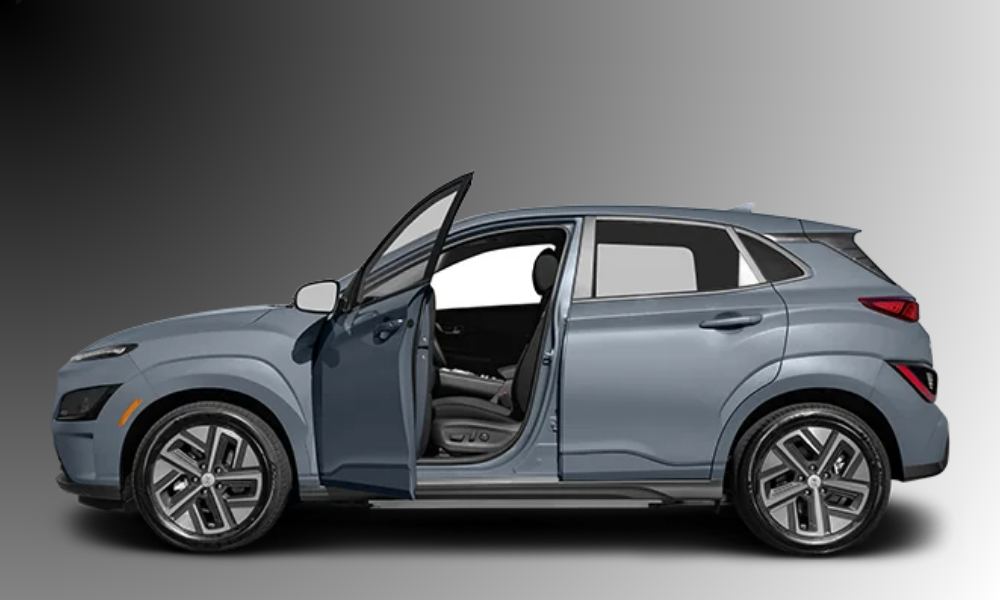
The 2023 Hyundai Kona Electric delivers a driving experience that feels noticeably more refined than the gasoline-powered Kona. The additional weight of the battery pack helps the vehicle feel more planted on the road, improving highway stability while also reducing some of the harshness found in the standard model.
Around town, the Kona Electric feels perfectly suited to urban driving. Instant electric torque provides smooth and effortless acceleration from traffic lights, while the compact dimensions make parking and maneuvering through crowded streets remarkably easy. Visibility is generally good, and the quiet electric powertrain creates a more relaxing driving environment than many gasoline-powered competitors.
The steering is light but accurate, making the Kona Electric approachable for everyday drivers. While it is not designed as a performance-focused EV, it feels agile enough to remain enjoyable on winding roads. The low-mounted battery helps lower the center of gravity, improving stability and reducing body roll during cornering.
For daily commuting and city driving, the Kona Electric remains one of the easiest and most comfortable electric SUVs to live with.
Performance & Acceleration
Power comes from a single front-mounted electric motor paired with a 64-kWh battery pack. The system produces 201 horsepower and an impressive 291 lb-ft of torque, figures that allow the Kona Electric to feel significantly quicker than its gasoline-powered counterpart.
Like most electric vehicles, acceleration is immediate. The instant delivery of torque makes the Kona Electric feel responsive at nearly any speed, whether merging onto a highway or navigating stop-and-go traffic. Hyundai estimates a 0-60 mph time of around 6.2 seconds, which remains competitive for an affordable electric crossover.
The strong low-speed acceleration is one of the vehicle’s most enjoyable characteristics. Even though the front wheels can occasionally struggle for traction during aggressive launches, the overall performance feels smooth, confident, and surprisingly energetic.
Drivers can also adjust regenerative braking levels using steering-wheel paddles, allowing for a more customizable driving experience. While it lacks some of Hyundai’s newest one-pedal driving technology found in newer EVs, the regenerative braking system remains effective and helps maximize efficiency during everyday driving.
Ride Comfort & Cabin Refinement
One of the biggest advantages of the 2023 Hyundai Kona Electric is its improved ride quality compared to the gasoline-powered Kona. The added weight of the battery pack helps smooth out rough pavement and gives the vehicle a more settled, composed feel at highway speeds.
The suspension does an excellent job absorbing everyday bumps and imperfections, making the Kona Electric a comfortable companion for commuting and longer journeys alike. Wind and road noise are also reasonably well controlled, especially when compared to similarly priced gasoline-powered crossovers.
Because there is no traditional engine operating under the hood, the cabin remains pleasantly quiet during city driving. The result is a more premium and relaxed driving experience than many buyers might expect from an affordable electric SUV.
Interior & Comfort
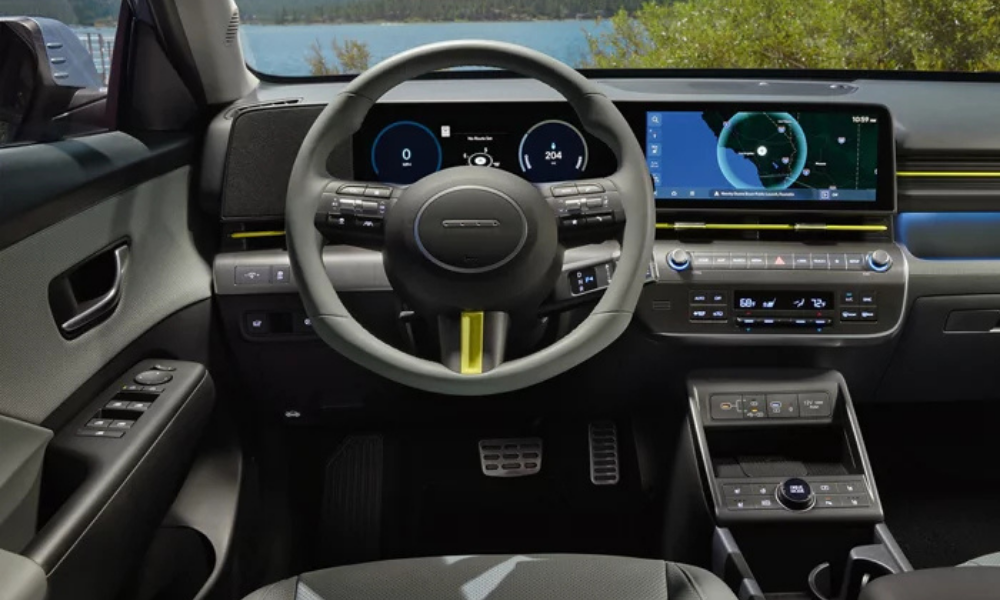
Inside, the Kona Electric offers a modern and practical cabin that feels noticeably more upscale than the standard gasoline Kona. Hyundai redesigned portions of the interior specifically for the electric model, creating a cleaner center console layout and a more contemporary appearance.
The front seats are comfortable and supportive, making the vehicle well suited for daily commuting. Available power-adjustable seating, heated front seats, and premium materials on higher trims further improve comfort levels. Drivers will also appreciate the elevated seating position, which provides good outward visibility and a commanding view of the road.
Rear-seat space is one of the Kona Electric’s weaker areas. While adequate for shorter trips, taller passengers may find legroom somewhat limited compared to rivals such as the Kia Niro EV and Chevrolet Bolt EUV. For couples, singles, and small families, however, the available space is generally sufficient.
Technology & Infotainment
The 2023 Kona Electric comes equipped with Hyundai’s easy-to-use infotainment system, which remains one of the better interfaces in the segment. Menus are straightforward, graphics are clear, and system responses are quick enough to avoid frustration during daily use.
Base models feature an 8-inch touchscreen with Apple CarPlay and Android Auto compatibility, while higher trims receive a larger 10.25-inch display with integrated navigation and additional connected services. The larger screen provides a more premium feel and allows easier access to vehicle information and charging data.
A digital instrument cluster is also available, displaying battery status, energy consumption, driving range, and regenerative braking information in a clear and attractive format. Wireless charging, premium audio, navigation, and connected vehicle services are available on upper trims, helping the Kona Electric remain competitive despite its aging platform.
The technology package may not be as advanced as Hyundai’s newest EVs, but it remains practical, intuitive, and easy to live with every day.
Range, Charging & Efficiency
Range remains one of the Kona Electric’s strongest selling points. The 2023 model is EPA-rated for up to 258 miles on a full charge, placing it among the leaders in the affordable electric SUV segment. For many drivers, that range is more than enough to handle a full week of commuting without needing to recharge.
The Kona Electric is also exceptionally efficient. Its energy consumption ratings rank among the best in its class, allowing owners to travel farther on each kilowatt-hour than many competing EVs. This efficiency helps reduce charging costs and makes the vehicle particularly appealing to buyers focused on minimizing operating expenses.
Charging performance is respectable, though newer EVs have started to move ahead. Using a DC fast charger, the Kona Electric can recharge from 10% to 80% in under an hour under ideal conditions. Home charging remains the most convenient solution for most owners, with a Level 2 charger capable of fully replenishing the battery overnight.
While charging speeds are no longer class-leading, the combination of strong range and outstanding efficiency continues to make the Kona Electric one of the most practical EVs in its price category.
Practicality & Cargo Space
Although the Kona Electric is classified as a subcompact SUV, it makes efficient use of its footprint and provides enough practicality for everyday life. The cargo area can easily accommodate groceries, luggage, backpacks, and daily commuting essentials without difficulty.
Folding the rear seats significantly increases available cargo space, allowing the vehicle to handle larger items when necessary. Families with young children will find the cargo area sufficient for strollers and everyday gear, though larger families may eventually wish for more space.
Storage throughout the cabin is adequate, with cupholders, door pockets, and center-console compartments providing room for smaller personal items. However, some rivals offer more innovative storage solutions and larger cargo areas overall.
The Kona Electric’s practicality is best suited to singles, couples, and small families rather than buyers who regularly carry multiple passengers and large amounts of cargo.
Safety & Driver Assistance
Hyundai equips the 2023 Kona Electric with a comprehensive suite of safety and driver-assistance technologies. Even base models include many of the features buyers now expect from a modern electric vehicle.
Standard equipment includes forward collision avoidance assist, lane-keeping assist, lane-following assist, blind-spot monitoring, rear cross-traffic alert, driver attention warning, and automatic emergency braking. These systems work together to improve driver awareness and help prevent common accidents.
Higher trims add adaptive cruise control, Highway Driving Assist, safe-exit warning, automatic high beams, and additional convenience technologies that make long-distance driving more comfortable and less stressful.
The Kona Electric’s extensive safety package helps reinforce its reputation as a practical daily driver. While some newer competitors offer more advanced semi-autonomous features, Hyundai’s systems remain effective, intuitive, and easy to trust in everyday driving situations.
Competitors Worth Considering
The 2023 Hyundai Kona Electric faces strong competition from a growing number of affordable electric vehicles. Buyers shopping in this segment have several compelling alternatives, each with its own strengths.
The Kia Niro EV remains one of the Kona Electric’s closest rivals. It offers more interior space, a larger cargo area, and a newer overall design while maintaining excellent efficiency and everyday usability.
The Chevrolet Bolt EUV delivers impressive value thanks to its affordable pricing and spacious interior. Although its charging speeds are limited, it remains one of the most cost-effective EVs available.
The Nissan Leaf Plus continues to appeal to buyers seeking simplicity and proven reliability, though its aging platform and CHAdeMO charging system make it less competitive than it once was.
Shoppers willing to spend more should also consider Hyundai’s own Ioniq 5, which offers significantly faster charging, more interior space, and a far more advanced electric vehicle platform. However, for buyers prioritizing efficiency and affordability, the Kona Electric remains a highly competitive option.
Trim Comparison
Kona Electric SE
The SE serves as the entry point to the lineup and represents the best value for many buyers. It includes the full electric powertrain, an impressive driving range, a touchscreen infotainment system, Apple CarPlay, Android Auto, and a comprehensive collection of safety technologies. For shoppers focused on maximizing value, the SE is difficult to beat.
Kona Electric SEL
The SEL adds additional comfort and convenience features, including upgraded technology, more connectivity options, and enhanced interior equipment. It strikes a good balance between affordability and premium features while retaining the same efficient electric powertrain.
Kona Electric Limited
The Limited trim sits at the top of the lineup and adds luxury-oriented upgrades such as premium interior materials, ventilated front seats, a larger infotainment display, premium audio, advanced driver-assistance systems, and additional convenience features. It delivers the most complete ownership experience but also carries a significantly higher price tag.
Which Trim Does Cardrav Recommend?
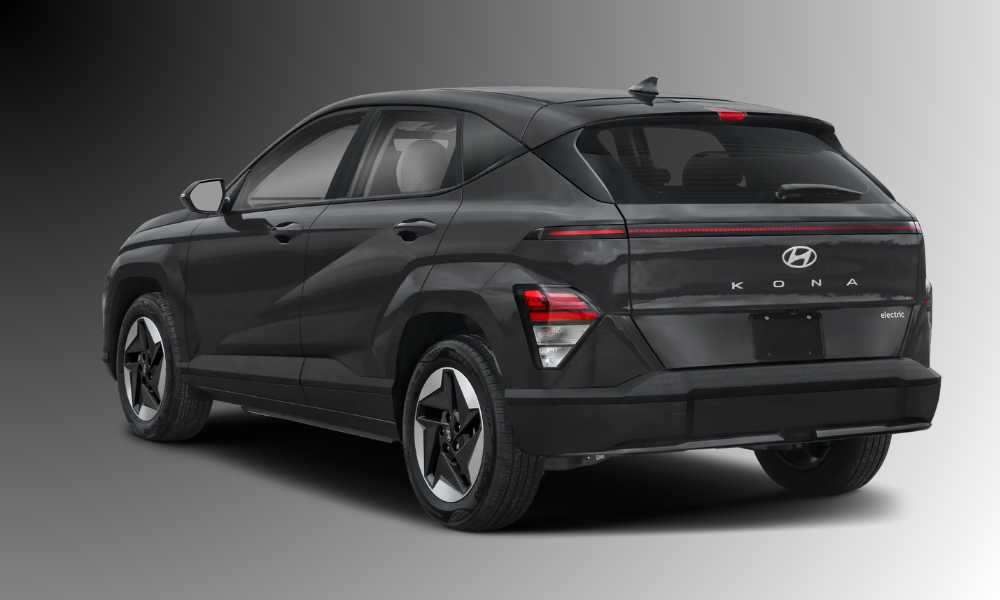
The 2023 Hyundai Kona Electric SE is the trim we recommend for most buyers. It provides the same 258-mile EPA-estimated driving range, identical electric motor, and the same outstanding efficiency as the more expensive trims while maintaining a substantially lower purchase price.
The SEL introduces additional convenience features, but the value equation becomes less compelling as the price climbs. Meanwhile, the Limited offers attractive luxury upgrades, yet it enters pricing territory where newer and more advanced EVs become realistic alternatives.
For shoppers looking to maximize value, range, and efficiency, the SE delivers everything that makes the Kona Electric appealing without paying for unnecessary extras.
Final Verdict: Should You Buy It?
The 2023 Hyundai Kona Electric remains one of the most efficient electric SUVs available, even as newer competitors continue to enter the market. While its platform is beginning to show its age, the Kona Electric still delivers an impressive combination of range, performance, efficiency, and everyday usability that makes it easy to recommend.
Its biggest strengths are clear. The 258-mile EPA-estimated range remains competitive, energy consumption is among the best in the segment, and the electric motor provides smooth, responsive acceleration that makes city driving effortless. Add Hyundai’s strong reputation for reliability and a generous list of standard safety features, and the Kona Electric becomes an appealing option for buyers transitioning to EV ownership.
However, shoppers should be aware of its limitations. Rear-seat space is tighter than many rivals, cargo capacity is only average, and charging speeds no longer lead the class. Buyers seeking more room or the latest EV technology may find better alternatives in newer models such as the Hyundai Ioniq 5 or Kia Niro EV.
Still, for drivers who prioritize efficiency, affordability, and proven electric technology, the 2023 Hyundai Kona Electric remains one of the smartest electric SUVs in its category.
FAQ
Is the 2023 Hyundai Kona Electric a good electric SUV?
Yes. The 2023 Hyundai Kona Electric remains one of the best affordable EVs thanks to its excellent range, impressive efficiency, quick acceleration, and low operating costs. It may not be the newest design on the market, but it continues to offer exceptional real-world value.
How far can the 2023 Hyundai Kona Electric travel on a full charge?
The Kona Electric is EPA-rated for up to 258 miles of driving range on a full charge. Actual range will vary depending on weather conditions, driving habits, terrain, and the use of climate-control systems.
How long does it take to charge the Hyundai Kona Electric?
Using a Level 2 home charger, the Kona Electric can be fully charged overnight. On a DC fast charger, the battery can typically recharge from 10% to 80% in less than an hour under ideal conditions.
Is the Hyundai Kona Electric faster than the gasoline Kona?
Yes. The electric version produces 201 horsepower and 291 lb-ft of torque, giving it significantly quicker acceleration than most gasoline-powered Kona models. Instant torque delivery makes the vehicle feel especially responsive in city driving.
Is the 2023 Hyundai Kona Electric reliable?
The Kona Electric has established a strong reputation for reliability and low operating costs. With fewer moving parts than a traditional gasoline vehicle, maintenance requirements are generally lower, making it an attractive long-term ownership proposition.
Which 2023 Hyundai Kona Electric trim offers the best value?
The SE trim provides the best overall value. It includes the full electric powertrain, excellent range, modern safety technologies, and essential comfort features while remaining considerably more affordable than the higher trims.
Should I buy the Kona Electric or the Hyundai Ioniq 5?
The answer depends on your priorities. The Kona Electric is the more efficient and affordable option, while the Ioniq 5 offers significantly faster charging, more interior space, a newer platform, and a more premium overall experience. Buyers focused on value will likely prefer the Kona Electric, while those seeking the latest EV technology may gravitate toward the Ioniq 5.