How to Choose the Right RV Air Conditioner
A Practical Guide to Choosing the Right Cooling System for Your RV
It usually starts around three in the afternoon in a campground with no shade. The sun has been working on the roof since morning and the rig feels like a parked car. You turn on the cooling and the unit runs hard but the back bedroom never catches up. Or you pull into a boondocking spot and realize that the air conditioner you rely on at full hookup sites is useless without a generator humming outside. These are the moments that show how much the choice of an RV air conditioner shapes a trip.
The decision is more layered than picking a number off a box. A rooftop unit has to fit the opening already cut into your roof and the clearance under low branches or garage doors. It also has to match how your coach moves air. Some rigs have ceiling ducts that carry cool air to several rooms while others rely on a single louvered cabin unit that blows straight into the living space. Then there is the electrical side. A unit that runs fine on shore power may trip a breaker on a small generator and a battery powered camper van needs an entirely different approach. Noise matters more than most buyers expect because the machine sits a few feet over your head while you sleep.
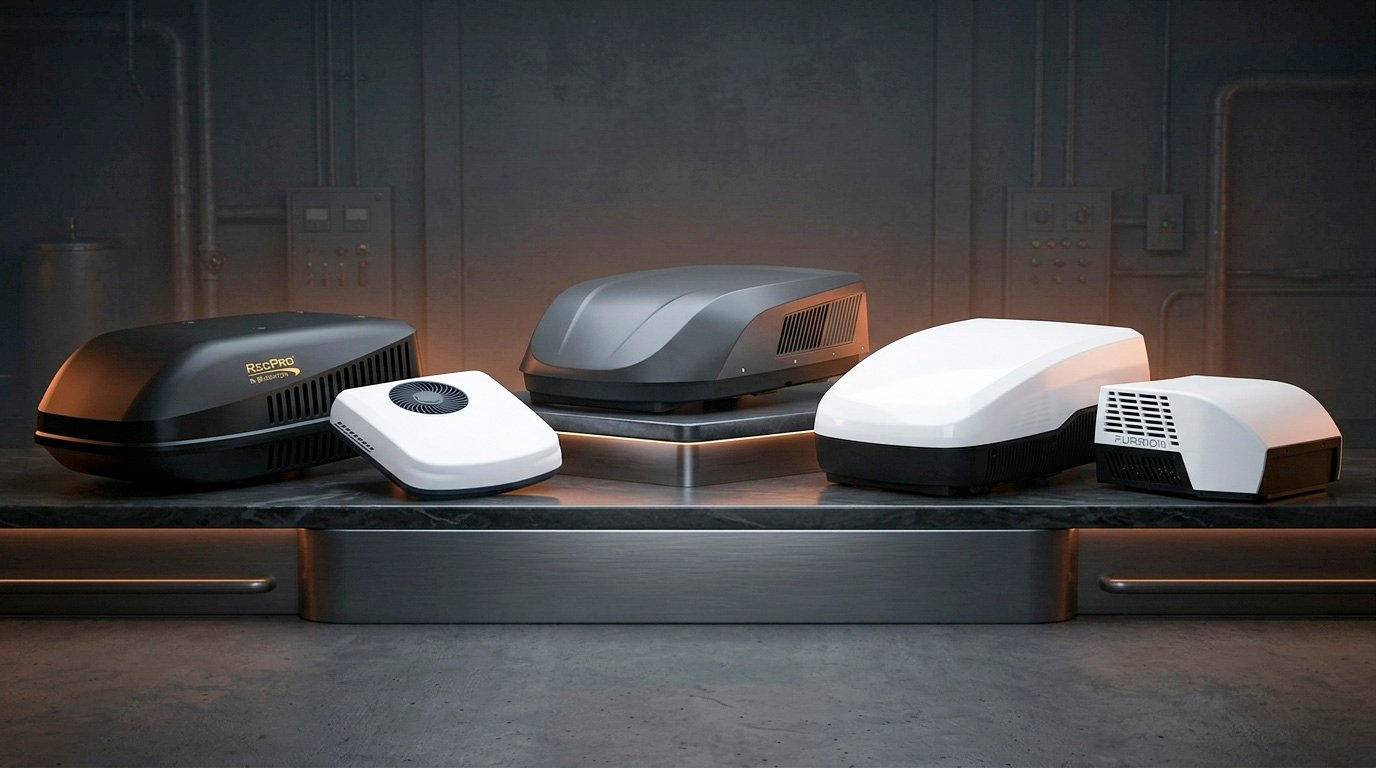
The five units below cover a wide spread of those situations. They run from a 10,000 BTU low profile 12V unit built for off grid travel up to a variable speed 18,000 BTU system aimed at big coaches in serious heat. In between sit a flexible 15,000 BTU heat pump model and a smart controlled non ducted unit with heat pump output. A mainstream rooftop replacement from an established brand rounds out the group. Some are quiet enough to forget about overhead while others make their presence known.
Our Take
The first thing to understand about any RV cooling system is that BTU capacity only tells part of the story. A 10,000 BTU unit makes sense in a small camper or van where the cabin volume is modest and the roof space is limited. A 13,500 BTU unit has long been the familiar baseline for many travel trailers because it balances cooling power with manageable electrical demand. Step up to 15,000 or 16,000 BTU and you gain a margin that matters in direct sun and long hot afternoons. An 18,000 BTU system belongs in a large coach or a rig with big windows and poor insulation where a smaller unit would run flat out all day.
A larger unit is not automatically a better one. Oversized cooling can cost you in weight on the roof and in electrical demand that your generator or inverter may not tolerate. It also asks more of your shore power pedestal. A smaller unit that runs steadily and fits your power source often serves a camper better than a powerful one that forces you to shut off everything else. Think of capacity as one variable that has to agree with your electrical limits and your floor plan.
Ducted versus non ducted deserves more attention than it gets. A ducted system sends air through ceiling channels and out of several vents so cool air reaches the bedroom and the kitchen at once. That is the natural fit for longer rigs. A non ducted unit blows into the cabin from a single point and works well when the space is compact or open. If you are replacing an existing air conditioner the question is simple. You should match what the rig already has unless you are ready to do real remodeling work. The units in this guide split on that point. The 15,000 BTU RecPro handles either layout while the 16,000 BTU TOSOT is strictly non ducted. The 18,000 BTU Furrion is a ducted listing and the Dometic is described as compatible with existing air distribution boxes.
Conventional rooftop systems and 12V battery units solve different problems. A standard unit that runs on household style power suits campgrounds with hookups and owners who carry a generator. The RecPro advertises a low amp design on 110 to 120V power and the Furrion is meant for 2,000W generator or inverter applications. A direct 12V design like the OutEquip makes sense for vans and off grid builds where the battery bank and solar system carry the load. That freedom comes with a cooling capacity ceiling and a need to size the electrical system thoughtfully. Low profile design adds another practical benefit because a shorter unit reduces wind drag and helps with clearance on low roofs and tight garages. The OutEquip stands about 6.3 inches tall which is part of why it suits vans.
Noise and compressor technology separate these units more than the capacity numbers do. The OutEquip lists 40 dB at its lowest level and the TOSOT lists 43 dB so both are comfortable over a sleeping area. The RecPro lists about 55.4 dB on low and the Dometic lists 58.5 dB which makes them the louder pair. Variable speed operation is the other technical divide. The Furrion uses it to adjust output instead of cycling fully on and off and that suits long hot stretches when the unit has to run for hours.
Heat pumps are worth treating as a shoulder season convenience. The RecPro and the TOSOT both include one and the TOSOT lists 12,500 BTU of heat pump output. They take the edge off a chilly morning without lighting a furnace. They are not a replacement for a dedicated heating system in cold weather since heat pump output falls as the outside temperature drops. The same caution applies to the small 4,500 BTU supplemental heater in the OutEquip. It helps at the margins and nothing more. The Dometic and the Furrion focus on cooling alone. No single unit wins every category here. The right choice depends on your roof and your power and the way you travel.
RecPro RP-AC3800
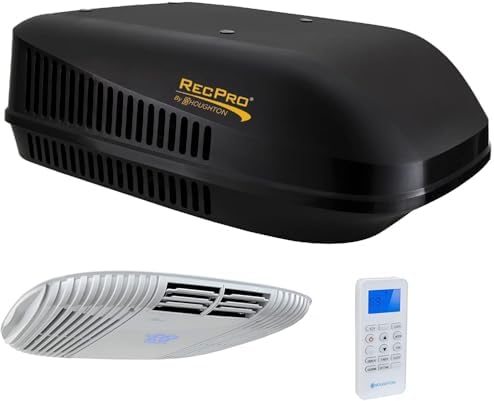
- ✅ Energy-Efficient Low Amp Draw – Our RecPro RV air conditioner is engineered with a low amp draw, allowing you to power…
- ✅ Rugged, Durable Design Built for Travel – Made from durable, UV-resistant plastic, this rooftop air conditioning unit …
- ✅ Ultra-Quiet Operation – Just 55.4 dB – Say goodbye to loud, disruptive units! With a noise level similar to a gentle r…
This unit is built around flexibility. RecPro lists it as a 15,000 BTU system that can serve either a ducted or a non ducted layout and that matters more than it sounds. Plenty of owners inherit a rig with ceiling ducts but still want the option to upgrade to something different later. Others own a smaller coach with no ducting at all. One unit that handles both situations takes a lot of guesswork out of the purchase.
The 15,000 BTU rating gives the cooling a comfortable cushion for midsize travel trailers and fifth wheels in hot regions. It sits in the zone where a single unit can often handle a living space without constant maximum effort. The listing also calls out a low amp design that runs on 110 to 120V power. In practice that is meant to ease the load on a generator or a campground pedestal and the exact draw will depend on conditions the supplied information does not detail. Buyers pairing it with a modest generator should check the manufacturer documents rather than assume it will fit.
Heating comes from a built in heat pump so the same unit can warm the cabin on cool mornings and evenings. It fits the convenience role described above and does not replace a furnace on cold trips. Controls include a wireless remote and an LED touch display. Cool and dry and fan and sleep and timer modes cover the usual needs. The listing mentions roughly 55.4 dB on low and that places it as audible but not unusually loud for a rooftop unit. Light sleepers might prefer one of the quieter designs in this group.
The main tradeoff is that its strength is breadth rather than a standout in any single area. It does not offer the lowest noise or the smartest controls or the highest capacity. It earns its place because it solves the layout question for owners who are not certain what they need or who want a unit that adapts if the rig changes.
OutEquip 12V 10,000 BTU RV Air Conditioner

- Efficient Cooling: 10,000 BTU air conditioner cools your RV in just 15 minutes, delivering quick, consistent comfort.
- The 4,500 BTU PTC heater provides supplementary warmth, ideal for mild temperatures and small spaces, but is not suitabl…
- Durable & Weather-Resistant: Built with UV-stabilized ABS materials, EPDM foam gasket, and zinc-coated condenser, design…
The OutEquip answers a question many campers keep asking: can a rooftop air conditioner run straight from a battery system? It is a 12V DC unit with 10,000 BTU of cooling and that makes it relevant for camper vans and small RVs and other off grid setups where an inverter and a generator are not part of the plan. The design is low profile at 6.3 inches tall and about 45 lb which helps with wind resistance and with clearance under trees or in storage.
The cooling output suits a compact cabin. It will not match a large trailer and the sensible way to read it is as a van or small camper solution. Inside the unit a variable frequency scroll compressor and brushless copper motor fans handle the work. The listing quotes airflow of 450 m³/h and a noise level of 40 dB at the lowest listed operating level. That figure is notably low in this group and points to a unit that can sit over a sleeping area without dominating it. Remote and app control come standard and the modes include eco and sleep and turbo.
Protection features cover undervoltage and overvoltage and overload and overtemperature conditions. That matters in a battery based system where voltage can swing. The 4,500 BTU PTC heater is a supplemental feature and should be treated that way. It can take the chill off but it will not serve as a primary heater for cold nights. The roof opening is designed around 14.1 by 14.1 inches and owners should measure their existing opening carefully before ordering.
The key tradeoff is that the supplied information does not give current draw. A battery bank and wiring and solar capacity all need careful sizing around a cooling load like this. Anyone building a van should plan that electrical system before choosing the unit. It belongs in the comparison because it is the only direct 12V option and it opens a category the other four do not touch.
TOSOT GO Cool 16,000 BTU RV Air Conditioner

- POWERFUL ALL-WEATHER COMFORT: 16,000 BTU cooling and 12,500 BTU heat pump for year-round comfort. Works in ambient temps…
- WHISPER-QUIET OPERATION (43dB): Engineered for quiet comfort. 32% quieter than standard RV ACs. At only 43dB, it’s quiet…
- HEAT PUMP FOR TRANSITION SEASONS: Built-in heat pump adds convenient electric warmth in spring and fall. No need to fire…
TOSOT approaches the category from a modern appliance angle. This is a non ducted rooftop unit rated at 16,000 BTU with a 12,500 BTU heat pump and the listing suggests it for RVs of roughly 16 to 24 feet. That pairing of strong cooling and substantial heating output makes it more capable in shoulder season than a unit that only adds a small heater. The outdoor operating range listed on Amazon runs from 23°F to 115°F which gives a sense of the temperature window the manufacturer expects it to handle.
Smart control is the other distinction. WiFi and app control sit alongside a remote and that allows you to start cooling the cabin before you walk back from a hike. Cool and heat and dry and fan and timer modes round out the options. The noise level of 43 dB places it among the quieter units in this group though it should be read as a listed figure rather than a promise about real conditions.
Because it is non ducted the cool air enters the cabin from one location. That works well in a compact travel trailer where the space is open. It becomes a poor match for a long rig that depends on ceiling ducts to reach the bedroom. The roof opening is 14.25 by 14.25 inches. The listing also states a two year warranty and ETL certification which adds some reassurance for a purchase that involves a roof penetration.
The caution is that the supplied details do not specify the electrical requirements so buyers should confirm that their power source can support a 16,000 BTU system. It deserves its place here because it offers the strongest combination of capacity and heat pump output and modern controls among the non ducted choices.
Dometic FreshJet 3 Series 13.5K

- Powerful Cooling with Higher Cooling Capacity Compared to Other Competitive Rooftop Air Conditioners
- Maximum Airflow with Higher Airflow than Other Competitive Rooftop Air Conditioners
- 14% Lighter than Dometic Brisk II Air Conditioner Models
Dometic carries the weight of an established name in RV climate control and the FreshJet 3 Series reflects a conventional approach. It is a 13,500 BTU rooftop unit and that capacity has long been a familiar size for travel trailers. Buyers who want a straightforward replacement from a brand they recognize will find the logic easy to follow.
The most practical detail is compatibility. The listing says it works with existing Dometic and competitor air distribution boxes. For anyone swapping out a tired unit that can save a lot of trouble because the interior ductwork and ceiling assembly stay in place. Construction uses EPP foam insulation and a composite base and shroud and Amazon describes the unit as 14 percent lighter than Dometic Brisk II models. The listed dimensions are about 29.5 by 27.56 by 13.99 inches and that gives a clear sense of the roof space it needs.
The listed noise is 58.5 dB which is the highest figure in this group. Sensitive sleepers should factor that in. The supplied information does not list any heating function and does not detail the electrical requirements so owners who want a heat pump should look at other units here. It is a cooling focused product.
The tradeoff is that it offers fewer extras than the rest of the lineup. There is no mention of app control or a heat pump. Its role in this comparison is to represent the mainstream path. For a buyer who wants a dependable replacement without any experimentation it is the most conventional option on the list.
Furrion Chill Cube 18K

- EASY TO INSTALL — This camper air conditioner mounts with a simple bolt-on installation and comes with a clear step-by-s…
- SUPERIOR PERFORMANCE — The Furrion Chill Cube 18K RV rooftop air conditioner has variable speed compressors to help move…
- HIGH CAPACITY & EFFICIENCY — This camper AC unit has a higher cooling capacity and is more energy efficient compared to …
The Chill Cube is built for a different scale of problem. It is an 18,000 BTU ducted unit with a variable speed compressor and R32 refrigerant and it targets large RVs and long stretches of hot weather. Variable speed operation means the compressor can adjust its output instead of cycling fully on and off. That tends to suit continuous cooling because it can hold a steady temperature with less abrupt swings.
Its power approach is the most notable detail. The listing says it is designed for 2,000W generator or inverter applications. That points toward owners who already carry a capable generator or a large inverter system and want a high capacity unit that does not demand a full size generator. Turbo Cool provides a burst of stronger output and Battery Saver is aimed at reducing draw. The design is aerodynamic and the unit weighs about 72.4 lb according to the supplied information. That is heavy so roof structure and installation help deserve thought.
One point catches buyers off guard. The air distribution box is sold separately for this head unit listing. You need to account for that before ordering. The listing is also ducted so it suits rigs with ceiling duct systems and not open cabin layouts that rely on a single blower.
The limitation is that the supplied information gives no noise figure and no heating function. It earns its spot as the high capacity option. Owners of large fifth wheels and motorhomes in hot regions who value efficient continuous cooling are the people it speaks to most clearly.
Conclusion
Start with the roof and the power source because those two facts eliminate more options than any spec sheet. If your rig has ceiling ducts you need a ducted or flexible unit and that rules out the strictly non ducted choice. If you live on batteries and solar the 12V design is the only one that matches your system. If you depend on a generator then the power rating matters more than the cooling number on the box.
Next match the capacity to your space and climate. Small cabins and vans do well with modest capacity and quiet operation. Midsize trailers sit comfortably in the 13,500 to 16,000 BTU range. Large coaches in sustained heat benefit from the extra headroom and the efficiency of variable speed operation. Heating belongs at the bottom of the list. Treat a heat pump or a small built in heater as a comfort feature for cool mornings and keep a real heating plan for cold weather.
Finally think about the quiet that you want at night and the controls you will actually use. Then measure your roof opening and your clearance before you click anything. The right unit is the one that fits the opening and the circuit and the layout of your rig. Get those three right and the cooling takes care of itself.