2022 Ford E Transit Review: Range Charging and Cargo

The 2022 Ford E Transit was Ford’s answer to a very practical question facing commercial drivers at the time: could an electric work van actually handle the demands of a normal working day? For businesses that depend on their vans every morning, range, cargo space, charging time, and reliability matter far more than simply having an electric powertrain.
Instead of designing an entirely new commercial vehicle, Ford took the familiar Transit formula and replaced its gasoline powertrain with electric drive. That approach gave businesses a van that looked and worked much like the Transit they already knew, while offering quieter operation and the potential for lower routine running costs.
The real appeal of the E Transit, however, depends heavily on how it is used. A van returning to the same depot every evening has very different needs from one covering long highway distances all day. That makes the 2022 Ford E Transit an interesting option for local deliveries, tradespeople, and commercial fleets, but its relatively limited driving range remains an important part of the buying decision.
Pros and Cons
- Pros:
- Immediate electric torque delivery for responsive acceleration under load
- Underfloor battery placement preserves the Transit cargo layout and available cargo volume
- Available 2.4 kW Pro Power Onboard system supplies power directly to jobsite tools
- Lower scheduled maintenance requirements by eliminating traditional engine services
- Independent rear suspension replaces the rigid rear axle to improve ride smoothness
- Cons:
- Official range ratings between 108 and 126 miles restrict the van primarily to local routes
- Daily operation requires access to dedicated charging infrastructure
- Highway speeds, cold weather, and heavy cargo lower real world driving distance
- Standard cargo van configuration lists no conventional factory towing rating
Cardrav Editorial Opinion
The 2022 Ford E Transit makes the most sense for predictable local commercial routes where the vehicle can return to a depot or home base for charging. For businesses whose vehicles cover under 80 miles daily within a metropolitan area and return to a central yard every evening, this electric setup offers smooth operation and lower routine energy costs.
Its main limitation is range compared with conventional gasoline work vans. Unplanned long distance trips or heavy highway routes require careful planning, making it less suitable for cross country transport or operators without reliable charging access.
What the 2022 Ford E Transit Is
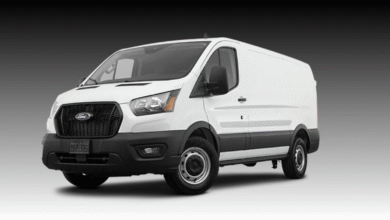
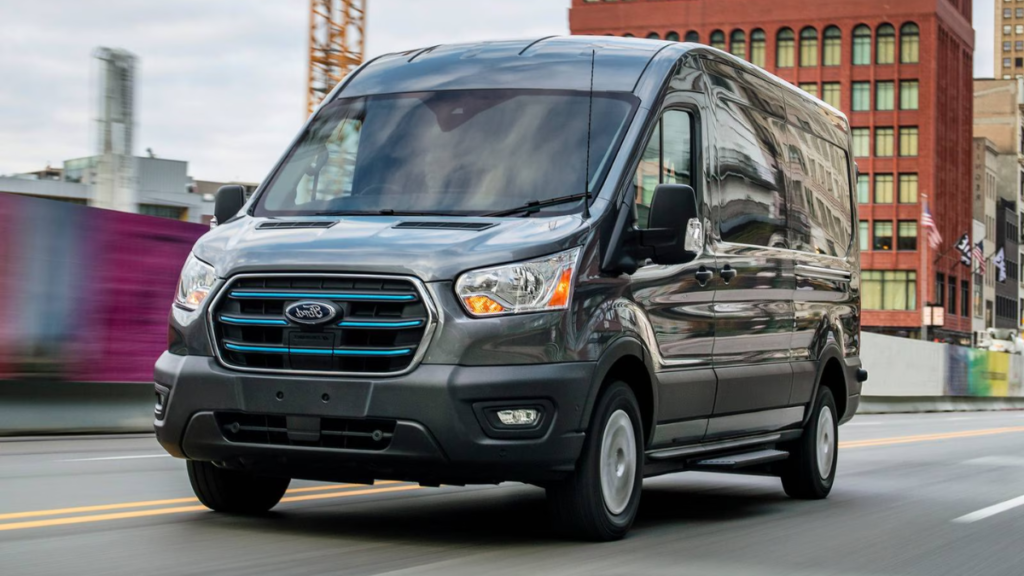
The 2022 Ford E Transit is a full size commercial electric van engineered for the North American market. Built at Ford Kansas City Assembly Plant, it used the established Ford Transit commercial van platform and body architecture.
Electrifying this existing format allowed commercial operators and upfitters to work with a familiar vehicle architecture, making it easier to install standard shelving, partition walls, and external racks.
Ford offered the North American model in three body lengths comprising regular, long, and long extended, along with three roof heights consisting of low, medium, and high roof profiles. Alongside the enclosed cargo van, Ford produced chassis cab and cutaway configurations to support specialized aftermarket utility bodies..
2022 Ford E Transit Powertrain and Performance
Powering the vehicle is a single electric motor driving the rear wheels through a single speed transmission. The powertrain generates 266 horsepower and 317 pound feet of torque. Because electric torque is available immediately from a complete stop, the van provides responsive acceleration, although performance naturally varies with payload.
To integrate the electric drive system beneath the vehicle, Ford incorporated an independent rear suspension with coil springs and semi trailing arms. This structural change replaced the traditional live rear axle, providing improved chassis control and a smoother ride when driving over unpaved surfaces or broken city streets. Published testing notes that the electric powertrain operates quietly, reducing interior noise compared to combustion models.
2022 Ford E Transit Battery and Range
The electric motor receives energy from an approximately 68 kWh battery pack mounted underneath the floor structure. Official Environmental Protection Agency range estimates vary based on body height and aerodynamic drag. Low roof cargo models achieved an estimated range of 126 miles, medium roof cargo models achieved 116 miles, and high roof cargo models achieved 108 miles on a full charge.
Ford used commercial fleet telematics data covering more than 30 million miles when developing the E Transit, with the data showing an average daily commercial van travel distance of roughly 74 miles. In practical use, total range fluctuates depending on route speed, payload weight, cold ambient temperatures, and cabin heating demands.For comparison, buyers can also look at other electric models such as the 2023 Nissan Leaf when considering range and charging needs.
Charging
Replenishing the battery occurs via an SAE Combo charge port located on the front grille. Every model came standard with a mobile power cord capable of plugging into standard outlets. A 120 volt household outlet provides very slow charging and is better suited to minor top ups than routine fleet charging.
For regular commercial use, 240 volt Level 2 charging is much more practical. Utilizing appropriate 240 volt Level 2 equipment, such as a 48 amp charge station, recharges the battery from empty in approximately eight hours, allowing fleets to replenish energy during overnight downtime. Public DC fast charging is supported up to 115 kW, allowing the battery to add roughly 30 miles of range in about 10 minutes under optimal conditions.
Cargo Space and Payload
The underfloor battery placement allows the 2022 Ford E Transit to retain the Transit cargo layout and its available cargo volume across the configuration range. Verified cargo volumes across the lineup are 246.7 cubic feet, 277.7 cubic feet, 357.1 cubic feet, 404.3 cubic feet, and up to 487.3 cubic feet for the high roof long extended wheelbase configuration.
The cargo van offered maximum payload capacity of up to about 3,880 pounds, although actual payload varied according to body length, roof height, equipment, and overall configuration. Actual payload limits vary by configuration because body size, roof height, equipment, and option packages affect curb weight.
Specification data lists no conventional factory towing rating for the standard cargo van configuration, and pulling a heavy trailer would increase energy consumption while reducing driving range.
Interior, Comfort and Technology
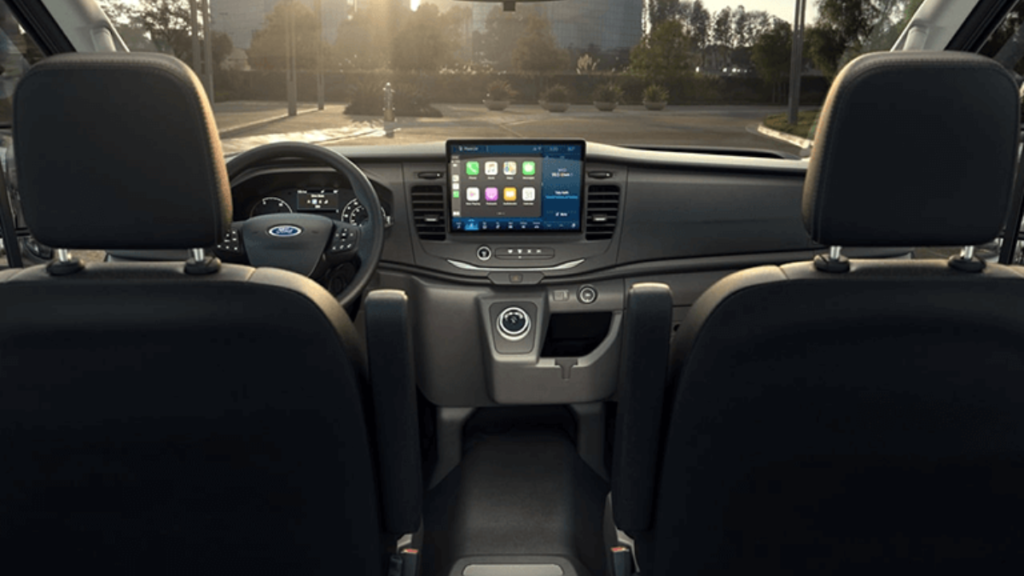
Inside the cabin, Ford replaced the floor mounted mechanical gear lever with a rotary dial on the center dashboard. An electronic parking brake switch replaced the traditional handbrake lever, clearing path space between the front seats for easier entry into the rear cargo area.
A 12 inch center touchscreen running Ford SYNC 4 software comes standard, supporting wireless Apple CarPlay and wireless Android Auto. Onboard cellular connectivity links to Ford Pro telematics software, letting dispatchers check battery charge status and monitor vehicle location remotely. Drivers can also schedule cabin preconditioning while connected to grid power, heating or cooling the interior before departing without draining battery energy.
Pro Power Onboard
An available auxiliary power system called Pro Power Onboard supplies up to 2.4 kW of electrical power drawn directly from the main high voltage battery pack. Standard 120 volt outlets installed in the rear cargo area allow workers to operate or charge compatible equipment such as power tool battery chargers, corded saws, or jobsite floodlights.
This system allows tradespeople to run electrical tools at remote job sites without carrying a separate gasoline generator. Pro Power Onboard provides a practical feature for mobile workshops and other commercial jobs that require portable electrical power.
Safety and Driver Assistance
Ford offered a range of Co Pilot360 driver assistance technologies on the E Transit, with several key safety systems included as standard equipment.
Standard safety features include Pre Collision Assist with Automatic Emergency Braking, Pedestrian Detection, Lane Keeping System with Lane Departure Warning, Driver Alert drowsiness monitoring, and Automatic High Beam Headlamps.
Additional driver assistance technologies were available as optional upgrades to improve urban visibility. Available systems included a Blind Spot Information System with Cross Traffic Alert, Adaptive Cruise Control, Reverse Brake Assist, and a 360 degree camera system that assists when maneuvering in tight alleys or loading bays.
Ford’s official 2022 E Transit product information provides further details on the vehicle’s standard and available driver assistance technologies.
Driving Experience
Published road tests generally describe the vehicle as quieter and smoother than traditional combustion vans. Placing the heavy battery beneath the floor lowers the center of gravity, which helps stabilize the chassis through corners and reduces body lean.
The electric powertrain changes the driving character by providing smooth acceleration without gear shifts. Published reviews have generally found the independent rear suspension more compliant than the traditional rear suspension used in conventional Transit models, while light steering calibration aids low speed maneuvering. Regenerative braking slows the vehicle when releasing the accelerator, capturing kinetic energy to recharge the battery while reducing wear on mechanical brake components.
Operating Costs and Maintenance
Switching to an electric drivetrain reduces scheduled mechanical upkeep because the vehicle does not contain an internal combustion engine. The electric system eliminates routine services such as oil changes, spark plug replacements, air filter swaps, and drive belt inspections. Normal maintenance focuses primarily on tires, brake fluid, cabin air filters, suspension parts, and cooling systems.
Ford estimated that scheduled maintenance costs could be about 40 percent lower than those of a comparable gasoline Transit. However, actual operating savings depend on local electricity rates, regional gasoline prices, charging infrastructure costs, and specific usage patterns.
Final Verdict
The 2022 Ford E Transit is a practical electric commercial van designed for predictable local routes. Buyers exploring other electric vehicles can also compare it with the 2023 Chevrolet Bolt EUV. By placing its battery beneath an established commercial frame, Ford delivered usable cargo volume, responsive performance, reduced routine maintenance, and jobsite power capabilities.
Its major limitation is its relatively short EPA range of 108 to 126 miles compared with conventional gasoline work vans. It is best suited to fleets, delivery services, and tradespeople with predictable daily routes and reliable overnight charging access.
Warranty
Factory warranty protection for the vehicle included 3 years or 36,000 miles of basic bumper to bumper coverage, 5 years or 60,000 miles of powertrain coverage, and 8 years or 100,000 miles of coverage for electric vehicle components and the high voltage battery pack against factory defects.
FAQ
Is the 2022 Ford E Transit a Good Cargo Van?
The vehicle succeeds by combining a proven commercial chassis with a smooth electric powertrain. It retains the familiar Transit cargo layout and upfit friendly design that commercial operators can work with. While its range limits it to local operations, its quiet power delivery, reduced routine maintenance, and modern cabin technology make it a practical platform for urban commercial applications.
What Is the Daily Driving Range under Real World Conditions?
While EPA estimates range from 108 to 126 miles depending on body height, real world mileage varies based on environmental and driving conditions. Heavy cargo payloads, high speed highway travel, and aggressive cabin heating during winter months reduce available range. Routes under 80 miles per day provide more practical operating margin, although fleet managers still need to account for weather, payload, traffic, and charging access.
How Long Does It Take to Charge the Battery?
Recharge times depend on the power rating of the charging equipment. Using a standard 48 amp Level 2 commercial charger, a full recharge from empty takes approximately eight hours, making overnight depot charging practical. On a 115 kW DC fast charger, the battery can add roughly 30 miles of range in 10 minutes for rapid midday top offs.
Is This Electric Van Good for Daily Commercial Work?
For last mile delivery providers, municipal service departments, and local tradespeople, the van is well suited to daily operations. It provides generous cargo volume, responsive acceleration, and available features like Pro Power Onboard that enhance jobsite utility. However, for long distance highway travel or multi state routes, a conventional gasoline van remains more practical.
How Does Cargo Volume Compare to Gas Powered Vans?
Cargo volume is comparable to equivalent gas powered Transit models because the underfloor battery placement preserves interior dimensions. Storage space ranges from 246.7 cubic feet on low roof regular length models up to 487.3 cubic feet on extended high roof variants. The familiar Transit format also makes it easier for commercial upfitters to adapt established shelving and storage solutions.