2022 Nissan Leaf Review: The Aging EV That Still Makes a Case
It's older, it's slower to charge, and the competition has gotten fierce. But the 2022 Leaf isn't done yet.

2022 Nissan Leaf : When the Nissan Leaf arrived in 2010, it did something no mass-market car had managed before. It made electric driving feel normal. Not experimental, not reserved for tech enthusiasts with garage space and disposable income. Just a regular car you plug in at night and drive to work in the morning.
More than a decade later, the 2022 Nissan Leaf Review tells a more complicated story. The EV market has exploded around it, and the Leaf is no longer the obvious choice it once was. The Chevrolet Bolt cut its price dramatically this year. The Hyundai Kona Electric offers solid range in a compact package. The Tesla Model 3 dominates on technology. The Kia Niro EV is quietly winning buyers with practical packaging and reliable range.
The Leaf has to navigate all of that while carrying a platform that is, by now, genuinely aging. What saves it is a combination of things that don’t show up on a spec sheet: real comfort, years of careful tuning, and a price point that opens EV ownership to buyers who can’t stretch to something newer. It comes in two versions, the 40 kWh standard and the 62 kWh Leaf Plus, and that split shapes almost everything about how you evaluate this car.
Our Opinion
The 2022 Nissan Leaf is a genuinely good car buried inside a platform the market has largely moved past. For a buyer who charges at home, drives under 150 miles a day, and wants a comfortable EV experience at a reasonable price, it delivers exactly what it promises.
The problems are real though. The standard model’s 149-mile range is limiting in 2022. The CHAdeMO DC fast charging connector is becoming rare at public stations, and that issue will only worsen. The interior feels dated next to newer competitors. Still, write it off completely and you’d be wrong. The right buyer will find it a satisfying long-term companion.
Pros and Cons
Pros:
- Competitive base pricing for EV entry
- Leaf Plus delivers a legitimate 212-mile range
- Comfortable, mature ride quality for the class
- ProPilot Assist is genuinely useful on the highway
- e-Pedal one-pedal driving is natural and well-calibrated
- Large Nissan dealer network for service access
- Upper trims feel more refined than the price suggests
Cons:
- Standard model’s 149-mile range feels tight in 2022
- CHAdeMO fast charging is becoming harder to find
- DC fast charging capped at 50 kW standard, 100 kW on Plus
- Infotainment feels several generations behind competitors
- No Apple CarPlay or Android Auto on base trim
- No wireless connectivity on any trim
- Interior material quality is inconsistent
What’s New for 2022?
Honestly, not a lot. Nissan made minor equipment adjustments, shuffled some features across trims, and updated available colors. The powertrain is unchanged, and the infotainment received no major revision.
It’s incremental at best. Nissan’s development attention in 2022 was clearly shifting toward the Ariya, its new dedicated EV platform. The Leaf is being held in place while the company prepares its next move. That’s not catastrophic for buyers who want the car today, but it does mean you’re not getting anything technically fresh.
Exterior Design
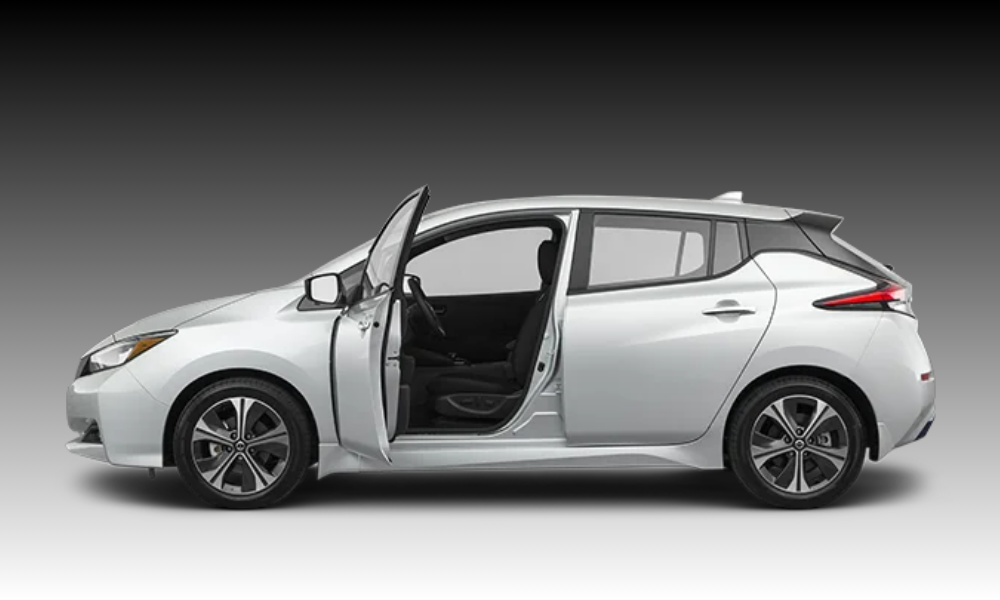
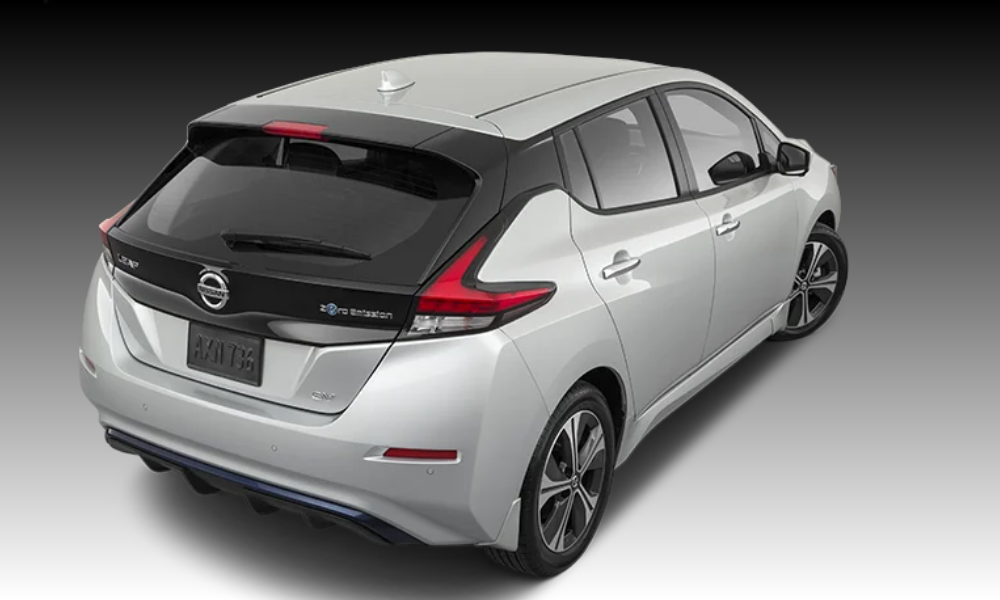
The current-generation design has been around since 2018, and it’s held up better than some expected. Compared to the original Leaf’s polarizing, almost cartoon-like proportions, this generation is genuinely clean. The front end is more cohesive, the lines are smoother, and the overall shape reads as a practical compact hatchback rather than a statement piece.
It won’t turn heads next to a Hyundai Ioniq 5 or a Kia Niro EV. But for many buyers, that’s actually fine. Not everyone wants their car announcing its powertrain to every parking lot it enters. The LED headlights on upper trims sharpen the look considerably, and brighter color choices like Scarlet Ember Tintcoat give the car more visual presence than silver or white ever will.
Driving Experience
This is where the Leaf surprises people who dismissed it as a budget appliance. The steering is well-weighted, light enough for effortless city maneuvering but with enough feedback to feel connected through a corner. It’s more engaging than the category typically demands.
City driving is where the Leaf genuinely excels. Coupled with the e-Pedal system, which allows one-pedal driving all the way to a complete stop, urban commuting becomes a relaxed and almost meditative experience once you adapt. The calibration is among the smoothest in the segment. Returning to a conventional car after a week with e-Pedal feels like something is missing.
Highway driving is composed and stable. At 70 mph the Leaf sits quietly, absorbs freeway imperfections without drama, and doesn’t ask much of the driver. ProPilot Assist on upper trims combines adaptive cruise with lane centering in a way that reduces fatigue on longer commutes. It’s trustworthy enough to rely on, and that matters.
Performance and Acceleration
The standard 40 kWh motor produces 147 horsepower and 236 lb-ft of torque, with a 0-to-60 time of around 7.4 seconds. That number undersells the real-world feel. Immediate torque delivery makes low-speed acceleration feel confident, and pulling away from traffic lights or merging onto local roads never feels uncertain.
Where it runs short is during sustained high-speed passing. The power is there, but it requires commitment. The Leaf Plus changes that calculation with 214 horsepower, 250 lb-ft of torque, and a 6.5-second 0-to-60 time. Highway on-ramps become effortless, and the motor carries speed with reserve rather than strain. If your driving involves meaningful highway time, the Plus powertrain is worth the step up.
Ride Comfort and Cabin
Nissan has always tuned the Leaf for comfort over sportiness, and it pays off. The suspension absorbs rough urban roads with a deliberate softness that never tips into mushiness. Cabin noise management is one of the Leaf’s quiet strengths: wind noise at highway speed is minimal, and the electric powertrain’s silence keeps conversations clear. Tire noise is the main intrusion, and it’s modest.
Front seats on upper trims offer solid thigh support with good visibility out front. The rear bench accommodates two adults comfortably on trips of reasonable length. Three across the back is tight, particularly for taller passengers given the tapering roofline. Climate system efficiency is good, though cold weather impacts range noticeably on the standard model.
Interior Design
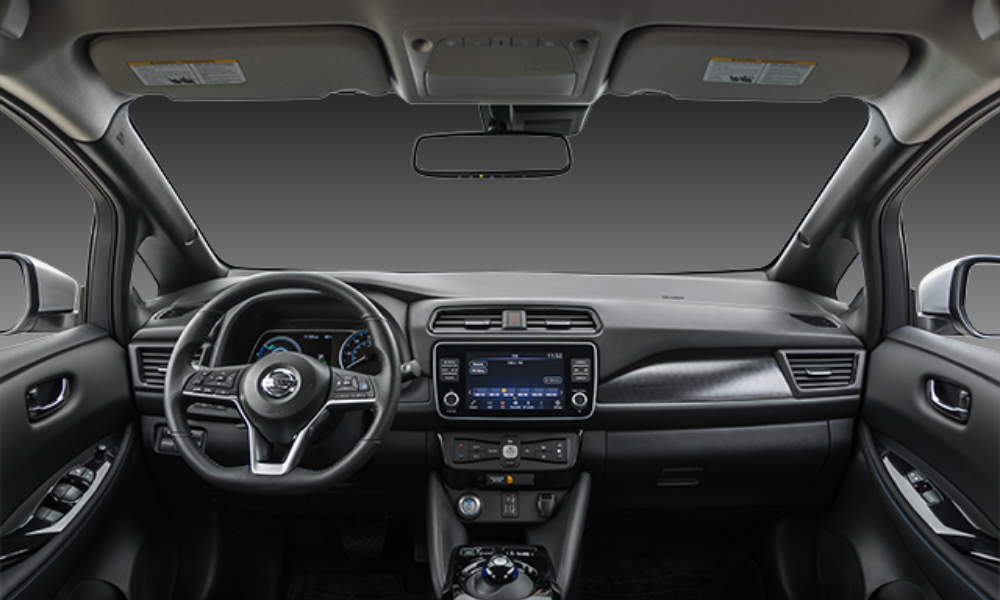
The interior tells the story of the Leaf’s age most clearly. The layout is logical, physical climate controls stay accessible, and the overall organization makes practical sense. But the materials are inconsistent. Areas you touch frequently feel reasonable. Lower door panels and dashboard sections use hard plastics that wouldn’t survive a direct comparison with newer competitors at the same price.
Upper trims do considerably better. Available leather seating and improved surface finishes at the SV Plus and SL Plus levels make the cabin feel more cohesive and complete. The blue accent stitching on seats adds personality in a cabin that otherwise keeps things businesslike. Visibility from the driver’s seat is genuinely excellent, with large windows and thin pillars making lane changes and parking easier than in many modern cars that prioritized styling over sightlines.
Technology and Infotainment
The 8-inch touchscreen works without being impressive. The interface is organized clearly, response time is acceptable, and the EV-specific energy monitoring data is genuinely useful for managing range in real time. That part Nissan got right.
Apple CarPlay and Android Auto are available on most trims but require a physical cable on all of them. No wireless option exists. In 2022 that’s an inconvenience rather than a dealbreaker, but it’s noticeable. The built-in navigation handles routing adequately, though most drivers default to Google Maps through CarPlay anyway.
ProPilot Assist is the technology highlight. The combined adaptive cruise and lane centering system is smooth, trustworthy, and genuinely reduces driver fatigue on highway commutes. It’s not hands-free, but it’s more useful than most systems at this price point. The available Bose audio system sounds noticeably better than the standard speakers and is worth the upgrade for anyone who listens to music regularly.
Fuel Consumption
The EPA rates the standard Leaf at 149 miles and the Leaf Plus at 212 miles. Both figures hold close to real-world performance under moderate conditions. Highway driving above 70 mph with climate running will reduce the standard model toward 120 to 130 miles. The Plus lands between 185 and 205 miles depending on conditions, which is a genuinely practical daily number.
The charging conversation is where things get complicated. The 50 kW CHAdeMO cap on the standard model and 100 kW on the Plus are the specs. The real issue is the connector standard itself. CHAdeMO chargers are declining at public stations as CCS has become dominant across North America. This is not a future concern. It’s a current one. Buyers should research CHAdeMO availability specifically in their area before committing. Level 2 home charging adds roughly 22 miles per hour and remains the practical backbone of Leaf ownership.
Practicality and Storage
The Leaf’s hatchback delivers 23.6 cubic feet behind the rear seat, expanding to 30 cubic feet with seats folded. Those numbers are modest compared to crossover-shaped competitors, but the flat load floor and practical opening handle weekly groceries, weekend bags, and moderate luggage without issue.
Rear door openings are wide enough to make child seat installation straightforward. Interior storage is reasonable: a covered center console bin, usable door pockets, and a small front cubby cover the basics. There is no front trunk, which is worth noting for buyers migrating from other EVs. Nothing about the storage frustrates, but nothing impresses either.
Safety and Driver Assistance Systems
The 2022 Leaf holds a five-star overall NHTSA rating, with strong side impact scores. Standard safety equipment across trims includes automatic emergency braking with pedestrian detection, rear cross traffic alert, blind spot warning, lane departure warning, and rear automatic braking.
Higher trims add ProPilot Assist and Nissan’s Intelligent Around View Monitor, a 360-degree camera system that earns its keep in tight urban parking. The safety suite is comprehensive and doesn’t require premium trims to access the fundamentals, which is a genuine strength worth acknowledging.
Worthy Competitors
Chevrolet Bolt EV: After its 2022 price cut, the Bolt offers 259 miles of range with an updated interior and CCS fast charging. For most buyers comparing these two directly, the Bolt wins on objective metrics.
Hyundai Kona Electric: Similar concept to the Leaf Plus, with a more modern interior feel. Inconsistent dealer availability has been a real-world problem that the Leaf, with Nissan’s large dealer network, doesn’t share.
Tesla Model 3: Significantly more expensive, but the Supercharger network and technology gap are real. If road trips matter to your ownership plan, the Model 3’s infrastructure advantage alone may justify the price difference.
Kia Niro EV: Offers 253 miles and a more modern feature set in a practical crossover shape. Costs more, but the value case strengthens when you count what you’re getting per dollar.
Key Strengths and Key Weaknesses
The Leaf’s strongest cards are comfort, ProPilot Assist, the e-Pedal calibration, and Nissan’s dealer network. These translate into genuine daily ownership quality that specs don’t always capture.
The weaknesses are structural. CHAdeMO infrastructure is declining. The standard model’s range is below par for 2022. The interior materials and infotainment belong to a previous product generation. These aren’t styling opinions. They’re facts about the car’s architecture that matter over a multi-year ownership period.
Which Category Does Cardrav Recommend?
The 2022 Nissan Leaf suits urban and suburban buyers who charge at home every night, commute under 100 miles daily on the standard model or 150 miles on the Plus, and want a proven EV from a manufacturer with a large, accessible dealer network. It’s particularly strong for first-time EV buyers who want a gentle, familiar entry into electric ownership.
It is not the right fit for buyers who rely on public DC fast charging, take frequent highway trips, or want current-generation technology inside the cabin.
Conclusion: Is It Worth Buying?
Yes, with honest expectations. The 2022 Nissan Leaf Review comes down to one core question: does the value justify the compromises for your specific situation? For many buyers, it does. The Leaf Plus especially makes a strong argument combining usable range, refined driving feel, and a comfort level that suits daily life well.
The CHAdeMO situation is the most important caveat. Research fast charging availability in your area before deciding. If public charging matters to your plan, the Bolt or Kona Electric will serve you better long-term. But if you’re charging at home and staying local, the Leaf remains a smart, comfortable, and well-priced path into EV ownership.
FAQ
What is the real-world range of the 2022 Nissan Leaf?
The standard 40 kWh model delivers roughly 120 to 145 miles in mixed driving depending on weather and speed. The Leaf Plus lands between 185 and 205 miles under similar conditions.
Is CHAdeMO charging a problem for the 2022 Nissan Leaf?
It’s a growing concern. CHAdeMO chargers are becoming less common as CCS dominates public infrastructure. If public fast charging is part of your ownership plan, research availability in your specific area carefully before buying.
How does the 2022 Nissan Leaf compare to the Chevrolet Bolt EV?
The Bolt offers more range and a more updated interior, with CCS charging that’s more practically accessible. The Leaf counters with a more refined ride and ProPilot Assist. The Bolt wins on pure value metrics in 2022.
Does the 2022 Nissan Leaf support Apple CarPlay?
Yes, on all trims except the base S. However, it requires a physical cable on every trim. Wireless CarPlay is not available.
Is the 2022 Nissan Leaf reliable for long-term ownership?
The Leaf has one of the longest real-world EV track records available. The main long-term concern is battery degradation. The current generation improved over the original, but it still lacks active liquid cooling, which some competitors use to better preserve long-term battery health.