2023 Nissan Leaf Review: Falling Behind Fast
The world's best-selling EV pioneer now faces a market that has moved meaningfully ahead. The 2023 Leaf is still worth considering. Just go in with your eyes open.

2023 Nissan Leaf: There’s a particular kind of respect reserved for things that were genuinely first. The Nissan Leaf was the first mass-market electric vehicle sold globally, and it did more to normalize EV ownership than almost any other car in history. That heritage counts for something. But respect for what a car was doesn’t automatically translate into a recommendation for what it is right now, and the 2023 Nissan Leaf Review has to confront that honestly.
The 2023 Leaf arrives without a meaningful update. The platform is unchanged from 2018. The CHAdeMO charging connector, which was already a growing concern in 2022, has not been addressed. The infotainment hasn’t evolved. And the range figures, useful for daily driving as they are, look increasingly modest next to what newer EVs deliver at similar prices.
What’s changed is everything around it. The Hyundai Ioniq 6 is now on sale. The Kia Niro EV delivers 253 miles with a modern interior. The Chevrolet Bolt continues offering 259 miles at a price built around accessibility. Even within Nissan’s own lineup, the Ariya’s arrival makes the Leaf’s age feel more pronounced by direct comparison.
This is not a review of a bad car. For the right buyer, the 2023 Leaf remains sensible, comfortable, and reasonably priced. But the story has shifted. In 2022, the Leaf held its ground. In 2023, it’s asking you to accept limitations that cost-comparable alternatives have already solved.
Our Opinion
The 2023 Nissan Leaf is a car the market has partially outgrown, but one that still serves a specific buyer genuinely well. If you charge at home, drive predictable daily distances, and value comfort and Nissan’s dealer network over cutting-edge technology, it remains a legitimate choice.
But the window is narrowing. CHAdeMO fast charging is a present-day problem, not a future one. The interior hasn’t kept pace with the competition. The standard model’s 149-mile range requires lifestyle accommodation that buyers spending similar money elsewhere don’t have to make. The Leaf Plus is the stronger version of this argument, but even it now faces better-equipped rivals at comparable prices.
Buy it clear-eyed, and it will likely serve you well. Buy it without understanding the compromises, and frustration may follow within the first year.
Pros and Cons
Pros:
- Comfortable, well-tuned ride for urban and suburban use
- Leaf Plus delivers 212 miles of usable real-world range
- ProPilot Assist remains one of the better affordable highway assist systems
- e-Pedal one-pedal driving is refined and genuinely practical
- Competitive base pricing for EV entry
- Extensive Nissan dealer network for service access
- Strong NHTSA five-star overall safety rating
Cons:
- No meaningful updates for 2023
- CHAdeMO DC fast charging infrastructure is actively declining
- Standard model’s 149-mile range is below competitive par
- Infotainment is noticeably dated compared to rivals
- No wireless Apple CarPlay or Android Auto on any trim
- Interior materials inconsistency remains unaddressed
- Newer competitors offer more range, faster charging, and better tech at similar prices
What’s New for 2023?
Almost nothing, and that itself is important information. Minor color adjustments and small equipment shuffles across trims represent the full scope of changes for the 2023 model year. The powertrain is unchanged. The battery options remain the same 40 kWh and 62 kWh packs. The charging architecture carries forward without modification.
In a year when several competitors made meaningful improvements, the 2023 Leaf arrives carrying the same fundamental package as 2022. Nissan’s development focus has moved to the Ariya platform. The Leaf is being managed rather than evolved. That’s a reasonable corporate decision, but for the buyer standing at a dealership in 2023, it means you are purchasing a 2022 car with a 2023 badge.
Exterior Design
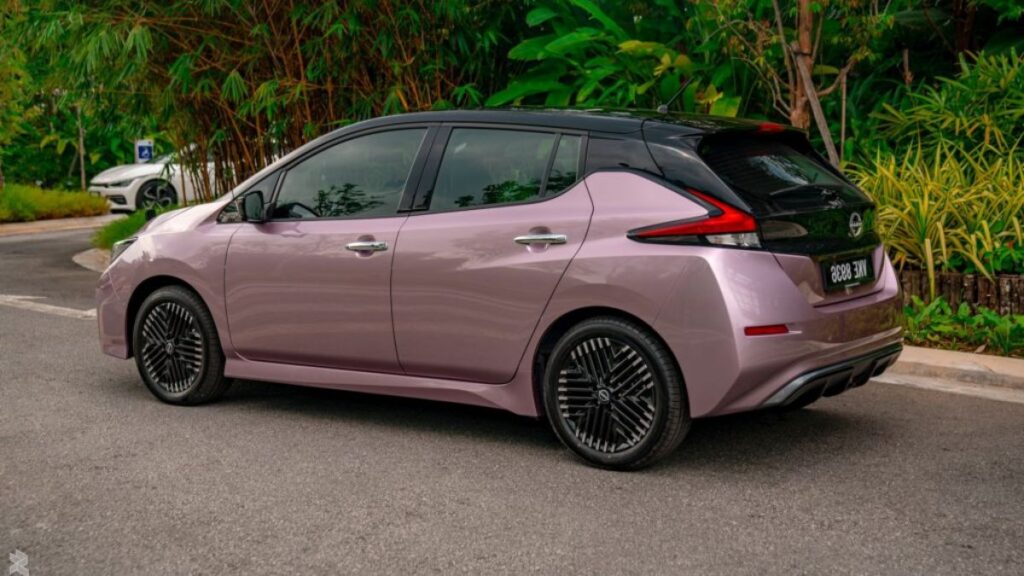
The current Leaf design is now five years old, and time has not been entirely kind to its competitive standing. The 2018 redesign was a genuine improvement over the original’s polarizing shape. The front end is clean, the lines flow logically, and the overall silhouette reads as a practical compact hatchback.
But the segment has moved. Parked next to a Kia Niro EV or a Hyundai Ioniq 5, the Leaf looks like it belongs to a different design era, because it does. The LED headlights on upper trims still look sharp at night, and bold color choices like Scarlet Ember Tintcoat give the car more presence than neutral shades allow. The build quality of the exterior panels remains solid. It’s just that styling ambition, which was never the Leaf’s priority, is increasingly what draws buyers into a showroom in 2023.
Driving Experience
The road is where the Leaf continues to make its strongest argument. The steering is light and accurate for city use, with enough feedback to feel connected without demanding driver effort. The turning radius is tight, and low-speed maneuverability in urban environments feels intuitive rather than managed.
The e-Pedal system has been refined to a point where it adapts naturally within the first few days. The transition from acceleration to regenerative braking is smooth and consistent, making it genuinely usable rather than something most drivers disable immediately. In stop-and-go traffic, it transforms the commute.
Highway behavior is stable and unfussy. The Leaf tracks straight, handles freeway imperfections without drama, and sits quietly at 70 mph. ProPilot Assist, available on upper trims, adds lane centering to adaptive cruise in a way that’s smooth enough to trust on longer highway stretches. The car drives like it was tuned by engineers who thought carefully about how people actually use a daily commuter. That’s both the Leaf’s clearest strength and its defining limitation.
Performance and Acceleration
The powertrain options are unchanged. The standard 40 kWh motor makes 147 horsepower and 236 lb-ft of torque, running 0 to 60 mph in around 7.4 seconds. In real-world city driving, the immediate torque delivery makes it feel more capable than that number implies. Pulling away from stops and navigating urban traffic feels confident and unhurried.
The strain shows at highway speeds. Sustained passing above 65 mph uses most of what the standard motor has available. It gets the job done, but not with reserve.
The Leaf Plus addresses this directly. At 214 horsepower and 250 lb-ft of torque, it reaches 60 mph in approximately 6.5 seconds and carries highway speed with genuine composure. On-ramps feel effortless, and the motor doesn’t sound like it’s working hard at cruise. For buyers whose commute involves significant freeway time, the Plus powertrain changes the daily experience meaningfully, not just the spec sheet.
Ride Comfort and Cabin
Comfort remains the Leaf’s most consistent quality. The suspension is tuned toward the softer end of the spectrum without sacrificing body control, and it handles rough urban surfaces with a composure that makes the daily commute noticeably less fatiguing than in harder-sprung competitors.
Cabin noise management is genuinely good. Wind noise at highway speed is minimal, tire noise is modest, and the electric powertrain’s silence lets audio and conversation come through clearly. These are qualities you notice every day, even if they don’t make headlines.
Front seats on upper trims offer solid support for average-length trips. Extended drives over two to three hours may remind you of the seats’ limitations. Rear passengers get adequate room for two adults, though the tapering roofline and modest floor-to-ceiling height make the back seat less welcoming for taller riders. Cold weather affects range more noticeably on the standard model than the Plus, and the Leaf’s lack of active liquid battery thermal management is a real consideration in northern climates.
Interior Design
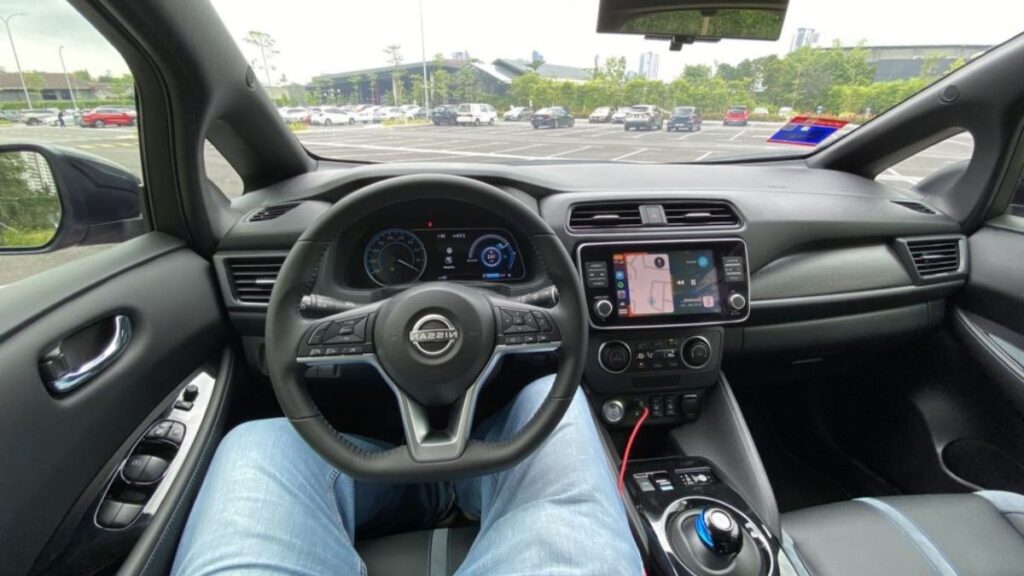
The interior is where the Leaf’s age is most apparent, and it’s worth being direct about it. The layout is logical. Physical climate controls remain accessible. The driver-facing information is organized sensibly. But sitting in a 2023 Kia Niro EV and then returning to the Leaf makes the material quality gap obvious without requiring any particular expertise.
Lower door panels and dashboard sections use hard plastics that competitors at this price have improved. The center console design feels like it belongs to a different product generation, because it does.
Upper trims close the gap meaningfully. Available leather seating, heated front seats and steering wheel, and blue accent stitching at SV Plus and SL Plus levels make the cabin feel more considered and complete. Visibility from the driver’s seat is excellent throughout the range, with large windows and thin pillars that make urban maneuvering easier than in many newer, more stylistically ambitious designs.
Technology and Infotainment
The 8-inch touchscreen handles its functions without distinction. The interface is organized well enough to navigate without frustration, but response time is occasionally sluggish, and the overall software experience doesn’t match what buyers now encounter in competitors at this price point.
Apple CarPlay and Android Auto are standard on most trims but require a physical cable on all of them. In 2023, with wireless connectivity available on many similarly priced vehicles, this is a noticeable step behind. The built-in navigation functions, but most drivers will use Google Maps through CarPlay for actual routing and traffic management.
ProPilot Assist remains the technology highlight. The combined adaptive cruise and lane centering calibration is smooth and reliable on highway driving, reducing fatigue in a meaningful way. It’s not hands-free, but it’s more genuinely useful than many systems that cost more. The available Bose audio is a worthwhile upgrade for drivers who prioritize sound quality.
Fuel Consumption
The EPA ratings are unchanged: 149 miles for the standard model, 212 miles for the Leaf Plus. Real-world performance holds close to those numbers under moderate conditions. Highway driving above 70 mph with climate control running pulls the standard model toward 120 to 130 miles. The Plus typically lands between 185 and 205 miles in real-world mixed use.
The standard model’s 149-mile ceiling is the harder conversation in 2023. The Chevrolet Bolt delivers 259 miles. The Kia Niro EV delivers 253. The gap has widened rather than narrowed, and for buyers who occasionally need flexibility, those extra miles represent real freedom rather than just a marketing number.
The CHAdeMO charging situation has crossed from future concern into present reality. Public CHAdeMO charger counts are declining as networks prioritize CCS expansion. Buyers who plan to charge exclusively at home will experience this limitation least. Anyone relying on public fast charging should audit their local infrastructure before making a decision. Level 2 home charging adds roughly 22 miles per hour and remains the practical foundation of Leaf ownership for most drivers.
Practicality and Storage
The Leaf’s 23.6 cubic feet of cargo space behind the rear seat expanding to 30 cubic feet with seats folded handles most daily needs without issue. The flat load floor and practical hatch opening manage groceries, weekend bags, and moderate luggage comfortably. Crossover-shaped competitors offer more flexibility for larger items, but the Leaf’s hatchback format serves a typical one or two-person household well.
Rear door openings are wide, making child seat installation straightforward. Interior storage covers the basics with a center console bin, functional door pockets, and a small front cubby. There is no front trunk, worth noting for buyers who have come to rely on that feature in other EVs. Nothing about the storage excites, but nothing frustrates either.
Safety and Driver Assistance Systems
The 2023 Leaf carries forward its five-star overall NHTSA rating and solid IIHS results from the current generation. Standard safety equipment across all trims includes automatic emergency braking with pedestrian detection, rear automatic braking, blind spot warning, rear cross traffic alert, and lane departure warning.
Upper trims add ProPilot Assist and the Intelligent Around View Monitor, the 360-degree camera system that earns genuine appreciation in tight urban parking situations. The safety suite is comprehensive, and fundamental protection features don’t require stepping up to premium trim levels. That’s a real and consistent strength of the Leaf across its generation.
Worthy Competitors
Chevrolet Bolt EV: More range, CCS charging infrastructure, and a more updated interior at a comparable price. The Bolt is the sharper value argument for most buyers in 2023.
Hyundai Kona Electric: More modern technology package with competitive range. Where it’s available, it’s a genuine alternative. Inventory availability has been the persistent real-world problem.
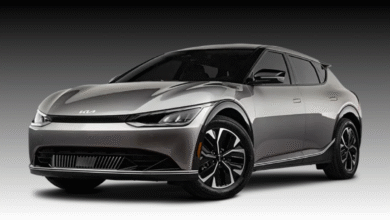
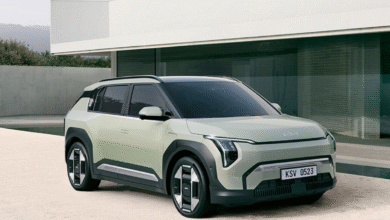
Kia Niro EV: The strongest head-to-head competitor. At 253 miles, with CCS charging and a significantly more modern interior, the Niro EV costs more but delivers meaningfully more for the money. Worth a direct comparison before deciding.
Tesla Model 3: Still the aspirational benchmark on technology and charging infrastructure. The Supercharger network advantage on road trips is not a small thing. The price gap is real, but so is what you’re getting for it.
Key Strengths and Key Weaknesses
The Leaf’s genuine strengths are its comfort, the e-Pedal calibration, ProPilot Assist’s highway effectiveness, and Nissan’s dealer network accessibility. These are daily ownership qualities that matter every week, not just on paper.
The weaknesses are structural rather than cosmetic. CHAdeMO infrastructure will continue declining. The platform will not receive new technology integration at this stage of its life. The range gap between the standard model and current competitors has widened. Buyers planning five or more years of ownership should weigh these facts carefully.

Which Category Does Cardrav Recommend?
The 2023 Nissan Leaf is the right choice for buyers who charge at home, drive predictable urban or suburban routes within the car’s range, and value a comfortable, well-supported ownership experience over the latest technology. The Leaf Plus version of this recommendation is considerably stronger than the standard model.
It is not the right choice for buyers who need public DC fast charging regularly, want current-generation infotainment, or are planning long-term ownership that requires infrastructure compatibility to remain strong over time.
Conclusion: Is It Worth Buying?
The 2023 Nissan Leaf Review arrives at a more conditional answer than previous years. In the right situation, yes. The comfort, pricing, and reliable daily driving experience are genuine. Nissan’s dealer network remains one of the most practical reasons to choose this car when service accessibility matters to your decision.
But buy it honestly. The CHAdeMO charging standard is not a speculative future concern anymore. The technology inside the cabin is not current. The standard model’s range requires accepting limitations that cost-competitive alternatives have removed. If those limitations fit your life, the Leaf will serve you reliably. If they don’t, the Bolt EV and Kia Niro EV both deserve serious consideration before you commit.
FAQ
Is the 2023 Nissan Leaf a good buy compared to the Chevrolet Bolt EV?
For most buyers, the Bolt offers more range, CCS charging, and a more updated interior at a comparable price. The Leaf counters with a more refined ride and ProPilot Assist. On objective daily-use metrics, the Bolt wins for most buyers in 2023.
What is the real-world range of the 2023 Nissan Leaf?
The standard 40 kWh model delivers approximately 120 to 140 miles in real-world mixed driving. The Leaf Plus lands between 185 and 205 miles depending on speed, weather, and climate control use.
Is CHAdeMO charging still practical for the 2023 Nissan Leaf?
It is becoming less so. Public CHAdeMO availability is declining as CCS becomes the dominant standard. Buyers who charge exclusively at home will feel this least. Anyone relying on public fast charging should research local infrastructure before deciding.
Does the 2023 Nissan Leaf come with Apple CarPlay?
Yes, on all trims except the base S. It requires a physical cable on all trims. Wireless CarPlay is not available on the 2023 Leaf.
How does the 2023 Nissan Leaf handle cold weather?
Cold weather reduces range more noticeably than in some competitors because the Leaf lacks active liquid battery thermal management. Owners in colder climates can expect range reductions of 20 to 30 percent in serious cold. Preconditioning the battery while plugged in helps, but the limitation is real for buyers in northern states.