The 2026 Honda Passport walks into a segment that has been quietly reshaping itself for years. The Toyota 4Runner went hybrid and body-on-frame proud. The Jeep Grand Cherokee kept leaning on brand heritage even as its reliability reputation took hits. The Subaru Outback stayed the sensible, slightly boring choice. Into that mix drops a Passport that no longer feels like a Pilot with a costume on.
This is the first ground-up redesign the Passport has had since it launched, and Honda used the opportunity to fix the two biggest complaints owners had. The old Passport looked derivative and drove like a tall minivan. The new one has its own face, a stiffer structure, and a TrailSport trim that can actually back up its marketing photos.
It slots between the CR-V and the three-row Pilot, aimed squarely at buyers who want two rows, real cargo space, and enough ground clearance to leave pavement without regret. That is a specific customer, and Honda seems to know exactly who they are building this for.
Our opinion after digging through the specs, trims, and Honda’s own engineering claims is that this is the most convincing Passport Honda has ever built. It isn’t perfect, but it closes the gap to the established off-road SUVs faster than we expected.
Our Opinion
The 2026 Passport earns its spot on midsize SUV shopping lists through real substance, not just a redesign. The V6 is stronger and smoother than before, the TrailSport hardware is legitimate, not cosmetic, and the interior finally feels like it belongs in a $45,000 vehicle instead of a rental fleet special.
The weak points are just as clear. Fuel economy trails hybrid rivals like the 4Runner by a meaningful margin, and Honda still has not offered a hybrid or turbo alternative to the lone V6. If you want electrification in this shape of vehicle, you are shopping elsewhere.
Pros and Cons
Pros
- Stronger, smoother V6 with a quick-shifting 10-speed automatic
- TrailSport hardware that holds up off-road, not just in the brochure
- Redesigned cabin with real material and tech upgrades
- Top Safety Pick+ rating from IIHS and a 5-star NHTSA score
- Wider body brings measurably more interior room
Cons
- No hybrid or turbocharged engine option
- Fuel economy lags behind class-leading rivals
- Built-in HomeLink garage door opener dropped fleet-wide in favor of a paid MyQ subscription
- TrailSport Elite pricing creeps close to $54,000 before options
What’s New?
Everything, essentially. The 2026 Honda Passport is a full fourth-generation redesign, not a refresh. The body is about an inch wider than the outgoing model, which sounds small on paper but translates into real shoulder and hip room once you are sitting in it.
Under the hood, the 3.5-liter V6 now makes 285 horsepower and 262 lb-ft of torque, up from the previous generation, and it pairs with a new 10-speed automatic that replaces the old nine-speed. Honda also upgraded the all-wheel-drive system to a second-generation i-VTM4 setup with a dedicated Trail Torque Logic mode for low-traction situations.
Inside, a 12.3-inch touchscreen and a 10.2-inch digital gauge cluster replace the smaller, dated displays from before. Google built-in support arrives for the first time on this model, alongside standard wireless Apple CarPlay and Android Auto. Seven trim levels are available for 2026, ranging from the RTL up through the TrailSport Elite Blackout.
Exterior Design
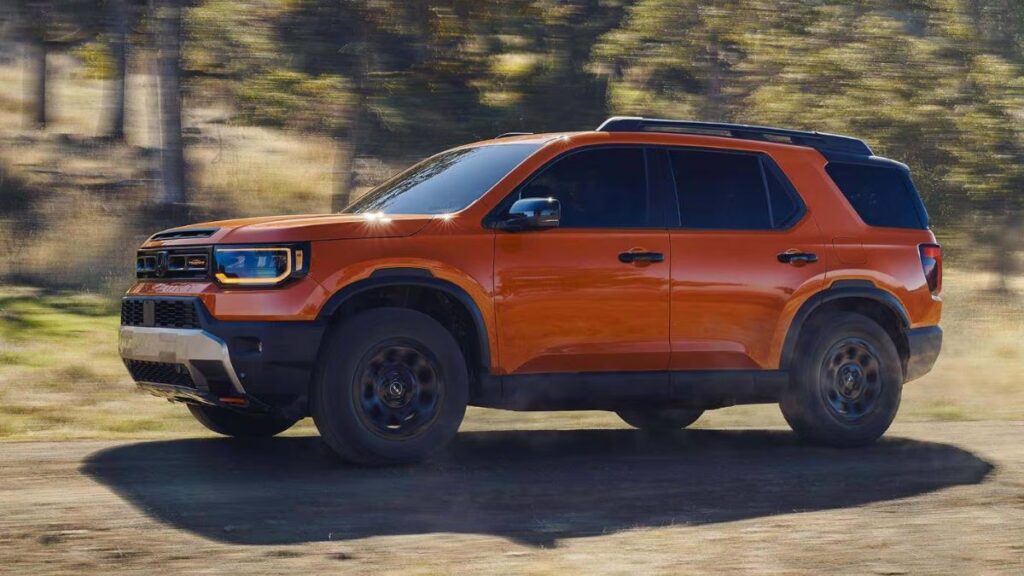
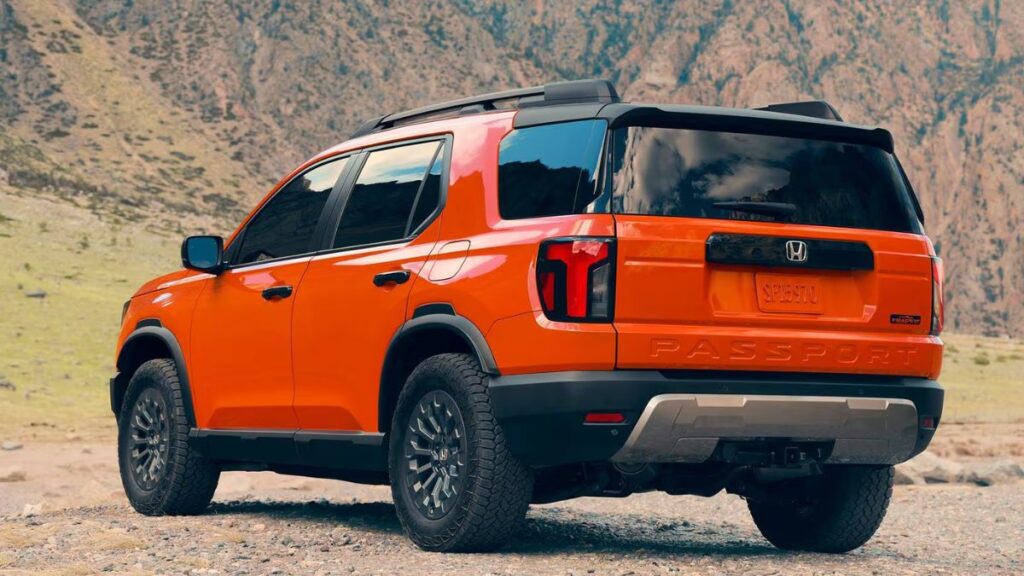
The old Passport looked like Honda took a Pilot, chopped the third row, and called it a day. This one does not. The grille is wider and more upright, the fenders are flared just enough to look purposeful, and the roofline sits with a squarer, more planted stance than before.
TrailSport models push the look further with amber daytime running lights, gloss black roof rails, and available all-terrain tires that fill out the wheel wells properly. Next to a 4Runner, the Passport reads as more contemporary. Next to a Grand Cherokee, it looks less premium but far tougher than the model it replaces.
We would not call it beautiful in the way a coupe-styled crossover aims to be. It was not designed to be. It was designed to look like it can take a hit on a fire road, and it succeeds at that specific job.
Driving Experience
The 2026 Honda Passport separates itself from its predecessor most clearly behind the wheel. The extra horsepower and torque show up from the first stab of the throttle, and the 10-speed automatic shifts with far less hunting than the old nine-speed ever managed. Around town, it feels composed rather than lazy.
On the highway, the wider track pays off in steadier lane changes and less body roll than you would expect from something with this much ground clearance. Steering weight is light, maybe a touch too light for our taste, but accurate enough that you are never guessing where the front tires are pointed.
Take a TrailSport off-road and the improvements compound. Hill Descent Control is smooth instead of grabby, the suspension soaks up washboard gravel without transmitting every bump into the cabin, and the 23-degree approach angle actually lets you tackle rutted trailheads without scraping the front fascia. This is where the excitement begins, and it is a distinctly different feeling than the outgoing Passport ever offered.
How Fast Is the 2026 Honda Passport?
Every 2026 Passport trim uses the same 3.5-liter V6 with Variable Cylinder Management, producing 285 horsepower and 262 lb-ft of torque. That output goes exclusively through a 10-speed automatic and standard all-wheel drive. There is no four-cylinder, no hybrid, and no turbo option, so what you see is what every buyer gets.
In practice, the V6 pulls with more urgency in the midrange than the horsepower figure suggests, which matters more in daily driving than a big peak number. Passing on two-lane roads feels confident rather than anxious. Towing capacity tops out at 5,000 pounds across the lineup, enough for a mid-size boat or a small camper, though Honda recommends premium fuel once you are pulling more than 3,500 pounds.
The TrailSport and TrailSport Elite trims post slightly lower EPA numbers than the RTL, a trade-off for their all-terrain tires and off-road gearing. It is not a huge performance ceiling, but it is a real one, and Honda has not signaled any plans to raise it with a turbocharged variant.
Is the 2026 Honda Passport Comfortable?
Ride quality on paved roads has clearly improved. The old Passport could feel busy over broken pavement, especially on TrailSport trims. The new chassis irons out small imperfections better, and the cabin stays quieter at highway speed thanks to added sound deadening around the wheel wells.
Where it falls short of true luxury SUVs is in secondary ride motions. Over long highway stretches with expansion joints, you will still feel a bit of float that a Grand Cherokee’s air suspension option would smooth out. Honda does not offer air suspension here at any price, so that ceiling is fixed.
Front seats are supportive for long drives, with standard heating and available ventilation on higher trims. Tri-zone climate control is standard across the board, which is a real convenience for families who argue about cabin temperature.
Interior Design and Luxury
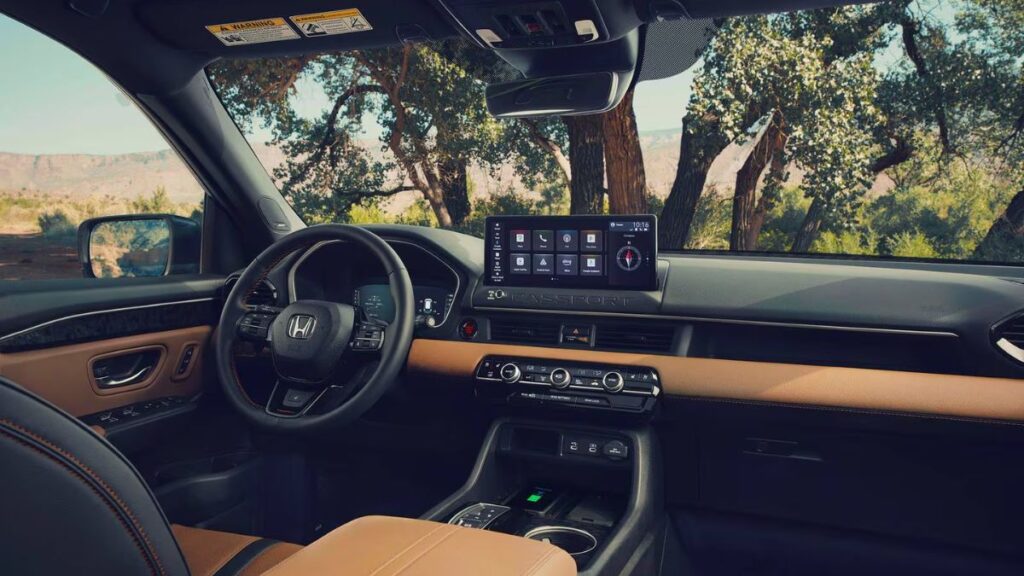
The dashboard layout is a clear step up from the outgoing model, with physical climate controls kept alongside the new touchscreen instead of buried inside a menu. That is a small thing that matters every single day you own the vehicle.
Material quality varies by trim in a way Honda is not shy about. The RTL uses a durable synthetic leather designed to shrug off the daily wear a family SUV takes on, without the upkeep genuine hide demands. TrailSport Elite adds a brown interior option and softer touch points, though it still stops short of what you would find in a more upscale competitor.
Rear seat legroom is close to what front passengers get, which is unusual in this class and a real plus for taller adult passengers riding in back. Fourteen cupholders sized for 32-ounce bottles is a small detail, but road-trip families will notice it within the first week of ownership.
Technology and Infotainment
The new 12.3-inch touchscreen is a massive improvement over the smaller, laggier unit it replaces. Menus load quickly, wireless Apple CarPlay and Android Auto connect without the dropouts that plagued some earlier Honda systems, and Google built-in support means native navigation and voice commands are available without a phone tethered at all.
The 10.2-inch digital instrument cluster is configurable and easy to read at a glance, which matters more than it sounds like it should on a vehicle you might be driving down a rutted trail while trying not to look away from the windshield for long. Wireless charging and Alexa built-in round out the standard tech package.
If there is a complaint, it is a specific one. Honda dropped the built-in HomeLink garage door transmitter from the redesigned Passport entirely, replacing it with MyQ Connected Garage integration through the HondaLink app after a 30-day free trial. Owners can retrofit a HomeLink mirror themselves, but it is an odd workaround to require on a vehicle otherwise stacked with convenience features.
Fuel Consumption
Honda rates the RTL trims at 19 city, 25 highway, and 21 combined miles per gallon. Step into a TrailSport or TrailSport Elite and those numbers drop slightly to 18 city, 23 highway, and 20 combined, a fair trade for the added off-road hardware and heavier all-terrain tires.
There is no sugarcoating this section. A hybrid Toyota 4Runner will beat these numbers by a wide margin, and buyers cross-shopping purely on fuel economy should look there first. The Passport runs on regular 87-octane gas, which softens the blow somewhat, and its 18.5-gallon tank keeps total range reasonable even without class-leading efficiency.
Practicality and Storage
Cargo space is a real strength. With the rear seats folded, the 2026 Honda Passport offers up to 83.8 cubic feet of space, and 44.0 cubic feet behind the second row with seats upright, per Honda’s official specifications, enough to swallow flat-pack furniture or a full camping load without straining.
The five-passenger layout, rather than a cramped third row squeezed in like some rivals attempt, means the space that exists is usable instead of theoretical. Roof rails come standard and can support an accessory platform rated for real cargo weight, which matters for buyers who actually use their SUV for gear hauling rather than grocery runs.
Safety and Driver Assistance Systems
Every 2026 Passport comes standard with the full Honda Sensing suite, including collision mitigation braking with pedestrian detection, forward collision warning, lane keeping assist, blind spot monitoring, traffic sign recognition, and adaptive cruise control with low-speed follow. None of it is locked behind a higher trim, which is not something every competitor can claim.
The IIHS awarded the redesigned Passport a Top Safety Pick+ rating, its highest honor, with Good scores across small overlap front, updated moderate overlap front, updated side, and headlight evaluations. NHTSA testing has similarly returned a 5-star overall score. Eight standard airbags, the most Honda has ever fitted to this model, include a redesigned three-chamber front passenger airbag aimed at reducing head strain in angled collisions.
Worthy Competitors
The Toyota 4Runner remains the Passport’s closest rival. Its hybrid powertrain delivers better fuel economy, and its body-on-frame construction makes it the stronger choice for serious off-road enthusiasts. The trade-off is a firmer ride and an interior that still feels less modern than Honda’s.
The Jeep Grand Cherokee appeals to buyers looking for a more premium driving experience, with available air suspension and a more upscale cabin. However, its long-term reliability record remains a concern for some shoppers, making the Passport the safer long-term bet.
The Subaru Outback targets a different audience. It is less expensive, easier to maneuver, and offers excellent all-weather capability, but it cannot match the Passport’s towing capacity, cargo space, or genuine off-road performance.
Key Strengths and Key Weaknesses
The Passport’s greatest strength is that Honda finally delivered an SUV that lives up to its adventure-focused image. The TrailSport trims offer meaningful off-road upgrades instead of cosmetic changes, while the redesigned chassis, smoother 10-speed automatic, and refined V6 make it a far more enjoyable everyday vehicle than its predecessor. A spacious cabin, strong safety credentials, and straightforward technology package further strengthen its appeal.
Its biggest drawback is the lack of an electrified powertrain at a time when many midsize SUV buyers expect better fuel efficiency. Rivals like the Toyota 4Runner now offer hybrid options, giving them an advantage for long-term fuel costs. Buyers seeking maximum efficiency may therefore find the Passport less compelling despite its many improvements.
Which Category Does Cardrav Recommend?
For most buyers, the TrailSport trim is the sweet spot in the 2026 Honda Passport lineup. The price increase over the RTL is reasonable considering the additional off-road hardware, improved tires, distinctive styling, and extra convenience features. It strikes the best balance between everyday comfort and genuine trail capability without pushing the price into luxury-SUV territory.
If your driving rarely extends beyond city streets and highways, the RTL remains the smarter value and delivers the same V6 powertrain with lower ownership costs. On the other hand, the TrailSport Elite is best reserved for buyers who specifically want its premium features and are comfortable spending several thousand dollars more. For the majority of shoppers, however, the standard TrailSport offers the strongest value in the lineup and is the version Cardrav would confidently recommend.
Conclusion: Is It Worth Buying?
Yes, with a clear caveat. If you want a midsize SUV that can actually handle a dirt road weekend and still feel composed on a Monday commute, the 2026 Honda Passport delivers on that promise better than it ever has before. The redesign is not cosmetic. It touches the powertrain, the chassis, the interior, and the safety architecture all at once.
If fuel economy is your top priority, or you specifically want a hybrid powertrain in this body style, look at the 4Runner instead and accept its older interior in exchange for better mpg. For everyone else cross-shopping this segment, the Passport now belongs in the conversation on merit, not just on price.
FAQ
Is the 2026 Honda Passport a good SUV to buy?
Yes. The 2026 Honda Passport combines a stronger V6, real off-road capability on TrailSport trims, and top-tier safety ratings, making it one of the more well-rounded midsize SUVs currently on sale.
What engine does the 2026 Honda Passport use?
Every 2026 Honda Passport uses the same 3.5-liter V6 with Variable Cylinder Management, rated at 285 horsepower and 262 lb-ft of torque, paired with a 10-speed automatic transmission and standard all-wheel drive.
Is the 2026 Honda Passport body-on-frame?
No. The 2026 Honda Passport uses a unibody platform, like the CR-V and Pilot, rather than the body-on-frame construction found on the Toyota 4Runner.
What is the towing capacity of the 2026 Honda Passport?
All 2026 Honda Passport trims are rated to tow up to 5,000 pounds when properly equipped with the accessory towing package.
Does the 2026 Honda Passport come with a hybrid engine?
No. Every 2026 Passport uses the same 3.5-liter V6 paired with a 10-speed automatic transmission and standard all-wheel drive. No hybrid or turbocharged option is currently offered.
What is the price range for the 2026 Honda Passport?
Pricing runs from roughly the mid-$40,000s for the base RTL trim up to the low-$50,000s for a fully loaded TrailSport Elite Blackout, before options and destination charges.
How does the 2026 Honda Passport compare to the Toyota 4Runner?
The Passport offers a more modern interior and stronger everyday drivability, while the 4Runner counters with a hybrid option and slightly better fuel economy for buyers prioritizing efficiency over on-road refinement.