For years, the 2023 Honda Pilot has been one of the safest choices in the three-row SUV segment. It never tried to be the fastest, the most luxurious, or the most adventurous option in its class. Instead, Honda focused on what many family buyers actually need: generous passenger space, long-term reliability, strong resale value, and an easy-to-live-with driving experience. That formula helped the Pilot become one of the most recognizable family SUVs in North America, competing directly with vehicles such as the Kia Telluride, Hyundai Palisade, Toyota Highlander, Nissan Pathfinder, and Ford Explorer.
The 2023 Honda Pilot represents far more than a routine redesign. This model launches the fourth-generation Pilot and introduces one of the most comprehensive updates in the vehicle’s history. Honda increased the overall size, improved passenger accommodations, redesigned the cabin, upgraded the technology package, and developed a more capable version of its intelligent all-wheel-drive system. The lineup also gained a more serious TrailSport model that was engineered to handle genuine off-road use rather than simply offering rugged styling cues.
As a result, the Pilot enters one of the most competitive segments in the automotive market with a stronger argument than ever before. It remains practical and family-focused, but it now feels more refined, more capable, and more versatile than the outgoing model. The question is whether these improvements are enough to challenge the segment leaders and justify choosing the Pilot over newer rivals that have dominated buyer attention in recent years.
Our Take
The 2023 Honda Pilot is the most complete version of Honda’s three-row SUV to date. While it may not deliver the sporty handling of some rivals or the fuel efficiency offered by hybrid alternatives, it excels in the areas that matter most to families. Passenger comfort is excellent across all three rows, cargo capacity is generous, technology is finally competitive, and the redesigned cabin feels significantly more upscale than before.
What impresses us most is how Honda managed to improve the Pilot’s capability without sacrificing its everyday usability. The new TrailSport trim adds genuine off-road credibility, while the rest of the lineup remains comfortable, quiet, and easy to drive. For buyers who need a dependable family SUV that can handle road trips, daily commuting, and occasional outdoor adventures, the Pilot remains one of the strongest choices in its class.
Pros & Cons
Pros
- Spacious third row that can comfortably accommodate adults
- Strong naturally aspirated V6 engine with smooth power delivery
- Excellent cargo space and family-friendly storage solutions
- User-friendly technology and physical controls
- TrailSport model offers real off-road capability
- Comprehensive standard safety technology
Cons
- Third-row power-folding seats are not available
- Fuel economy trails some competitors and hybrid alternatives
- No hybrid powertrain option
- Handling is competent but not particularly engaging
- Upper trims become expensive compared to some rivals
What’s New for 2023
The 2023 Honda Pilot enters an all-new generation and receives its most significant update in years. Honda redesigned the SUV from the ground up with a longer wheelbase, wider track, and a more rugged exterior appearance intended to move the Pilot away from its minivan-like image. The cabin has been completely reworked with improved materials, a more modern dashboard layout, and additional passenger space throughout all three rows.
Power comes from a revised 3.5-liter V6 engine producing 285 horsepower, paired exclusively with a new 10-speed automatic transmission. Honda also upgraded its available i-VTM4 all-wheel-drive system, allowing improved torque distribution and better traction in challenging conditions. Buyers looking for adventure can now choose the new TrailSport trim, which adds all-terrain tires, increased ground clearance, steel skid plates, off-road suspension tuning, and a dedicated TrailWatch camera system.
Technology improvements are equally important. Wireless Apple CarPlay and Android Auto are available on most trims, larger infotainment screens are offered, and Honda expanded the standard safety suite. Combined, these updates make the 2023 model feel considerably more modern and competitive than the Pilot it replaces.
Exterior Design
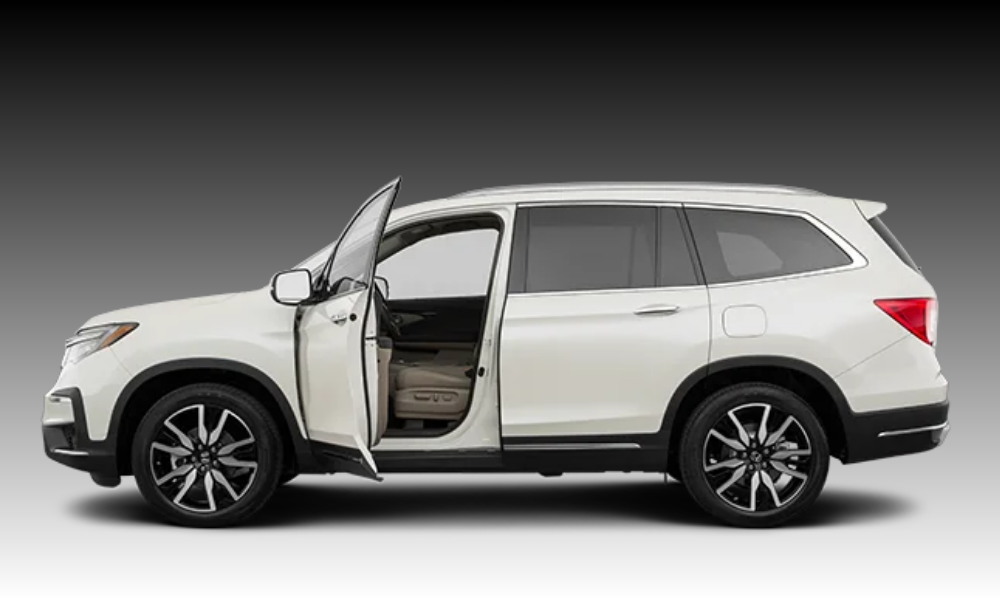
Honda gave the Pilot a more upright and confident design for 2023. The longer hood, squared-off proportions, and broader stance create a tougher appearance that better aligns with traditional SUVs. While previous generations occasionally drew comparisons to minivans, the new Pilot looks more substantial and purposeful from every angle.
The front end features a larger grille flanked by slim LED headlights, while pronounced fenders and cleaner body lines give the SUV a more athletic presence. Higher trims benefit from additional black exterior accents, larger wheels, and upgraded lighting elements that help distinguish them from entry-level models. The TrailSport trim stands out further with unique styling details, orange badging, skid plates, and all-terrain tires that signal its off-road intentions.
Despite the more rugged appearance, Honda avoided excessive styling gimmicks. The Pilot remains clean, functional, and likely to age gracefully over time. It may not attract as much attention as some competitors, but its design emphasizes durability and practicality rather than short-lived trends.
Driving Experience
Behind the wheel, the 2023 Honda Pilot delivers exactly what most family SUV buyers want: confidence, comfort, and predictability. The steering is precise enough for daily driving, visibility is excellent, and the vehicle feels composed whether navigating city traffic or covering hundreds of miles on the highway.
The redesigned chassis contributes to a noticeably more refined driving experience than the outgoing model. Road imperfections are absorbed effectively, body motions remain controlled, and cabin noise is reduced at cruising speeds. The Pilot does not attempt to be a performance SUV, but it feels stable and secure in situations that matter most to family buyers.
One of the biggest surprises is the TrailSport model. Unlike many adventure-themed trim packages that focus primarily on appearance, the Pilot TrailSport was engineered with genuine off-road capability in mind. Its upgraded all-wheel-drive system, increased ground clearance, and specialized suspension tuning allow it to tackle rough trails with far more confidence than most three-row crossovers.
Drivers seeking sharp handling may still prefer alternatives such as the Mazda CX-90 or certain versions of the Ford Explorer. However, for buyers who prioritize comfort, long-distance travel, family usability, and occasional outdoor adventures, the Pilot strikes an excellent balance that is difficult to fault.
Performance & Acceleration
Every 2023 Honda Pilot is powered by a naturally aspirated 3.5-liter V6 engine producing 285 horsepower and 262 lb-ft of torque. While many competitors have transitioned to turbocharged four-cylinder engines, Honda continues to rely on a traditional V6 that prioritizes smoothness and predictable power delivery over outright performance numbers.
The engine is paired with a 10-speed automatic transmission that shifts smoothly and keeps the V6 within its optimal power band. Acceleration is respectable for a midsize three-row SUV, with enough power for highway merging, passing slower traffic, and carrying a full load of passengers without feeling strained. The Pilot is not designed to be a performance-oriented SUV, but it rarely feels underpowered in everyday driving situations.
One advantage of the V6 is its refined character. Power arrives progressively without the sudden surge sometimes associated with turbocharged engines, making the Pilot easy to drive in urban environments and during long-distance road trips. Buyers who prioritize smooth operation over aggressive acceleration will likely appreciate Honda’s approach.
Properly equipped models can tow up to 5,000 pounds, making the Pilot capable of handling small boats, utility trailers, and recreational equipment. That capability adds another layer of versatility for families who need more than basic transportation.
Ride Comfort & Cabin Refinement
Comfort has always been one of the Pilot’s strengths, and the 2023 model continues that tradition while introducing noticeable improvements in refinement. The suspension is tuned to absorb rough pavement effectively, helping the Pilot maintain a composed and comfortable ride even on less-than-perfect roads.
Wind and road noise are well controlled at highway speeds, creating a quieter cabin than the previous generation. The improvements become particularly noticeable during long road trips, where reduced noise levels and supportive seating contribute to a more relaxed driving experience. Honda’s front seats provide excellent long-distance comfort, while upper trims add ventilation, heating, and additional adjustment options.
The Pilot’s family-friendly nature also makes it an excellent choice for buyers considering alternatives such as the Honda’s long-time rivals. Shoppers comparing this SUV with the Toyota Highlander, Kia Telluride, or Hyundai Palisade will find that the Pilot remains one of the most comfortable vehicles in the segment, especially when carrying passengers in all three rows. Those looking for a more premium driving experience may also want to explore the BMW X5 and Infiniti QX55 reviews available on Cardrav, although both target a different audience and price range.
While the Pilot is not as athletic as some competitors, its balance between ride quality, refinement, and everyday usability is among the best in the class. It feels engineered for real families rather than enthusiastic drivers, and that focus works in its favor.
Interior & Practicality
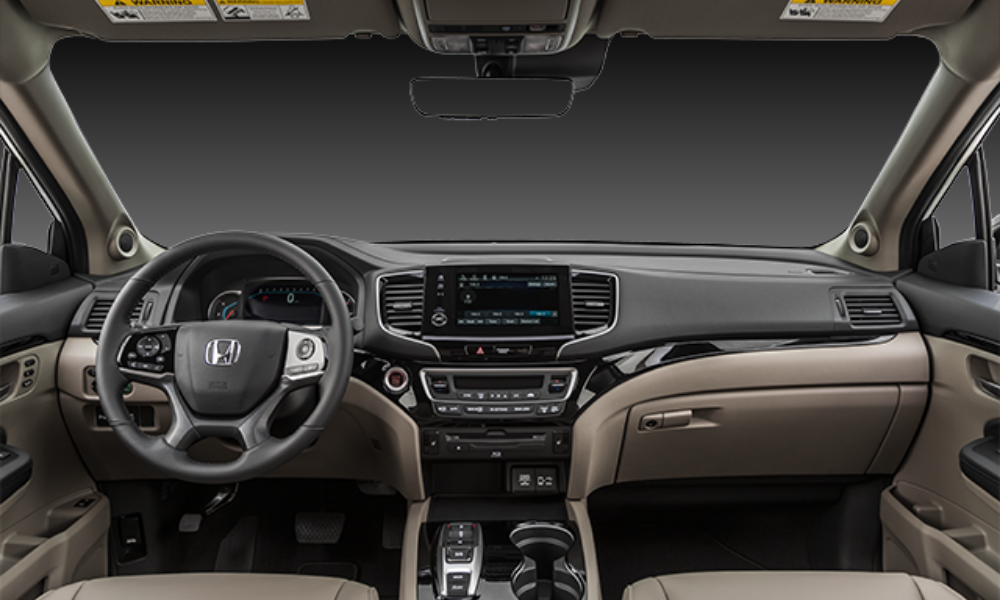
The interior is arguably where the 2023 Honda Pilot makes its biggest leap forward. Honda redesigned the cabin with higher-quality materials, improved ergonomics, and a more modern layout that immediately feels more upscale than the outgoing model. The dashboard design is clean and functional, with physical controls that remain easy to use while driving.
Passenger space is excellent throughout the cabin. Front-seat occupants enjoy generous headroom and legroom, while the second row offers enough space for adults to travel comfortably on longer journeys. Access to the third row is easier than before, and unlike many competitors, the rear seats are genuinely usable for adults rather than being reserved exclusively for children.
Practicality is a major strength. Depending on trim level, the Pilot can seat up to eight passengers, while select versions feature a removable second-row center seat that can be stored beneath the cargo floor when not needed. This clever design allows owners to switch between maximum passenger capacity and a more spacious seating arrangement without sacrificing flexibility.
Cargo space is equally impressive. There is useful storage behind the third row for groceries and everyday items, while folding the rear seats creates a large and versatile cargo area suitable for family vacations, sports equipment, or home-improvement projects. Numerous storage bins, cupholders, charging points, and small-item compartments are distributed throughout the cabin, reinforcing the Pilot’s reputation as one of the most practical family SUVs on the market.
Rather than chasing luxury for its own sake, Honda focused on creating a cabin that works exceptionally well in everyday life. The result is an interior that may not be the flashiest in the segment but remains one of the smartest and most functional.
Technology & Infotainment
Honda made significant improvements to the Pilot’s technology package for 2023, addressing one of the biggest weaknesses of the previous generation. Most trims feature a responsive 9-inch touchscreen infotainment system with a cleaner interface, faster processing speeds, and improved graphics. Wireless Apple CarPlay and Android Auto are available on the majority of the lineup, allowing drivers to connect their smartphones without dealing with cables.
The system is easy to learn and operates with minimal distraction while driving. Unlike some competitors that bury important functions inside touchscreen menus, Honda continues to provide physical controls for frequently used features such as volume and climate settings. This approach may seem simple, but it greatly improves usability in everyday driving.
Higher trims receive additional technology upgrades, including a 10.2-inch digital instrument cluster, wireless smartphone charging, navigation, and a premium Bose audio system. Multiple USB charging ports are available throughout the cabin, including the third row, ensuring passengers can keep their devices powered during long trips.
While some luxury SUVs offer larger displays and more advanced visual effects, the Pilot focuses on functionality rather than flashy technology. The result is a user-friendly infotainment experience that works consistently and complements the SUV’s family-oriented mission.
Fuel Economy
Fuel economy remains one of the few areas where the Honda Pilot does not lead the segment. The 3.5-liter V6 delivers smooth and reliable performance, but it cannot match the efficiency of some turbocharged or hybrid competitors.
Front-wheel-drive models are rated at up to 19 mpg in the city and 27 mpg on the highway, while all-wheel-drive versions see a slight reduction. TrailSport models sacrifice a small amount of efficiency due to their all-terrain tires, suspension upgrades, and additional off-road equipment.
In real-world driving, most owners should expect fuel economy that is competitive with other V6-powered three-row SUVs but below hybrid alternatives such as the Toyota Highlander Hybrid. Buyers who regularly travel long distances or prioritize fuel savings may find the absence of a hybrid powertrain disappointing.
However, Honda’s naturally aspirated V6 offers advantages in refinement, durability, and predictable power delivery that many buyers still prefer. For families focused on comfort, reliability, and towing capability, the Pilot’s fuel economy is unlikely to be a dealbreaker, even if it is not class-leading.
Safety & Driver Assistance
Safety has long been a priority for Honda, and the 2023 Pilot continues that tradition with a comprehensive collection of standard driver-assistance technologies. Every trim comes equipped with the Honda Sensing suite, which includes forward collision warning, automatic emergency braking, lane departure warning, lane-keeping assistance, adaptive cruise control, and traffic sign recognition.
These systems operate smoothly and are designed to reduce driver fatigue during highway travel while helping prevent common accidents in everyday traffic. Blind-spot monitoring, rear cross-traffic alert, parking sensors, and additional convenience features become available or standard as buyers move higher in the trim lineup.
The Pilot’s redesigned structure was engineered with improved crash protection in mind, and Honda placed significant emphasis on passenger safety across all three rows. The vehicle’s advanced airbag system, strong body construction, and extensive safety technology contribute to its reputation as one of the safest family SUVs available.
For many families, safety is one of the most important reasons to consider the Pilot. Honda’s combination of proven reliability, modern driver-assistance technology, and strong crash-test performance makes the 2023 Pilot a reassuring choice for parents who spend a significant amount of time transporting children, relatives, and friends.
Competitors Worth Considering
The midsize three-row SUV segment is packed with excellent options, and the 2023 Honda Pilot faces some very strong competition. The Toyota Highlander remains a favorite among buyers who prioritize fuel efficiency, reliability, and resale value, while the Kia Telluride continues to impress with its premium interior, upscale design, and generous list of standard features.
The Hyundai Palisade offers many of the same strengths as the Telluride but leans further toward comfort and luxury. Buyers who want sharper driving dynamics may prefer the Ford Explorer, particularly its more powerful engine options. Meanwhile, the Subaru Ascent appeals to families living in colder climates thanks to its standard all-wheel-drive system and strong safety credentials.
What helps the Pilot stand out is its balance. Few competitors combine such a spacious cabin, excellent practicality, strong safety technology, comfortable road manners, and genuine off-road capability in a single package. While some rivals outperform it in specific categories, the Pilot remains one of the most complete family SUVs available.
Which Trim Does Cardrav Recommend?
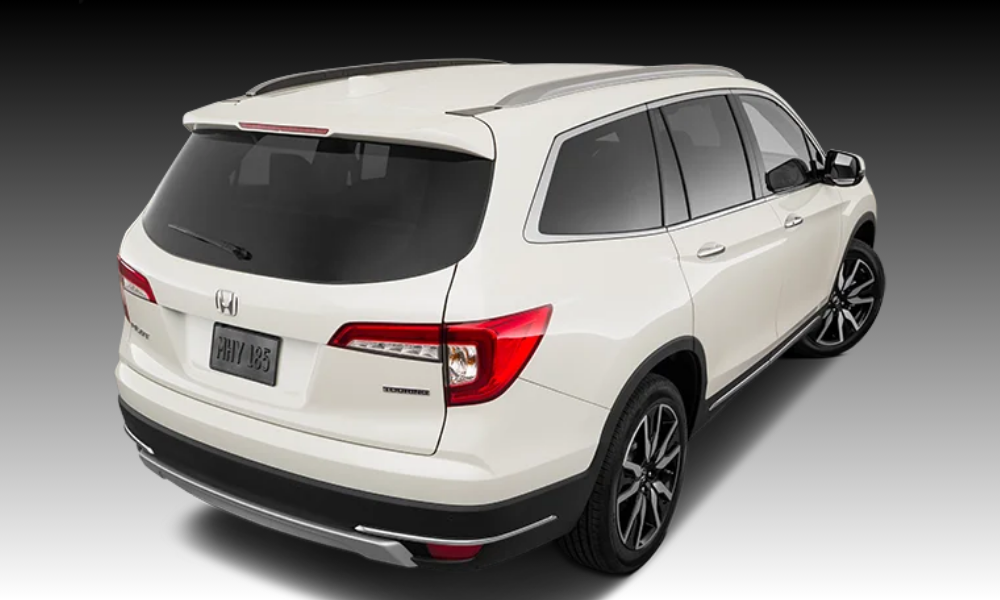
For most buyers, the EX-L trim represents the sweet spot of the 2023 Honda Pilot lineup.
It includes many of the features families actually use every day, including the larger infotainment screen, wireless Apple CarPlay and Android Auto, a power tailgate, leather-trimmed seating, wireless phone charging, additional USB ports, and upgraded convenience features. It delivers a noticeably more premium experience than the entry-level trims without approaching the pricing territory of the Elite.
Buyers who frequently explore unpaved roads, campsites, or outdoor destinations should strongly consider the TrailSport. Its upgraded all-wheel-drive system, all-terrain tires, increased ground clearance, and off-road-focused hardware make it one of the most capable adventure-oriented family SUVs in the segment.
For the majority of families, however, the EX-L offers the best combination of value, comfort, technology, and long-term ownership satisfaction.
Final Verdict: Should You Buy It?
The 2023 Honda Pilot successfully builds upon everything that made previous generations popular while addressing many of their shortcomings. The redesigned platform provides more interior space, improved refinement, better technology, and a stronger overall driving experience. Honda also deserves credit for creating a TrailSport model that delivers meaningful off-road capability rather than simply adding cosmetic upgrades.
While fuel economy remains average and some rivals offer more dramatic styling or more luxurious interiors, the Pilot excels where it matters most. It is spacious, comfortable, practical, safe, and easy to live with on a daily basis. The thoughtful cabin layout, flexible seating arrangements, and abundant storage solutions make it particularly appealing for growing families.
If you’re searching for a three-row SUV that can handle school runs, family vacations, weekend projects, and occasional outdoor adventures without compromise, the 2023 Honda Pilot deserves a place near the top of your shopping list. It may not dominate every category, but few competitors deliver such a well-rounded package.
FAQ
Is the 2023 Honda Pilot bigger than the previous generation?
Yes. The fourth-generation Pilot is longer and wider than its predecessor, resulting in improved passenger space, easier third-row access, and increased cargo capacity. The additional size also contributes to a more comfortable ride and greater overall practicality.
Is the Honda Pilot TrailSport a real off-road SUV?
Compared with most three-row crossovers, yes. The TrailSport includes all-terrain tires, steel skid plates, increased ground clearance, a specialized all-wheel-drive system, and off-road driving modes. While it is not as extreme as dedicated body-on-frame SUVs, it is genuinely capable on trails and rough terrain.
How many passengers can the 2023 Honda Pilot seat?
Depending on trim level, the Pilot can accommodate up to eight passengers. Some trims feature a removable second-row center seat, allowing owners to switch between seven-passenger and eight-passenger configurations.
Is the 2023 Honda Pilot reliable?
Honda has built a strong reputation for long-term reliability, and the Pilot has historically been one of the brand’s most dependable SUVs. The naturally aspirated V6 engine and proven engineering approach should appeal to buyers planning to keep their vehicle for many years.
Should I buy the Honda Pilot or the Toyota Highlander?
The answer depends on your priorities. The Toyota Highlander is generally the better choice for fuel efficiency, especially in hybrid form. The Honda Pilot offers a roomier interior, more usable third-row seating, greater cargo flexibility, and a more capable off-road-oriented TrailSport model. Families that need maximum space often prefer the Pilot, while efficiency-focused buyers may lean toward the Highlander.