2026 Kia EV3 Review: Range, Charging, Price, and What to Know
A practical look at the EV3's range, charging, interior, technology, pricing, and market differences.

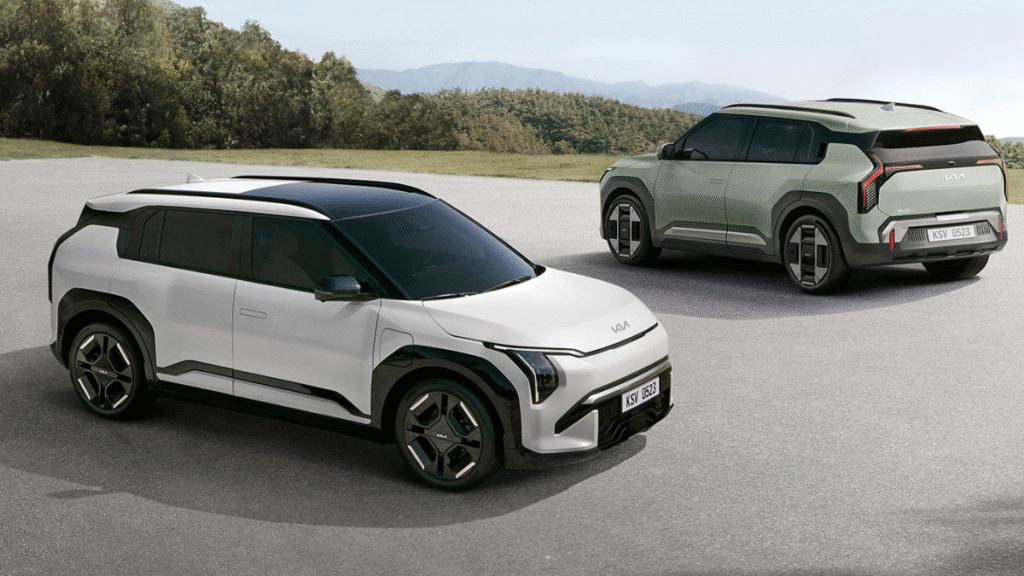
The 2026 Kia EV3 takes a slightly different approach to the electric SUV. It is smaller and more affordable than the Kia EV6, but Kia has still given it the kind of range, technology, and practical interior that many everyday EV buyers are looking for.
What makes the EV3 interesting is how well it fits into normal daily life. Its compact size should make it easier to live with in crowded cities, while the larger battery version offers enough claimed range to make longer trips less stressful. The cabin also puts a lot of focus on space, technology, and simple everyday usability rather than outright performance.
In this review, we look at the 2026 Kia EV3’s range, charging, performance, interior, technology, pricing, and the differences between markets. More importantly, we’ll look at whether the EV3 makes sense as an everyday electric SUV and which version is worth considering.
Because the EV3 is sold with different model years, trims, pricing, and range figures depending on the market, this review separates the key details for the UK, Australia, and U.S. buyers where necessary.
Pros and Cons
Pros
- Long Range battery delivers up to approximately 375 miles WLTP in UK trim
- Compact footprint that’s easier to park and maneuver than the EV6
- Comfortable ride and a notably quiet cabin, according to early drive reports
- Useful 460-liter rear cargo area plus a small front trunk
- Modern, clearly laid-out interior with wireless CarPlay and Android Auto
- Reasonable DC fast-charging times across both battery sizes
Cons
- Front-wheel drive only in the current UK and MY26 Australian lineups
- AWD availability depends entirely on market and model year
- Trim names, equipment, and pricing differ significantly by region
- Charging speed is solid but not exceptional for the class
- Heavy reliance on touchscreen controls won’t suit every driver
What Is the 2026 Kia EV3?
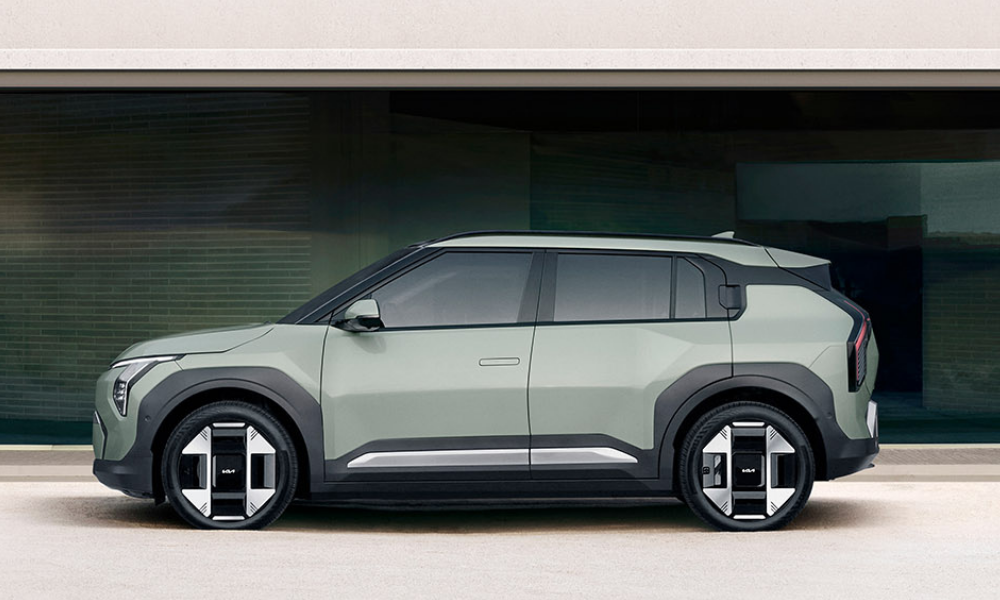
The Kia EV3 is a compact electric SUV that sits below the EV6 and well below the three-row EV9 in Kia’s lineup. It brings the brand’s electric know-how down to a smaller, more approachable size and price point, aimed at buyers who want an EV for daily driving rather than a flagship statement piece.
Where the EV6 leans into sportier styling and the EV9 is built around family-hauling space, the EV3 is the easy, everyday option. It’s sized closer to a subcompact crossover, simple to park in tight city spaces while still offering usable range for regular commuting and the occasional longer trip.
This review focuses primarily on the 2026 Kia EV3 as sold in the UK and Australia. The United States gets a related but distinct vehicle, badged as the 2027 Kia EV3, with its own specifications, trims, and pricing. We cover that separately later in this review, since mixing the two would give American readers a misleading picture of what they’re actually buying.
What’s New for 2026?
It’s tempting to call the EV3 an entirely new model everywhere at once, but rollout timing varies by market. The UK and Australia are getting the EV3 as a 2026 model, built on Kia’s E-GMP-derived electric architecture and using a 400V electrical system rather than the 800V setup found on some Kia EVs.
In the United States, the EV3 arrives in late 2026 as a 2027 model year vehicle with its own trim structure and pricing. So “new for 2026” means two fairly different things depending on where you’re reading this from. We’ll be specific about which market we’re discussing throughout.
Electric Motor and Driving Performance
The current UK and Australian EV3 uses a single front-mounted electric motor producing 150 kW, or roughly 201 horsepower, with 283 Nm of torque, sent to the front wheels through a single-speed reduction gear. There’s no all-wheel-drive option in these markets for the 2026 lineup ,buyers who specifically want AWD traction or the extra performance of a dual-motor setup will need to look at another market or model year, or wait for an AWD version to reach theirs.
Zero-to-62-mph times in the UK come in at approximately 7.5 seconds for the Air Standard Range, about 7.7 seconds for the Air Long Range, and around 7.9 seconds for the GT-Line and GT-Line S. None of those numbers will impress anyone chasing outright quickness, and that’s fine , that’s not really the point of this car.
Early drives, including impressions from Korea ahead of wider availability, describe the EV3 as smooth, quiet, and comfortable rather than sporty. Published first-drive reports point to a ride that’s noticeably settled for a car in this size class, with cabin noise at speed said to be well controlled. The early driving experience suggests Kia tuned the EV3 for relaxed daily use rather than back-road enthusiasm, and the 201-hp motor should still feel responsive enough for city driving, merging, and typical overtaking.
The EV3 also introduces Kia’s i-Pedal 3.0 system, which lets you drive using one pedal for both acceleration and most braking, regardless of which regenerative-braking level you’ve selected. You can dial in how aggressively the car slows down when you lift off, without losing the ability to bring it to a full stop using just the accelerator. An adaptive regeneration function also adjusts braking behavior based on driving conditions — a genuinely useful feature for city driving, though it’s simply adaptive regeneration rather than the car learning and rewriting itself around your personal habits.
Range and Battery Options
Two battery sizes are offered in the UK and Australia: a 58.3-kWh Standard Range pack and an 81.4-kWh Long Range pack. Official WLTP figures vary by trim and wheel size, so treat any single “up to” number with some caution.
In the UK, approximate WLTP range comes out to around 270 miles for the Air Standard Range, up to about 375 miles for the Air Long Range, roughly 367 miles for the GT-Line, and about 362 miles for the GT-Line S, with GT-Line S models fitted with a heat pump landing closer to 361 miles. The 375-mile figure gets used in headlines a lot, but it only applies to a specific configuration, not the whole range.
Australian MY26 figures use the WLTP standard as well, with approximately 436 km for the Air SR, around 604 km for the Air LR, about 563 km for the Earth, and roughly 563 km for the GT-Line.
WLTP, used in the UK and Australia, and EPA, used in the United States, are different test procedures that don’t produce directly comparable numbers. A 321-mile EPA rating and a 375-mile WLTP rating for a related but different U.S. vehicle shouldn’t be read as one being a worse result than the other , they’re simply measured differently.
The 58.3-kWh Standard Range suits city driving, shorter commutes, and buyers with reliable home charging who want a lower purchase price. The 81.4-kWh Long Range is the better call for frequent highway driving, longer trips, or anyone who can’t plug in every night. Neither is automatically the right answer; it depends on how you actually drive.
Charging: How Long Does the EV3 Take?
On an 11 kW AC home or public charger, Kia’s approximate figures put the Standard Range at about 5 hours and 20 minutes from 10 to 100 percent, while the Long Range takes roughly 7 hours and 15 minutes given its larger pack.
DC fast charging is where the EV3 is more relevant for road trips. From 10 to 80 percent, Kia quotes approximately 29 minutes for the Standard Range and around 31 minutes for the Long Range ,solid numbers for the class, if not the fastest available. Real-world charging speed depends on the output of the charger you plug into, the battery’s temperature going in, its state of charge, and outside conditions, so Kia’s quoted figures are best treated as a target rather than a guarantee.
Interior and Comfort
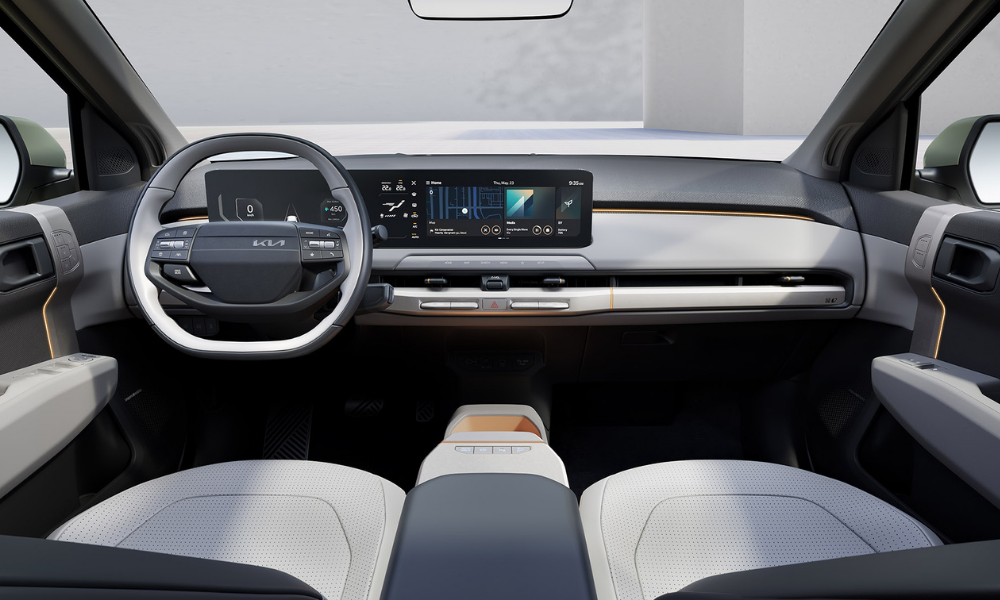
Inside, Kia has gone for an open, uncluttered front cabin rather than a heavily styled one. The dashboard reads cleaner than what you’ll find in some larger EVs, built around a wide display setup that pairs a 12.3-inch digital instrument cluster with a 12.3-inch central touchscreen and a smaller climate display in between, at roughly 5 inches.
The EV3 feels a bit larger inside than its exterior dimensions suggest, mostly because the dashboard and front seating area don’t crowd the occupants the way some compact SUVs do. Large glass areas help visibility, and small details like retractable cupholders in the center console show some thought went into everyday usability rather than just visual design. Rear seats can recline, a small but appreciated touch on longer drives.
Trim and market dictate which options you get: a head-up display, wireless phone charging, Harman Kardon audio, heated and ventilated front seats, dual-zone climate control, and ambient lighting are all available, but not every EV3 gets every feature. Check a specific item against the exact trim and market you’re shopping.
Cargo Space and Everyday Practicality
Rear cargo space comes in at approximately 460 liters, with an additional 25-liter front trunk under the hood for smaller items like charging cables. That’s enough for a real grocery run, luggage for a trip away, or the usual gear that comes with family errands, though buyers who regularly haul bulky items may want to fold the rear seats down for extra room.
Technology and Infotainment
U.S.-market cubic-foot figures for the related 2027 vehicle shouldn’t be compared directly to these liter figures without converting first. They measure the same general idea in different units, and rough mental math can lead you astray.
The EV3’s tech package centers on that wide dual-screen layout, along with wireless Apple CarPlay and Android Auto, USB-C ports, Kia Connect services, and over-the-air software updates. Depending on trim and market, buyers can also get a head-up display and Harman Kardon premium audio.
The U.S. version also brings a generative-AI voice assistant, though its exact functionality has yet to be demonstrated in detail and is worth judging once buyers can actually use it, since assistant capabilities tend to evolve after launch. The U.S. infotainment system supports streaming apps such as Netflix, YouTube, and TikTok , a nice-to-have for passengers during charging stops rather than a core selling point of the vehicle.
Safety and Driver Assistance
Euro NCAP tested the EV3 in 2025, awarding scores of 83 percent for Adult Occupant protection, 84 percent for Child Occupant, 78 percent for Vulnerable Road Users, and 78 percent for Safety Assist in the standard-equipment assessment. Here’s the detail that matters: the EV3 earned 4 stars with standard equipment, and 5 stars only with the optional Safety Pack fitted. That distinction gets lost in a lot of headline coverage, so check exactly which configuration you’re looking at before assuming you’re getting the higher rating.
On the driver-assistance side, the EV3 offers Highway Driving Assist 2, adaptive cruise control, lane keeping and lane following assistance, blind-spot monitoring, rear cross-traffic assistance, and automatic emergency braking. These are advanced driver-assistance systems designed to support an attentive driver, not systems that drive the car on their own — HDA2 shouldn’t be mistaken for self-driving capability.
2026 Kia EV3 Trims and Pricing
Pricing and trim names differ enough by country that a single global number wouldn’t be useful, so here’s a market-by-market breakdown.
UK
The UK lineup is built around Air, GT-Line, and GT-Line S trims. Air is offered with either Standard Range or Long Range batteries, while GT-Line and GT-Line S come exclusively with the Long Range pack. Current UK pricing, including the applicable £1,500 Government Electric Car Grant where eligible, runs from about £31,555 for the Air Standard Range up to roughly £34,555 for the Air Long Range, about £37,955 for the GT-Line, and approximately £43,055 for the GT-Line S, with the GT-Line S heat-pump version priced at around £43,955. These are current snapshot figures , government incentives and eligibility change, and the grant may not apply identically across every trim, so confirm current terms before you buy. For the latest UK pricing and trim details, see Kia’s official EV3 price guide.
Australia
Kia Australia’s MY26 lineup is built around the Air, offered in Standard Range and Long Range configurations, along with Earth and GT-Line variants on the Long Range battery, all front-wheel drive for this model year. Approximate drive-away pricing runs from around A$46,990 for the Air Standard Range up to roughly A$68,490 for the GT-Line, with the Air Long Range and Earth landing in between at approximately A$52,990 and A$58,990.
Kia Australia backs the EV3 with a 7-year, unlimited-kilometer warranty; high-voltage battery and other EV-specific component coverage follows Kia Australia’s own warranty terms and conditions, so check the specifics rather than assuming identical coverage across every component. It’s still a notable advantage over the UK’s 7-year, 100,000-mile coverage for buyers who drive a lot of highway miles.
Kia later introduced an all-wheel-drive GT-Line for the following MY27 Australian lineup, using an 81.4-kWh battery, dual motors, roughly 195 kW and 385 Nm, a 0-100 km/h time of about 6.6 seconds, and approximately 559 km of WLTP range. That AWD version is a separate, later addition and wasn’t part of the base MY26 lineup covered here.
Other Markets
Equipment, trim naming, and pricing structures vary in other regions where the EV3 is sold, so treat the UK and Australian details above as representative examples rather than universal figures.
The 2027 Kia EV3 in the U.S.
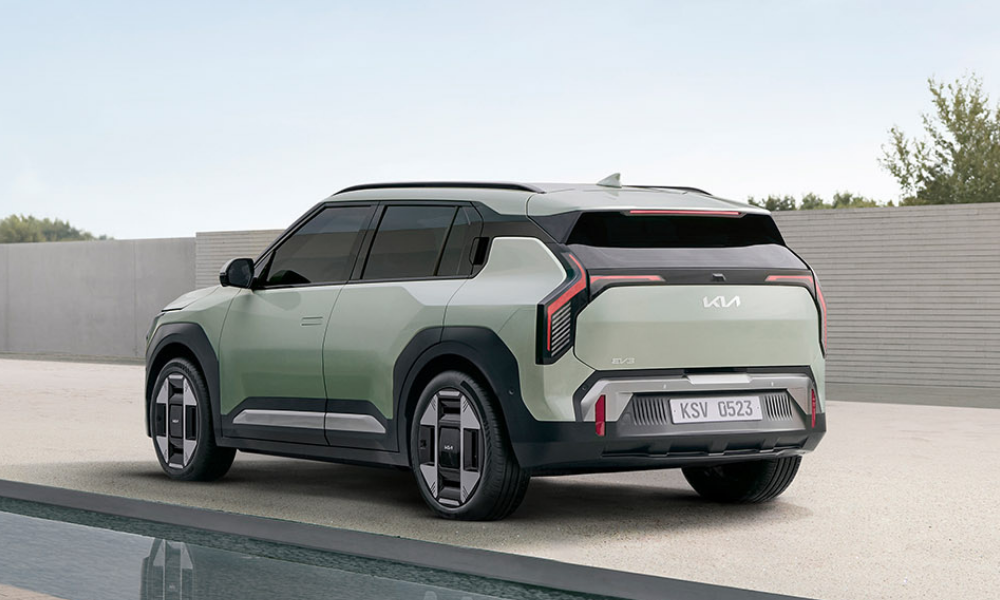
American buyers get a related but distinct vehicle. Kia America now offers the 2027 EV3 directly on its website, with inventory listings and a build-and-price tool available alongside published EPA-estimated range figures and a confirmed trim structure.
Official U.S. pricing starts at $29,890 MSRP before destination and other applicable charges. The trim walk runs from Light FWD at $29,890, up through Wind FWD at $34,990, Wind AWD at $38,690, Land FWD at $38,490, Land AWD at $41,690, GT-Line AWD at $43,490, and GT AWD at $45,890.
Battery choices mirror the global car in size, if not necessarily configuration: the Light uses the 58.3-kWh pack, while Wind, Land, GT-Line, and GT all use the 81.4-kWh battery. Kia’s published EPA-estimated figures are: Light FWD at 221 miles, Wind FWD and Land FWD at 321 miles, and Wind AWD, Land AWD, GT-Line AWD, and GT all at 280 miles. Check the specific configuration you’re considering against Kia’s published figures, since trim availability can shift.
Power output splits by drivetrain, with FWD models making approximately 201 hp, AWD versions around 261 hp, and the performance-oriented GT stepping up to roughly 288 hp along with features like Virtual Gear Shift and Active Sound Design. The GT is a U.S.-specific trim, not something to expect badged the same way globally.
The U.S. model uses a built-in NACS charging port and supports Plug & Charge, with DC fast-charging times landing in a similar window to the global car , roughly 29 minutes for the smaller battery and about 31 minutes for the larger one from 10 to 80 percent, again dependent on charger conditions.
Dimensionally, the U.S. EV3 measures around 169.3 inches long and 72.8 inches wide. Most of the technology, safety, and interior features described earlier in this review carry over conceptually, though exact equipment lists depend on the trim you choose.
2026 Kia EV3 vs the Competition
The EV3’s most relevant rivals depend heavily on which market you’re shopping in.
In the UK and Europe, the Volvo EX30 brings stronger performance and AWD appeal along with a more premium-focused interior, worth weighing against what the EV3 offers with its Long Range battery and larger rear cargo area. The Hyundai Kona Electric is a practical alternative with a different balance of packaging, range, and equipment from its sister brand. The Peugeot e-2008 and Jeep Avenger suit buyers prioritizing a smaller footprint and city-focused use over outright range.
In Australia, the BYD Atto 3 is the key alternative for buyers focused on value and equipment. The Volvo EX30 shows up here too for anyone who’d rather have a smaller footprint and stronger acceleration than the EV3’s longer WLTP range, and the Zeekr X is a more premium, performance-oriented option worth a look for the same segment.
For U.S. buyers looking at the 2027 EV3, the Chevrolet Equinox EV is the larger alternative for buyers prioritizing space, while the Nissan Leaf remains a more budget-focused option for buyers who want to spend less upfront and are willing to weigh that against its older platform.
None of these comparisons point to a clean win across the board. Check current specifications and pricing for whichever competitor matters most to you before deciding.
Who Should Buy the 2026 Kia EV3?
The EV3 makes the most sense for drivers who want a compact electric SUV without stepping up to the EV6’s size or price. It suits urban and suburban commuters, buyers who value range over acceleration, and anyone who can charge at home regularly and wants to minimize how often they think about the battery. It’s also a reasonable pick for buyers who want a smaller, more manageable EV than Kia’s larger models while still getting a similar technology set.
Who Should Skip the 2026 Kia EV3?
Buyers who need all-wheel drive in markets where it currently isn’t offered should look elsewhere, at least until an AWD version reaches their region. The same goes for anyone who needs significantly more cargo room than the 460-liter rear area provides. Drivers chasing genuinely quick acceleration, or those without reliable charging access, may also find the EV3 isn’t the right fit. Anyone who isn’t a fan of touchscreen-heavy cabins should sit in one before committing.
Does Cardrav Recommend the 2026 Kia EV3?
Yes, with some caveats depending on what you need from it. The EV3’s strongest argument comes from the combination of compact dimensions, strong claimed range, reasonably quick charging, a practical interior, and a comfortable everyday driving character, without requiring a step up to Kia’s larger EVs, rather than from any single standout spec.
The lack of AWD in the current UK and Australian lineups is a real limitation for anyone who specifically wants that traction or the extra performance of a dual-motor setup, and the significant variation in trims and pricing between markets means you’ll need to research your specific region carefully rather than assume global consistency.
Final Verdict
The 2026 Kia EV3 isn’t trying to be the fastest or flashiest small electric SUV on sale, and that restraint is arguably its biggest strength. It’s a well-packaged electric SUV built around strong claimed range, reasonable DC charging, a practical interior, and an easygoing everyday character, backed by modern technology , for buyers who want that over outright performance. Just go in understanding that the version you get, and what it costs, depends heavily on where you live.
FAQ
1. How much range does the 2026 Kia EV3 have?
The 2026 Kia EV3 offers different claimed ranges depending on the battery, trim, and market. In the UK, the Long Range version is rated for up to around 375 miles under the WLTP test cycle, while the Standard Range version is rated at around 270 miles. Australian figures differ, with the Air Long Range rated at up to 604 km WLTP. Real-world range will vary with speed, weather, temperature, and driving conditions.
2. How long does it take to charge the Kia EV3?
Using an 11 kW AC charger, the 58.3 kWh battery takes around 5 hours 20 minutes to charge from 10% to 100%, while the 81.4 kWh battery takes around 7 hours 15 minutes. On a suitable DC fast charger, the EV3 can charge from 10% to 80% in roughly 29 to 31 minutes, depending on the battery and conditions.
3. Is the 2026 Kia EV3 available with AWD?
It depends on the market and model year. The 2026 EV3 sold in the UK and the current Australian MY26 range is front-wheel drive. Kia has also introduced an AWD version for the Australian MY27 range, while the U.S. 2027 EV3 is offered with both FWD and AWD configurations.
4. Is the Kia EV3 a good family car?
The EV3 can make a lot of sense for a small family or buyers who want a practical everyday electric SUV. It has a 460-liter rear cargo area, a 25-liter frunk, a useful amount of cabin space, and plenty of modern technology. It is not as large as the EV6 or EV9, though, so buyers who regularly carry several adults or a large amount of luggage may want something bigger.
5. Is the 2026 Kia EV3 worth buying?
For many buyers, yes. The EV3 combines a compact footprint with strong claimed range, useful charging capability, a practical cabin, and competitive technology. The main reasons to look elsewhere are if you want faster charging, more performance, a larger SUV, or a configuration that is not available in your market. The best version also depends heavily on local pricing, equipment, and battery options.