The 2023 Ford Explorer Review begins with a reminder of just how influential this SUV has been in the American automotive landscape. Few vehicles have shaped the modern SUV market quite like the Explorer, a nameplate that has spent more than three decades serving families, commuters, adventurers, and fleet operators alike. Even today, it remains one of Ford’s most important models and one of the most recognizable three-row SUVs on the road.
For 2023, the Explorer continues largely unchanged, carrying over the sixth-generation design that first arrived for the 2020 model year. While some rivals have received major redesigns and significant technology upgrades, Ford chose to focus on refining an already capable package. The result is an SUV that still offers strong performance, impressive towing capability, and one of the most engaging driving experiences in the midsize SUV segment.
Unlike many competitors that prioritize comfort above all else, the Explorer stands apart with its rear-wheel-drive-based architecture. This platform gives the SUV a more balanced and athletic character than most front-wheel-drive rivals. Whether navigating city streets, merging onto highways, or tackling winding roads, the Explorer feels more composed and responsive than many vehicles in its class.
Under the hood, buyers can choose from several powertrains, including a turbocharged four-cylinder, a hybrid V6, and a powerful twin-turbocharged V6 found in higher trims. This variety allows the Explorer to appeal to a wide range of buyers, from efficiency-focused families to drivers who want surprisingly quick acceleration from a three-row SUV.
However, the Explorer is no longer the undisputed leader it once was. Newer rivals such as the Kia Telluride, Hyundai Palisade, and Honda Pilot have raised expectations for interior quality, comfort, and technology. While Ford continues to impress in areas such as driving dynamics and capability, some aspects of the cabin now feel less premium than the SUV’s price tag would suggest.
The 2023 Explorer remains a versatile and capable family vehicle, but it enters an increasingly competitive segment where buyers have more excellent choices than ever before. The question is no longer whether the Explorer is a good SUV, but whether its strengths are enough to justify choosing it over some of the newer and more refined alternatives available today.
Our Take
The 2023 Ford Explorer remains one of the most enjoyable midsize SUVs to drive. Its rear-wheel-drive platform, strong engine lineup, confident handling, and impressive towing capability give it a personality that many competitors simply cannot match. For drivers who value performance and road manners as much as practicality, the Explorer continues to stand out in a crowded segment.
At the same time, the Explorer shows signs of aging in a few important areas. Interior materials fall short of expectations in some trims, road and wind noise are more noticeable than in class leaders, and pricing climbs quickly once buyers move beyond the lower trim levels. Rivals such as the Kia Telluride and Hyundai Palisade deliver a more upscale experience for similar money.
Still, the Explorer succeeds in offering a rare combination of family-friendly versatility and genuinely rewarding driving dynamics. It may not be the segment benchmark it once was, but it remains one of the most well-rounded choices for buyers who want more than just another comfortable three-row crossover.
Pros & Cons
Pros
- Strong engine options with impressive acceleration
- Rear-wheel-drive architecture improves handling and towing capability
- Generous cargo capacity for family use
- Comprehensive standard safety technology
- One of the most engaging driving experiences in the segment
Cons
- Interior materials feel less premium than expected
- Third-row seating can be uncomfortable for adults
- Hybrid model offers only modest fuel-economy gains
- Wind and road noise are noticeable at highway speeds
- Higher trims become expensive very quickly
What’s New for 2023
Ford made only minor changes to the Explorer lineup for 2023. The overall design, powertrain options, trim structure, and technology features carry over largely unchanged from the previous model year. As a result, the Explorer continues to offer the same combination of performance, practicality, and versatility that has defined the current generation since its introduction.
While some competitors received major redesigns and technology upgrades for 2023, Ford chose to maintain the Explorer’s existing formula. Buyers still have access to multiple powertrain choices, including the turbocharged four-cylinder engine, the available hybrid system, and the powerful twin-turbocharged V6 offered in higher trims.
A few equipment adjustments were made across certain trims due to ongoing supply-chain constraints, but there were no major feature additions or styling revisions. Ford instead focused on keeping the Explorer competitive through its strong engine lineup, extensive safety technology, and wide range of available configurations.
The lack of significant updates means the Explorer remains familiar to returning buyers, though it also allows newer competitors to gain ground in areas such as cabin design, infotainment technology, and overall refinement. Many industry observers expected a more substantial refresh, but Ford ultimately reserved larger updates for the following model year.
The lack of significant updates also means the Explorer entered 2023 facing newer and more recently redesigned competitors, making this one of the oldest entries in the segment from a technology and interior-design perspective.
Exterior Design
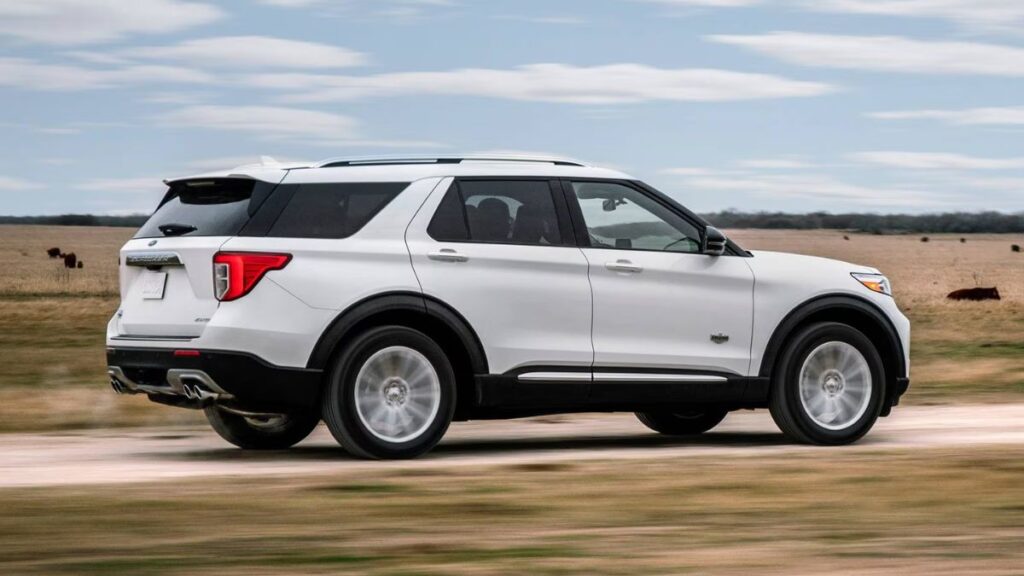
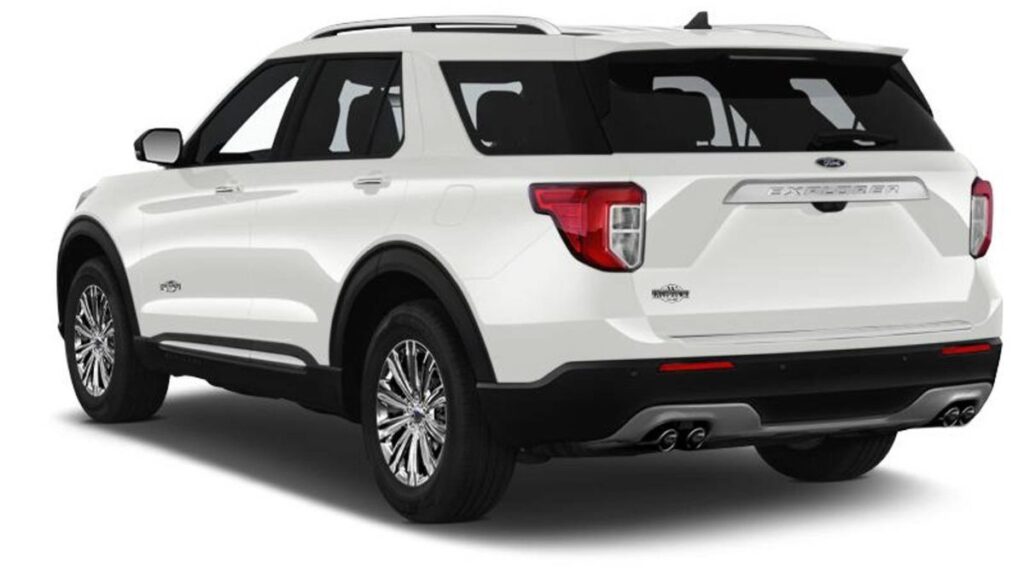
The 2023 Ford Explorer continues with the same overall design introduced when the current generation debuted, and while it no longer feels cutting-edge, it remains one of the better-looking SUVs in the segment. Its long hood, upright stance, and balanced proportions give it a more traditional SUV appearance than many modern crossovers. The rear-wheel-drive-based platform also contributes to a more premium profile, with a cabin that sits farther back and a silhouette that looks more athletic than most front-wheel-drive rivals.
Ford offers enough visual variety across the lineup to appeal to different buyers. The Timberline trim adds rugged styling elements and off-road-inspired details, while the ST introduces black exterior accents and a more aggressive appearance. At the top of the range, King Ranch and Platinum models add upscale touches that help the Explorer look more expensive than lower trims.
Even so, newer competitors have started to move the styling benchmark forward. The latest Kia Telluride, Hyundai Palisade, and Honda Pilot feature fresher exterior designs and more distinctive lighting signatures. The Explorer still looks handsome and capable, but it no longer stands out in the way it once did.
Driving Experience
One of the Explorer’s greatest strengths is something many family SUVs struggle to deliver: genuine driving enjoyment. Thanks to its rear-wheel-drive architecture, the Explorer feels more balanced and composed than most competitors. It turns into corners with confidence, resists excessive body roll, and feels surprisingly agile for a vehicle that can carry up to seven passengers.
Around town, the Explorer feels lighter than its size suggests. The steering is predictable, visibility is generally good, and maneuvering through traffic or tight parking lots is easier than expected. Drivers transitioning from a sedan may find the Explorer less intimidating than some larger three-row SUVs.
Highway driving is where the Explorer begins to show its touring abilities. The SUV remains stable at higher speeds, tracks confidently in its lane, and provides strong passing power regardless of engine choice. Long-distance travel feels effortless, particularly with the turbocharged powertrains.
Drivers who frequently encounter winding roads will appreciate the Explorer even more. Most competitors prioritize comfort and isolation, but Ford has managed to inject a level of responsiveness that is rare in this class. The Explorer feels willing to change direction and maintains impressive composure when pushed harder than a typical family SUV.
The suspension does a respectable job of balancing ride comfort and handling control, though it occasionally feels firmer than some rivals over broken pavement. Smaller road imperfections are more noticeable than they are in vehicles such as the Kia Telluride or Hyundai Palisade.
Refinement is one area where the Explorer falls slightly behind the segment leaders. Wind noise becomes noticeable at highway speeds, and engine sounds are not masked as effectively as they are in some competitors. These issues are not severe enough to ruin the driving experience, but they prevent the Explorer from feeling as polished as some of its newest rivals.
Performance & Acceleration
Ford offers one of the strongest engine lineups in the midsize SUV segment. Most Explorers come equipped with a turbocharged 2.3-liter EcoBoost four-cylinder engine producing 300 horsepower and 310 lb-ft of torque. While some buyers may initially prefer the idea of a naturally aspirated V6, Ford’s turbocharged engine delivers impressive real-world performance and rarely feels strained.
The standard engine works seamlessly with the 10-speed automatic transmission during most driving situations. Acceleration is strong, highway merging is effortless, and passing slower traffic requires very little planning. In fact, the base powertrain often feels quicker than the standard engines offered by several direct competitors.
Buyers seeking even more performance can move up to the twin-turbocharged 3.0-liter EcoBoost V6 available in higher trims. Producing up to 400 horsepower and 415 lb-ft of torque, this engine transforms the Explorer into one of the quickest three-row SUVs on the market. The ST model, in particular, delivers acceleration that rivals some luxury performance SUVs costing significantly more.
A hybrid powertrain remains available for selected trims, combining a 3.3-liter V6 with electric assistance for a total of 318 horsepower. While the hybrid provides smooth operation and respectable efficiency, its fuel-economy advantage over the standard turbocharged engine is smaller than many buyers may expect, making the 2.3-liter EcoBoost the better overall value for most shoppers.
Ride Comfort & Cabin Refinement
The 2023 Ford Explorer delivers a ride quality that strikes a reasonable balance between comfort and control. Unlike some competitors that prioritize softness above all else, the Explorer is tuned to maintain composure during cornering and higher-speed driving. As a result, it feels more connected to the road than many midsize SUVs, though that connection occasionally comes at the expense of ultimate ride isolation.
Front-seat comfort is generally very good, especially on higher trims that offer additional power adjustments, heating, ventilation, and premium upholstery. The seats provide excellent support during longer journeys, and drivers can easily find a comfortable seating position thanks to the wide range of adjustments and commanding view of the road.
The second row offers respectable comfort for adults, though it falls slightly behind segment leaders when it comes to legroom and overall spaciousness. Families will still find the seating area practical for daily use, but passengers who regularly occupy the second row may notice that rivals such as the Hyundai Palisade and Kia Telluride provide a bit more room to stretch out.
Ride quality remains composed over most road surfaces, but smaller imperfections and sharp bumps are transmitted into the cabin more noticeably than in some competing SUVs. This is particularly evident on trims equipped with larger wheels, where impacts can feel firmer than expected.
Cabin refinement is where the Explorer shows its age the most. Wind noise becomes increasingly noticeable at highway speeds, and road noise is not filtered out as effectively as in some newer rivals. The cabin is certainly comfortable enough for family road trips, but buyers seeking a near-luxury level of quietness may find better alternatives elsewhere in the segment.
Interior & Luxury Feel
The Explorer’s interior focuses more on functionality than outright luxury. From the driver’s seat, the layout is straightforward and easy to understand, with controls positioned logically and a dashboard design that prioritizes usability over dramatic styling. Everything feels familiar within a few minutes behind the wheel.
Front-seat occupants enjoy generous space, and the driving position is one of the Explorer’s strengths. Visibility is good in most directions, the large mirrors help reduce blind spots, and the elevated seating position provides the confidence many SUV buyers appreciate.
The second row is comfortable for adults, but it does not feel as spacious as some class leaders. Families with children are unlikely to have complaints, though taller passengers may notice that competitors offer slightly better legroom and overall passenger accommodations.
The third row remains one of the Explorer’s weaker areas. While it is perfectly suitable for children and occasional adult use, taller passengers will find space limited on longer journeys. This is an area where larger rivals such as the Chevrolet Traverse maintain a clear advantage.
Material quality is perhaps the biggest disappointment. While upper trims add leather upholstery, wood accents, and additional soft-touch surfaces, many areas of the cabin still contain hard plastics that feel out of place considering the Explorer’s price. This becomes especially noticeable when comparing the Ford directly with premium-feeling competitors such as the Telluride and Palisade.
That does not mean the interior is poorly built. The cabin feels solid overall, controls operate with reassuring precision, and storage solutions are thoughtfully placed throughout the vehicle. The issue is less about quality and more about perceived value, as buyers spending over $50,000 may expect a more upscale environment than the Explorer consistently delivers.
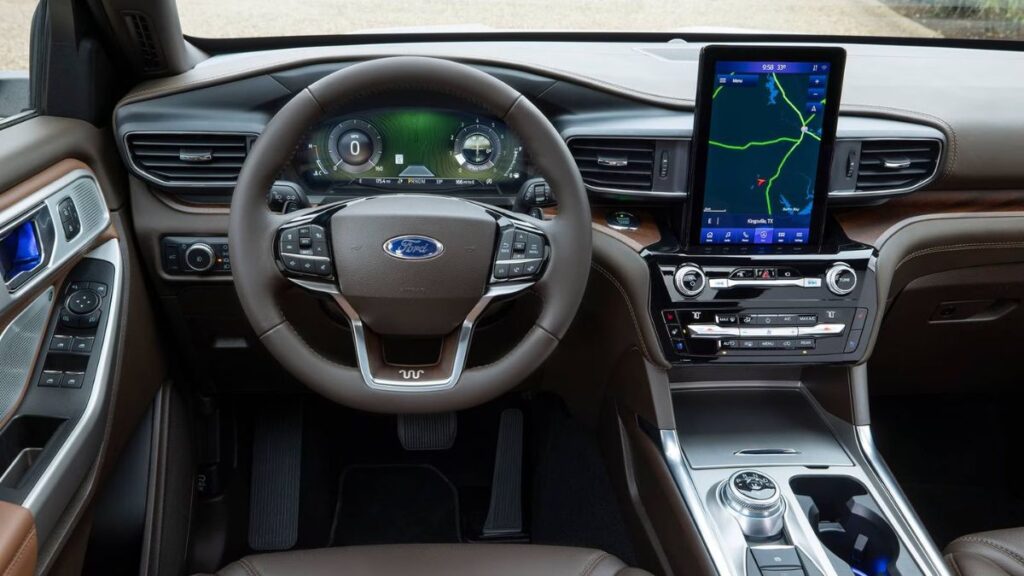
Technology & Infotainment
Every 2023 Ford Explorer comes standard with Ford’s Sync infotainment system, an 8-inch touchscreen, Apple CarPlay, Android Auto, Bluetooth connectivity, and multiple USB ports. The interface is easy to learn, menus are logically organized, and response times are generally quick enough for everyday use.
The system’s biggest weakness is not functionality but presentation. While the standard 8-inch display remains user-friendly, it now feels noticeably smaller and less modern than the larger screens offered by several key competitors. Buyers stepping out of newer SUVs may find the Explorer’s technology experience less impressive at first glance.
Buyers who move up the trim ladder gain access to larger digital displays, premium Bang & Olufsen audio systems, wireless smartphone charging, and additional convenience features. While the overall technology package remains user-friendly and competitive, the Explorer no longer feels like a segment leader in infotainment innovation. The standard 8-inch touchscreen, in particular, now appears small compared with the larger and more sophisticated displays found in newer rivals such as the Kia Telluride, Hyundai Palisade, and Honda Pilot.
Safety technology is a stronger selling point. Ford includes the Co-Pilot360 suite as standard equipment, bringing features such as automatic emergency braking, blind-spot monitoring, lane-keeping assistance, rear cross-traffic alert, and automatic high beams. Higher trims add more advanced driver-assistance features, helping the Explorer remain competitive despite its aging infotainment hardware.
Fuel Economy
Fuel economy is respectable but not class-leading. The standard turbocharged 2.3-liter EcoBoost engine achieves EPA estimates of up to 24 mpg combined in rear-wheel-drive form and around 23 mpg combined with all-wheel drive. Those figures place the Explorer near the top of the segment on paper, outperforming some V6-powered competitors by a small margin.
In real-world driving, however, the results are not always as impressive as the official ratings suggest. The turbocharged engine delivers strong acceleration and responsive performance, but drivers who frequently use that power may find fuel consumption closer to that of competing midsize SUVs. As a result, the Explorer’s efficiency advantage often feels smaller than expected.
Ford also offers a hybrid powertrain on selected trims, pairing a 3.3-liter V6 with electric assistance. While the hybrid improves efficiency and provides smooth operation, the gains are relatively modest compared with the standard engine. For many buyers, the additional cost and limited trim availability may make the conventional EcoBoost engine the more attractive option.
Practicality & Cargo Space
Practicality has always been one of the Explorer’s strongest selling points, and the 2023 model continues that tradition. The three-row layout allows the SUV to accommodate large families, while the flexible seating configurations make it easy to switch between passenger and cargo duties when needed.
Cargo space behind the third row is competitive for the segment and large enough for groceries, sports equipment, or several carry-on suitcases. Families heading out on weekend trips will find enough room for luggage without immediately needing to fold seats.
When additional space is required, the second and third rows fold flat to create a large and usable cargo area. The flat load floor makes loading bulky items easier, and the wide rear opening improves access when carrying larger objects such as furniture, bicycles, or home improvement supplies.
Storage throughout the cabin is equally practical. The center console provides generous space for personal items, door pockets are large enough for water bottles and everyday essentials, and there are numerous smaller compartments designed to keep phones, wallets, and charging cables organized.
The Explorer also performs well as a towing vehicle. Thanks in part to its rear-wheel-drive-based platform, properly equipped models can tow up to 5,600 pounds. The available towing package adds useful features such as trailer sway control, upgraded cooling systems, and trailer-compatible blind-spot monitoring, making the Explorer one of the more capable tow vehicles in the midsize SUV segment.
Safety & Driver Assistance
Safety remains one of the Explorer’s strongest attributes. Every model comes standard with Ford Co-Pilot360, a comprehensive suite of driver-assistance technologies designed to help drivers avoid common accidents and improve confidence behind the wheel.
Standard features include automatic emergency braking with pedestrian detection, blind-spot monitoring, rear cross-traffic alert, lane-keeping assistance, automatic high beams, and post-collision braking. These systems operate smoothly in everyday driving and help the Explorer remain competitive with the latest family SUVs.
Higher trim levels and optional packages add even more advanced technology. Features such as adaptive cruise control, lane-centering assistance, evasive steering assist, and enhanced parking aids are available, providing additional convenience during long highway journeys and crowded urban driving situations.
The Explorer also performs well in crash testing. It earned strong ratings from both federal and independent safety organizations, reinforcing its reputation as a secure choice for families. Combined with its extensive list of standard safety equipment, the Explorer remains one of the safer options in the midsize three-row SUV category.
One notable omission is Ford’s BlueCruise hands-free highway driving system, which was not yet available on the 2023 Explorer. Some competitors were beginning to introduce more advanced semi-autonomous driving technologies, making the Explorer feel slightly behind the curve in this specific area.
Competitors Worth Considering
The Kia Telluride remains one of the strongest alternatives to the Explorer. It offers a more upscale cabin, a smoother ride, and a better overall value proposition. While it lacks the Explorer’s rear-wheel-drive dynamics and powerful engine options, the Telluride excels in comfort, refinement, and family-friendly practicality.
The Hyundai Palisade shares much of its engineering with the Telluride but adds a slightly more luxurious personality. Its premium interior materials, quiet cabin, and impressive list of standard features make it one of the most well-rounded three-row SUVs currently available.
Honda completely redesigned the Pilot for 2023, making it a more compelling competitor than ever. The latest Pilot offers a spacious interior, improved technology, and the rugged TrailSport trim for buyers who occasionally venture beyond paved roads. It may not feel as sporty as the Explorer, but it delivers excellent everyday usability.
The Toyota Highlander continues to attract buyers looking for reliability, efficiency, and strong resale value. While its driving experience is less engaging than the Explorer’s, the Highlander remains a smart choice for families prioritizing long-term ownership and fuel economy.
Buyers who place a higher priority on passenger and cargo space should also consider the Chevrolet Traverse. It offers one of the roomiest third rows in the class and more cargo capacity than the Explorer, making it especially appealing for larger families who regularly travel with passengers and luggage.
Which Trim Does Cardrav Recommend?
The XLT trim strikes the best balance between price, equipment, and long-term value. It builds upon the base model with additional comfort features, improved interior appointments, and access to several desirable option packages without pushing the price into premium-SUV territory.
Many of the Explorer’s higher trims are undeniably appealing, particularly the ST and Platinum models. However, their significantly higher prices can quickly place them in competition with entry-level luxury SUVs, making them harder to justify for the average family buyer.
For most shoppers, the XLT delivers everything that makes the Explorer attractive in the first place: strong performance, modern safety technology, generous practicality, and room for customization. It remains the sweet spot in the lineup and the version we would recommend first.
Final Verdict: Should You Buy It?
The 2023 Ford Explorer remains a highly capable midsize SUV that successfully blends family practicality with a surprisingly enjoyable driving experience. Its rear-wheel-drive platform, strong engine lineup, and impressive towing capability help it stand apart from many competitors that focus primarily on comfort.
Few three-row SUVs combine performance, towing capability, and everyday practicality as successfully as the Explorer.
Buyers who enjoy driving will appreciate the Explorer more than most three-row SUVs currently on the market. It feels more responsive through corners, offers stronger acceleration than many rivals, and delivers a level of confidence that is difficult to find elsewhere in the segment.
At the same time, the Explorer is no longer the clear class leader. Interior quality falls short of some competitors, road noise is more noticeable than expected, and upper trims become expensive very quickly. Rivals such as the Kia Telluride, Hyundai Palisade, and Honda Pilot provide a more refined overall ownership experience.
Even with those shortcomings, the Explorer remains an excellent choice for buyers who value performance, towing capability, and versatility. If driving enjoyment ranks high on your priority list, the 2023 Ford Explorer continues to be one of the most rewarding family SUVs you can buy.
FAQ
Is the 2023 Ford Explorer a good family SUV?
Yes, the 2023 Ford Explorer remains a strong family SUV thanks to its three-row seating, generous cargo capacity, extensive safety features, and available all-wheel drive. It also offers better towing capability and stronger performance than many competitors. However, families who prioritize cabin refinement and third-row comfort may prefer alternatives such as the Kia Telluride or Hyundai Palisade.
Which engine is best in the 2023 Ford Explorer?
For most buyers, the turbocharged 2.3-liter EcoBoost four-cylinder is the best choice. It produces 300 horsepower, delivers strong acceleration, and provides a good balance between performance and fuel economy. The 3.0-liter twin-turbo V6 is exceptionally powerful, but its higher cost makes it harder to justify unless performance is a top priority.
Does the 2023 Ford Explorer have enough room for adults in the third row?
The third row is suitable for children and shorter adults, but taller passengers may find it cramped on longer journeys. Legroom is competitive for the segment, yet the seat cushions are relatively low and firm compared with some rivals. Buyers who frequently carry adults in the third row may want to compare the Explorer with the Chevrolet Traverse or Volkswagen Atlas.
Is the 2023 Ford Explorer reliable for long-term ownership?
The 2023 Ford Explorer offers average-to-above-average long-term reliability when properly maintained. The turbocharged EcoBoost engines have improved significantly over previous generations, though routine maintenance remains important. Buyers planning to keep the vehicle for many years should pay close attention to service history and recommended maintenance intervals.
What is the best 2023 Ford Explorer trim level?
The XLT trim is the best choice for most buyers. It adds important comfort and convenience features over the base model while remaining reasonably priced. It also provides access to additional appearance, technology, and safety packages, allowing owners to customize the SUV without stepping into the much more expensive upper trims.