2022 Toyota Prius Prime Review: Worth Plugging In?
Efficient, affordable, and one of the smartest plug-in hybrids you can buy.
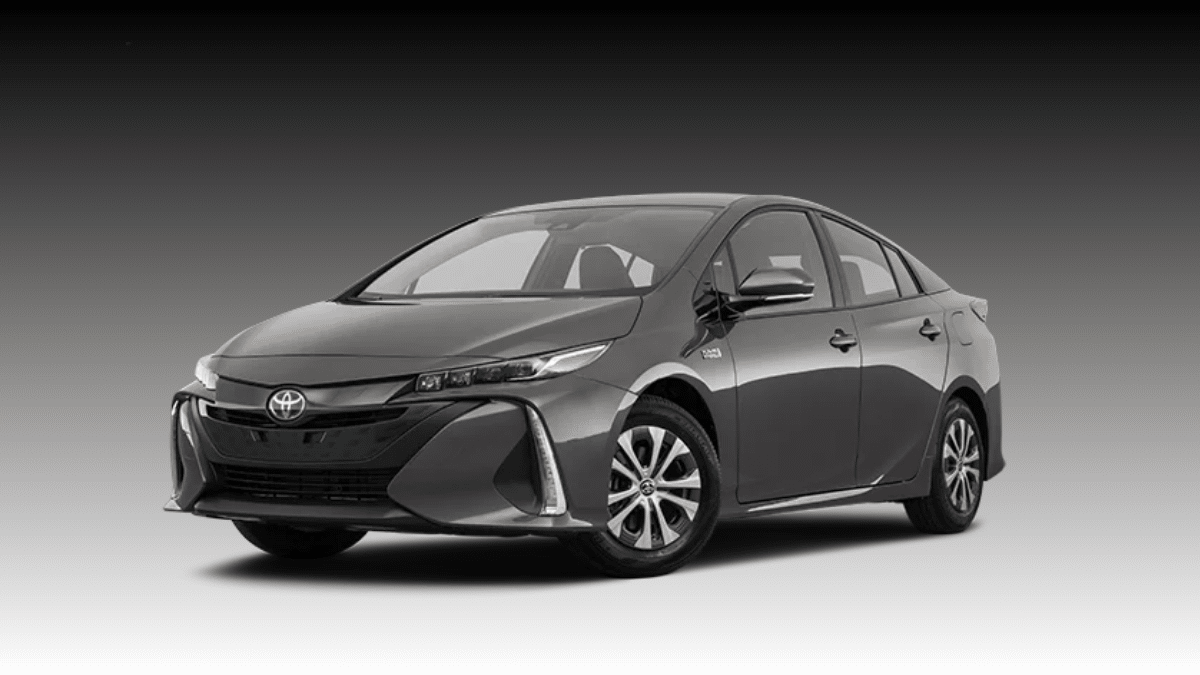
Plug in at home, drive 25 miles on silence, then forget about gas stops for weeks. That’s the Prius Prime in a sentence, and it’s exactly what makes this plug-in hybrid matter.
The 2022 Prius Prime targets a specific driver: someone with a predictable commute under 25 miles who can charge at home on a standard 120-volt outlet. The 8.8-kWh battery handles that commute on electricity alone. When it depletes, the 1.8-liter hybrid engine engages, delivering 54 mpg. No range anxiety. No expensive charger installation. No compromise.
Toyota carries this generation forward unchanged, which signals confidence in the formula. The car is mature, proven, and refined. It’s not exciting, but it works. That’s the appeal.
Our Take
The Prius Prime is a hybrid first, with electric capability bolted on. It works perfectly for drivers who charge nightly and take short commutes. For everyone else, it’s still a capable 54-mpg hybrid, but the plug-in premium becomes harder to justify. The car is slow, the interior is functional, and the design is conservative. But for the right buyer, those tradeoffs don’t matter.
Pros and Cons
Pros
- Up to 25 miles of electric driving for most daily trips
- Outstanding fuel economy and a long driving range
- Easy home charging with a standard outlet
- Comfortable cabin with plenty of standard safety features
- Proven reliability and low running costs
Cons
- Less cargo space than the regular Prius
- Slow acceleration
- Interior feels plain for the price
- Base trims miss some advanced safety features
- Infotainment system could be more user-friendly
What’s New
The 2022 Prius Prime carries the 2021 generation forward without substantial revision. This speaks to the design cycle maturity and Toyota’s confidence in the fundamental platform. No new engines. No battery changes. No interior updates. The specification sheet remains virtually identical to 2021, which means Toyota is refining a proven formula rather than chasing market trends.
This consistency offers a benefit to the buyer. It means component availability is strong, parts prices are competitive, and dealer knowledge is established. The flip side is that the Prius Prime doesn’t gain any of the incremental improvements consumers often expect in new model years.
If you’re considering a 2022 versus 2021, specification difference is negligible. Pricing may vary slightly, but the driving experience, efficiency, and capability remain the same.
Exterior Design
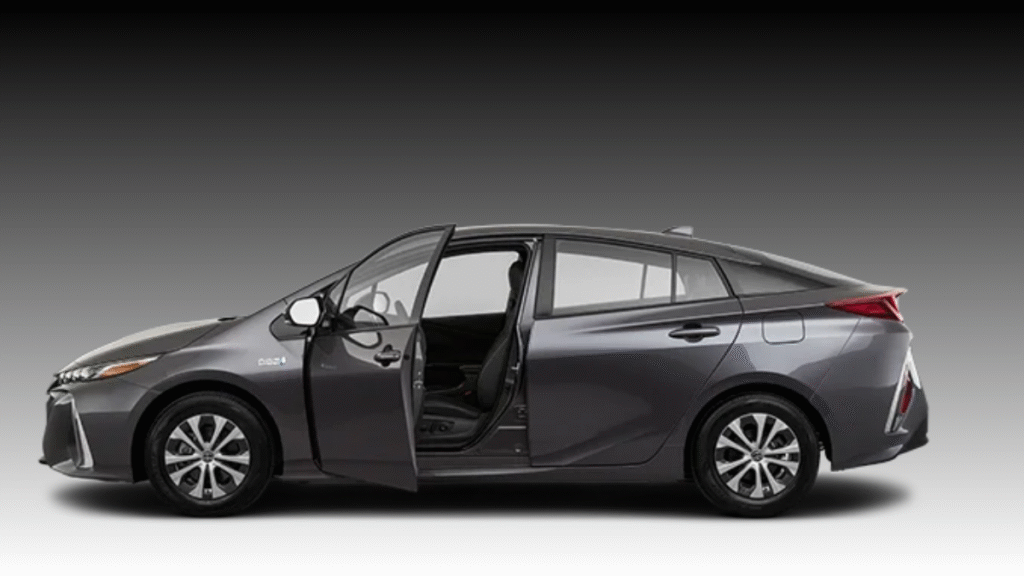
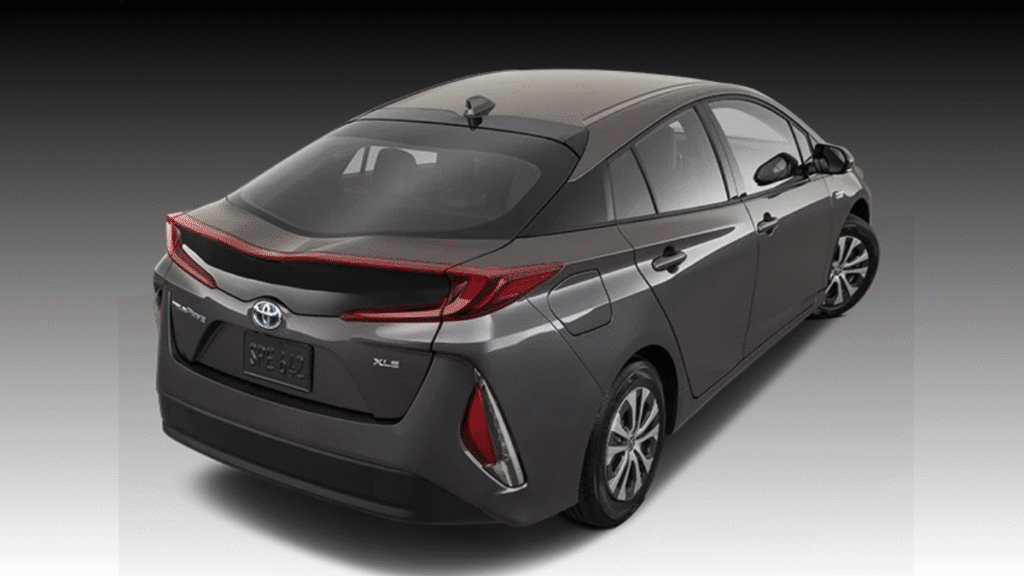
The Prius Prime looks conservative but honest. The front end features dual-wave LED headlights and an acrylic grille that reads modern without being aggressive. The full-width LED rear lamp panel is the most distinctive element. Aluminum components reduce weight without sacrificing durability. Side by side with the Hyundai Ioniq Plug-in, the Prime feels simpler and less sporty. Next to the Kia Niro Plug-in, it looks less SUV-like. Both comparisons are accurate. Toyota isn’t trying to hide what the Prime is.
Build quality is solid. Panel gaps are even. Weatherstripping stays tight through multiple seasons. The car doesn’t turn heads, but nobody mistakes it for something cheap either.
Driving Experience
Start with a full battery charge and press the EV button. The cabin goes silent. There’s no engine rumble, just the whir of the electric motor and the whisper of tires. This is where the Prius Prime distinction shines. The steering is light enough for city driving without providing much feedback. Turn-in is immediate but the soft suspension means body roll develops quickly. This isn’t a car that rewards spirited driving.
On the highway, the transition to hybrid mode is seamless once the battery depletes. Power delivery is adequate for merging and passing, though neither happens quickly. The CVT transmission prioritizes efficiency over dynamic shifts. Wind noise creeps in above 70 mph. Tire noise dominates at highway speeds.
The brake pedal incorporates regenerative braking, which recovers energy during deceleration. The sensation takes a few drives to trust, but it works. Forcing EV mode indefinitely in city driving is practical, with most owners driving entirely on electricity if daily distance stays under 50 mph.
Performance and Acceleration
The Prius Prime’s 121 horsepower combined output doesn’t translate to excitement. Zero to 60 mph takes 10.8 seconds, which is slow by any measure. Merging onto freeways requires planning. Passing slower traffic demands commitment and full throttle. The three driving modes don’t change power delivery, only efficiency targeting. In pure EV mode, the Prime reaches 84 mph if you’re patient, which is fine for city streets but useless for highway cruising at sustained speed.
Cold weather can trigger engine startup despite charged batteries. Real-world testing shows engine engagement becomes frequent in freezing temperatures. The thermal efficiency story is the real point: the 1.8-liter Atkinson-cycle engine achieves 40 percent thermal efficiency, nearly double typical engines. This efficiency translates to fuel tank longevity, not driving excitement.
Ride Comfort and Cabin Refinement
The suspension is soft and squishy, a shared complaint across Prius models. Bumps are absorbed but the car bounces through their cycles rather than settling quickly. This affects highway stability over rough pavement and makes the cabin feel less planted than contemporary sedans. Interior noise is well controlled. Engine sound is muffled. Wind noise creeps in at highway speeds.
Seats are surprisingly accommodating with heated fronts standard. Cushioning is moderate. Support is adequate for city driving but becomes slightly firm on longer journeys. Climate control is responsive without hunting for target temperature. Remote air conditioning on the Limited trim allows pre-conditioning via smartphone.
Interior and Luxury Feel
The cabin prioritizes function over ambiance. The layout is clean and intuitive. Controls are logically placed. The steering wheel adjusts both toward and away from the driver. The seat includes lumbar support. Door pockets, seatback pouches, and center console cubbies provide practical storage. Cup holders fit standard beverages.
Cargo space is the real limitation. Behind the rear seat, 13.1 cubic feet remains, compared to 18.3 in a standard Prius. The battery eats space. Rear seats fold flat but don’t become completely level. Visibility is solid in all directions. The backup camera is standard. Interior color options are muted. Gray, black, and silver dominate. Materials feel budget rather than premium at this price point, but nothing feels cheap.
Technology and Infotainment
The 7-inch touchscreen feels small in 2022. Graphics are clear and responsive. Apple CarPlay and Android Auto are standard, which most drivers prefer over the native interface. Navigation is available and works well. Voice activation exists but misses some commands that competitors offer. An 11.6-inch screen upgrade on higher trims is genuinely useful and worth the cost difference.
The eight-speaker system on the Limited sounds clean. The base six-speaker system is acceptable but lacks depth. Connected services include remote climate activation, remote locking and starting via smartphone app, and battery charge status viewing. The system struggles with complex voice commands and requires precise phrasing.
Fuel Economy
The Prius Prime’s efficiency depends entirely on charging discipline. If you plug in daily and keep daily driving under 25 miles, fuel consumption approaches zero. The EPA rates it at 133 MPGe when fully charged, a theoretical figure based on electrical energy. When the battery depletes and the gas engine engages, expect 54 mpg combined in real-world driving. Edmunds testing averaged 63.3 mpg, suggesting EPA estimates are conservative.
Charging from empty to full takes 5.5 hours on a standard 120-volt outlet or two hours on 240-volt. Electricity costs roughly one-third the price of gasoline per mile. For drivers who charge daily, this translates to measurable savings. The 11.6-gallon tank provides 625 miles of highway range. If you can’t charge regularly, the Prius Prime still delivers 54 mpg as a hybrid, which is exceptional.
Practicality and Cargo Space
The hatchback provides better access than a sedan trunk, but the Prius Prime sacrifices cargo volume compared to the standard Prius. The 13.1-cubic-foot cargo area accommodates weekly groceries or small luggage but not bulky items. The rear seat folds flat, expanding capacity to approximately 41 cubic feet, though the battery pack intrudes slightly. Passenger capacity remains five across all trims.
The five-door configuration eases loading and provides better accessibility than sedans. Practicality is strong for daily commuting and shopping but falls short for camping trips or moving situations. Weekend bags fit fine. Interior storage includes door pockets, seatback pouches, center console cubbies, and USB ports for device charging.
Safety and Driver Assistance
The Prius Prime achieved a perfect five out of five stars in NHTSA crash testing. Standard safety equipment includes forward-collision warning with pedestrian and bicyclist detection, lane-departure warning, and lane-keeping assist. The rear-seat reminder became standard for 2022. All trims receive Toyota Safety Sense 2.0.
Blind-spot warning appears on the XLE and is standard on Limited. Adaptive cruise control and rain-sensing wipers appear on the Limited trim. The Limited adds adaptive cruise that maintains following distance and brings the car to a complete stop if needed. ABS, stability control, backup camera, and pre-collision system are standard across all trims.
Competitors Worth Considering
The Hyundai Ioniq Plug-in Hybrid offers more power and sport orientation at a similar price. The Ioniq produces 139 horsepower, includes blind-spot warning standard, and feels more upscale inside. The Kia Niro Plug-in Hybrid provides crossover utility and higher seating position if you prefer SUV presence. The Niro offers more cargo space and commands a price premium for that. Both achieve similar fuel economy to the Prius Prime.
The Honda Insight hybrid lacks plug-in capability but delivers 48 mpg without requiring charging. For drivers who can’t charge regularly, the Insight eliminates complexity while sacrificing the electric-only option. For buyers considering a pure electric vehicle, the Chevy Bolt EV provides longer range at comparable price but requires Level 2 charging infrastructure and greater range planning.
Biggest Strength and Biggest Weakness
The biggest strength is genuine practicality for owners who charge regularly. The 25-mile electric range covers the average commute, making daily electric driving realistic without expensive infrastructure. The seamless hybrid transition eliminates range anxiety entirely. Toyota’s proven reliability on the hybrid system means efficiency without sacrificing durability. The biggest weakness is performance. The car is slow, and no version changes that. Acceleration feels labored and merging requires patience. The secondary weakness is interior material quality. At nearly $35,000 for the top trim, the abundance of hard plastics and thin door panels feel cheaper than the price suggests.
Which Trim Does Cardrav Recommend
Go with the Limited. The upgrade to the 11.6-inch touchscreen alone improves the daily driving experience significantly, and the inclusion of blind-spot warning, adaptive cruise control, and rain-sensing wipers adds practical safety and convenience. The pricing gap between XLE and Limited is approximately $4,000, and the feature additions justify the cost. The LE base trim feels incomplete. The XLE omits blind-spot warning, a notable safety gap at this price point.
Final Verdict: Should You Buy It
Buy the Prius Prime if you have a predictable daily commute under 25 miles and can charge at home. For that buyer, the Prime delivers genuine fuel savings and simplified daily driving. The seamless transition between silent electric commuting and reliable hybrid mode for weekend driving addresses two major vehicle concerns simultaneously. If you drive more than 25 miles daily or can’t charge regularly, a standard hybrid makes more sense. If you prioritize performance or luxury feel, look elsewhere. For the practical commuter who charges nightly and values proven reliability over cutting-edge features, the Prius Prime is worth the purchase. It’s not exciting. It works.
Frequently Asked Questions
Can I charge the Prius Prime on a standard household outlet?
Yes. The Prius Prime comes with a 120-volt charging cable that plugs into any household outlet. Toyota recommends a dedicated 15-amp circuit. Full charging takes approximately 5.5 hours. A 240-volt charger reduces this to about two hours. This simplicity is one of the Prime’s greatest advantages compared to pure EVs.
How much will I save on fuel with the Prius Prime?
Savings depend on charging discipline and electricity costs in your region. A driver who charges daily and keeps daily driving under 25 miles essentially eliminates fuel costs. Electricity costs run roughly one-third the price of gasoline per mile. Over a year, a driver covering 10,000 miles with 80 percent electric distance saves between $1,500 and $2,000 compared to a conventional sedan.
How long does the Prius Prime battery last?
The 8.8-kWh battery carries an 8-year, 100,000-mile warranty. Real-world data shows batteries lasting well beyond 150,000 miles with gradual, not sudden, degradation. Replacement cost when eventually needed runs approximately $5,500 to $6,500 at Toyota dealerships.
Is the Prius Prime worth it if I can’t charge at home?
Not really. Without regular charging, you’ll rarely access the 25-mile electric range that justifies the plug-in premium. A standard Prius hybrid or Corolla Hybrid delivers similar fuel economy without the added battery and motor costs. Workplace or public charging changes the math, but home charging is the real benefit.
How does the 2022 Prius Prime compare to the redesigned 2023 model?
The 2023 is a complete redesign with a much larger 13.6-kWh battery offering 39 to 44 miles of electric range, improved styling, better interior materials, and updated infotainment. The 2022 is the smart choice if fuel economy is your priority and you prefer proven reliability. The 2023 is worth the wait if you want modernization, though it typically costs $3,000 to $5,000 more.