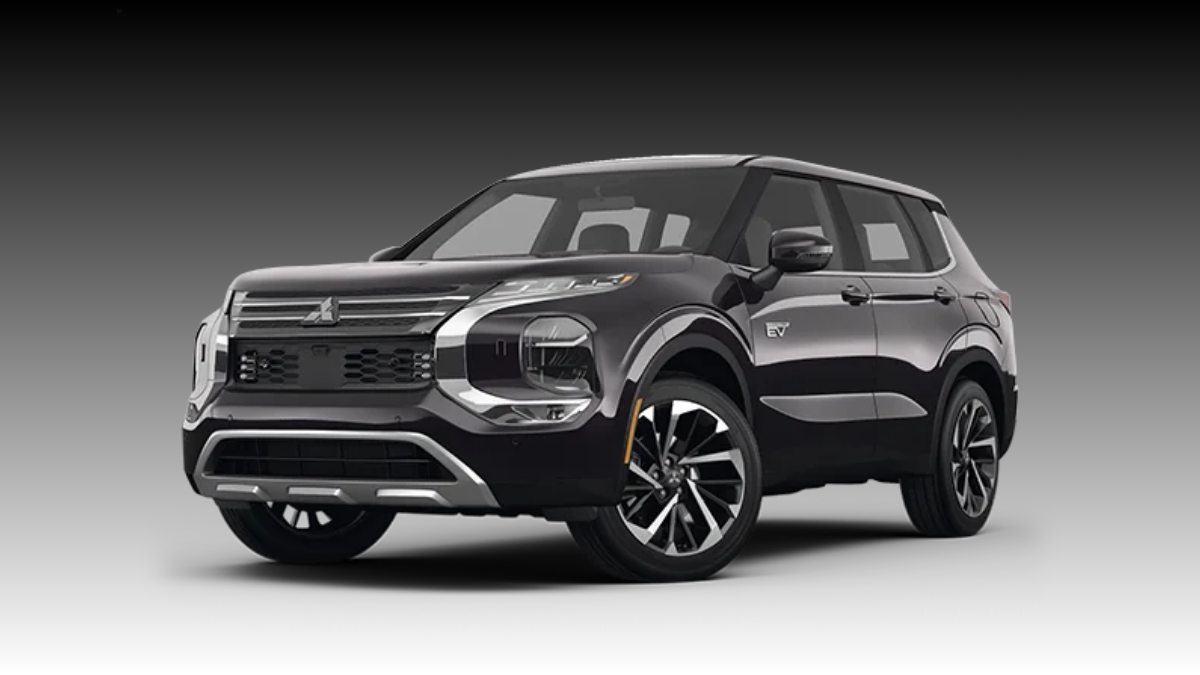
2023 Mitsubishi Outlander PHEV : The plug-in hybrid SUV market has grown considerably over the past few years, with more options than ever for buyers who want electric commuting capability without the range anxiety of a full EV. The 2023 Mitsubishi Outlander PHEV arrives in this crowded field with a few distinct advantages. It is one of the few plug-in hybrids that can seat seven passengers. It offers all-wheel drive as standard. And it includes DC fast charging, a feature rarely found outside of fully electric vehicles.
The second-generation Outlander PHEV represents a significant step forward from its predecessor. The battery has grown from 13.8 kWh to 20 kWh, boosting EPA-rated electric range from 24 miles to 38 miles. Total system output now stands at 248 horsepower, up from 181 in the previous model. The platform is shared with the Nissan Rogue, which provides a solid foundation for ride quality and interior space. But the real question is whether the Outlander PHEV’s unique combination of features makes it a smart choice for families considering a plug-in hybrid SUV.
Our Take
The 2023 Mitsubishi Outlander PHEV is a practical family SUV that offers electric commuting capability and three-row seating, a combination that remains uncommon in the plug-in hybrid segment. The 38 miles of EPA-rated electric range is enough for most daily commutes, and the ability to fast-charge adds flexibility that few PHEVs provide.
That said, the Outlander PHEV is not without compromises. The third row is tight and best suited for children. The interior materials, while improved, don’t quite match the price point of some competitors. The CHAdeMO fast-charging standard is less common in the U.S. than the more widely available CCS plug. And the hybrid fuel economy of 26 mpg once the battery is depleted is unremarkable for a vehicle of this size.
For families who need to carry more than five people and want to reduce their fuel consumption, the Outlander PHEV is one of the few options available. It is not the most efficient plug-in hybrid on the market, nor is it the most exciting to drive. But it delivers where it counts for many buyers: practicality, all-weather capability, and the ability to handle daily commutes on electricity alone.
Pros
- 38 miles of EPA-rated electric range covers most daily commutes without using gasoline
- Available third-row seating for up to seven passengers is rare in this class
- DC fast charging capability is uncommon among plug-in hybrids
- Quicker acceleration than the standard gasoline Outlander
- Super All-Wheel Control (S-AWC) provides confident all-weather traction
- 10-year/100,000-mile powertrain and hybrid component warranty
- 1,500-pound towing capacity
Cons
- CHAdeMO fast-charging standard is less common than CCS in the U.S.
- Third-row seats are tight and best suited for children
- Fuel economy in hybrid mode (26 mpg) is unremarkable
- Lower MPGe (64) compared to some plug-in hybrid rivals
- Made in Japan, so it does not qualify for federal tax credits
- Interior materials, while improved, don’t match the price point of some competitors
What’s New for 2023
The 2023 Mitsubishi Outlander PHEV is a clean-sheet design compared to the previous generation, with improvements that address nearly every limitation of the earlier model.
The battery has grown from 13.8 kWh to 20 kWh, boosting EPA-rated electric range from 24 miles to 38 miles. Total system output now stands at 248 horsepower and 332 pound-feet of torque, up significantly from the previous generation. The result is a vehicle that reaches 60 mph in 6.6 seconds according to independent testing, which is 1.6 seconds quicker than the non-hybrid Outlander.
For the first time, the Outlander PHEV offers available third-row seating, making it a seven-passenger vehicle. The cabin and exterior have been thoroughly redesigned with higher-quality materials, a 12.3-inch digital instrument cluster, and a 9-inch infotainment display. The 2023 model also adds DC fast charging capability using the CHAdeMO standard, allowing the battery to reach 80 percent in approximately 38 minutes.
Exterior Design
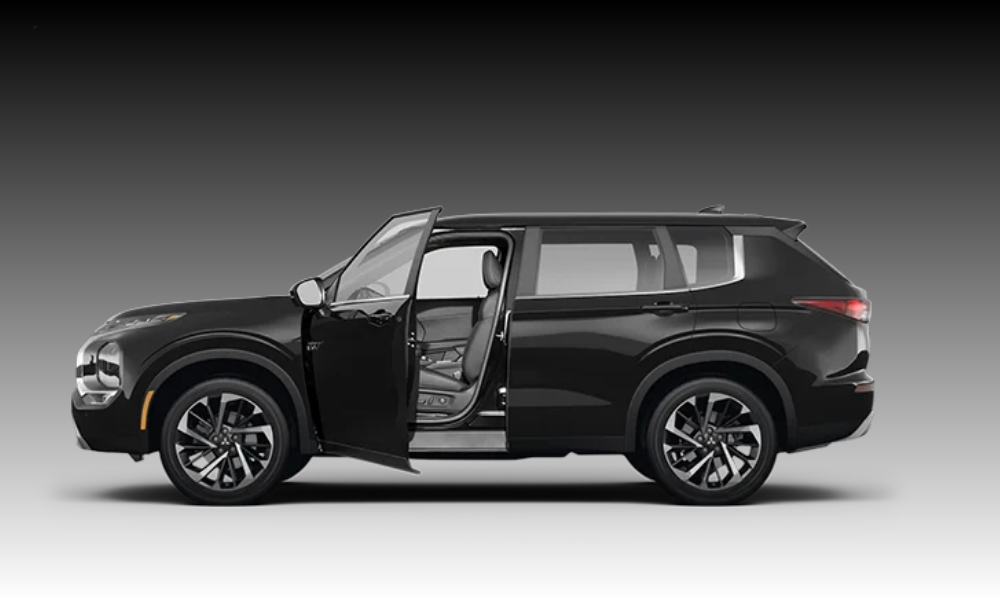
The 2023 Mitsubishi Outlander PHEV adopts a more aggressive and contemporary design language than its predecessor. The front fascia is dominated by a bold grille flanked by sharp LED headlights, giving the vehicle a distinctive road presence. The overall silhouette is clean and athletic, with pronounced wheel arches and a gently sloping roofline.
Compared to rivals like the Toyota RAV4 Prime and Honda CR-V, the Outlander PHEV leans into a more rugged aesthetic. It looks like it could handle a dirt road, even if most owners will never take it off pavement. The design is not as polarizing as some competitors, but it is distinctive enough to stand out in a crowded segment.
Driving Experience
The driving experience of the 2023 Mitsubishi Outlander PHEV is best described as composed and comfortable rather than exciting. In electric mode, the vehicle feels very much like a full EV. The instant torque from the electric motors provides responsive acceleration around town, and the lack of a traditional transmission means no gear changes to interrupt the flow. The cabin is well insulated from road and wind noise, creating a serene environment for passengers.
On the highway, the Outlander PHEV settles into a comfortable cruise. The suspension absorbs most imperfections, though larger bumps can transmit a noticeable jolt into the cabin. The steering is light and easy to manage, making the vehicle feel smaller than its size suggests. However, it lacks the feedback that driving enthusiasts might desire.
In corners, the Outlander PHEV exhibits body roll, which is expected given its weight of approximately 4,651 to 4,751 pounds. The Super All-Wheel Control (S-AWC) system provides good grip, and the vehicle feels secure and predictable. It is not a sporty SUV, but it is not intended to be.
Performance and Acceleration
The 2023 Mitsubishi Outlander PHEV delivers solid performance for a family SUV. Total system output is 248 horsepower and 332 pound-feet of torque. The electric motors provide instant torque, making the vehicle feel responsive from a standstill.
Independent testing from Car and Driver recorded a 0 to 60 mph time of 6.6 seconds. This is significantly quicker than the standard gasoline Outlander and places the PHEV ahead of some competitors like the Ford Escape PHEV. Other tests have recorded times ranging from 6.5 to 6.9 seconds, depending on conditions and the specific trim tested.
The acceleration is smooth and linear, with no abrupt shifts or hesitation. The system seamlessly transitions between electric and hybrid power, and the driver can select different driving modes to prioritize efficiency or performance.
Ride Comfort and Cabin Refinement
The 2023 Mitsubishi Outlander PHEV delivers a ride that prioritizes comfort over sportiness. The independent front and rear suspension absorbs most road imperfections well, though larger bumps can transmit a noticeable jolt into the cabin.
The cabin is well insulated from wind and road noise, making highway journeys more pleasant. In electric mode, the Outlander PHEV is exceptionally quiet. When the gasoline engine engages, it can sound strained under hard acceleration, but it remains subdued in most driving conditions.
The front seats are comfortable and supportive, with available heating, ventilation, and even a massage function on higher trims. The second row is spacious and accommodating for adults, with generous legroom and reclining seats. The third row, while available, is best suited for children or short trips.
Interior and Luxury Feel
The interior of the 2023 Mitsubishi Outlander PHEV has been thoroughly revised and is a significant step forward from the previous generation. The materials are improved, the design is more modern, and the overall feel is more upscale.
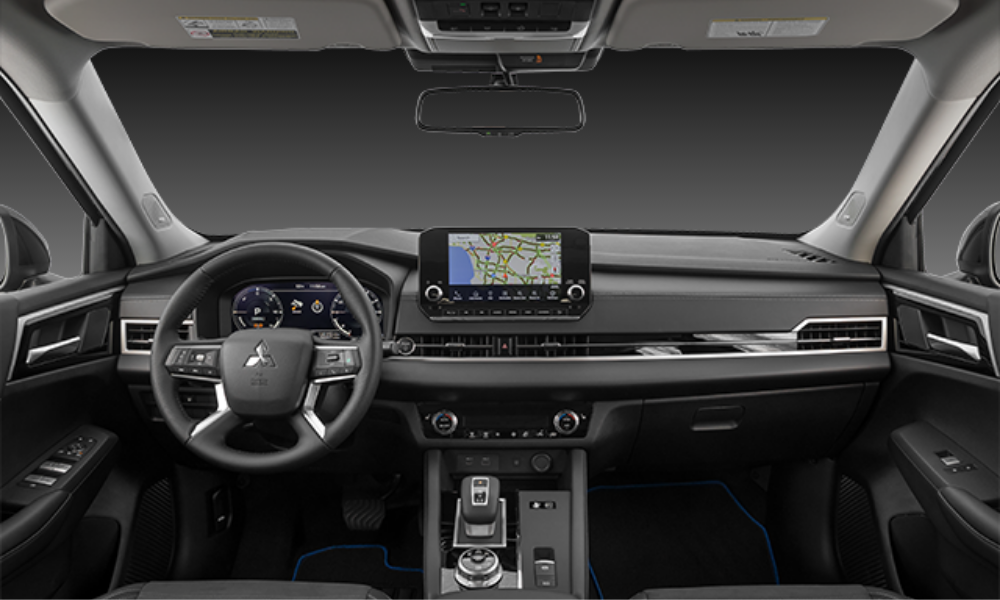
Higher trims feature perforated and diamond-stitched semi-aniline leather, with contrasting trim on the dashboard and armrests. The cabin is neatly presented and exceeds expectations for a mainstream brand. The driver benefits from a 12.3-inch digital instrument cluster that displays key information clearly. The 9-inch infotainment touchscreen is responsive and supports Apple CarPlay and Android Auto.
However, the interior does not quite match the premium feel of some competitors at this price point. For buyers who prioritize interior quality, the Toyota RAV4 Prime and Honda CR-V offer more cohesive designs.
Technology and Infotainment
The 2023 Mitsubishi Outlander PHEV comes well equipped with modern technology features. The 9-inch touchscreen is responsive and easy to use, with clear graphics and intuitive menus. Wireless Apple CarPlay and Android Auto are standard. A premium Bose sound system is available on higher trims.
All trims come with a suite of advanced driver assistance features, including forward collision mitigation, blind spot warning, lane departure warning with prevention, and rear cross-traffic alert with automatic braking. Higher trims add adaptive cruise control with lane-centering assistance. The 12.3-inch digital display provides clear and customizable information, including battery status, range, and hybrid system operation.
Mitsubishi Connect provides remote services, including the ability to check battery status, precondition the cabin, and locate the vehicle via a smartphone app.
Fuel Economy
The 2023 Mitsubishi Outlander PHEV achieves an EPA-estimated 64 MPGe when operating on a combination of electricity and gasoline. This figure is lower than the previous generation’s 74 MPGe and trails rivals like the Toyota RAV4 Prime. However, MPGe calculations can vary between manufacturers, so direct comparisons should be interpreted with some caution.
When the battery is depleted and the vehicle operates as a conventional hybrid, fuel economy is rated at 26 mpg combined (25 city, 27 highway). This is essentially identical to the non-hybrid Outlander, which is a reflection of the vehicle’s weight—approximately 4,651 pounds—and its three-row configuration. The 14.8-gallon fuel tank provides a combined electric-gasoline range of up to 420 miles.
For drivers who regularly charge and maximize electric miles, the overall fuel costs will be significantly lower than a conventional SUV. For those who frequently take long highway trips without charging, the fuel economy advantage over a standard Outlander is minimal.
Practicality and Storage
Practicality is one of the strongest attributes of the 2023 Mitsubishi Outlander PHEV. The second row is spacious and accommodating for adults. The third row, while tight, provides seating for children or for short trips. The Outlander PHEV is one of the few plug-in hybrid SUVs to offer seven-passenger seating.
Cargo space is competitive for the class. Behind the third row, there is approximately 9.1 to 11.7 cubic feet of space. With the third row folded, capacity expands to 33.5 cubic feet. With both the second and third rows folded, cargo capacity reaches 78.5 to 79.7 cubic feet. The cargo opening is wide and the floor is flat when both the second- and third-row seats are folded down.
The vehicle can tow up to 1,500 pounds, which is sufficient for a small trailer or a couple of jet skis.
Biggest Strengths and Weaknesses
The Outlander PHEV’s primary advantage is its 38-mile electric range, which is sufficient for most daily commutes without needing to engage the gasoline engine. The availability of seven-passenger seating is another clear strength, as few plug-in hybrids offer that kind of passenger capacity. The inclusion of DC fast charging, while using the less common CHAdeMO standard, still adds flexibility for longer trips that other PHEVs simply don’t have. The vehicle is also quicker than the standard gasoline Outlander, and the Super All-Wheel Control system provides confident traction in various weather conditions. The electric driving experience itself is quiet and refined, which makes the Outlander PHEV a pleasant vehicle for daily use.
But there are trade-offs. The CHAdeMO fast-charging standard is less convenient than CCS in the U.S., which may limit fast-charging options on the road. The fuel efficiency rating of 64 MPGe trails some competitors, and the third-row seats are tight, making them best suited for children rather than adults. While the interior materials are improved over the previous generation, they do not quite match the price point of some rivals. The Outlander PHEV is also assembled in Japan, which means it does not qualify for federal tax credits. And under hard acceleration, the gasoline engine can sound strained, which detracts from the otherwise refined experience.
Competitors Worth Considering
The 2023 Mitsubishi Outlander PHEV competes in a growing segment of plug-in hybrid SUVs. Its primary rivals include:
Toyota RAV4 Prime: This is the benchmark in the segment. The RAV4 Prime offers 42 miles of electric range, 302 horsepower, and 38 mpg in hybrid mode. It is more efficient and more powerful than the Outlander PHEV, but it does not offer a third row and is often more expensive and harder to find. The RAV4 Prime also uses the more common CCS charging standard. The Outlander PHEV offers a more comfortable and refined ride, with a quieter cabin and a more family-friendly focus.
Kia Sportage PHEV: The Sportage PHEV offers a stylish design, a well-appointed interior, and competitive electric range. It achieves 84 MPGe, better than the Outlander PHEV. It does not offer a third row and is less powerful than the Outlander PHEV.
Ford Escape PHEV: The Escape PHEV offers good electric range and fuel economy, but it is front-wheel drive only and does not offer a third row.
Hyundai Tucson PHEV: Similar to the Sportage PHEV, the Tucson PHEV offers a stylish design and competitive features but lacks a third row.
Kia Sorento PHEV: The Sorento PHEV is a direct competitor that also offers three-row seating. It offers 32 miles of electric range and a more engaging driving experience, though the Outlander PHEV offers more electric range (38 miles) and faster charging capability.
The Outlander PHEV stands out primarily for its available third-row seating and DC fast charging capability. For families who need seven seats and want plug-in capability, the Outlander PHEV is one of the few options available.
Trim Comparison
The 2023 Mitsubishi Outlander PHEV is available in several trim levels, with prices ranging from approximately $39,845 to $49,995. All trims come standard with all-wheel drive and the same 248-horsepower powertrain.
ES S-AWC: Starting at $39,845. Standard features include 18-inch alloy wheels, LED headlights, a 9-inch infotainment display, Apple CarPlay and Android Auto, and the full suite of safety features. This is the entry point and offers solid value for buyers who prioritize function over luxury.
SE S-AWC: Starting at $42,145. Adds heated front seats, a power-adjustable driver’s seat, and additional convenience features. This trim represents a reasonable step up in comfort.
Ralliart S-AWC: Starting at $44,145. This trim adds cosmetic enhancements inspired by Mitsubishi’s rally heritage, but it does not include any performance upgrades. It is a visual package only.
SEL S-AWC: Starting at $45,445. Adds leather seating, a premium audio system, a power liftgate, and additional luxury features. This is the sweet spot for buyers who want a well-equipped vehicle without reaching the top of the range.
40th Anniversary Edition: Starting at $49,995. This limited-edition trim adds unique styling elements, premium features, and exclusive badging. It is for buyers who want the most distinctive version of the Outlander PHEV.
All prices exclude the destination charge of approximately $1,345. The vehicle is assembled in Japan and does not qualify for federal electric vehicle tax credits.
Which Trim Does Cardrav Recommend?
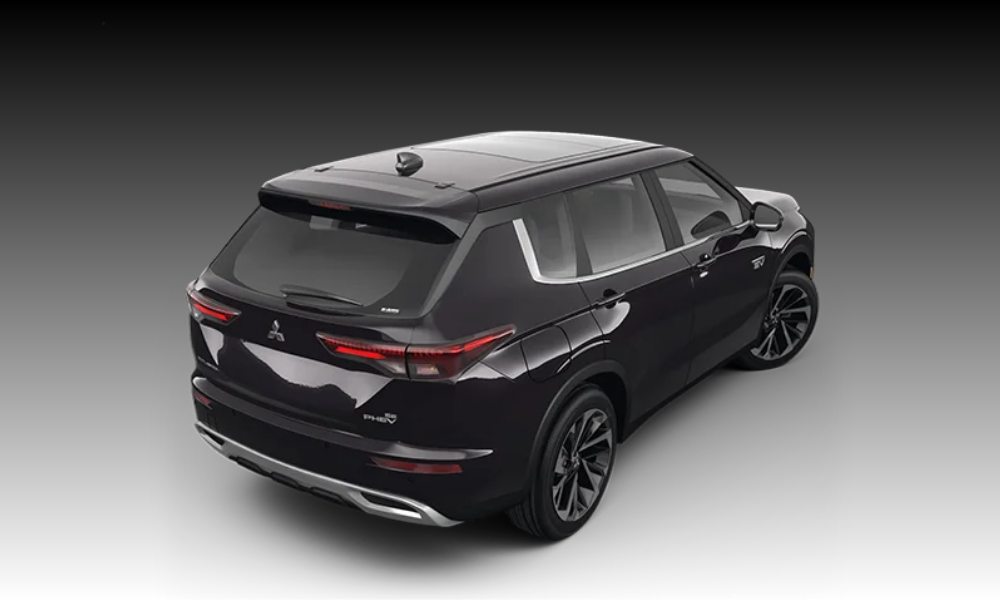
Cardrav recommends the SEL S-AWC trim for most buyers. It strikes the best balance between features and price, adding leather seating, a premium audio system, and a power liftgate without the significant price jump to the 40th Anniversary Edition.
The SE S-AWC is a solid choice for budget-conscious buyers who still want heated seats and a power-adjustable driver’s seat. The ES S-AWC is the best value for buyers who prioritize function over luxury. The Ralliart trim is best avoided unless the cosmetic upgrades are genuinely appealing, as it adds no performance benefit. The 40th Anniversary Edition is for buyers who want the most distinctive version and are willing to pay for it.
Should You Buy It?
Yes, if you need seven seats and want a plug-in hybrid. The Outlander PHEV is one of the few vehicles in its class that offers both. The 38 miles of electric range covers most daily commutes, and the DC fast charging capability adds flexibility for longer trips.
Yes, if you want a practical, family-friendly SUV with all-wheel drive. The Outlander PHEV delivers genuine utility with confident all-weather traction and a spacious interior.
No, if you prioritize maximum fuel efficiency. The Outlander PHEV’s 64 MPGe lags behind the Toyota RAV4 Prime and other rivals.
No, if you want a premium interior or a sporty driving experience. The Outlander PHEV’s interior materials don’t quite match the price point of some competitors, and the driving experience is more comfortable than exciting.
No, if you frequently use public fast chargers. The CHAdeMO standard is less common than CCS, which may make finding a compatible charger more difficult.
Final Verdict
The 2023 Mitsubishi Outlander PHEV is a vehicle that prioritizes practicality over excitement. It is not the most efficient plug-in hybrid, nor is it the most powerful. It does not have the most luxurious interior or the most advanced technology. But it does something that few other vehicles in its class can do: it offers seven-passenger seating and DC fast charging in a plug-in hybrid package.
For families who need to carry more than five people and want to reduce their fuel consumption, the Outlander PHEV is one of the few choices available. The 38 miles of electric range covers most daily commutes, and the DC fast charging capability adds flexibility for longer trips.
The compromises are real. The third row is tight. The interior materials are not class-leading. The CHAdeMO charging standard is less convenient than CCS. And the fuel economy in hybrid mode is unremarkable.
But for buyers who prioritize family-friendly utility and plug-in capability, the Outlander PHEV delivers where it counts. It is a practical, capable, and useful vehicle that makes a strong case for itself in a growing but still niche segment.
Frequently Asked Questions
Is the 2023 Mitsubishi Outlander PHEV a good family vehicle?
Yes, for families who need to carry up to seven passengers. The Outlander PHEV offers available third-row seating, which is rare among plug-in hybrids. The second row is spacious and comfortable, and the third row is suitable for children or short trips. The 38-mile electric range covers most daily commutes, and the DC fast charging capability adds flexibility for longer journeys.
How does the 2023 Mitsubishi Outlander PHEV compare to the Toyota RAV4 Prime?
The Toyota RAV4 Prime offers more power (302 hp vs. 248 hp), longer electric range (42 miles vs. 38 miles), and better fuel efficiency (94 MPGe vs. 64 MPGe). However, the Outlander PHEV offers available third-row seating, which the RAV4 Prime does not. The RAV4 Prime is also typically more expensive and harder to find. The Outlander PHEV offers a more comfortable and refined ride, with a quieter cabin and a more family-friendly focus. Choose the Outlander PHEV if you need seven seats; choose the RAV4 Prime if you prioritize efficiency and performance.
What is the real-world electric range of the 2023 Mitsubishi Outlander PHEV?
The EPA-rated electric range is 38 miles. In real-world driving, the actual range depends on driving style, temperature, and use of climate control. At highway speeds, the range is closer to 24 miles. For most daily commutes, the Outlander PHEV provides sufficient electric range to complete the trip without using gasoline.
How long does it take to charge the 2023 Mitsubishi Outlander PHEV?
Using a Level 2 (240V) charger, the 20 kWh battery can be fully charged in approximately 6.5 hours. Using a CHAdeMO DC fast charger, the battery can be charged to 80 percent in approximately 38 minutes. Using a standard household 120V outlet, charging takes more than 16 hours and is not recommended for daily use. The Outlander PHEV is one of the few non-luxury-brand plug-in hybrids in the U.S. to offer fast-charging capability.
Does the 2023 Mitsubishi Outlander PHEV qualify for federal tax credits?
No. The Outlander PHEV is assembled in Japan, which means it does not meet the North American assembly requirement for federal electric vehicle tax credits. Some states may offer their own incentives, so it is worth checking local programs.