2022 Hyundai Tucson Review: Hyundai rarely changes the direction of an entire model line with a single redesign, but that’s exactly what happened here. For years, the Tucson was viewed as a sensible compact SUV that offered value and practicality without giving buyers a compelling reason to choose it over segment leaders. The fourth-generation model changed that perception almost overnight. With bold styling, a dramatically improved cabin, and the introduction of hybrid and plug-in hybrid powertrains, the 2022 Tucson arrived as a far more ambitious vehicle than any Tucson before it.
What makes this Tucson important is not only the design. Many automakers can make a crossover look aggressive for a few years. Hyundai did something more useful. It took one of the most competitive classes in the market and built a vehicle that felt larger, more expensive, and more thoughtfully packaged than buyers expected at this price point. That matters because compact SUV shoppers are no longer choosing between basic family transportation and something interesting. They want both.
The exterior is the obvious talking point. Hyundai’s “parametric dynamics” styling gave the Tucson a face that could not be mistaken for a Toyota RAV4, Honda CR-V, Mazda CX-5, or Ford Escape. The lighting signature alone made the SUV feel more futuristic than most of its rivals when it launched. But the shape is not just decorative. The longer body and wider stance help create one of the roomiest cabins in the segment.
Inside, the Tucson feels like a serious step forward for Hyundai. The dashboard is cleaner, the screens are better integrated, and the cabin has a more premium mood than the badge might suggest. Not every material is luxurious, and some touch-sensitive controls will not please every driver, but the overall impression is far stronger than before.
The powertrain lineup also gives the Tucson real depth. The standard 2.5-liter engine is fine for regular commuting, but the hybrid and plug-in hybrid versions are where the vehicle becomes more convincing. They add power, improve efficiency, and make the Tucson feel more refined in daily driving. That variety allows Hyundai to challenge the RAV4, CR-V, Escape, and Sportage from several angles at once.
The 2022 Tucson is not perfect. The base engine can feel ordinary, the sport-themed N Line looks faster than it drives, and the plug-in hybrid costs noticeably more than the standard model. Still, this generation changed the way buyers looked at Hyundai’s compact SUV. It turned the Tucson from a safe alternative into one of the main reasons the segment became even harder for everyone else.
Our Take
The 2022 Hyundai Tucson is one of those vehicles that makes more sense the longer you study it. At first, the design grabs your attention. Then the cabin space starts to impress. After that, the hybrid lineup, safety equipment, warranty coverage, and pricing make the argument even stronger.
This is not the sportiest compact SUV in the class. A Mazda CX-5 still feels more connected from behind the wheel, and a Toyota RAV4 Hybrid has a stronger reputation for long-term resale value. But the Tucson wins buyers over by feeling complete. It offers style without sacrificing practicality, technology without becoming confusing, and comfort without pretending to be a luxury SUV.
For most shoppers, the hybrid model is the version that best represents the Tucson’s strengths. It feels smoother and more responsive than the standard gasoline model while delivering better fuel economy. The plug-in hybrid is appealing for drivers who can charge at home, but the regular hybrid is the easier recommendation for most families.
Pros & Cons
Pros
- Bold exterior design that still feels distinctive
- Spacious cabin with excellent rear-seat legroom
- Strong hybrid and plug-in hybrid options
- Comfortable ride quality
- Impressive safety credentials
- Premium-feeling interior on higher trims
- Excellent warranty coverage
Cons
- Standard 2.5-liter engine feels average
- N Line and XRT trims are mostly appearance packages
- Touch-sensitive controls may annoy some drivers
- Plug-in hybrid loses some cargo space
- Limited trims can become expensive
What’s New for 2022
The 2022 Hyundai Tucson was completely redesigned, marking the start of the fourth generation. It became larger, sharper, more spacious, and far more visually distinctive than the outgoing model.
Hyundai introduced its bold parametric design language, giving the Tucson a dramatic front end with hidden daytime running lights integrated into the grille. This design choice helped the SUV stand apart immediately in a segment often filled with conservative shapes.
The cabin also changed dramatically. The 2022 Tucson gained a cleaner dashboard, available digital displays, improved infotainment technology, and a more upscale overall layout. Passenger space increased, especially in the second row, making the Tucson one of the roomiest compact SUVs of its model year.
The powertrain lineup expanded as well. In addition to the standard 2.5-liter gasoline engine, Hyundai added hybrid and plug-in hybrid options. These versions gave the Tucson better performance, improved fuel economy, and a stronger answer to rivals such as the Toyota RAV4 Hybrid and Ford Escape Hybrid.
Hyundai also added more standard and available safety technology. The 2022 Tucson received strong safety recognition, including an IIHS Top Safety Pick+ award, helping reinforce its appeal as a family-focused compact SUV.
Exterior Design
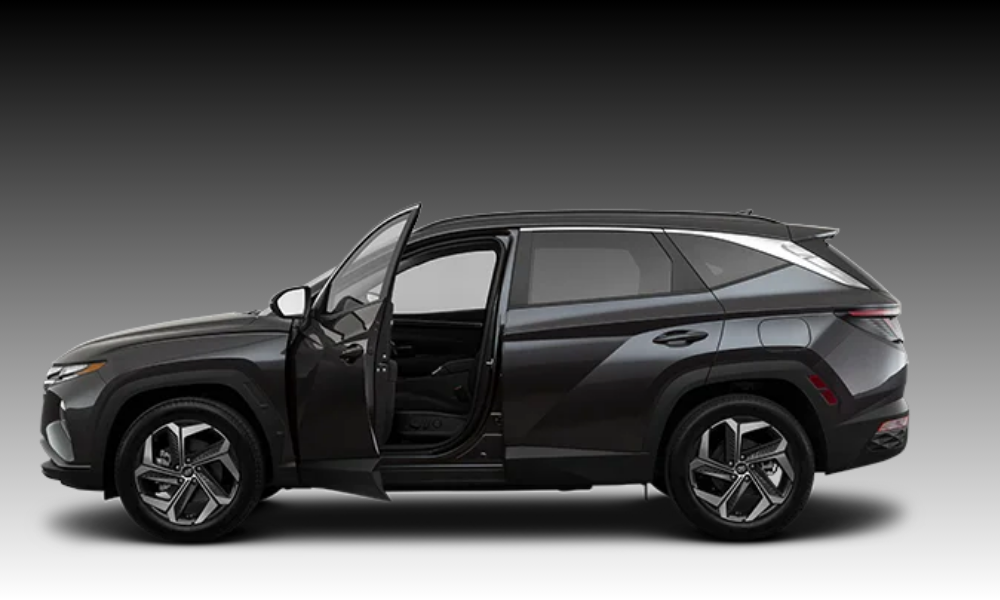
The 2022 Tucson’s design remains one of the boldest styling statements ever made in the compact SUV segment. While most manufacturers play it safe with evolutionary updates, Hyundai took a far more aggressive approach. The result is a crossover that still looks modern years after its introduction.
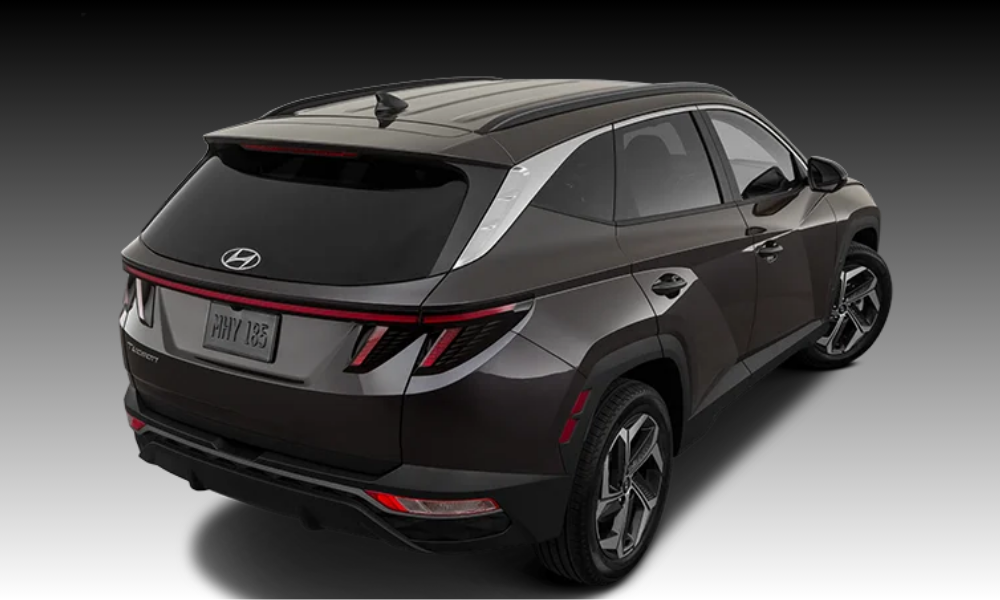
Its most recognizable feature is the front lighting arrangement. The daytime running lights blend directly into the grille when turned off, creating a distinctive appearance that immediately separates the Tucson from nearly every competitor on the road. It was a risky design decision at launch, but it helped establish a unique identity in a class filled with similar-looking vehicles.
The sharp body creases and geometric surfaces continue along the sides, giving the SUV a sense of movement even when parked. Some buyers may find the styling busy compared to the cleaner appearance of a Honda CR-V or Toyota RAV4, but few would accuse the Tucson of being forgettable.
More importantly, the dramatic styling serves a purpose. The longer wheelbase and larger overall dimensions create a vehicle that looks substantial without sacrificing efficiency or maneuverability. It is one of the rare compact SUVs that appears larger than it actually is.
Driving Experience
The Tucson was never designed to be the enthusiast’s choice in this segment, and Hyundai wisely avoided pretending otherwise. Instead, it focuses on delivering a calm, comfortable, and predictable driving experience that suits the needs of most families.
Around town, visibility is good, steering effort is light, and the vehicle feels easy to place on the road. Daily commuting is largely stress-free, which is exactly what many compact SUV buyers want. The suspension does an excellent job of smoothing out rough pavement and keeping occupants comfortable over longer journeys.
Highway driving is where the Tucson feels most at home. The cabin remains reasonably quiet, road imperfections are well controlled, and the vehicle tracks confidently at speed. Long-distance travel feels effortless, particularly in hybrid models where the powertrain operates with impressive smoothness.
The standard 2.5-liter engine gets the job done, but it rarely feels eager. Acceleration is adequate rather than exciting, and drivers carrying passengers or cargo may occasionally wish for more power. Fortunately, Hyundai anticipated this criticism.
The hybrid and plug-in hybrid models transform the Tucson’s personality. Additional torque from the electric motor provides stronger low-speed response, smoother acceleration, and a more refined overall driving experience. These versions feel better suited to the vehicle’s character and justify their higher price tags.
While a Mazda CX-5 remains more engaging on a winding road, the Tucson counters with greater comfort and a more relaxed attitude. For many buyers, that trade-off will be worth making.
Performance & Acceleration
Performance varies significantly depending on which Tucson buyers choose.The standard 2.5-liter four-cylinder produces 187 horsepower and 178 lb-ft of torque. Paired with an eight-speed automatic transmission, it provides respectable everyday performance. The power delivery is smooth, but there is little excitement when accelerating aggressively. It feels competent rather than memorable.
Hybrid models tell a different story. Combining a turbocharged 1.6-liter engine with electric assistance produces a healthier 226 horsepower. More importantly, the additional torque arrives instantly, making the vehicle feel more responsive in real-world driving conditions.
The plug-in hybrid sits at the top of the range with 261 combined horsepower. It delivers the quickest acceleration in the lineup while also providing the ability to drive short distances using electricity alone. Buyers seeking both efficiency and performance will naturally gravitate toward this model.
What stands out most is not outright speed but refinement. The electrified versions feel smoother, quieter, and more sophisticated than the standard gasoline model. That’s why the hybrid remains the powertrain we would recommend to most Tucson shoppers.
Ride Comfort & Cabin Refinement
If there is one area where the Tucson consistently impresses, it is ride comfort. Hyundai clearly prioritized passenger comfort during development, and the results are noticeable from the moment the vehicle begins moving. The suspension absorbs bumps, potholes, and broken pavement with surprising composure, giving the Tucson a mature character that feels closer to a larger SUV than a compact crossover.
Seat comfort is another highlight. Front occupants benefit from supportive seating that remains comfortable during extended journeys, while rear passengers enjoy enough space to stretch out without feeling confined. The generous second-row legroom remains one of the Tucson’s strongest advantages over several rivals.
Noise isolation is equally impressive. Wind noise is well controlled, and road noise remains subdued on most surfaces. Hybrid models are particularly refined at lower speeds, often moving through traffic with minimal engine intrusion.
The overall result is a vehicle that encourages long-distance travel rather than merely tolerating it. While luxury-brand SUVs still offer higher levels of refinement, the Tucson delivers a surprisingly premium experience for its price point.
Interior & Luxury Feel
Open the door of the 2022 Tucson and one thing becomes immediately clear: Hyundai wanted this cabin to feel like a step above the segment’s expectations. The company didn’t simply add a larger screen or a few decorative trim pieces. It rethought the entire environment, creating an interior that feels far more sophisticated than many buyers expect from a mainstream compact SUV.
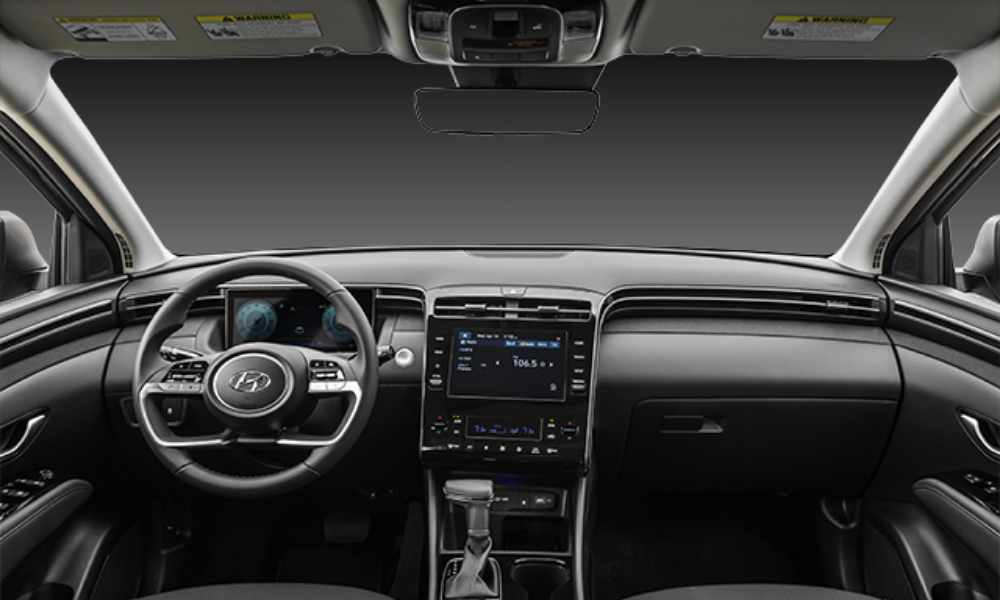
The dashboard design is clean and modern, with horizontal lines that visually widen the cabin. Unlike some competitors that rely on busy styling or oversized controls, the Tucson presents a calmer and more upscale atmosphere. Even years after its introduction, the design still looks contemporary.
Space is arguably the Tucson’s greatest interior strength. Hyundai used the larger platform to create one of the roomiest cabins in the class, particularly for rear-seat passengers. Adults can comfortably sit behind taller drivers without feeling cramped, and families installing child seats will appreciate the generous second-row accommodations.
Higher trims elevate the experience further with premium materials, leather upholstery, ventilated seats, and ambient lighting. While it doesn’t quite reach luxury-brand territory, it often feels more expensive than its price tag suggests. That’s especially true when compared with some rivals that prioritize durability over visual appeal.
Not everything is perfect. The glossy piano-black surfaces attract fingerprints quickly, and some touch-sensitive controls require more attention than traditional buttons. Still, these are relatively minor complaints in what is otherwise one of the most impressive interiors in the segment.
The Tucson may have arrived with bold exterior styling, but its cabin is what convinces many buyers to stay interested after the first test drive.
Technology & Infotainment
Technology became one of the Tucson’s strongest selling points the moment this generation arrived.
Even lower trims provide a user-friendly infotainment experience with smartphone connectivity, intuitive menus, and clear graphics. Hyundai understood that modern buyers expect technology to work seamlessly, not require a learning curve every time they get behind the wheel.
The available 10.25-inch touchscreen gives the dashboard a premium appearance and remains one of the cleaner systems in the segment. Navigation graphics are sharp, menus are logically arranged, and system responses are generally quick. Unlike some competitors that bury common functions in endless submenus, Hyundai keeps things relatively straightforward.
Digital instrumentation is another highlight. Higher trims receive a fully digital gauge cluster that looks modern without becoming distracting. It provides useful information while contributing to the Tucson’s upscale atmosphere.
Wireless Apple CarPlay and Android Auto compatibility add further convenience, while available features such as a Bose premium audio system, connected services, wireless charging, and Hyundai’s digital key technology help the Tucson compete with vehicles costing significantly more.
There are still some compromises. The touch-sensitive climate controls look elegant but are not always as easy to use while driving as traditional physical buttons. Even so, the overall technology package remains one of the Tucson’s biggest strengths and helped establish it as one of the most modern compact SUVs of its era.
Fuel Economy
Fuel economy depends heavily on which Tucson powertrain buyers choose. The standard 2.5-liter gasoline model delivers respectable efficiency for a compact SUV, but it doesn’t stand out in a segment increasingly dominated by electrified alternatives. It performs well enough for everyday driving, yet its numbers are unlikely to be the reason buyers choose it.
The hybrid changes that equation considerably. It delivers significantly better fuel economy while also feeling smoother and more responsive on the road. For many shoppers, it represents the best balance of efficiency, performance, and value in the entire lineup.
At the top sits the plug-in hybrid. Drivers who can regularly charge at home may complete much of their daily commuting without using gasoline at all. While the purchase price is higher, the potential fuel savings and added electric range make it an attractive option for the right buyer.
Practicality & Cargo Space
Practicality is where the Tucson truly earns its reputation as a family SUV. Many compact crossovers promise versatility, but the Tucson delivers it in ways owners notice every day. The wide-opening doors make entering and exiting easy, loading children into car seats is less of a struggle, and passengers benefit from generous space throughout the cabin.
The rear seat deserves particular praise. Legroom is among the best in the segment, allowing adults to travel comfortably in the second row for extended periods. That’s not something every compact SUV can claim.
Cargo space is equally impressive. Behind the rear seats, the Tucson provides enough room for grocery runs, airport luggage, strollers, sports equipment, and the countless items that accumulate during family life. The cargo area is well-shaped and easy to access, making it genuinely useful rather than merely impressive on paper.
Fold the rear seats and the Tucson becomes even more accommodating. Whether transporting furniture boxes, camping gear, bicycles, or home-improvement supplies, the available space rivals some larger SUVs.
Storage throughout the cabin has also been thoughtfully considered. Small-item compartments, door pockets, cupholders, and center-console storage areas are positioned where drivers and passengers naturally expect them. These details rarely appear in advertisements, but they play a major role in daily ownership satisfaction.
Ultimately, practicality is one of the reasons the Tucson became such a strong competitor in the compact SUV class. It doesn’t simply provide space. It uses that space intelligently, creating a vehicle that feels ready for almost anything family life can throw at it.
Safety & Driver Assistance
The 2022 Hyundai Tucson arrived at a time when safety had become one of the most important factors in the compact SUV segment, and Hyundai responded by making advanced driver-assistance technology a major part of the vehicle’s appeal.
Even lower trims receive an impressive collection of standard safety features. Automatic emergency braking, forward collision warning, lane-keeping assistance, lane-following assistance, blind-spot monitoring, rear cross-traffic alert, driver attention warning, and safe exit warning help create a vehicle that constantly works in the background to reduce risk.
Move into higher trims and the technology becomes even more sophisticated. Features such as Highway Driving Assist, adaptive cruise control with stop-and-go capability, navigation-based assistance, surround-view cameras, and enhanced collision-avoidance systems make long-distance travel noticeably less stressful.
What makes Hyundai’s systems particularly effective is that they rarely feel intrusive. Rather than constantly warning or correcting the driver, they generally intervene smoothly and predictably. The technology feels like a helpful co-pilot rather than an overprotective supervisor.
The result is a compact SUV that earned strong safety recognition and gives families plenty of confidence behind the wheel. For parents shopping in this segment, the Tucson’s safety package remains one of its strongest arguments.
Competitors Worth Considering
The Toyota RAV4 is perhaps the Tucson’s most obvious rival. It offers exceptional resale value, a strong reputation for reliability, and one of the most successful hybrid powertrains in the industry. Buyers focused on long-term ownership costs will naturally compare these two vehicles.
Honda’s CR-V takes a different approach. Rather than relying on dramatic styling, it focuses on refinement, practicality, and everyday usability. It remains one of the safest recommendations in the segment and continues to attract buyers who prioritize simplicity and long-term dependability.
The Mazda CX-5 appeals to drivers who care more about driving enjoyment and interior quality. It feels more premium than most mainstream competitors and delivers a more engaging experience behind the wheel, though it sacrifices some interior space compared to the Tucson.
Ford’s Escape, Kia Sportage, Subaru Forester, and Volkswagen Tiguan all deserve consideration as well, but few combine the Tucson’s mix of styling, cabin space, technology, safety, and hybrid availability quite as effectively.
Which Trim Does Cardrav Recommend?
For most buyers, the Tucson Hybrid SEL Convenience strikes the best balance in the lineup. It combines the stronger hybrid powertrain with a generous collection of comfort, technology, and safety features without pushing the price into luxury-SUV territory. The improvement in fuel economy alone makes it easier to justify over the standard gasoline model.
Buyers who prioritize maximum efficiency and have access to home charging should consider the Plug-In Hybrid, but for the majority of families, the Hybrid SEL Convenience remains the smartest overall choice.
Final Verdict: Should You Buy It?
The 2022 Hyundai Tucson wasn’t simply a redesign. It was a statement.
Hyundai took a nameplate that had spent years competing on value and transformed it into one of the most complete compact SUVs on the market. The bold styling attracted attention, but the spacious interior, impressive technology, strong safety credentials, and available hybrid powertrains are what ultimately turned the Tucson into a serious contender.
There are rivals that outperform it in specific areas. The Mazda CX-5 is more engaging to drive. The Toyota RAV4 has a stronger reputation for resale value. The Honda CR-V remains one of the safest recommendations in the segment. Yet very few competitors manage to balance so many strengths at once.
For buyers looking for a stylish, practical, efficient, and family-friendly compact SUV, the 2022 Tucson remains one of the strongest choices of its generation. Years after its launch, it still feels like one of Hyundai’s most important success stories.
FAQ
Is the 2022 Hyundai Tucson Hybrid worth the extra money over the standard Tucson?
For most buyers, yes. The hybrid not only delivers significantly better fuel economy, but it also feels smoother and more responsive in everyday driving. The added refinement often makes the upgrade worthwhile even before fuel savings are considered.
How reliable is the 2022 Hyundai Tucson compared with the Toyota RAV4 and Honda CR-V?
The Tucson benefits from Hyundai’s strong warranty coverage and has generally earned positive reliability feedback. However, the RAV4 and CR-V still hold longer-established reputations for long-term dependability and resale value.
Does the 2022 Hyundai Tucson have enough room for a family of five?
Yes. One of the Tucson’s biggest advantages is its spacious cabin. Rear-seat legroom is among the best in the segment, and cargo capacity is more than sufficient for family road trips, groceries, strollers, and everyday use.
Which 2022 Hyundai Tucson trim offers the best value?
The Hybrid SEL Convenience is the trim we would recommend most often. It combines excellent fuel economy, advanced safety technology, modern infotainment features, and strong overall value without approaching the price of top-tier trims.
What makes the 2022 Hyundai Tucson different from other compact SUVs?
Its combination of bold styling, class-leading passenger space, advanced technology, available hybrid and plug-in hybrid powertrains, and strong safety credentials helps it stand out in one of the most competitive segments in the automotive market.