2023 Volkswagen Tiguan: Volkswagen isn’t chasing headlines the way it used to. The Tiguan has been around since 2007, and unlike many competitors, it doesn’t shout for attention. It simply sells. Year after year, the Tiguan stays near the top of Europe’s compact SUV charts, and the 2023 version continues that streak without trying to reinvent what works.
That approach has its fans and its critics. Buyers who want drama go elsewhere. Buyers who want a sensible, well-built family SUV that won’t embarrass them on a long drive keep coming back to the Tiguan. The 2023 model year, built on the updated second-generation platform, is more of a refinement than a revolution. Refinement is something Volkswagen tends to do well.
The compact SUV market is crowded with cars that promise personality. Mazda sells you driving spirit. Honda sells you hybrid efficiency. Hyundai sells you warranty coverage and screen real estate. Volkswagen, traditionally, sells you something harder to put into a marketing headline. It sells the sense that nothing on the car will go wrong in year three, year five, or year seven.
The Tiguan 2023 sits in that tradition. It doesn’t lead its class on any single metric. The Mazda CX-5 is more fun. The Toyota RAV4 is more efficient. The Hyundai Tucson looks more daring. The Tiguan simply does almost everything competently and lasts longer doing it. In a segment where new rivals arrive every model year, that consistency has a value that doesn’t always show up on a spec sheet.
For American buyers, the 2023 Tiguan comes primarily with a 2.0-liter turbocharged four-cylinder engine, an eight-speed automatic transmission, and either front-wheel drive or 4Motion all-wheel drive. Trim levels run from S through SE, SE R-Line Black, SEL R-Line, and SEL Premium R-Line. There is no longer a Tiguan with a manual gearbox in the U.S. market, and there is no hybrid option in this generation. That last point matters for buyers cross-shopping the Toyota RAV4 Hybrid or Honda CR-V Hybrid.
The car that shows up at your local VW dealer in 2023 is the result of a facelift introduced for the 2022 model year. That update sharpened the exterior, upgraded the interior technology, and added more standard safety equipment. It’s a mature product, and it behaves like one.
Our Opinion
The Tiguan is the right SUV for a buyer who doesn’t want to think about their SUV very often. It starts. It drives. It holds the road. It doesn’t ask for attention at fuel stops. After three years of ownership, it still feels like a coherent, well-assembled product in a way that several rivals don’t.
It is not the right SUV for buyers who want their vehicle to feel like an event. The Tiguan is competent, not charismatic. If you enjoy driving and want that enjoyment to translate into your daily vehicle, the Mazda CX-5 or even the Ford Escape will reward you more. The Tiguan rewards you by getting out of your way.
In short, the Tiguan 2023 is the adult in the room. That’s either exactly what you want or exactly what you don’t.
Pros and Cons
Pros:
- Build quality and material selection exceed most rivals at the price point
- Refined 2.0 TSI engine delivers strong low-end torque for daily driving
- One of the more comfortable long-distance cruisers in the compact SUV class
- Cargo capacity is genuinely class-competitive at 37.6 cubic feet behind the rear seats
- Driver assistance features come standard across the lineup, not locked behind expensive trim levels
- VW’s MIB3 infotainment system responds faster than the previous generation
- Residual values hold steady, particularly in SEL and R-Line trims
Cons:
- No hybrid powertrain available, a real gap in 2023 against the RAV4 Hybrid and CR-V Hybrid
- The eight-speed automatic can hesitate on kickdown when the engine is cold
- Third-row seating on FWD models is extremely tight and arguably not worth the option price
- The base S trim feels noticeably under-equipped for a vehicle approaching $30,000
- Road noise on coarse pavement is more pronounced than in some Japanese competitors
- Touch-sensitive controls on higher trims replicate the same frustrations found in the Golf and T-Roc
What’s New?
The 2023 Tiguan is effectively a carryover of the 2022 facelift, which was the more significant update. That refresh brought revised front and rear bumpers, a new grille design, updated LED lighting signatures, and a new steering wheel design borrowed from the Mk8 Golf.
Inside, the bigger change was the move to Volkswagen’s MIB3 infotainment system on a standard 8.0-inch touchscreen, with an 8.0-inch digital cockpit display now available across more trim levels. The shift-by-wire gear selector appeared on automatic models, which freed up console space but divided opinion among traditional VW owners.
For 2023 specifically, changes are minimal. Volkswagen made some trim content adjustments and updated option packages, but the mechanical and structural package is unchanged from the prior year. That’s worth knowing because it means any 2022-versus-2023 pricing advantage may be worth pursuing at your dealer.
Exterior Design
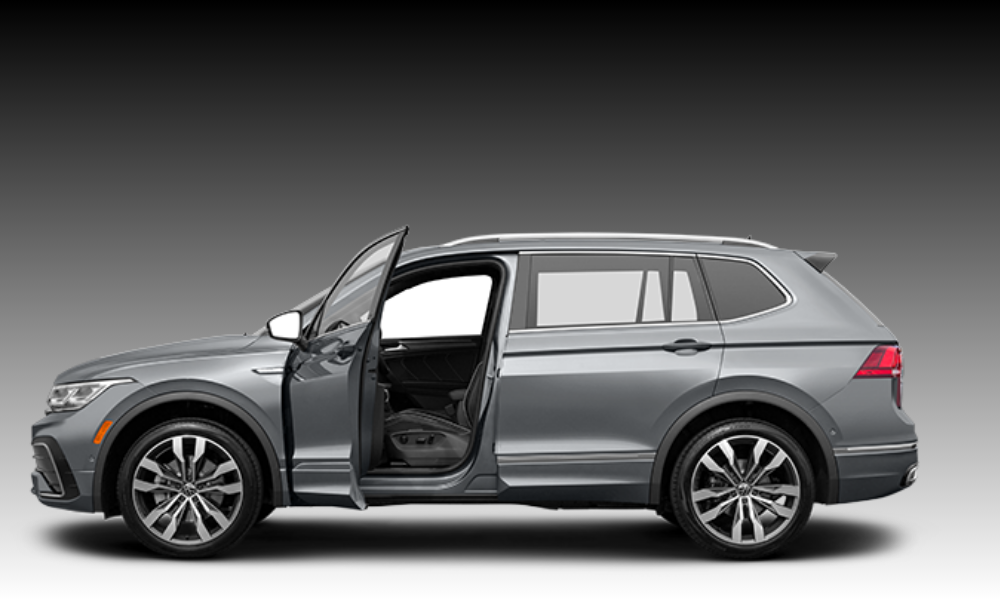
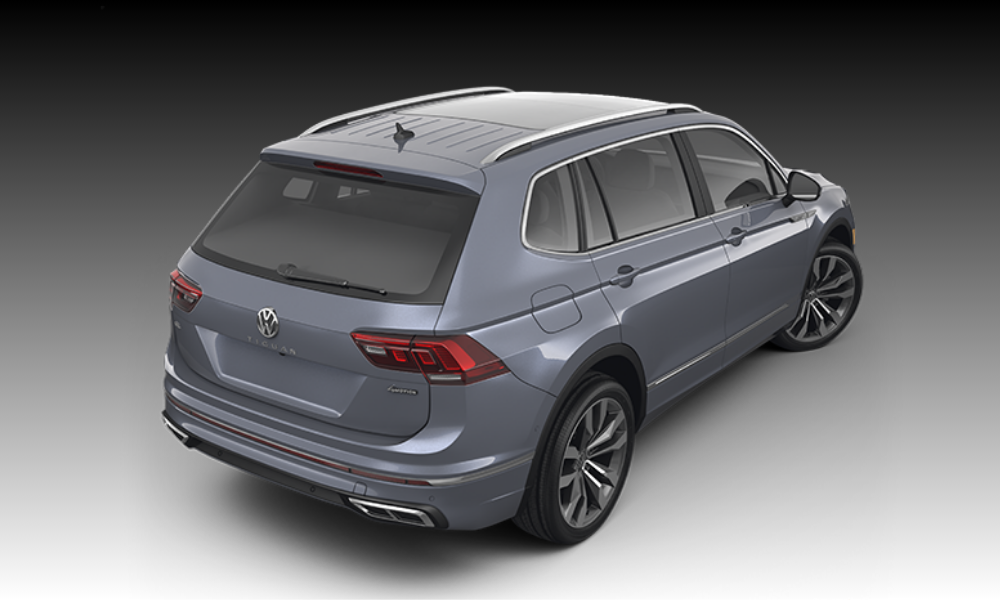
The facelifted Tiguan looks tidier and more grown-up than the pre-facelift car, without ever crossing into dramatic territory. The front end now wears a wider grille with a horizontal light bar that connects the LED headlights on higher trims, giving the car a more planted visual stance. The rear gets revised taillight graphics and a cleaner bumper treatment.
It’s not a design that turns heads at a traffic light. The Mazda CX-5 still has more visual flair. The Hyundai Tucson looks like it’s trying harder to be noticed. The Tiguan simply looks like a Volkswagen, which in this segment is a quieter kind of identity. Some buyers will find that refreshing. Others will find it anonymous.
The R-Line trims add a more aggressive front fascia, side skirts, and unique wheel designs that pull the design language a bit further forward. Even then, the Tiguan R-Line doesn’t shout. It raises its voice slightly.
Driving Experience
Here’s where the Tiguan earns its reputation and also where it reveals its limits.
The steering is accurate, well-weighted, and free of the artificial heaviness that has crept into several competitors. On a winding back road, the Tiguan responds to inputs predictably, and the chassis communicates enough about what’s happening at the front tires to keep you engaged without ever demanding your full attention. This is a Volkswagen family SUV that remembers VW’s hot-hatch DNA, even if only faintly.
The 2.0-liter turbocharged engine produces 201 horsepower and 221 lb-ft of torque, with peak torque arriving low in the rev range. In real-world driving, this means the Tiguan feels stronger than its horsepower figure suggests. Merging onto a highway or passing slower traffic requires less planning than in the naturally aspirated competitors from Toyota or Honda.
The eight-speed automatic, sourced from Aisin, is smooth in normal driving but can be hesitant when you ask for sudden acceleration from a standing start or a low-speed roll. It eventually gets there, but the delay is noticeable compared to the dual-clutch gearboxes VW uses in Europe. American buyers get this torque-converter unit because it’s better suited to the way Americans actually drive.
Around town, the Tiguan feels substantial without being cumbersome. The turning circle is competitive for the class. Visibility is good in most directions, with the high beltline and slightly thick rear pillars being the only meaningful compromises.
This is not an exciting SUV to drive. But it is a satisfying one. There’s a difference, and the Tiguan sits firmly on the satisfying side.
Performance and Engines
There is only one engine offered in the U.S.-market 2023 Tiguan. It is a 2.0-liter turbocharged four-cylinder producing 201 horsepower and 221 lb-ft of torque, paired exclusively with an eight-speed automatic transmission. Front-wheel drive is standard on S, SE, and SE R-Line Black trims. 4Motion all-wheel drive is standard on SEL R-Line and SEL Premium R-Line and optional on SE and SE R-Line Black.
For buyers in Europe, the engine lineup is broader, including 1.5 TSI, 2.0 TSI in various outputs, 2.0 TDI diesel options, and a plug-in hybrid eHybrid with around 24 miles of electric range. Those powertrains do not come to North America, which is one of the Tiguan’s bigger competitive disadvantages in this market.
Zero to 60 mph takes approximately 7.1 seconds in all-wheel-drive form, which is competitive but not class-leading. The Tiguan does not offer a performance variant in the U.S. The previous-generation Tiguan R was discontinued. Buyers seeking more punch will need to step up to a vehicle like the Mazda CX-50 or move into a different segment.
The 2.0 TSI is a refined unit at cruising speeds, and the turbo’s low-end torque delivery makes the car feel muscular in everyday driving. It is not a thrilling engine to wring out, but it is the kind of powertrain that becomes invisible in the best possible way after a few weeks of ownership.
Ride Comfort and Cabin Refinement
The Tiguan’s ride quality is one of its standout attributes. The suspension is tuned for comfort without becoming floaty, and the damping is well-controlled over expansion joints and broken pavement. On long highway stretches, the Tiguan settles into a relaxed rhythm that makes 400-mile days feel manageable.
Cabin refinement is good, though not class-leading. Wind noise is well-suppressed at speed, but tire noise on coarser asphalt is more pronounced than in the Toyota RAV4 or Honda CR-V. The engine remains quiet during cruising, only becoming audible under hard acceleration.
NVH is generally well-managed, and the Tiguan feels like a more substantial vehicle than many competitors in this price range. Door close quality, switchgear feel, and the general solidity of the cabin reinforce the impression that this is a car built to last.
Interior Design and Quality
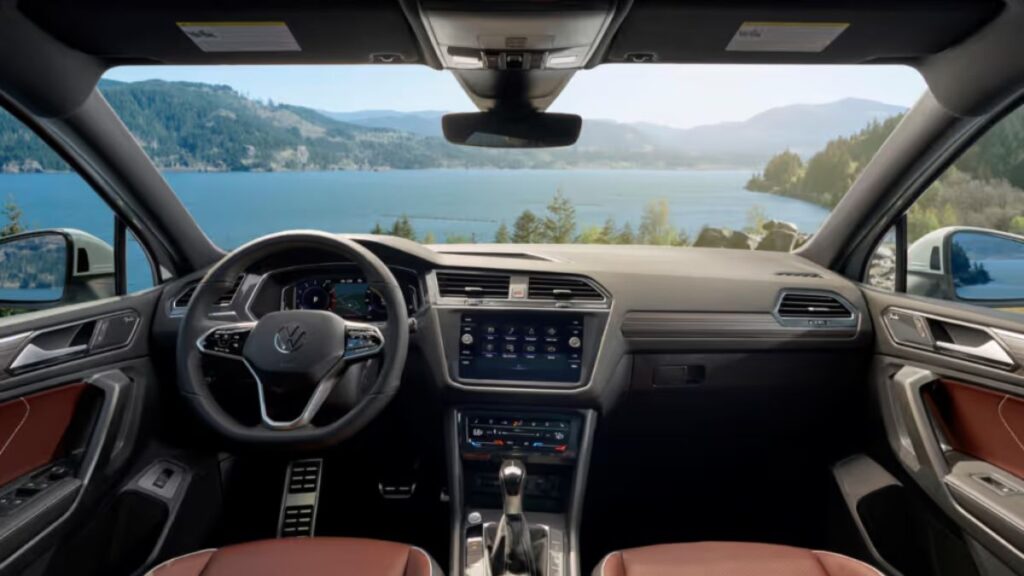
Volkswagen’s interior game has been strong for years, and the Tiguan benefits from that consistency. Materials in the cabin are appropriately premium for the price point, with soft-touch surfaces on the dashboard, door uppers, and center armrest. Hard plastics are present on lower door panels and around the climate control area, but they don’t feel cheap.
The 2023 Tiguan’s interior is clean and conservative. The dashboard architecture is simple and uncluttered, with the touchscreen sitting high on the dash and a row of physical shortcut buttons retained below it, which is a sensible decision after the haptic-heavy approach in some other VW Group products.
Front seats are comfortable and supportive, with adequate adjustment range. The driver’s seat in higher trims includes memory settings that work properly. Rear seat space is competitive for the class, with two adults fitting comfortably and a third being possible for shorter trips. Rear air vents are standard on most trims, which families will appreciate.
The third-row seat, available only on front-wheel-drive models, is extremely tight. It’s marketed as a seven-seat SUV, but the rearmost seats are suitable only for small children on short trips. Buyers genuinely needing a third row should look at the Volkswagen Atlas or a competitor like the Hyundai Santa Fe.
Technology and Infotainment
The MIB3 infotainment system on the standard 8.0-inch touchscreen is responsive and reasonably intuitive. Menu structure is logical, wireless Apple CarPlay and Android Auto are standard, and the system responds to inputs without the frustrating lag that characterized earlier VW infotainment generations.
The optional 8.0-inch digital cockpit instrument cluster replaces the traditional analog gauges and offers multiple display layouts. It works well and adds a sense of modernity to the cabin without becoming overwhelming or distracting.
The voice control system has improved significantly with the MIB3 generation, though it still doesn’t match the natural-language processing of some newer competitors. Climate control on most trims uses physical controls, which is welcome after the haptic-heavy direction in some other VW products. Higher trims do include some touch-sensitive controls on the steering wheel that require a learning period.
The Fender premium audio system, available on upper trims, delivers genuinely good sound quality and is worth considering if audio matters to you.
Fuel Consumption
The EPA rates the 2023 Tiguan at 23 mpg city, 30 mpg highway, and 26 mpg combined for front-wheel-drive models. All-wheel-drive versions come in at 22 city, 29 highway, and 25 combined.
Real-world figures are typically close to these ratings in mixed driving. Highway cruising can deliver 28 to 31 mpg consistently. City-only driving often lands in the 21 to 24 mpg range. The eight-speed automatic and the engine’s efficiency at low RPM help in stop-and-go conditions.
These numbers are competitive for a gasoline-only compact SUV with this level of power and standard all-wheel drive capability, but they fall short of hybrid alternatives. The Toyota RAV4 Hybrid delivers an EPA-estimated 40 mpg combined, and the Honda CR-V Hybrid sits in a similar range. For buyers covering significant annual mileage, that difference adds up quickly and represents the Tiguan’s clearest efficiency disadvantage.
Practicality and Storage
The Tiguan is one of the more practical compact SUVs available. With the rear seats up, the cargo area offers 37.6 cubic feet of space, which is genuinely competitive. Folding the rear seats down expands capacity to 73.4 cubic feet, more than enough for most family hauling needs.
The rear seats fold flat easily, and the load floor is low enough that loading heavy items doesn’t require lifting them high. A power tailgate is standard on higher trims and available on mid-trim models. A hands-free opening function is included on SEL Premium R-Line.
Cabin storage is good. The door pockets accept large water bottles. The center console bin is deep enough for personal items. Cup holders in both rows are appropriately sized. The glove compartment is a useful size, and there’s a sensible arrangement of USB-C ports distributed throughout the cabin.
For buyers regularly transporting children, the rear door openings are wide enough to make installing child seats manageable. The LATCH anchor points are clearly marked and easy to access.
Safety and Driver Assistance Systems
The 2023 Tiguan earned a five-star overall safety rating from the National Highway Traffic Safety Administration (NHTSA) and a Top Safety Pick designation from the Insurance Institute for Highway Safety (IIHS), with Good ratings in most categories.
Standard safety equipment across the entire Tiguan lineup includes forward collision warning with autonomous emergency braking, blind spot monitoring, rear cross traffic alert, and lane keeping assist. Adaptive cruise control with stop-and-go capability is standard on SE and above.
The driver assistance systems work without being overly intrusive, though the lane keeping assist can feel assertive on roads with unclear lane markings. Adjusting the sensitivity through the vehicle settings menu takes a few minutes and is worth doing early in ownership.
The available adaptive cruise control handles highway traffic smoothly, including stop-and-go situations, and works reliably in real-world conditions.
Worthy Competitors
Toyota RAV4: Hybrid efficiency is the headline advantage, with EPA-estimated 40 mpg combined. Build quality is comparable. Driving dynamics are duller than the Tiguan, and infotainment remains Toyota’s weakest point.
Honda CR-V: New for 2023, with a more modern interior, improved hybrid system, and class-leading rear seat and cargo space. Driving engagement has improved, and the CR-V now matches or exceeds the Tiguan in most categories except engine refinement.
Mazda CX-5: The most engaging compact SUV to drive, with genuinely premium interior materials and a well-sorted chassis. The trade-off is a tighter back seat, lower towing capacity, and less cargo space than the Tiguan.
Hyundai Tucson: Bold exterior design, strong warranty coverage, and a feature-heavy interior give it strong appeal for tech-focused buyers. The driving experience is less polished than the Tiguan, and long-term reliability data is still maturing compared to established rivals.
Key Strengths and Key Weaknesses
The Tiguan stands out for its solid build quality and long-term durability, easily beating many rivals in this area. Its 2.0 TSI engine feels smooth and delivers strong, usable torque that works well for everyday driving in both city traffic and highway cruising. The cargo area is practical and well-shaped, making it genuinely useful in real-world family use, and the standard safety equipment across all trims adds real value without forcing buyers into higher-priced versions. On top of that, it’s a comfortable SUV on long trips, where it settles into an easy, relaxed rhythm.
That said, it comes with clear trade-offs. There’s no hybrid option in a segment where efficiency is becoming a major priority, and the eight-speed automatic can hesitate a bit when you ask for quick acceleration. The third-row seating is more of a formality than a real usable space for adults, and the base S trim feels a bit light on features for the price. Road noise also becomes more noticeable on rough pavement compared to some Japanese competitors.
Which Category Does CarDrav Recommend?
The Tiguan sits in the mature, well-rounded compact SUV category alongside the Honda CR-V, prioritizing competence and longevity over excitement or efficiency extremes.
CarDrav recommends the SE trim with the optional 4Motion all-wheel drive as the configuration that offers the best value. It adds all-wheel-drive capability for approximately $1,800 over the front-wheel-drive SE, which is reasonable for the security and weather performance gain. Buyers wanting more features should consider the SE R-Line Black for its appearance package and additional tech.
This is the right SUV for buyers who plan to keep their vehicle long-term, cover moderate to high annual mileage, and want a car that won’t demand much from them mechanically or emotionally.
Conclusion: Is It Worth Buying?
The 2023 Volkswagen Tiguan is worth buying if you want a compact SUV that prioritizes competence, build quality, and long-term value over flashy design or class-leading efficiency. It does most things well and nothing particularly badly.
It is not worth buying if you cover significant annual mileage and would benefit from hybrid efficiency. The Toyota RAV4 Hybrid and Honda CR-V Hybrid will save you real money at the pump over five years of ownership, and they should be on your shortlist.
If the Tiguan’s blend of refinement, all-weather capability, and understated design appeals to you, it remains one of the most rational purchases in its segment. It is not exciting. It is, however, exactly what it claims to be.
Frequently Asked Questions
Is the 2023 Volkswagen Tiguan reliable?
The Tiguan has a generally strong reliability record, particularly the 2.0 TSI engine which has been refined across multiple generations. The eight-speed automatic has been less prone to issues than the dual-clutch gearboxes VW used previously. Routine maintenance is straightforward, and parts availability through VW’s dealer network is wide. Long-term durability remains one of the Tiguan’s stronger selling points compared to newer competitors with less proven track records.
How does the Tiguan compare to the Toyota RAV4?
The RAV4 wins decisively on fuel efficiency if you choose the hybrid variant, with EPA-estimated 40 mpg combined versus the Tiguan’s 25 to 26 mpg. The Tiguan counters with a more refined driving experience, a more cohesive interior design, and a quieter cabin at highway speeds. Build quality is comparable. The choice depends on whether efficiency or driving refinement matters more to your daily reality.
What is the real-world fuel economy of the 2023 Tiguan?
Expect 25 to 28 mpg in mixed driving conditions. Highway cruising can deliver 28 to 31 mpg consistently, while city-only driving typically falls in the 21 to 24 mpg range. These numbers track close to EPA estimates and hold up across seasons and driving styles. Against hybrid competitors, the Tiguan cannot match their efficiency, which is its clearest running-cost disadvantage.
Is the Tiguan big enough for a family?
For a family with two or three children, yes. Rear seat space is genuinely competitive in the compact SUV class, and cargo capacity of 37.6 cubic feet behind the rear seats handles most family hauling needs. The optional third row on front-wheel-drive models is too tight for regular use. For a family genuinely needing three rows of usable seating, the Volkswagen Atlas is the appropriate step up.
Does the 2023 Tiguan hold its value well?
Volkswagen compact SUVs hold value reasonably well in the U.S. market, though not at the level of Toyota or Honda rivals. The Tiguan benefits from strong brand recognition and consistent demand in both new and used markets. Higher trim levels, particularly the SEL R-Line and SEL Premium R-Line, retain value better than entry-level S and SE configurations. Trading in at three years typically yields predictable residuals, and shopping both new and lightly used examples can surface genuine value opportunities.