2023 Toyota Crown Review: AWD Hybrid Sedan
Toyota Crown-2023 a luxury sedan with an elegant look
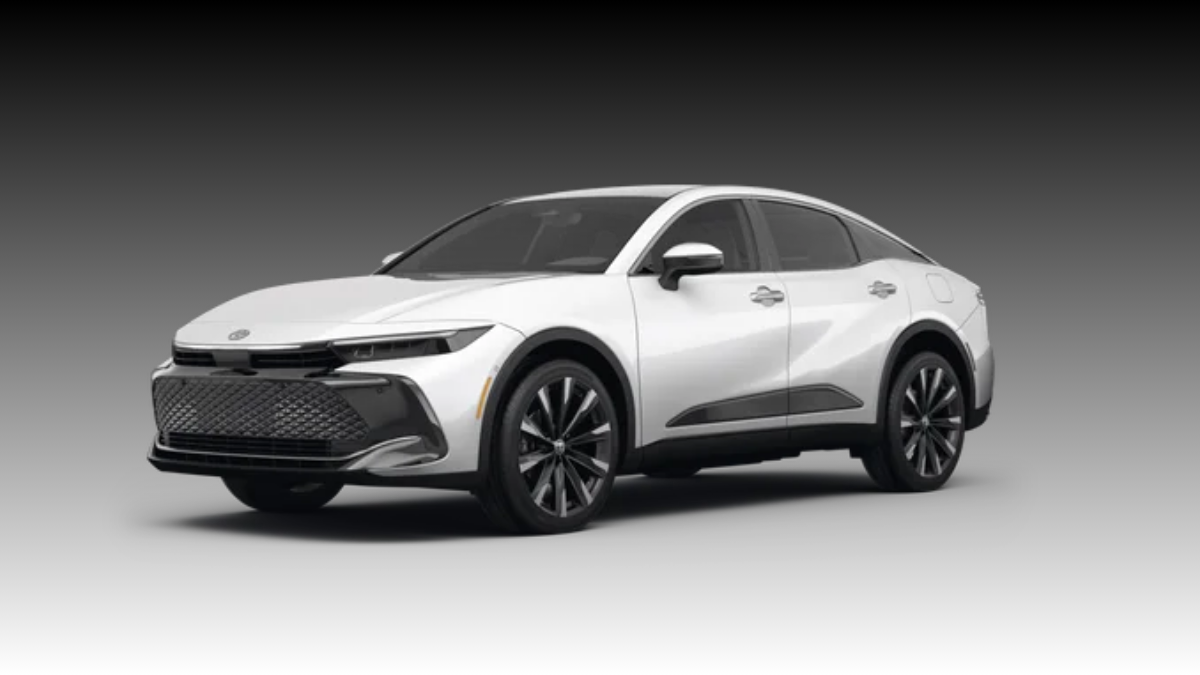
The 2023 Toyota Crown is one of those cars that’s easier to appreciate than to explain. Toyota discontinued the Avalon in 2022, signaling what looked like a quiet retreat from the large sedan segment. Then it brought back the Crown nameplate, absent from American showrooms since the 1970s, and built something that doesn’t fit neatly into any category.
It’s not a crossover, but it rides taller than most sedans. It’s not a luxury car, but it’s priced like one at the top of the range. Every trim comes with a hybrid powertrain and all-wheel drive, which no direct competitor offers as standard. The styling is aggressive enough to polarize people, which seems intentional. Toyota clearly wasn’t aiming for broad approval here. Whether that confidence is earned depends a lot on what you’re buying a car to do.
2023 Toyota Crown: Our Take
Fuel economy is the headline. The base powertrain returns 41 mpg combined with AWD, and the cabin is among the quietest you’ll find in this class. Ride comfort is a real strength too, especially in the Platinum trim with its adaptive suspension.
But the interior doesn’t feel like a $37,000 car. Hard plastics show up in places they shouldn’t, and the overall ambiance sits closer to a well-spec’d Camry than anything approaching luxury. The base engine is also underwhelming, not slow exactly, but unexciting in a way that feels mismatched with the price. The rear seatback angle is slightly off too; not uncomfortable, just never quite right on longer drives.
If efficiency and comfort are what you’re buying for, the Crown makes a strong case. If you want premium materials or engaging performance, it’s a harder sell.
Pros and Cons
Pros
- 41 mpg combined with standard AWD
- Genuinely quiet cabin with excellent ride comfort
- Distinctive exterior that actually stands out
- Spacious interior with easy entry and exit
Cons
- Interior materials don’t match the price
- Base engine feels underwhelming for what this car costs
- Interior storage is stingy throughout the cabin
- Rear seatback angle is awkward on long trips
- Pricier than most hybrid sedans without the luxury feel to justify it
What’s New
This is a ground-up new model. The Crown hasn’t been sold in the US since the 1970s, and this version bears no resemblance to that era’s cars. Toyota built it to sit between the Camry and the luxury segment, with a higher ride height, standard AWD, and a fastback silhouette that reads as sedan from the side and crossover from the front.
Two powertrains are available. The XLE and Limited run a 236-horsepower 2.5-liter hybrid paired with a CVT. The Platinum gets the Hybrid Max system: a 2.4-liter turbocharged hybrid making 340 horsepower, paired with a six-speed automatic.
Exterior Design
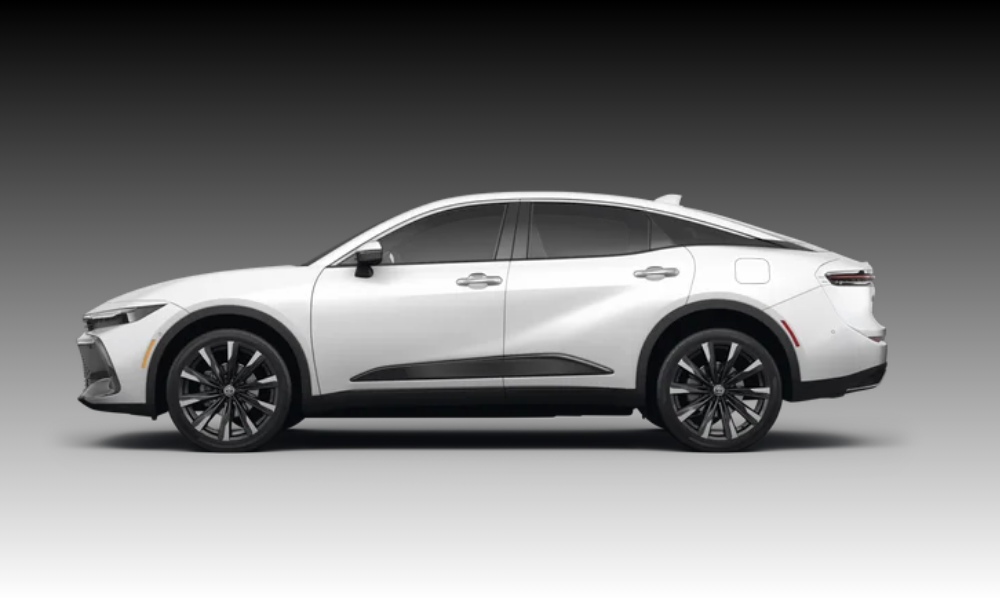
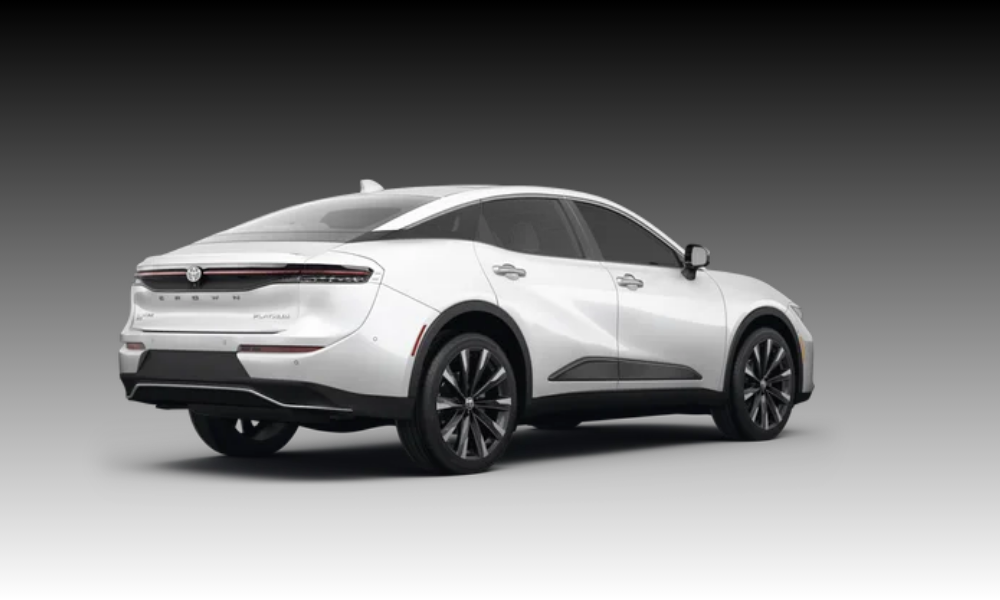
The Crown is a strange-looking car, and that’s intentional. The front end uses a wide hammerhead grille flanked by slim LED headlights that give it a face unlike anything else in Toyota’s lineup. The roofline flows into a fastback shape at the rear, finishing with a full-width LED light bar. Optional two-tone paint with a blacked-out roof adds visual drama without feeling excessive.
Not everyone will like it. But in a segment where most sedans could be swapped for each other at a glance, the Crown at least has a point of view.
2023 Toyota Crown Driving Experience
Get behind the wheel of the Crown and the first thing you notice is how settled it feels. Not in the numb, disconnected way that some comfort-focused sedans achieve by isolating the driver from everything, but genuinely composed. The suspension works quietly in the background. Road imperfections register, but they don’t intrude. At highway speeds, the cabin stays hushed enough that a conversation at normal volume requires no effort.
The base hybrid powertrain contributes to that quietness. In everyday driving, the transition between electric and gasoline power is smooth enough to miss entirely, and the CVT keeps the engine in a calm, low-rev state most of the time. Push harder and the engine note rises more than you’d expect from a car at this price, but that situation doesn’t come up often in the kind of driving the Crown is built for.
Where the Crown genuinely surprises is in corners. The elevated ride height and comfort tuning suggest something that leans and rolls through bends, and while body motion is present, it’s controlled. The steering weights up predictably, the chassis follows the line you set, and the AWD system stays invisible unless you’re on a wet or loose surface. It’s not a car that invites spirited driving, but it’s far more composed than its setup suggests. For a driver who values confidence over excitement, that composure matters.
The Platinum changes the character of the driving experience more than the spec sheet implies. The Hybrid Max powertrain responds with noticeably more urgency, and the six-speed automatic adds a sense of mechanical directness that the CVT can’t replicate. Combined with the adaptive suspension, the Platinum feels more sorted and more willing than the XLE or Limited on the same roads. It’s still not a driver’s car, but the gap between comfort and engagement narrows enough to make it genuinely enjoyable.
Performance and Acceleration
The base hybrid system in the XLE and Limited trims gets the job done without excitement. We estimate 0-60 in around 7.4 seconds, which is roughly in line with similar-priced sedans. For daily driving, highways, city traffic, and the occasional merge, it’s perfectly adequate.
The Platinum’s Hybrid Max setup is a different machine entirely. We clocked 0-60 in 6.0 seconds, which is quick by any reasonable measure. The six-speed automatic shifts with actual purpose, and the extra torque makes highway passing feel effortless.
The tradeoff is steep, though. You go from 41 mpg to 30 mpg on paper, and the real-world number runs lower. We saw 26.9 mpg on a standardized route, so expect numbers in the mid-20s in mixed driving. That’s not a rounding error; that’s a fundamentally different ownership experience.
Ride Comfort and Cabin Refinement
This is where the Crown earns its price. The Platinum’s adaptive suspension handles poor surfaces better than most sedans costing considerably more. Even on firmer settings, it stays composed. Wind and road noise are well controlled across all trims, and the base hybrid powertrain adds to that quietness in everyday driving.
Rear seat space is generous, but the seatback angle takes some adjustment. It’s not painful, just slightly upright in a way that becomes noticeable on trips over an hour.
Interior and Luxury Feel
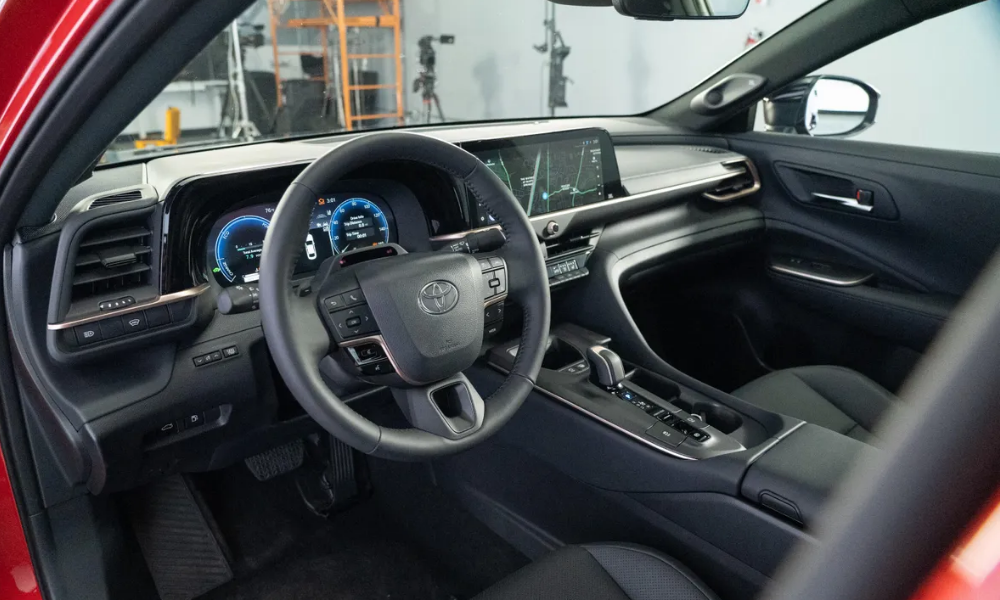
The dashboard layout is clean and modern. The 12.3-inch touchscreen is well-sized and responsive, and physical controls for climate and audio are present and clearly labeled, which sounds basic but isn’t universal in this class.
The materials are the weak point. For a car that starts above $28,000 and climbs to nearly $37,000, hard plastics in visible areas are a real miss. The overall feel sits closer to a Camry than a Lexus, and at this price, that comparison works against the Crown.
Storage up front is also limited. The center bin is usable, the wireless charger is convenient, but the glovebox is small and there’s nowhere to store sunglasses. For a car that positions itself around passenger comfort, it’s a noticeable gap.
Technology and Infotainment
Toyota’s latest infotainment is genuinely good. The 12.3-inch screen is sharp and reasonably intuitive. There’s a learning curve to the deeper menus, but common functions are easy to reach. Voice recognition handles natural phrasing well and doesn’t require reformatting requests the way older systems did.
Toyota Safety Sense 3.0 is standard across all trims, covering adaptive cruise control, automatic emergency braking, lane centering, and blind-spot monitoring. These systems are well-calibrated, helpful in real traffic without being intrusive or overly sensitive.
2023 Toyota Crown Fuel Economy
The base hybrid returns 41 mpg combined with standard AWD across both the XLE and Limited trims. That figure puts the Crown among the most efficient AWD sedans available. The Camry Hybrid does 46 mpg, but it’s smaller and front-wheel drive only. Getting 41 mpg while moving more mass and routing power to all four wheels is a real achievement.
The Platinum drops to 30 mpg combined on paper, but our real-world testing produced 26.9 mpg. Budget for the mid-20s if you’re cross-shopping the Hybrid Max.
Practicality and Storage
Trunk capacity comes in at 15.2 cubic feet, which is average for the segment. The rear seats fold down for longer items, though the trunk opening is narrower than ideal. Child seat installation is straightforward; tether anchors and Isofix points are accessible without a struggle, and the generous rear seat room makes maneuvering seats in and out manageable.
Interior small-item storage is thin. There’s no overhead sunglass holder, the glovebox is small, and the center bin is useful but not generous. For a car built around passenger comfort, it’s a miss that shows up on every drive.
Where the Crown Wins and Where It Doesn’t
The Crown’s strongest card is the efficiency equation. 41 mpg combined with standard AWD, in a car this size, is a number that’s hard to argue with. The Camry Hybrid beats it on paper at 46 mpg, but the Camry is smaller, lighter, and front-wheel drive only. The Crown delivers comparable real-world savings while moving more mass, seating passengers more comfortably, and adding all-weather capability. For a buyer who commutes significant miles, the difference at the pump over three years of ownership is meaningful money, and the Crown achieves it without asking for any obvious sacrifice in the things that matter on a daily drive.
The weakness sits at the other end of the same price tag. A buyer who configures the Platinum at $36,998 is spending money in a range where the comparisons get uncomfortable fast. The Genesis G80 is within reach. Entry-level BMW and Audi territory is nearby. Those cars have interiors that feel earned at that price. The Crown doesn’t. Hard plastics appear in sightlines where competitors use softer materials. The overall feel of the cabin stays closer to a $28,000 car than a $37,000 one, and that gap becomes harder to ignore once you’ve sat in something the Crown is priced against.
The honest read is this: the Crown’s value case is strongest at the XLE, where the efficiency story is compelling and the price is fair. The further up the trim ladder you go, the more the interior falls short of what buyers in that price range reasonably expect. Toyota built a very good car and priced it in a way that invites comparisons it can’t always win.
Competitors Worth Considering
Toyota Camry Hybrid. Better fuel economy at 46 mpg combined, significantly lower price, and sharper handling. If you don’t need the Crown’s extra space or AWD, the Camry Hybrid is the more rational choice for most buyers.
Genesis G80. Costs more, but the interior quality is in a different league. Genuinely premium materials, more powerful engine options, and a more refined overall experience. Fuel economy suffers considerably, but if you’re spending near $37,000 anyway, the G80 is worth a test drive.
Volkswagen Arteon. Sleek design, a spacious cabin, and a more premium feel than the Crown. Less efficient and more expensive, but a more polished product for buyers who care about how a car feels to sit in day to day.
Trim Comparison
The Crown lineup runs three trims, and the differences between them are more significant than a simple options list suggests.
XLE (~$28,590) is where most buyers should start. You get the 236-horsepower hybrid system, the full Toyota Safety Sense 3.0 suite, a 12.3-inch touchscreen, LED headlights, and 19-inch wheels. More importantly, you get the 41 mpg combined figure that makes the Crown’s case for itself. The XLE doesn’t feel stripped; it’s well-equipped in ways that matter for daily use. The missing items are comfort features, not safety or technology ones.
Limited (~$32,590) adds leather seating, heated front seats, a premium audio system, and 20-inch wheels, all while keeping the same 236-horsepower powertrain and 41 mpg figure. The jump from XLE is roughly $4,000, and what you’re paying for is a nicer place to sit. If heated leather matters to you, the Limited delivers it without sacrificing any of the efficiency that makes the Crown worth buying in the first place. If those features aren’t on your list, the XLE covers everything you actually need.
Platinum (~$36,998) is the version that changes the conversation. The Hybrid Max powertrain replaces the base system entirely, pushing output to 340 horsepower and pairing it with a six-speed automatic instead of the CVT. Adaptive suspension, 21-inch wheels, and a surround-view camera round out the additions. The Platinum is genuinely quicker and more engaging to drive. It’s also a different ownership experience: fuel economy drops to 30 mpg on paper and runs closer to 27 mpg in real-world testing. You’re spending roughly $8,400 more than the XLE for a faster car that costs noticeably more to run. That math works for buyers who specifically want the Hybrid Max powertrain. For everyone else, the value case doesn’t hold up.
Which Trim Does Cardrav Recommend?
The XLE. It delivers the powertrain that makes the Crown worth considering in the first place, 41 mpg with standard AWD and the full safety suite, without the price jumps that are hard to justify.
The Limited is a reasonable upgrade if heated leather seats are on your checklist, but the $4,000 difference is real money for features that don’t change how the car drives. The Platinum is a fundamentally different car to drive, but you pay for it twice: at purchase and at the pump. Unless the Hybrid Max powertrain is specifically what you came for, the base hybrid is the better vehicle for most buyers.
Should You Buy the 2023 Toyota Crown?
Buy it if you want a spacious, efficient sedan with AWD and a ride quality that most competitors can’t match at this price. The Crown’s combination of fuel economy, comfort, and distinctive styling is genuinely hard to replicate.
Skip it if you’re shopping in this price range for interior quality or driving engagement. At $32,000 to $37,000, there are alternatives that feel more upscale inside or are simply more enjoyable to push. The Crown asks you to accept a Camry-level interior at a price where buyers have better options if materials matter to them.
Final Verdict
The Crown is an interesting car in a segment that badly needed one. It’s fuel-efficient, comfortable, and distinctive in ways that most sedans stopped trying to be years ago. Those are real qualities, and they make a real difference on a daily commute.
What holds it back is straightforward: the interior doesn’t feel like a near-$37,000 product, and the base engine is underwhelming for what Toyota is charging. These aren’t dealbreakers for every buyer, but they’re real enough to know going in.
For efficiency-focused buyers who want something larger and more capable than a Camry Hybrid, the Crown makes a lot of sense. For everyone else, it comes down to how much you value standing out.
Frequently Asked Questions
Is the 2023 Toyota Crown worth the premium over a Camry Hybrid?
The Camry Hybrid gets 46 mpg and costs significantly less. The Crown offers more interior room, standard AWD, and a taller seating position. Whether that difference justifies the extra cost depends on how much those specific things matter to your daily driving.
How does the Platinum’s real-world efficiency compare to the EPA estimate?
We saw 26.9 mpg on a standardized test route against the EPA’s 30 mpg rating. Budget for the mid-20s in mixed driving conditions.
Is the Platinum trim worth the upgrade?
Only if the performance is what you’re buying for. The Hybrid Max system is noticeably quicker and more engaging, but you give up 11 mpg and pay several thousand more. For most buyers, the base hybrid is the smarter long-term choice.
How does the 2023 Toyota Crown ride quality hold up on rough roads?
Very well, particularly in the Platinum with adaptive suspension. The Crown stays composed on poor surfaces without becoming too stiff on sportier settings. It’s one of the better-riding sedans in this price range.
Is cargo space adequate?
15.2 cubic feet is average for the segment. The rear seats fold for longer loads, but the trunk opening is on the narrow side. The bigger limitation is interior storage for small items, which is limited throughout the cabin.