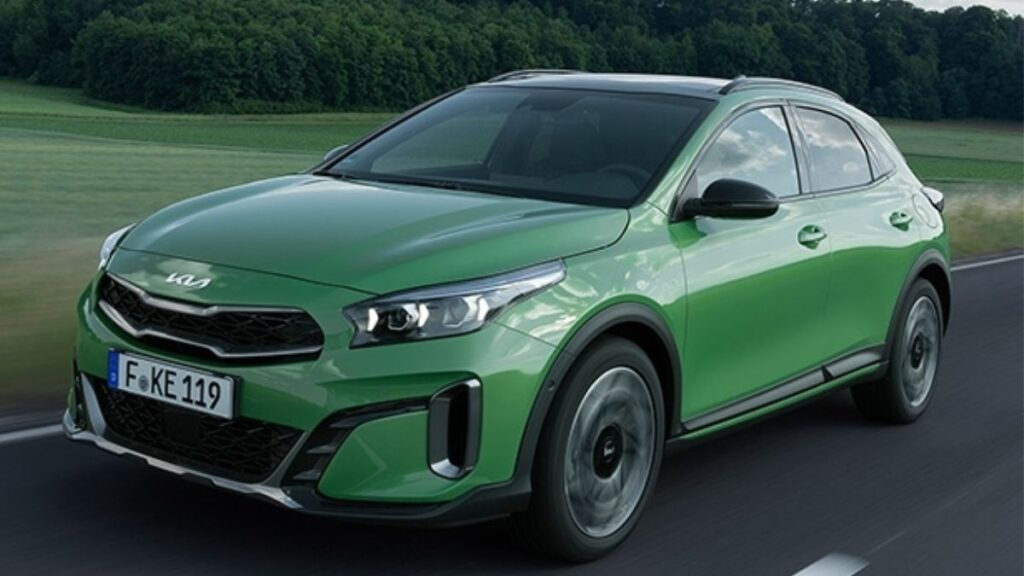
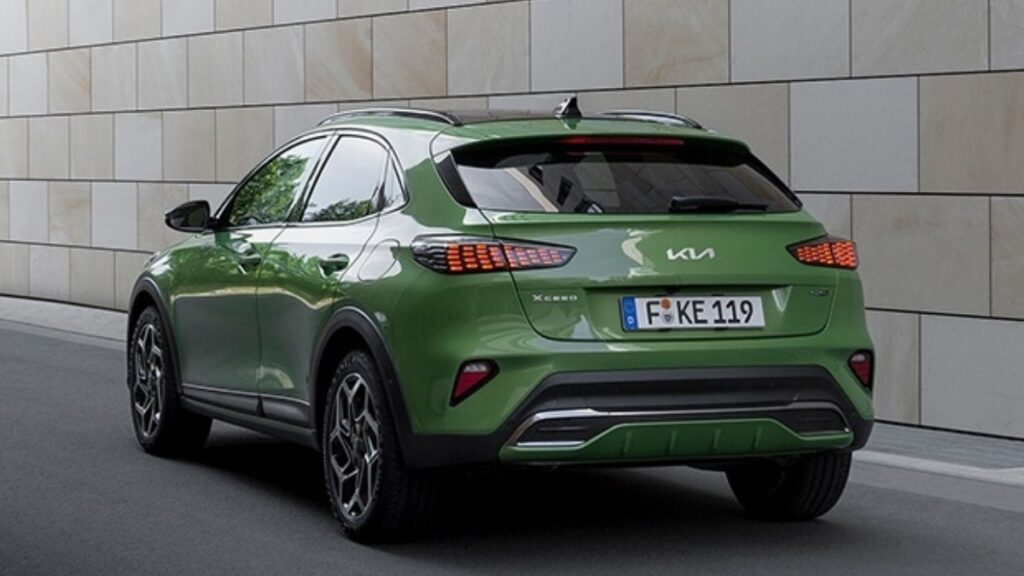
The 2022 Kia XCeed looks like it belongs in a different category, and that’s deliberate. It’s built on the Ceed hatchback platform but sits higher, wears plastic cladding around the wheel arches, and takes on a chunkier stance that reads as crossover without actually being one. The 2022 facelift sharpened the styling, updated the tech, and cut the engine range down. Diesel is gone entirely. It feels like a current car, but the real question is whether it justifies its place in a segment that adds new rivals every year.
The XCeed isn’t a traditional SUV and doesn’t pretend to be. It targets buyers who want the raised driving position and tougher looks of a crossover without the extra size, weight, and fuel consumption of a larger vehicle. The main competition comes from the Mazda CX-30, Volkswagen Taos, Toyota Corolla Cross, and Hyundai Kona. Kia’s advantage here is mostly on value: the trim levels are generously specced, the ride is comfortable, and the seven-year warranty remains one of the better deals in the class.
If you drive in a city, care more about how your car looks than how much it holds, and don’t regularly need to carry four adults or fill the boot, the XCeed is a reasonable choice. If rear seat space or cargo flexibility matters to you day-to-day, it will likely frustrate you. It works well for certain buyers, and figuring out whether you’re one of them is what this review is for.
Quick Verdict
Consider the 2022 Kia XCeed if you want SUV looks without the SUV size, value distinctive styling, and appreciate generous standard equipment backed by Kia’s industry-leading warranty. It’s a comfortable, well-built crossover that excels in urban environments.
Avoid it if you regularly carry rear passengers (especially adults or teenagers) or need maximum cargo space. In those cases, the VW Taos or Kia Sportage are more practical choices.
Pros
- Distinctive, eye-catching exterior design
- Generous standard equipment across all trims
- Seven-year, 100,000-mile warranty
- Comfortable, compliant ride quality
- Plug-in hybrid option with useful electric range
Cons
- Tight rear passenger legroom and headroom
- PHEV version sacrifices significant cargo space
- Petrol engine becomes coarse and noisy when pushed
- Touchscreen climate controls are distracting
- No all-wheel-drive option available
What’s New for 2022
The 2022 facelift brought subtle but meaningful updates. The exterior received revised LED headlights and taillights with a more intricate signature, a narrower grille for a slightly moodier look, and the new Kia badge spelled out across the rear. Inside, there are USB-C charging ports, revised trim materials, and the introduction of a new range-topping GT-Line S grade.
Under the hood, Kia streamlined the engine lineup. The previous diesel and 1.0-liter petrol options have been dropped. Buyers now choose between a 1.5-liter turbocharged petrol (158 hp), a more potent 1.6-liter turbo (201 hp) reserved for the GT-Line, and a 1.6-liter plug-in hybrid (139 hp) with an 8.9 kWh battery providing a 30-mile electric range.
Overview
The XCeed is fundamentally a Ceed hatchback that has been given a crossover makeover. It shares the same platform and mechanicals, but the raised ride height,44 mm (1.73 inches) taller, gives the driver a better view of the road without the bulk of a traditional SUV. It doesn’t try to be sporty or off-road capable. Instead, it focuses on comfort, style, and everyday usability.
Its personality leans heavily toward city-friendly practicality. The suspension is tuned softer than the standard Ceed, prioritizing ride comfort over sharp handling. This is a car for people who want SUV looks and a commanding view of the road without committing to the size, weight, or running costs of a larger vehicle. It feels more at home on paved streets than on dirt trails, and that’s perfectly fine for its intended audience.
2022 Kia XCeed Trims and Value: Which One Should You Buy?
The 2022 XCeed is available in multiple trims, with the new sporty GT-Line sitting at the top of the range.
Base Model (Starting around $28,000)
Surprisingly well equipped with LED headlights, an 8-inch infotainment screen with Apple CarPlay and Android Auto, a leather-trimmed steering wheel, cruise control, a reversing camera with dynamic guidelines, and collision avoidance technology.
Mid-Range Model (Starting around $31,000)
Adds 18-inch alloy wheels, a 10.25-inch infotainment screen with navigation, privacy glass, electrically folding and heated door mirrors, heated front seats, dual-zone automatic climate control, keyless entry and start, and rear parking sensors.
GT-Line (New for 2022)
Adds a sporty body kit, unique 18-inch wheels, hexagonal LED lights, a flat-bottom steering wheel, black headliner, perforated leather gear shifter, sporty GT-Line seats, and a more powerful 1.6-liter engine (201 hp).
Best Value Trim: The mid-range model is the clear sweet spot. It adds genuinely useful features—the larger screen, heated seats, and improved wheels—without the steep price premium of the GT-Line.
Trim to Consider Avoiding: The GT-Line, while well equipped, represents a significant jump in cost for mostly aesthetic upgrades. Unless the sporty styling and extra power are absolute must-haves, the mid-range trim offers superior value for money.
2022 Kia XCeed Driving Experience: Urban Agility Meets Highway Composure
City Driving
Around town, the XCeed feels refreshingly manageable. The raised seating position provides excellent visibility over traffic, and the relatively compact dimensions make threading through narrow streets and parking in tight spaces straightforward. The standard reversing camera with dynamic guidelines is a genuine asset here. The petrol engine responds smoothly in stop-and-go traffic, though it can feel a touch strangled at lower revs when you need a quick burst of acceleration.
Highway Behavior
At highway speeds, the XCeed settles into a comfortable cruise. It reaches 70 mph with little effort and feels stable and planted, even in crosswinds. Wind noise is well suppressed, but the petrol engine becomes noticeably coarse and intrusive when pushed hard—especially during overtaking maneuvers or climbing steep gradients. This is where the XCeed starts to fall behind rivals like the Mazda CX-30, which maintains better composure and a quieter cabin at speed.
Steering Feel
The steering is nicely weighted and offers adequate feedback for everyday driving. It’s accurate and predictable, which suits the XCeed’s laid-back character perfectly. It doesn’t provide the sporty communication of a Mazda, but it doesn’t need to; the focus here is ease and confidence, not engagement.
Acceleration
The 1.5-liter petrol produces 158 hp and 253 Nm of torque, propelling the XCeed from 0-60 mph in approximately 8.7 seconds. That’s adequate rather than exciting—enough to merge confidently onto highways but not enough to pin you to the seat. The six-speed manual gearbox is reasonably slick, though the shift action can feel a little vague. The GT-Line, with its 1.6-liter engine (201 hp) and seven-speed dual-clutch automatic, drops the 0-60 time to a more respectable 7.5 seconds. The PHEV, however, feels notably slower and less urgent, its extra weight blunting the electric motor’s initial shove.
Ride Comfort
Ride quality is a mixed bag. On smooth roads, the softer suspension delivers a comfortable, almost relaxing experience. However, over potholes and sharp road imperfections, the ride can feel unexpectedly harsh, especially on the larger 18-inch wheels fitted to higher trims. In real-world driving, this becomes more noticeable on deteriorating city streets, where the car can feel jittery. The PHEV, with its smaller 16-inch wheels, absorbs bumps more effectively, though the extra weight means it’s less agile through corners.
2022 Kia XCeed Interior and Technology: Clean Layout, But Some Trade-Offs
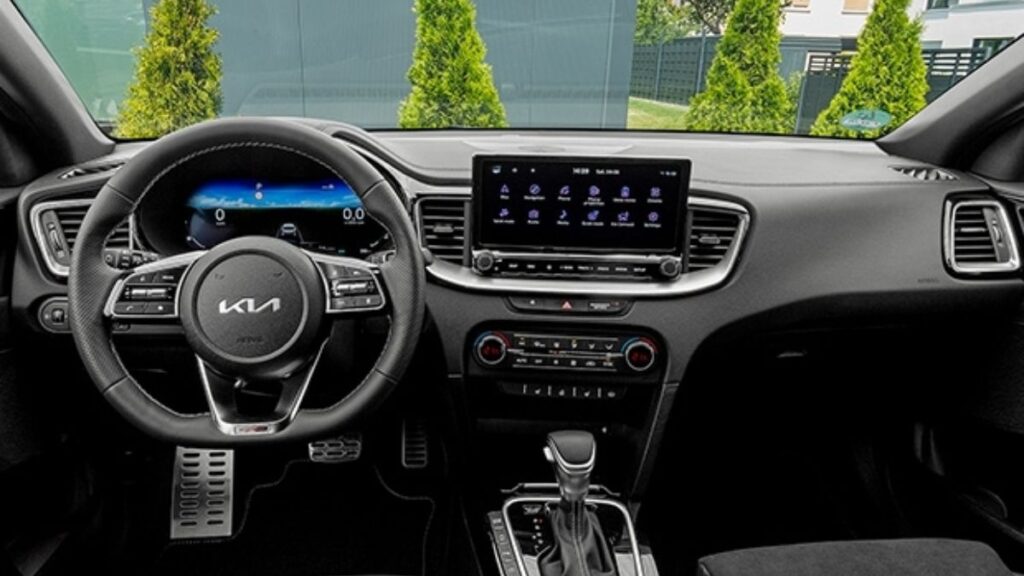
The XCeed’s cabin is well built and thoughtfully designed, with materials that generally feel pleasant to the touch. Higher trims add leather and suede upholstery that elevate the feel considerably, giving the cabin a genuinely upscale ambiance for the price point.
The dashboard layout is clean and uncluttered. The centerpiece is the infotainment screen,8 inches on base models and 10.25 inches on higher trims. The larger screen features crisp graphics and a responsive interface. However, the switch from physical buttons to touch-sensitive operation beneath it feels like a step backward in usability. At least there’s still a proper volume knob, a small but appreciated concession.
The optional 12.3-inch digital instrument cluster displays key driving information clearly and adds to the high-tech feel. Standard Apple CarPlay and Android Auto connectivity work seamlessly, and the optional JBL sound system delivers crisp, balanced audio. However, the climate controls are integrated into the touchscreen, which can be distracting to adjust while driving—a common frustration in modern cars. The cabin can also feel darker than expected with the darker trim materials, and rear visibility is somewhat restricted due to the sloping roofline.
Comfort and Practicality
Up front, the XCeed offers a comfortable driving position with good adjustment. The seats are supportive, and the raised ride height gives a better view of the road ahead. Heated front seats are available on higher trims, adding welcome warmth on colder mornings.
This is where the XCeed starts to fall behind rivals. Rear passenger space is noticeably tighter than you’d expect from a crossover. Legroom is limited, and the sloping roofline significantly reduces headroom for taller occupants. Three adults across the rear bench would be a real squeeze, making this less suitable for families with growing children. The cabin also feels somewhat dark and claustrophobic with the darker trim materials, especially for those in the back. Sound insulation is generally good, though some road noise is noticeable on coarse surfaces.
Storage and Cargo Space
The XCeed offers a reasonably practical cargo area for a car of its size. The trunk is wide and deep enough for weekly grocery runs or a couple of suitcases. The rear seats fold down to expand capacity, though the split-fold arrangement varies by trim—higher trims get a more versatile 40:20:40 split, while lower trims make do with a 60:40 arrangement.
The plug-in hybrid version, however, sacrifices a noticeable amount of cargo space due to the battery pack located under the floor. Buyers considering the PHEV should be aware of this trade-off, as the reduced trunk space can be a significant drawback for those who regularly use the cargo area.
Range and Efficiency
Petrol Version
The 1.5-liter turbocharged petrol engine delivers reasonable fuel economy for a crossover of this size. Official fuel consumption figures are competitive with rivals in the segment, though real-world numbers will vary depending on driving conditions and style. Expect mid-30s mpg in mixed driving.
Plug-In Hybrid
The PHEV version combines a 1.6-liter petrol engine with an electric motor and an 8.9 kWh battery. It offers an official all-electric range of approximately 30 miles, which is useful for short commutes and city driving. However, the electric motor can feel easily overwhelmed, and the petrol engine tends to fire up sooner than expected, especially when accelerating or climbing hills.
Safety and Reliability
The XCeed comes with a decent spread of driver assistance functions, including automatic emergency braking (with pedestrian and cyclist detection), self-dipping headlights, a driver drowsiness warning, and lane-keeping assistance. A reversing camera is also standard across the range.
Kia shares much of its technology and hardware with its Hyundai sister brand, both trading on a generally strong reputation for reliability. Kia still stands apart for its signature seven-year, 100,000-mile warranty, offering peace of mind that covers most typical ownership periods.
Ownership Costs
Pricing (Estimated)
While the XCeed is not officially sold in the U.S., pricing in other markets suggests it would be positioned competitively. The 1.5-liter turbo starts at approximately $28,000, with the plug-in hybrid and GT-Line variants commanding a premium over the base model.
Running Costs
The petrol version offers reasonable running costs for its class. The PHEV can deliver significantly lower fuel costs if regularly charged and used for short trips, though the higher purchase price may offset these savings for many buyers. Insurance groups are typical for a crossover in this segment.
Competitors Worth Considering
The XCeed faces stiff competition from several established rivals, each with its own strengths. The Mazda CX-30 is the one to beat for driving enthusiasts—it offers sharper handling, a more premium interior feel, and better noise insulation at highway speeds. The XCeed fights back with more generous standard equipment and a lower price point, but the CX-30 remains the more engaging driver’s car.
For buyers who prioritize practicality above all else, the Volkswagen Taos is a compelling alternative. It offers significantly more rear passenger space and a larger cargo area, making it the sensible choice for families. The XCeed counters with more distinctive styling and Kia’s superior warranty, but the Taos wins on sheer versatility.
The Toyota Corolla Cross is the sensible, reliable option—it’s efficient and well-built, but it’s also undeniably bland to drive and look at. The XCeed offers a more distinctive design, better standard equipment, and a longer warranty for a similar price, making it the more appealing choice for style-conscious buyers.
The Hyundai Kona is a close relative, sharing much of the same technology. However, the Kona is smaller inside and rides less comfortably than the XCeed. The XCeed offers a smoother ride and more usable interior space, giving it an edge for those who prioritize comfort over the Kona’s more polarizing design.
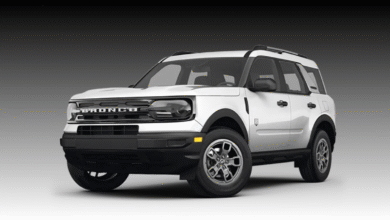
Finally, the Ford Bronco Sport targets a different buyer altogether—one who values off-road capability and rugged styling. The Bronco Sport is more capable on dirt trails, but the XCeed is more fuel-efficient, cheaper to run, and better suited to purely on-road use. For urban dwellers who never venture off pavement, the XCeed is the more sensible choice.
Final Verdict
Biggest Strength: The XCeed’s blend of hatchback practicality, genuine SUV presence, and Kia’s exceptional seven-year warranty makes it a compelling choice for buyers who want something distinctive from the usual crossover herd.
Biggest Weakness: The tight rear passenger space and compromised cargo area in the PHEV version limit its family-friendly credentials, making it a less practical choice for anyone regularly carrying more than two passengers.
Final Summary: The 2022 Kia XCeed is a well-executed crossover that successfully blends the best of hatchback agility and SUV attitude. It looks great, drives comfortably, and offers generous standard equipment. The rear space is undeniably tighter than some rivals, and the PHEV’s cargo sacrifice is a notable compromise. But for singles, couples, or small families who prioritize style and everyday urban usability over outright practicality, the XCeed is one of the most compelling options in its class. Just be honest with yourself about how much space you really need before signing on the dotted line.
Who Should Buy It
Ideal Buyer: Someone who wants the raised seating position and rugged looks of an SUV without the bulk, poor fuel economy, or premium price tag of a larger vehicle. Perfect for urban dwellers, young professionals, or empty-nesters who value style and maneuverability over max cargo capacity.
Who Should Avoid It: Buyers who regularly carry rear passengers (especially adults or growing teenagers) or need maximum cargo space for strollers or sports equipment should look at larger SUVs like the Kia Sportage, Toyota RAV4, or VW Taos.
FAQs
Is the 2022 Kia XCeed worth buying over a compact SUV?
Yes, if you prioritize city maneuverability over family space. The 2022 Kia XCeed offers SUV looks and a raised seating position without the bulk of a traditional compact SUV. But if you regularly carry rear passengers or need cargo versatility, a proper SUV like the Sportage or RAV4 is the smarter choice.
How does the 2022 Kia XCeed compare to the Mazda CX-30?
The Mazda drives better; the 2022 Kia XCeed offers better value. The CX-30 has sharper handling and a quieter cabin, but the XCeed delivers a smoother ride, more standard equipment, and Kia’s seven-year warranty. Choose the Mazda for engagement; choose the XCeed for comfort and peace of mind.
Can this genuinely handle a family with young kids?
It works for one child, but tight for two. Isofix anchors are easy to access, and the boot fits a compact stroller. But a rear-facing seat will push the front passenger forward. If your family is growing, the VW Taos is more practical.
Is the petrol engine really that noisy on the highway?
Yes, especially on steep grades. Around town, the 1.5-liter turbo is refined and quiet. But push it hard on a highway merge or climb a long hill, and it becomes coarse and intrusive. Highway-heavy drivers should consider the Mazda CX-30 for better insulation.
Will I regret this purchase in three years regarding resale and reliability?
Reliability is solid; resale is average. Kia shares hardware with Hyundai, and the seven-year warranty offers genuine peace of mind. However, the XCeed doesn’t hold value like a Toyota or Volkswagen—it’s a niche crossover. Fine for long-term owners, but less ideal for those who switch cars frequently.