The 2024 Ford Mustang arrives at a strange moment for performance cars. While much of the automotive industry continues moving toward electrification, smaller engines, and increasingly digital driving experiences, Ford is still holding onto something many enthusiasts thought would disappear by now: a naturally aspirated V8-powered muscle car.
This new seventh-generation Mustang does not try to completely reinvent itself. Instead, Ford focused on refining the formula that has kept the Mustang alive for nearly six decades. The styling is sharper without abandoning its classic proportions, the interior finally feels modern enough to compete with newer sports cars, and the updated engine lineup still delivers the kind of rear-wheel-drive performance that made the Mustang famous in the first place.
The EcoBoost model remains the smarter daily driver for many buyers thanks to its strong turbocharged performance and reasonable fuel economy, but the GT continues to be the heart of the lineup. At a time when rivals like the Camaro and Challenger are disappearing or changing direction entirely, the 2024 Mustang feels more important than ever for drivers who still want a traditional American performance car experience.
Pros
- Powerful naturally aspirated V8 engine
- Modern redesigned interior with large digital displays
- Available manual transmission
- Strong performance from both EcoBoost and GT models
- One of the last true rear-wheel-drive muscle cars
Cons
- Some touchscreen controls replace physical buttons
- Rear seats remain cramped
- Interior quality still trails some rivals
- V8 models consume significant fuel
- Steering in EcoBoost models can feel overly light
Our Take
Ford deserves credit for understanding that the Mustang never needed a complete identity change. Many modern performance cars have become overly complicated, excessively digital, or disconnected from the driving experience that originally made enthusiasts fall in love with them. The 2024 Mustang avoids that mistake.
This new generation feels more like a careful evolution than a radical redesign, and honestly, that was the correct approach. It still looks unmistakably like a Mustang, still sends power to the rear wheels, and still offers a naturally aspirated V8 paired with a manual transmission. In today’s market, that combination is becoming incredibly rare.
What surprised us most is how much the interior experience has improved. Older Mustangs always felt slightly behind competitors when it came to cabin technology and overall refinement, but the new curved displays and redesigned dashboard finally give the car a genuinely modern atmosphere. Ford clearly wanted the Mustang to feel more premium without losing its aggressive muscle-car personality.
The EcoBoost model continues making a strong case for itself as a daily sports car. It feels quicker and more responsive than many buyers expect, and the turbocharged engine delivers enough torque to keep the car entertaining in everyday driving. Still, the GT remains the version that truly defines the Mustang experience. The sound of the 5.0-liter V8 alone changes the entire personality of the car, and the added power makes the Mustang feel far more emotional and engaging behind the wheel.
The best part is that Ford did not try to turn the Mustang into something it is not. The 2024 model still feels raw enough to satisfy enthusiasts while becoming modern enough to attract younger buyers who expect larger screens, better connectivity, and more advanced driver assistance technology..
Exterior Design
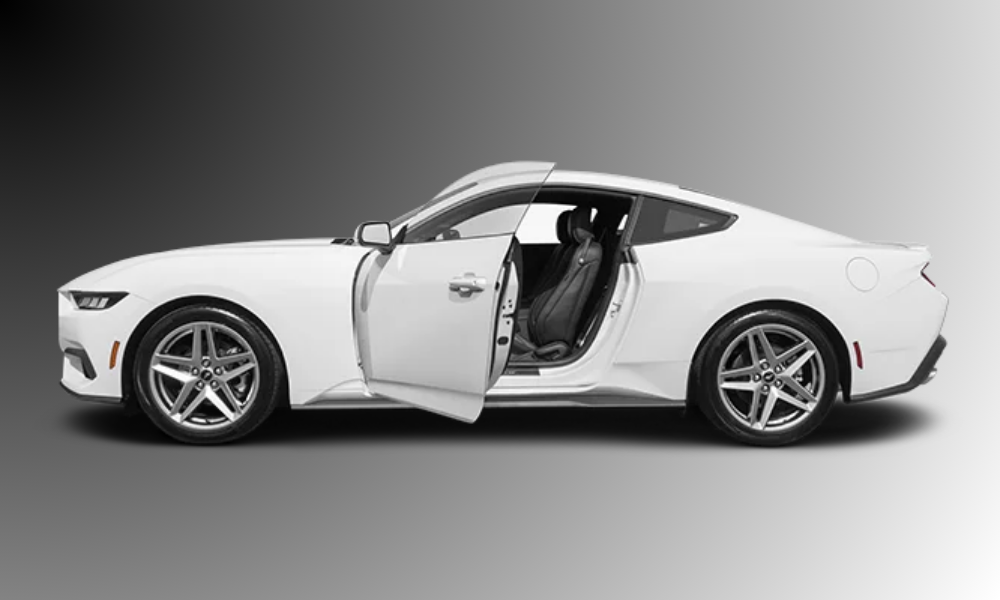
The 2024 Ford Mustang may be an all-new generation underneath, but Ford wisely resisted the temptation to completely redesign the car. Instead, the company focused on modernizing the Mustang’s appearance while preserving the proportions and visual identity that enthusiasts immediately recognize.
From almost every angle, the new Mustang still carries the classic long-hood, short-deck muscle car shape that has defined the model for decades. The front end now looks sharper and more aggressive, especially on GT models, with slimmer headlights, revised grille designs, and more sculpted body lines that give the car a lower and wider appearance on the road.
Ford also differentiated the EcoBoost and GT models more clearly this time around. The EcoBoost carries a cleaner and slightly more restrained design, while the GT receives larger air intakes and a more aggressive front fascia that better matches the character of the V8 engine underneath the hood.
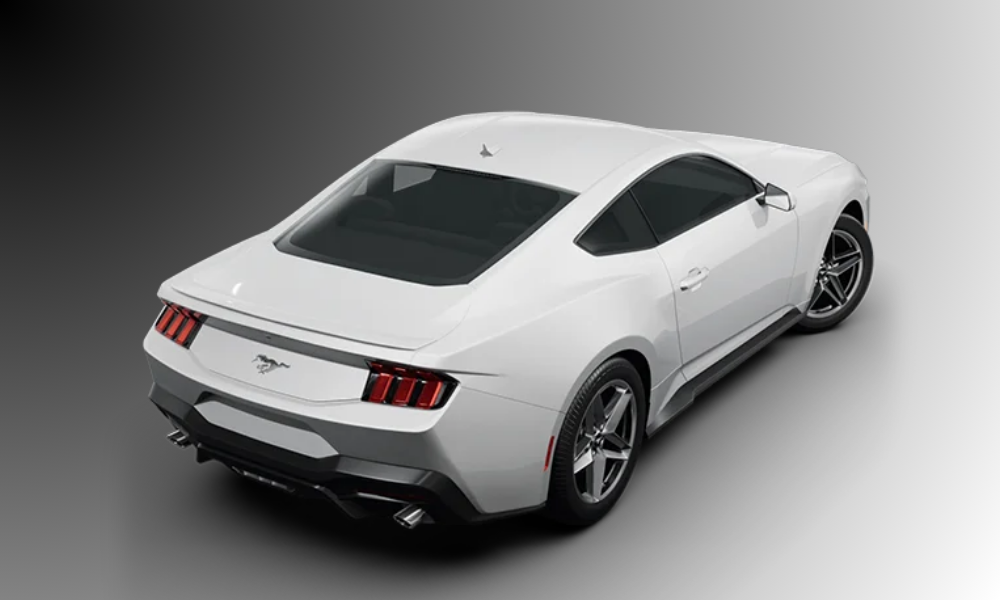
At the rear, the signature tri-bar taillights remain one of the Mustang’s strongest visual elements. Ford modernized them without removing the instantly recognizable Mustang identity, which was absolutely the right move. The updated rear design also looks wider and more planted than before, especially when viewed from lower angles.
Wheel designs range from relatively subtle setups on base trims to far more aggressive performance-oriented designs on higher trims and Performance Package models. Buyers can also customize details like Brembo brake caliper colors, giving the car a slightly more premium and personalized feel than older Mustangs typically offered.
The overall result is a Mustang that still feels unmistakably American but now looks cleaner, sharper, and more modern than the outgoing generation without losing the aggressive personality people expect from the nameplate.
Driving Experience
The 2024 Ford Mustang still prioritizes driver engagement in a way that many modern performance cars no longer do. Even with the added technology, larger screens, and more refined interior, the Mustang continues feeling mechanical enough to remind drivers that this is still a traditional rear-wheel-drive sports coupe at heart.
The EcoBoost model is better than many people expect. Its turbocharged 2.3-liter four-cylinder engine delivers strong low-end torque, quick throttle response, and enough performance to make everyday driving genuinely entertaining. The ten-speed automatic transmission also suits the EcoBoost surprisingly well, keeping the engine in its powerband while helping the car feel quicker than its numbers might initially suggest.
What impressed us most is that the EcoBoost no longer feels like the “cheap Mustang.” Ford clearly spent time improving the sound character and responsiveness of the turbocharged engine, and the result is a car that feels sporty and lively without requiring V8-level fuel bills.
Still, the GT completely changes the personality of the Mustang. The naturally aspirated 5.0-liter V8 delivers power in a far more emotional and dramatic way than the EcoBoost ever could. Acceleration feels stronger, the steering becomes more confidence-inspiring, and the overall car simply feels more alive from behind the wheel.
The V8 soundtrack remains one of the Mustang GT’s greatest strengths. In a market increasingly filled with turbocharged engines and artificial sound enhancement, the Mustang’s naturally aspirated V8 still provides the kind of raw character many enthusiasts are afraid the industry is slowly losing.
Handling is also more composed than previous generations. Performance Package models generate impressive grip levels through corners, while the larger Brembo brakes provide strong stopping power during aggressive driving. The optional electronic drift brake may initially sound gimmicky, but it actually adds another layer of fun for drivers interested in learning controlled slides on track.
The Mustang still is not the sharpest sports car in the segment, nor the most refined. But that has never really been the point. What makes the 2024 Mustang special is the sense of personality and excitement it continues delivering in a world where many new performance cars are becoming increasingly sterile.
Interior and Technology
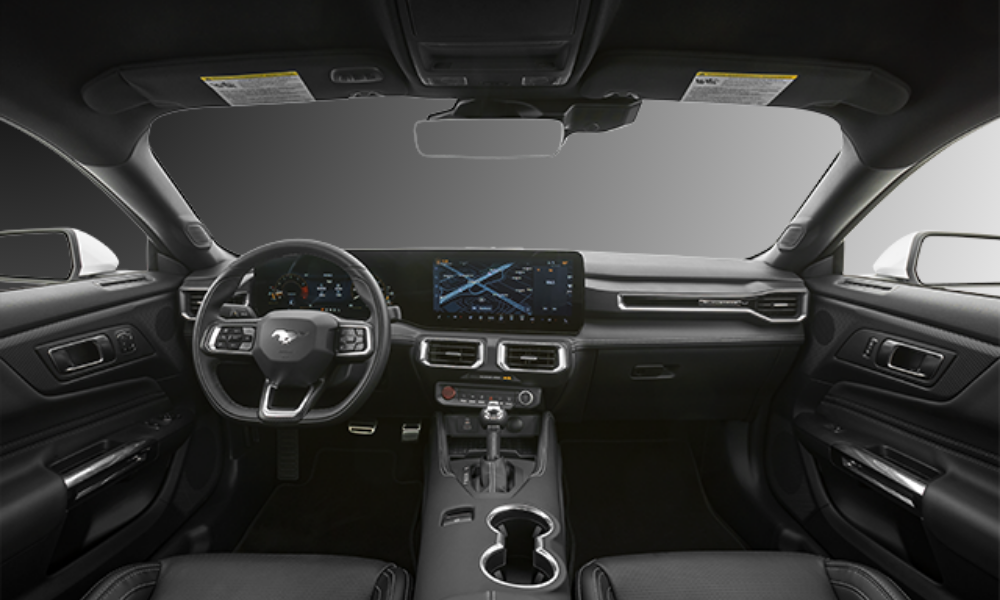
One of the biggest improvements in the 2024 Ford Mustang is the interior. Previous generations always felt slightly behind rivals when it came to cabin design and technology, but this new model finally brings the Mustang into a far more modern era.
The dashboard is now dominated by a large curved digital display setup that combines the 12.4-inch digital gauge cluster with a massive 13.2-inch central touchscreen. The entire layout feels heavily inspired by modern fighter jets, with the screens angled toward the driver and the center console creating a more cockpit-like atmosphere than before.
Ford clearly designed this generation to appeal not only to longtime Mustang fans but also to younger buyers who expect larger displays, customizable graphics, and stronger smartphone integration. The updated Sync 4 infotainment system feels faster and more responsive than older Ford systems, while wireless Apple CarPlay and Android Auto help the technology experience feel competitive with newer sports cars.
The digital instrument cluster also adds a surprising amount of personality to the car. Drivers can customize themes, layouts, and display styles depending on drive modes, giving the Mustang a more futuristic feel without completely abandoning its muscle-car identity.
Material quality has improved as well, especially on Premium trims equipped with leather or suede-style seat inserts. Soft-touch surfaces appear in more areas throughout the cabin, and the ambient lighting system helps create a more upscale atmosphere at night.
Front-seat comfort remains solid for both daily driving and longer highway trips. The seating position feels low and sporty without becoming uncomfortable, and visibility is reasonable for a modern coupe. Rear-seat space, however, still remains one of the Mustang’s weakest areas. Adults will find the back seats cramped, especially during longer drives, although occasional use for shorter trips is still manageable.
Cargo space is also respectable for a sports coupe. The fastback design allows the trunk to remain surprisingly usable compared to many smaller sports cars, making the Mustang slightly more practical than its aggressive styling might initially suggest.
Safety and Driver Assistance
While the 2024 Mustang has yet to receive official crash ratings from organizations like NHTSA or IIHS, Ford has equipped every model with a comprehensive suite of safety and driver-assistance technologies. The Mustang Co-Pilot360 system includes adaptive cruise control with stop-and-go capability, blind-spot monitoring, lane-keeping assist, rear cross-traffic alert, and automatic emergency braking, providing drivers with confidence both on city streets and highways.
Additional features such as evasive steer assist, reverse brake assist, speed sign recognition, and automatic high-beam headlights enhance safety without interfering with the driving experience. The FordPass app allows owners to interact with the vehicle remotely, offering functions such as remote start, vehicle status monitoring, and keyless access. Even though the Mustang remains a rear-wheel-drive sports coupe, these modern systems help mitigate risk and make the car more accessible to a wider range of drivers.
Fuel Economy
Fuel economy continues to be one of the biggest differences between the EcoBoost and GT versions of the 2024 Mustang. Buyers choosing the turbocharged four-cylinder model will get a far more practical daily driver, while the V8 models naturally prioritize performance and character over efficiency.
The EcoBoost remains surprisingly reasonable for a rear-wheel-drive sports coupe with over 300 horsepower. Its turbocharged engine delivers enough low-end torque to feel energetic during normal driving while still maintaining respectable fuel consumption figures on the highway. For many buyers, it strikes the best balance between performance, daily usability, and ownership costs.
The GT tells a very different story. Ford’s naturally aspirated 5.0-liter V8 delivers the kind of sound and throttle response enthusiasts love, but fuel economy is not one of its strengths. City driving especially can become expensive fairly quickly, particularly on Performance Package models or cars equipped with active exhaust systems that encourage drivers to stay deeper in the throttle.
Manual transmission models also consume slightly more fuel than the automatic versions, although most enthusiasts considering the six-speed manual are unlikely to care much about efficiency numbers in the first place.
Ultimately, the EcoBoost is the smarter financial choice for buyers planning to daily drive the Mustang regularly, while the GT remains the emotional choice for drivers who value the experience of a naturally aspirated V8 more than fuel savings.
Mustang GT vs EcoBoost
Choosing between the EcoBoost and GT versions of the 2024 Mustang ultimately comes down to what buyers expect from the car.
The EcoBoost is unquestionably the more rational option. Its turbocharged four-cylinder engine delivers strong acceleration, solid torque, and noticeably better fuel economy than the V8 models. For daily commuting, longer highway drives, and buyers entering the Mustang lineup for the first time, the EcoBoost makes a surprisingly convincing case for itself. It still feels quick, still looks aggressive, and still maintains the rear-wheel-drive personality that defines the Mustang experience.
But emotionally, the GT exists in an entirely different category.
The naturally aspirated 5.0-liter V8 transforms the Mustang into something far more dramatic and memorable every time the engine starts. The sound alone changes the character of the car completely, and the stronger steering feel combined with the added performance makes the GT feel more alive and engaging from behind the wheel.
Ford also deserves credit for continuing to offer a six-speed manual transmission with the V8 at a time when many manufacturers are abandoning manual gearboxes altogether. For enthusiasts, that decision alone makes the Mustang GT feel increasingly special in today’s market.
The EcoBoost may be the smarter purchase on paper, but the GT remains the version that fully captures what people imagine when they think about owning a Mustang.
Competitors
The 2024 Ford Mustang now occupies a very unusual position in the performance car market. Many of its traditional rivals are either disappearing entirely or moving toward electrification, leaving the Mustang as one of the last affordable American performance cars still offering a naturally aspirated V8 and a manual transmission.
The Chevrolet Camaro has always been one of the Mustang’s closest competitors thanks to its sharp handling and strong engine lineup. In some situations, the Camaro arguably feels more athletic through corners, but its cramped visibility and aging interior make the Mustang feel more modern and easier to live with daily.
The Dodge Challenger takes a completely different approach. It focuses far more on straight-line power, comfort, and old-school muscle car personality rather than agility. While the Challenger delivers incredible V8 soundtracks and massive road presence, the Mustang feels lighter, sharper, and far more composed on twisty roads.
Cars like the Toyota Supra and Nissan Z also compete for similar buyers, especially those wanting rear-wheel-drive performance coupes. However, both Japanese rivals approach performance from a more compact sports car perspective, while the Mustang continues embracing its larger American muscle car identity.
What makes the Mustang stand out most today is balance. It successfully combines modern technology, daily usability, strong performance, and traditional V8 character in a package that still feels relatively attainable compared to many newer performance cars entering the market.
Which Trim Does Cardrav Recommend?
For most buyers seeking the ultimate balance of performance, technology, and daily usability, the Mustang GT Premium Fastback stands out as the recommended trim. It combines the naturally aspirated 5.0-liter V8 engine with a six-speed manual or ten-speed automatic transmission, a more refined interior, and modern infotainment technology. This trim captures the essence of what makes the Mustang iconic while providing features that enhance comfort, connectivity, and overall driving satisfaction.
For buyers with a smaller budget or those seeking a slightly more practical daily driver, the EcoBoost Fastback offers strong acceleration, lower fuel consumption, and nearly all of the modern interior and technology benefits present in the GT trims. While it may lack the visceral thrill of the V8, it remains a compelling choice for buyers prioritizing efficiency without sacrificing the Mustang’s signature rear-wheel-drive character.
Final Verdict
The 2024 Ford Mustang successfully proves that traditional gasoline-powered performance cars still have a place in today’s automotive world. While many manufacturers continue shifting toward smaller engines, hybrid systems, and fully electric performance vehicles, Ford chose to preserve the core identity that made the Mustang legendary in the first place.
What makes this new generation impressive is that it modernizes the Mustang without removing its personality. The redesigned interior finally feels competitive with newer sports cars, the updated technology brings the cabin into a far more modern era, and the revised engine lineup still delivers the kind of rear-wheel-drive excitement enthusiasts continue searching for.
The EcoBoost model remains one of the better daily-driver sports coupes in its price range, offering strong turbocharged performance and reasonable efficiency. But the GT continues to be the true heart of the Mustang lineup. Its naturally aspirated V8, available manual transmission, and unmistakable sound create an experience that is becoming increasingly rare in the modern automotive industry.
The 2024 Mustang may not be the most refined sports car on the market, nor the most practical, but that has never really been the point. What Ford created here is a modern muscle car that still feels emotional, engaging, and unmistakably American at a time when many competitors are losing exactly those qualities.
Drivers considering a 2024 Ford Mustang might want to explore other high-performance models, including the classic muscle car styling of the Dodge Challenger with its V8 engine, the Chevrolet Camaro with its more refined driving dynamics, the Toyota Supra with its sleek sports car feel, and the Nissan Z with its retro-inspired design and powerful twin-turbocharged engine. Buyers interested in modern, high-performance electric vehicles might also want to compare the Mustang with the Ford Mustang Mach-E and Tesla Model 3 Performance.
FAQ
How much horsepower does the 2024 Ford Mustang EcoBoost Fastback make?
The 2024 Ford Mustang EcoBoost Fastback is powered by a turbocharged 2.3-liter four-cylinder engine producing 310 horsepower and 350 lb-ft of torque. Power is sent to the rear wheels through a 10-speed automatic transmission.
How fuel-efficient is the 2024 Ford Mustang EcoBoost Fastback?
The EcoBoost Fastback offers respectable efficiency for a rear-wheel-drive sports coupe. Natural Resources Canada estimates fuel consumption at 10.8 L/100 km in the city and 7.1 L/100 km on the highway. The Mustang also features a 59-liter fuel tank and runs on regular unleaded gasoline.
What are the dimensions and cargo capacity of the 2024 Mustang EcoBoost Fastback?
The 2024 Mustang EcoBoost Fastback measures 189.4 inches in length, 75.4 inches in width, and 55 inches in height. It seats four passengers in a traditional 2+2 layout and offers 377 liters of trunk cargo space. The EcoBoost Fastback rides on standard 18-inch wheels.
What safety features come with the 2024 Ford Mustang EcoBoost Fastback?
Ford equips the EcoBoost Fastback with a wide range of modern safety technologies, including eight airbags, lane departure warning, anti-collision assistance, hill-start assist, tire pressure monitoring, and automatic high-beam LED headlights. Rear parking assistance with radar and camera support is also included.
What technology and infotainment features does the 2024 Mustang EcoBoost Fastback offer?
Inside, the Mustang EcoBoost Fastback features a 12.4-inch digital display with voice-command capability for audio and phone controls. Connectivity options include Apple CarPlay, Android Auto, Bluetooth, USB, and AM/FM radio, while a six-speaker audio system comes standard.
Does the 2024 Ford Mustang EcoBoost Fastback include memory seats?
No, the EcoBoost Fastback does not offer memory seat functionality. However, it does come equipped with cloth front seats designed for everyday comfort and support.