


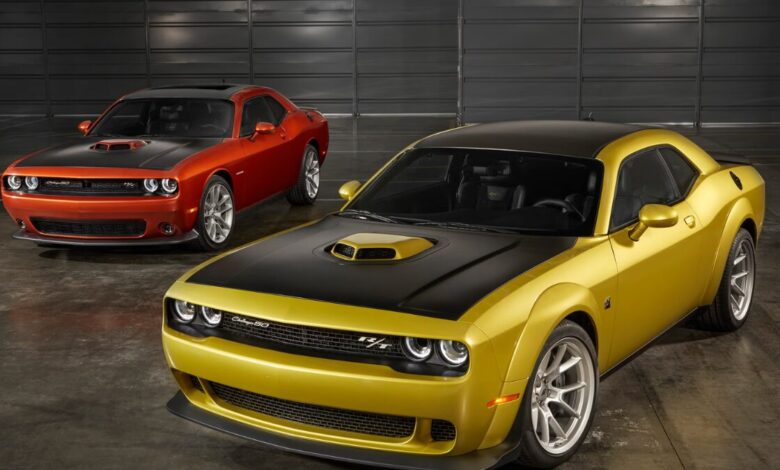
The 2020 Dodge Challenger SRT Hellcat continues standing as one of the last true old-school American muscle cars in a market increasingly dominated by smaller turbocharged performance vehicles and electrified sports sedans.
While many modern performance cars focus heavily on lap times, lightweight platforms, and razor-sharp handling, the Challenger follows an entirely different formula. Massive supercharged V8 power, aggressive retro-inspired styling, comfortable highway cruising, and pure straight-line performance remain the core of its identity.
Even years after its release, the Hellcat still feels outrageous in the best possible way.
Under the hood sits a supercharged 6.2-liter HEMI V8 producing over 700 horsepower, delivering brutal acceleration and one of the most recognizable exhaust notes in the modern performance car world. And unlike many sports coupes, the Challenger also offers a surprisingly spacious cabin and usable daily practicality.
The result is a muscle car that feels both nostalgic and absurdly modern at the same time.
For buyers searching for maximum personality, dramatic road presence, and raw American performance, the 2020 Dodge Challenger SRT Hellcat still remains one of the most unforgettable cars in its segment.
Our Take
The 2020 Dodge Challenger SRT Hellcat is not trying to compete with lightweight European sports cars or ultra-precise track machines. Dodge built this car around emotion, presence, and unapologetic muscle-car excess, and honestly, that is exactly what makes it special.
Everything about the Hellcat feels dramatic.
The supercharged V8 delivers absurd levels of power with almost endless acceleration, the exhaust note sounds aggressive even at idle, and the widebody design gives the car one of the most intimidating appearances on the road today.
But what surprises many drivers is how usable the Challenger actually feels during normal driving.
Unlike many high-performance coupes, the cabin is spacious, visibility is relatively decent, and the ride quality remains comfortable enough for long highway trips. The large trunk and usable rear seats also make the Challenger far more practical than most rivals in the segment.
Of course, the Challenger is still a heavy muscle car. It does not feel as agile or sharp through corners as a Chevrolet Camaro ZL1 or Ford Mustang Shelby GT500. But that trade-off feels intentional rather than accidental.
The Hellcat is built for straight-line excitement, highway dominance, and pure driving theater.
And even years later, very few modern performance cars deliver that experience quite like this.
Pros
- Supercharged 6.2-liter HEMI V8 delivers incredible power and acceleration
- One of the most aggressive exhaust sounds in the muscle car segment
- Surprisingly spacious interior for a performance coupe
- Large trunk offers excellent everyday practicality
- Comfortable ride quality during daily driving and highway cruising
- Widebody models provide noticeably improved grip and handling stability
- Uconnect infotainment system remains simple, fast, and easy to use
- Distinct retro-inspired styling still looks intimidating and unique
- Available manual transmission adds extra driver engagement
- Excellent straight-line performance and highway presence
Cons
- Heavier and less agile than key rivals like the Camaro ZL1
- Fuel economy is poor, especially during aggressive driving
- Interior materials are solid but not truly premium for the price
- Rear visibility can still feel limited in tighter parking situations
- Massive power can feel overwhelming for inexperienced drivers
- High insurance and tire replacement costs compared to regular muscle cars
- Rear-seat comfort is better than rivals, but still limited for taller adults during long trips
What’s New for 2020?
For 2020, Dodge continued refining the Challenger SRT Hellcat lineup with additional performance-focused updates and wider availability of the popular Widebody package.
One of the biggest highlights remained the Challenger SRT Hellcat Redeye, which pushed performance even further by increasing output to 797 horsepower, making it one of the most powerful production muscle cars available at the time.
Dodge also expanded feature availability across the lineup, including:
- Updated wheel designs
- Additional exterior color options
- Improved performance tuning for Widebody models
- Expanded driver-assistance technology availability
- More customization combinations for trims and appearance packages
The available Widebody setup continued to be one of the most important upgrades for serious enthusiasts thanks to:
- Wider Pirelli performance tires
- Improved cornering grip
- Larger fender flares
- Enhanced suspension tuning
- Better overall stability during aggressive driving
While the overall formula of the Challenger remained familiar, Dodge focused on refining the car’s muscle-car identity rather than completely redesigning it and honestly, that approach suited the Hellcat perfectly.
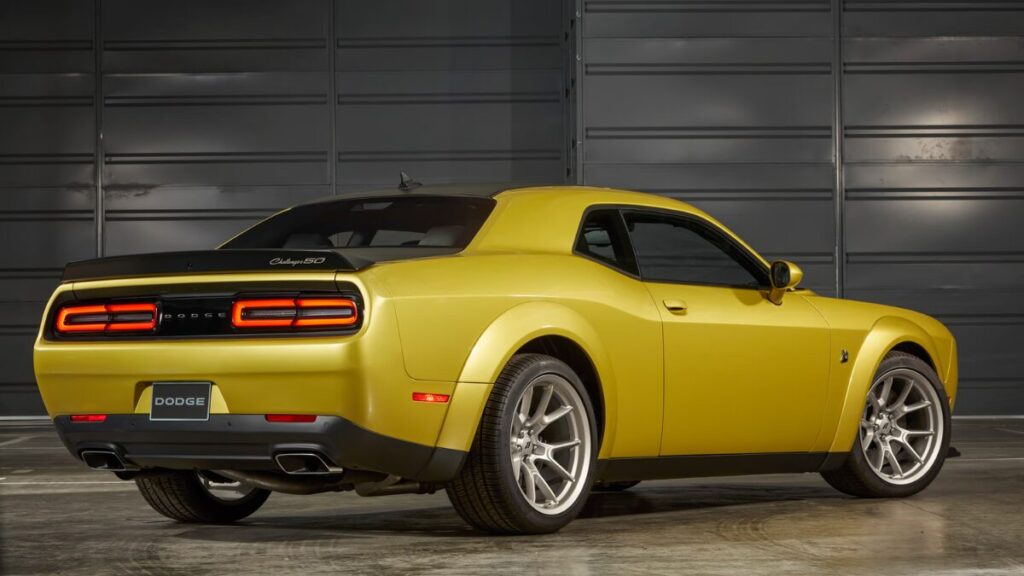
Performance & Acceleration
The 2020 Dodge Challenger SRT Hellcat delivers the kind of performance that still feels excessive even by modern standards.
At the center of the experience sits a supercharged 6.2-liter HEMI V8 engine producing 717 horsepower and 656 lb-ft of torque in the standard Hellcat model. Power is sent exclusively to the rear wheels through either a six-speed manual transmission or an available eight-speed automatic transmission.
Acceleration is brutally quick.
The Hellcat launches from 0 to 60 mph in roughly 3.6 seconds, while the quarter-mile arrives in the low 11-second range with proper traction. And thanks to the massive supercharger and aggressive throttle response, the car delivers relentless power almost everywhere in the rev range.
But honestly, numbers alone do not fully describe the experience.
The supercharger whine, deep exhaust tone, and constant sense of raw torque give the Challenger a completely different personality compared to many modern turbocharged performance cars. It feels mechanical, loud, and unapologetically aggressive in a way that very few cars still do today.
For buyers wanting even more insanity, the Hellcat Redeye variant increased output to an astonishing 797 horsepower, pushing the Challenger into near-supercar territory during straight-line acceleration.
And despite all that power, the Challenger still feels surprisingly manageable during normal driving thanks to smooth transmission tuning and predictable throttle delivery in calmer driving modes.
Driving Experience
Driving the 2020 Dodge Challenger SRT Hellcat feels completely different from most modern performance cars.
Everything about the experience feels larger, louder, and more dramatic.
The first thing drivers immediately notice is the sheer amount of power available at almost any speed. Even moderate throttle inputs unleash massive acceleration, while full throttle feels genuinely violent in lower gears. The supercharger whine combined with the deep HEMI exhaust note constantly reminds you that this is still a traditional American muscle car at heart.
But despite its extreme performance, the Challenger remains surprisingly comfortable during everyday driving.
The suspension absorbs rough roads better than many rivals, highway cruising feels stable and relaxed, and the cabin stays relatively quiet when driven normally. Long-distance driving is actually one of the Hellcat’s strongest qualities, especially compared to more aggressive track-focused competitors.
Widebody models improve overall confidence significantly.
The wider tires generate noticeably more grip during cornering, while the upgraded suspension setup reduces some of the body movement that older muscle cars were known for. Steering response also feels sharper and more controlled compared to the standard setup.
Still, physics cannot be ignored.
The Challenger remains a large and heavy coupe, and drivers can feel that weight during tighter corners or rapid direction changes. Cars like the Camaro ZL1 and Mustang Shelby GT500 still feel more agile and track-focused overall.
But honestly, Dodge never designed the Hellcat to be the sharpest canyon carver in the segment.
This car is about drama, straight-line speed, highway power, and pure muscle-car personality — and in those areas, it remains one of the most entertaining performance cars ever built.
Interior & Comfort
One of the biggest surprises about the 2020 Dodge Challenger SRT Hellcat is how comfortable and spacious it feels compared to most performance coupes.
While many rivals prioritize tight cockpit-like cabins and aggressive driving positions, the Challenger offers a far more relaxed and usable interior layout. The seats are wide, supportive, and comfortable enough for long-distance driving, while overall cabin space feels noticeably larger than competitors like the Chevrolet Camaro.
Front-seat comfort is excellent, especially during highway cruising.
Rear-seat space is also one of the Challenger’s biggest advantages. Unlike many sports coupes where the rear seats feel nearly unusable for adults, the Challenger provides enough legroom and headroom for passengers to sit comfortably during shorter and medium-length trips.
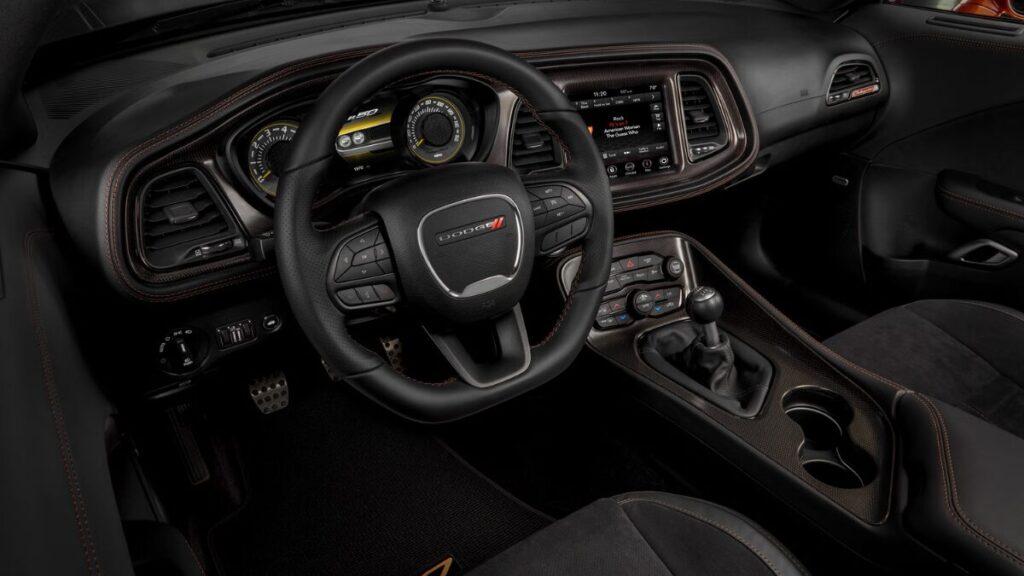
The overall design continues embracing Dodge’s retro-inspired muscle-car theme, mixing modern technology with classic styling cues. Large gauges, a wide dashboard layout, and muscular interior proportions help the cabin feel authentic to the car’s personality.
Material quality is solid overall, although some surfaces still feel less premium compared to certain European rivals. Soft-touch materials are present throughout much of the cabin, but some lower interior panels remind drivers that the Challenger prioritizes performance character over outright luxury refinement.
Widebody models and higher trims can also be equipped with:
- Heated and ventilated front seats
- Premium leather and Alcantara upholstery
- Heated steering wheel
- Power-adjustable performance seats
- Interior ambient lighting
- Carbon-fiber and aluminum trim accents
Overall, the Hellcat’s cabin successfully balances old-school muscle-car attitude with modern everyday comfort, which remains one of the reasons many owners still enjoy driving the Challenger daily.
Technology & Infotainment
The 2020 Dodge Challenger SRT Hellcat may embrace old-school muscle-car styling, but its technology and infotainment experience feel far more modern than many people expect.
At the center of the cabin sits Dodge’s excellent Uconnect infotainment system, which continues being one of the easiest and most user-friendly systems available in the segment. Response times are fast, menus are logically organized, and most functions remain simple to access while driving. Unlike some rivals that overload the driver with complicated submenus and distracting layouts, the Challenger keeps everything straightforward and intuitive.
Standard models come equipped with a 7-inch touchscreen, while higher trims and optional packages upgrade to the larger 8.4-inch display. Both systems support Apple CarPlay and Android Auto integration, allowing drivers to connect smartphones quickly and access navigation, music, messaging, and apps with minimal effort.
The Challenger also offers features such as Bluetooth connectivity, navigation, SiriusXM satellite radio, voice controls, multiple USB ports, remote start capability, and available Wi-Fi hotspot functionality depending on configuration.
Audio quality is surprisingly impressive as well. Buyers can choose between the standard sound system, an upgraded Alpine premium setup, or the available 18-speaker Harman Kardon audio system, which delivers powerful and immersive sound quality that perfectly matches the Hellcat’s aggressive personality.
Performance-focused technology also plays a major role in the overall experience. Dodge’s Performance Pages system allows drivers to monitor real-time horsepower output, torque delivery, launch control settings, G-force data, lap timers, engine information, and multiple drive-mode configurations directly through the infotainment screen.
These features help the Challenger feel far more advanced than its retro-inspired design might initially suggest.
And honestly, one of the best aspects of the Uconnect system is simply how effortless it feels to use daily, especially compared to many modern infotainment systems that focus so heavily on futuristic visuals that they become unnecessarily frustrating during real-world driving.ily.
Cargo Space & Practicality
For a high-performance muscle coupe producing more than 700 horsepower, the 2020 Dodge Challenger SRT Hellcat is surprisingly practical in everyday driving situations.
One of the Challenger’s biggest advantages over many rivals is simply its larger size. The wide body not only creates a far roomier cabin, but also provides considerably more cargo capacity than most performance coupes in the segment. That added practicality makes the Hellcat much easier to live with daily compared to more cramped competitors like the Chevrolet Camaro.
The trunk offers approximately 16.2 cubic feet of cargo space, which is excellent for a muscle car. There is enough room for luggage, backpacks, grocery runs, gym bags, or even longer road-trip packing without much difficulty. The wide trunk opening also improves usability when loading larger items, while the folding rear seats provide additional flexibility whenever extra storage space is needed.
Inside the cabin, the Challenger also offers several useful storage areas for smaller everyday items, helping the interior feel more functional than many drivers might expect from a high-horsepower coupe.
Visibility is slightly better than some rivals as well thanks to the Challenger’s more upright design and larger windows, although the long hood and widebody dimensions can still require caution in tighter parking situations.
Overall, the Hellcat successfully combines outrageous performance with genuine day-to-day usability, which remains one of the biggest reasons many owners continue driving these cars regularly instead of keeping them strictly as weekend toys.
Fuel Economy
Fuel economy has never been the primary reason buyers choose the 2020 Dodge Challenger SRT Hellcat, and realistically, nobody expects a supercharged V8 muscle car with more than 700 horsepower to behave like an efficient commuter vehicle.
Still, considering the level of performance available, the Challenger performs reasonably well during relaxed highway driving thanks to its comfortable cruising behavior and available eight-speed automatic transmission.
EPA estimates rate the Hellcat at approximately 13 MPG in the city, 22 MPG on the highway, and around 16 MPG combined. Real-world fuel economy, however, depends heavily on driving style.
Aggressive acceleration, spirited driving, and frequent full-throttle pulls can reduce fuel consumption very quickly, especially since the Hellcat constantly encourages drivers to enjoy the supercharger sound and massive power delivery.
The large fuel tank does help improve highway driving range, making the Challenger surprisingly capable during long-distance road trips compared to many smaller performance cars.
And honestly, most Hellcat owners would probably agree that the experience, sound, and raw straight-line performance easily outweigh any concerns about fuel efficiency.
Safety & Driver Assistance Features
The 2020 Dodge Challenger SRT Hellcat focuses primarily on raw performance and muscle-car excitement, but Dodge still equipped the car with a respectable amount of modern safety and driver-assistance technology to improve confidence during everyday driving.
While the Challenger does not feel as technology-heavy as some newer luxury performance cars, it still offers many of the key safety features buyers expect in a modern high-performance coupe. Available systems include blind-spot monitoring, rear cross-traffic alert, adaptive cruise control, forward collision warning, rear parking sensors, automatic high beams, rain-sensing windshield wipers, and a rearview camera system.
The Challenger’s larger dimensions can actually work in its favor during highway driving, helping the car feel stable and planted at higher speeds. Visibility is also slightly better than some smaller sports coupes, although the long hood, thick rear pillars, and widebody dimensions still require extra attention in tighter parking situations.
Widebody models especially benefit from the available parking sensors and camera systems due to the car’s increased width and aggressive stance.
Overall, the Challenger delivers a reassuring sense of stability on the road thanks to its heavy platform and wide footprint. And while the available safety technology certainly helps, drivers should still remember that managing more than 700 horsepower responsibly remains one of the most important parts of driving a Hellcat safely.power responsibly remains one of the most important safety factors of all.
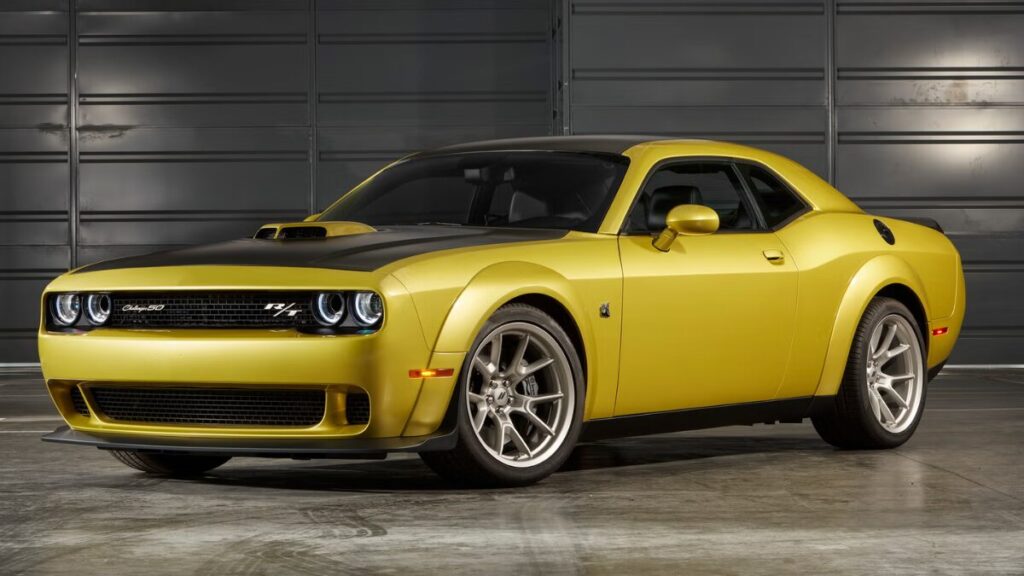
Which Trim Does Cardrav Recommend?
For most buyers, the standard 2020 Dodge Challenger SRT Hellcat Widebody delivers the best overall balance of performance, usability, and value within the lineup.
While the even more extreme Hellcat Redeye offers nearly 800 horsepower and truly outrageous straight-line acceleration, the standard Hellcat already feels incredibly fast in real-world driving. Honestly, for many drivers, the additional power of the Redeye becomes difficult to fully enjoy outside of drag strips or very controlled conditions.
The Widebody package, however, feels genuinely worth it.
The wider stance, upgraded suspension tuning, larger tires, and improved grip make the Challenger feel noticeably more stable and confident during aggressive driving. Beyond the performance improvements, the wider fenders also give the Hellcat a far more intimidating and muscular appearance that perfectly matches the car’s personality.
Buyers who prioritize maximum driver engagement should still consider the six-speed manual transmission, especially since very few high-horsepower muscle cars continue offering a manual gearbox today. However, the available eight-speed automatic remains the quicker and more refined option overall, particularly for daily driving and drag-strip performance.
Ultimately, the Hellcat Widebody represents the version that best captures everything people love about the modern Challenger: massive supercharged power, dramatic styling, comfortable cruising ability, and pure American muscle-car character.
Final Verdict
The 2020 Dodge Challenger SRT Hellcat remains one of the most unforgettable modern muscle cars ever built.
At a time when many performance cars are becoming smaller, quieter, and increasingly digital, the Hellcat continues embracing pure excess in the best possible way. Massive supercharged V8 power, aggressive styling, dramatic sound, and relentless straight-line acceleration all combine to create an experience that still feels genuinely special years later.
But what makes the Challenger even more impressive is how usable it remains despite its extreme performance. The spacious cabin, comfortable ride quality, large trunk, and surprisingly relaxed highway manners allow the Hellcat to function as more than just a weekend toy.
Of course, this is not the sharpest sports coupe in the segment. Rivals like the Camaro ZL1 and Mustang Shelby GT500 still feel more agile during aggressive cornering. Fuel economy is also poor, and the car’s size can occasionally feel overwhelming in tighter environments.
Still, none of those compromises truly matter once the supercharged HEMI comes alive.
The Hellcat was never designed to be subtle or perfectly balanced. It was built to deliver emotion, excitement, and old-school American muscle-car drama at a level very few modern vehicles can match.
And honestly, that is exactly why enthusiasts continue loving it.
FAQ
Is the 2020 Dodge Challenger SRT Hellcat reliable?
The 2020 Dodge Challenger SRT Hellcat is generally considered reasonably reliable for a high-performance muscle car, especially when properly maintained. However, because of its supercharged V8 engine and massive power output, maintenance costs, tires, brakes, and fuel expenses are naturally higher than regular Dodge Challenger models. Buyers looking at used Hellcat models should always inspect service history carefully and verify the car has not been abused or heavily modified.
How fast is the 2020 Dodge Challenger Hellcat?
The standard 2020 Challenger SRT Hellcat can accelerate from 0 to 60 mph in around 3.6 seconds and complete the quarter-mile in the low 11-second range. Higher-performance Redeye models are even quicker thanks to their increased horsepower output.
Is the Dodge Challenger Hellcat good for daily driving?
Surprisingly, yes. Despite its extreme performance, the Challenger Hellcat remains one of the most comfortable and practical muscle cars for everyday use. The cabin is spacious, the ride quality is smoother than many rivals, and the trunk offers excellent cargo space for a performance coupe.
What is the difference between the Hellcat and Hellcat Redeye?
The biggest difference is power output. The standard Hellcat produces 717 horsepower, while the Hellcat Redeye increases output to 797 horsepower using upgraded supercharger components and additional performance tuning. The Redeye also receives several track-focused upgrades and delivers even more aggressive acceleration.
Does the 2020 Dodge Challenger Hellcat hold its value?
The Challenger Hellcat has generally held its value well compared to many traditional performance cars, largely because of strong enthusiast demand and the growing popularity of high-horsepower American muscle cars. Clean, low-mileage examples often remain highly desirable in the used car market.





Thank you for writing this post!
Thank you for writing this post!
Great beat ! I would like to apprentice while you amend your web site, how could i subscribe for a blog site? The account helped me a acceptable deal. I had been a little bit acquainted of this your broadcast provided bright clear concept