
There was something quietly frustrating about the 2023 Volkswagen ID.3 electric hatchback, not because it was bad, but because it felt unfinished. The software stumbled. The interior felt hollow. And the driving experience, while competent, seemed to lack any real character. For a car that was supposed to mark Volkswagen’s future, it felt strangely unsure of itself.
Then the facelift arrived. Not a revolution, but a careful rethink. And this 2023 Volkswagen ID.3 electric hatchback feels different. It is not perfect, and it is important to say that early. But the edges have been smoothed, the rough spots ironed out, and what remains is a car that finally feels ready for what it was always meant to be: a practical, spacious, everyday electric hatchback for people who just want things to work.
This is not a car that will make your pulse race. But it might make your daily commute feel a little less like a chore. And for many buyers, that matters more than any 0-60 time.
Our Take
The 2023 Volkswagen ID.3 electric hatchback is a car that does most things well and a few things brilliantly. It is spacious—genuinely spacious, in a way that surprises anyone who steps into the back seat. It is efficient enough to handle a week’s worth of commuting without charging anxiety. And it is comfortable, in a relaxed, unbothered way that makes long journeys feel shorter.
But it is not a sports car. The steering is light, almost too light for some. The suspension, while composed on smooth roads, can feel busy over rougher surfaces. The regenerative braking, even in B mode, doesn’t offer the true one-pedal experience that some rivals provide. And the price, particularly in Pro S trim, puts it in a bracket where alternatives like the MG4 and Cupra Born demand serious consideration.
For buyers who prioritize space, efficiency, and a well-built interior, this is one of the best electric hatchbacks available. For those who want driving excitement or the best value for money, there are more compelling options. The ID.3 sits in the middle, and for most families, that’s exactly where it should be.
Pros
- Spacious rear seats with genuine legroom for adults
- Pro S offers up to 339 miles of WLTP range (real-world: ~234 miles at 56 mph)
- 170 kW DC charging makes road trips practical under optimal conditions
- Interior materials feel noticeably better than the pre-facelift model
- 12-inch infotainment screen is quicker and more stable
- V2X technology adds a useful safety layer in compatible regions
- Rear-wheel drive gives a tight turning circle in the city
Cons
- Expensive compared to MG4 and other rivals
- No true one-pedal driving, B mode only slows to walking pace
- Firm ride on rough roads
- Pro S is a 4-seater (only two rear seats); Pro has five seats
- Infotainment still not as polished as Tesla
- Flat front seats lack lateral support
- Software features vary by market
What’s New for 2023
The facelift is not about reinvention. It is about refinement. Volkswagen listened to the criticism, and the changes are visible everywhere.
The exterior is cleaner. The front bumper now features vertical air curtains that reduce drag, and the black panel under the windshield has been removed, giving the bonnet a longer, more conventional look. The rear LED taillights extend into the hatch, and a new Dark Olivine Green color adds some visual variety.
The interior is where the upgrades matter most. The old 10-inch screen has been replaced by a 12-inch unit running updated software that is faster and less prone to glitches. The door panels have been redesigned with larger armrests. The materials feel softer, more premium. The new Artvelours Eco upholstery, made from 71 percent recycled plastic, is a step up from the previous fabric.
The lineup has been simplified to two models: Pro (58 kWh, five seats) and Pro S (77 kWh, four seats). Optional packages replace the confusing trim structure of earlier years.
But here is the caveat: software versions and features vary between markets. Some European models get the 12-inch screen; others retain the 10-inch unit. The updates are real, but they are not always universal.
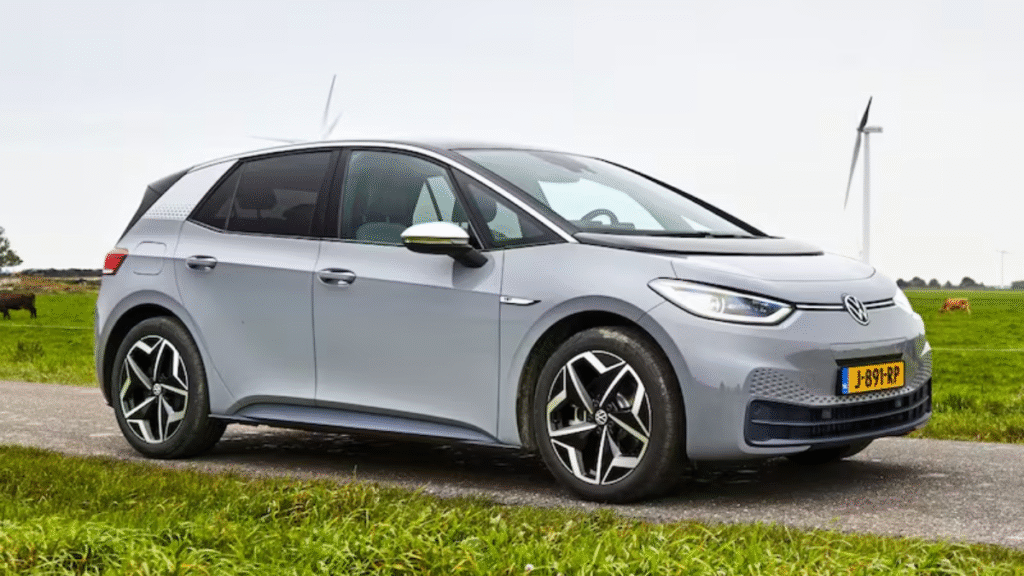
Driving Experience: Relaxed, Not Exciting
The 2023 Volkswagen ID.3 electric hatchback is powered by a rear-mounted motor driving the rear wheels. The rear-wheel-drive layout gives it a tight turning circle, making city driving and parking noticeably easier than in front-wheel-drive rivals. The light steering is effortless, though it provides little feedback to the driver.
The Pro model delivers 204 horsepower, which is more than enough for daily driving. Zero to 62 mph takes 7.3 seconds, which feels brisk without being dramatic. The Pro S uses the same motor but with a larger battery, offering the same acceleration with significantly more range.
On smooth roads, the ID.3 is composed and quiet. The cabin insulation is effective, and wind noise is minimal at highway speeds. But on rougher surfaces, the suspension transmits bumps more sharply than some buyers might expect. It is not uncomfortable, but it is not as plush as the Golf either.
The steering lacks engagement. It is accurate, but there is no real weight to it. It is the kind of car that gets you where you need to go without demanding much from you. For some, that is a strength. For others, it is a missed opportunity.
Range and Charging: Practical, But With Caveats
The Pro S offers an official WLTP range of up to 339 miles. That number sounds impressive, and it is, under ideal conditions. In real-world driving at 56 mph, the range drops to approximately 234 miles. At 75 mph, it falls to around 166 miles. For daily commuting and suburban driving, the ID.3 is more than adequate. For long-distance road trips, it requires planning, especially in colder weather.
Charging is where the facelift makes a meaningful difference. Maximum DC fast-charging rises from 125 kW to 170 kW, reducing 10 to 80 percent charge time to around 30 minutes under optimal conditions, when the battery temperature is above 20°C. In cold weather, speeds drop significantly. At freezing temperatures, the battery may struggle to accept more than 60 kW, extending charge times considerably.
The Pro version supports 120 kW fast charging, with similar temperature dependencies. Plug and Charge is now supported, allowing the car to authenticate and start charging automatically at compatible stations, a small but welcome convenience.
Interior: A Clear Step Forward
The cabin of the 2023 Volkswagen ID.3 electric hatchback is noticeably better than its predecessor. The previous hard plastics have been replaced with softer materials. The new Artvelours Eco fabric feels more premium than the old cloth. The door panels are better designed, with larger armrests that make long journeys more comfortable.
The 12-inch infotainment screen is now standard on most models. It is quicker, more stable, and easier to use than the old system. The climate controls are backlit, making them easier to find at night.
The rear seats are genuinely spacious. Legroom rivals that of larger sedans, and the flat floor makes the cabin feel open. But there is a catch: the Pro S version has only two rear seats. It is a 4-seater. Families with three children will need to choose the Pro model, which seats five.
The cargo space is 385 liters with the seats up and expands to 1,267 liters with the seats folded, competitive but not class-leading.
Technology: Better, But Not Flawless
The 2023 Volkswagen ID.3 electric hatchback features Volkswagen’s latest infotainment software. It is more responsive than the original system, with faster boot times and smoother navigation. Wireless Apple CarPlay and Android Auto are standard.
The optional head-up display with augmented reality projects navigation arrows onto the windshield, a genuinely useful feature that reduces the need to glance away from the road. The V2X technology, where available, can communicate with other vehicles and infrastructure within a range of up to 800 meters, warning of hazards ahead.
But the system is not flawless. The climate controls are still touchscreen-based, and adjusting them while driving requires attention away from the road. The voice control system, while improved, still lags behind competitors like Tesla and BYD.
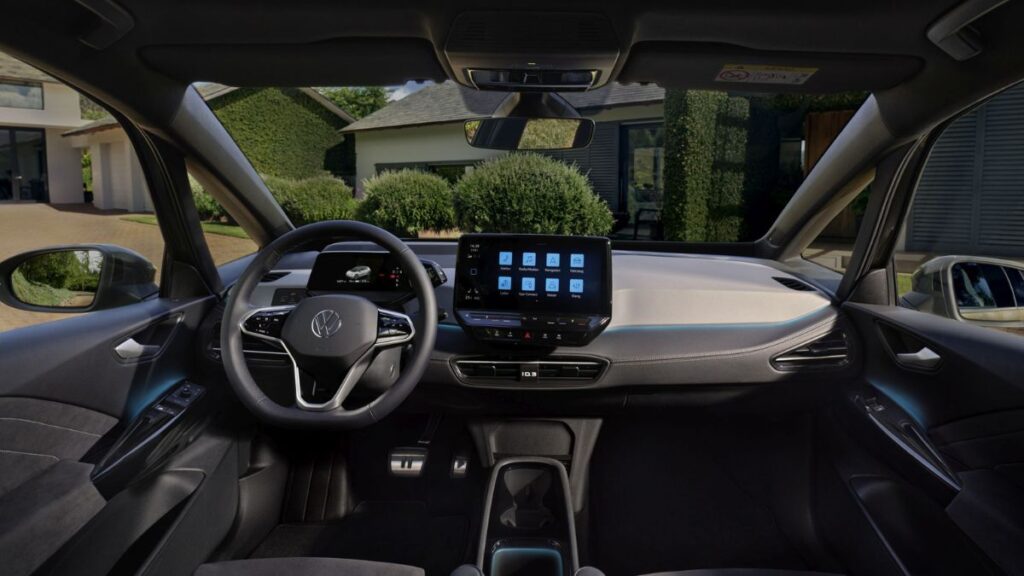
Ride Comfort and Refinement
The ID.3 is quieter than before. The facelift adds extra soundproofing, reducing wind and road noise at highway speeds. The cabin is comfortable for long journeys, with supportive seats and a relaxed driving position.
But the ride is firmer than some rivals. On smooth roads, it is composed. On rougher roads, the suspension transmits bumps more noticeably than a Golf would. The flat seats, while comfortable for short trips, lack lateral support for more spirited driving.
Practicality and Storage
The 385-liter boot is adequate for weekly grocery runs and weekend trips. With the rear seats folded, it expands to 1,267 liters. Inside the cabin, storage is functional but not exceptional. The door pockets are generous, and the center console bin is useful. There is no frunk, as the electric motor takes up space at the front.
Safety and Reliability
Euro NCAP awarded the ID.3 a five-star safety rating. Standard features include automatic emergency braking, lane keeping assist, traffic sign recognition, and adaptive cruise control.
Volkswagen offers an 8-year, 100,000-mile battery warranty. Early data from European markets suggests the ID.3 has been generally reliable, though some owners have reported software issues.
Biggest Strength and Biggest Weakness
Biggest Strength: The 2023 Volkswagen ID.3 electric hatchback offers more interior space than its Golf-sized footprint suggests. The rear legroom is genuinely impressive, and the 339-mile WLTP range, though lower in real-world driving—still makes the Pro S a practical choice for long journeys. The facelift addresses most of the original model’s flaws, from interior quality to infotainment speed, and the 170 kW charging capability makes road trips more manageable.
Biggest Weakness: The ID.3 is expensive compared to alternatives like the MG4, which offers similar range and performance for significantly less money. The Pro S is a 4-seater, limiting its appeal for larger families. The firm ride and lack of true one-pedal driving are notable omissions, and the infotainment, while improved, still lags behind the best in the market. For buyers seeking the sharpest value or the most engaging drive, the ID.3 falls short.
Competitors Worth Considering
MG4: The MG4 is the ID.3’s most direct rival. It offers similar range and performance at a lower price, around £10,000 less in the UK, and €4,000 less in Europe. The MG4 handles more sharply, though its interior feels less premium. The price gap makes it a compelling alternative for budget-conscious buyers.
Cupra Born: The Cupra Born shares the same MEB platform but is tuned for sharper handling and sportier styling. It is more engaging to drive, though it commands a higher price. Choose the Born for excitement; choose the ID.3 for comfort.
BYD Dolphin: The BYD Dolphin offers a futuristic interior and a lower starting price, but its range and charging speed do not match the ID.3 Pro S.
Renault Megane E-Tech: The Renault Megane E-Tech offers stylish design and a well-built cabin, but its range and interior space are inferior to the ID.3.
Tesla Model 3: The Tesla Model 3 is a premium alternative with superior technology and driving dynamics. It is more expensive and has less cargo space, though its packaging is different rather than definitively smaller.
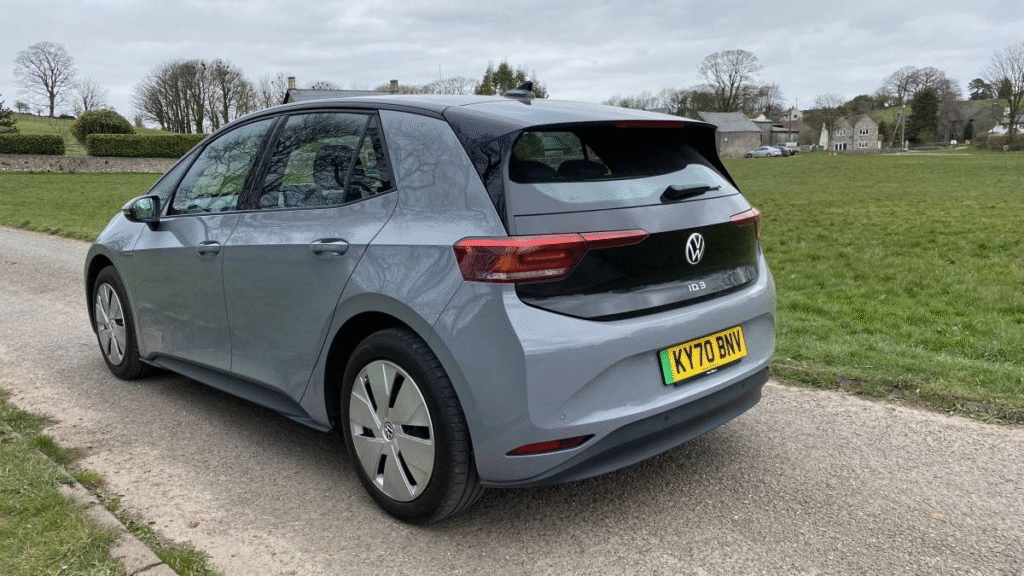
Trim Comparison
Pro: 58 kWh battery, 204 hp, five seats, up to 263 miles WLTP range, 120 kW DC charging. Starting at approximately $37,000 USD. Best for larger families and budget-conscious buyers.
Pro S: 77 kWh battery, 204 hp, four seats, up to 339 miles WLTP range, 170 kW DC charging. Starting at approximately $42,000 USD. Best for buyers prioritizing range and frequently taking long trips.
Which Trim Should You Buy
For most buyers, the Pro S is the better choice, if only for the extra range and faster charging. The 77 kWh battery makes long-distance travel more practical, and the 170 kW charging capability reduces wait times at fast chargers. However, the Pro S is a 4-seater, so families with three children should choose the Pro instead.
Who Should Buy the 2023 Volkswagen ID.3 Electric Hatchback
Ideal buyers: Small to medium families, daily commuters, and anyone who values interior space and efficiency over driving excitement. The ID.3 is one of the best electric hatchbacks for urban and suburban use.
Who should avoid it: Driving enthusiasts seeking sharp handling and feedback; budget-conscious buyers who can find better value in the MG4; larger families who need three rear seats (stick with the Pro model).
Should You Buy It
Yes, if you want a spacious, efficient, and well-built electric hatchback. The 2023 Volkswagen ID.3 electric hatchback offers exceptional passenger room, a more refined interior than its predecessor, and enough range for most daily needs. It is one of the best family-friendly EVs in its class.
No, if you want the best value for money or a genuinely engaging drive. The ID.3 is expensive compared to rivals, the steering is light and uncommunicative, and the infotainment still lags behind the best in the market.
Final Verdict
The 2023 Volkswagen ID.3 electric hatchback is not a car for the thrill-seeker. It is not the cheapest EV in its class, nor the most advanced. But it is, finally, the car Volkswagen promised three years ago. It is spacious, comfortable, and practical. Its range is more than adequate for daily life. Its interior feels genuinely improved. And its driving experience, while not exciting, is honest and predictable.
This is a car that does not try to impress you with numbers. It tries to make your life easier. And in that quieter, more practical mission, it succeeds. For families, commuters, and anyone who just wants an electric hatchback that works without drama, the 2023 Volkswagen ID.3 electric hatchback is a strong, thoughtful choice.
FAQs
Is the 2023 Volkswagen ID.3 electric hatchback worth the price compared to the MG4?
That depends on your market and your priorities. In the UK, the MG4 is significantly cheaper—around £10,000 less for comparable specs. In Europe, the gap is around €4,000. The ID.3 offers a more premium interior, better build quality, and a more refined driving experience. If you value quality over cost, the ID.3 is worth the premium. If budget is your priority, the MG4 offers exceptional value.
How does the 2023 Volkswagen ID.3 electric hatchback compare to the Cupra Born?
The Cupra Born shares the same MEB platform but is tuned for sportier driving. It offers sharper handling, more aggressive styling, and a more engaging experience. The ID.3 prioritizes comfort, space, and efficiency. Choose the Born if you want a fun drive; choose the ID.3 if you want a practical family car.
What is the real-world range of the 2023 Volkswagen ID.3 electric hatchback?
The Pro S is rated at 339 miles under WLTP testing. In real-world mixed driving, expect approximately 234 miles at 56 mph and 166 miles at 75 mph. Range depends heavily on temperature, driving style, and use of climate control. In cold weather, expect lower figures.
How long does it take to charge the 2023 Volkswagen ID.3 electric hatchback?
With 170 kW DC fast charging, the Pro S can charge from 10 to 80 percent in about 30 minutes under optimal conditions (battery temperature above 20°C). In cold weather, charging speeds drop significantly. Using a 7 kW home wallbox, a full charge takes approximately 10 to 12 hours for the Pro S.
Is the 2023 Volkswagen ID.3 electric hatchback a good family car?
Yes, for small to medium families. The rear seats are spacious and comfortable, and the 385-liter boot handles daily needs well. However, the Pro S version is a 4-seater with only two rear seats, which limits its practicality for families with three children. The standard Pro version seats five and is the better choice for larger families.

You’ve the most impressive websites.
You’ve the most impressive websites.
I’d like to find out more? I’d love to find out more details.
I’d like to find out more? I’d love to find out more details.