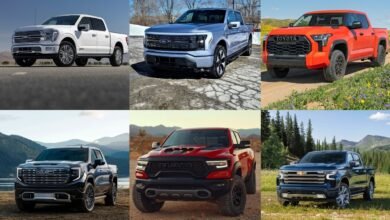
10 Used Trucks for Towing 2022–2025 Models Compared
How towing ratings, payload, engines, and used-market prices separate a smart 2022 to 2025 pickup from an expensive mistake.


Used trucks for towing have become one of the more interesting corners of the American pickup market in 2026. The difference between a capable truck and an overpriced one often comes down to a few lines on its original build sheet rather than the badge on the tailgate. A 2022, 2023, 2024, or 2025 pickup can pull a travel trailer, a boat, or an equipment hauler for substantially less than a comparable new truck, but only when the engine, axle ratio, cab configuration, drivetrain, and factory trailering equipment match the intended load. Manufacturers publish headline towing numbers for specific configurations, and a truck carrying the same model name can have a maximum rating thousands of pounds lower.
That distinction matters more in the used market because buyers rarely have the opportunity to choose every component of a truck before purchasing it. A dealer may advertise a 13,000-pound towing capacity because that number appears in the manufacturer’s specifications, but the actual vehicle sitting on the lot may have a different engine, axle ratio, bed length, or drivetrain. Its certified towing capacity could be considerably lower. The difference is not a minor technicality. It determines whether the truck can handle a loaded camper safely and comfortably.
This comparison examines ten used pickups from the 2022 through 2025 model years, covering everything from off-road-oriented midsize trucks to full-size gasoline and diesel workhorses. Each recommendation considers the engine, available torque, transmission, towing equipment, payload limitations, practical ownership characteristics, and current American used-market asking prices. The objective is not to identify the truck with the highest number on a specification sheet, but to understand which pickup offers the strongest combination of capability and value for a particular kind of buyer.
Our Take
The biggest mistake used-truck shoppers make is treating maximum towing capacity as the single most important measurement. It is an attractive number because it makes comparisons easy, but it does not describe how a particular truck will perform with a specific trailer, passengers, luggage, and equipment on board. The published maximum normally belongs to a carefully selected configuration, and the vehicle’s payload capacity can become the limiting factor long before its headline towing rating is reached.
Consider a family purchasing a travel trailer with a loaded weight of approximately 7,000 pounds. A properly equipped midsize truck may technically approach that weight, but passengers, camping supplies, and the trailer’s tongue weight can consume much of its available payload. A half-ton pickup with a lower published payload in a luxury configuration might face the same problem. The correct purchase therefore depends on the exact truck, not simply the model name.
Full-size and midsize pickups also serve different ownership needs. The Chevrolet Colorado, Ford Ranger, Jeep Gladiator, and Toyota Tacoma are easier to maneuver in many everyday environments, and their towing capabilities are sufficient for smaller campers, boats, and utility trailers. However, their smaller platforms generally provide less payload and less room for carrying passengers and cargo while towing. The Ram 1500, Toyota Tundra, GMC Sierra, Ford F-150, and Chevrolet Silverado offer more substantial options for buyers who regularly tow heavier trailers or need a spacious crew cab.
Engine selection matters just as much. Gasoline V8s such as the Ram HEMI and Nissan Endurance engine provide familiar performance characteristics and avoid some of the additional maintenance considerations associated with modern diesel emissions equipment. Turbocharged gasoline engines deliver strong torque across a useful operating range, while diesel engines such as the Duramax and EcoDiesel offer substantial low-speed pulling power that can be attractive during sustained highway towing. None is automatically the right choice for every buyer. A gasoline V8 can be a more practical purchase for occasional weekend towing, whereas a diesel may justify its additional complexity for someone who regularly covers long distances with a heavy trailer.
The shape and weight of the trailer are also important. A small equipment trailer and a large travel trailer can weigh similar amounts, yet the camper creates considerably more aerodynamic resistance because of its height and frontal area. A truck that feels comfortable pulling a low utility trailer may require substantially more effort when towing a tall travel trailer into a headwind or up a long highway grade. Fifth-wheel and gooseneck trailers introduce another consideration because their hitch weight is carried in the truck bed rather than through a conventional receiver.
Model year alone is not a reliable measure of value either. A 2022 pickup may cost considerably less than a 2025 equivalent, but mileage, condition, equipment, and previous towing history can narrow or even reverse that advantage. Newer trucks may offer additional driver-assistance features, updated transmissions, and remaining factory warranty coverage. The better financial decision is the one that combines a realistic purchase price with sufficient capability and a documented maintenance history.
Our strongest recommendation is to begin with the trailer rather than the truck. Determine its fully loaded weight, expected hitch weight, passenger requirements, and intended travel conditions. Then identify the pickup configurations that can handle those demands within their certified limits. That approach produces a much more useful shortlist than simply searching for the truck advertising the largest maximum towing number.
How We Evaluated These Used Trucks
The comparison focuses on American-market trucks from the 2022 through 2025 model years. Engine outputs, transmission information, and maximum towing figures are based on manufacturer specifications applicable to the relevant model year. Where a manufacturer publishes different ratings according to engine, cab, bed, drivetrain, axle ratio, or towing package, the applicable configuration is identified rather than presenting the highest published number as a standard capability.
The maximum towing figures are manufacturer ratings intended for properly equipped vehicles. They should not be interpreted as independent test results or as confirmation that every truck of the same model can tow the same weight. SAE J2807 ratings are relevant where applicable, but the individual vehicle’s certification labels and original equipment remain essential.
Used-market prices are based primarily on U.S. dealer listing snapshots collected on November 7, 2026, using CarWhere’s model-year-specific market data. The price ranges represent the middle half of available listings, while the median provides a reference point around which individual asking prices vary. These figures are asking prices rather than completed transaction prices or trade-in valuations. The 2024 Nissan Titan XD uses a separate November 13, 2026 listing snapshot because its market inventory is considerably smaller.
The evaluation also considers how each truck fits its intended role. A midsize truck is not penalized simply because it cannot match a full-size diesel’s maximum towing figure. Instead, its usefulness is assessed according to the type of trailer it is likely to pull, the practicality of its dimensions, the available payload, and the financial value it offers in the used market.
The 10 Used Trucks
2022 Ram 1500: Full-Size Value With Four Engine Choices
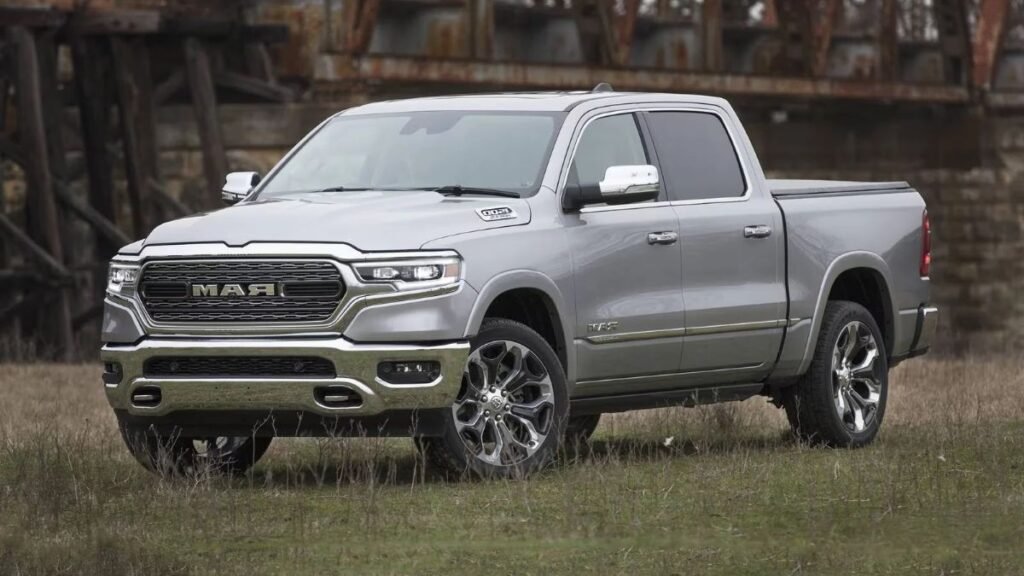
The 2022 Ram 1500 rewards buyers who examine the original build sheet carefully. Its engine lineup includes the 3.6-liter Pentastar V6 with eTorque, the 5.7-liter HEMI V8, the 5.7-liter HEMI V8 with eTorque, and the 3.0-liter EcoDiesel V6. These engines produce different levels of horsepower and torque, and their towing capacities vary substantially despite sharing the same model name. All are paired with an eight-speed automatic transmission, although the engine and axle combination determine how effectively the truck performs when pulling a trailer.
The 3.6-liter Pentastar V6 produces 305 horsepower and 269 lb-ft of torque. It is suitable for buyers who need a full-size pickup for everyday transportation and occasional lighter towing, but it is not the configuration to choose when approaching the Ram’s highest advertised trailer rating. The 5.7-liter HEMI V8 produces 395 horsepower and 410 lb-ft of torque. Its naturally aspirated character provides predictable power delivery, while the available eTorque mild-hybrid system adds electric assistance during certain operating conditions. The EcoDiesel V6 produces 260 horsepower and 480 lb-ft of torque, giving it a different advantage when pulling a substantial load at lower engine speeds.
Ram’s 2022 Ram 1500 towing and engine information identifies a maximum towing rating of 12,750 pounds for the HEMI V8 with eTorque when equipped with the required Max Tow Package and qualifying Quad Cab, two-wheel-drive, and axle configuration. The regular HEMI V8 reaches up to 11,590 pounds, while the EcoDiesel can reach 12,560 pounds in its qualifying configuration. The V6’s maximum is approximately 7,700 pounds. These differences are substantial enough that buyers should never assume a used Ram 1500 has the highest published towing capacity simply because it has a HEMI badge.
The HEMI is attractive for buyers who want strong gasoline performance without the additional emissions hardware of a modern diesel. The EcoDiesel, on the other hand, offers greater torque and can be an appealing choice for sustained highway travel with a substantial trailer. However, its diesel particulate filter, exhaust aftertreatment equipment, and other diesel-specific components make service history particularly important. The engine should be inspected by someone familiar with modern diesel systems before purchasing a high-mileage example.
The Ram’s other strength is its everyday comfort. Its cabin remains one of the more refined environments in the full-size pickup segment, especially in Laramie, Limited, and Limited Longhorn configurations. The available air suspension can improve ride quality and help the truck maintain its intended operating height, although it introduces additional components that deserve inspection. Buyers who spend long hours commuting between towing trips may appreciate the Ram’s quieter cabin and more comfortable suspension tuning compared with more work-focused alternatives.
Tradesman and Big Horn models can represent excellent value because they concentrate on practical equipment rather than luxury features. A properly configured lower-trim Ram may be a better towing purchase than a more expensive Limited if both meet the same requirements. The axle ratio, cab configuration, bed length, and factory tow package are more important than the trim badge when determining the vehicle’s actual capacity.
Our detailed 2023 Ram 1500 review provides additional perspective on the model family’s cabin refinement, driving experience, and ownership characteristics, although its technical specifications concern the 2023 model rather than the 2022 truck.
In the November 7, 2026 U.S. dealer listing snapshot, the 2022 Ram 1500 had a median asking price of approximately $33,406, with the middle half of listings ranging from $29,291 to $38,101 across 6,848 vehicles. The 2022 Ram 1500 used-market report provides a useful reference when comparing mileage and trim levels. For buyers who want a comfortable full-size pickup with a broad engine lineup, the 2022 Ram remains an attractive candidate, provided the actual towing equipment matches the intended load.
2022 Jeep Gladiator: The Off-Road Pickup That Tows Within Limits
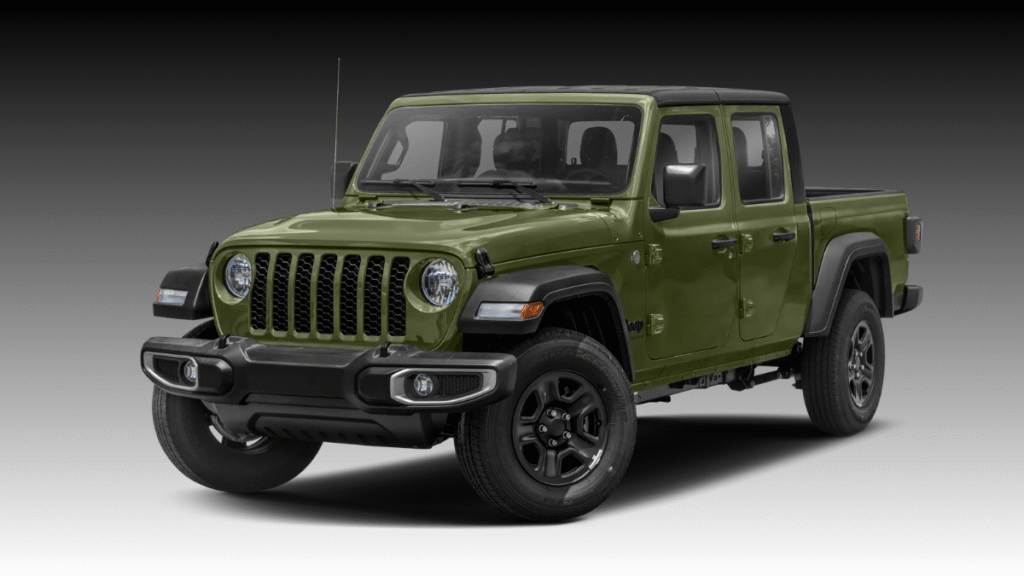
The 2022 Jeep Gladiator occupies a different position from the conventional full-size trucks in this comparison. Its greatest appeal is the combination of pickup utility and Jeep’s distinctive off-road design, including removable roof panels, removable doors, solid axles, and a body-on-frame structure. These features make it one of the more specialized midsize pickups available on the used market, but they also mean that buyers should understand its towing limitations before treating it as a replacement for a larger truck.
The principal gasoline powertrain is a 3.6-liter Pentastar V6 producing 285 horsepower and 260 lb-ft of torque. It is available with a six-speed manual transmission or an eight-speed automatic. The naturally aspirated engine offers familiar response and a relatively straightforward ownership proposition, although its torque output is lower than that of several modern turbocharged competitors. The 2022 Gladiator also offered a 3.0-liter EcoDiesel V6 in selected configurations, with 260 horsepower and 442 lb-ft of torque, providing a stronger low-speed pulling characteristic for buyers who can find a suitable example.
Jeep’s maximum advertised towing rating reaches 7,650 pounds, but that figure requires the appropriate gasoline Sport or Sport S automatic configuration with the Max Tow Package and its 4.10 rear axle ratio. The package includes additional cooling and towing-related equipment. Ordinary Sport and Sport S trucks have lower ratings, and manual-transmission models are rated considerably lower. Rubicon, Mojave, Overland, and diesel configurations also have their own specific towing limits. The 2022 Gladiator technical information and the vehicle’s original specifications should be checked before purchasing an example for trailer work.
The Gladiator’s off-road engineering is one of its strongest advantages, but it also introduces trade-offs. Solid axles and trail-focused suspension geometry help the truck handle rough terrain, while larger tires and additional off-road equipment can affect payload and usable carrying capacity. Its dimensions and towing characteristics also differ from a full-size pickup, particularly when pulling a large, tall travel trailer over long highway distances. A lower towing rating is not automatically a problem, but the truck requires more careful matching to the trailer and passengers.
This is where the Gladiator becomes a more specialized recommendation. It makes sense for buyers who want to reach remote campsites, launch smaller boats, pull utility trailers, or use their pickup for off-road recreation. It is less convincing as a substitute for a full-size truck that regularly tows heavy campers or equipment. Buyers should also avoid assuming that a Rubicon or Mojave is a better towing choice simply because it is more expensive. Those trims emphasize different forms of capability.
Used pricing reflects the Gladiator’s distinctive appeal. The November 7, 2026 market snapshot showed a median dealer asking price of approximately $30,671, with the middle half of listings between $28,120 and $33,592 across 1,910 vehicles. The 2022 Jeep Gladiator used-market data provides a useful reference when comparing the different trims and mileage levels.
For someone who places off-road flexibility and open-air driving high on the priority list, the 2022 Gladiator offers a combination that most competing pickups cannot reproduce. For someone primarily interested in towing capacity and payload, a conventional full-size truck is usually the more practical purchase.
2023 Toyota Tundra: The Redesigned Generation at a Used Price
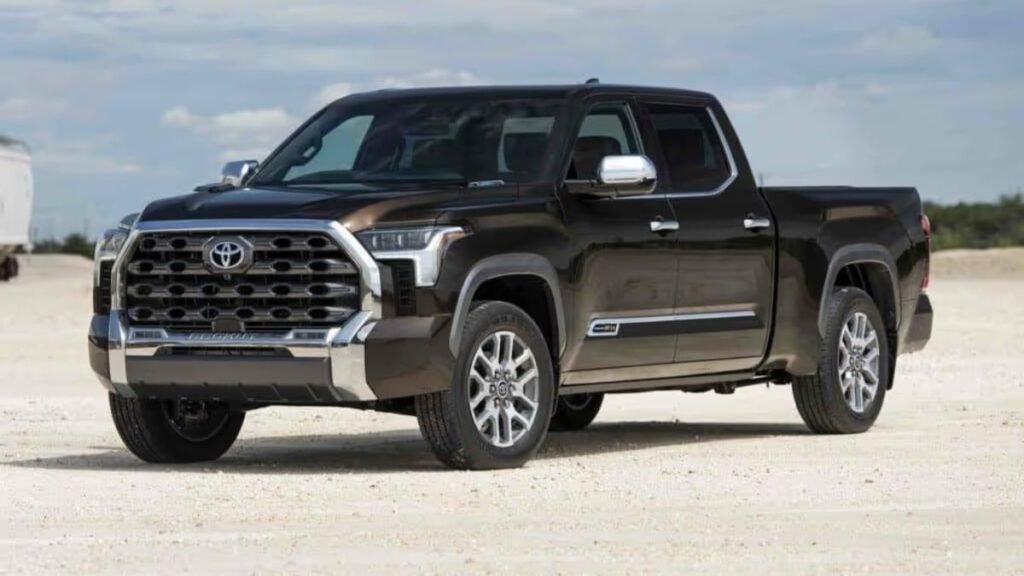
The 2023 Toyota Tundra represents the second model year of Toyota’s redesigned third-generation full-size pickup. Its replacement of the previous naturally aspirated V8 with a twin-turbocharged V6 was a major engineering change, and it fundamentally altered the way the truck delivers power. The result is a more modern platform with strong torque, a ten-speed automatic transmission, and an available hybrid powertrain for buyers who want additional performance.
The standard i-FORCE engine is a 3.4-liter twin-turbocharged V6, although Toyota markets it as a 3.5-liter twin-turbo powertrain in its model-year materials. The SR version produces 348 horsepower and 405 lb-ft of torque, while most higher trims produce 389 horsepower and 479 lb-ft. The available i-FORCE MAX hybrid combines the twin-turbo engine with an electric motor to produce 437 horsepower and 583 lb-ft of torque. These outputs belong to different configurations and should not be combined when comparing specifications.
The maximum towing capacity reaches 12,000 pounds, but this rating belongs to a specifically configured SR5 Double Cab with a 6.5-foot standard bed and two-wheel drive. The equivalent four-wheel-drive SR5 is rated lower, while the SR uses a lower-output engine and has a substantially smaller maximum rating. CrewMax and hybrid configurations also have different limits. This distinction is especially important because the Tundra’s hybrid system delivers substantial torque, but its additional hardware does not automatically translate into a higher towing capacity.
Toyota’s third-generation chassis uses a boxed frame and a multi-link rear suspension in place of the previous generation’s traditional leaf-spring arrangement. This change was intended to improve ride control and overall refinement, while the ten-speed automatic helps maintain useful engine speeds when pulling a trailer. The truck also offers modern towing assistance and camera technologies, depending on trim and equipment. These features improve convenience but do not replace the need to verify the actual trailer rating and payload of the individual vehicle.
The i-FORCE MAX is particularly interesting for drivers who regularly encounter grades or carry heavy loads at relatively low speeds. Its electric motor supplies torque quickly, which can make acceleration feel more immediate than in the conventional powertrain. However, its towing rating and payload must still be evaluated separately. A hybrid Tundra should not be purchased solely because its combined horsepower and torque figures are larger.
Buyers should also consider that 2023 was an early year for the redesigned platform. A strong brand reputation does not establish the condition of an individual truck, and used buyers should examine service records, VIN-specific recall status, and evidence of previous heavy towing. Toyota’s 2023 Tundra model information confirms the standard engine output, hybrid specifications, and advertised maximum towing capability.
Our 2026 Toyota Tundra review provides a broader look at the evolution of the current generation, but the 2023 model’s specifications and equipment should remain the basis of any purchase decision involving this used truck.
In the November 7, 2026 used-market snapshot, a 2023 Toyota Tundra carried a median asking price of approximately $42,671, with the middle half of dealer listings ranging from $38,795 to $46,816 across 2,720 vehicles. The 2023 Toyota Tundra price report is useful when comparing SR5 inventory with more expensive Limited, Platinum, and hybrid examples.
The 2023 Tundra is a strong option for buyers seeking a modern full-size platform with substantial torque and Toyota’s distinctive approach to ownership. Its actual towing value, however, depends on choosing the right configuration rather than assuming that every Tundra is capable of pulling 12,000 pounds.
2023 Chevrolet Colorado: A Midsize Truck With a Full-Size Rating Ceiling
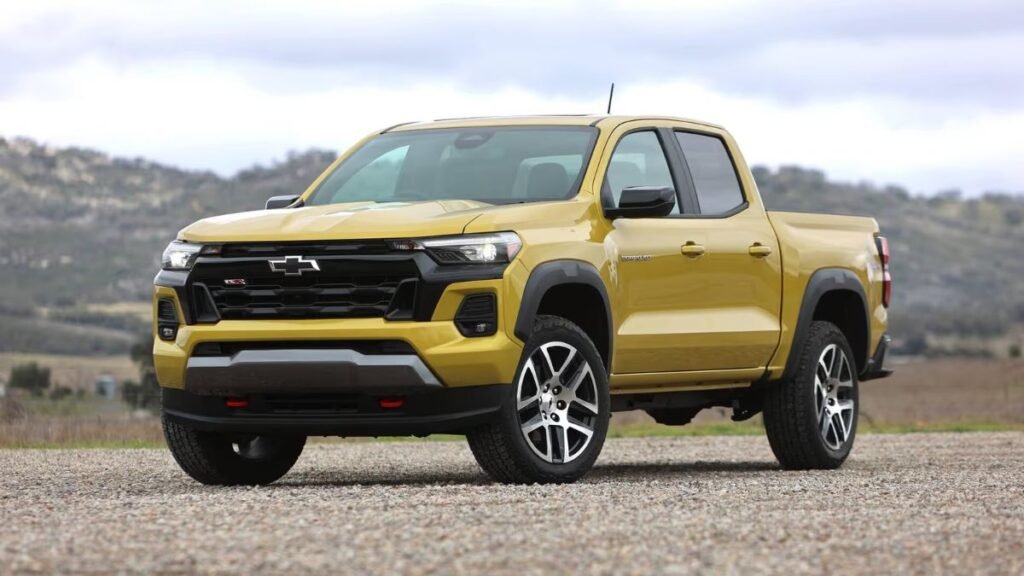
The redesigned 2023 Chevrolet Colorado marked one of the most important changes in the modern midsize pickup segment. Chevrolet moved the truck to a revised platform, introduced a more contemporary cabin, and replaced the previous engine lineup with different versions of a 2.7-liter turbocharged four-cylinder. This approach simplified the powertrain range while giving buyers access to substantially different levels of performance depending on trim and equipment.
The base 2.7-liter Turbo produces 237 horsepower and 259 lb-ft of torque. The Turbo Plus version increases output to 310 horsepower and approximately 391 lb-ft, while the Turbo High-Output configuration produces 310 horsepower and 430 lb-ft. All versions use an eight-speed automatic transmission. The difference between them is more than a matter of acceleration, because the engine tune and associated equipment also determine the truck’s maximum towing rating.
The Colorado can reach a maximum towing capacity of 7,700 pounds, but that number requires the appropriate Turbo Plus configuration with the Z82 Trailering Package and G80 locking rear differential. The base Turbo engine is rated at only 3,500 pounds. Turbo Plus trucks without the required towing equipment have lower ratings, while the off-road-focused ZR2 is rated at approximately 6,000 pounds. The ZR2 Desert Boss and related equipment can reduce the maximum further. Buyers should therefore avoid assuming that the most powerful or most expensive Colorado is automatically the best towing model.
The 2.7-liter engine’s strong low-speed torque gives the Colorado an advantage when pulling moderate trailers, especially when compared with older midsize pickups that used naturally aspirated V6 engines. Its eight-speed automatic transmission provides a wider range of ratios, helping the engine remain responsive during acceleration and highway climbing. The truck also benefits from an improved cabin layout, updated infotainment, and useful trailering technologies such as Hitch Guidance and available Hitch View.
Its physical size makes the Colorado particularly attractive for owners who need a pickup that can work during the week and tow recreational equipment on weekends. It is easier to maneuver than a full-size pickup in tight parking areas and smaller driveways, and it provides a more manageable platform for boats, utility trailers, and appropriately sized campers. Its smaller payload capacity remains an important limitation, however, and buyers pulling a large travel trailer with several passengers should calculate the loaded tongue weight before committing to a particular configuration.
The redesigned Colorado also requires careful attention to model year when shopping. The 2022 truck belongs to the previous generation and uses a different engine lineup. A used 2023 Colorado should not be valued or evaluated as though it were simply an updated version of the older truck. Chevrolet’s official 2023 Colorado announcement explains the redesign, revised powertrain approach, and new equipment.
Our 2023 Chevrolet Colorado review provides additional analysis of the redesigned truck, its interior, and its everyday capabilities.
The November 7, 2026 U.S. dealer snapshot showed a median asking price of approximately $33,665 for the 2023 Colorado, with the middle half of listings between $29,995 and $36,138 across 1,706 vehicles. The 2023 Colorado used-market report provides useful price context for buyers comparing WT, LT, Z71, Trail Boss, and ZR2 examples.
The Colorado is one of the most convincing midsize towing options in this comparison, provided the buyer finds a Turbo Plus model with the equipment required for its higher rating. It delivers substantial capability without the size and cost of a full-size pickup, but payload and configuration still determine whether it is suitable for the intended trailer.
2024 GMC Sierra 1500: A Premium Truck With a Strong Diesel Option
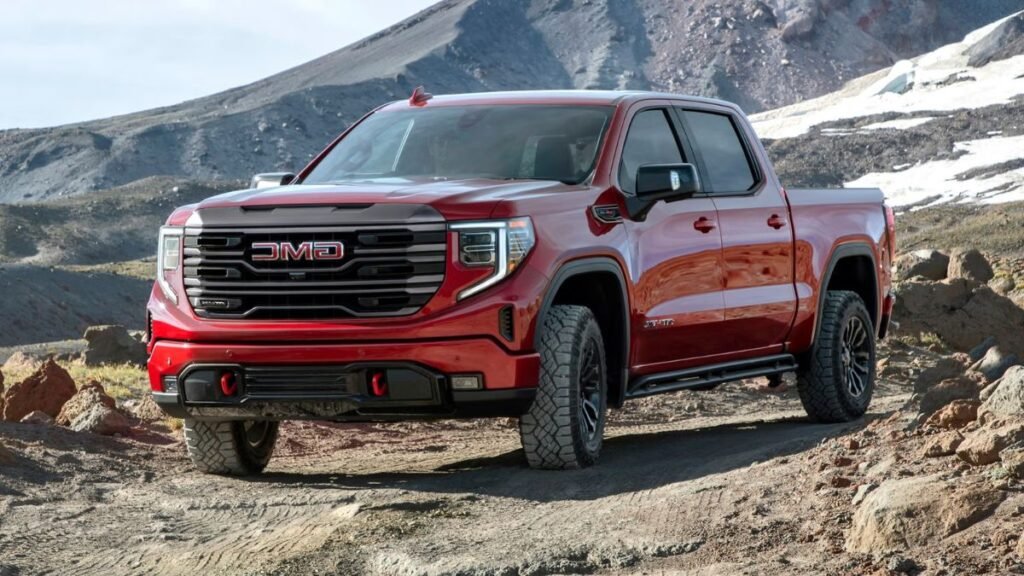
The 2024 GMC Sierra 1500 occupies an interesting position in the full-size market because it combines conventional work-truck capability with a more premium range of trims and cabin equipment. Its engineering is closely related to the Chevrolet Silverado 1500, but GMC places greater emphasis on interior refinement, available luxury equipment, and off-road-oriented models. For a used buyer, the Sierra can provide substantial towing capability while offering a more upscale daily driving experience.
The 2024 engine lineup includes the 2.7-liter TurboMax four-cylinder producing 310 horsepower and 430 lb-ft of torque, the 5.3-liter EcoTec3 V8 producing 355 horsepower and 383 lb-ft, the 6.2-liter EcoTec3 V8 producing 420 horsepower and 460 lb-ft, and the 3.0-liter Duramax inline-six diesel producing 305 horsepower and 495 lb-ft. The TurboMax uses an eight-speed automatic transmission, while the V8 and Duramax options use a ten-speed automatic. These engines deliver different combinations of acceleration, torque, and towing capability, which makes the original equipment particularly important when shopping for a used truck.
The 3.0-liter Duramax reaches a maximum towing capacity of approximately 13,200 pounds in the properly equipped two-wheel-drive configuration with the Max Trailering Package. The corresponding maximum for qualifying four-wheel-drive configurations is approximately 13,000 pounds. The 5.3-liter V8 can reach approximately 11,200 pounds in its qualifying configuration, while the TurboMax has a maximum of around 9,500 pounds. The 6.2-liter V8 offers strong performance, but its maximum tow rating depends on drivetrain and trailering equipment and should not be confused with the diesel’s 13,200-pound figure.
The Duramax is especially attractive for buyers who spend a considerable amount of time towing on highways. Its 495 lb-ft of torque arrives at useful engine speeds for pulling a loaded trailer, while the ten-speed automatic transmission helps manage engine speed across changing grades. Diesel fuel economy can also be an advantage during sustained highway operation, although actual results depend on the trailer’s weight and aerodynamic profile. Buyers should remember that diesel emissions components require proper maintenance, and the used vehicle’s history is more important than the engine’s reputation alone.
The Sierra’s trim range also creates significant differences in the used market. Pro and SLE models emphasize practical equipment, Elevation provides a more distinctive appearance, and SLT moves toward a more premium cabin. AT4 and AT4X are oriented toward off-road use, while Denali and Denali Ultimate bring additional luxury equipment. A buyer seeking maximum towing value may find an SLT or suitable Pro configuration more practical than a highly equipped off-road model. Additional luxury equipment can add weight and reduce the available payload.
The available Trailering Package provides important hardware, including hitch equipment and electrical connectors, while an integrated trailer brake controller and other assistance systems may be available depending on trim. GMC’s 2024 Sierra 1500 technical configuration page allows buyers to examine the original engine and body configurations, while its 2024 Duramax announcement describes the diesel’s power and torque output.
Our 2023 GMC Sierra 1500 review offers additional perspective on the Sierra family’s driving experience, cabin refinement, and general capabilities, although the 2024 specifications should be verified separately.
Used prices for the 2024 Sierra 1500 remained relatively high in the November 7, 2026 market snapshot. The median asking price was approximately $43,635, with the middle half ranging from $38,906 to $48,927 across 5,443 dealer listings. Elevation represented a substantial portion of the available inventory. The 2024 GMC Sierra 1500 used-market report gives buyers a useful starting point for comparing different trims and mileage levels.
The Sierra is particularly appealing to buyers who want strong towing capability without giving up cabin quality. Its diesel option makes it a compelling long-distance towing choice, but the actual truck’s axle, drivetrain, trailering package, and payload determine whether the premium is justified.
2024 Nissan Titan XD: A V8 Alternative Between Half-Ton and Heavy-Duty Trucks
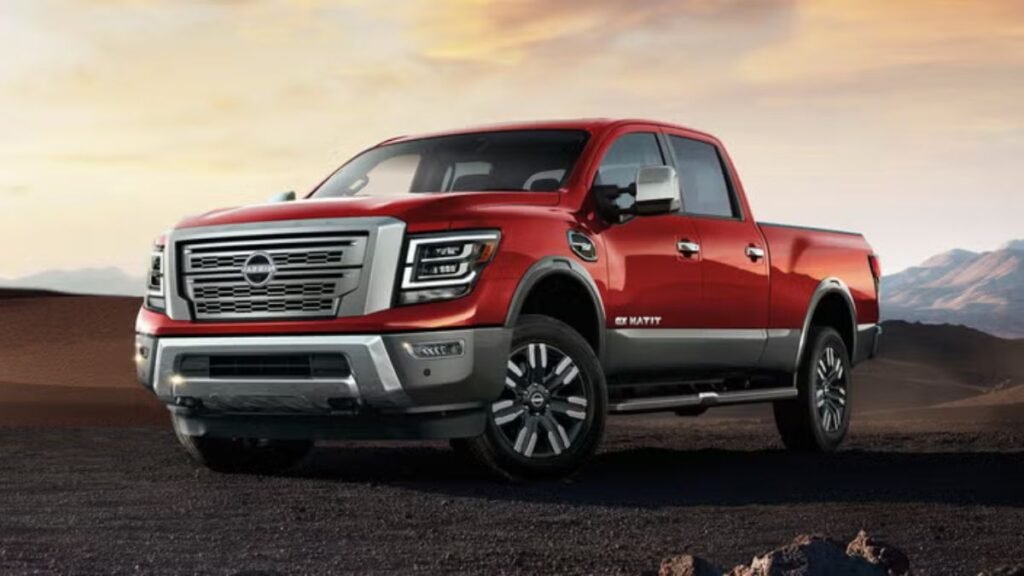
The 2024 Nissan Titan XD occupies an unusual position in the American pickup market. It is more substantial than a conventional half-ton Titan, yet it does not follow exactly the same formula as a traditional three-quarter-ton diesel pickup. Nissan built the XD around a heavier platform, offered it exclusively as a four-wheel-drive Crew Cab, and equipped it with a naturally aspirated V8. The resulting combination appeals to buyers who want additional towing and payload capability without moving into a more expensive heavy-duty diesel truck.
The 5.6-liter Endurance V8 produces 400 horsepower and 413 lb-ft of torque. It uses a nine-speed automatic transmission and provides predictable power delivery without turbocharging. This engine is shared with the regular Titan, but the XD’s chassis, dimensions, and equipment distinguish it from the standard model. Nissan’s official 2024 Titan press kit provides the exact powertrain specifications and model-year equipment information.
The Titan XD’s towing figures depend on trim and hitch type. The SV can reach 10,900 pounds of conventional towing and 11,050 pounds with the available gooseneck hitch when properly equipped. The PRO-4X is rated at 10,730 pounds with conventional towing and 10,880 pounds with a gooseneck, while the Platinum Reserve reaches 9,650 and 9,910 pounds respectively. These ratings must remain separate because the gooseneck number is not the truck’s conventional towing capacity. Nissan also lists a maximum payload of up to 2,360 pounds, although the actual carrying capacity of an individual vehicle must be taken from its certification label.
The heavier-duty components and frame give the Titan XD additional capability compared with the regular Titan. Its receiver hitch, available integrated gooseneck equipment, trailer sway control, and standard trailer brake controller make it a more substantial towing platform. It can be particularly interesting to buyers who prefer a naturally aspirated gasoline V8 and want a truck capable of handling boats, larger travel trailers, or certain heavier work trailers.
However, the XD should not be treated as a direct substitute for every three-quarter-ton diesel. Its gasoline engine, available configurations, and published towing limits define a specific market position. The maximum ratings do not mean that every XD is appropriate for a large fifth-wheel or commercial trailer, especially when hitch weight and payload are considered.
There is also an important ownership consideration. The 2024 model year marked the end of Nissan Titan and Titan XD production. That does not mean that service support or replacement parts will disappear, but buyers should understand that future resale demand and the supply of comparable vehicles may differ from what they encounter with Ford, Chevrolet, or Toyota. The truck’s condition, service history, and actual configuration matter more than the final-model-year designation by itself.
Used-market inventory is much thinner than it is for the F-150 or Silverado. An AutosToday snapshot refreshed on November 13, 2026, showed approximately 31 used 2024 Titan XD listings, with a median dealer asking price of about $42,099 and average mileage of approximately 36,158 miles. The sample is relatively small, so individual listings can vary considerably according to trim and condition. The 2024 Titan XD used inventory report provides a useful reference, but buyers should not treat the median as a universal valuation.
Our 2023 Nissan Titan review provides background on the V8-powered Titan family, although the standard Titan and Titan XD have distinct towing capacities and should be evaluated separately.
The 2024 Titan XD is a specialized choice for buyers who want V8 simplicity, a more substantial chassis than the regular Titan, and useful towing capability. Its smaller inventory and discontinued status make careful shopping particularly important, but a well-maintained example at the right price can be a worthwhile alternative to more common domestic pickups.
2024 Ford Ranger: A Modern Midsize Truck With Serious Towing Capability
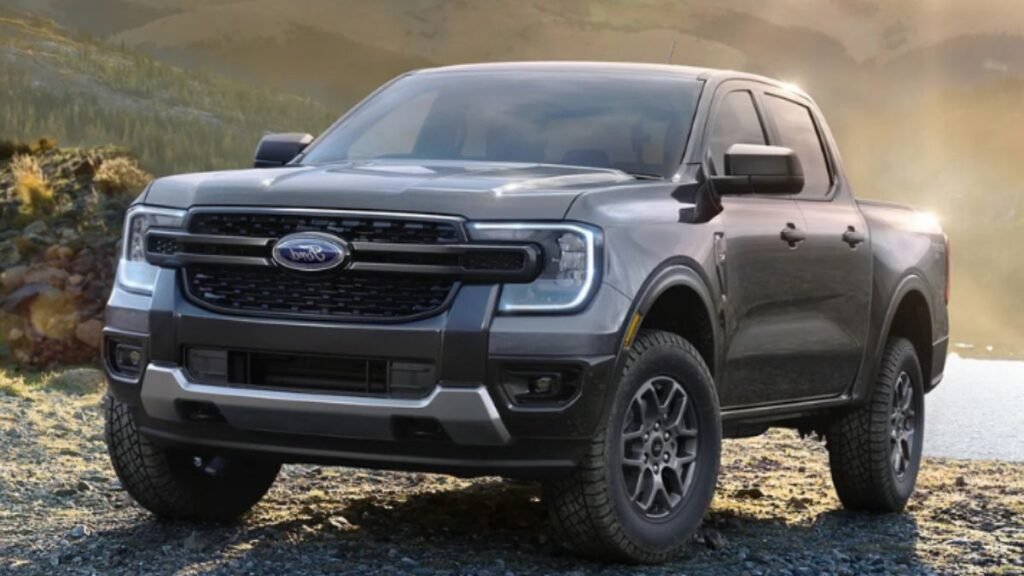
The redesigned 2024 Ford Ranger represents a major change from the previous generation. Ford updated the platform, introduced a more modern cabin, revised the powertrain lineup, and improved the truck’s overall refinement. Buyers shopping for a used Ranger should recognize that the 2024 model is not simply a newer version of the older 2022 or 2023 truck. It belongs to a redesigned generation with different performance characteristics and technology.
The standard 2.3-liter EcoBoost four-cylinder produces 270 horsepower and 310 lb-ft of torque, while the available 2.7-liter EcoBoost V6 increases output to 315 horsepower and 400 lb-ft. Both engines are paired with a ten-speed automatic transmission. The standard four-cylinder provides sufficient performance for ordinary driving and moderate trailer loads, while the V6 gives the Ranger stronger acceleration and additional confidence when climbing grades or carrying a heavier trailer.
Properly configured 2024 Rangers can tow up to 7,500 pounds. The maximum is available with qualifying 2.3-liter EcoBoost two-wheel-drive and four-wheel-drive SuperCrew configurations, as well as selected 2.7-liter EcoBoost SuperCrew four-wheel-drive models. The Raptor uses a different 3.0-liter EcoBoost V6 producing 405 horsepower and 430 lb-ft of torque, but its maximum towing rating is approximately 5,510 pounds. This distinction is important because the Raptor is designed around high-speed off-road performance rather than the highest possible trailer rating.
The Ranger’s size makes it attractive to drivers who regularly travel through urban environments or park in smaller residential spaces. It offers many of the advantages of a traditional body-on-frame pickup without the overall dimensions of an F-150 or Silverado. The redesigned cabin also brings improved technology, more contemporary displays, and better everyday ergonomics. However, payload and bed capacity remain below those of many full-size trucks, which limits its suitability for larger campers and heavily loaded trailers.
The 2024 Ranger also provides an interesting used-market comparison with the older 2022 and 2023 models. The redesigned vehicle generally commands a higher asking price, but it also offers a newer platform and a more modern cabin. Buyers who do not need the additional performance of the V6 may find that a properly equipped 2.3-liter model provides the best balance of purchase price and towing capability. Buyers who tow frequently should examine the 2.7-liter version where available.
A November 7, 2026 U.S. dealer listing snapshot showed a median asking price of approximately $37,348, with the middle half of listings ranging from $33,442 to $40,698 across 1,179 vehicles. The XLT represented the largest share of available inventory. The 2024 Ford Ranger used-market report provides a useful reference when comparing the redesigned truck against older-generation examples.
The Ranger makes the most sense when its midsize proportions are an advantage rather than a compromise. It can pull a properly matched camper, boat, or utility trailer while remaining practical for everyday transportation, but buyers who regularly tow near the upper end of its rating should carefully examine payload and configuration before purchasing.
2025 Ford F-150: The Most Versatile Used Full-Size Towing Choice
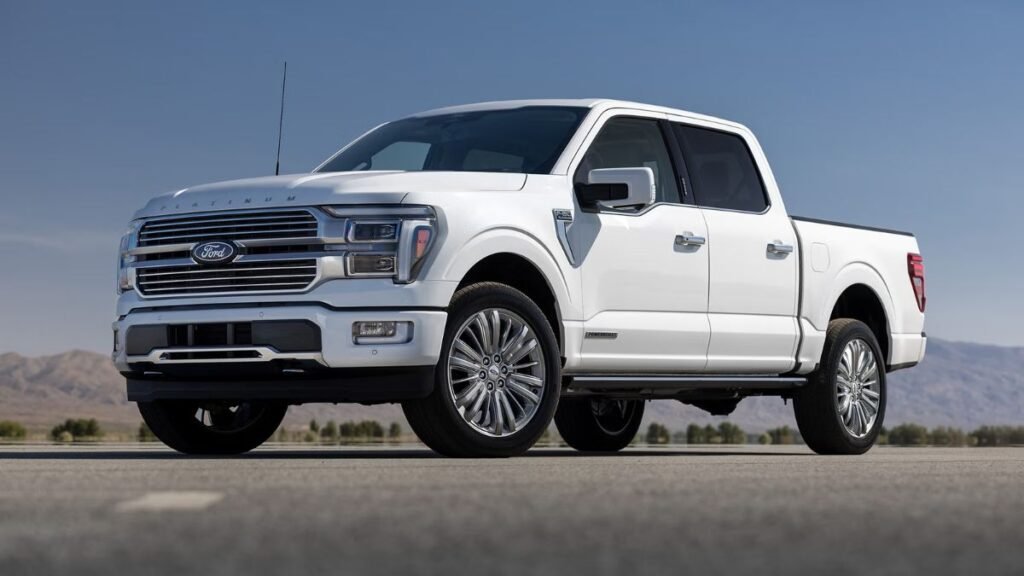
The 2025 Ford F-150 remains one of the most versatile pickups in the American market because its engine range allows buyers to choose a truck around the type of work they actually perform. Rather than relying on one engine to serve every purpose, Ford offers several powertrains with noticeably different torque characteristics and towing capacities. For a used buyer, this creates an opportunity to find a truck with the right level of capability without paying for an expensive trim or performance package that adds little practical value.
The 2.7-liter EcoBoost V6 produces 325 horsepower and 400 lb-ft of torque, while the naturally aspirated 5.0-liter V8 delivers 400 horsepower and 410 lb-ft. The 3.5-liter EcoBoost V6 also produces 400 horsepower but increases torque to 500 lb-ft, making it particularly attractive for frequent towing. Ford offers the 3.5-liter PowerBoost hybrid as well, with combined output of 430 horsepower and 570 lb-ft. All four engines use a ten-speed automatic transmission.
The maximum published towing capacity reaches 13,500 pounds with the properly equipped 3.5-liter EcoBoost V6. Ford’s 2025 F-150 specifications list maximum towing capacities of 8,400 pounds for the 2.7-liter EcoBoost, 12,900 pounds for the 5.0-liter V8, 13,500 pounds for the regular 3.5-liter EcoBoost, and 11,200 pounds for the PowerBoost hybrid. These are maximum available ratings, not universal limits for every cab, bed, drivetrain, or trim combination. High-performance Raptor and Raptor R models also have different towing limits.
The 3.5-liter EcoBoost is especially attractive for buyers who regularly pull heavier travel trailers or equipment. Its 500 lb-ft of torque offers strong pulling performance, while the ten-speed transmission helps keep the engine within its useful power range. The 5.0-liter V8 appeals to buyers who prefer a naturally aspirated engine and conventional V8 characteristics. The 2.7-liter EcoBoost is more appropriate for lighter towing and general daily use, while the PowerBoost hybrid offers strong torque and useful onboard electrical capability. However, its maximum towing rating is lower than the regular 3.5-liter EcoBoost, so buyers should not confuse combined power output with the highest available trailer capacity.
Ford’s towing technology also strengthens the F-150’s position. Depending on trim and equipment, the truck can be fitted with Pro Trailer Backup Assist, an integrated trailer brake controller, trailer coverage through the blind-spot monitoring system, available towing cameras, and other assistance features. The Max Trailer Tow Package and the exact factory axle configuration become particularly important for buyers targeting the highest published ratings. Two trucks that look almost identical from the outside may have substantially different towing capacities because of their original equipment.
Trim selection is another important part of the used buying process. An XL or XLT can be a better towing purchase than a heavily equipped Platinum or King Ranch if the lower trim has the correct engine, axle ratio, and factory towing package. Our detailed guide to which Ford F-150 trim is actually worth buying explains the differences between work-oriented, comfort-focused, and premium configurations.
The 2025 F-150 also carries a substantial used-market premium because many examples remain relatively recent. A November 7, 2026 U.S. dealer listing snapshot showed a median asking price of approximately $44,456, with the middle half ranging from $39,068 to $57,582 across 9,274 listings. The XLT represented the largest share of available inventory, giving shoppers a relatively broad selection of comparable vehicles. Buyers should compare similarly equipped XLT and Lariat trucks rather than assuming that a more expensive trim automatically offers better towing capability. The 2025 F-150 used-market pricing data provides current asking-price context.
For buyers who need one pickup to handle commuting, family use, recreational towing, and occasional heavier work, the F-150 offers one of the broadest combinations of capability and configuration choices. Its real advantage is not a single maximum rating but the ability to find a specific engine and equipment package that fits the intended trailer without automatically moving into the heavy-duty class.
2025 Chevrolet Silverado 1500: A Strong Alternative for Diesel Towing
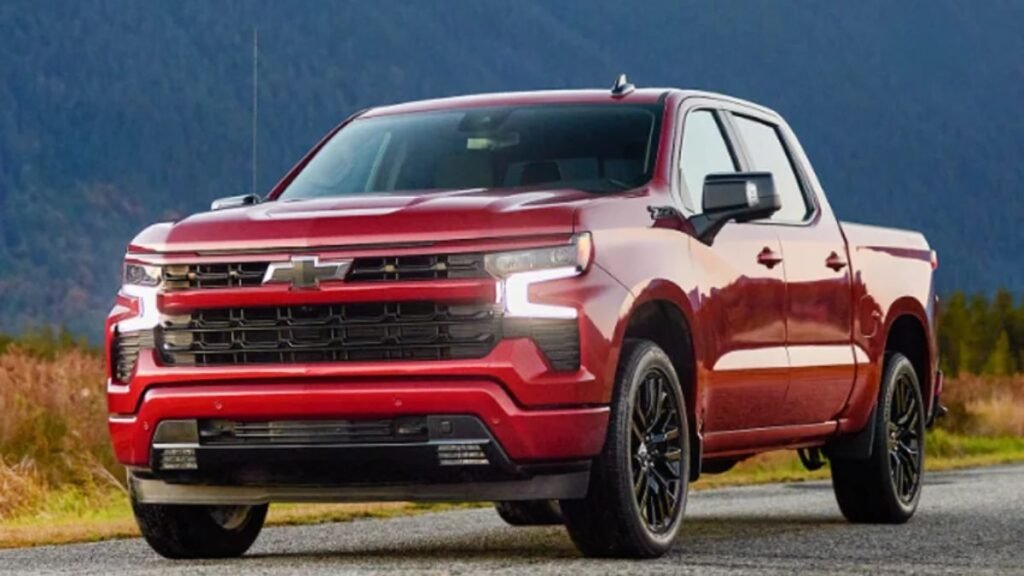
The 2025 Chevrolet Silverado 1500 is one of the closest alternatives to the F-150, particularly for buyers who prioritize engine choice and the availability of a high-torque diesel powertrain. Chevrolet carries forward a lineup that includes the TurboMax four-cylinder, two gasoline V8 engines, and the Duramax turbodiesel inline-six. This range allows used buyers to compare very different ownership propositions within the same model family, from an affordable work-oriented truck to a well-equipped diesel configuration intended for more frequent towing.
The 2.7-liter TurboMax produces 310 horsepower and 430 lb-ft of torque, paired with an eight-speed automatic transmission. The 5.3-liter EcoTec3 V8 produces 355 horsepower and 383 lb-ft, while the 6.2-liter V8 increases output to 420 horsepower and 460 lb-ft. Both V8s use a ten-speed automatic transmission. The 3.0-liter Duramax diesel produces 305 horsepower and 495 lb-ft, also paired with a ten-speed automatic. These figures make the diesel especially interesting for sustained trailer work, where low-speed torque and the ability to maintain pulling performance under load can matter more than peak horsepower.
The Silverado’s maximum conventional towing capacity reaches 13,300 pounds with specific properly equipped Duramax configurations. The qualifying setup includes the 3.0-liter diesel, Max Trailering Package, two-wheel drive, and the appropriate cab, bed, and wheel configuration. The 2025 Chevrolet trailering specifications identify qualifying Double Cab standard-bed and Crew Cab short-bed configurations with 20-inch wheels. Four-wheel-drive versions have lower maximum ratings. This means that the 13,300-pound figure should never be applied to every Silverado simply because it has the Duramax engine.
The diesel’s 495 lb-ft of torque makes it particularly suitable for buyers who frequently travel long distances with substantial trailers. Its performance under load can make it more comfortable for sustained highway towing than a smaller gasoline engine, although maintenance history is essential. The 5.3-liter V8 provides a more conventional gasoline alternative, while the 6.2-liter offers stronger performance for buyers who prioritize acceleration as well as towing. The TurboMax is a useful option for lighter work and buyers who place greater emphasis on purchase price.
Chevrolet’s trailering technology is another reason the Silverado remains competitive. Available equipment includes an integrated trailer brake controller, Hitch Guidance, Hitch View, trailer camera compatibility, trailer sway control, and blind-zone assistance for selected configurations. These systems do not increase the truck’s certified towing rating, but they make connecting and maneuvering a trailer more convenient. Additional camera views are particularly useful when towing a long travel trailer or positioning the truck in a confined storage area.
The Silverado and GMC Sierra share much of their underlying engineering, but their market positioning differs. The Silverado generally offers a more direct work-focused value proposition, while the Sierra places greater emphasis on premium finishes and equipment in its higher trims. Buyers who want the diesel powertrain without paying for a Denali-level interior may find an LT or RST Silverado more attractive. Our 2023 Chevrolet Silverado 1500 review provides additional context about the model family, although the 2025 truck’s technical specifications must be evaluated separately.
Used prices make the 2025 Silverado interesting when compared with the F-150. A November 7, 2026 dealer listing snapshot showed a median asking price of approximately $41,562, with the middle half ranging from $36,170 to $48,537 across 6,319 listings. The LT represented the largest share of available inventory, giving buyers a relatively broad selection of examples. A diesel-equipped truck may command more than a basic TurboMax work model, so comparing equipment and engine options is essential. The 2025 Silverado 1500 used-market report provides useful price context.
The Silverado is particularly compelling for buyers who intend to tow regularly and can find a properly equipped Duramax example with a documented maintenance history. Its gasoline versions remain sensible alternatives for less frequent towing, but the diesel’s torque makes it one of the more specialized full-size options in this comparison.
2025 Toyota Tacoma: A Midsize Pickup for Moderate Towing and Everyday Use

The 2025 Toyota Tacoma approaches towing from a different direction than the full-size trucks in this guide. It does not attempt to compete directly with the F-150, Silverado, or Sierra at their highest published ratings. Instead, it combines a smaller footprint, a modernized chassis, available off-road equipment, and two distinctly different powertrain choices. For buyers who tow moderate loads but still want a pickup that is relatively easy to drive and park every day, the Tacoma offers a useful balance.
The standard i-FORCE powertrain uses a 2.4-liter turbocharged four-cylinder engine. Output depends on trim and transmission, with higher-output automatic configurations producing up to 278 horsepower and 317 lb-ft of torque. Some SR configurations have lower output, and the six-speed manual powertrain has its own ratings. Toyota also offers the i-FORCE MAX hybrid system, which combines the turbocharged engine with an electric motor to produce up to 326 horsepower and 465 lb-ft of torque. The hybrid uses an eight-speed automatic transmission and delivers stronger combined output, but the additional hardware does not automatically provide the highest towing rating.
Toyota lists a maximum towing capacity of up to 6,500 pounds for the 2025 Tacoma. That rating belongs to qualifying XtraCab SR5 and TRD PreRunner configurations and should not be applied to every Double Cab, SR, or hybrid model. Certain Double Cab versions reach approximately 6,400 pounds, while the SR is rated substantially lower at around 3,500 pounds in qualifying configurations. i-FORCE MAX hybrid versions have their own lower maximum ratings, generally around 6,000 pounds depending on trim. Toyota’s official 2025 Tacoma announcement confirms its powertrain options and model-year equipment, while the vehicle’s original trailering specifications determine the exact capacity.
The fourth-generation Tacoma introduces a more modern interior, updated infotainment, revised chassis engineering, and additional driver-assistance technology. Available towing equipment includes a trailer brake controller and features designed to help drivers monitor and maneuver a trailer. These additions can make towing easier, particularly when backing a trailer into a driveway or campsite. However, the Tacoma’s midsize dimensions and lower payload headroom compared with full-size pickups still matter when choosing a larger travel trailer.
Off-road trims introduce another consideration. The TRD Off-Road, TRD Pro, and Trailhunter are designed around different suspension, tire, and terrain-focused equipment. That hardware can improve performance away from pavement, but it does not automatically make these trims better towing trucks. Larger tires, additional accessories, and extra equipment can reduce available payload. Buyers who rarely leave paved roads may find an SR5 or other road-oriented configuration offers better value for trailer use.
The Tacoma’s reputation also influences used-market pricing. A November 7, 2026 U.S. dealer listing snapshot showed a median asking price of approximately $38,849, with the middle half of listings ranging from $35,773 to $42,740 across 3,875 vehicles. The SR5 accounted for the largest share of available inventory, making it a useful trim for comparing equipment and asking prices. Buyers should still examine the individual engine, cab, bed, and drivetrain because a lower-priced SR and a more heavily equipped hybrid are not interchangeable towing purchases. The 2025 Toyota Tacoma used-market report provides current market context.
The Tacoma makes the most sense for buyers who do not need the higher ratings of a full-size pickup. It can handle many smaller campers, boats, and utility trailers when properly configured, while remaining easier to maneuver in everyday driving. Its strongest appeal is the combination of moderate towing capability and midsize practicality, rather than maximum trailer weight.
What Towing Capacity Does Not Tell You
A truck’s maximum towing capacity is only one part of the weight calculation, and it can become misleading when buyers treat it as the amount of trailer the vehicle can safely pull under every circumstance. The published maximum applies to a defined configuration and specific operating conditions. Once passengers, cargo, accessories, and hitch equipment are added, the usable capacity of an individual vehicle can be substantially different.
Payload is often the limiting factor, particularly when towing a travel trailer with a conventional hitch. The trailer’s tongue weight presses down on the truck, and that load counts against the available payload along with passengers, luggage, tools, and other equipment. A trailer weighing 8,000 pounds may place approximately 800 to 1,200 pounds on the hitch when loaded within the commonly used 10 to 15 percent tongue-weight range. That is a substantial amount of the payload available on many half-ton and midsize pickups, especially when several adults and camping supplies are also carried.
The vehicle’s door-jamb certification label is therefore more useful than a general payload figure quoted in a brochure. It identifies the maximum combined weight of occupants and cargo the specific vehicle was designed to carry. Buyers should also examine the front and rear Gross Axle Weight Ratings because exceeding the rear axle limit can create a serious problem even when the truck remains below its overall Gross Vehicle Weight Rating.
Gross Combined Weight Rating adds another layer to the calculation. It represents the maximum allowable combined weight of the loaded truck and trailer. A vehicle may have a sufficient advertised trailer rating but still exceed its combined rating when fuel, passengers, equipment, and cargo are included. The correct calculation must use actual loaded weights rather than empty-vehicle figures.
Axle ratio, transmission gearing, engine cooling, tire load ratings, suspension calibration, and drivetrain configuration also influence a truck’s ability to perform under sustained towing conditions. A higher numerical axle ratio can improve pulling performance by increasing the mechanical advantage available at the wheels, although it may affect highway engine speed and fuel consumption. Four-wheel drive can improve traction on a wet boat ramp or loose surface, but additional drivetrain weight may reduce the maximum rating compared with an otherwise similar two-wheel-drive truck.
Trailer design matters as well. A low utility trailer and a tall travel trailer of similar weight do not create the same aerodynamic load. A large camper can generate substantial wind resistance at highway speeds, placing additional demands on the engine and transmission. Fifth-wheel and gooseneck trailers transfer their load through a hitch mounted in the bed rather than through a conventional receiver. Their weight ratings and hitch-load calculations must therefore be treated separately. The available payload of the truck remains critical because the pin or gooseneck weight is carried directly by the vehicle.
The most useful approach is to determine the fully loaded trailer weight, expected hitch weight, passenger load, and cargo requirements before choosing a truck. A vehicle’s certified limits should never be exceeded simply because the advertised maximum tow rating appears sufficient.
When a Half-Ton Truck Is Not Enough
The ten trucks in this comparison cover a broad range of towing requirements, but there is a point where moving to a heavy-duty pickup becomes the more sensible decision. Buyers who regularly pull large fifth-wheel campers, heavier horse trailers, commercial equipment, or substantial equipment haulers may need the additional payload, rear axle capacity, braking hardware, and chassis strength offered by a three-quarter-ton or one-ton truck.
The distinction is not simply about having a larger engine. Heavy-duty pickups are engineered around higher vehicle weight ratings, stronger frames, more substantial suspension components, larger brakes, and powertrains designed for demanding work. A properly equipped F-150 or Silverado 1500 may advertise an impressive towing number, but a heavy travel trailer can exceed its available payload long before the headline trailer rating becomes the limiting factor. The same calculation applies to fifth-wheel and gooseneck trailers, where hitch weight can consume a substantial portion of the truck’s payload.
Buyers who need more capability should compare trucks such as the 2025 Ford F-250 Super Duty, the 2023 Ram 2500, and the 2025 Chevrolet Silverado 2500HD. These models belong to a heavier class and offer powertrain and chassis options better suited to sustained heavy towing. However, they also bring higher purchase prices, greater vehicle weight, and potentially higher fuel, tire, and maintenance costs. A heavy-duty truck is not automatically a better purchase for someone who only pulls a small camper several weekends a year.
The correct choice depends on the trailer’s fully loaded weight, actual hitch load, number of passengers, expected annual towing mileage, and whether the truck will also perform daily transportation duties. Moving into the heavy-duty class should solve a measurable capacity problem rather than simply provide a larger badge and a bigger engine.
What to Inspect Before Buying a Used Towing Truck
A used pickup that has spent much of its life pulling heavy trailers requires a different inspection approach from a truck used mainly for commuting. Towing places additional thermal and mechanical stress on the engine, transmission, cooling system, brakes, tires, suspension, differential, and transfer case. A low-mileage example is not automatically the better purchase if its service history reveals years of demanding work and limited maintenance.
The first step should be establishing the truck’s original configuration. The VIN, factory window sticker, build information, and door-jamb certification label can help confirm the engine, axle ratio, factory towing package, Gross Vehicle Weight Rating, Gross Combined Weight Rating, and payload information. An aftermarket receiver hitch does not prove that the vehicle was originally equipped for its advertised maximum towing rating. A truck may also have been modified with larger wheels, tires, suspension lifts, or aftermarket tuning that changes its practical capability.
The frame and underbody deserve close attention. Inspect the hitch receiver, mounting points, rear suspension, crossmembers, and frame rails for deformation, cracks, heavy corrosion, or evidence of poorly executed repairs. Scratches and surface rust are not automatically reasons to reject a truck, but structural damage around the hitch or rear frame should be treated seriously. The condition of the trailer wiring, seven-pin connector, brake controller, and integrated towing systems also needs to be checked, because faults in these components can make an otherwise capable pickup inconvenient and potentially unsafe.
The transmission and cooling system are particularly important on trucks that have worked hard. Service records should show that the manufacturer’s recommended maintenance schedule was followed, including the relevant transmission, differential, and transfer-case service where required. Check for fluid leaks, abnormal shifting, delayed engagement, overheating warnings, and unusual noises under acceleration. A professional inspection should include a road test and diagnostic scan rather than relying only on the seller’s description of how the truck drives.
Diesel-powered models require additional consideration. The Duramax and Ram EcoDiesel offer useful torque characteristics, but their emissions systems add components that need proper maintenance. Buyers should examine the diesel particulate filter, exhaust aftertreatment system, DEF equipment, EGR components, and relevant service history. Frequent short trips or interrupted regeneration cycles can create a different ownership pattern from a diesel that regularly operates at highway temperatures. A diesel truck with impressive towing specifications can become an expensive purchase if its emissions equipment or fuel system has been neglected.
Gasoline turbocharged engines also deserve a careful maintenance review. Oil changes, coolant condition, evidence of modifications, and signs of repeated overheating are important. The presence of aftermarket engine tuning or non-factory towing equipment should prompt additional questions, especially if the truck has been used for heavy trailer work. Brake condition, tire load ratings, alignment, shocks, and rear suspension condition should also be evaluated because they directly affect the vehicle’s ability to control a loaded trailer.
Finally, buyers should check the VIN for outstanding safety recalls through the National Highway Traffic Safety Administration recall database. A recall lookup does not replace a vehicle history report or mechanical inspection, but it helps identify safety-related work that may still need to be completed. A detailed pre-purchase inspection by a qualified truck mechanic is money well spent when the vehicle is expected to tow regularly.
Conclusion: The Right Used Truck Is the One That Matches the Load
The best used truck for towing is not necessarily the one with the largest advertised number or the newest model year. It is the truck whose powertrain, axle configuration, payload capacity, suspension, and factory towing equipment match the trailer it will actually pull. The difference between a smart purchase and an expensive mistake can come down to selecting the correct engine and axle ratio, or discovering that a vehicle’s payload has already been consumed by passengers, accessories, and hitch weight.
For buyers who want a comfortable full-size pickup with strong towing potential and several engine choices, the Ram 1500 remains an attractive used-market option. The Toyota Tundra offers a modern twin-turbocharged platform and a compelling alternative for buyers who value its ownership approach. The Chevrolet Colorado and Ford Ranger demonstrate that midsize pickups can handle substantial recreational towing when their equipment is selected correctly, although neither should be treated as a substitute for a full-size truck when the loads become consistently heavy.
The GMC Sierra 1500 and Chevrolet Silverado 1500 provide some of the strongest diesel options in this group, particularly for buyers who regularly pull trailers over longer distances. The 2024 Nissan Titan XD occupies a more specialized position, offering a naturally aspirated V8 and additional chassis capacity, but its final model year and smaller used-market supply deserve careful consideration. The 2025 Ford F-150 stands out for its enormous configuration range, while the Toyota Tacoma remains a practical choice for moderate towing and buyers who value its midsize character.
Price should remain part of the decision, but it should never replace a proper technical assessment. A less expensive 2022 truck can represent excellent value if its service history is clear and its configuration meets the intended towing requirement. A newer 2025 pickup may justify its additional asking price through lower mileage, updated technology, remaining factory coverage, or equipment that an older alternative does not offer. What matters is the condition and capability of the specific truck rather than the year printed on its registration.
Before making a purchase, buyers should identify the fully loaded trailer weight, determine the required tongue or pin weight, check the truck’s actual payload label, and confirm its VIN-specific towing rating. They should also compare the condition of the frame, transmission, cooling system, brakes, and suspension rather than relying on a clean exterior or a seller’s maximum-capacity claim. A truck that meets these requirements can provide years of dependable service without the expense of buying new.
Ultimately, the smartest used towing pickup is not the truck that promises to pull the most. It is the one that can handle the intended load within its certified limits, maintain control under real driving conditions, and remain affordable to own after the purchase is complete. That is the difference between buying a powerful pickup and buying the right towing truck.