2023 GMC Sierra 1500 Review: Capability Meets Refinement
Capability, comfort, and premium feel in one full-size pickup

The 2023 GMC Sierra 1500 strikes a balance that few trucks manage: genuine capability wrapped in something approaching luxury.
The pickup truck market has become increasingly polarized. You’ve got utilitarian work rigs on one end and lifestyle trucks dripping with chrome on the other. Somewhere in between sits GMC’s Sierra 1500, a full-size pickup that doesn’t really want to choose sides. It wants both the serious towing capacity and the leather-trimmed interior. Both the off-road chops and the quiet highway cruiser vibe. In 2023, GMC gave the Sierra another round of updates: mostly tweaks rather than overhauls. That reinforces what this truck has always tried to be: a more refined alternative to the Chevrolet Silverado.
Against competitors like the Ford F-150, Ram 1500, and Toyota Tundra, the Sierra carves out its own niche. It’s less iconic than the F-150, less trendy than the Ram, and less of a Japanese engineering showcase than the Tundra. But that doesn’t mean it’s the afterthought. For buyers who want a truck that can actually do truck things while also feeling like you’re sitting in something that shares DNA with a luxury car, the Sierra makes a compelling case. The 2023 updates only strengthen that argument.
The real question isn’t whether the Sierra is good. It clearly is. It’s whether you can justify choosing it over the F-150, which dominates the segment purely through market gravity. We spent time behind the wheel across multiple trims and engine options to find out.
Our Take
The 2023 GMC Sierra 1500 is the thinking person’s full-size truck. It won’t outsell the F-150 by any measure, and it doesn’t have the off-road credibility of the dedicated Jeep and Toyota platforms. What it does have is a genuinely satisfying blend of capability and comfort that doesn’t feel compromised in either direction. The cabin is surprisingly upscale. The engine lineup is flexible enough to handle whatever you throw at it. The towing capacity is legitimately best-in-class on the diesel variant.
That said, this isn’t a truck without fault. The handling is ponderous due to its sheer size. Even on a proper road, it never feels particularly agile. The base interior materials are decidedly budget-grade. And if you’re shopping primarily on price, the Sierra’s premium positioning means you’re paying more than equivalent F-150 gear.
But for a buyer who actually uses their truck and wants to enjoy the other 80 percent of driving when it’s just commuting or cruising, the Sierra nails it.
Pros & Cons
Pros:
- Upscale cabin quality that legitimately rivals luxury car brands in upper trims
- Four diverse engine options covering every conceivable use case
- Best-in-class towing capacity with the diesel, up to 13,200 pounds
- Surprisingly composed ride quality thanks to good isolation
- Excellent infotainment system with a large, intuitive touchscreen
- MultiPro tailgate is genuinely clever and functional
- Off-road capability in AT4X trim legitimately impresses
Cons:
- Ponderous handling and excessive body roll in corners
- Base Pro model interior feels like economy car territory
- Expensive when compared feature-for-feature with F-150
- Large size makes it unwieldy in tight spaces
- Diesel engine needs DEF fluid monitoring when towing
- Some material inconsistencies in mid-range trims
What’s New
The 2023 update brings changes that are less “revolutionary” and more “thoughtful refinement.” The Duramax diesel engine gained 10 percent more horsepower and 7.6 percent more torque, bringing output to 305 hp and 495 lb-ft. That’s a meaningful bump for those towing heavy loads. GMC also introduced the AT4X AEV Edition, a collaboration with overlanding specialist American Expedition Vehicles that adds heavy-duty recovery points, locking differentials, skid plates, and 33-inch off-road tires. It’s the kind of niche product that signals GMC’s serious commitment to the off-road market.
Otherwise, the Sierra leans into stability. The core platform, introduced for the 2019 model year, remains fundamentally sound. GMC understood they didn’t need to reinvent the wheel. Just make the existing wheel work better. This isn’t a truck trying to be trendy or chase every viral feature. It’s a truck that already knows what it’s good at.
Exterior Design
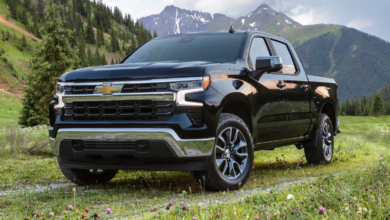
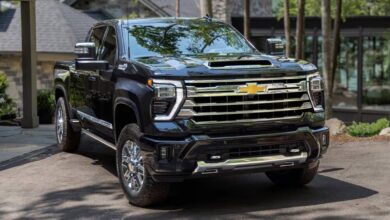
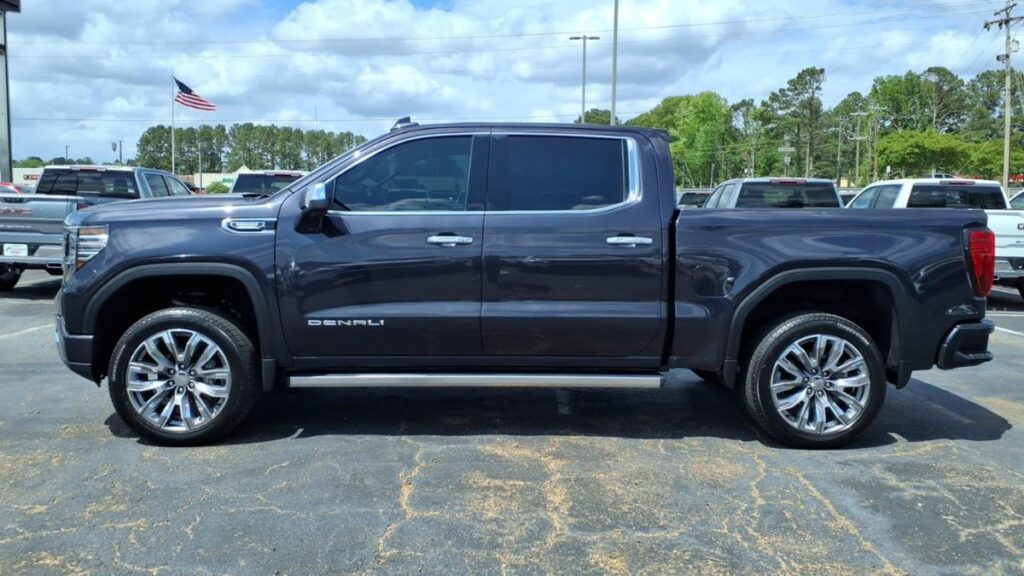
The Sierra’s design vocabulary hasn’t changed, and honestly, there’s no pressing reason it should. That huge grille is unmistakably GMC: bold, aggressive, and a little bit polarizing depending on your aesthetic. The overall shape reads as deliberately boxy and monolithic. There’s no pretense of sportiness. This is a truck that looks like it can tow, and follow-through matters.
Move up the trim ladder and the design actually improves. The base Pro looks utilitarian with its unpainted bumpers and steel wheels. Drop it into an AT4 with proper lighting and wheels, though, and suddenly that blunt design feels intentional rather than cost-cutting. The Denali trims don’t try to hide their premium positioning: chrome trim, larger wheels, and tighter material fit tell you this costs more. It doesn’t make the Sierra revolutionary in the styling department, but it’s competent and honest about what it is.
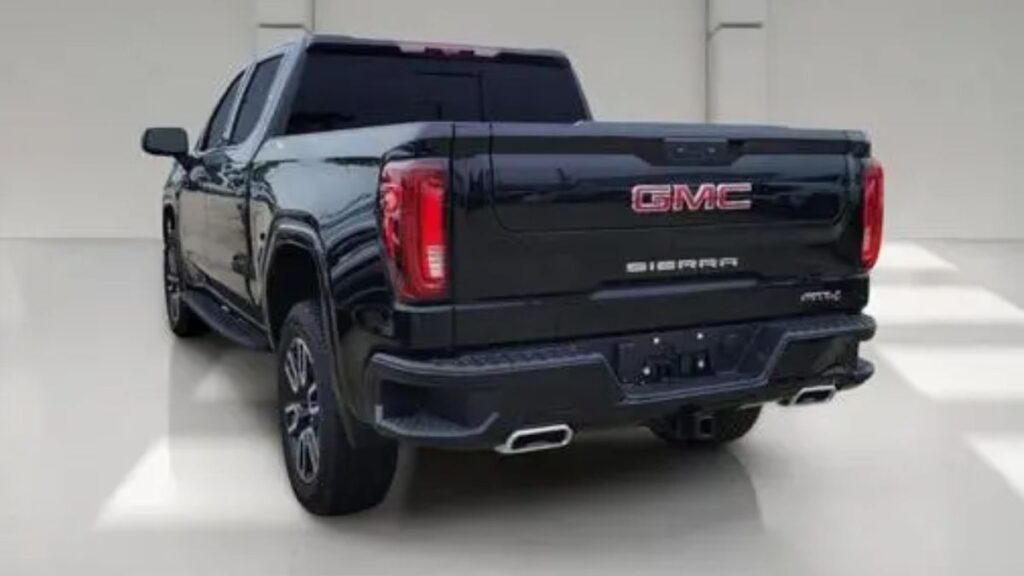
The pickup bed is functional. The available carbon-fiber bed on higher trims saves real weight. The MultiPro tailgate isn’t just a gimmick. Its six configurations genuinely solve real problems for different loading scenarios. It’s the kind of feature that makes you wonder why every truck doesn’t offer it.
2023 GMC Sierra 1500: Driving Experience
The Sierra doesn’t drive like most full-size trucks. The isolation is genuinely exceptional. Wind and road noise take longer to reach the cabin than you’d expect from a two-ton vehicle. At highway speeds, the truck settles into a relaxed cruising posture that contradicts its work-truck identity.
Push it into a corner, and the reality reasserts itself. The truck is large, and it feels large. Body roll is significant. Steering feedback is numb. This isn’t a vehicle trying to be nimble. It’s not tragic. It simply isn’t thrilling. For someone who uses their truck for actual driving rather than just hauling, the ride quality is the real story. The suspension soaks up imperfections better than you’d expect. Even loaded with cargo, the truck maintains composure on rough surfaces.
The turbo-four is adequate for daily duties. It pulls from a stop with surprising enthusiasm thanks to early boost delivery. For highway driving, the V8 engines feel more at home. The 5.3-liter V8 is the sweet spot for most buyers, offering genuine power without completely tanking fuel economy. The 6.2-liter is overkill unless you’re regularly towing heavy loads, but if you need the power, it absolutely delivers it.
The diesel is a different beast entirely. It’s eerily quiet for a diesel. The cabin insulation is that good. The torque delivery feels effortless, and on the highway at 70 mph, the truck practically floats. This engine makes the truck feel overqualified for everyday driving while being perfectly qualified for serious work.
2023 GMC Sierra 1500 Performance & Acceleration
The base 2.7-liter EcoTec3 turbo four-cylinder produces 310 hp and 430 lb-ft of torque. It’s not thrilling, but it handles daily driving without complaint. Zero-to-60 isn’t particularly quick, but the early turbo boost means traffic feels manageable.
The 5.3-liter V8 makes 355 hp and 383 lb-ft. This is the engine that balanced every reasonable expectation: power, towing capability, and fuel economy all in one package. Acceleration is genuinely brisk. Real-world driving feels capable rather than quick, which is exactly what a truck should feel like.
The 6.2-liter V8 is the performance option, making 420 hp and 460 lb-ft. In our test truck equipped with this engine and four-wheel drive, it hit 0-60 in 6.2 seconds. That’s legitimately quick for a full-size truck, and it absolutely justifies itself if you’re regularly towing trailers or just want maximum punch from your truck.
The 3.0-liter Duramax diesel delivers 305 hp and 495 lb-ft of torque. The numbers are adequate, but the delivery is where it shines. Low-end grunt is immense. Towing feels effortless. On flat ground, the diesel delivers the best real-world highway fuel economy in the lineup. Expect 30+ mpg at steady 55 mph cruising. The tradeoff is that you’re managing DEF fluid consumption when towing, and winter operation requires awareness of gelling issues in extreme cold.
Every engine pairs with either an 8-speed automatic (turbo-four) or 10-speed automatic (everything else). Transmission behavior is smooth and unobtrusive. That’s exactly what you want from a truck transmission.
Ride Comfort & Cabin Refinement
The cabin isolation is genuinely impressive. Triple-sealed doors and hydraulic body mounts don’t just sound like nice features. They actually create a serene environment at highway speeds. The truck is loud only if you want it to be. Push the engine hard, and power comes with sound. Cruise at steady speeds, and the cabin remains conversational-level quiet.
The ride quality strikes a balance between firmness and forgiveness. The truck doesn’t feel floaty, but it also doesn’t crash over potholes. Loaded down with cargo, the suspension maintains the same composed demeanor. The AT4 and AT4X with their upgraded suspensions and off-road tires ride even better, which seems counterintuitive until you actually drive one.
Wind noise is minimal even with windows down on the highway. Seat comfort is excellent across the lineup. Even the cloth seats in base models provide adequate support. Move into leather on higher trims, and the support improves further. On long drives, the Sierra shows its competence. It’s not a luxury car, but it genuinely approaches that level of refinement.
2023 GMC Sierra 1500 Interior & Luxury Feel
Here’s where trim level matters more than anywhere else. The base Pro model is utilitarian to the point of minimalism. Cloth seats, rubber flooring, manual adjustment everything. It’s brutally honest about being a work truck. If that’s your actual use case, there’s nothing wrong with it.
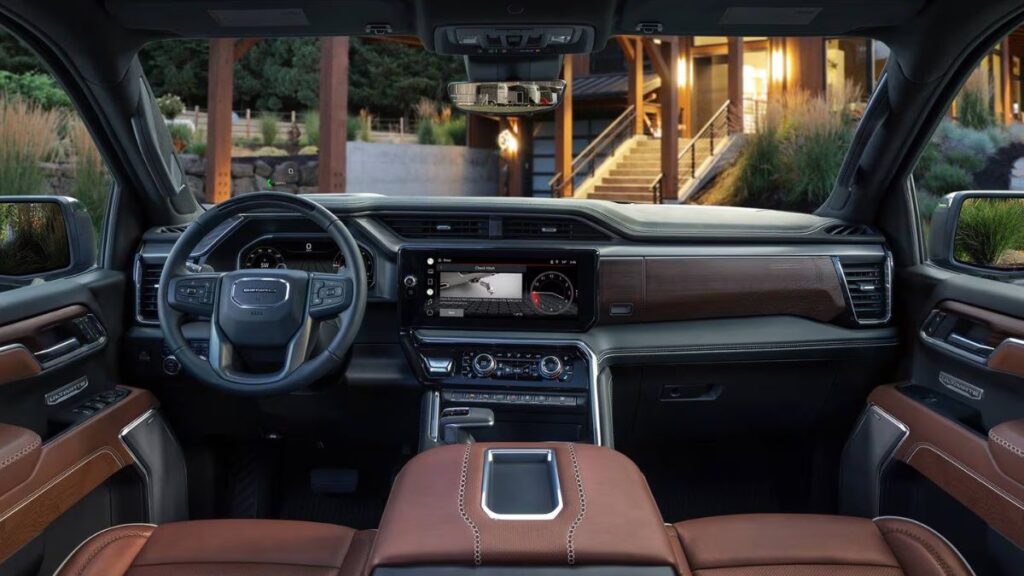
But step into an SLE or Elevation, and everything changes. Padded dash surfaces, better materials, and heated seats become standard. The ergonomic layout is intuitive. Controls fall naturally to hand. Storage is well-distributed, with clever hidden compartments and dual glove boxes.
Upper trims like the Denali and AT4X use perforated leather, power-adjustable seats with lumbar support, and genuine wood accents. The material quality is consistently good, though one editor noted occasional inconsistency in how various surfaces align. It’s a minor complaint in an otherwise impressive execution.
The cabin width is genuinely generous. Headroom and legroom front and rear are best-in-class figures. On long trips, the extra space becomes genuinely valuable for passenger comfort. The dual-zone automatic climate control keeps everyone happy without requiring manual adjustment.
2023 GMC Sierra 1500 Technology & Infotainment
GMC’s infotainment system is one of the strong points of the Sierra. The 13.4-inch touchscreen (on most trims above the base) is responsive and intuitive. Unlike some automotive systems that feel like they’re fighting you, this one works with you. Icons are large enough to access without squinting, and menu hierarchies make sense.
Wireless Apple CarPlay and Android Auto are standard across the lineup. The voice command system actually understands conversational speech rather than requiring robotic menu navigation. A 4G LTE Wi-Fi hotspot keeps everyone connected, and Bluetooth connectivity is bulletproof.
The available Bose audio system is genuinely good. Not just “good for a truck,” but actually listenable across music genres. On the Denali Ultimate, the 12-speaker system with the MultiPro tailgate speakers (yes, the tailgate has speakers) is more novelty than necessity, but it works.
One note: keep the software updated. GMC has been proactive with over-the-air updates that improve responsiveness and add features. If you’re keeping the truck long-term, staying current matters.
2023 GMC Sierra 1500 Fuel Economy & MPG
Real-world fuel economy varies meaningfully based on engine choice and driving habits. The 2.7-liter turbo-four achieves around 19 mpg city and 22 mpg highway in mixed driving. That’s not exceptional, but it’s acceptable for a truck of this size.
The 5.3-liter V8 is better, posting up to 24 mpg city and 29 mpg highway. Legitimately surprising for a gas V8 in a full-size truck. Real owners report consistent numbers in the mid-20s combined, which is genuinely good.
The diesel is the fuel economy leader. Expect 26 mpg combined in normal driving, with highway figures touching 30 mpg at steady speeds. Towing heavy loads reduces that to around 9-10 mpg, which is comparable to a V8 despite the diesel’s reputation. The tradeoff is higher fuel cost. Diesel runs roughly 50 cents more per gallon than regular unleaded in most markets.
The 6.2-liter V8 is the thirstiest option at around 14 mpg city and 17 mpg highway. If fuel economy is a priority, don’t pick this engine.
Real-world data from owners shows the average Sierra 1500 achieves about 20.82 mpg combined across all engine types. That’s respectable for the segment.
2023 GMC Sierra 1500 Practicality & Cargo Space
The Sierra offers three bed lengths: 5-foot-8, 6-foot-6, and 8-foot-2. Most buyers choose the standard 6-foot-6, which balances cargo capacity and maneuverability. The bed itself is useful with integrated tie-downs and optional LED lighting. The MultiPro tailgate’s different configurations mean you can load cargo differently depending on what you’re hauling.
Maximum payload varies by configuration. The lightest trucks approach 2,000 pounds, while stripped work-focused models can exceed that. Maximum towing capacity reaches 13,200 pounds with the diesel in four-wheel-drive configuration. That’s legitimately best-in-class and enough to handle most trailers most people actually tow.
Under-bed storage is available on certain trims, providing additional organization for tools and equipment. The crew cab configuration offers genuine rear-seat space. Not just a token gesture. Kids or smaller adults can sit back there on actual trips.
2023 GMC Sierra 1500 Safety & Driver Assistance
The NHTSA has given the Sierra good marks in crash testing. The standard suite of safety features includes forward collision alert with automatic emergency braking, lane departure warning, and lane keep assist. These systems work without being overly intrusive.
Optional equipment includes adaptive cruise control and blind-spot monitoring. The available Super Cruise system on select trims enables hands-free driving on compatible highway segments. It’s less comprehensive than some competitors’ systems, but it works and reduces fatigue on long drives.
The 360-degree camera system with multiple views actually makes the truck more manageable. It’s a vehicle with questionable rear visibility, but the camera system handles it. Bed view camera for hitching trailers is genuinely useful. The system isn’t flashy, but it’s effective.
Ratings from NHTSA and IIHS place the Sierra in the middle of the full-size pickup segment. Not at the top, but solidly capable.
Competitors Worth Considering
The Ford F-150 dominates for a reason. It’s genuinely good at everything and costs less than the Sierra when you compare equivalent trims. If budget is the primary driver, the F-150 wins. If you don’t specifically need the Sierra’s interior refinement, there’s no point paying the premium.
The Ram 1500 offers interior space that legitimately rivals the Sierra. Its ride quality is comparable. The diesel option is equally strong. Ram’s design is more progressive, which appeals to certain buyers. Pricing is competitive with the Sierra.
The Toyota Tundra is a different beast. It’s more construction-focused and less refined, but arguably more reliable if longevity is your primary concern. It’s the truck you choose if you plan to keep it for 200,000 miles and don’t care about interior niceties.
The Nissan Titan exists in this space but hasn’t found the same market success as the others. It’s worth test-driving if you’re seriously shopping, but it lacks the dealer network and resale value of the established competitors.
For most buyers, the decision comes down to Ford’s value proposition versus GMC’s refinement. Both are legitimate choices.
Biggest Strength and Biggest Weakness
Biggest Strength: The cabin insulation and ride quality are genuinely exceptional. You get a truck that can work while also being pleasant to spend time in. That’s not a common combination, and GMC nails it here.
Biggest Weakness: The high asking price relative to the F-150, combined with lower brand recognition, means you’re paying premium pricing without getting premium resale value. A Sierra Denali costs similar money to an F-150 Lariat, yet the F-150 will be easier to resell when the time comes. That’s a market reality GMC can’t control, but it impacts the value proposition.
Which Trim Does Cardrav Recommend?
The SLE strikes an excellent balance. It adds meaningful features: heated seats, the MultiPro tailgate, and carpet instead of rubber. All without pushing into the premium territory where costs escalate quickly. Pair it with the 5.3-liter V8 for a truck that has genuine capability while achieving acceptable fuel economy.
If budget allows and you want the interior refinement to justify the truck’s premium positioning, the Denali with the 3.0-liter diesel is genuinely compelling. You get the refinement, the best fuel economy, and towing capacity that handles virtually any real-world scenario.
Skip the base Pro unless you have a very specific work-focused use case. The jump in comfort and features to the SLE is worth every penny.
Final Verdict: Should You Buy It?
Buy the 2023 GMC Sierra 1500 if you want a full-size truck that actually feels pleasant to drive on regular roads while maintaining legitimate capability. Buy it if the interior quality and isolation matter to you. Buy it if you’re willing to pay a premium for a refined experience.
Don’t buy it if the F-150’s lower price and higher resale value are dealbreakers. Don’t buy it if you need the most off-road-capable option. The Jeep or Toyota platforms do that better. Don’t buy it if you’re primarily focused on monthly payment. Larger competitors offer more content at similar price points.
For the buyer who actually uses their truck for work or towing but also spends significant time commuting and cruising, the Sierra is the right choice. It’s not the most truck for the money. It’s the most complete truck for someone who values balance over specialization.
FAQ
What is the 2023 GMC Sierra 1500 price range?
Base prices start around $38,000 for the Pro trim and climb to over $80,000 for a loaded Denali Ultimate. Most buyers will find value in the $45,000-$65,000 range depending on trim and engine selection.
2023 GMC Sierra 1500 vs Silverado: What’s the difference?
The Sierra and Silverado share a platform, but the Sierra leans toward refinement and premium positioning while the Silverado emphasizes value. Interior materials are better in the Sierra, the infotainment system is superior, and pricing reflects that gap.
Best engine for 2023 GMC Sierra 1500?
The 5.3-liter V8 represents the sweet spot for most buyers. It offers genuine power, reasonable fuel economy, and strong towing capacity without the premium fuel consumption of the 6.2 or the complexity of the diesel.
How long does 2023 GMC Sierra 1500 last with proper maintenance?
Properly maintained Sierras regularly exceed 150,000 miles. Some owners report 200,000+ miles with minimal issues. Reliability is comparable to the Ford F-150, though the Tundra has a reputation for longevity. Extended warranties are worth considering for long-term ownership.
What is 2023 GMC Sierra 1500 towing capacity?
Maximum towing capacity is 13,200 pounds with the diesel engine in 4WD configuration. Even the base turbo-four can handle 9,500 pounds. Real-world towing is strong across the engine range, though the diesel’s torque delivery makes heavy loads feel most manageable.
Is 2023 GMC Sierra 1500 reliable and problem-free?
The 2023 model benefits from a mature platform introduced for 2019. Reliability ratings place it in the middle of the full-size pickup segment. Some owners report issues with the DFM (Dynamic Fuel Management) system on certain V8 engines, though GMC has addressed early complaints. Regular maintenance is your best insurance.
What is 2023 GMC Sierra 1500 fuel economy and MPG?
EPA ratings range from 19 mpg city/22 mpg highway on the turbo-four to 24 city/29 highway on the V8, with the diesel achieving 21 city/23 highway. Real-world numbers trend slightly lower in mixed driving but align reasonably well with EPA estimates.