Best Brake Pads for Cars: Top Ceramic Picks
Find the Right Brake Pads for Quieter, Cleaner, More Confident Braking

The best brake pads for cars can make a noticeable difference in braking feel, noise, dust, and everyday driving confidence. Somewhere around the fourth or fifth year of owning a car, most drivers start noticing small things they never paid attention to before. A faint pulse in the pedal on a downhill stretch. A puff of gray dust on the wheels that reappears no matter how often they get cleaned. A squeak that shows up at low speed and disappears once the car is rolling faster. None of it feels urgent, but it is usually the brakes asking for attention long before anything actually fails.
That is normally the point where a search for new brake pads begins, and it rarely goes the way people expect. A quick search returns dozens of listings that all claim to fit the same car, with ratings clustered closely together and descriptions full of terms like ceramic, semi metallic, OE specification, and low dust formulation. Picking the option with the most stars starts to feel like the safest move, mostly because everything else is confusing.
The truth is a little more layered than that. A brake pad built for a quiet commuter sedan is not solving the same problem as one built for a driver who brakes hard and often. A rear pad will not fix a noise coming from the front axle. And two cars sharing the same nameplate can use entirely different brake hardware depending on the model year or trim. There is no single pad that works best for every car and every driver, and pretending otherwise would not do anyone any favors.
This guide looks at five specific options worth knowing about if you are trying to find the best brake pads for cars in this situation, four built around ceramic friction material and one performance oriented alternative, and breaks down what each one actually does well, who it fits, and what to check before you commit to one.
Quick Picks
Best everyday ceramic choice: Bendix Priority1 CFC914, an OE oriented front pad built for consistent, low drama daily braking.
Best practical rear ceramic option: PowerStop Z17 17-905, a rear pad that arrives with installation hardware and leans into quiet, low dust performance.
Best performance street option: Hawk Performance HPS 5.0, a Ferro Carbon compound for drivers who want firmer, more responsive braking on the street.
Best premium rear ceramic option: Akebono ACT905A, an ultra premium rear pad aimed at smooth, refined everyday stopping.
Best quiet everyday ceramic option: Wagner ThermoQuiet QC465A, a front pad engineered specifically around noise and dust reduction.
Comparison Table
| Product | Material | Position | Best Suited For | Key Strength |
|---|---|---|---|---|
| Bendix Priority1 CFC914 | Ceramic | Front | Everyday commuting in listed Honda and Acura applications | Consistent, OE oriented braking |
| PowerStop Z17 17-905 | Ceramic, metal, stainless steel | Rear | Drivers who want hardware included and lower noise | Quiet, low dust rear replacement |
| Hawk Performance HPS 5.0 | Ferro Carbon | Front | Performance oriented street driving | Firmer bite and refined pedal feel |
| Akebono ACT905A | Ceramic | Rear | Drivers prioritizing refinement over budget | Smooth, premium braking character |
| Wagner ThermoQuiet QC465A | Ceramic | Front | Noise sensitive daily drivers | Purpose built noise and dust control |
Treat this table as a shortcut for narrowing your options, not a final answer. Everything in it comes from the supplied product listings, not independent lab testing, so read the fuller breakdown below before deciding.
Why These Five Brake Pads
Four of the five products here are ceramic, and that is not an accident. Ceramic friction material tends to suit the way most people actually drive day to day, which is a lot of stop and go traffic, a lot of predictable braking, and a general preference for a quiet cabin and clean wheels. But building this guide entirely around ceramic pads would leave out a real segment of drivers who are not chasing quiet or clean. They want a firmer pedal and more assertive braking, and that is exactly where the Hawk HPS 5.0 comes in. It is a Ferro Carbon compound, not ceramic, and it is included on purpose so this guide does not pretend one friction material solves every problem.
Beyond material, the five products cover different positions, different vehicle platforms, and different priorities. Some are built around noise reduction specifically, some emphasize refinement, and one leans into included hardware to make a rear replacement more straightforward. None of this reflects Cardrav running its own braking tests or measuring stopping distances in a controlled environment. It reflects the supplied product information and listing details for each pad, evaluated against how these categories of friction material generally behave in everyday use.
One thing worth repeating before going any further: brake pads are vehicle specific, and very often axle specific. Two cars with the same nameplate can use completely different brake hardware depending on model year, trim, engine, or brake package. Confirm your exact year, make, model, trim, and brake configuration using Amazon’s Confirmed Fit tool or the manufacturer’s official application data before ordering any of the products below.
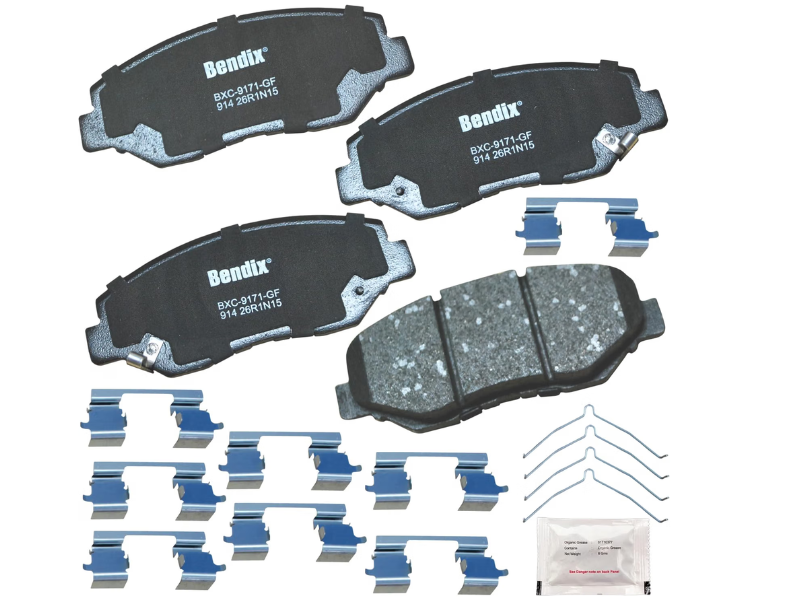
Bendix Priority1 CFC914 Ceramic Front Brake Pads
Bendix has been a familiar name in the braking industry for a long time, and the Priority1 CFC914 reflects that steady reputation rather than trying to reinvent anything. It is engineered to OE specifications, meaning the goal is matching the fit, form, and function of what your vehicle originally shipped with rather than chasing a more aggressive feel.
The listing covers select model years across the Acura ILX, Honda Accord, Civic, CR V, CR Z, Element, and Fit. That is a broad range of vehicles, but the years attached to each one matter more than the nameplate itself. A 2012 Civic and a 2020 Civic do not necessarily share the same brake hardware, so this is exactly the kind of listing where checking Amazon’s Confirmed Fit tool before ordering saves a return shipment later.
What this pad is actually good at is consistency. The friction material is designed to resist fade under higher temperatures and heavier loads, which matters most to a driver who wants their morning commute to feel the same in July as it does in January. It is not trying to be exciting. It is trying to be dependable, and for a lot of daily drivers, that is the entire point.
Pros
- OE oriented engineering gives drivers a factory feel replacement rather than a noticeable upgrade or downgrade in character.
- Ceramic construction supports quieter, smoother everyday braking compared to more aggressive compounds.
- Covers several Honda and Acura applications, but exact model year and brake configuration still need to be confirmed.
- Designed specifically to resist brake fade under sustained heat and load, which benefits longer commutes and hillier routes.
Cons
- The application list is specific to certain model years, so vehicles outside that range will not be compatible.
- It only addresses front brakes, so rear replacement requires a separate decision.
- Buyers sometimes assume broader compatibility than the listing actually supports, which makes fitment confirmation especially important here.
if your Honda or Acura falls squarely within the listed model years, this is a sensible, well proven choice for a driver who wants brakes that behave like the ones the car came with. If your vehicle sits outside that range, look elsewhere rather than assuming it will work anyway.
PowerStop Z17 17-905 Rear Ceramic Brake Pads
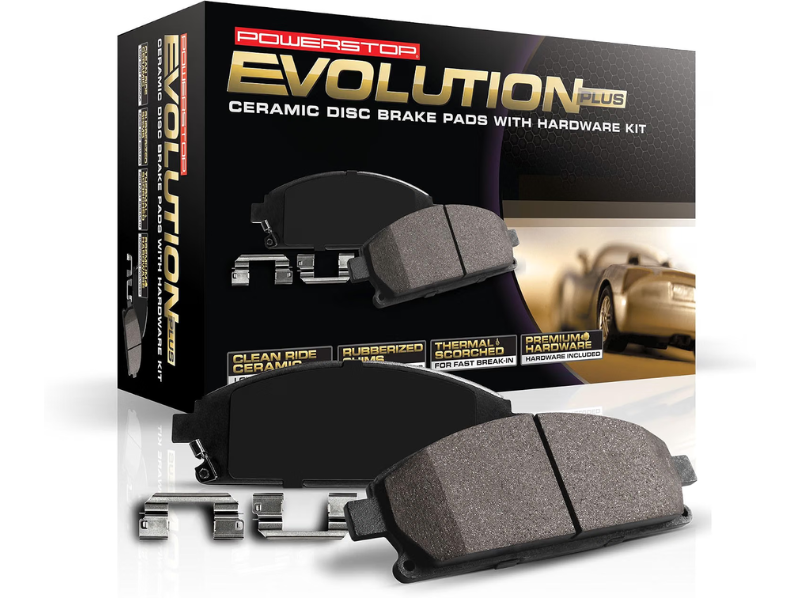
Anyone who has opened a brake pad box expecting hardware and found none knows how much of a headache that small omission can create mid job. PowerStop avoids that entirely with the Z17, which packages two rear ceramic pads together with the installation hardware needed to complete the job in one box.
Applications listed include the Nissan Altima, Sentra, and Maxima, though as with any brake pad, that should be a starting point for research rather than a green light to order without checking further. What stands out in the supplied details is how deliberately this pad is built around quiet operation.
The pads are thermal scorched, chamfered, and slotted, a process meant to help the friction material seat evenly against the rotor faster, and multi layer rubberized shims are built in specifically to dampen vibration before it turns into squealing. A low dust ceramic formulation rounds out the pitch for anyone tired of scrubbing gray residue off their wheels every weekend.This is a rear specific product, so pairing it with front brake needs or assuming it covers both axles would be a mistake.
Pros
- Installation hardware is included, which can make a rear brake replacement noticeably more straightforward.
- Noise reduction features, including chamfering, slotting, and rubberized shims, are built directly into the pad rather than left to aftermarket accessories.
- Low dust ceramic formulation supports cleaner wheels over time for drivers who commute frequently in stop and go traffic.
Cons
- This is a rear application only, so it does not address front brake replacement.
- The listed vehicle applications are specific to certain Nissan models, and fitment should be confirmed rather than assumed.
- Noise reduction features help, but final noise levels still depend on installation quality and rotor condition, not the pad alone.
for a rear ceramic pad that shows up ready to install and is genuinely built around quiet, low dust performance, the Z17 earns its place, as long as your vehicle matches the listed fitment.
Hawk Performance HPS 5.0 Street Brake Pads
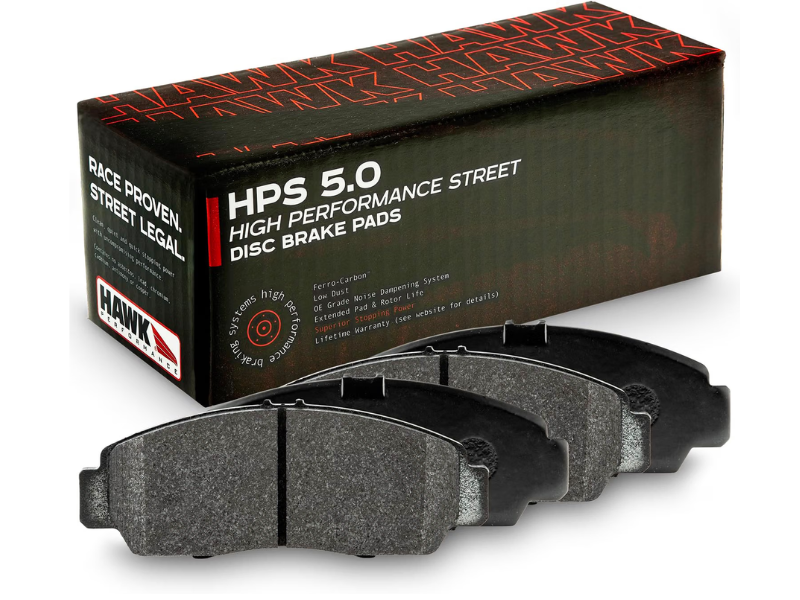
This is the one entry on this list that steps outside the ceramic conversation entirely, and that is intentional. The HPS 5.0 uses a Ferro Carbon friction compound, not ceramic, and it is aimed at a different kind of driver than the other four products here.
According to the supplied product information, Hawk positions HPS 5.0 as a premium street compound for muscle cars, European sedans, and tuned vehicles, engineered for stronger torque and higher deceleration rates while remaining compatible with ABS systems. The listing describes an operating range of roughly 100 to 750 degrees, a figure that comes directly from Hawk’s own product information rather than any independent measurement, and it should be read that way.
Where this pad makes real sense is pedal feel. Plenty of drivers who own something with a bit more performance intent, or who simply brake harder and more often than average, find that a standard ceramic pad feels soft or gradual under their foot. HPS 5.0 is built to respond with a firmer initial bite and a more direct connection between pedal input and braking force, while Hawk also designs it for a smooth, predictable release rather than an abrupt, grabby character. Durability under sustained hard use factors into the design as well.
It is worth being clear about what this pad is not. It is not a track focused compound, and treating it as one misunderstands what it is built for. It is also not the choice for someone whose main complaint about their current brakes is noise or dust, since performance compounds generally trade some of that everyday quiet and cleanliness for stronger response. This is a front brake pad application, and as with every product in this guide, confirming the exact vehicle fitment before ordering matters.
Pros
- Delivers a firmer, more responsive pedal feel for drivers who find ceramic pads too soft for a more spirited driving style.
- Engineered for higher heat tolerance and reduced fade under demanding street driving conditions, according to the supplied listing.
- Positioned specifically for performance sedans, muscle cars, and tuned vehicles rather than marketed as a universal daily driver pad.
Cons
- This is not a ceramic pad, so it will not deliver the same quiet, low dust experience as the other four products in this guide.
- Despite the performance branding, it is not intended for track use, and treating it as a track pad misunderstands its purpose.
- As a front application built for specific vehicle types, it requires the same careful fitment check as any other pad on this list, and it is not a fit for every car.
drivers who want a noticeably firmer pedal and a more assertive braking character for street driving should take this seriously, understanding clearly that it trades some quiet, low dust comfort to get there. Drivers whose main priority is a quiet, clean commute will be happier with one of the ceramic options in this guide.
Akebono ACT905A Ultra-Premium Ceramic Rear Disc Brake Pads
Akebono built its reputation on refined braking, closely tied to a long history supplying OEM level components, and the ACT905A leans directly into that identity rather than positioning itself as a budget alternative. This is a rear ceramic pad marketed under Akebono’s ultra premium line, and the ceramic formulation described in the listing supports that positioning rather than just repeating a marketing phrase.
The supplied listing includes Infiniti and Nissan applications among its supported fitments, but it does not provide a complete, exhaustive vehicle list, which means this is not a pad to order based on assumption. For reference, the package measures roughly 6.5 by 3.75 by 3.15 inches and weighs about 1.85 pounds according to the listing, a small detail but a useful one when confirming you have the right product in hand.
What earns the ACT905A a spot in this guide is less about a single headline feature and more about overall character. Ceramic construction already lends itself to smoother, quieter braking, and a premium formulation built around that strength tends to translate into a more refined pedal feel and a less abrupt braking response than a budget oriented pad might deliver. For a driver who thinks about braking as part of the overall polish of their car rather than a purely functional afterthought, that distinction carries real weight.
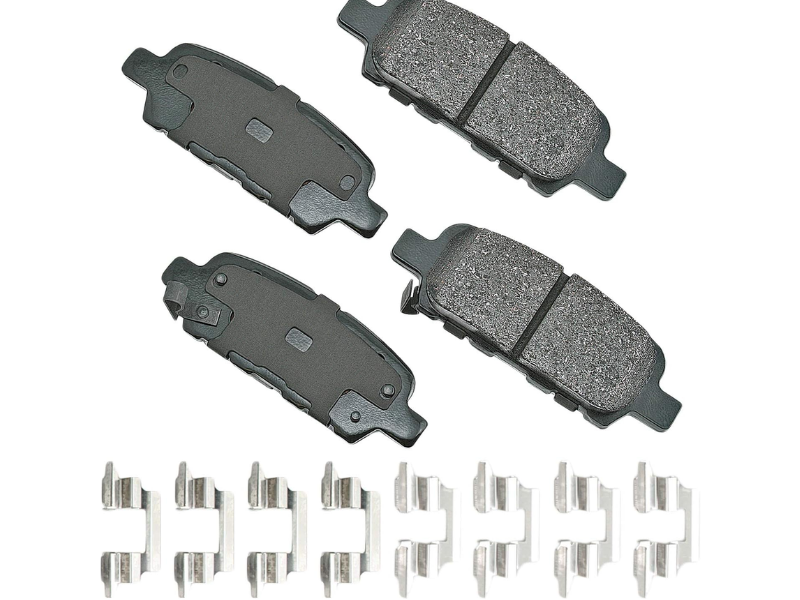
One note on ordering accuracy: Akebono uses similar naming conventions across different part numbers, and the product covered here is specifically the ACT905A, not any other Akebono ceramic line. Getting that number right matters.
Pros
- Premium ceramic formulation is positioned around refined, smooth braking rather than a budget feel.
- Akebono’s long standing history supplying OEM level components lends credibility to the ultra premium positioning of this rear pad.
- Rear application suits drivers looking to pair refined stopping at the back axle with a similarly refined front pad setup.
Cons
- The supplied listing does not offer a complete vehicle application list, so compatibility beyond what is stated should not be assumed.
- As a rear only pad, it does not resolve front brake needs on its own.
for drivers within Akebono’s listed applications who want their rear brakes to feel as refined as the rest of the car, the ACT905A is a premium option worth the extra consideration over a more basic rear pad.
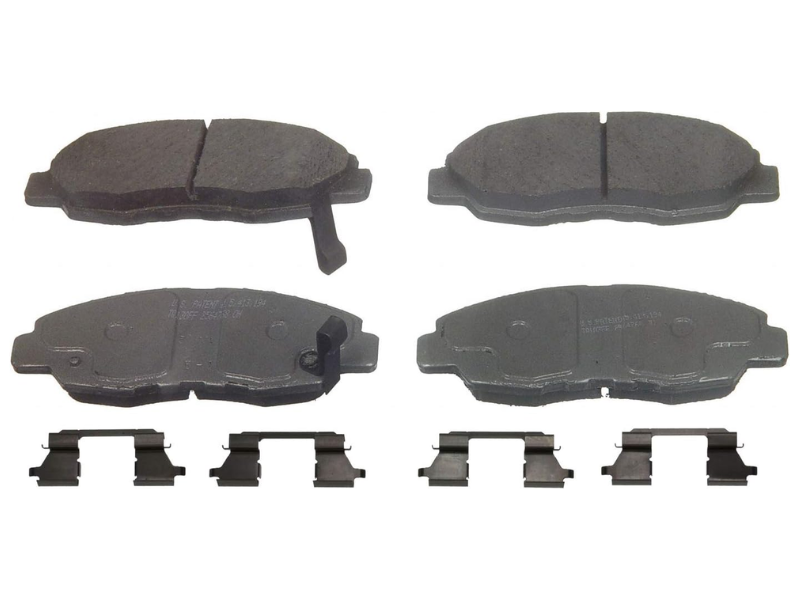
Wagner ThermoQuiet QC465A Ceramic Disc Brake Pad Set
Wagner built an entire product line around a single idea, and the name says it outright. ThermoQuiet exists specifically to deal with brake noise, and the QC465A is a front ceramic pad built with application specific engineering intended to manage sound, heat, and vibration rather than treating quiet operation as a side effect of good ceramic construction.
The supplied listing describes a long life friction formulation aimed at reduced fade, along with reduced rotor wear and brake dust. For select applications, Wagner uses a one piece design that integrates the friction material, backing plate, and insulator into a single unit, intended to reduce the kind of internal movement that often causes noise, and premium stainless steel hardware is included for select applications as well. It is worth checking your specific listing to confirm exactly what is included with your fitment, since the listing specifies select applications rather than universal inclusion. Wagner also uses its OE25 zero copper friction formulation here, part of a broader industry move away from copper content in brake materials.
This is the pad for a driver who is simply tired of a noisy brake pedal, not necessarily a dramatic squeal, just the low grade noise that becomes background irritation on a daily commute. It is a front application, so anyone also addressing rear brakes will need to pair it with a separate decision, and coverage is tied to specific listed applications rather than a universal fit, so confirming your exact vehicle still matters.
Pros
- Purpose built around noise reduction, which directly benefits daily commuters dealing with frequent stop and go traffic.
- Reduced brake dust formulation supports cleaner wheels over time compared to more traditional compounds.
- Uses Wagner’s OE25 zero copper friction formulation, in line with a broader industry shift away from copper content in brake materials.
- The one piece design used in select applications is intended to reduce the internal movement that often contributes to noise.
Cons
- Hardware inclusion applies to select applications only, so it should not be assumed to be included with every fitment.
- This is a front only pad, so rear brake needs require a separate purchase.
- The listing covers specific applications rather than every passenger car, so buyers still need to confirm their exact vehicle before ordering.
if a quieter pedal and cleaner wheels are the main things you want out of a brake job, the ThermoQuiet QC465A is built specifically to deliver that, provided your vehicle matches the listed application.
How to Choose the Best Brake Pads for Your Car
Start with an honest look at how you actually drive, not how you imagine yourself driving. Someone who spends most of their week creeping through city traffic has different priorities than someone who covers mostly highway miles or occasionally hauls something heavy.
If quiet operation and cleaner wheels matter most, a ceramic pad specifically engineered around those goals, like the Wagner ThermoQuiet or the PowerStop Z17, will serve daily commuting and stop and go traffic noticeably better than a more aggressive compound. If you would rather have a straightforward, factory feel replacement that matches what your car came with, the Bendix Priority1 leans into that OE oriented approach for its listed applications.
If your driving involves heavier braking demands, whether that comes from a performance minded car or just a habit of braking harder and more often, the Hawk HPS 5.0 offers a firmer, more responsive pedal, with the understanding that you are giving up some of the everyday quiet and low dust comfort ceramic pads are known for. If refinement is the priority and you are working on the rear axle, the Akebono ACT905A leans into that premium, smooth character.
Vehicle weight matters here too. Heavier vehicles generate more heat during braking, which can influence how a pad wears or handles sustained use. Front and rear brakes are not interchangeable, so double check you are shopping for the correct axle position. And no matter which pad appeals to you, rotor condition plays just as large a role as pad choice. New pads installed on scored, thin, or warped rotors will not perform the way they should, regardless of how good the friction material is.
None of this replaces the most basic step of all. Confirm your exact year, make, model, trim, and brake configuration before ordering, using manufacturer application data or Amazon’s Confirmed Fit tool wherever it is available.
If you plan to handle brake work yourself, having the right tools can make the job much easier. A solid set of basic hand tools is a good starting point, while an impact wrench can save time when dealing with stubborn fasteners. If you are building out your garage, our guides to the best impact wrenches for cars and garage work and best socket sets for garage work are worth a look. And if you regularly tow, it is also worth paying attention to how your trailer’s braking system is set up, including choosing the right trailer brake controller.
Ceramic vs Semi Metallic Brake Pads
Ceramic brake pads rely on ceramic fibers and filler material rather than heavy metal content, which tends to mean quieter operation, a smoother pedal feel, and generally lower visible dust. That combination suits daily driving well, which is why four of the five products in this guide are ceramic. Semi metallic pads use a blend of metal fibers with other compounds, and they generally handle sustained heat and heavier braking loads well, often with a firmer initial bite, at the cost of more noise potential and more visible dust.
The Hawk HPS 5.0 in this guide is not semi metallic, it is Ferro Carbon, but it illustrates a similar tradeoff: a firmer, more responsive pedal in exchange for some of the quiet, low dust comfort ceramic pads are known for. Neither material wins outright. Matching the compound to how you actually drive matters more than the label on the box.
What Makes a Good Brake Pad?
A few practical qualities separate a genuinely good brake pad from a mediocre one. Consistent friction and stable performance under heat matter most, since a pad that fades feels weakest exactly when you need it. Noise control and dust behavior are what most drivers actually notice day to day, while pedal feel, whether a pad bites immediately or builds pressure gradually, should match your driving style rather than fight it.
Rotor compatibility and correct fitment tie everything together. Even a well engineered pad is the wrong choice if it does not match your exact vehicle and axle position, and vehicle weight and driving style also shape which characteristics matter most for your car.
Brake Pad Bedding
Bedding in a new brake pad means running it through a controlled break in process so the friction material transfers evenly across the rotor. Skipping it will not necessarily wreck your brakes, but it can leave you with a less consistent pedal feel early on. There is no single universal bedding procedure for every vehicle and pad, so manufacturer instructions should always take priority over a generic guide, including this one.
Generally, bedding involves a series of moderate to firm stops with cooling time between them, without coming to a complete stop and holding the pedal down while the car sits still, since that can concentrate heat in one spot on the rotor. The goal is simply a clean, even contact surface between pad and rotor.
When Should Brake Pads Be Replaced?
A handful of signs are worth watching for. Persistent squealing often means a wear indicator is doing exactly what it was designed to do, while grinding usually signals the friction material has worn down enough for metal to contact metal, which should be addressed right away. Changes in pedal feel, longer stopping distances, or pulling to one side are also worth investigating.
Vibration during braking is commonly linked to worn or warped rotors, but pads are not the only possible cause. Tires, calipers, and brake fluid condition can produce similar symptoms, so it is worth having the issue properly diagnosed rather than assuming new pads alone will fix it. There is no single mileage figure that applies to every car, since pad life depends on traffic, driving style, vehicle weight, and brake system design.
How Long Do Ceramic Brake Pads Last?
There is no honest way to hand you one universal number here. A driver who spends most of their time on the highway with light, predictable braking will generally get more life out of a set of pads than someone navigating dense stop and go traffic every day. Vehicle weight, terrain, climate, and rotor and caliper condition all play a role too. Rather than fixating on a mileage figure, check actual pad thickness periodically and watch for the wear signs above.
Do Ceramic Brake Pads Stop Better?
Stopping performance depends on far more than the brake pad alone, including tires, road surface, vehicle weight, rotor and caliper condition, brake system design, temperature, and driver input. Ceramic pads deliver smooth, dependable performance for typical commuting and city driving, but it would not be accurate to say every ceramic pad outperforms every semi metallic or performance compound. The Hawk HPS 5.0 in this guide, for instance, is specifically built for a firmer bite than a standard ceramic pad offers. Which one stops “better” depends on what kind of stopping character you actually want.
Are Ceramic Brake Pads Quieter?
Generally, yes. Ceramic formulations tend to run quieter than many traditional semi metallic compounds. That said, promising completely silent brakes would be misleading, since installation quality, rotor condition, hardware, vehicle design, and even temperature and humidity all influence how quiet a brake system actually is.
Do Ceramic Brake Pads Produce Less Dust?
Many ceramic formulations produce less visible dust than traditional semi metallic compounds, which is one of the more common reasons drivers choose them. Results still vary by formulation and vehicle, so it is fair to say ceramic pads generally trend toward lower visible dust, without claiming every ceramic pad beats every other compound in every case.
Cardrav Recommendation
There is no single winner among these five, because the right pad depends entirely on what you need from your brakes.
For an everyday OE oriented ceramic replacement, the Bendix Priority1 CFC914 makes sense for drivers whose Honda or Acura falls within its listed model years and who want brakes that behave like the ones the car came with. For a rear ceramic replacement that includes hardware and leans into quiet, low dust performance, the PowerStop Z17 is a practical, well thought out choice. For performance oriented street driving, where a firmer pedal and more assertive braking character matter more than a quiet cabin, the Hawk HPS 5.0 delivers that, with the clear understanding that it is Ferro Carbon rather than ceramic. For premium rear braking with a smooth, refined character, the Akebono ACT905A is worth the extra consideration. And for drivers whose main priority is a quiet, clean daily commute, the Wagner ThermoQuiet QC465A is built specifically around solving that.
Whichever direction you lean, confirm your exact fitment before anything else. Fitment comes before brand reputation, star rating, or anything else on this list. A great brake pad on the wrong vehicle is still the wrong brake pad.
Final Thoughts
Brake pads rarely get much thought until something changes, a new noise, more dust than usual, or a pedal that feels slightly different underfoot. By the time that happens, most drivers just want something that fits correctly and actually solves the problem they are noticing. These five options cover real, different priorities, from a quiet daily commute to a firmer pedal for more spirited street driving, and none of them is the automatic right answer for every car.
Match the pad to how you actually drive, confirm fitment carefully before ordering, follow the bedding instructions specific to your vehicle and pad, and keep an eye on the practical warning signs covered above. Get those basics right, and whichever pad you choose from this list should do its job reliably for a long time.
Suggested internal link placement: “How to check your brake fluid” fits naturally within the section on when brake pads should be replaced. Suggested internal link placement: “Signs your rotors need replacing” fits naturally within the buying guide or the replacement warning signs section. Suggested internal link placement: “Complete guide to brake system maintenance” fits naturally within the introduction or final thoughts section. Exact Cardrav URLs to be inserted later.
FAQ
Are ceramic brake pads good for daily driving?
Yes. For most daily driving, ceramic brake pads offer a good balance of quiet operation, smooth braking, and reduced visible dust. They are a practical choice for commuters who want reliable braking without excessive noise or wheel dust.
Are ceramic brake pads better than semi metallic pads?
Not in every situation. Ceramic pads are generally well suited to everyday driving because they tend to run quietly and produce less visible dust. Semi metallic pads can be a better choice for drivers who regularly deal with heavier loads, higher temperatures, or more demanding braking conditions.
How long do ceramic brake pads last?
There is no fixed lifespan that applies to every vehicle. Driving style, traffic, vehicle weight, terrain, and brake system condition all affect wear. Checking the actual pad thickness periodically is more useful than relying on a specific mileage estimate.
How do I know which brake pads fit my car?
Confirm your exact year, make, model, trim, and axle position before ordering. Use Amazon’s Confirmed Fit feature or the manufacturer’s official application guide whenever possible. Even a product marketed as one of the best brake pads for cars may not fit your specific vehicle.
Do brake pads need to be bedded in?
In most cases, yes. Proper bedding helps establish consistent contact between the new pads and rotors and can improve braking consistency during the early part of their service life. Always follow the bedding procedure recommended by the brake pad manufacturer and your vehicle manufacturer.