Best Rust Converters and Inhibitors
Compare rust converters, protective coatings, and corrosion inhibitors for lasting automotive rust protection.

The best rust converters and inhibitors are not interchangeable products, and that is the first thing worth understanding before you buy anything. Automotive rust starts as a thin orange bloom on a bolt head or a chipped edge of a fender. Left alone, it spreads under paint, creeps along seams and eats into the metal itself. Once it reaches frame rails, rocker panels or floor pans, it becomes a safety problem as well as a cosmetic one.
The trouble is that the shelf of car rust products is confusing. Labels promise protection, but the chemistry behind each can be quite different. A rust converter reacts with existing rust and changes it into a more stable surface that can be coated. A rust encapsulator skips the chemical conversion and seals prepared rusty metal behind a tough barrier. A rust preventive coating is built to protect properly prepared metal from moisture and oxygen. A corrosion inhibitor, usually a film that stays in place on the surface, slows corrosion by keeping water and salt away from metal.
Pick the wrong type and you can waste a weekend. A thick coating over loose, flaking rust will not last. A thin inhibitor sprayed on a heavily scaled panel will not rebuild anything. This guide covers five products that represent these categories, explains what each one is for and points out where each one falls short.
Comparison Table
| Product | Type | Best For | Application | ASIN |
|---|---|---|---|---|
| Rust-Oleum Automotive Rust Reformer | Rust reformer and converter | Surface rust that needs a paintable finish | Applied to rusty metal after loose material is removed, then topcoated | B003HG48AC |
| Corroseal Rust Converter & Primer | Rust converter and primer | Converting rust and prepping for further coatings | Applied to cleaned rusty metal, then covered with a finish coat | B001CRETZW |
| POR-15 Rust Preventive Coating | Rust preventive coating | Protecting properly prepared metal over the long term | Applied to clean, prepped metal following the maker’s directions | B00H2VVM8E |
| Eastwood Rust Encapsulator Plus | Rust encapsulating coating | Sealing treated metal behind a protective barrier | Applied to prepared metal as a sealing coating | B07WZNLC2T |
| Fluid Film 1 Gallon | Corrosion inhibitor and protective coating | Ongoing corrosion protection on hidden areas and underbody | Applied as a protective film over metal surfaces | B004NDDCKK |
My Take
None of these five products is a universal winner. They solve different problems, and the useful question is what condition your metal is in right now and what you want it to do next.
If you have light surface rust on a bracket, a suspension component or a small body area, a converter or reformer is the logical starting point. Rust-Oleum Automotive Rust Reformer and Corroseal Rust Converter & Primer both belong here. They are meant to work with the rust that remains after you remove the loose material, and then give you a surface that accepts a topcoat. They suit straightforward repairs where you plan to finish the job with paint.
If your goal is a longer term barrier on metal you have already cleaned well, a coating makes more sense. POR-15 and Eastwood Rust Encapsulator Plus are in this camp. They are less about chemistry on the rust and more about sealing the metal away from moisture. They reward careful preparation and punish shortcuts.
Fluid Film plays a different role altogether. It is a corrosion inhibitor, so it fits seams, cavities, undercarriage areas and the kind of places you cannot easily sand and paint. Many owners use it as ongoing maintenance rather than a one time repair.
Think of the products as steps in a process rather than rivals. A converter or encapsulator handles existing damage. An inhibitor helps keep new corrosion from starting. If you also keep up with routine upkeep such as choosing the right oil filter and changing it on schedule, you are looking after the mechanical side while these products look after the metal.
Rust-Oleum Automotive Rust Reformer
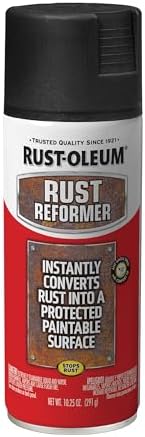
- Use on any rusty, metal surface to Instantly convert rust to a flat black, paintable surface that is protected and preve…
- Oil based formula creates a bond with rusted surface that can be easily painted
- Dries tack free in 20-40 minutes, allow 24 hours before applying topcoat
This is a rust reformer, which in practical terms means a rust converter. It is designed to treat rusty metal and leave behind a surface you can paint. That makes it a natural fit for a repair where the end goal is a finished, painted look.
It makes sense on parts that are visible or semi visible and have surface rust but are still structurally sound. Think brackets, small body panels, trailer hardware and similar areas. Because the product is meant to produce a paintable surface, it suits someone planning to match or refresh a color afterward.
Where it differs from the other products is in its intent. It is not a thick sealing coating like an encapsulator, and it is not a film that stays on the surface like Fluid Film. It treats the rust and sets you up for the next coat.
Preparation still decides the outcome. Wire brush or scrape away flaking rust, remove grease and dirt, and follow the directions on the label for conditions and recoat timing. A reformer cannot bond well to loose scale or an oily surface.
The limitation is simple. It is not a repair for metal that has rusted through or lost thickness. It is a treatment for surface rust, and it works best when you respect that boundary. Owners who like a familiar, straightforward approach to small rust spots will probably find it comfortable to work with.
Corroseal Rust Converter & Primer
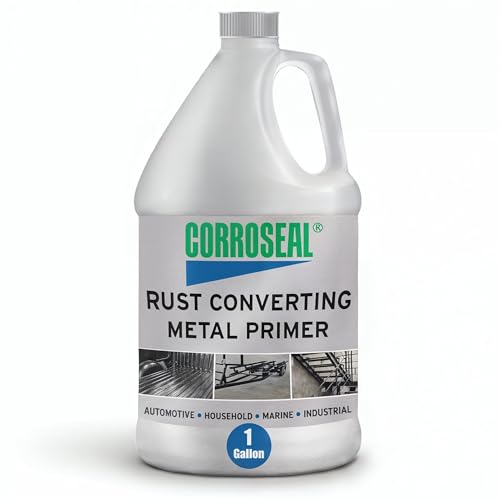
- Paint, prime and convert rust in one step – water based rust converter with latex metal primer
- Restore metal surfaces, extend life of metal equipment by protecting it from rust and corrosion
- Non-flammable and non-corrosive, water-based formula cleans up with just soap and water
Corroseal is a rust converter and primer in one. Its job is to convert rust and then prepare the surface for further coating, which is why the primer part of the name matters. You are not meant to treat it as the final finish.
The practical advantage is that the product combines two steps in the same category. After the rust has been converted and primed, you add a finish coat suited to the application. That helps on projects where you are working through a number of rusty parts and want a consistent base before painting.
It fits well on frames, brackets, panels and other steel components where the rust is on the surface and the part will be painted afterward. A restoration hobbyist working through a project over several weekends may appreciate having a converter that also acts as a foundation for paint.
Compared with the Rust-Oleum reformer, the emphasis here is on the primer role. Compared with POR-15 or Eastwood, it is a converting treatment rather than a heavy sealing barrier. Understanding that helps you decide whether you need conversion plus primer or a coating that seals prepared metal.
The usual cautions apply. Remove loose rust first, keep the surface clean and read the manufacturer’s directions about topcoating. If you skip the finish coat, you have not finished the job. It is also not a fix for corrosion that has eaten through the metal.
POR-15 Rust Preventive Coating

- Rust Preventive Coating: Protects metal surfaces from water, chemicals, salt, corrosive contaminants and everyday wear a…
- Cured By Moisture: POR-15 dries faster when moisture is present. Once cured, the coating forms a hard, impact-tough fini…
- Application: Remove grease, oil, and other foreign substances using POR-15 water-based Cleaner Degreaser followed with P…
POR-15 is a rust preventive coating, not a conventional rust converter. The version covered here is the 16 oz Gloss Black variant. Its purpose is to protect properly prepared metal, and the key word is prepared.
This is the kind of product people reach for when they want a durable barrier on parts such as frames, floor pans, suspension pieces and other areas that take a beating. It is a coating, so you are building a protective layer rather than chemically treating rust and walking away.
What sets it apart is the preparation mindset. It rewards a thorough job. The metal should be clean and free of loose rust, oil and contamination, and you should follow the manufacturer’s directions for surface prep and recoating. If you treat it like a casual spray paint, you may be disappointed.
It is a good match for the owner who is willing to do the work properly on a larger or more demanding project. A frame refresh, a floor repair or a restoration is a more natural fit than a quick touch up on a single bolt.
The limitations are worth stating plainly. It will not rebuild metal that is already badly corroded. The gloss black finish is also a design decision, so think about where the part will be seen. If it will be visible, plan how you will handle appearance and any topcoat the manufacturer recommends.
Be careful around parts where a coating does not belong. Friction surfaces such as brake components should stay clean. If you are working near the brake system and need a refresher on the parts involved, the guide to ceramic brake pad picks is a useful reference before you start masking things off.
Eastwood Rust Encapsulator Plus

- RUST ENCAPSULATOR: Iron oxide is no match for our original Eastwood Rust Encapsulator. This paint-over-rust solution qui…
- HOW TO USE: Apply product as a primer/Encapsulator over clean or corroded (rusted) steel or cast iron. Prep surface by m…
- EASTWOOD QUALITY: Eastwood offers solutions which combines our 4,000+ unique products with the know-how to “Do The Job R…
Eastwood Rust Encapsulator Plus is a rust encapsulating coating. The version covered here is the 1 Quart Matte Black variant. Instead of converting rust, an encapsulator seals prepared and treated metal behind a protective layer so moisture has a harder time reaching it.
The matte black finish suits underbody work, chassis components and areas where a low sheen looks right. Owners restoring older vehicles or maintaining trucks that see wet or salty roads may find the format appealing for parts that are mostly out of sight.
The difference from a converter is worth repeating. A converter works on the rust itself and then asks you to topcoat. An encapsulator is more about the barrier. That does not mean you can ignore preparation. Loose rust, scale and contamination still need to come off, because a coating is only as sound as what it sticks to.
Treat it as a sealing step after surface prep rather than a shortcut around it. Follow the manufacturer’s directions for cleaning, application conditions and any recommended topcoats or primers.
The limitation is the same one that applies to the whole category. If the metal has lost its strength, a coating will not bring it back. It is also a coating, so it will not behave like a self healing film that you can spray over and forget.
Fluid Film 1 Gallon
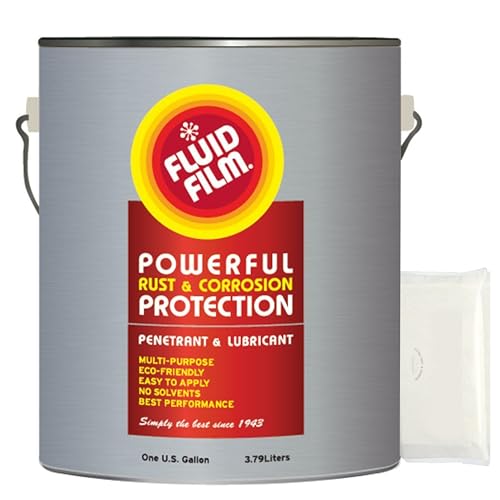
- RUST PREVENTIVE LUBRICANT – Auto Undercoating, 1 Gallon
- LONG LASTING NON-DRIP FORMULA – Solvent-free, does not dry out
- LANOLIN BASED – Clean, Odor Free Undercarriage Protection
Fluid Film is a corrosion inhibitor and protective coating. It is not a rust converter, and it does not turn rust into a paintable surface. It works as a protective film that helps keep moisture and road salt from reaching the metal.
That changes where it makes sense. It suits areas you cannot easily strip and repaint, such as seams, hinges, hidden cavities, wheel wells and the underside of a vehicle. The gallon size also suggests it is meant for someone who plans to treat a larger area or reapply over time.
Compared with the other four products, it is the one most closely tied to maintenance. A converter or a coating is typically a project. An inhibitor like this is closer to a habit. Owners in regions with wet winters or heavy road salt may prefer this approach because it can be refreshed as part of regular care.
Application still matters. Clean surfaces and removal of heavy loose rust give any protective film a better chance to do its job. Follow the manufacturer’s directions for how to apply it and how often to refresh it.
The limitation is that it does not repair or convert rust that is already established, and it is not a paint. It slows corrosion and protects, but it will not leave you with a hard, paintable finish. Think of it as a layer of defense rather than a restoration step.
Conclusion
The best rust converters and inhibitors are the ones matched to the condition of your metal and the kind of protection you need. A rust converter reacts with the rust that remains and gives you a surface ready for coating. A rust encapsulator seals prepared metal behind a barrier. A preventive coating protects properly prepped metal over the long run. A corrosion inhibitor sits on the surface and helps keep moisture and salt away.
Surface rust that you plan to paint over points toward a converter or reformer. Larger projects on frames and floors lean toward a coating or encapsulator, provided you are willing to prepare the metal properly. Hidden areas and ongoing maintenance suit an inhibitor. Often the sensible plan combines two of these, using one product to deal with existing rust and another to help protect against what comes next.
No product will rescue metal that has already lost its structure. If a panel or frame member is soft, perforated or flaking away in layers, the answer is repair or replacement rather than another coat of anything.
FAQs
1. What is the difference between a rust converter and a rust inhibitor?
A rust converter reacts with existing rust and changes it into a more stable surface that you can then coat or paint. A rust inhibitor aims to slow or prevent corrosion, usually by leaving a protective film that keeps moisture and salt from reaching the metal. A converter is a treatment for rust that is already there. An inhibitor is more about ongoing protection.
2. Can a rust converter stop rust permanently?
No product can promise that. A converter can treat surface rust and prepare the metal for coating, but the long term result depends on surface preparation, whether you topcoat properly, the conditions during application and the environment the vehicle lives in. Moisture, road salt and damage to the finish can all bring rust back over time.
3. Can you paint directly over surface rust?
It is not a good idea. Paint applied over untreated rust tends to trap moisture and the rust can keep spreading underneath. Remove loose rust first, then treat what remains with a suitable converter or sealing product and follow the manufacturer’s instructions before painting.
4. What is the best way to protect a car from rust?
Start by keeping the vehicle clean, especially the underbody after exposure to road salt. Repair chips and scratches before moisture gets in, make sure drain holes stay clear and treat early surface rust before it spreads. A protective film on hidden areas can help as well. Some owners also keep practical gear on hand for this kind of upkeep, and the roundup of useful car accessories is a handy place to look.
5. Can rust treatment repair severely corroded metal?
No. Rust treatments are meant for surface rust and for protecting sound metal. If corrosion has caused holes, deep pitting or a loss of structural strength, a converter or coating will not restore it. Affected areas usually need proper repair, patching or replacement, especially on frames, mounting points and other safety related parts.