

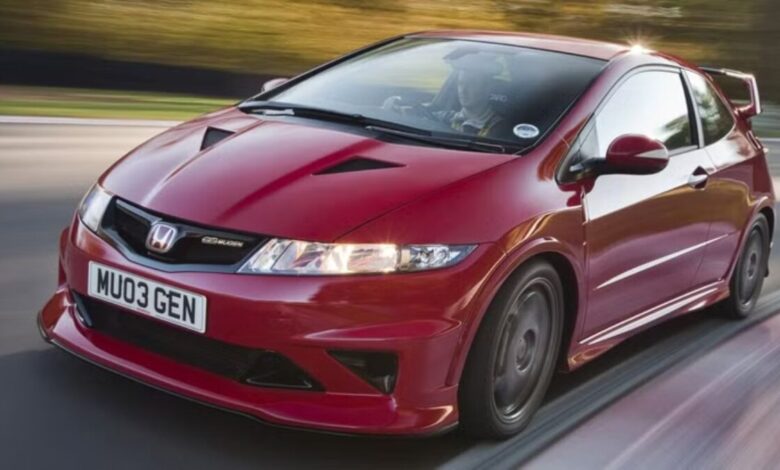
Honda Civic Type R FN2 is one of the most debated hot hatches Honda has ever built. Some enthusiasts remember it as the Type R that lost the sharpness of the older EP3. Others see it as an underrated performance hatchback that was judged too harshly for being different rather than genuinely bad.
The truth sits somewhere in the middle, and that is what makes the FN2 so interesting today. When it arrived in 2007, it looked futuristic, felt more refined inside, and offered better everyday usability than the Civic Type R that came before it. At the same time, Honda made one decision that would follow the car for the rest of its life: it replaced the older independent rear suspension layout with a torsion-beam rear setup.
For many purists, that change was enough to define the entire car. The FN2 was immediately compared with the EP3, and in that direct comparison, it felt heavier, more mature, and less playful at the limit. It did not have the same raw chassis magic straight from the factory, and that disappointment created a reputation that still follows the car nearly two decades later.
But judging the FN2 only by what it lost misses what it still delivers. Under the hood sits Honda’s naturally aspirated K20Z4 engine, a high-revving 2.0-liter VTEC four-cylinder that rewards commitment in a way modern turbocharged hot hatches rarely do. It does not deliver huge low-end torque, but when the revs climb and the engine comes alive, the FN2 still feels mechanical, eager, and genuinely exciting.
That character matters more today than it did when the car was new. Modern performance cars are faster, more efficient, and more technologically advanced, but many of them feel filtered compared with the FN2. The hydraulic steering, manual gearbox, naturally aspirated power delivery, and compact hatchback body give it a type of driver involvement that is becoming increasingly rare.
The Honda Civic Type R FN2 was never the perfect Type R, and it was never the sharpest. Yet it remains a fascinating car because it blends daily usability with old-school Honda performance in a way that still feels special. As clean examples become harder to find, more enthusiasts are beginning to realize that the FN2 was not the failure many people claimed it to be. It was simply misunderstood.
Our Take
The Honda Civic Type R FN2 deserves a more balanced reputation than it has received over the years. It is not as raw as the EP3, and its stock suspension setup can feel too firm and unsettled on rough roads. Those criticisms are valid, especially for drivers expecting the most focused Type R experience.
However, the FN2 still delivers many of the qualities that make older Honda performance cars so appealing. The K20 engine loves to rev, the six-speed manual gearbox feels precise and mechanical, the steering has genuine feedback, and the car remains practical enough to use every day. That combination gives it more depth than its controversial reputation suggests.
The best way to understand the FN2 is not as a replacement for the EP3, but as a different kind of Type R. It is more mature, more usable, and more comfortable, yet still capable of delivering a proper VTEC driving experience when the road opens up. For buyers who want an affordable, reliable, naturally aspirated hot hatch with real character, the FN2 is becoming harder to ignore.
Pros & Cons
Pros
- High-revving naturally aspirated K20 engine
- Excellent six-speed manual gearbox
- Strong reliability when properly maintained
- Distinctive futuristic design
- Practical hatchback body with useful cargo space
- Hydraulic steering gives good road feedback
- More refined and usable than older Type R models
- Strong aftermarket support for suspension and handling upgrades
Cons
- Stock ride can feel harsh on broken pavement
- Torsion-beam rear suspension remains controversial
- Lacks low-end torque compared with turbocharged rivals
- Not as sharp or playful as the EP3 in factory form
- Rear visibility is limited by the split rear glass
- Clean, unmodified examples are becoming harder to find
- Interior technology feels dated by modern standards
Why the FN2 Was So Controversial
Few Type R models have divided opinion as much as the FN2. The controversy began almost immediately after its launch because enthusiasts expected Honda to build a direct evolution of the highly respected EP3 Civic Type R. Instead, Honda took the car in a different direction.
The biggest talking point was the suspension. Honda replaced the EP3’s independent rear suspension with a torsion-beam setup, a decision made primarily to improve packaging, practicality, and overall cabin space. On paper, many enthusiasts viewed this as a step backward before they had even driven the car. Once road tests began appearing, critics argued that the FN2 lacked some of the sharpness and adjustability that made the EP3 such a favorite among driving purists.
The timing also worked against the FN2. It arrived during an era when hot hatchbacks were becoming increasingly competitive. Rivals such as the Renault Megane Renaultsport, Ford Focus ST, and Volkswagen Golf GTI were earning praise for their balance of performance and handling. Against such strong competition, the FN2 found itself judged more harshly than many of its rivals.
Yet the years have been kind to the FN2. As enthusiasts gained distance from the original expectations surrounding the car, many began to appreciate its strengths. The excellent K20 engine, strong reliability, practical hatchback design, and unique driving character have helped the FN2 build a loyal following. Today, it is increasingly viewed not as the Type R that failed, but as the Type R that was misunderstood.
Engine & Performance
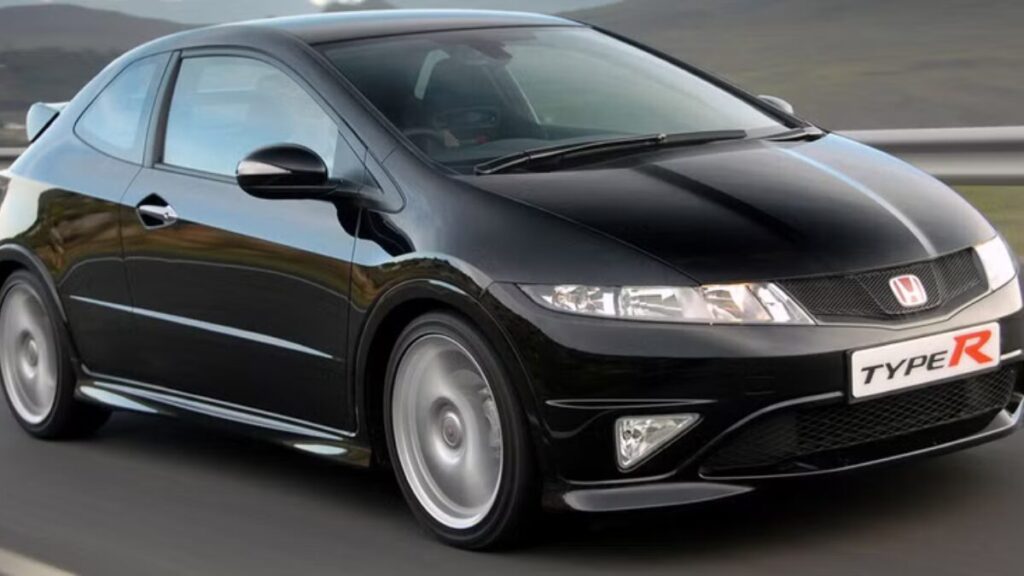
At the heart of every FN2 sits one of Honda’s greatest modern engines: the naturally aspirated 2.0-liter K20Z4 four-cylinder. Producing around 198 horsepower and revving all the way to an 8,000-rpm redline, it represents the kind of performance philosophy that has largely disappeared from today’s market. There are no turbochargers, no artificial sound enhancements, and no shortcuts. The engine rewards drivers who are willing to work for its performance.
Around town, the K20 feels smooth and civilized. It is easy to drive in traffic, surprisingly refined at lower speeds, and perfectly capable of daily commuting duties. However, the real personality of the engine only begins to emerge as the revs climb. Once past the mid-range, the engine becomes noticeably sharper, more urgent, and far more exciting. The final stretch toward the redline remains one of the most satisfying experiences available in any front-wheel-drive performance car from this era.
Equally impressive is the six-speed manual gearbox. Honda’s manual transmissions have long been considered among the best in the industry, and the FN2 continues that tradition. The shift action feels precise, mechanical, and rewarding, encouraging drivers to make the most of the engine’s powerband. Few modern performance cars deliver the same level of connection between driver, gearbox, and engine.
On paper, the FN2 is no longer a particularly fast car by modern hot hatch standards. Yet performance figures tell only part of the story. The way the engine builds power, the responsiveness of the throttle, and the involvement required from the driver create an experience that often feels more rewarding than many faster turbocharged alternatives.
Driving Experience
The FN2 delivers a driving experience that feels increasingly rare in today’s automotive landscape. Modern hot hatchbacks often rely on massive torque figures, sophisticated electronics, and advanced driver aids to create speed. The FN2 relies on something much simpler: driver involvement.
The steering is one of the car’s greatest strengths. Unlike many modern performance cars that use heavily assisted electric systems, the FN2 employs hydraulic steering that communicates far more information through the wheel. Drivers can feel changes in grip levels, road surfaces, and cornering loads with a clarity that immediately builds confidence on challenging roads.
Through corners, the FN2 feels eager and responsive. Turn-in is quick, body control is generally good, and the front end grips hard when pushed. The car encourages drivers to maintain momentum and make the most of its naturally aspirated engine rather than relying on bursts of turbocharged torque. That approach rewards skill and makes fast driving feel genuinely satisfying.
The biggest criticism remains the factory suspension setup. On smooth roads, the FN2 feels composed and capable. On rougher surfaces, however, the rear suspension can occasionally feel unsettled, particularly when encountering mid-corner bumps. This characteristic became one of the defining criticisms of the car and contributed significantly to its controversial reputation among enthusiasts.
Even so, the FN2 remains an enjoyable and confidence-inspiring hot hatch. It may not be the sharpest Type R Honda has ever produced, but it offers a level of mechanical connection that many modern performance cars struggle to replicate. The combination of hydraulic steering, a high-revving naturally aspirated engine, and one of the best manual gearboxes in the business creates a driving experience that continues to win over enthusiasts years after production ended.
Interior & Practicality
One area where the FN2 unquestionably improved over its predecessors was interior design and everyday usability. While the EP3 focused almost entirely on the driving experience, the FN2 introduced a cabin that felt far more modern, ambitious, and distinctive. Even today, nearly two decades after its launch, the interior still looks futuristic compared to many rivals from the same era.
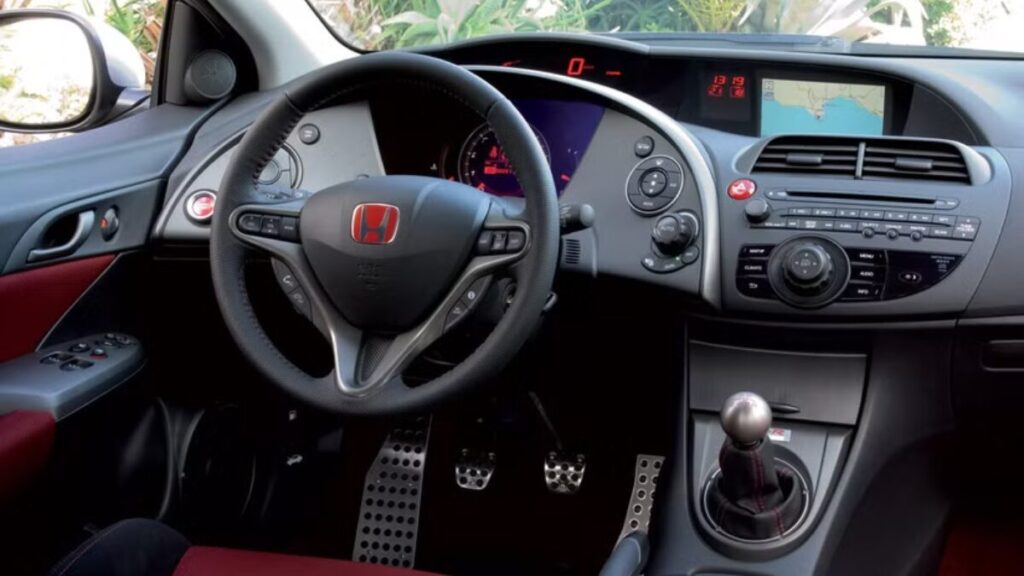
The dual-tier dashboard remains one of the most recognizable features of the car. By separating key information across different display levels, Honda created a cockpit that immediately feels different from a conventional hatchback. The digital speedometer, driver-focused layout, and unique dashboard architecture give the FN2 a sense of occasion every time you climb behind the wheel.
The driving position is another major strength. You sit low, the steering wheel offers excellent adjustment, and all primary controls fall naturally to hand. Combined with the supportive Type R sport seats, the FN2 creates an environment that encourages enthusiastic driving without becoming tiring during longer journeys. Unlike some hardcore performance cars, it remains comfortable enough for daily use.
Practicality is often overlooked when discussing the FN2, but it is actually one of the car’s biggest advantages. Honda’s clever packaging allows the cabin to feel surprisingly spacious for a compact performance hatchback. Rear passengers enjoy reasonable headroom and legroom, while the large hatchback opening makes loading luggage, shopping, or sports equipment easy.
The famous Honda fuel tank layout also helps maximize cargo flexibility. With the rear seats folded, the FN2 offers a level of practicality that many performance cars simply cannot match. This ability to function as both an entertaining driver’s car and a genuinely useful daily hatchback is one of the reasons the FN2 continues to attract enthusiasts today.
Reliability & Common Problems
Reliability has always been one of Honda’s strongest selling points, and the FN2 continues that tradition remarkably well. Compared with many European performance hatchbacks from the same period, ownership costs are generally lower, mechanical durability is stronger, and major failures are relatively uncommon when the car has been maintained correctly.
The K20Z4 engine is widely regarded as one of Honda’s most dependable modern performance engines. High mileage examples are common, and many owners report years of trouble-free ownership with little more than routine servicing. Regular oil changes, valve clearance inspections, and basic preventative maintenance are usually enough to keep the engine healthy for a very long time.
Most issues buyers encounter today are related to age rather than fundamental engineering weaknesses. Suspension components naturally wear over time, particularly on cars driven aggressively or on poor roads. Factory dampers are often one of the first areas requiring attention, which explains why many surviving examples have already been upgraded with aftermarket suspension setups.
Buyers should also inspect the gearbox carefully. While the six-speed manual remains one of the highlights of the FN2 experience, heavily abused examples can develop synchro wear, particularly in second and third gear. Rust around the rear wheel arches, aging air-conditioning compressors, and worn interior trim are also worth checking on older cars.
Despite these concerns, the FN2 remains one of the safest performance hatchbacks to purchase on the used market. A well-maintained example with documented service history is often a far better ownership proposition than many newer performance cars that rely on more complex technology and expensive components.
What to Check Before Buying
If you are shopping for an FN2 today, condition matters far more than mileage. These cars are now old enough that maintenance history, ownership quality, and overall care have a much greater impact on value than the number shown on the odometer.
The first thing to check is service history. A properly maintained FN2 should have evidence of regular oil changes, routine servicing, and attention to common wear items. Documentation showing previous maintenance is often a strong indicator that the car has been cared for throughout its life.
A thorough inspection should also focus on suspension condition, gearbox operation, and signs of corrosion. Listen for suspension noises during a test drive, check for smooth gear engagement, and inspect the rear arches and underbody carefully. These areas can reveal far more about the car’s condition than cosmetic appearance alone.
Modified examples are not automatically bad purchases. In fact, some upgraded FN2s drive significantly better than stock cars thanks to improvements in suspension, brakes, and chassis setup. The key is identifying modifications performed with quality components rather than budget parts installed purely for appearance.
Ultimately, the best FN2 is rarely the cheapest one. Enthusiasts should prioritize maintenance history, mechanical condition, and evidence of careful ownership above all else. Doing so dramatically increases the chances of finding an example that will provide years of enjoyable and reliable ownership.
FN2 vs EP3: Which Type R Is Better?
The debate between the FN2 and EP3 has been raging for years, and there is no universally correct answer. Both cars represent different interpretations of the Type R formula, and each appeals to a slightly different type of enthusiast.
The EP3 remains the favorite among many purists. It feels lighter on its feet, more playful at the limit, and more focused on delivering a raw driving experience. Its independent rear suspension and simpler character make it feel closer to the classic Type R philosophy that helped build Honda’s performance reputation. Even today, many enthusiasts consider it the more exciting car straight from the factory.
The FN2, however, offers strengths that are often overlooked. It delivers a more refined cabin, a far more distinctive interior design, improved practicality, better long-distance comfort, and a more mature overall driving experience. While it may sacrifice some of the EP3’s sharpness, it compensates by being easier to live with every day.
Ultimately, the decision comes down to priorities. Drivers seeking the purest and most aggressive Type R experience will likely prefer the EP3. Those looking for a better all-rounder that combines performance, practicality, reliability, and daily usability may find the FN2 the more rewarding ownership proposition.
Is the FN2 Becoming a Modern Classic?
The answer is increasingly yes.
For many years, the FN2 sat in an awkward position within the Type R family. It was overshadowed by the EP3 before it and the turbocharged FK2 and FK8 models that followed. As a result, values remained relatively affordable while other Type R generations received most of the attention from collectors.
That situation has begun to change. Enthusiasts are starting to appreciate the qualities that make the FN2 unique rather than focusing solely on its shortcomings. The naturally aspirated K20 engine, hydraulic steering, manual gearbox, distinctive styling, and strong reliability record all represent characteristics that are becoming increasingly rare in modern performance cars.
The market has noticed as well. Clean, original, and well-maintained examples are becoming harder to find each year. Championship White cars are particularly sought after, while low-mileage examples are attracting growing interest from collectors and long-term enthusiasts.
Will the FN2 ever reach the iconic status of the Integra Type R or EK9? Probably not. However, it is steadily earning recognition as one of the most underrated performance Hondas of its generation and is well on its way to becoming a respected modern classic.
The FN2 is steadily gaining recognition as a modern classic among enthusiasts. For readers interested in the evolution of Honda’s performance hatchbacks, check out our review of the Honda Civic Type R and the latest Honda Civic to see how the Type R badge has developed into today’s turbocharged models.
Which FN2 Should You Buy?
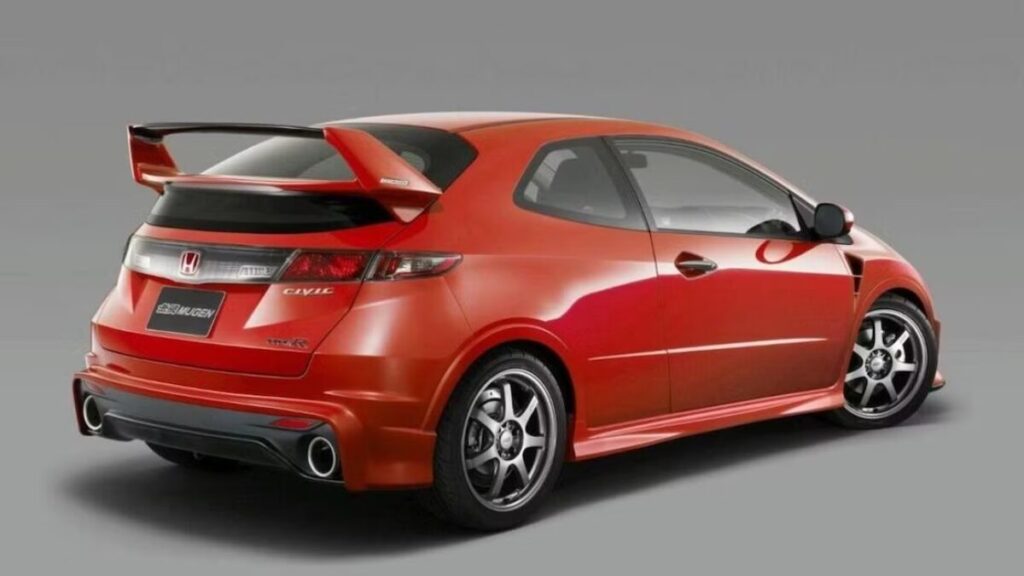
For most buyers, the best choice is the FN2 Type R GT. Since every FN2 shares the same engine, transmission, and fundamental performance characteristics, the GT trim provides the strongest overall ownership experience thanks to its additional comfort and convenience features.
Equipment such as automatic climate control, cruise control, automatic lights and wipers, and folding mirrors make the GT significantly easier to live with on a daily basis. These upgrades do not dilute the driving experience, but they do make the car feel more complete during everyday use.
Regardless of trim level, condition should always take priority over specification. A well-maintained standard car with a complete service history is almost always a better purchase than a neglected GT model. Buyers should focus on mechanical health, documented maintenance, and overall ownership history before considering optional equipment.
If possible, seek out an example that remains close to factory specification or has been modified using high-quality components. Clean cars are becoming increasingly difficult to find, which makes purchasing the right example more important than ever.
Final Verdict
The Honda Civic Type R FN2 may never fully escape the controversy that surrounded it when new, but history has been far kinder to the car than many early critics expected.
Viewed through a modern lens, the FN2 offers something genuinely special. Its naturally aspirated K20 engine, precise six-speed manual gearbox, hydraulic steering, and practical hatchback design combine to create a driving experience that feels increasingly rare in today’s automotive world. It may not dominate performance benchmarks anymore, but it continues to deliver something many faster cars struggle to replicate: genuine driver involvement.
The FN2’s greatest strength is balance. It is exciting enough to satisfy enthusiasts, practical enough for daily use, reliable enough for long-term ownership, and affordable enough to remain accessible. Few performance hatchbacks manage to blend those qualities as successfully.
For buyers searching for an engaging hot hatch with character, reliability, and strong enthusiast support, the FN2 remains one of the smartest performance car purchases available today. It may once have been misunderstood, but it is finally receiving the appreciation it deserves.
FAQ
Is the Honda Civic Type R FN2 reliable?
Yes. The FN2 is widely regarded as one of the most reliable performance hatchbacks of its era. The K20Z4 engine is particularly durable when maintained correctly, and major mechanical failures are relatively uncommon. Most issues encountered today are age-related rather than design flaws.
Why was the FN2 Civic Type R controversial?
The biggest source of controversy was Honda’s decision to replace the EP3’s independent rear suspension with a torsion-beam setup. Many enthusiasts felt this reduced handling sharpness compared to previous Type R models. Over time, however, many owners have come to appreciate the FN2’s strengths as a more refined and practical performance hatchback.
Is the FN2 better than the EP3?
Neither car is objectively better. The EP3 offers a rawer and more focused driving experience, while the FN2 provides greater refinement, practicality, and everyday comfort. The better choice depends entirely on what you expect from a Type R.
Is the FN2 a good investment?
No performance car should be purchased solely as an investment, but clean FN2 examples have shown increasing demand in recent years. Well-maintained cars, particularly those in Championship White with strong service history, are becoming more desirable among enthusiasts and collectors.
What is the best modification for an FN2?
Most owners agree that suspension upgrades provide the greatest improvement. Quality dampers, coilovers, and a rear anti-roll bar can dramatically improve handling and help unlock the chassis potential that many believe the factory setup never fully achieved.