2022 Honda Civic Type R occupies a fascinating place in today’s performance car market. When it was new, most of the conversation focused on its aggressive styling, front-wheel-drive layout, and whether Honda could really justify asking premium hot hatch money for a Civic. Four years later, those debates feel almost irrelevant. The automotive landscape has changed dramatically since then, and that shift has only strengthened the Type R’s reputation.
Modern performance cars have become heavier, more digital, and increasingly dependent on technology to deliver speed. The numbers are often more impressive than ever, yet many enthusiasts would argue that something has been lost along the way. Steering systems have become quieter, manual transmissions are disappearing, and the sense of connection between driver and machine has become harder to find. Looking at the 2022 Civic Type R through a 2026 lens highlights exactly why the car continues to command so much respect.
The final FK8-generation Type R was never the most luxurious option in its segment, nor was it the easiest car to live with every day. What it offered instead was a level of precision that few rivals could match. Honda engineered a chassis that seemed to ignore the traditional limitations of front-wheel drive, paired it with one of the best manual transmissions of the modern era, and wrapped everything in a package that remained practical enough to serve as a daily driver.
That combination has aged remarkably well. While newer competitors have chased greater power outputs and increasingly sophisticated technology, the Civic Type R has quietly become something enthusiasts value even more today than when it first appeared: a performance car that prioritizes involvement over specifications. In many ways, it represents the closing chapter of an era before electrification, automation, and digital intervention began reshaping the enthusiast-car formula.
The question in 2026 is no longer whether the Civic Type R was a great hot hatch when it was new. The more interesting question is whether it has become one of the most desirable modern performance cars you can buy today.
Our Take
The 2022 Honda Civic Type R has reached a point in its life cycle where it can be judged more fairly than when it was new. The early discussions surrounding its styling, pricing, and front-wheel-drive layout have largely faded, leaving buyers with a clearer question: how good is the car itself?
The answer is remarkably simple. The final FK8 remains one of the most complete performance cars Honda has ever built.
What stands out today is not its acceleration figures or lap times. Plenty of newer cars can match or exceed those numbers. What continues to separate the Civic Type R from much of the modern performance market is the way every major component feels carefully developed to serve a single purpose. The steering feels natural, the chassis remains composed regardless of road conditions, and the manual transmission still ranks among the best available in any production car.
Just as importantly, the Civic Type R never sacrificed practicality to achieve its performance goals. Four years later, it remains a hatchback that can comfortably handle commuting duties during the week before spending a weekend on a back road or at a track event. That versatility is a major reason why so many owners have kept their cars long after newer alternatives became available.
Looking at the market in 2026 also highlights another advantage. While many performance cars have become increasingly expensive and technologically complex, the Civic Type R continues to offer a relatively straightforward ownership experience backed by Honda’s reputation for durability. For buyers planning to keep a performance car for years rather than lease it for a few seasons, that matters.
The newer FL5 Civic Type R is undoubtedly a more refined machine. It offers a higher-quality cabin, cleaner styling, and incremental improvements across the board. Yet the FK8 has lost none of its appeal. If anything, its more aggressive personality and distinctive character make it feel increasingly special as performance cars become more restrained and predictable.
For many buyers in 2026, the question is no longer whether the FK8 is better than its successor. The more relevant question is whether any modern hot hatch delivers a more memorable experience for the money. That remains surprisingly difficult to answer.
Pros & Cons
Pros
- Outstanding steering feedback that still feels better than many newer performance cars.
- One of the finest manual transmissions available in the modern automotive market.
- Exceptional chassis balance despite sending all power to the front wheels.
- Practical hatchback design with generous cargo capacity and usable rear seating.
- Strong reliability record compared with many European performance rivals.
- Holds its value well thanks to sustained enthusiast demand.
Cons
- Cabin materials no longer feel as premium as some newer competitors.
- Ride quality can become tiring on rough urban roads.
- Highway road noise is more noticeable than in the latest generation.
- Aggressive exterior styling remains divisive among buyers.
- Finding a clean, unmodified example has become increasingly difficult.
- Used-market pricing remains higher than many shoppers expect.
What’s New for 2022
Unlike many model years that introduce major updates, the story of the 2022 Honda Civic Type R is largely defined by timing. This was effectively the final chapter of the FK8 generation before Honda introduced the redesigned FL5 model, making 2022 an important year for enthusiasts who preferred the outgoing car’s more aggressive character.
Honda made few significant mechanical changes because the formula already worked exceptionally well. The turbocharged 2.0-liter engine, six-speed manual transmission, limited-slip differential, and adaptive suspension carried over largely unchanged. Rather than reinventing the package, Honda chose to send the FK8 generation into retirement with the same qualities that had helped establish its reputation in the first place.
Looking back from 2026, that decision appears to have been the right one. The 2022 model now represents the final opportunity to own the Civic Type R in its most extroverted and uncompromising form before the brand moved toward a more mature and sophisticated direction with the FL5.
Exterior Design
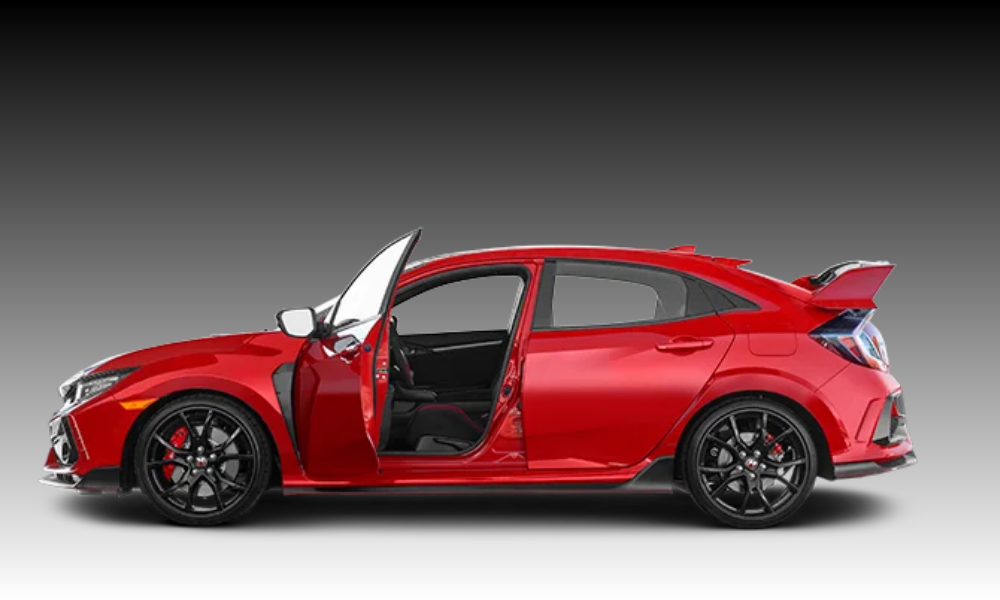
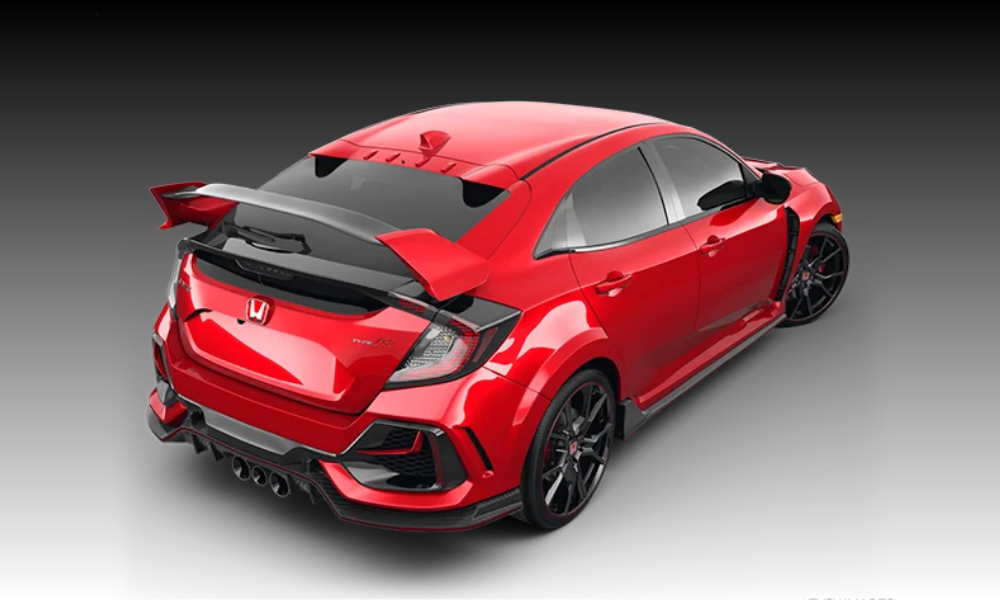
Few performance cars have aged as differently as the 2022 Honda Civic Type R. When it was new, much of the discussion centered on its styling. Some enthusiasts loved its oversized rear wing, dramatic vents, and aggressive bodywork, while others felt Honda had pushed the design too far. Years later, that debate feels less important than it once did.
Viewed in 2026, the FK8 stands out because it refuses to blend into traffic. In a market increasingly filled with clean, minimalist designs, the Civic Type R still looks like a car created by engineers who wanted everyone to know exactly what it was built for. The wide fenders, large front openings, and low stance give it a sense of purpose that many modern performance cars lack.
What helps the design age better than expected is the fact that much of it is functional. The front bumper channels air where it is needed, the rear wing contributes to stability at higher speeds, and the aerodynamic package was developed with performance in mind rather than visual drama alone. That engineering focus gives the car more credibility today than many rivals whose aggressive styling serves little practical purpose.
The newer FL5 generation is undeniably cleaner and more mature, and some buyers will prefer its understated approach. The FK8, however, remains the more distinctive car. It reflects an era when Honda was willing to take risks with the Type R badge, and that personality continues to separate it from almost everything else in the hot hatch segment.
Whether you find it attractive or excessive will always come down to personal taste. What cannot be denied is that the 2022 Civic Type R still looks special, and that is something many performance cars lose surprisingly quickly.
Driving Experience
The 2022 Honda Civic Type R feels different from most modern performance cars for a simple reason: it never tries to isolate the driver from what the car is doing. The steering, suspension, brakes, and drivetrain all work together in a way that makes the car feel transparent. You always know what the front tires are doing, how much grip is available, and how the chassis is reacting beneath you.
That confidence becomes most apparent on a winding road. The Type R changes direction eagerly, but it never feels nervous or unpredictable. There is an unusual sense of precision to the way the front end responds to steering inputs. Small corrections are all that is needed, and the car settles into a corner naturally rather than requiring constant adjustments.
One of Honda’s greatest achievements was managing to make a 306-horsepower front-wheel-drive car feel so composed under hard acceleration. Even by today’s standards, the front axle remains impressively disciplined. The limited-slip differential works quietly in the background, helping the car put power down effectively without constantly reminding the driver that all of the engine’s output is being sent to the front wheels.
The result is a car that rewards smooth driving rather than aggressive driving. Push too hard and the Type R remains capable, but its real brilliance appears when a driver begins working with the chassis instead of simply demanding speed from it. Few cars in this segment communicate their capabilities so clearly, and that quality remains just as impressive in 2026 as it was when the car was new.
Performance & Acceleration
Numbers alone never fully explain the Civic Type R. The turbocharged 2.0-liter engine produces 306 horsepower and 295 lb-ft of torque, figures that remain respectable today even though newer rivals have surpassed them. What matters more is how accessible that performance feels in everyday driving.
The engine delivers strong mid-range power, allowing the car to accelerate confidently without requiring constant downshifts. Whether merging onto a highway or overtaking slower traffic, there is enough power in reserve to make the car feel effortless when driven normally and genuinely quick when pushed harder.
Equally important is the way the engine works with the six-speed manual transmission. The gearing feels well matched to the powerband, making it easy to stay in the heart of the engine’s performance range. Rather than chasing maximum output, Honda focused on responsiveness and consistency, qualities that often matter more in real-world driving than an additional few horsepower.
By modern performance-car standards, the Civic Type R may no longer dominate comparison charts, but it remains fast enough that few owners will ever feel shortchanged. More importantly, it delivers its performance in a manner that remains enjoyable long after the novelty of straight-line acceleration fades.
Ride Comfort & Cabin Refinement
Performance-oriented cars often force buyers to accept significant compromises in daily use. The 2022 Civic Type R makes surprisingly few of them.
The suspension is firm, as expected, but it rarely feels harsh. Honda found an effective balance between body control and ride quality, allowing the car to remain comfortable enough for long-distance travel without sacrificing the composure that defines its handling. Broken pavement and rough city streets are noticeable, yet they never become a constant source of frustration.
The front seats deserve particular praise. They provide excellent support during spirited driving while remaining comfortable during extended hours behind the wheel. Many performance seats excel at one of those tasks but struggle with the other. Honda managed to achieve both.
Cabin refinement is where the car begins to show its age slightly compared with newer competitors. Road noise is more noticeable at highway speeds than it is in the latest generation, and some rivals offer a quieter overall environment. Even so, the Type R remains perfectly usable as a daily driver, which is one of the reasons so many owners continue to use it for everything from commuting to weekend road trips.
What stands out most today is how little the car asks its owner to sacrifice. It remains engaging when the road becomes interesting and comfortable when it does not, a balance that many performance cars spend years trying to achieve.
Interior & Luxury Feel
The cabin is one of the areas where the 2022 Civic Type R has aged better than many people expected. When the car was new, most of the attention naturally focused on its performance credentials, leaving the interior somewhat overlooked. Looking back from 2026, it becomes clear that Honda got more right here than it was often given credit for.
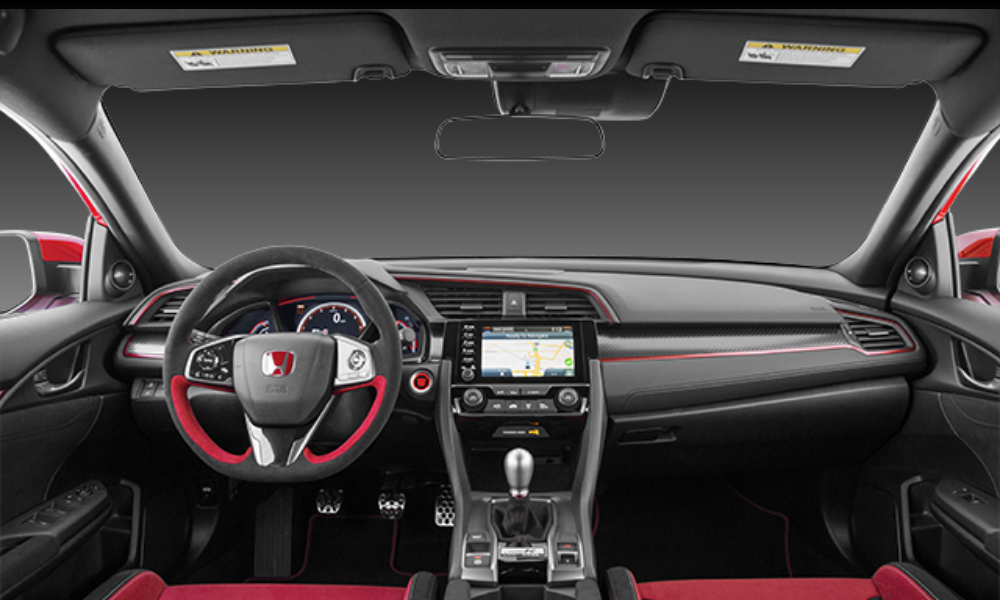
The first thing that defines the experience is the seating position. Honda places the driver low in the car without making entry and exit difficult, creating an immediate sense of connection with the chassis. Combined with the thin steering wheel rim and excellent outward visibility, the driving position feels carefully considered rather than aggressively sporty for the sake of appearance.
The red bucket seats remain one of the interior’s defining features. They hold occupants securely during spirited driving, yet they avoid the overly restrictive feeling found in some high-performance rivals. Even after several hours on the road, they remain supportive rather than exhausting, which contributes significantly to the Type R’s everyday usability.
Material quality is generally solid throughout the cabin. Soft-touch surfaces appear in the areas drivers interact with most frequently, while switches and controls continue to feel durable years after production ended. The interior does not attempt to compete with entry-level luxury cars, but it also avoids feeling inexpensive. Instead, Honda focused on creating an environment that feels functional, robust, and built to withstand long-term ownership.
Perhaps the most impressive aspect of the cabin is how little it distracts from driving. The controls are logically arranged, visibility is excellent, and nearly everything falls naturally to hand. In an era where many interiors seem designed around screens first and drivers second, the Civic Type R’s more straightforward approach has arguably become one of its strengths.
Technology & Infotainment
The technology package reflects Honda’s broader philosophy for the Type R. Rather than overwhelming drivers with layers of menus and configurable settings, the system focuses on delivering the features owners are most likely to use every day.
The infotainment system remains intuitive, with Apple CarPlay and Android Auto providing seamless smartphone integration. Navigation, media controls, and connectivity functions are easy to access, which reduces the learning curve for new owners. While newer systems offer sharper graphics and faster processing speeds, the Civic’s setup continues to perform its core tasks effectively.
Performance-specific displays add genuine value. Information such as boost pressure, lap timing data, and vehicle dynamics can be monitored without turning the cabin into a digital science project. The data is there when drivers want it and stays out of the way when they don’t.
Fuel Economy
Fuel economy has never been the primary reason to buy a Civic Type R, yet the car remains surprisingly reasonable considering its performance capabilities.
The turbocharged four-cylinder engine is efficient during normal driving, particularly on longer highway journeys where the engine settles comfortably into its cruising range. Drivers who regularly explore the upper reaches of the rev range will naturally see higher fuel consumption, but that comes with the territory of any performance-oriented vehicle.
Viewed from a 2026 perspective, the Civic Type R still strikes an appealing balance between performance and efficiency. It delivers genuine enthusiast credentials without demanding the fuel bills typically associated with larger, more powerful performance cars.
Practicality & Cargo Space
Performance cars often force buyers to choose between excitement and usability. The 2022 Honda Civic Type R remains one of the few cars in its class that genuinely delivers both.
The hatchback body style immediately gives it an advantage over many traditional sports sedans and coupes. The cargo area is large enough to handle airport luggage, weekly shopping trips, photography equipment, or the random tasks that inevitably become part of daily ownership. Fold the rear seats down and the available space increases substantially, making the Type R far more versatile than its aggressive appearance suggests.
Rear-seat accommodation is another pleasant surprise. Adults can comfortably sit in the second row without feeling punished for choosing a performance car. Legroom remains competitive even by modern standards, and the Civic’s long wheelbase helps create a cabin that feels more spacious than many rivals.
This practicality becomes even more important when viewed from a 2026 perspective. Buyers shopping for used performance cars often want a single vehicle capable of handling every responsibility. The Civic Type R continues to excel in that role. It can serve as a commuter during the week, a road-trip companion on weekends, and a track-day toy when the opportunity arises.
That flexibility is a major reason why the FK8 has retained such a loyal following. Many performance cars are fun occasionally. The Civic Type R remains enjoyable almost every day.
Safety & Driver Assistance
Safety rarely dominates discussions about the Civic Type R, but that does not mean Honda neglected it. Beneath the performance-focused personality is a platform that benefits from the same engineering priorities found throughout the broader Civic lineup.
Visibility is one of the car’s underrated strengths. The seating position, relatively slim roof pillars, and well-designed glass area make it easier to place the car confidently in traffic than many modern performance vehicles. That may sound like a small detail, but it contributes significantly to everyday driving comfort.
Honda also equipped the Type R with a range of driver-assistance technologies designed to reduce fatigue during longer journeys. Features such as adaptive cruise control, lane-keeping assistance, forward-collision warning, and collision-mitigation braking provide an additional layer of security without constantly interfering with the driving experience.
More importantly, the car’s safety credentials begin with its fundamental engineering. Strong braking performance, predictable handling characteristics, and excellent chassis balance help drivers avoid problems before electronic systems ever need to intervene. The Type R remains approachable even when driven enthusiastically, which cannot be said for every high-performance vehicle.
From today’s perspective, the technology may not appear cutting-edge, but it continues to cover the essentials effectively. Most owners are unlikely to feel they are sacrificing meaningful safety features in exchange for the car’s performance focus.
Competitors Worth Considering
The hot hatch market has changed considerably since the 2022 Civic Type R first appeared, but several rivals continue to deserve consideration.
The Volkswagen Golf R remains the most logical alternative for buyers who prioritize year-round usability. Its all-wheel-drive system delivers exceptional traction in poor weather, and the cabin feels noticeably more upscale. It is arguably the more complete all-around package, though some drivers may find it less engaging than the Honda.
The Hyundai Elantra N has become one of the strongest performance bargains on the market. It offers impressive capability, a playful chassis, and a lower entry price. While it lacks the Type R’s long-term reputation and polish, it delivers remarkable value.
Buyers seeking a premium badge often gravitate toward the Audi S3. The Audi offers a more refined driving experience and a higher-quality interior, but it approaches performance from a very different angle. It feels composed and efficient rather than involving and communicative.
Even the newer FL5 Civic Type R deserves consideration. It improves cabin quality, refinement, and overall maturity without abandoning the core philosophy that made the FK8 successful. For some buyers, it will be the better car. For others, the older FK8’s more extroverted personality remains part of its appeal.
Ultimately, the strongest argument in favor of the 2022 Civic Type R is that none of these alternatives replicate its exact combination of practicality, driver involvement, reliability, and long-term ownership appeal.
Which Trim Does Cardrav Recommend?
Choosing a 2022 Honda Civic Type R is refreshingly straightforward because Honda largely avoided the complicated trim hierarchies that have become common throughout the industry.
Every Type R came equipped with the performance hardware that matters most: the turbocharged 2.0-liter engine, six-speed manual transmission, adaptive suspension, limited-slip differential, and upgraded braking system. As a result, buyers do not need to spend time comparing multiple performance variants or worrying about missing critical equipment.
In today’s market, the condition of the vehicle is far more important than optional accessories. A well-maintained, unmodified example with documented service history will almost always be a better purchase than a heavily modified car with questionable maintenance records.
For that reason, Cardrav recommends prioritizing ownership history, maintenance documentation, and overall condition above cosmetic upgrades or aftermarket modifications. The standard Type R already delivers everything that made the FK8 generation special.
Final Verdict: Should You Buy It?
The 2022 Honda Civic Type R has reached the stage of its life where its reputation is no longer built on marketing claims or comparison-test victories. Enough time has passed for enthusiasts and owners to understand exactly what Honda created, and that clarity has only strengthened the car’s standing.
It remains one of the most satisfying performance cars of the modern era not because it dominates any single category, but because it succeeds in so many of them simultaneously. It is fast without being intimidating, practical without feeling ordinary, and capable without becoming detached from the driver.
There are certainly newer cars with more power, more technology, and more premium interiors. There are also cars that launch harder, ride more softly, or attract greater attention with their badges. Yet few alternatives combine all of those qualities as effectively as the Civic Type R.
What makes the 2022 model particularly interesting in 2026 is that it now represents something increasingly uncommon. It belongs to a generation of performance cars that still placed mechanical feel at the center of the experience. The steering communicates, the gearbox rewards skill, and the chassis encourages drivers to become more involved rather than simply relying on technology.
For buyers searching for a performance car they can genuinely enjoy for years rather than months, the final FK8 remains one of the strongest recommendations in its segment. It may no longer be the newest hot hatch on the market, but it continues to be one of the easiest to admire and one of the hardest to replace.
FAQ
Is the 2022 Honda Civic Type R becoming a future collectible?
There are growing signs that it could. The FK8 represents the final Civic Type R generation before Honda moved to the more mature FL5 design, and enthusiast demand remains strong. Well-maintained, unmodified examples are already attracting increased attention from buyers who believe the car will become one of the defining performance Hondas of its era.
Is the FK8 Civic Type R more fun to drive than the newer FL5?
That depends on what you value. The FL5 is objectively more refined and offers a higher-quality interior, but many enthusiasts still prefer the FK8 because it feels more aggressive, more dramatic, and slightly more raw in its responses. The driving experience is different enough that reasonable enthusiasts can make a convincing argument for either car.
What should buyers check before purchasing a used 2022 Civic Type R?
Service records, tire condition, brake wear, and evidence of modifications should be at the top of the list. Because many Type Rs were owned by enthusiasts, finding a car that has not been heavily modified can sometimes be more important than finding one with the lowest mileage.
Is the 2022 Honda Civic Type R expensive to maintain?
Compared with many European performance cars, ownership costs remain relatively manageable. Routine maintenance is straightforward, parts availability is generally good, and Honda’s reputation for reliability continues to benefit long-term owners. Consumables such as performance tires and brakes can still be expensive, but overall ownership costs are lower than many direct competitors.
Would you buy a 2022 Civic Type R or a new hot hatch in 2026?
For buyers who prioritize driving involvement and value retention, the 2022 Civic Type R remains an extremely compelling choice. A newer hot hatch may offer additional technology and warranty coverage, but the FK8 continues to deliver a driving experience that many enthusiasts believe is becoming increasingly rare.