IR Ceramic Window Tint: VLT, Heat Rejection, and Privacy
Compare VLT, heat rejection, UV protection, privacy, and signal compatibility before choosing a ceramic window tint.

If you’ve ever opened a car door after an afternoon in a sun-baked parking lot and felt the heat roll out like an oven, you already understand why people start researching IR ceramic window tint. The seats are too hot to touch, the steering wheel is worse, and the glare off the hood makes it hard to see anything until your eyes adjust.
Most drivers assume the fix is simply a darker film. It isn’t that simple. Darkness is measured as VLT (visible light transmission), but how well a film handles infrared rejection, UV protection, and overall heat rejection is a separate question. Meanwhile, a very dark film can cut night visibility, and a poorly made one can add haze or distortion to the glass you’re looking through. Many drivers also want a non-metallic window tint so their GPS, phone, and toll transponder keep working normally.
This guide compares five ceramic films from four brands, at 20% and 5% VLT, so you can see how they differ before you buy. For other practical upgrades that make daily driving easier, our roundup of smart car upgrades worth buying is a good companion read.
Our Take
We’re not ranking these films, and we’re not naming a winner. The right choice depends on what you want from your windows, and each priority pulls in a different direction.
Privacy and visibility are the clearest example. A driver who parks outdoors and wants to keep belongings out of sight may lean toward a much darker film. Someone who drives country roads at night, or who already struggles with dim conditions, may reasonably choose a lighter one. Neither is wrong. They’re weighing different things.
Heat is similar. Heat rejection is the outcome you feel, and infrared rejection is one piece of how a film gets there. A high IR figure on a listing is useful, but it doesn’t tell you everything about how a film performs on your car, in your climate, on your glass.
Then come the unglamorous factors: optical clarity, scratch resistance, color stability, and installation difficulty. A film that looks great on paper can disappoint if it’s hazy through the windshield-adjacent glass or if curved rear windows defeat a first-time DIY installer.
Local tint laws override all of it. VLT limits vary by state and by window position, and a film that’s perfectly fine on one car in one state may be illegal elsewhere. Check your rules before you buy.
One more note on sourcing. The performance figures below come from the product listings. They are manufacturer claims, not Cardrav lab results, and we haven’t tested these films ourselves.
Comparison Table
| Product | Brand | VLT | Main Strength | Best Fit |
|---|---|---|---|---|
| RockRose 20% Nano Ceramic Window Tint | RockRose | 20% | 2-ply nano-ceramic with custom sizing | DIYers and installers who want flexibility |
| Vepagoo 20% VLT Ceramic Tint Film | Vepagoo | 20% | Balanced heat, glare, and privacy claims | Daily drivers wanting moderate darkness |
| Vepagoo 5% VLT Ceramic Tint Film | Vepagoo | 5% | Maximum privacy | Larger vehicles where darkness is legal |
| TOYOCO Window Tint Film for Cars | TOYOCO | 20% | High advertised UV and IR rejection | Heat-focused buyers |
| United Ultra Ceramic Window Tint by HIDNY | HIDNY | 20% | Non-metallic, signal-friendly construction | Tech-reliant drivers |
The Five IR Ceramic Window Tint Options
RockRose 20% Nano Ceramic Window Tint

- NANO CERAMIC WINDOW TINT: Use our Nano Ceramic window tint for home or for car to fully experience the capabilities of o…
- HIGH QUAILTY HAZE FREE MATERIAL: RockRose 2PLY Nano Ceramic Window Film uses the finest ceramic material and finest PET …
- CUSTOM FIT, ENDLESS STYLE: Rockrose offers limo tint, 5% window tint, 15% window tint, 20% window tint, 35% window tint …
RockRose’s pitch is as much about workability as performance. The listing describes a 2-ply nano-ceramic film at 20% VLT, made to be heat-shrunk onto curved glass, compatible with plotter cutting, and available in custom sizes. For anyone cutting film for multiple windows or vehicles, that last point matters more than it sounds. Buying to size can reduce waste and awkward seams.
On performance, the listing positions the film as haze-free, with UV protection, infrared rejection, and heat reduction claims. These are product-page claims, and we have no independent test data to confirm them. A 20% film lets about one-fifth of visible light through, which is a noticeable step darker than factory glass. It’s private enough that people have trouble seeing in from outside during the day, and the listing also mentions architectural use, which suggests the same film family is sold beyond cars.
Who it suits: a hands-on owner, or a shop, that values shrinkability and cut-to-size flexibility as much as the heat claims.
Vepagoo 20% VLT Ceramic Tint Film

- Daytime Privacy: This ceramic window tint offers one-way visible effect during the day, letting you see out clearly whil…
- No Signal Interference: Unlike metal-based films, this nano-ceramic tint ensures smooth signal reception. Your GPS, phon…
- Heat & Glare Reduction: Significantly reduces infrared heat and minimizes sun/headlight glare. Keeps your car cooler, re…
If RockRose is the film for people who care about handling, Vepagoo’s 20% option reads as the all-rounder. The listing describes a ceramic film that makes claims on nearly every front: UV blocking, IR blocking, lower cabin heat, reduced glare, added privacy, and a scratch-resistant surface. It’s also marketed as non-metallic and signal-friendly, which is worth noting if your car leans on GPS or cellular connectivity.
The practical trade-off is the one every 20% film shares. You gain a meaningful reduction in glare and a more private cabin, but you give up some brightness, especially after sunset. Vepagoo also sells a 5% version, covered next, so the brand lets you pick a darkness level instead of settling for one default.
We’d treat the scratch-resistance and performance language as the maker’s claims. Scratch resistance in particular is easy to advertise and harder to judge until a film has lived through car washes, seat belts, and rolled-down windows.
Who it suits: a daily driver who wants a noticeable comfort improvement without committing to the darkest option.
Vepagoo 5% VLT Ceramic Tint Film
- Daytime Privacy: This ceramic window tint offers one-way visible effect during the day, letting you see out clearly whil…
- No Signal Interference: Unlike metal-based films, this nano-ceramic tint ensures smooth signal reception. Your GPS, phon…
- Heat & Glare Reduction: Significantly reduces infrared heat and minimizes sun/headlight glare. Keeps your car cooler, re…
At 5% VLT, this is the darkest film in the lineup, and the difference from a 20% film is large. Only around five percent of visible light passes through, so the glass looks nearly black from outside. The listing highlights privacy, heat and glare reduction, UV and IR protection claims, scratch resistance, and nano-ceramic construction, and it points to larger vehicles such as SUVs and pickups as a fit.
That fit makes sense. Big rear glass areas are where privacy and sun load add up quickly. But the trade-off is real: lower VLT means less light reaching your eyes, and night driving, dim garages, and rainy dusk conditions are where very dark tint is most noticeable. Backing out of a driveway at 10 p.m. through 5% film is a different experience from doing it through 20%.
Many places restrict very dark tint on front side windows, and often on windshields and rear glass as well. Check your state’s rules before installation. Don’t buy this film assuming it’s legal everywhere.
Who it suits: an owner of a larger vehicle who has confirmed 5% is allowed on the intended windows and values privacy above all.
TOYOCO Window Tint Film for Cars

- 20% VLT DARK SHADE: This 20% ceramic car window tint offers a dark look for side and rear windows that helps increase pr…
- UV & IR REJECTION: This automotive window tint film helps reduce infrared heat and reject UV while remaining nonmetallic…
- NOT FOR FRONT WINDSHIELD: This 20% car window tint film is intended for rear and side windows only. Many areas restrict …
TOYOCO leads with numbers. The product information claims more than 99% UV rejection and more than 95% IR rejection, on a 20% VLT ceramic film. Those are manufacturer claims, not independently verified laboratory results, and we wouldn’t treat them as guaranteed.
Still, it helps to know what such figures would mean if a film delivered them. High UV rejection would be good news for the dashboard, door panels, and upholstery, which are the parts of a car that fade and crack under years of sun. High IR rejection would mean less of the sun’s infrared energy, a major contributor to that baking-cabin feeling, passing through the glass. The listing also mentions glare reduction, scratch resistance, privacy, and visibility.
A caution on spec-shopping: a headline IR percentage is usually measured under specific conditions, and real-world results depend on the glass, the installation, and the climate. Use the number as a rough indicator, not a promise.
Who it suits: a heat-focused buyer in a sunny climate who wants strong advertised numbers at a moderate darkness level.
United Ultra Ceramic Window Tint by HIDNY
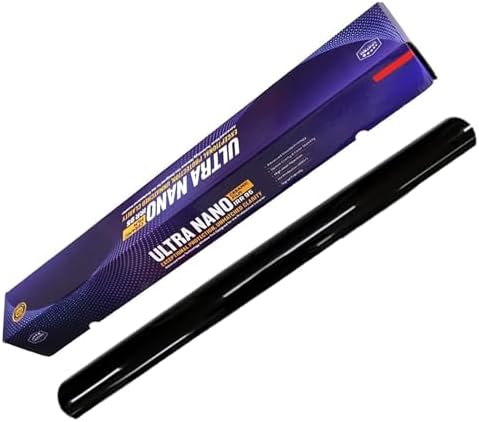
- ADVANCED 2PLY NANO CERAMIC TECHNOLOGY: Crafted with optical-grade PET and premium nano ceramic technology, this 2PLY win…
- HIGH HEAT REJECTION & UV PROTECTION: This ceramic car window tint blocks up to 99% of harmful UV rays while rejecting 80…
- 20% VLT PRIVACY & GLARE REDUCTION: The 5% VLT window tint for cars provides enhanced daytime privacy while reducing hars…
HIDNY’s angle is electronics. The listing describes a 2-ply nano-ceramic film at 20% VLT with a non-metallic construction, and it highlights compatibility with GPS and cellular signals. Product information also indicates IR rejection claims of roughly 93 to 95 percent, which, again, is a product claim and not verified data. The listing adds optical clarity, color stability, durability, UV protection, and privacy.
The non-metallic point matters more than it used to. Modern cars carry navigation, phone mounts, dash cams, toll tags, keyless entry, and connected-car modules. Not every metallic film will interfere with them, but a non-metallic film removes the question entirely. That’s the appeal.
Color stability is the other detail we’d weigh. Cheap films tend to shift toward purple or brown over time, and a claim of stable color is a good thing to look for. Whether this film holds up is something only years of use can answer, and we can’t confirm it here.
Who it suits: a driver whose car is full of connected gear and who wants a signal-friendly film at moderate darkness.
Buying Guide: How to Choose an IR Ceramic Window Tint
VLT
VLT is the percentage of visible light a film lets through. Higher VLT means more light passes and the film looks lighter. Lower VLT means a darker film and generally more privacy. A 5% film is dramatically darker than a 20% film: it blocks about 95 percent of visible light compared with about 80 percent. Because tint laws vary by location and window position, there’s no universal legal recommendation. Look up your own rules first.
Heat and Infrared Rejection
Heat reduction describes the overall result: how much cooler the cabin feels. Infrared rejection is one mechanism behind it, since infrared radiation is a large share of the sun’s heat. A high IR rejection percentage is helpful, but it doesn’t tell the whole story. Measurement methods differ, and the glass and installation also matter. On the hottest days, tint works best alongside other measures, like these ways to improve summer cabin comfort.
UV Protection
UV protection matters for the people in the car and for the car itself. Ultraviolet light is a major cause of fading, drying, and cracking in upholstery, dashboards, and trim. Plenty of films advertise high UV blocking, so use it as a baseline expectation, not a differentiator. We won’t make medical claims here.
Optical Clarity
Haze, distortion, and a faint “oily” look can all show up in lower-quality films. For a driver, that’s not cosmetic. It affects how clearly you read mirrors, signs, and pedestrians, especially at night. Look for films marketed on clarity, and inspect the result after installation.
Privacy
Privacy rises as VLT drops. A 20% film gives meaningful daytime privacy, while 5% is close to opaque from outside. The catch is that the same darkness reduces what you can see out, particularly after dark.
Signal Compatibility
Metallic films can, in some cases, interfere with GPS, cellular, and other signals. That doesn’t happen with every metallic film, and results vary. Non-metallic ceramic films are attractive because they sidestep the concern entirely, which is helpful for drivers who depend on navigation, smartphones, and electronic vehicle systems.
Durability
Judge durability on four things: scratch resistance, color stability, adhesive quality, and how the film is constructed (multi-ply films are often marketed as more robust). Listings can describe these, but we haven’t seen independent lifespan data for any product here and won’t guess at one.
Installation
DIY installation is cheaper, and with patience it’s doable on flat or gently curved glass. Curved automotive windows, especially rear glass, can be difficult because the film must be heat-shrunk to conform. Professional installers bring tools, experience, and a clean workspace, which helps avoid bubbles, creases, and dust. If you’ve never tinted before, consider starting with a smaller window or hiring a pro.
Local Laws
Check the tint law where you live before buying or installing anything. Limits differ by state, by window position, and sometimes by vehicle type. No VLT is legal everywhere, and an illegal install can mean fines or a required removal. Visibility is also a safety question, and our guide to car safety essentials worth keeping on hand covers related ground.
Conclusion
Choosing an IR ceramic window tint comes down to a handful of trade-offs, and none of them has a single right answer. VLT sets how dark the glass looks and how private the cabin feels. Heat and infrared rejection shape how comfortable the car is in summer, though a single percentage never tells the whole story. UV protection helps your interior age more gracefully. Clarity decides whether the film is a pleasure or a nuisance to look through, and non-metallic construction takes signal compatibility off your worry list.
Installation and local law bring it back to reality. A film you can’t legally run, or can’t install cleanly, isn’t a good fit however strong its claims look.
Among these five, the choice mostly follows how you drive: a flexible, shrinkable film for hands-on installers, a balanced 20% film for daily use, a very dark 5% option where the law allows it, a numbers-forward film for sunny climates, or a signal-friendly film for a tech-heavy car. Decide what matters most to you, confirm your local rules, and let that guide your choice.
FAQs
What is IR ceramic window tint?
IR ceramic window tint is a film built with ceramic or nano-ceramic particles, designed to reject infrared radiation, a major source of solar heat, while also blocking UV. Because it’s non-metallic, it typically doesn’t have the signal concerns some metallic films raise. How dark it looks depends on the VLT you choose, not the ceramic technology.
What does 20% VLT mean?
It means the film lets roughly 20 percent of visible light through and blocks the rest. That’s noticeably darker than factory glass and gives good daytime privacy, though it will dim your view a bit at night. Always confirm that 20% is permitted on the specific windows you plan to tint.
Is 5% tint too dark for everyday driving?
It can be. A 5% film offers strong privacy, but it reduces visibility considerably in low light, and many areas restrict it on certain windows. Some drivers use it on rear windows of larger vehicles where it’s allowed. Check your local law first, and think honestly about your night driving.
Does ceramic window tint block heat and UV rays?
Quality ceramic films are designed to reduce solar heat and block most UV, and the listings here make strong claims on both counts. Those figures come from manufacturers and weren’t independently verified for this article. Real-world results vary with the glass, the installation, and your climate.
Can ceramic window tint interfere with GPS or phone signals?
Ceramic films are non-metallic, so they’re generally marketed as compatible with GPS, cellular, and other electronics. Metallic films may interfere in some cases, though not always. If signals matter to you, a non-metallic film is the cautious choice.