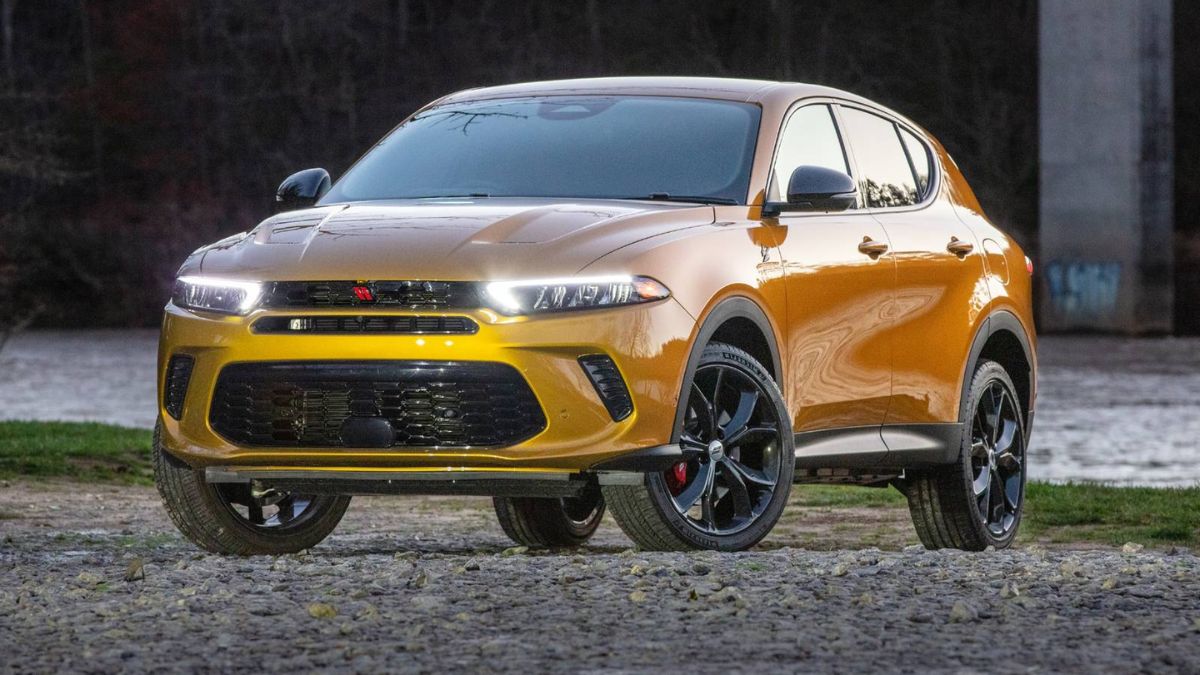
2023 Dodge Hornet: The muscle car company tries its hand at a compact crossover, and the results are more complicated than the marketing suggests
Dodge has not launched a genuinely new nameplate in over a decade. The last time the brand introduced something from scratch, gas was cheaper and nobody was cross shopping a Charger against a Toyota RAV4. So when the 2023 Dodge Hornet showed up wearing a name pulled from a 1950s Hudson and aimed squarely at the compact SUV crowd, it was fair to wonder what a company built on supercharged V8s actually knows about building a small crossover.
The honest answer is: more than you’d think, and less than buyers might hope.
The Hornet shares its underpinnings with the Alfa Romeo Tonale, which sounds like a strange pairing until you drive it. That Italian DNA shows up in the way the Hornet turns into a corner, in the shape of its dashboard, and in a few quirks that a Honda or Toyota engineer never would have signed off on. Dodge didn’t build this thing from a blank sheet. It borrowed a chassis, dropped in its own engine, and leaned hard into the idea that a small SUV can still be fun to drive.
Compare that to the class regulars. The Honda CR-V and Toyota RAV4 are appliances, reliable ones, but nobody cross shops them for cornering grip. The Mazda CX-50 is the closest thing to a genuine rival in spirit, and it beats the Hornet in a few areas that matter. The Hornet’s pitch is narrower than most: if you want a small SUV that actually rewards a driver on a curvy back road, this is one of the only entries in the segment even trying.
That focus comes at a cost, and it’s not a small one. Cargo space, rear legroom, and price all take a hit in the name of driving character. Whether that trade makes sense depends entirely on what you actually do with the vehicle day to day.
Our Opinion
The 2023 Dodge Hornet is the rare compact SUV that a Miata owner might actually enjoy driving, and that alone sets it apart from a crowded field of appliances. The turbocharged four cylinder in the GT trim makes more power than anything else in its class, the steering has real feedback, and the chassis holds its line through a corner in a way that feels genuinely sporty rather than marketing sporty. That’s the good news.
The bad news is that Dodge charges a premium for all of that and doesn’t back it up with class leading space or value. Rear seat passengers sit with their knees close to the front seatbacks, the cargo hold is smaller than nearly every competitor’s, and the base price undercuts nothing. If driving dynamics are your top priority in a small SUV, the Hornet earns a real look. If you need room for a family and a stroller, look elsewhere first.
Pros and Cons
Pros
- Most powerful gas engine in the compact SUV segment
- Genuinely engaging steering and chassis response
- Standard all wheel drive on every trim
- Upscale cabin design with a big, easy to use touchscreen
- Distinctive styling that doesn’t blend into a parking lot
Cons
- Below average cargo space for the class
- Tight rear seat legroom for taller passengers
- Noticeable turbo lag off the line
- Pricier than most rivals once options are added
- Reliability ratings trail the segment average
What’s New
The Hornet is an all new model for 2023, so there’s no prior year to compare it against. Dodge launched the lineup with the gas only GT trim first, followed by the R/T plug in hybrid arriving as a spring 2023 model. The GT pairs a 2.0 liter turbo four with a 9 speed automatic, while the R/T combines a 1.3 liter turbo engine with an electric motor for a claimed 30 plus miles of electric only range.
Every Hornet ships standard with all wheel drive, a 10.25 inch touchscreen, and a 12.3 inch digital gauge cluster, features that used to be options on cars twice this price. An available Track Pack adds two stage adjustable shocks, Alcantara seating, and Brembo front brake calipers. This is Dodge’s first entry into the small crossover space, and the debut lineup is trying to cover both a performance buyer and, eventually, a hybrid minded one.
Exterior Design
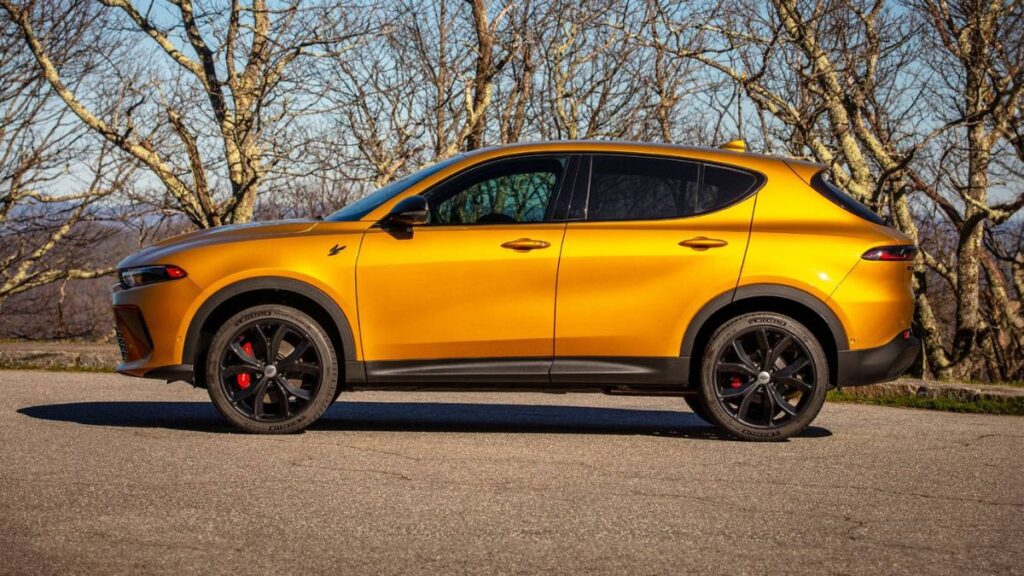
The Hornet looks like a Dodge shrunk down and squeezed into a European suit. Hood vents, a wide low grille, and LED running lights borrow visual language straight from the Charger and Challenger, while the overall proportions and surface details come from the Tonale underneath. It’s a more distinctive shape than the CR-V or RAV4, both of which have settled into safe, forgettable silhouettes.
At the back, a full width red light bar spans the tailgate, doing double duty as brand identity since the Dodge name doesn’t actually appear anywhere on the exterior. The Blacktop package adds gloss black trim and 18 inch wheels, while the Track Pack bumps that up to 20 inchers with red calipers peeking through. It’s a good looking small SUV. Whether it’s a better looking one than the CX-50, which has its own sharp, chiseled presence, comes down to taste.
2023 Dodge Hornet Driving Experience
This is where the Hornet earns its keep. Point it at a two lane road with some elevation change and the car comes alive in a way that catches you off guard for something with a five passenger badge on it. The steering has actual weight and feedback, something most compact SUVs simply don’t bother with anymore. Body roll is present but controlled, and the chassis communicates what the front tires are doing instead of leaving you to guess.
Sport mode sharpens throttle response and holds gears longer, and it’s worth using anytime the road gets interesting. The optional two stage adjustable suspension in the Track Pack firms things up further for drivers who want to chase apexes on a weekend, though the standard setup is honestly the better daily choice for most people.
This is not a flawless performance car. Turbo lag is real and noticeable at low speeds, which means merging onto a highway or darting into a gap in traffic sometimes takes a beat longer than you’d like. Once boost arrives, the Hornet moves with real urgency. It’s the getting there that occasionally feels uneasy.
Performance and Acceleration
The GT’s 2.0 liter turbo four makes 268 horsepower and 295 pound feet of torque, numbers that top every gas powered rival in the compact SUV class, including four cylinders from the CR-V, RAV4, and Escape that all fall well short. Dodge quotes a 0 to 60 mph time of 6.5 seconds, quick for the segment and quicker on paper than most people will ever need from a small crossover. The 9 speed automatic shifts cleanly enough in daily driving, though it can hunt for gears occasionally in stop and go traffic.
The R/T plug in hybrid takes a different approach entirely. Its 1.3 liter turbo four teams with a 90 kilowatt electric motor driving the rear axle, giving it a split personality: quiet, electric only commuting most of the time, with a “PowerShot” boost mode that adds a temporary jolt of extra power when you mash the throttle. It’s a genuinely different character than the GT, more about flexibility than outright feel, and it’s the only plug in hybrid Dodge has ever built.
Neither engine feels like it’s just going through the motions. Dodge clearly wanted each one to have its own personality, and for the most part, that’s exactly what happened.
Ride Comfort and Cabin
Day to day, the Hornet rides on the firmer side of comfortable, which tracks with its performance leanings. Broken pavement and expansion joints come through with a bit more clarity than in a CR-V or RAV4, though it never crosses into harsh territory on the standard suspension. Road noise at highway speed is well controlled for the segment.
Front seat comfort is a genuine strength. There’s ample width and support, and taller drivers won’t feel boxed in. The story changes in the back. Rear seat legroom is tight enough that anyone approaching six feet will notice their knees getting close to the front seatback on longer drives. It’s fine for kids or shorter trips. It’s not where you want to put an adult for a three hour highway run.
2023 Dodge Hornet Interior and Comfort
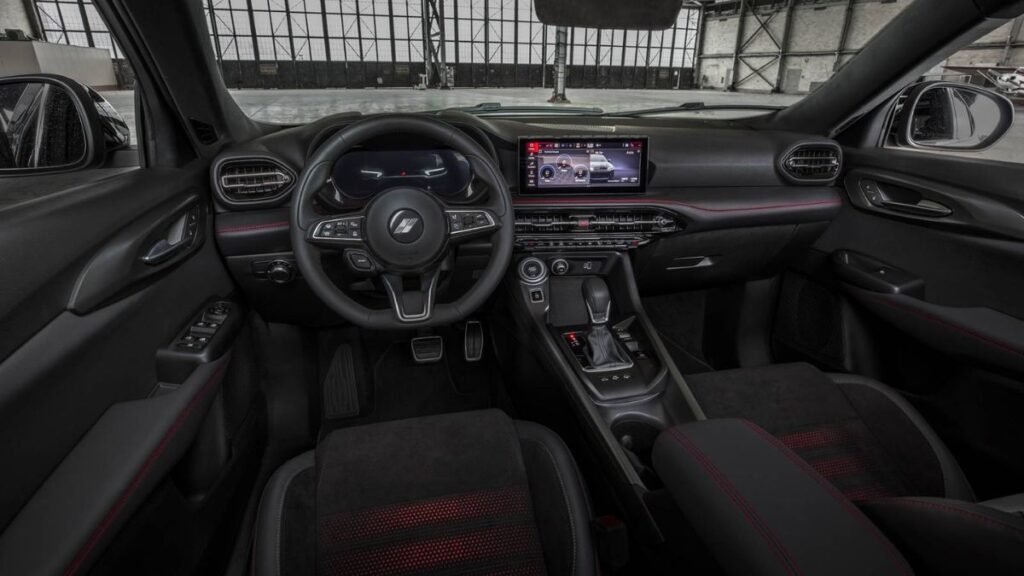
Step inside and the cabin feels more expensive than the window sticker implies, at least at first glance. Soft touch materials cover the dash and upper door panels, red stitching runs through the seats and trim, and the overall layout has a driver focused tilt borrowed straight from the Charger and Challenger playbook. It’s a genuinely nice place to sit.
Dig a little deeper and some of the materials lower in the cabin feel like cost cutting caught up with the design team. It’s not a bad interior by any measure, but it doesn’t quite match what a Kia Sportage or Hyundai Tucson offers for similar money, and those are supposed to be the value oriented choices in this class. Standard seats are a cloth and synthetic leather blend with six way manual adjustment, and buyers wanting heated seats, ventilation, or genuine leather have to move up the trim ladder and pay for it.
Technology and Infotainment
The Uconnect 5 system paired with the 10.25 inch touchscreen is one of the better setups in the segment, full stop. Menus are logical, the graphics look sharp, and Dodge managed to keep a row of physical climate controls instead of burying everything in the touchscreen, which drivers will appreciate the first time they’re adjusting the temperature at 70 mph. Wireless Apple CarPlay and Android Auto come standard, along with a WiFi hotspot and Amazon Alexa integration.
The 12.3 inch digital gauge cluster looks the part but offers less customization than rivals from Hyundai or Kia, which is a minor gripe rather than a dealbreaker. The system can occasionally stutter when you’re rapid firing commands or swiping through screens quickly, a small hiccup that doesn’t ruin the experience but is worth mentioning since Dodge markets this as a tech forward vehicle.
2023 Dodge Hornet Fuel Economy
The GT trim returns an EPA estimated 21 mpg in the city, 29 on the highway, and 24 combined, numbers that lag behind most gas only rivals in the class. The RAV4 and CR-V both post noticeably better combined figures, and that gap adds up over a year of ownership even before factoring in Dodge’s recommendation to run premium fuel for the GT to get its full performance out of the engine.
The R/T plug in hybrid flips that story. With over 30 miles of claimed electric only range, a commuter who plugs in regularly could go weeks between fill ups. Once the battery depletes, though, it reverts to a smaller turbo engine that has to work harder, and real world combined fuel economy will vary a lot based on how disciplined an owner is about charging. This is not a fuel economy champion in either form, and drivers cross shopping strictly on mpg numbers have better options elsewhere.
Practicality and Storage
Here’s where the Hornet’s performance focus really shows its cost. The GT offers just 27 cubic feet of cargo space behind the rear seats and 54.7 with them folded down, figures that trail nearly every rival in the class, including the RAV4’s 37.6 cubic feet and the CR-V’s 39.3. The R/T hybrid loses even more room to its battery pack, dropping to 22.9 cubic feet.
In practical terms, that means the Hornet struggles with a full set of luggage that a same sized rival would swallow without a second thought. Under floor storage helps a little, and the 60/40 split folding rear seats add flexibility, but anyone who regularly hauls gear, groceries for a family, or airport luggage for four people should test fit their actual stuff before signing anything.
2023 Dodge Hornet Safety Features
Every 2023 Hornet comes standard with automatic emergency braking that includes pedestrian and cyclist detection, blind spot monitoring, rear cross traffic alert, and lane departure warning with lane keep assist, a genuinely strong standard safety suite for the class. The optional Tech Pack adds adaptive cruise control, a surround view camera system, and semi autonomous highway driving assistance for buyers willing to pay extra.
Two complete sets of LATCH connectors sit in the rear outboard seats for families installing child seats, along with a tether anchor in the middle position. It’s a well equipped safety package on paper. Just know that some of the more advanced features that rivals include standard, like adaptive cruise, live behind an optional package here rather than coming built in.
Worthy Competitors
The Mazda CX-50 is the Hornet’s closest rival in spirit, and it beats the Dodge on interior quality, cargo space, and overall polish, making it the smarter buy for most shoppers who still want some driving fun. The Toyota RAV4 doesn’t try to be sporty at all, but it wins on interior space, cargo room, and a reputation for reliability the Hornet simply can’t match yet. The Honda CR-V plays it even safer than the RAV4, trading excitement for one of the most spacious, comfortable cabins in the segment. The Kia Sportage undercuts the Hornet on price while offering a longer warranty and a genuinely upscale interior for the money, a tough combination for Dodge to counter.
Key Strengths and Key Weaknesses
Dodge nailed the driving character. Full stop. The Hornet steers, corners, and accelerates with more enthusiasm than anything else in this class, and that’s not a small accomplishment for a company that’s never built a compact crossover before.
Where it falls short is just as clear. Cargo space lands at the bottom of the segment, rear seat room disappoints anyone over six feet tall, and the price climbs fast once you start adding the packages that make the Hornet feel complete. Reliability data is still thin given how new the nameplate is, but early scores sit below the class average, which is worth factoring into a long term ownership decision.

Which Category Does Cardrav Recommend?
The Hornet GT is the pick if driving enjoyment tops your list and you can live with a smaller trunk. Stick with the base GT rather than the GT Plus unless you specifically want the extra creature comforts, since the core driving experience doesn’t change much between trims. Buyers who want the hybrid angle should wait for a used R/T once more real world data on the battery and electric range exists, since it’s a genuinely different vehicle experience worth understanding before committing.
Families who need maximum interior space and cargo room should look at the CR-V or RAV4 first. This isn’t a knock on the Hornet, it’s simply not built for that mission.
Conclusion: Is the 2023 Dodge Hornet Worth Buying?
If you’re shopping this segment purely on driving feel, the Hornet earns a real spot on your test drive list, and it might be the most fun you have behind the wheel of a small SUV all year. But most compact SUV buyers aren’t shopping for canyon carving. They want room for a family, a big trunk, and a fair price, and on all three of those fronts, the Hornet asks you to give something up.
My honest take: this is a car built for a specific kind of buyer, someone who genuinely cross shops small SUVs against hot hatchbacks and wants a taste of muscle car attitude in a practical shape. If that’s you, go drive one. If you just need a reliable, roomy way to get the family and the groceries home, the Hornet isn’t the obvious answer here, and that’s fine. Not every car needs to be for everyone.
FAQ
Is the 2023 Dodge Hornet a good SUV overall?
The Hornet is a good SUV specifically for buyers who value driving engagement over cargo space and interior room, where it lags behind most rivals in the compact SUV class.
What engine does the 2023 Dodge Hornet GT use?
The GT trim uses a 2.0 liter turbocharged four cylinder producing 268 horsepower and 295 pound feet of torque, paired with a 9 speed automatic transmission and standard all wheel drive.
How much cargo space does the 2023 Dodge Hornet have?
The GT trim offers 27 cubic feet behind the rear seats and 54.7 cubic feet with them folded, both below average for the compact SUV segment.
Does the 2023 Dodge Hornet come as a hybrid?
Yes, the R/T trim is a plug in hybrid pairing a 1.3 liter turbo engine with an electric motor, offering over 30 miles of claimed electric only range.
Is the 2023 Dodge Hornet more expensive than its rivals?
Yes, the Hornet GT starts higher than base trims of the Honda CR-V, Toyota RAV4, and Ford Escape, though it does include standard all wheel drive that some rivals charge extra for.