All-Season Tires Five Options for Different Drivers
A closer look at five all-season tires, comparing everyday comfort, wet-road traction, tread life, and the needs of different drivers.


Disclosure: CarDrav may earn a commission from qualifying purchases made through links in this article. Learn more in our Affiliate Disclosure.
All-season tires rarely get much attention until something on the road reminds a driver how much they matter. It might be a sudden downpour on the interstate, a longer stopping distance than expected, or the first light snowfall of the year. Sometimes, the warning is less dramatic. The ride has become noisier, the steering no longer feels as settled, or the tread is wearing down enough to make replacement unavoidable. That is when choosing a new set starts to feel more complicated than it first appeared. Tires can look similar on a product page, yet differences in tread design, rubber compounds, and construction can affect everything from wet-road confidence to highway comfort. The challenge is finding a set that suits the way you actually drive, rather than paying for features you may rarely use.
For many drivers, the appeal of an all-season tire is straightforward. One set can handle everyday commuting, weekend trips, summer rain, and the occasional light dusting of snow without the inconvenience of changing tires with the seasons. But versatility has limits, and the compromises are worth understanding before spending several hundred dollars on a replacement set. A tire designed to deliver a comfortable, quiet ride may appeal to someone who spends hours on the highway, while another driver may care more about tread life and the cost of owning the tires over several years. Families driving crossovers and SUVs also need to pay close attention to size, load requirements, and the demands of a heavier vehicle. No single characteristic tells the whole story, and a long warranty does not automatically make a tire the right choice.
That is why this comparison looks beyond brand names and headline claims to examine five different options: the Hankook Kinergy ST H735, General AltiMAX RT45, Goodyear Assurance ComfortDrive, Cooper Endeavor Plus, and Michelin Defender2. Each has a different intended role, and the differences matter more when you connect them to real driving needs. The aim is not to declare one tire the winner for everyone, but to explain what each option is designed to offer, where its priorities may appeal to a particular driver, and what deserves a closer look before buying. By the end, you should have a clearer sense of which features matter most for your vehicle, your local weather, and the miles you drive every year.
A Practical Perspective on Choosing All-Season Tires
The first thing worth accepting is that every tire is a set of compromises. A compound soft enough to grip wet pavement tends to wear faster. A tread built for a hushed highway ride usually gives up some of the crisp steering feel a driver might want on a winding road. When a manufacturer advertises long tread life, quiet manners, and strong wet braking all at once, it is worth asking which of those claims is the real priority and which are simply reassurance.
Treadwear warranties deserve particular skepticism. A higher mileage figure suggests a harder-wearing tire, but it is a limited warranty, usually prorated, and it often depends on regular rotation, correct inflation, and proof of maintenance. It does not guarantee you will reach that number, and a long-lasting tire that is noisy or vague on center can be a worse daily companion than one that wears out sooner. The sensible approach is to weigh quietness, wet braking, steering response, fitment, and long-term cost together rather than letting one number decide.
Wet performance matters more than most buyers expect. Grip in rain and the ability to channel standing water away from the contact patch are what keep a car composed when a downpour hits at highway speed. Good tread design lowers the risk of hydroplaning, but no tire eliminates it, and worn tread erodes that margin quickly.
Then there is winter. Conventional all-season tires are built for wet and dry pavement across a wide temperature range, with some ability to handle a light dusting. That is very different from sustained freezing temperatures, packed snow, and ice, where their rubber stiffens and their tread pattern runs out of ideas. All-weather tires carry the three-peak mountain snowflake symbol and are engineered to handle winter more seriously, while still being usable year-round. If your region sees real winter, that category, dedicated winter tires, or traction equipment such as tire chains for snow and ice belongs in the conversation.
Finally, be honest about your own routes and tolerances. Climate, annual mileage, vehicle type, and how much road noise or firmness you will put up with should shape the choice more than any ranking.
The Five Tire Options
Choosing between all-season tires becomes easier when the differences between individual models are tied to the way a vehicle is used every day. Some drivers spend most of their time commuting on crowded roads, where predictable handling and reasonable road noise matter more than anything else. Others cover long distances on the highway and would rather prioritize comfort and tread life over a sportier feel behind the wheel. Drivers of crossovers and SUVs have another set of considerations, including vehicle weight, load requirements, and the tire size their manufacturer recommends. These differences are worth keeping in mind because a tire that makes sense for one driver may offer little advantage to someone with a different vehicle or driving routine.
The five models in this comparison approach those needs from different angles. The Hankook Kinergy ST H735 and General AltiMAX RT45 focus on everyday touring use, while the Goodyear Assurance ComfortDrive puts particular emphasis on ride refinement. The Cooper Endeavor Plus is aimed more directly at crossovers and SUVs, and the Michelin Defender2 deserves consideration from drivers interested in long-term tread life. Each review looks at the tire’s intended role, its relevant advantages, and the tradeoffs buyers should understand before making a decision. The Amazon links point to specific size listings, so use them as starting points for checking availability, not as a guarantee of fitment. Always confirm the correct tire size, load index, and speed rating for your vehicle before ordering.
Hankook Kinergy ST H735
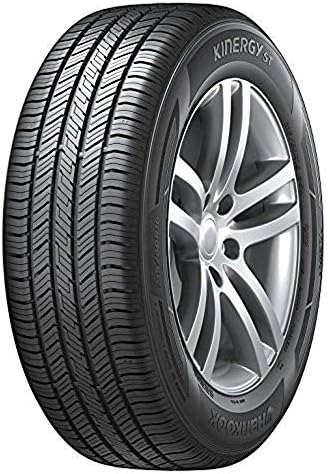
- Backed by a 70,000 mile limited manufacturer tread life warranty
- Stiff tread block enhances durability while also boosting handling performance
- Wide lateral grooves increase snow traction and wet braking
- Notch sipes bite into the road for better traction in dry, wet, and light winter weather conditions
- Optimized pitch sequence reduces road noises for a quiet, comfortable ride
The Kinergy ST H735 is the kind of tire many drivers end up with after a sensible, unglamorous search. It is positioned as a touring all-season option for everyday passenger vehicles, and its appeal is in being a practical middle ground rather than a specialist. For a driver who covers ordinary commuting and errand mileage, mostly on paved roads, that role makes sense.
What matters with a tire like this is how it behaves across ordinary days. Wet traction, steering response, and cabin noise should be adequate and predictable, and the tire’s real strength is usually that nothing about it demands attention. I would not describe it as the quietest, the longest-lasting, or the sharpest handler of this group; the evidence does not support a claim like that, and tread coverage figures differ by size, so check the specific one for your fitment.
Compared with the others, it tends to suit someone who prioritizes balanced day-to-day usability over a headline feature. A driver who wants maximum tread life or a plush, refined highway ride may be happier looking toward the Michelin or Goodyear.
The linked listing is a 235/65R17 104H, a size common on crossovers and some SUVs. It will not fit every vehicle, so confirm size, load index, and speed rating against your door placard before ordering.
General AltiMAX RT45

- Up to 75,000-miles of limited manufacturer tread life coverage
- Engineered to offer drivers reliable braking on wet roads plus optimal traction in light snow
- Responsive handling on wet and dry roads for consistent year-round performance
- Low road noise to give drivers and passengers a quiet, comfortable ride
- Long-lasting treadwear for more miles on the road
The AltiMAX RT45 is aimed at everyday passenger cars, minivans, and crossovers, and General leads with durability. The manufacturer advertises up to 75,000 miles of limited treadwear coverage, though that figure is not uniform; some sizes carry a lower number, so confirm the one attached to your size. Like any limited warranty it is conditional, typically prorated and dependent on rotation and proper care, and it is not a promise that you will get 75,000 miles.
One practical touch is its Replacement Tire Monitor, letters in the tread that wear away to spell out a replace message at 2/32 inch of remaining depth. That is a useful visual cue for owners who rarely check tread with a gauge. General also describes braking on wet roads and some capability in light snow as design goals, which is consistent with its touring positioning but should be read as intent, not proof.
Against the others, the RT45 makes the most sense for a driver who values stated tread life and ordinary comfort over a premium ride. If you want a more refined cabin, the Goodyear is the obvious comparison.
The linked listing is a 225/70R14, a small, older-style size. That fits relatively few modern vehicles, so check your sidewall or door jamb rather than assuming it applies to you.
Goodyear Assurance ComfortDrive

- RELISH THE RAIN: Goodyear Assurance ComfortDrive Radial 215/45R17 Car Tire has optimized AquaChannel grooves that are sy…
- TRUST YOUR TRACTION: Experience lasting control and responsiveness with the Goodyear Assurance ComfortDrive Tires; they …
- CARESS EVERY CURVE: Drive comfortably and confidently with the Goodyear Assurance ComfortDrive tires ultra-refined handl…
- REDUCE NOISE: These tires have an innovative noise-reducing tread pattern that helps to eliminate sounds from the street…
The ComfortDrive is the tire in this group built around how a drive feels. Goodyear positions it as a comfort-oriented touring tire, and the features line up with that: its ComfortFlex technology is meant to absorb impacts while keeping steering responsive, and its AquaChannel grooves with large lateral notches are intended to move water out of the contact patch. It is offered in 16 to 20 inch sizes, which covers many sedans and crossovers.
Who benefits? Someone with a long daily commute, where a quiet cabin and softened road imperfections affect how tired you are at the end of the drive. That refinement is the point of the tire, though I would treat claims of a “luxurious” ride as manufacturer language rather than something I can measure. The tread life coverage is a 60,000-mile limited warranty, below the General and Michelin figures, which is part of the tradeoff.
If rain is frequent on your route, pair good tires with good visibility; fresh windshield wiper blades are part of the same wet-weather picture.
Against the Hankook and General, you are paying attention to comfort first and mileage second. A driver who wants the maximum miles per dollar may prefer another choice.
Cooper Endeavor Plus

- Newly launched in 2021
- Treadwear warranty: 65,000 miles
- Confidence in the rain – Offers the right combination of water evacuation grooves and checkmark channels to help flush o…
- Add more miles – An added layer of reinforced material gives you more contact with the road for even tread wear and a lo…
- Find peace on the road – A contemporary tread design reduces noise and delivers a smooth and quiet ride
The Endeavor Plus is the only tire here conceived mainly for crossovers, SUVs, and light trucks, and that difference in purpose is its clearest distinction. Cooper describes it as an all-season touring tire with a reinforced casing for even wear, a silica-enhanced compound, a symmetrical tread with wide grooves for evacuating water, and Wear Square indicators that show remaining tread. It is offered in 16 to 22 inch sizes and backed by a 65,000-mile limited treadwear warranty.
That SUV focus is useful but easy to oversimplify. It does not mean the tire is right for every crossover, and the linked listing is a size with an XL load designation, meaning extra load capacity, which makes load index and inflation requirements especially important to confirm. Larger, heavier vehicles also tend to wear tires differently, so rotation habits matter.
Where it differs from the Hankook, General, and Goodyear is vehicle orientation: those lean toward passenger cars and comfort, while the Cooper targets the weight and proportions of taller vehicles. A driver of a compact sedan should probably look elsewhere, and someone who wants the longest advertised tread life may prefer the Michelin.
Michelin Defender2

- MICHELIN DEFENDER2 TIRE: The MICHELIN Defender2 tire is our longest-lasting tire – completely redesigned to offer increa…
- ENGINEERED TO OUTLAST: The MICHELIN Defender2 tire can offer 2 years of additional treadlife compared to three leading c…
- PEACE OF MIND: Bring peace of mind to your drive with the dependable MICHELIN Defender2 tire. This safe tire features Lo…
- A BETTER FIT: The MICHELIN Defender2 tire is designed for vehicles such as the Toyota Camry, Chevrolet Equinox, Honda Ac…
The Defender2 is built around ownership length. Michelin advertises an 80,000-mile limited treadwear warranty, with its EverTread 2.0 compound and MaxTouch construction designed to spread forces across the contact patch and encourage even wear. It is offered in 16 to 20 inch sizes for sedans, crossovers, and SUVs.
Value here means total cost over years, not the price on day one. But the warranty is not a promise. It is limited and prorated, it typically also carries an age limit, so a low-mileage driver may run out of years before miles, and it depends on rotation, alignment, correct pressure, and your driving style. Road conditions matter too: a single puncture or sidewall injury can end a tire’s life early, which is why many owners keep tire sealants for cars as an emergency measure. A sealant is a stopgap, never a substitute for sound tires and proper maintenance.
Against the others, the Defender2 suits the driver who plans to keep the same set for a long time. If you sell the car in two years, or care more about ride softness or the lowest purchase price, another tire may serve you better.
Choosing the Right Tire for Your Driving
If this comparison shows anything, it is that the right purchase depends on you rather than on a ranking. Annual mileage, regional weather, the kind of vehicle you drive, and how much you value comfort against longevity all change the answer. A long-distance commuter and a low-mileage weekend driver can look at the same tire and reach opposite conclusions, and both can be correct.
Before you buy, make sure you are comparing like with like: the same vehicle application, the same size, and the correct load index and speed rating for your car. Warranty figures and features can differ between sizes, and a listing that suits one vehicle may be wrong for yours. Be realistic, too, about winter. Conventional all-season tires handle wet roads and light snow, but severe cold, packed snow, and ice call for something more capable. If you can say which of those conditions you actually face, and which trade you are willing to make between comfort, mileage, and cost, one of these five will almost certainly stand out.