2022 Chevrolet Bolt EV Review: Still Worth Buying
GM's most practical EV gets a serious price cut and a fresh attitude. But is it enough to stay relevant?

The 2022 Chevrolet Bolt EV enters an electric car market where it often feels like only the wealthy get to participate. A six-figure Tesla, a loaded Rivian, or a premium Audi e-tron. That version of the story has been told plenty of times. The Bolt tells a different story entirely, and honestly, it might be the more important one.
The Bolt has been around since 2017, quietly doing what mainstream EVs are supposed to do: go far enough, cost enough less than a luxury alternative, and fit into real American life. But 2022 brought something nobody expected from GM. Instead of raising the price like nearly every other automaker, they cut it. Significantly. The base price dropped to around $25,500 after a $6,500 price reduction, making the Bolt one of the most aggressively priced electric vehicles on the market.
That puts it in a very interesting position. The Nissan Leaf is in the same neighborhood but offers less range. The Hyundai Kona Electric is close in concept but harder to find at a dealership. And the Tesla Model 3, while more desirable to some, costs thousands more. The Bolt isn’t trying to compete with those cars on prestige. It’s competing on value, and for a growing number of buyers, value wins.
What changed in 2022 was more than just the sticker price. GM reworked the interior, added some missing technology, and refreshed the overall package enough that the Bolt finally feels like a complete product rather than a work in progress. It’s not perfect. There are still areas where you can feel the cost-cutting. But as a daily driver for someone who charges at home and commutes within range, the 2022 Bolt EV is a genuinely hard car to argue against.
Our Opinion
The 2022 Chevrolet Bolt EV is the kind of car that earns respect without demanding it. It’s not flashy, it doesn’t have a massive touchscreen, and it won’t make your neighbors jealous. What it does is deliver real-world usefulness at a price that makes electric ownership accessible to buyers who couldn’t otherwise afford to go electric.
The range is legitimate, the interior is vastly improved over the old version, and the driving feel is surprisingly engaging for a budget EV. The weaknesses are real too. The charging speed is slow by modern standards, the styling won’t win any design awards, and the one-pedal driving system takes genuine adjustment. But for the money, this car makes a strong case.
Pros and Cons
Pros:
- One of the lowest prices of any long-range EV on sale
- 259 miles of EPA-rated range is genuinely usable
- Completely redesigned interior is a major upgrade
- One-pedal driving is addictive once you learn it
- Comfortable for city and highway driving alike
- Available DC fast charging (though not the quickest)
Cons:
- DC fast charging maxes out at 55 kW, which feels dated in 2022
- Styling is polarizing and conservative
- No Android Auto wireless, only wired
- Rear seat headroom is tight for taller passengers
- The front seats still feel slightly flat after long drives
What’s New for 2022?
The 2022 model year brought the most significant update the Bolt has seen since its launch. GM didn’t just tweak things around the edges. They redesigned the interior almost entirely, which was overdue. The old cabin felt like a concept car that ran out of budget before production. The new one is more cohesive, more intuitive, and noticeably better to sit in.
On top of the interior overhaul, GM dropped the price by $6,500 on the standard Bolt EV and similarly reduced the Bolt EUV, the longer, slightly roomier version. The 10.2-inch infotainment screen replaced the older system, and a new driver information display was added. GM also made one-pedal driving even more refined, and the overall software experience feels tighter.
Importantly, GM did not increase the charging speed. The 55 kW DC fast charging cap stayed in place, which is the one technical decision that’s genuinely hard to defend in 2022. More on that later.
Exterior Design
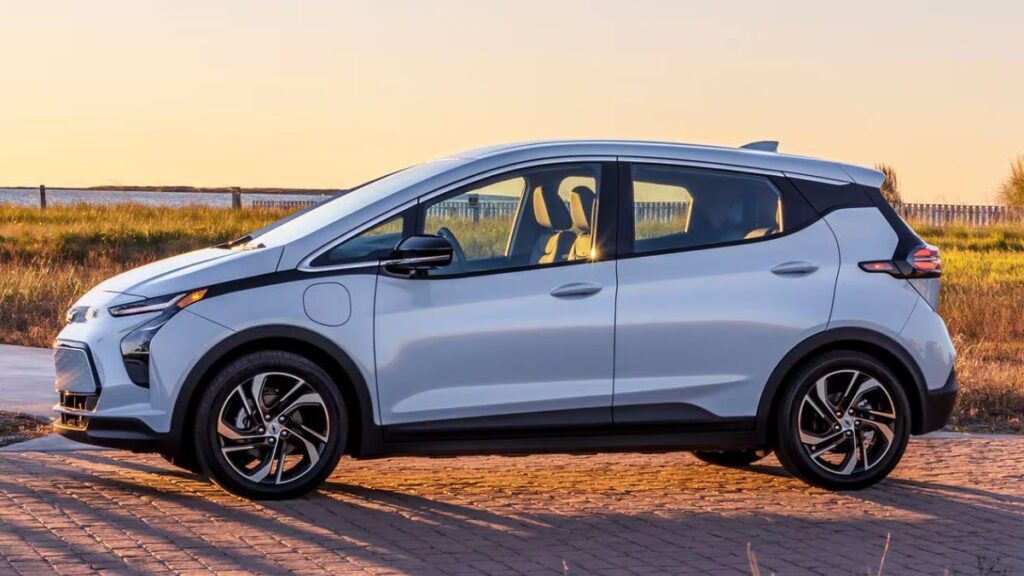
Let’s be honest: the Bolt doesn’t turn heads. It never has. The design is clean and functional, and it reads clearly as an EV without screaming about it, but it won’t inspire anyone to pull out their phone for a photo. The front end received a refresh for 2022, with reshaped headlights and a smoother bumper treatment that modernizes the face just enough.
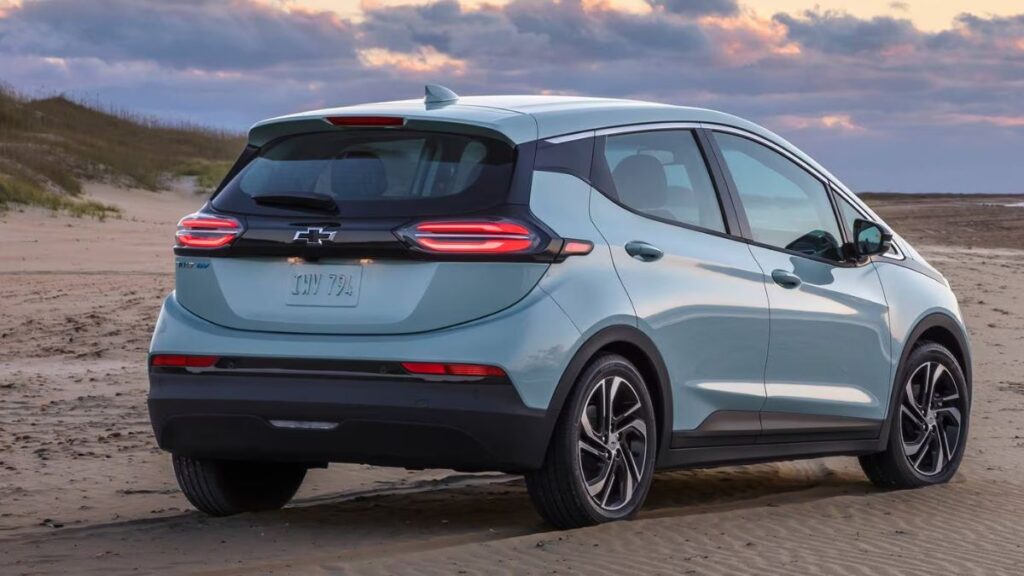
The profile is hatchback-practical. The tall roofline is intentional, helping with headroom and interior volume. The rear is blunt and upright in a way that maximizes cargo space rather than aerodynamic drama. Compared to the Hyundai Ioniq 5, which commands attention wherever it goes, the Bolt looks like office furniture. That’s not necessarily an insult. It depends entirely on what you’re buying a car for.
The color options for 2022 include some genuinely nice choices. Radiant Red Tintcoat looks particularly good on the car because the straightforward shape benefits from a bold color. In white or silver, it blends into parking lots like it was designed to. That’s a buyer choice, but worth noting.
2022 Chevrolet Bolt EV Driving Experience
This is where the Bolt surprises people, and it’s worth spending real time here. Electric torque delivery is immediate, and the Bolt makes full use of it off the line. From a stoplight, it moves with more authority than you’d expect from something at this price point. It won’t pin you to the seat, but it doesn’t feel slow either.
The steering is light and reasonably precise. In a city environment, the Bolt is genuinely easy to place, to maneuver, and to park. It doesn’t feel like a small car that’s trying to be significant. It feels like a car that knows exactly what it is and does it well.
Highway driving is stable and composed. At 70 mph, the cabin is acceptably quiet. Not Tesla-quiet, not Audi-quiet, but not distracting either. The suspension does a solid job of absorbing road imperfections without transmitting harshness into the cabin.
The one-pedal driving system deserves its own conversation. When engaged, lifting off the accelerator applies regenerative braking strong enough to bring the car to a complete stop without touching the brake pedal. It sounds strange, and for the first day or two, it is. But within a week, most drivers adapt completely. And once you do, driving anything else feels like it’s missing a feature. In city traffic especially, it’s genuinely more relaxing than conventional driving.
Performance and Acceleration
The 2022 Bolt EV runs a single electric motor producing 200 horsepower and 266 lb-ft of torque, driving the front wheels. Zero to 60 mph comes in around 6.5 seconds, which is quick enough to feel confident in everyday situations, merging on highways, passing on two-lane roads, and accelerating through intersections.
It’s not a performance car. Nobody should expect it to be. But there’s a satisfying directness to the throttle response that you don’t always get at this price in a gasoline vehicle. The torque is available immediately and consistently. There’s no waiting for a downshift, no hesitation. You ask, it goes.
Where performance breaks down slightly is at sustained highway speeds. The Bolt maintains pace fine, but aggressive passing maneuvers feel less effortless above 65 mph. The power is there, it just requires more commitment. At city and suburban speeds, it’s more than adequate.
Ride Comfort and Cabin
The suspension tuning leans toward comfort without becoming floaty. Potholes and expansion joints are absorbed with reasonable composure. The ride quality is one area where the Bolt genuinely punches above its price bracket, feeling more controlled and mature than the entry-level price would suggest.
Cabin noise management is adequate. Wind noise is minimal at highway speeds. Road noise is present but not intrusive. The electric powertrain’s silence means you hear more of the road than you might in a louder gasoline car, but it’s not a problem. It’s part of the EV experience.
The front seats got a meaningful improvement over the previous generation. They offer better support and more adjustability, though they still feel slightly flat on longer drives over two hours. The lack of proper lumbar articulation becomes noticeable after a while. It’s not a dealbreaker, but it’s honest.
2022 Chevrolet Bolt EV Interior
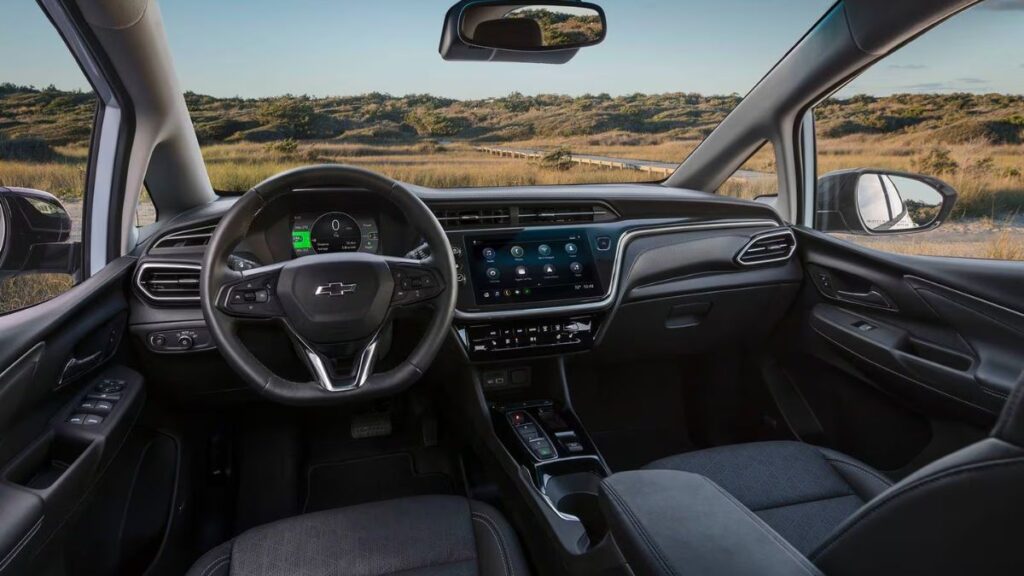
The 2022 interior is a genuine step forward for the Bolt. The dashboard is cleaner, the materials quality has improved in the areas you touch most, and the overall layout makes more logical sense. The center console was redesigned and now includes actual storage, which sounds basic but was genuinely lacking before.
The instrument panel uses a 10.2-inch central display alongside a dedicated driver information cluster. The physical controls for climate are straightforward and usable without looking down. GM made the right call keeping those buttons physical rather than hiding them in a touchscreen menu.
Rear seat space is adequate for two adults and tight for three. Headroom in the back is the real constraint. The Bolt’s tall roofline helps up front but the rear seat doesn’t benefit as much. Adults over six feet will notice. Kids won’t care.
Material quality is honest. Soft touch where it counts most, harder plastics in lower areas. It doesn’t feel cheap, but it also doesn’t pretend to be something it isn’t.
Technology and Infotainment in the 2022 Chevrolet Bolt EV Review
The 10.2-inch infotainment screen runs GM’s latest software, and it’s a noticeable improvement over what came before. The interface is organized logically, response time is acceptable, and the integration of energy monitoring features is genuinely useful for an EV driver. Seeing your range estimate adjust in real time based on climate use and driving style helps you manage range anxiety better than any static number could.
Apple CarPlay is standard and works well. Android Auto is also standard, but both require a physical cable in 2022. No wireless connection. For a lot of buyers in 2022, that’s already feeling behind. It works fine, but it’s a small frustration every time you get in the car.
The built-in navigation does a decent job of routing around traffic, though it lacks the polish of Google Maps. Most users will default to their phone anyway.
The Bose premium audio option sounds quite good for the vehicle class. The standard speakers are passable.
Fuel Consumption in the 2022 Chevrolet Bolt EV Review
The EPA rates the 2022 Bolt EV at 259 miles of range on a full charge, and in real-world testing that number holds up reasonably well under mixed driving conditions. Highway driving at 75 mph with the climate control running will pull that number down toward the 220-mile range. City driving, where regenerative braking recovers energy efficiently, can actually beat the EPA estimate.
Charging at home on a Level 2 charger at 240 volts adds roughly 25 miles of range per hour. A full charge from near empty takes around 7 to 8 hours overnight, which works for the vast majority of owners who plug in before bed. The 55 kW DC fast charging limit is where things get frustrating. At a public DC fast charger, you’re looking at roughly 100 miles of range in 30 minutes. Competitors like the Hyundai Ioniq 5 can accept more than twice that charging speed. On a road trip, that difference matters significantly.
For daily commuters who charge at home, this limitation is almost irrelevant. For anyone doing regular long-distance travel, it’s a genuine issue worth considering before buying.
Practicality and Storage
The Bolt’s hatchback body style is one of its most underrated assets. The rear cargo area offers 16.6 cubic feet behind the rear seat, expanding to 56.9 cubic feet with the rear seats folded. That’s grocery runs, IKEA trips, and weekend luggage handled without compromise.
The front doesn’t offer a frunk, which some EV buyers expect. Interior storage is solid, with a usable center console, a decent glove box, and door pockets that actually hold a full water bottle without wrestling. The wireless charging pad on higher trims is convenient and works without issue.
For a buyer who does a typical daily commute, some weekend errands, and an occasional longer trip, the Bolt’s practicality is entirely sufficient.
Safety and Driver Assistance Systems
The 2022 Bolt EV earned a five-star overall rating from NHTSA. Standard safety equipment includes forward collision alert, automatic emergency braking, lane keep assist, and rear cross traffic alert. The suite covers the fundamentals without going overboard.
GM’s Super Cruise hands-free driving system is not available on the Bolt, and that’s notable. If driver assistance technology is a priority, the Bolt’s list is complete but not leading-edge. It keeps you safe, but it won’t drive for you.
The side blind zone alert and following distance indicator are helpful in daily use and feel genuinely integrated rather than just checked boxes.
Worthy Competitors
Nissan Leaf: Costs less at the base level but offers significantly less range on the standard battery. The Bolt is the better long-distance bet at a similar price.
Hyundai Kona Electric: Similar range and concept, but supply has been inconsistent and pricing crept up. The Bolt beats it on value right now.
Hyundai Ioniq 5: More technology, far faster charging, and genuinely striking design. It also costs several thousand dollars more. If budget allows, it’s a real alternative.
Tesla Model 3: Better charging infrastructure through the Supercharger network and stronger technology integration. The starting price gap has narrowed, but the Tesla still costs more. If you do road trips often, the Supercharger network alone may justify the price difference.
Chevrolet Bolt EUV: The Bolt’s own sibling offers more rear seat room and the option of Super Cruise. If you have passengers regularly, the few hundred extra dollars for the EUV version deserve a look.
Key Strengths and Key Weaknesses
The Bolt’s strongest card is the combination of real range and an accessible price. Nothing else offers 259 miles of range at this cost. That’s not a small achievement. Pair that with a genuinely improved interior and one-pedal driving that becomes second nature, and the Bolt is a compelling package for the right buyer.
The weakest point is the charging speed. 55 kW in 2022 is simply behind where the industry is moving. GM knows this, and newer platforms like Ultium address it. But the Bolt hasn’t caught up yet. That’s not a reason to avoid it if you charge at home and stay within its range. It is a reason to think carefully if your situation requires frequent public fast charging.
Which Category Does CarDrave Recommend?
The 2022 Chevrolet Bolt EV is best suited for urban and suburban buyers who charge at home, commute within 100 miles daily, and want to enter electric ownership without a premium price. It’s also a strong fit for households adding a second vehicle and wanting something simple and efficient.
It is not the right fit for buyers who take frequent long highway trips, need maximum charging speed, or want the latest in driver assistance technology.
Conclusion: Is It Worth Buying?
Yes, with clarity about what you’re getting. The 2022 Chevrolet Bolt EV is the most accessible long-range electric car available in America right now, and the interior improvements make it feel like a genuinely finished product for the first time. The price cut alone changed the conversation around this car.
If you drive a predictable daily route, charge at home, and want to stop paying for gas without spending luxury money, the Bolt is a straightforward recommendation. Buy it for what it is, not for what you wish it were, and it will serve you well.
FAQ
What is the real-world range of the 2022 Chevrolet Bolt EV?
In mixed real-world driving, most owners see between 220 and 250 miles per charge. The EPA rating is 259 miles, which is achievable in mild weather with moderate highway speeds.
How fast does the 2022 Chevrolet Bolt EV charge?
On a Level 2 home charger, it adds about 25 miles per hour. On a DC fast charger, the Bolt EV maxes out at 55 kW, which provides roughly 100 miles of range in 30 minutes. This is slower than most newer EVs.
Is the 2022 Chevrolet Bolt EV eligible for the federal tax credit?
As of the 2022 model year, the Bolt EV does not qualify for the federal EV tax credit due to GM having exceeded the manufacturer sales cap under the old credit structure. Check current legislation for updates, as tax credit rules changed in late 2022.
How does the 2022 Chevrolet Bolt EV compare to the Bolt EUV?
The EUV is about six inches longer with more rear legroom, available Super Cruise, and a slightly higher starting price. The standard Bolt EV is the better value pick for single occupants or couples. Families or frequent rear passengers should look at the EUV.
Is the 2022 Chevrolet Bolt EV reliable for daily use?
For buyers who charge at home and drive within the car’s range, the Bolt EV is extremely reliable in daily use. The electric powertrain requires far less maintenance than a gasoline engine, with no oil changes and fewer brake replacements due to regenerative braking reducing wear.