2026 Chevrolet Silverado 1500 Review: What You Need to Know
A closer look at engines, towing, trims, technology, pricing, and everyday capability.

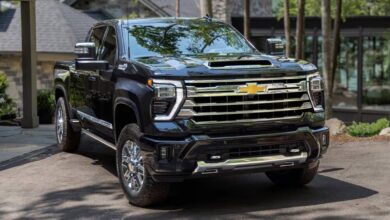
The 2026 Chevrolet Silverado 1500 is not trying to win a single category. It is trying to cover every category a full size truck buyer might care about, and that is really the point of this generation. Positioned between the midsize Colorado and the heavier duty 2500 and 3500 models, the Silverado 1500 sits in the size and price range where most American truck shoppers actually buy. It carries over the fourth generation platform that Chevrolet introduced back in 2019, so this is not a ground up redesign, and it is in fact the final model year on this platform before a full redesign arrives for 2027. Still,
the changes for 2026 are meaningful enough to matter to a buyer cross shopping this truck against a Ford F 150, a Ram 1500 or a Toyota Tundra. Before going further, it is worth separating this truck from its electric sibling. The Silverado EV is a completely different vehicle with its own platform and its own review. This article is about the gasoline and diesel Silverado 1500, the version most buyers are actually looking at when they search for a new work truck, tow rig or family pickup.
What makes this truck worth a close look is its sheer breadth. Four engines, three cab styles, three bed lengths, nine trim levels and a towing range that stretches from below 9,000 pounds on lighter builds to as much as 13,300 pounds in the strongest configuration. That flexibility is the truck’s real identity. It also means a buyer needs to understand which combination of choices actually applies to them, because very little about this truck is one size fits all.
Pros and Cons
Pros
- A genuinely wide spread of engine choices, from an efficient turbocharged four cylinder to a torquey diesel to two V8 options
- Strong rear seat legroom in Crew Cab models, among the roomier options in the class
- A large, well organized bed with numerous tie down points and configuration options
- An easy to use touchscreen interface that scales up with trim level
- Super Cruise hands free highway driving is available on higher trims, a genuine advantage on long interstate hauls
Cons
- Ride quality trails the Ford F 150 and Ram 1500 on rougher pavement, especially on stiffer suspension setups
- Steering feel is light and the truck can be unsettled by midcorner bumps
- The ZR2 off road trim is capable but does not clearly lead its segment the way some rivals do
- Visibility around the tall hood and lower resolution parking camera can make tight maneuvering less confident than expected
What Is New for 2026
Because the Silverado 1500 remains part of the generation that launched in 2019, the 2026 changes are refinements rather than a reinvention. The most notable addition is the new RST Select special edition package, available exclusively on the RST trim paired with the turbocharged 2.7 liter TurboMax engine. It brings 20 inch gloss black wheels, all terrain tires, tube steps and a spray on bedliner, and it is offered in both Crew Cab and Double Cab form without pushing the price anywhere near LTZ territory.
The ZR2 also gains standard equipment for 2026 that used to be optional, namely the Technology Package and the Multi Flex Tailgate, which slightly narrows the gap between it and an optioned up 2025 counterpart. Chevrolet also adds two new exterior colors, White Sands and Polar White Tricoat, and introduces an optional dealer installed sport exhaust calibration specific to the 6.2 liter V8. Neither the RST Select nor the ZR2 update reshapes the lineup, but both are useful data points if you are deciding between a 2025 leftover and a new 2026 model. Cardrav covered the outgoing truck in detail in its earlier 2023 Chevrolet Silverado 1500 review, which remains a useful supporting reference for anyone comparing how the lineup and pricing have shifted over the past few years, without replacing or changing anything in this current review.
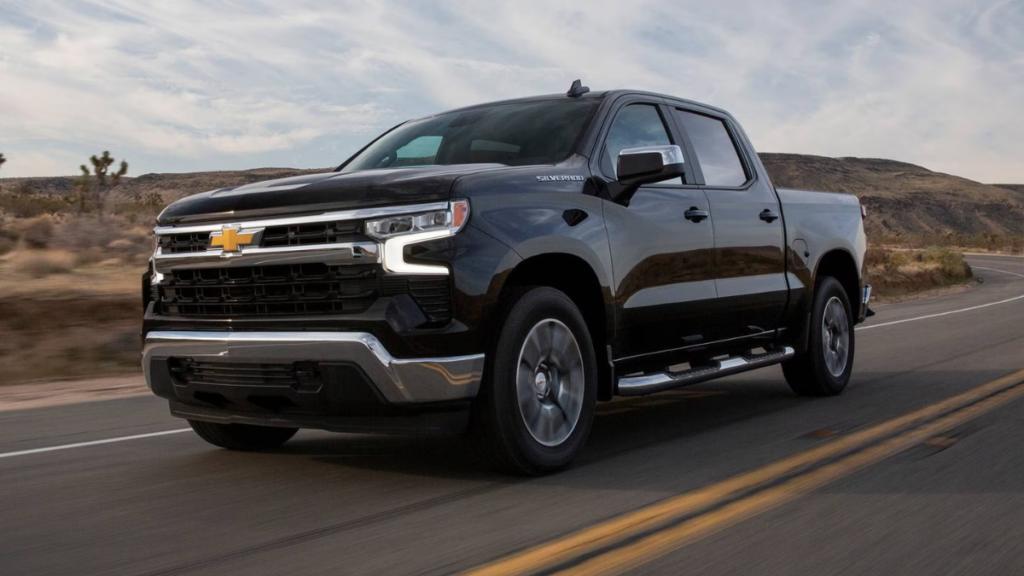
2026 Chevrolet Silverado 1500 Engines and Trailering
This is where the 2026 Chevrolet Silverado 1500 earns its reputation as a configurable truck rather than a single minded one, and it deserves the most space in this review because the engine choice shapes almost everything else about ownership.
The base engine is a turbocharged 2.7 liter TurboMax four cylinder making 310 horsepower and 430 lb ft of torque, paired with an eight speed automatic. On paper a four cylinder base engine in a full size truck sounds like a compromise, but this one is tuned for low end torque rather than outright power, and Chevrolet has sold it as the volume engine across most trims for a reason. For a buyer who mostly commutes, occasionally hauls yard waste or gear, and tows a light trailer once in a while, this engine covers the job without the fuel and maintenance costs of a V8, and it also happens to enable the truck’s highest available payload figures.
Above that sits the 5.3 liter V8, producing 355 horsepower and 383 lb ft of torque with a 10 speed automatic. This is the traditional truck engine buyers expect, and it remains the sensible middle choice for anyone who tows moderately sized trailers, boats or campers on a regular basis and wants the reassurance of a V8 under the hood, even though its torque figure is actually lower than the turbocharged four cylinder’s.
The 6.2 liter V8 is the performance flagship, rated at 420 horsepower and 460 lb ft of torque, also with the 10 speed automatic. It comes standard on the ZR2 and is available on RST, LTZ and High Country. It is also the strongest towing choice among the gas engines, reaching close to the top of the trailering chart when properly optioned.
Then there is the 3.0 liter turbocharged inline six Duramax diesel, making 305 horsepower but a substantial 495 lb ft of torque, the highest torque figure in the lineup, again through the 10 speed automatic. This is the engine for buyers who tow often and tow heavy, particularly over long highway distances, since diesel torque delivers strong pulling power at low RPM along with the best highway fuel economy in the lineup.
Chevrolet’s official trailering figures illustrate how much configuration actually matters. The floor of the range sits below 9,000 pounds on lighter, off road oriented builds like the ZR2. The published maximum of 13,300 pounds belongs to one specific, properly equipped build listed by Chevrolet, a Double Cab Standard Bed truck with the Duramax diesel engine, two wheel drive, the Max Trailering Package and 20 inch wheels, and it does not represent the towing capability of every Silverado 1500.
The 6.2 liter V8 comes in just behind that peak, reaching 13,200 pounds in select four wheel drive configurations that also carry the Max Trailering Package, and it is worth noting that a Crew Cab diesel does not automatically match the Double Cab Standard Bed’s headline number. The 5.3 liter V8 tops out around 11,300 pounds and the base TurboMax around 9,500 pounds, both when properly equipped with the Max Trailering Package. The practical takeaway for a buyer is simple. Do not shop by the headline number alone. Confirm the tow rating for the exact cab, bed, drivetrain, wheel size and package combination being considered, because two trucks with the same engine badge on the tailgate can have meaningfully different capability.
2026 Chevrolet Silverado 1500 Cab and Bed Configurations
The 2026 Silverado 1500 is offered in Regular Cab, Double Cab and Crew Cab body styles, paired with bed lengths of roughly 5 feet 8 inches, 6 feet 6 inches or 8 feet depending on the combination chosen. These are not interchangeable decisions. A contractor or rancher who regularly hauls long lumber, pipe or equipment benefits from the 8 foot bed, usually paired with a Regular Cab or Double Cab to keep overall length reasonable.
A family buyer, on the other hand, is far more likely to prioritize the Crew Cab’s four full doors and rear seat room, accepting the shorter 5 foot 8 inch bed as the tradeoff. The Double Cab sits in between, offering rear access without the full stretch of a Crew Cab, and it happens to be the cab and bed combination that unlocks the truck’s single highest published tow rating, which makes it worth a look even for buyers who did not initially plan on it.
2026 Chevrolet Silverado 1500 Trim Levels
Nine trims give the 2026 Chevrolet Silverado 1500 one of the widest ladders in the segment: Work Truck, Custom, Custom Trail Boss, LT, LT Trail Boss, RST, LTZ, High Country and ZR2.
Work Truck is the fleet and contractor spec, with vinyl or cloth seating and the basics needed to get a job done without paying for equipment that will not survive a work site. Custom adds a step of comfort and styling without moving far up the price ladder, a reasonable choice for a buyer who wants a private, non fleet truck on a tight budget.
LT is the volume retail trim and arguably the smartest starting point for most buyers, since it opens up the full range of engines, cabs, beds and drivetrains while staying reasonably priced, an approach independent reviewers have also pointed to as the truck’s sweet spot. RST leans into styling with a sportier front end and blacked out trim, and the new RST Select special edition sharpens that look further with gloss black wheels, all terrain rubber and tube steps, though only in combination with the TurboMax engine.
Custom Trail Boss and LT Trail Boss add factory off road suspension and skid plates to their respective base trims, a sensible middle ground for buyers who want weekend trail capability without committing to the ZR2. LTZ and High Country move the truck upmarket with leather, additional sound deadening and more standard technology, including availability of Super Cruise on the top trim.
ZR2 sits at the top of the off road ladder with Multimatic dampers, wider off road tires, locking differentials and, new for 2026, a standard Technology Package and Multi Flex Tailgate, though as noted in the pros and cons, it does not automatically outclass every off road rival in its price range. None of these trims is objectively correct. The right one depends on whether the truck’s job is work, family duty, weekend recreation or some blend of all three.
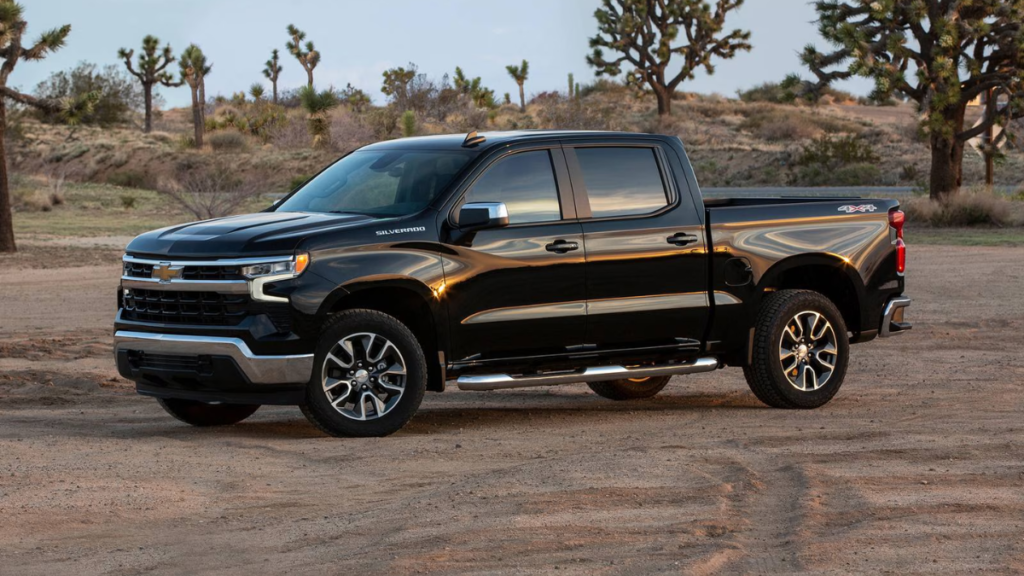
Towing Capacity Explained
Because towing is usually the first question a truck shopper asks, it is worth restating clearly. Chevrolet’s trailering guide shows a range from below 9,000 pounds on lighter, off road configurations up to a maximum of 13,300 pounds, and that maximum is tied to one specific build, the Double Cab Standard Bed diesel described above, not the truck as a whole.
Buyers focused on towing a specific trailer, whether it is a travel camper, a livestock trailer or a boat, should work backward from that trailer’s loaded weight, then confirm which Silverado 1500 configuration actually meets or exceeds it with a safety margin, rather than assuming any Silverado can handle it because of a number seen in an advertisement.
Payload and Everyday Hauling
Payload is a different measurement from towing, and the two get confused often enough that it is worth spelling out the difference. Towing capacity describes what the truck can pull behind it on a trailer. Payload describes what the truck itself can carry, including passengers, cargo in the bed, and anything added to the truck like a bed cover or toolbox. Chevrolet lists a maximum available payload figure of up to 2,260 pounds, achieved on the lightest TurboMax equipped configurations,
while Edmunds’ own tested configuration came in lower, closer to 2,020 pounds, depending on options and equipment fitted to that particular truck. The general pattern holds across the lineup: lighter engine and equipment combinations tend to carry more weight in the bed, while heavier drivetrains and more equipment eat into that number. Anyone planning to regularly haul mulch, gravel, equipment or tools should check the payload sticker on the specific truck being purchased rather than relying on an advertised maximum.
Dimensions and Ground Clearance
Chevrolet quotes an overall length range of roughly 211 to 242 inches and an unloaded weight range of about 4,410 to 5,710 pounds across the lineup, both of which shift substantially depending on cab, bed and engine choice. A commonly referenced Crew Cab configuration lands around 231.9 inches long, 81.2 inches wide without mirrors, 75.5 inches tall, with an 8.1 inch ground clearance and a wide 46.3 foot turning circle, a reminder that a Crew Cab Silverado is not a truck built for tight downtown parking garages or narrow suburban driveways without some practice.
Ride, Handling and Daily Driving Feel
The Silverado feels composed and predictable in normal driving, with the 5.3 liter V8 providing enough power for confident acceleration, highway merging and passing. The 10 speed automatic transmission shifts smoothly and makes good use of the engine’s low end torque around town, while the truck remains stable and straight at highway speeds.
The limitations become more noticeable on rougher pavement. Midcorner bumps can unsettle the chassis more than some rivals, while the steering is accurate but relatively light for a truck of this size. Drivers who prioritize ride comfort may notice the difference, particularly when moving from a car or crossover into a full size pickup.
That does not make the Silverado uncomfortable or difficult to drive. It simply means the driving experience leans more toward capability and stability than the softer, more settled ride some buyers may expect from a full size truck. A test drive over both smooth and rough roads is worthwhile before choosing between the Silverado and its main competitors.
Cabin Comfort and Interior Space
The Crew Cab’s rear seat is a genuine strength, with legroom that compares well against the segment’s other roomy cabins, making the Crew Cab a realistic choice for families who need to fit car seats or adult passengers regularly. Front seat comfort is competitive without being class leading, and materials quality climbs noticeably as trim level rises, with LTZ and High Country bringing a more finished, less utilitarian feel than the Work Truck and Custom trims.
Visibility is the one recurring complaint, since the tall hood and thick pillars can make parking and low speed maneuvering trickier than expected, an issue only partly offset by a rear camera that reviewers have described as lower resolution than some competitors offer.
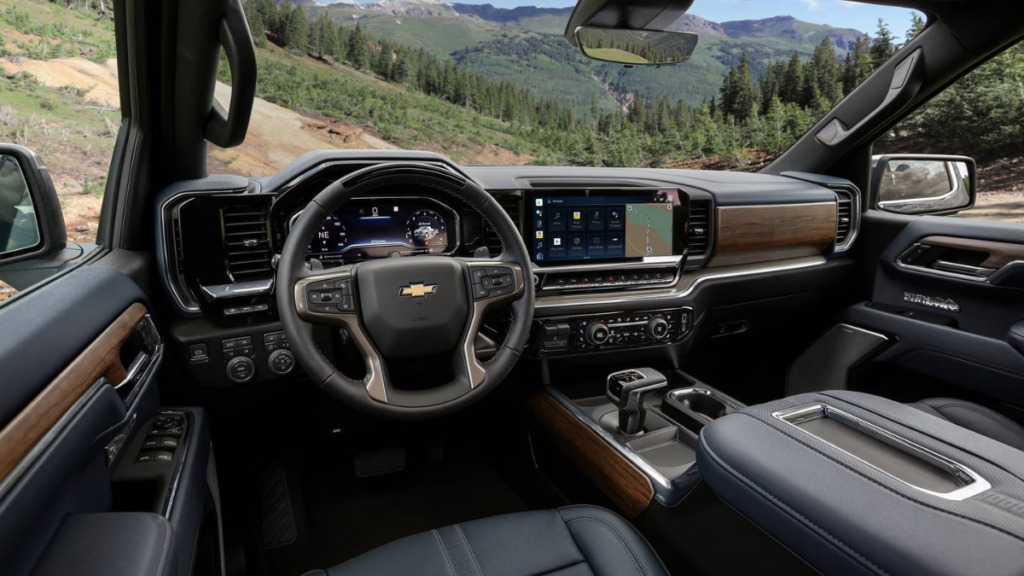
Technology and Driver Assistance
Touchscreen size scales with trim, starting at a modest 7 inch unit on the Work Truck and growing to a 13.4 inch display with Google built in navigation and voice commands on LT and above, an upgrade most buyers will want given how central the screen has become to daily use. Trailering technology is also well developed, with camera views designed to help a driver see around a hitched trailer and monitor its position while backing up.
The standout feature, though, is Super Cruise, Chevrolet’s hands free highway driving system available on the High Country trim. For 2026, when Super Cruise mapped road coverage is unavailable, Hands On Steering Assist can provide lane centering on roads with visible lane markings, though this assistance requires the driver to keep hands on the wheel rather than operating hands free. For buyers who spend real time on the interstate, whether commuting or towing across state lines, Super Cruise meaningfully reduces fatigue in a way that a longer feature list on paper does not always translate into on the road.
Safety Features and Driver Assistance
The 2026 Silverado 1500 offers a range of standard and available safety and driver assistance features, including a rear vision camera, lane departure warning, tire pressure monitoring and electronic stability control. Depending on the trim and equipment package, buyers can also get additional systems designed to provide greater awareness and assistance during everyday driving and highway travel.
Availability varies considerably across the lineup, so buyers should check the exact equipment list for the trim and configuration they are considering rather than assuming that a particular driver assistance feature is included. This is especially important when comparing lower work oriented trims with more heavily equipped models.
The Silverado also offers technologies designed to make towing and maneuvering easier, including multiple camera views and trailering related assistance on properly equipped models. These features can be particularly useful when connecting a trailer, backing into a tight space or monitoring the area around a large pickup.
Pricing the 2026 Chevrolet Silverado 1500
Pricing spreads widely across this lineup, which is exactly what you would expect from a truck offered in nine trims, three cabs, three beds and four engines. A Work Truck Crew Cab with the base TurboMax engine starts in the low 40,000 dollar range before options, a reasonable entry point for a fleet or budget minded buyer who still wants the roomier cab.
Climb toward LT and RST, and pricing moves into the high 40,000 to low 50,000 dollar range depending on cab, bed and drivetrain, with the new RST Select special edition landing in roughly that same neighborhood, including destination fees. LTZ, High Country and ZR2 push well past that, into territory where a well equipped truck can approach or exceed 70,000 dollars once options like Super Cruise, premium audio and off road packages are added.
It is worth being precise about the difference between Chevrolet’s official MSRP figures and the transaction or advertised pricing seen at a given dealership, since the latter can include temporary incentives, regional adjustments or dealer markups that do not reflect the manufacturer’s baseline price. These figures are approximate and should be confirmed against current manufacturer and dealer pricing rather than treated as a fixed MSRP.
How the Silverado 1500 Compares to Its Rivals
Set against the Ford F 150, the Silverado’s case rests on its engine breadth and trailering tech rather than outright towing supremacy, since the F 150 has built its own reputation as a towing and hauling leader with a similarly wide range of powertrains. Against the Ram 1500, the comparison shifts toward ride and cabin refinement, an area where independent testing has consistently favored the Ram’s smoother chassis tuning and more upscale interior finish, even as the Silverado counters with its own strengths in configuration flexibility and trailering technology.
The Toyota Tundra brings a different pitch entirely, leaning on reliability reputation and strong safety credentials, though it offers a narrower spread of trims and configurations than the Silverado. Closer to home, the GMC Sierra 1500 shares its underlying mechanicals with the Silverado but wraps them in a more upscale, tech forward interior, making it worth a look for buyers who want Silverado level capability with a different cabin personality. None of these comparisons produces a single obvious winner. Each truck front loads different priorities, and the right choice depends on whether ride comfort, cabin refinement, reliability reputation or configuration breadth matters most to the individual buyer.
Who Should Buy One
This truck makes the most sense for a buyer who values choice over a single standout trait. Someone who wants to configure a truck precisely around a specific mix of work, towing, family use or weekend off roading will appreciate having four engines, three cabs, three beds and nine trims to choose from. Buyers who prioritize the smoothest possible ride or the most refined cabin in the segment may want to cross shop the Ram 1500 before deciding, while buyers chasing outright towing bragging rights should compare configuration by configuration against the F 150 rather than assuming either truck automatically wins.
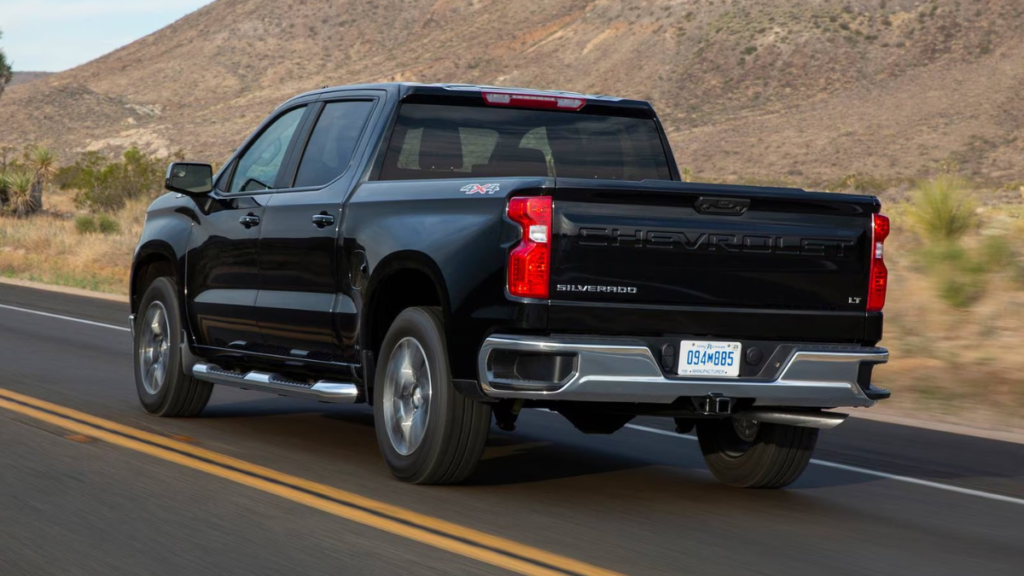
Final Verdict on the 2026 Chevrolet Silverado 1500
The 2026 Chevrolet Silverado 1500 is not the segment leader in ride comfort, and it is not the undisputed towing champion either. What it offers instead is breadth. Four distinct engines, three cab styles, three bed lengths and nine trims mean a buyer can build a Silverado around almost any specific need, from a stripped down work truck to a family hauler to a diesel powered tow rig to a genuine off road ZR2.
That flexibility is a real advantage for a shopper who knows exactly what they need the truck to do. Buyers who instead want the smoothest highway ride or the most polished cabin in the class should spend time in a Ram 1500 before signing paperwork, and those chasing the single highest tow rating in the segment should compare specific configurations against the F 150 rather than relying on headline numbers from either brand. For the buyer who wants a configurable, broadly capable full size pickup and is willing to match the configuration to the job, the Silverado remains a strong, credible choice in a competitive class.
FAQ
How much can the 2026 Chevrolet Silverado 1500 tow?
Towing capacity ranges from below 9,000 pounds on lighter, off road oriented configurations up to a maximum of 13,300 pounds, and that maximum applies only to a specific Double Cab Standard Bed diesel configuration with the Max Trailering Package and 20 inch wheels. The 6.2 liter V8 comes close behind at 13,200 pounds in select four wheel drive configurations. Always confirm the rating for the exact cab, bed, engine and drivetrain combination you are considering rather than assuming the advertised maximum applies universally.
What engines are available on the 2026 Chevrolet Silverado 1500?
Four engines are offered: a turbocharged 2.7 liter TurboMax four cylinder with 310 horsepower, a 5.3 liter V8 with 355 horsepower, a 6.2 liter V8 with 420 horsepower, and a 3.0 liter turbocharged Duramax diesel inline six with 305 horsepower and 495 lb ft of torque, the highest torque figure in the lineup.
What is new on the Silverado 1500 for 2026?
The main additions are the new RST Select special edition package, offered exclusively with the TurboMax engine, and a standard Technology Package plus Multi Flex Tailgate on the ZR2 trim. The truck remains part of the fourth generation platform introduced in 2019 rather than an all new redesign, with the next generation model expected for 2027.
Is this a good choice for towing a camper or boat?
It can be, provided the specific configuration is matched to the trailer’s loaded weight. The diesel and 6.2 liter V8 offer the strongest trailering numbers in the right cab and bed combination, but buyers should confirm the exact tow rating for their chosen build rather than shopping by the advertised maximum alone.
How does this truck compare to the Ford F 150 and Ram 1500?
The Silverado competes on engine variety and trailering technology, while the F 150 is often positioned as a towing and hauling leader and the Ram 1500 is generally regarded as offering a smoother ride and more refined cabin. Each truck suits a different set of buyer priorities rather than one being a universal winner.