Rooftop Cargo Boxes: Finding the Right Fit
Compare capacity, cargo access, and vehicle fit to find the right rooftop cargo box for your next trip.

Rooftop cargo boxes earn their place on the days when a vehicle’s interior stops being enough. A ski weekend with four people, a camping trip with a cooler and a tent, or a long drive to visit family with real luggage all push gear into the cabin. Bags end up at passengers’ feet, stacked behind the rear seats, and pressed against the back window. Visibility suffers, the cabin feels cramped, and anything you need mid trip is buried. A hard shell box on the roof moves the bulk outside, shields it from rain and road grime, and gives the interior back to the people and pets who actually need it.
The difficulty is that cubic feet tell only part of the story. Two boxes with the same advertised volume can behave very differently once loaded. One may be long and narrow, which suits skis and suitcases, while another is short, wide, and tall, which suits tents and duffels. Mounting hardware can eat into the floor, so a box with a flat interior may swallow more than a rival of equal volume. Opening style matters too. A box that opens on both sides is easy to reach from a curb or a tight parking space, while a rear opening box can be awkward on a tall vehicle even if its mouth is very wide.
Fit and limits matter as much as space. A box mounts to crossbars, not to a bare roof, so your rack and its bar spacing come into play immediately. Rear hatch clearance decides whether you can open the tailgate without striking the box. Your vehicle’s roof load limit, your rack’s rating, and the box’s own rated load are three separate numbers, and the lowest one governs. Security and weather sealing deserve scrutiny, and so do aerodynamic effects, since a box on the roof adds drag and can bring wind noise and a measurable drop in fuel economy.
This comparison rests on manufacturer specifications, independent reviews, and what owners report. Cardrav has not tested these boxes, and nothing here claims hands on experience. We keep manufacturer claims separate from what independent testers found, and where sources disagree on a number, we say so, because relying on the wrong figure can leave you with a box that does not fit or a load that exceeds a limit.
Our Take
The most useful way to judge a rooftop box is to ask how it will be loaded. A box that looks impressive on a specification sheet can disappoint if its shape does not suit your gear. The SportRack Vista XL shows this clearly. Its 18 cubic feet match the larger Thule boxes in this group, yet an independent reviewer measured it at roughly 63 inches long, so skis and many snowboards are out. Its strength is a tall, wide, flat interior for bulky camping gear. The Yakima SkyBox NX 16 and the Thule Force XT L carry less volume on paper but are longer and lower, and both handle skis up to 175 centimeters. The two 18 cubic foot Thule boxes stretch that limit to 195 and 200 centimeters.
Construction and convenience features separate the mid priced and premium boxes from the budget one. The Thule boxes and the Yakima use clamp style hardware with a click or torque indicator that tells you when the mount is tight. The Vista XL relies on bolts through the base that tighten onto the crossbars, which an independent tester called the most involved installation of any box it had handled. That tester also noted that the Vista has no interior tie down points, and that its key can be removed even when the lid is not fully latched. The Motion XT XL addresses that last point, because its key cannot be removed unless the box is closed properly.
Feedback from testers and owners clusters around a few problem areas. Locks and handles come first. Independent reviewers found the Force XT line’s combined handle and lock harder to operate than Thule’s higher end design and relayed owner reports of broken handles and keys. The reviewer who tested the Yakima over a year reported its key core icing up in winter. Wind noise and fuel economy follow, with blunter and larger boxes costing more. Water ingress is uncommon on the better boxes, but tight seals mean any water that does get in tends to pool, and dark shells trap heat.
The five boxes make sense as a group because they answer different needs. The Yakima is a balanced mid size choice with a flat floor. The Force XT L is a lighter Thule for luggage and skis. The Motion XT XL is the premium, large capacity option. The Vista XL is the budget route for occasional camping. The Force XT XL gives longer skis and bulky loads more room without the Motion’s refinement. Generation matters here too. The Force XT and Motion XT lines are previous generation Thule designs, and Thule now sells newer Force 3 and Motion 3 boxes. We keep the XT models as listed, so confirm availability and fit on the Amazon page before you order.
Five Hard Shell Roof Boxes Worth Considering
Yakima SkyBox NX 16: A Versatile Box for Family Road Trips
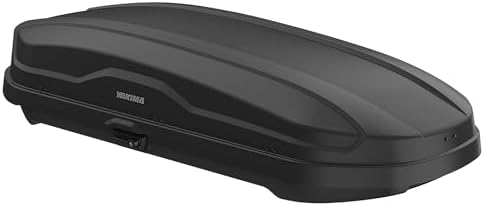
- More Room for Cargo Space: Provides generous 16 cubic feet of secure storage for up to 4 campers; Fits snowboards and sk…
- Dual-Sided Access for Convenience: Unique dual-sided opening design allows easy loading and unloading from either side o…
- Enhanced Security: Full metal opening handle is easy to use and locks gear inside the box and the box to the vehicle.
The SkyBox NX 16 is built for the driver whose roof box has to do a bit of everything. It offers 16 cubic feet in a shell that Yakima lists at 75.5 by 35 by 16 inches, and it weighs about 47 pounds. An independent tester who used it for a full year and more than 10,000 miles called its interior well suited to family camping trips and long drives, and also useful for wet gear after beach days. Its defining trait is a flat floor, made possible by low profile mounting hardware borrowed from Yakima’s pricier boxes. That floor helps with rigid items such as suitcases, camp chairs, and a child’s bike, and the raised nose gives bulky items room at the ends.
Access and security are straightforward. The lid opens from either side, each side has a metal handle, and SKS locks are included. Mounting uses a torque limiting knob that clicks when the clamps are tight, and the same tester could move the box between vehicles in under ten minutes with practice. Yakima says the hardware fits its own crossbars, factory bars, and aerodynamic bars, and retailers list a crossbar spread of 24 to 36 inches. The compact length helps with hatch clearance, and the tester fit it on a wagon and two SUVs without trouble. Yakima lists skis and snowboards up to 175 centimeters.
The weaknesses are documented. The tester noticed a steady hum at highway speed from the blunter nose and a fuel economy cost of roughly 1 to 3 miles per gallon on long drives. The key core also iced up in winter, which delayed departures from a ski hill, and the tester said skiers who want to carry several pairs should consider the larger NX 18. There is a load rating question as well. Yakima’s US page does not clearly state a maximum cargo load, and one retailer explains that Yakima treats the vehicle and rack limits as the governing numbers, so no rating is given here.
Buyers should read ratings on this listing with one caution. Yakima’s older Carbonite listings remain on Amazon, so make sure the reviews you read describe the NX generation. We could not confirm the current rating or count, so we leave them out. Choose this box over the Force XT L if you value a flatter floor and an easy mount, and if you can accept the winter key issue and a bit of highway noise.
Thule Force XT L: A Lighter Thule for Luggage and Outdoor Gear

- A versatile roof-mounted cargo box for everyday use
- Provides 18 cubic feet of additional packing space
- Designed to fit a wide range a vehciles with maximum space efficiency
The Force XT L suits drivers who want a mainstream box without the weight of the larger models. Thule lists 16 cubic feet, external dimensions of 74.75 by 33 by 18 inches, and a weight of 41 pounds. The interior measures 70 by 28.75 by 16.25 inches, which holds duffels and suitcases comfortably, and the rated load is 165 pounds. Thule says it takes five to seven pairs of skis or three to five snowboards up to 175 centimeters. The shell is thermoformed ABS with an acrylic cap and UV protection, and its textured surface is meant to reduce drag.
PowerClick mounting is the central convenience. The claws tighten onto the crossbars until an integrated indicator clicks, and Thule says the box fits its own bars and most aftermarket and factory crossbars, with adapters for some truck and van systems. Access is dual side with a central lock and included keys. One owner who covered about 20,000 miles with the larger Force XT XL on an SUV reported no leaks and easy closing, but also a fuel economy cost of 3 to 5 miles per gallon. That is a useful reminder that the penalty depends on the vehicle and driving speed.
The locking mechanism is the recurring complaint. One independent tester said the LockKnob is harder to operate than Thule’s premium lock and relayed owner reports of broken handles and keys. A summary of owner feedback described it as finicky if the lid is not perfectly aligned, and warned against forcing it, which is how a minor annoyance becomes a broken part. The box is also heavy enough that most people will want help lifting it onto the roof.
An earlier snapshot of this listing’s review page showed 1,906 global ratings and 447 written reviews, though we could not confirm the current average or count. A large pool suggests consistent feedback, but it may include other sizes, so look for comments about the large size specifically. This is a previous generation model. Choose it over the Yakima if lower weight and Thule’s rack ecosystem matter more than a flat floor.
Thule Motion XT XL: A Premium Box for Bulky Loads and Longer Skis

- Roof-mounted cargo box provides 18 cubic feet of additional packing space
- Designed for optimal space efficiency, aerodynamics, and vehicle fit
- Quick-mount system “clicks” when roof box is secure and properly mounted
The Motion XT XL is the premium option here, and the independent reviewer that tested it called the Motion line a favorite all around design. It offers 18 cubic feet, external dimensions of 84.5 by 36 by 17 inches, and an interior of 79 by 31.5 by 15 inches. It weighs 46 pounds and has a rated load of 165 pounds. Thule lists skis up to 200 centimeters, with five to seven pairs or three to five snowboards. The reviewer fit four pairs of skis with room to spare, including a 185 centimeter pair, and on a road trip also carried a large double sleeping bag and pad, backpacks, off road recovery gear, and a cooler.
Refinement is what the price buys. SlideLock separates locking from opening, and the key cannot be removed unless the lid is properly latched, which prevents driving off with the box unsecured. Both sides have identical handles and integrated locks, and a strap on each side helps with closing. The reviewer called the PowerClick installation the simplest of any roof box it had installed and moved the box between vehicles with different crossbar setups. An overhanging lip sealed out weather well, and on that trip road noise and fuel economy changes were small, though strong crosswinds still produced some whooshing.
The drawbacks are specific. The price is high. The box has no drainage ports and a tight seal, so water from wet gear can pool. The dark shell does not ventilate, so heat sensitive items such as food should stay out of it in warm weather. The lid also feels a little flimsy if you lift it from the front or back, so the reviewer recommends using the center handles. Hatch fit needs a measurement. A Thule retailer says the center of your front crossbar should sit more than 51 1/4 inches from the seam where the roof meets the hatch for this size to clear.
This is a previous generation model, and Thule now sells a newer Motion 3. We kept the exact XT XL, and we could not confirm its current rating, review count, or stock on Amazon, so check the listing before you buy. Choose it over the other boxes if you carry bulky or long gear often and value a lock that prevents mistakes.
SportRack Vista XL: A Budget Box for Bulky Camping Gear

- 18 cubic foot (510 L) internal cargo capacity
- Made from durable UV-resistant ABS material
- Rear opening for easy access away from traffic
The Vista XL answers a simple question: how much roof space can you get for the least money? Its 18 cubic foot interior is tall and wide. An independent reviewer reported external dimensions of about 63 by 38 by 19 inches and fit a large duffel, a six person tent, two camping mats, and three sleeping bags. The rear opening, which that reviewer measured at 18.5 inches, is the widest it had tested, so it is easy to slide in mattresses, strollers, and smaller bikes. The limited length rules out skis and many snowboards, so this is a camping and luggage box, not a ski box.
The compromises are what you would expect at the price. Access is from the rear only, which gets awkward on taller vehicles because the lid and lock can be a stretch to reach. Mounting uses bolts through predrilled holes in the base, tightened with knobs on the crossbars, and the reviewer called it the most involved installation of any box it had handled. The crossbar range is narrow. Sources agree on a minimum of about 23 5/8 inches, but they disagree on the maximum, between roughly 27 1/2 and 29 3/4 inches. At about 38 inches wide, the box also caused clearance trouble on a low profile bar set. There are no interior tie down points and no pull down strap for the lid.
Load rating is a genuine uncertainty. Published figures are 100, 110, and 150 pounds depending on the source, and we cannot resolve the conflict, so we do not state one. Read the manual that ships with your exact box, and use the lowest number you find. SportRack’s guidance, as relayed by the reviewer, is to avoid speeds above 40 mph with an empty box and to carry at least 50 pounds of cargo for highway driving, because the shell lacks stiffeners.
We could not confirm the current rating or review count, so we omit them. On budget listings, the useful reading is in the negative reviews, which tend to describe fit, access, and mounting. The independent reviewer’s overall score of 3.8 out of 5 reflects both the value and the limitations. Choose this box over the Thule and Yakima options if budget is the priority, trips are occasional, your gear is bulky but not long, and your crossbar spread matches.
Thule Force XT XL: More Length for Skis and Big Loads
- A versatile roof-mounted cargo box for everyday use
- Provides 18 cubic feet of additional packing space
- Designed to fit a wide range a vehciles with maximum space efficiency
The Force XT XL is the larger sibling of the XT L, aimed at skiers and anyone carrying long or bulky gear. Amazon lists it at 82.75 by 33.75 by 17.25 inches, with an interior of 77.5 by 29.5 by 15.25 inches, a 165 pound rated load, and a weight of 47 pounds. It holds 18 cubic feet, and an independent tester’s comparison puts the maximum ski length at 195 centimeters. That is the practical difference from the Force XT L, whose limit is 175 centimeters. If your skis are 180 centimeters or longer, or you want several pairs inside, the extra length is the reason to choose this size. Its 33.75 inch width also leaves roof space beside the box for other accessories.
It shares the XT L’s strengths, including PowerClick mounting, dual side opening, and a matte textured shell. The 20,000 mile owner who used this size on an SUV reported a dry interior in rain and snow, and an easy mount, but described removal as a pain without help and noted a significant fuel economy cost. A comparison by the independent tester that reviewed the Motion lists six tie down points and built in stiffeners on this model, which helps with securing gear and keeping the lid rigid.
The weaknesses match the sibling’s. That same tester said the Force’s LockKnob is less durable and less easy to use than the Motion’s SlideLock, and relayed owner reports of broken handles and keys. It pointed value buyers toward other options for that reason. At 47 pounds empty, lifting it takes two people, and the extra length raises the odds of a hatch conflict, so measure before you buy.
We could not confirm the current Amazon rating, review count, or stock for this listing, so we omit them. Like the other XT models, it is previous generation, and we kept this exact model. Choose it over the Force XT L when your gear needs the length, and over the Motion XT XL when similar volume and ski length matter more than a premium lock and finish.
Choosing the Right Roof Box Before You Buy
The trade offs that matter most are the ones you feel on every trip. Shape comes first. If you carry skis, length decides everything, and the gap between a 175 centimeter limit and a 195 or 200 centimeter limit is the gap between fitting your skis and not. If you carry camping gear, width and height matter more, and a short, tall box can beat a longer one of lower volume. Access is next. Dual side opening makes a real difference in tight parking and on tall vehicles, while a rear opening works well only if you can comfortably reach it.
A larger box is worth its bulk when your gear is long or bulky, when several people share the trip, or when you ski with longer equipment. A shorter or lighter box makes more sense on a smaller vehicle, when the rear hatch sits close to the crossbars, or when you want less drag, less noise, and an easier lift. Convenience and cost pull against each other too. The Vista XL’s savings come with a harder installation, rear only access, and a basic lock, while the Thule Motion XT XL’s lock and handling cost more but remove several annoyances. Advertised features deserve the same scrutiny as volume, because the documented limits, such as the Force locks, the Yakima key core, and the Vista mounting, are what you live with.
Compatibility and limits come before everything else. Measure your crossbar spread and compare it to the box’s range, since the Vista XL’s is narrow and the Yakima’s is wide. Measure the distance from your front crossbar to the hatch seam, because a box that strikes the tailgate is a failed purchase. Then work out weight. The box’s rated load, your crossbar rating, and your vehicle’s roof limit are separate numbers, and the lowest one governs. The box and the rack count toward that limit as well. One retailer’s example for a vehicle with a 165 pound roof limit subtracts a 48 pound box and a rack of about 12 pounds, leaving about 105 pounds for cargo. Your numbers will differ, so check the owner’s manual and the box’s own manual.
Once you have a box, the supporting gear deserves some thought. Freeing the cabin makes room for the comfort and safety items that should stay within reach. If you are deciding what else to bring on a long drive, our guide to car accessories that actually make a difference is a sensible next stop. If the trip involves sleeping in or near the vehicle, the interior space you recover is exactly what makes that practical, and our look at car mattresses shows what fits. Whatever rides on the roof, keep an emergency kit accessible inside the vehicle, and our rundown of car safety essentials covers what belongs in it.
A simple framework will carry you through the decision. Start with your gear and pick the shape that fits it. Confirm that the box fits your crossbars and clears your hatch. Work out your weight limit from the lowest applicable rating. Then use lock quality, access, and price to break ties, and read recent owner feedback about the exact size you are buying. A box that fits your vehicle, respects your limits, and suits your load will serve you well for many trips, however modest its specifications look next to a bigger rival.