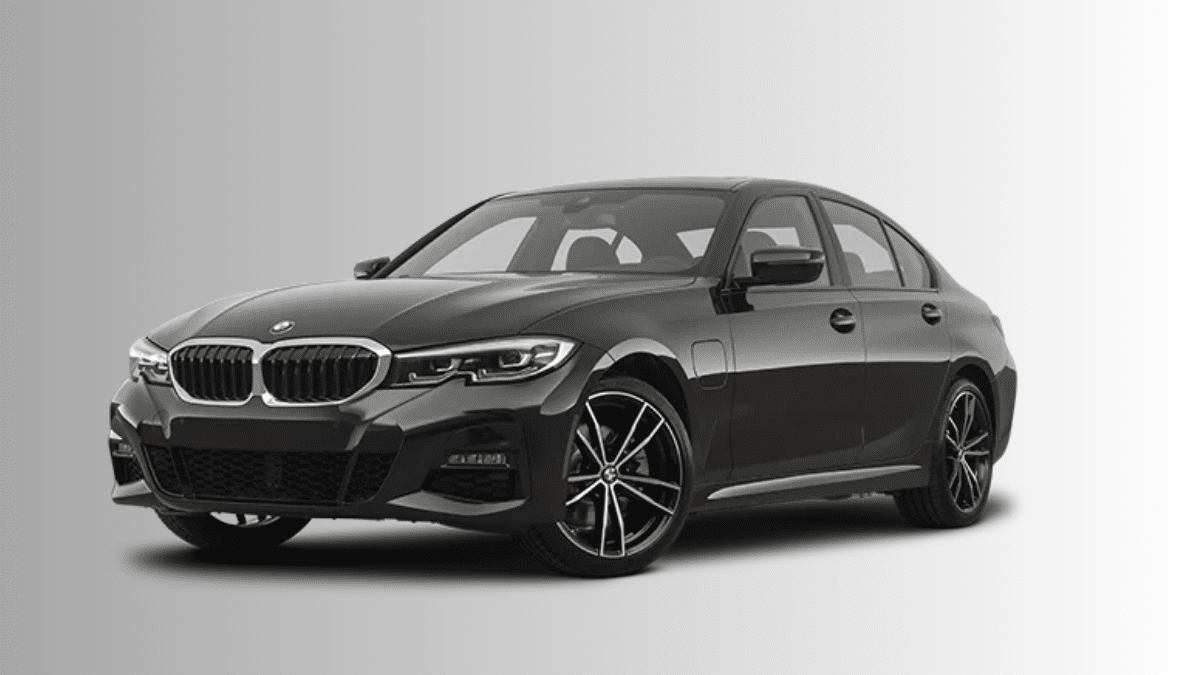
2022 BMW 3 Series: The luxury sedan market in 2022 faced a fundamental split. Efficiency or engagement? Comfort or control? Technology theater or honest engineering? Mercedes-Benz chose screens and prestige. Audi chose front-wheel-drive practicality. Genesis chose value and equipment lists. BMW’s 2022 3 Series chose a different path entirely. This midsize luxury sedan doubled down on rear-wheel-drive handling while simultaneously asking a smarter question: what if a luxury sedan could be both a joy to drive during the week and a practical commuter on Monday mornings?
The answer lives in the 330e plug-in hybrid, and it’s the reason the 2022 BMW 3 Series deserves serious consideration from buyers who spend their time split between winding roads and city traffic, between weekend adventures and daily commutes. Where competitors offer either performance or practicality, the 330e delivers both.
The G20 generation of the 3 Series arrived in 2019 and reclaimed steering and chassis precision BMW had lost to softer competitors. The 2022 model year brought a subtle facelift that refined the formula further. But the real story isn’t what changed on the outside. It’s what changed in how you drive it every day.
Our Take
Cardrav recommends the 330e. It is priced just $1,500 above the base 330i yet delivers plug-in hybrid capability with 22 miles of pure electric driving for daily commutes, a federal tax credit up to $5,836 that effectively makes it cheaper than the gas-only base model, and the same responsive steering that defines the 3 Series. For buyers splitting time between city driving and road trips, this is the sweet spot. For those seeking maximum performance, the M340i delivers it. For those wanting simplicity over capability, the 330i exists. But for real-world driving flexibility paired with genuine luxury, the 330e is the logical choice.
Pros
- Polished handling and responsive steering that actually communicates with the driver
- Tastefully modern interior with practical ergonomics and genuine luxury feel
- Powerful and fuel-efficient engine options across the lineup
Cons
- Ride quality can be a little too firm at times, especially with the M Sport suspension package
- Most of the 3 Series’ advanced driver assist features aren’t standard and require expensive option packages
What’s New for 2022
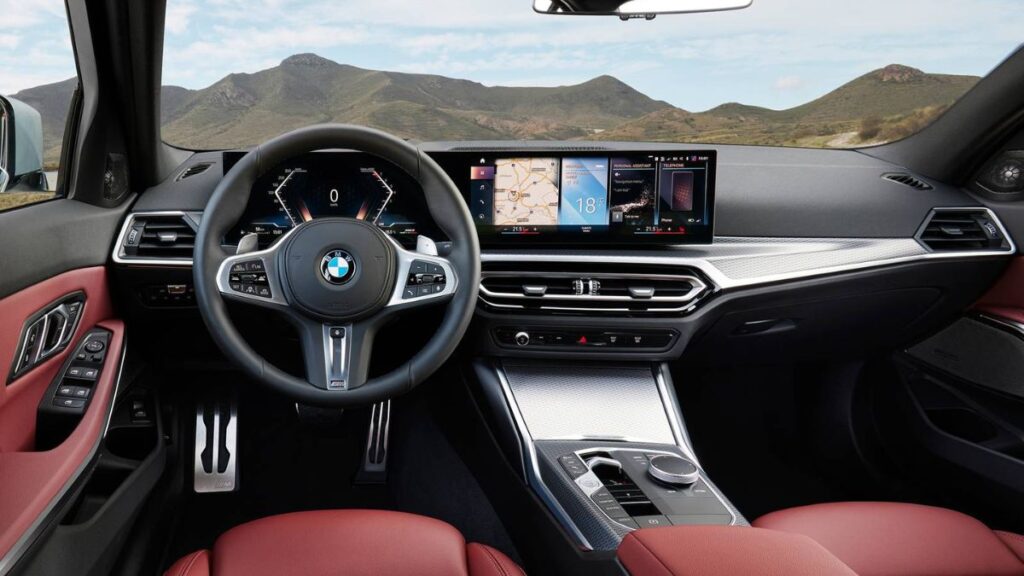
The 2022 BMW 3 Series received a mid-cycle facelift that touched cosmetics more than substance. The grille design remained the same, but new LED headlights with an inverted L-shaped daytime running light signature give the front end a slightly fresher expression. Inside, the big news came with the curved infotainment display, a 14.9-inch screen that curves into the driver’s instrument cluster. BMW calls this the “Curved Display,” and it is visually stunning even if some of its functionality borders on ornamental.
All 2022 models got the updated iDrive 7.0 system with over-the-air updates for navigation maps and the operating system itself. The voice assistant, activated by saying “Hey BMW,” actually understands conversational speech better than it did before, which helps offset the touchscreen’s learning curve. A new “BMW Operating System 8” arrived late in the model year but didn’t roll out widely on 2022 inventory.
Underneath, nothing fundamental changed. The same proven engines, transmissions, and chassis continued. For most buyers shopping used 2022 models, these updates feel like polish on an already solid foundation rather than must-haves.
Exterior Design
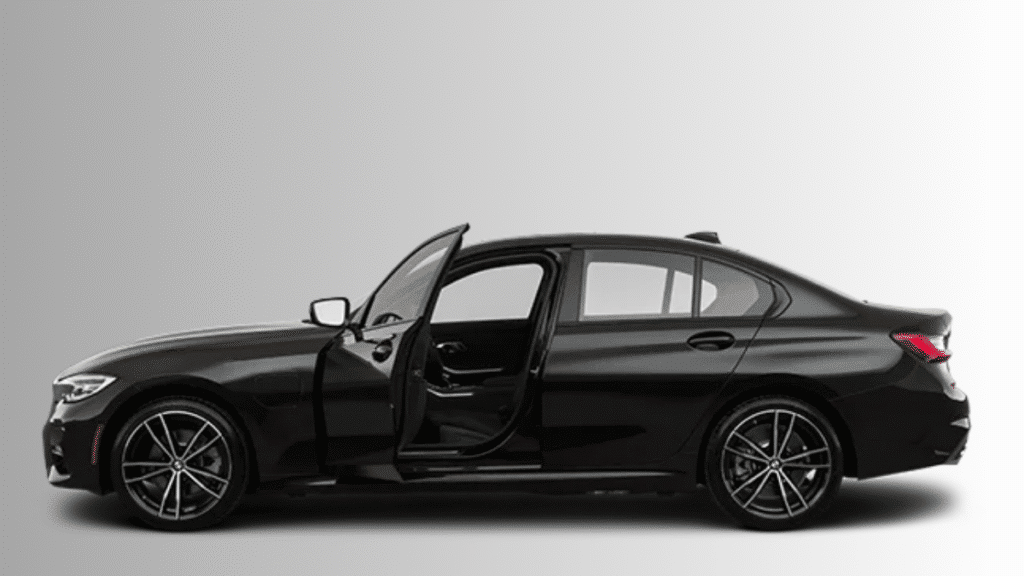
The 2022 BMW 3 Series looks like a luxury sedan should look. Restrained. Purposeful. The long hood, short overhangs, and clean body sides create proportion that ages well because it doesn’t chase trends. Compare it to the flashy, creased lines of the Alfa Romeo Giulia, and the 3 Series feels mature. Next to the fussy complexity of the newest Mercedes-Benz C-Class, it reads as elegant simplicity.
The grille remains a conversation point. BMW’s “kidney” shape has grown over the years, and on the M340i and M3 variants, it commands real visual presence. The base 330i gets a proportionally smaller version that feels less aggressive and more balanced to the overall design. This isn’t a bad-looking car by any measure, but the optional M Sport package with its darker trim and 19-inch wheels genuinely improves the overall stance without looking cartoonish.
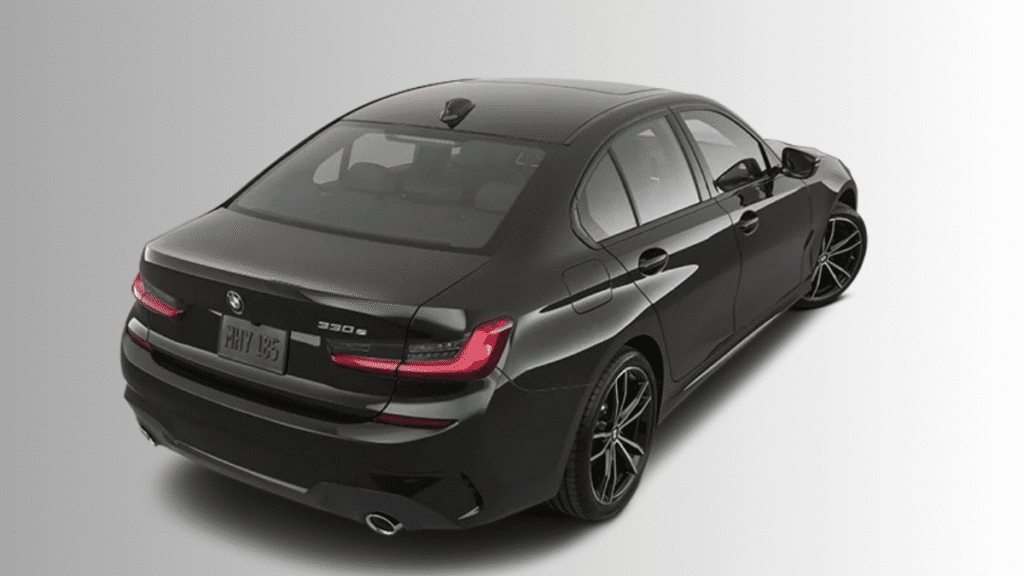
The facelift added those new LED headlights, which are bright and precise. They cost extra on lower trims but look purposeful. Tail light design stayed largely the same, which is fine because it worked before. At night, the 3 Series carries itself with quiet confidence. Nothing flashy, nothing overstyled. This is how German engineering traditionally dressed itself, and for buyers tired of SUV design language creeping into every vehicle class, that restraint is refreshing.
Driving Experience
This is where the 2022 BMW 3 Series separates itself from the field. The steering is alive in a way that feels almost rare now. Turn the wheel, and inputs arrive at the front wheels with immediacy that modern driver-assistance systems haven’t dampened. The chassis feels light on its feet despite the car being 3,600 pounds, and the standard rear-wheel drive means the car genuinely wants to be thrown into corners.
Acceleration feels adequate in the 330i (255 horsepower moves the car with purpose, hitting 60 mph in around 5.7 seconds), but the 330e’s electric torque supplementing the turbo four creates interesting transitions. There’s a brief lag when the system shifts between electric and gas power, but it’s minor enough that most drivers won’t notice on regular roads. The M340i’s 382-horsepower inline-six is the real story, though. It’s the engine BMW used to build its reputation. Smooth, linear power delivery, 4.2 seconds to 60 mph, and enough midrange punch to make highway merging actually fun.
Braking feels well-calibrated. The pedal requires more initial pressure than in some competitors, but that builds confidence rather than frustration. The car stops with authority and without drama, which is exactly what a luxury sedan should do.
The suspension tuning generally favors sportiness over cushioned comfort, particularly on the M Sport setup. This means rougher roads telegraph through the chassis more than in a Mercedes-Benz C-Class. But for drivers who’d rather feel the road than be isolated from it, that’s a feature, not a bug.
Performance & Acceleration
The 2022 BMW 3 Series offers three powertrains, and each has a distinct character. The 330i’s 2.0-liter turbocharged four-cylinder makes 255 horsepower and 295 pound-feet of torque. That’s enough for 5.7 seconds to 60 mph with all-wheel drive, and 5.6 seconds with rear-wheel drive. EPA estimates peg it at 26 city, 36 highway, 30 combined on the RWD version. These are strong numbers for a turbocharged economy engine. The turbo responds quickly, and the eight-speed automatic transmission shifts smoothly through the gears.
The 330e plug-in hybrid pairs the same 2.0-liter turbo with an 111-horsepower electric motor and a 12-kilowatt-hour battery. Combined output is 288 horsepower and 310 pound-feet of torque. That’s 0.5 seconds quicker to 60 than the standard four-cylinder, and it qualifies for the federal tax credit of up to $5,836. On battery alone, it travels 23 miles before the gas engine kicks in. In EV mode around town, it feels effortless. The transition to hybrid operation is generally imperceptible.
The M340i is the engine that proves BMW still understands performance sedans. Its 3.0-liter turbocharged inline-six makes 382 horsepower and 369 pound-feet of torque. That’s 4.2 seconds to 60 mph and feels genuinely quick without requiring premium fuel or constant maximum throttle. The linearity of power delivery is what separates this engine from rough competitors. Accelerate gently, and it’s refined. Floor it, and it hunts with purpose. EPA estimates are 23 city, 32 highway, 26 combined, which is respectable considering the power on offer.
Ride Comfort & Cabin Refinement
The 2022 BMW 3 Series generally delivers refinement on smooth surfaces and composed behavior on rough pavement. Highway driving is the 3 Series’ comfort forte. Wind and road noise stay muted, the suspension absorbs expansion joints smoothly, and the supportive seats prevent fatigue on six-hour drives. The steering takes some pressure to move, which helps highway stability, and the overall sense is of a car firmly planted on the road.
In city driving, the story gets more nuanced. The standard suspension on the 330i feels appropriately compliant. Potholes get absorbed without jackhammering the cabin. The M Sport suspension tightens things noticeably, improving cornering but increasing the thump from broken pavement. For buyers planning to drive mostly highways and well-maintained roads, the M Sport setup is worth considering. For urban dwellers, the standard setup makes more daily sense.
The powered front and rear seats are genuinely good. They adjust in multiple directions, include lumbar support, and the bolstering keeps the driver centered without feeling claustrophobic. Rear passengers get less adjustability, and legroom is adequate but not luxurious compared to the Audi A4 or Genesis G70. Someone six feet tall will fit fine; someone 6’3″ might wish for an inch more headroom.
Climate control keeps temperatures stable across the cabin, though managing it through the touchscreen rather than physical controls requires some menu diving. The optional heated and ventilated seats work quickly and effectively, particularly in the front.
Interior & Luxury Feel
Step inside the 2022 BMW 3 Series, and the interior looks premium without feeling ostentatious. The design philosophy favors horizontal lines and clean surfaces. Soft-touch plastics cover the upper dashboard, and higher trims get leather upholstery that feels genuinely nice to the touch, though it doesn’t match the buttery quality of Mercedes-Benz leather.
The driving position is spot-on. The steering wheel adjusts for reach and tilt, and most drivers will find a natural seating position quickly. Visibility forward is excellent. Visibility to the rear is fine, though the sloping roofline and thick C-pillars require a slight adjustment compared to some boxy competitors.
Materials throughout feel appropriate for the price. The dashboard is soft-touch, the seat leather is substantial, and the overall impression is of thoughtful assembly rather than luxury theater. Nothing will make you forget this costs $42,000 to $55,000, which is exactly right for a brand selling engineering and driving experience rather than status symbols.
Technology & Infotainment
The iDrive system is a study in contradictions. It’s powerful and comprehensive. It’s also complex and sometimes befuddling. The curved touchscreen looks beautiful, but it reflects sunlight aggressively when wearing polarized sunglasses. The physical rotary controller on the center console helps, giving users a non-visual way to navigate menus, but climate control operated entirely through screens remains a frustration.
The voice assistant activated by “Hey BMW” actually works better in 2022 than in previous years. It understands natural speech, follows multi-step commands, and doesn’t require verbose robotic phrasing. Say “I’m cold,” and it turns up the heat. Say “Call mom,” and it dials without requiring last names or full contact information. This is the kind of integration that makes the complex system feel less burdensome.
Apple CarPlay and Android Auto arrive standard on all trims, which means most users can simply plug in their phones and ignore iDrive for familiar interfaces. For buyers uninterested in BMW’s vision of in-car computing, this is the sanest approach.
The digital instrument cluster displays relevant information cleanly. The 8.8-inch display on base models is adequate; the 10.25-inch screen with 12.3-inch instrument cluster on the M340i is notably better and makes menu navigation less tedious. Navigation is voice-controlled or touchscreen-based, and map updates arrive over the air without requiring dealer visits.
Fuel Economy
The EPA estimates for the 330i are 26 mpg city, 36 highway, 30 combined on rear-wheel drive. That’s strong for a turbocharged luxury sedan. Real-world driving varies, but mixed city and highway generally sees 28 to 30 mpg, depending on driving aggression. The highway performance is particularly good; drivers report consistent 35+ mpg on longer highway legs at steady speeds.
The M340i sees 23 city, 32 highway, 26 combined. That’s a meaningful drop from the base model, but it’s still respectable for a 382-horsepower inline-six. The more powerful engine’s presence in 25% fewer mpg represents a fair trade-off for drivers wanting the performance.
The 330e hybrid tells a different story. The EPA rates it at 75 MPGe combined when plugged in regularly and driven mostly on short trips. If you charge at home and commute 20 miles daily, the car returns easily 50+ mpg equivalent. If you never plug it in, it reverts to regular hybrid operation and returns around 28 mpg combined, which is good but nothing special. The real-world value of the 330e depends entirely on access to charging and commute patterns.
For a car in this price and class, fuel economy is respectable across the board. The 330i is genuinely efficient. The M340i is strong for its power. The 330e is a game-changer only if charging at home makes sense for your life.
Practicality & Cargo Space
The 2022 BMW 3 Series is a practical luxury sedan for two or occasionally four people. The trunk is genuinely useful at 17 cubic feet, beating the Mercedes C-Class (12.6 cubic feet) and Audi A4 (12 cubic feet) by meaningful margins. The rear seats fold in a 60/40 split for longer cargo. The interior dimensions feel spacious enough for weekend trips without feeling cavernous like a BMW 5 Series.
Daily living is easy. The center console storage, cup holders, and phone tray accommodate modern life without fuss. The steering feel means parking is engaging rather than a chore. The turning radius is tight enough for urban streets without being cramped.
For families, the rear seat matters. Three people fit, but the middle passenger ends up sitting on a raised section that makes longer drives uncomfortable. Two kids fit fine. Two full-sized adults fit fine. Two adults and a child works. Everything beyond that requires compromise.
The fuel door opens with an internal release, the battery on the 330e lives under the rear seat and doesn’t steal trunk space, and maintenance access is generally straightforward. This is a car designed for owners who plan to keep it for years.
Safety & Driver Assistance
The 2022 BMW 3 Series comes equipped with a thorough suite of safety features, though most advanced driver assistance systems are not standard and require expensive option packages.
Standard safety features include automatic emergency braking with pedestrian detection, lane departure warning, and forward collision warning. Adaptive cruise control, blind-spot monitoring, and rear cross-traffic alert are available on higher trims or as part of option packages.
The systems are generally well-calibrated and genuinely protective on roads with distracted drivers. The lane keeping assist works smoothly without being intrusive, and the automatic emergency braking is responsive without being overly sensitive. However, buyers should be aware that many of the most useful driver assistance features are not included in the base price, which is a notable omission in this price class.
Competitors Worth Considering
The 2022 BMW 3 Series competes primarily against the Mercedes-Benz C-Class, Audi A4, and increasingly against the Genesis G70. Each takes a different approach to the segment.
Mercedes-Benz C-Class: This is the premium choice. Its interior feels more luxurious, the materials more carefully selected, and the overall presentation more theatrical. The problem is cost and daily usability. A C300 starts around $43,000 but reaches $50,000 quickly with options. Its infotainment is touchscreen-heavy without the physical rotary controller that makes iDrive more usable. For buyers seeking status and luxury theater, the Mercedes wins. For drivers seeking engagement and value, it’s overpriced.
Audi A4: This is the usability choice. Its interior layout is cleaner, more intuitive. The climate controls are physical buttons, not buried in menus. The problem is front-wheel drive as standard, which compromises handling. The steering is numb compared to the BMW. The overall experience feels safe and sensible but less involving. For buyers prioritizing comfort and ease of use, the A4 makes sense. For drivers who want their sedan to feel premium and responsive, the 3 Series wins.
Genesis G70: This is the value choice. It offers more standard equipment, a lower price, and a more spacious interior. The 2.5-liter turbo makes 300 horsepower, and the optional 3.3-liter twin-turbo delivers 365. The warranty is longer, and the service plan is more generous. The problem is handling. The G70 drives acceptably, but the steering feels isolated, the chassis less precise. For buyers seeking comfortable luxury and strong equipment for less money, the G70 is compelling. For drivers seeking the ultimate daily performance sedan, the 3 Series is the better machine.
Which Trim Does Cardrav Recommend?
Cardrav recommends the 330e, with important caveats about market conditions. The federal tax credit made the 330e effectively cheaper than the 330i despite the higher sticker price in 2022. In the used market, the 330e typically costs $2,000 to $4,000 more than a comparable 330i with similar mileage. Without access to the 2022-era federal tax credits, the value case rests on fuel economy and practical flexibility.
If you have home charging and drive less than 50 miles daily, the 330e makes practical sense. You spend 90% of driving on electric power, saving $2,000 to $2,500 in fuel costs over five years. The used market price premium breaks even through fuel savings within two to three years. You gain practical flexibility (EV mode for commutes, hybrid mode for road trips) that the 330i doesn’t offer.
If you cannot reliably charge at home or work, you are not the 330e buyer, regardless of market year. Without charging access, the battery-heavy hybrid is penalized in fuel economy compared to the gas-only 330i. In this scenario, either buy the 330i for lowest operating cost or the M340i if performance matters more than efficiency.
If you’re a driving enthusiast prioritizing performance over efficiency, the M340i remains the choice. Accept the higher used market price and the 26 mpg reality. Driving engagement is worth the premium for the right buyer.
Final Verdict: Should You Buy It?
The 2022 BMW 3 Series is a car that understands what it does and does it well. But the real story lives in the 330e plug-in hybrid, where BMW solved a market problem competitors ignored: How do you give buyers a luxury sedan with genuine driving engagement, practical efficiency, and real-world flexibility without forcing compromise?
The steering is responsive. The handling is precise. The hybrid powertrain is genuinely practical. The economics work in your favor with federal incentives applied. The 22 miles of electric range covers 90% of typical commutes. The hybrid mode makes long-distance travel effortless.
Yes, the infotainment system has a learning curve. Yes, the rear seat is compact. Yes, the interior materials don’t match Mercedes’ luxury theater. But the fundamentals are sound. This is a luxury sedan that delivers what it promises: responsive driving dynamics combined with practical daily usability, wrapped in premium materials and supported by BMW’s engineering reputation.
The 2022 BMW 3 Series isn’t the cheapest luxury sedan (that’s Genesis G70). It isn’t the most luxurious (that’s Mercedes C-Class). It isn’t the most feature-loaded (that’s Audi A4). But it is the most capable daily driver for buyers who value both engagement and practicality. And when you choose the 330e, you get all that capability at a price that makes genuine sense.
In a market increasingly obsessed with screens and autonomous systems, the 2022 BMW 3 Series still believes that how a car drives matters. For drivers who agree, the 330e is the right choice.
FAQ
What federal tax credits are available for a used 2022 BMW 3 Series 330e in 2026?
A: The generous $5,836 federal tax credit available for new 2022 purchases no longer applies to used vehicle purchases. Current federal incentives for used EVs are capped at $4,000, available only through dealer transactions, and subject to strict income limitations (maximum $55,000 for single filers, $110,000 for married). Most buyers purchasing a used 2022 330e in 2026 won’t qualify for the federal credit. State and local incentives vary by region and may offer additional rebates on used plug-in hybrid purchases. Check your local regulations for current availability.
How does the 2022 BMW 3 Series 330e compare to the base 330i for used car buyers in 2026?
A: In the used market, the 330e typically costs $2,000 to $4,000 more than a comparable 330i with similar mileage. Without access to the 2022-era federal tax credits, the value case rests on fuel economy and practical flexibility. If you charge at home regularly, the 330e delivers $2,000 to $2,500 in fuel savings over five years compared to the 330i, offsetting the used market price premium. If you won’t regularly charge, the 330i is the more economical choice.
Should I buy the 330e plug-in hybrid if I can’t charge at home?
A: No. The 330e’s entire value proposition depends on regular charging access. Without it, the car operates as a battery-heavy standard hybrid with worse fuel economy than the gas-only 330i due to added battery weight. You’ll pay the used market premium without getting the benefit. In this scenario, either buy the 330i for lowest operating cost or the M340i if performance matters more than efficiency.
What’s the real-world electric range of a used 2022 BMW 3 Series 330e, and how much will it degrade by 2026?
A: EPA estimates 22 miles of pure electric range when new. After four years and typical mileage (50,000 miles), battery degradation is minimal (roughly 5-10%), so expect 19 to 21 miles of real electric range from a four-year-old example. For 90% of American commutes under 45 miles round trip, this still covers the full workday on a single charge. Battery degradation is slower in hybrid vehicles than pure EVs because the battery isn’t cycled as heavily.
How much has a 2022 BMW 3 Series depreciated by 2026, and is it a good used buy?
A: A 2022 BMW 3 Series with moderate mileage (50,000 miles) typically sells for 35-40% of its original MSRP. A 330i that cost $42,445 new now sells for approximately $26,000 to $32,000. A 330e that cost $43,945 new now sells for approximately $28,000 to $35,000. This depreciation is normal for luxury sedans. The 330e holds value slightly better than the 330i due to hybrid demand, but the difference is modest (usually 2-4%). It’s a reasonable used buy if you value driving dynamics and practical ownership over lowest purchase price or maximum feature content.
Should I buy a used 2022 BMW 3 Series, or wait for a newer model year?
A: The 2022 model received the mid-cycle facelift with the curved infotainment display and updated iDrive 7.0 that remains current through 2025. The underlying engineering is proven and reliable. If you find a well-maintained used 2022 model at fair market pricing, it represents good value. Waiting for 2023 or 2024 models offers only incremental software updates and design refinements. Buy based on condition, mileage, and price, not model year alone.