2023 Kia Rio Review: The Last Cheap New Car Left
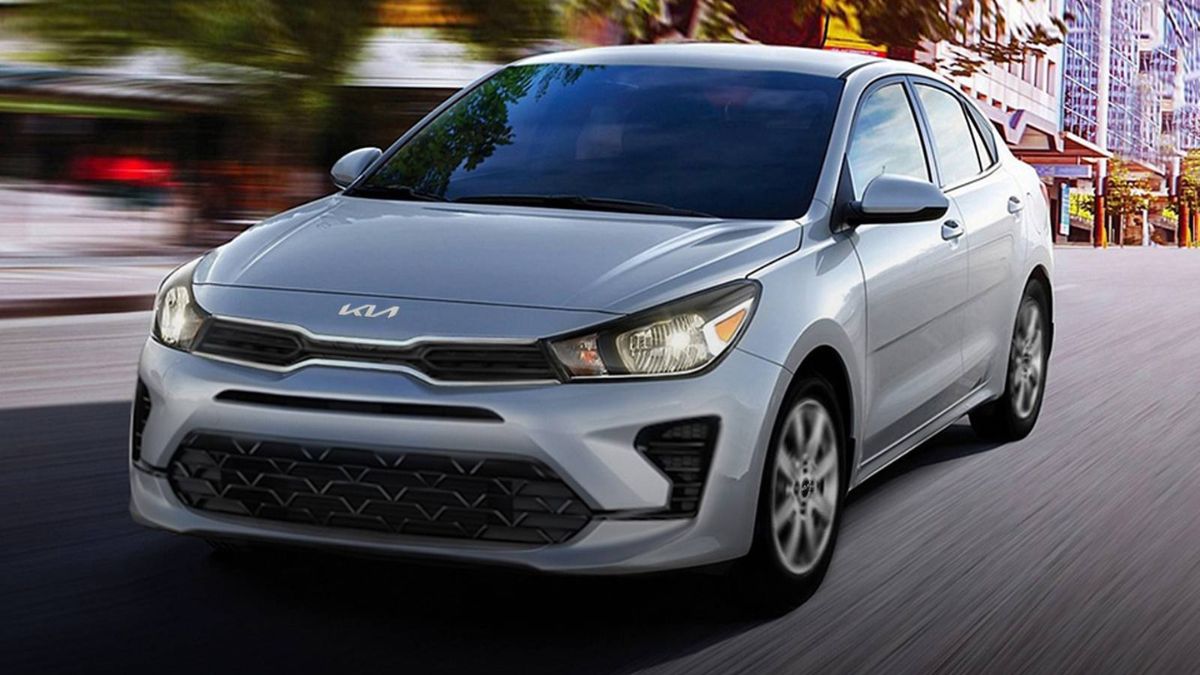
2023 Kia Rio: A no-frills subcompact that quietly did its job for 24 years before Kia pulled the plug, There used to be a whole category of cars built around one idea: get people into a new vehicle for as little money as possible. The 2023 Kia Rio is one of the last survivors of that category, and it’s also the final one. Kia confirmed there would be no 2024 model, which means every Rio sold this year came with an expiration date stamped on the whole nameplate.
That context matters more than it usually would for a subcompact review. The Nissan Versa and Mitsubishi Mirage were the Rio’s closest rivals for years, and both are now either winding down or getting harder to find with any real incentives attached. So the Rio’s send-off isn’t happening in a vacuum. It’s happening as the entire cheap-car segment in America shrinks to almost nothing, mostly because automakers make more money on crossovers and buyers keep choosing them anyway.
I’ve spent time in a few of these bargain-basement sedans and hatchbacks over the years, and the Rio has always been the one that felt like it wasn’t cutting corners just to hit a price point. It’s not exciting. Nobody is cross-shopping this against a GTI. But if your goal is a reliable set of wheels for under $18,000 that won’t punish you at the pump, the Rio has earned its spot on that short list.
This 2023 Kia Rio review covers what changed for the final year (not much), how it drives, where the money went, and whether it’s still worth chasing down on a dealer lot or in the used market a few years from now.
Our Opinion
The Rio does exactly what it promises and nothing more. It’s cheap to buy, cheap to run, and easy to live with in a city or suburban commute. The engine is slow by any modern standard, the base trim skips safety tech that competitors give away for free, and the back seat is genuinely tight for adults. None of that is a surprise at this price.
What impressed me more than expected was the ride quality and the interior layout. Kia didn’t treat this as a throwaway model in its final year. The touchscreen is sized right, the buttons are where you’d expect them, and the whole cabin avoids the cheap-feeling plastics that plague some rivals. It’s not a luxury experience. It’s a well-sorted, honest one.
Pros and Cons
Pros
- Excellent fuel economy for a gas-only engine
- Low starting price and low projected ownership costs
- Roomy trunk (sedan) or genuinely useful cargo area (hatchback)
- Easy-to-use 8-inch touchscreen with wireless Apple CarPlay and Android Auto
- Solid IIHS crash test scores
Cons
- Slow acceleration, especially when merging or passing
- Automatic emergency braking is locked behind an option package
- Tight back seat for taller adults
- CVT drones under hard throttle
- Being discontinued after this model year limits long-term resale confidence
What’s New?
Almost nothing changed for 2023, and that’s by design. This was Kia’s way of letting the Rio finish its run without any surprises. The only real update is a new low oil warning light that alerts the driver before oil levels get dangerously low, a small but sensible addition. Trim structure, pricing, and mechanical specs carried over from 2022 essentially untouched.
The bigger news isn’t a feature change at all. It’s the announcement that the Rio wouldn’t return for 2024, which came from Kia directly to Automotive News rather than through a splashy press event. Quiet exits seem to be the norm for this segment. Hyundai did the same thing with the Accent a year earlier.
Exterior Design
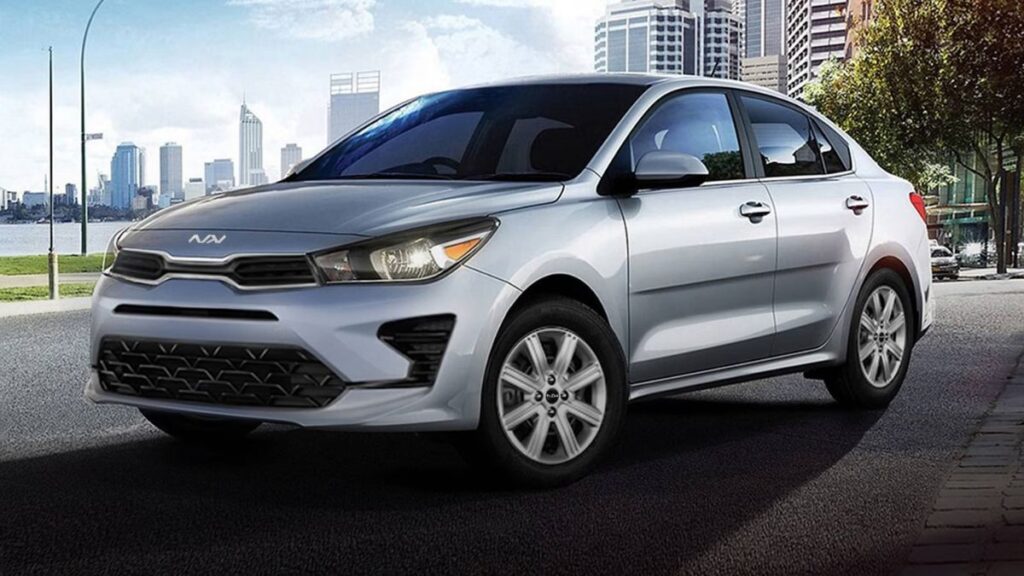
The Rio’s styling has always leaned toward simple rather than aggressive, and the final-year model doesn’t change that approach. The sedan has a clean, slightly upright profile that reads more mature than sporty, while the hatchback version gets a shorter rear overhang that makes it look a bit more athletic in photos than it does in person.
Compared to the Nissan Versa, which added sharper creases and a more expressive front fascia in its last redesign, the Rio looks almost conservative. That’s not necessarily a knock. Some buyers in this segment want a car that blends in rather than draws attention, and the Rio nails that brief. The 15-inch wheels on the base trim are the one spot where the design gives away its budget positioning; they look a size too small for the body.
2023 Kia Rio Driving Experience and Performance
This is where the Rio surprised me the most, and not because it’s fun. It isn’t. But the composure at highway speeds caught me off guard for a car in this price bracket. Steering feel is a little numb, sure, but the accuracy is there. You always know where the front wheels are pointed, and the car doesn’t wander or need constant small corrections on longer stretches of freeway, which is a problem that has plagued more than a few subcompacts I’ve driven.
City driving is where the Rio’s small footprint pays off. Parking lots, tight downtown streets, multi-level garages with impossibly narrow turns, the Rio handles all of it without drama. The ride leans soft, which helps smooth out potholes but does let the car lean a bit in quicker corners. This isn’t a car built for back roads, and it doesn’t pretend to be. It’s built for the daily grind, and on that measure, it delivers more than the specs suggest it should.
Performance and Acceleration
Every 2023 Rio, regardless of trim or body style, comes with the same 120-horsepower 1.6-liter four-cylinder paired to a continuously variable transmission. There’s no engine choice to make here, which simplifies shopping but also means there’s no way to buy your way into more power.
Around town, the engine is adequate. It gets out of its own way at stoplights and keeps up with traffic without much complaint. Merging onto a highway with a full load of passengers is a different story. You’ll want a bit more runway than you’d need in a Forte or a Versa, and the CVT tends to hold a higher RPM longer than feels natural, producing a drone that’s noticeable but not obnoxious. Passing on a two-lane road at speed requires planning ahead. This isn’t a car that rewards impatience.
Ride Comfort and Cabin Luxury
“Luxury” is a strong word for a car that starts under $18,000, so let’s be honest about what’s actually happening here. The Rio’s cabin isn’t luxurious, but it also doesn’t feel like it’s apologizing for its price. The seats are firmer than you’d find in something like a Corolla, but they held up fine on a two-hour test drive without any pressure points or fatigue.
Road noise is the trade-off. There’s a fair amount of wind and tire noise that creeps into the cabin at highway speeds, more than you’d get in a Versa with its extra sound insulation. It’s not loud enough to be tiring, but you’ll notice it on longer trips. The suspension does a good job soaking up smaller imperfections, though bigger bumps and expansion joints send a noticeable jolt through to the seats, a reminder of where the cost-cutting happened.
2023 Kia Rio Interior and Comfort
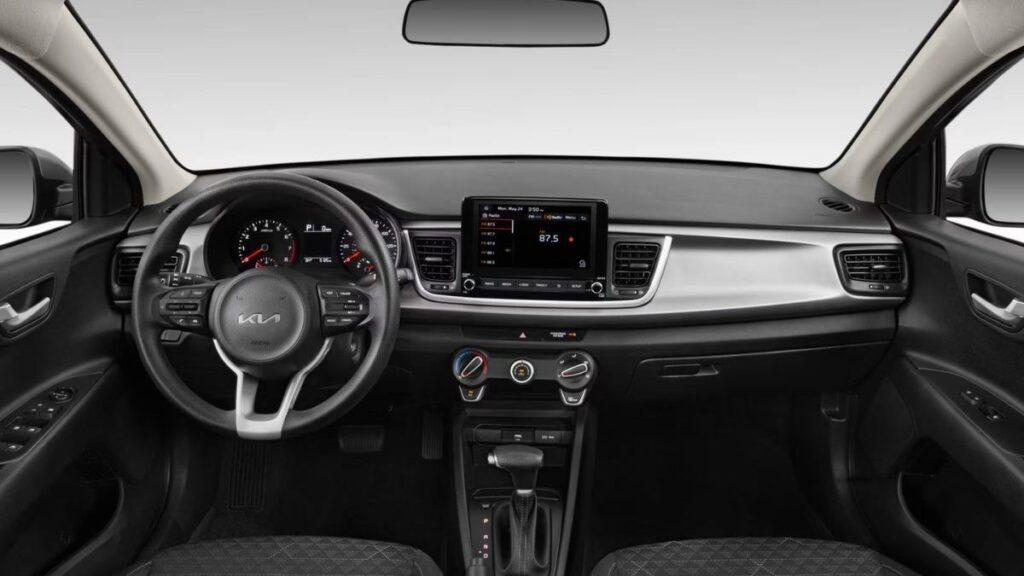
Kia’s interior team clearly prioritized function over flash here. The dashboard layout puts the touchscreen front and center, tilted slightly toward the driver, with physical knobs for volume and tuning that don’t require diving into a menu. That’s a small thing that matters a lot in daily use, and it’s one area where the Rio actually beats some pricier competitors that have gone all-in on touch controls.
Material quality won’t fool anyone into thinking they’re in a more expensive car. There’s a lot of hard plastic on the doors and lower dash, and the color scheme on base trims leans toward gray-on-gray, which does nothing for the mood. The S trim’s added trim pieces help a little, but this remains an interior built to a budget, not one dressed up to hide it.
Technology and Infotainment
The 8-inch touchscreen is genuinely good, and I don’t say that lightly for a car at this price. Wireless Apple CarPlay and Android Auto come standard on every trim, which is still not universal in this segment, and the interface is responsive without the lag that plagues some budget systems. The six-speaker stereo sounds better than expected for background music and podcasts, though it won’t satisfy anyone who cares about bass.
The S trim adds Kia Connect telematics and satellite radio, along with a clearer rearview camera display. None of this is groundbreaking technology, but it’s technology that actually works reliably, which counts for more than flashy features that glitch out. If you’ve driven a budget car with a laggy, confusing infotainment system, the Rio’s setup will feel like a relief.
Fuel Consumption
This is one of the Rio’s strongest arguments. EPA estimates put it at 32 mpg city and 41 mpg highway, with a combined rating around 36 mpg. Real-world numbers from owners have echoed that, with some reporting over 50 mpg on flat highway stretches and consistent 40-plus mpg in city driving.
For a car with no hybrid system and no turbocharging, those numbers come from smart, simple engineering rather than complicated tech that can fail down the road. If gas prices are a real factor in your monthly budget, the Rio makes a stronger case than almost anything else sold new in America right now, hybrids included once you account for the lower purchase price.
2023 Kia Rio Practicality and Storage
The sedan offers 13.7 cubic feet of trunk space, which is respectable for the segment and enough for a real grocery run or a couple of suitcases. The hatchback is the more interesting option here, with 17.4 cubic feet behind the rear seats and 32.8 cubic feet with them folded down. That’s more usable cargo room than some compact SUVs offer, packaged into a footprint that’s easier to park.
Inside, storage is more modest. The center console is on the small side, cupholders are adequate but not generous, and rear passengers get limited legroom if the front seats are pushed back for taller drivers. Car seat installation is workable but not ideal, since the rear anchor points aren’t the easiest to access in the tighter cabin. This is a car built for one or two people with occasional cargo needs, not a family hauler.
Safety and Driver Assistance Systems
The IIHS gave the 2023 Rio its top rating of Good in five of six crash test categories, with the passenger-side small overlap test coming back as Acceptable, the second-highest tier. Those are solid numbers for a car in this price class, and better than what some rivals manage.
The catch is what’s standard versus what costs extra. Forward collision warning, pedestrian detection, and lane-keep assist are locked behind an optional Technology package rather than included from the start, which is disappointing when the Versa offers similar features as standard equipment across its lineup. If active safety tech matters to you, budget for the package or look at the S trim, since the base LX skips it entirely.
Worthy Competitors
The Nissan Versa remains the Rio’s closest rival, and it makes a stronger case on standard safety equipment, though it can’t match the Rio’s fuel economy or the hatchback’s cargo flexibility. The Mitsubishi Mirage undercuts the Rio slightly on price and offers similarly strong fuel economy, but it feels noticeably slower and less refined on the road, especially at highway speeds. For buyers willing to spend a bit more, the Kia Forte offers significantly more power and a roomier cabin, which might be worth the stretch if the Rio’s acceleration feels too limiting during a test drive.
Key Strengths and Key Weaknesses
The Rio’s biggest strength is how well it balances low cost with genuine usability. It doesn’t feel like a car built down to a price in the way some rivals do. The infotainment system, the ride quality, and the fuel economy all punch above what the sticker suggests.
Its biggest weakness is the gap between trims when it comes to safety tech. Charging extra for basic driver assistance features in 2023, especially as the car heads into its final year, feels like a missed opportunity to send the nameplate off on a stronger note.
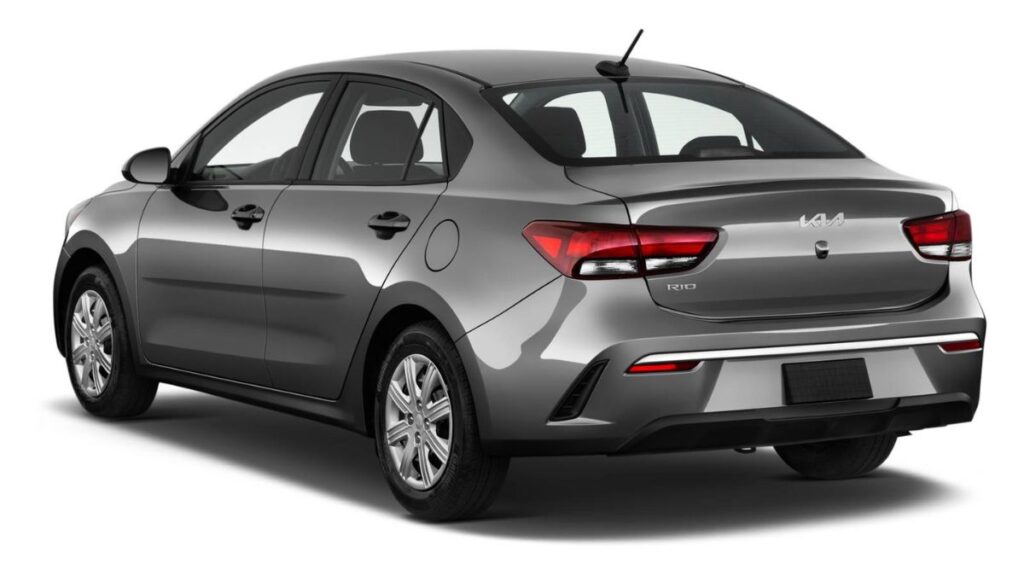
Which Category Does Cardrav Recommend?
If you’re deciding between trims, the Rio S hatchback is the smarter overall pick for most buyers. It strikes the best balance between cost and everyday usability, especially if you actually plan to use the car for more than basic commuting. The extra cargo space alone makes a noticeable difference in real life, whether you’re carrying groceries, luggage, or small weekend gear.
On top of that, the S trim brings meaningful upgrades in convenience and equipment compared to the base LX, without jumping into pricing territory where you start seriously considering something like the Kia Forte. It avoids that awkward middle zone where you’re spending more money but not getting a clearly better class of car.
In simple terms, the Rio S hatchback feels like the “fully usable version” of the Rio lineup. You still keep the low running costs and efficiency, but you gain enough practicality and features to make daily ownership noticeably easier and more comfortable.
Conclusion: Is It Worth Buying?
If you’re shopping brand new in 2026 for a subcompact and stumble onto leftover Rio inventory, snap it up if the price is right, but don’t expect that scenario to last much longer since Kia stopped building them after 2023. The far more common path now is buying used, and that’s actually where the Rio makes the most sense. Depreciation on cheap cars tends to be gentler in dollar terms even if it’s steep in percentage terms, and a lightly used Rio S hatchback gives you nearly the same experience as new for meaningfully less money. The catch with any discontinued nameplate is resale confidence a few years down the line, since there’s no next generation to keep dealer trade-in values propped up the way a redesigned Versa or Forte would. Weigh that against the fact that this platform has been refined for years with no major reliability surprises, and the trade-off starts to look reasonable for a buyer who just needs dependable transportation and doesn’t care about brand cachet.
For anyone cross-shopping against the segment as it exists in 2026, the calculation has shifted. The Versa is still sold new and recently picked up more standard safety equipment, which narrows the gap that used to favor cars like the Rio. The Mirage is reportedly on its own way out soon, which means the entire subcompact sedan and hatchback category is thinning out fast. If you want this kind of simple, affordable car and can find one in good shape, whether new-old-stock or gently used, it’s still a smart buy. Just go in knowing you’re buying into the end of an era rather than the start of one.
FAQ
Is the 2023 Kia Rio a good car?
Yes. It delivers strong fuel economy, a user-friendly infotainment system, and low ownership costs, making it one of the more sensible choices in the shrinking subcompact segment even as this 2023 Kia Rio review notes its slow acceleration.
Why did Kia discontinue the Rio after 2023?
Kia confirmed there were no plans to continue selling the Rio in the US after the 2023 model year, following a broader industry shift away from affordable sedans and hatchbacks as buyers increasingly choose crossovers and SUVs.
What is the fuel economy on the 2023 Kia Rio?
The EPA rates it at 32 mpg city and 41 mpg highway, with a combined estimate around 36 mpg, numbers that hold up well against real-world owner reports.
Does the 2023 Kia Rio have automatic emergency braking?
Not standard. It’s included only with the optional Technology package on the S trim, which also adds pedestrian detection, lane-keep assist, and automatic high-beam LED headlights.
Is the Rio hatchback or sedan the better pick?
The hatchback offers more usable cargo space, with 17.4 cubic feet behind the rear seats compared to the sedan’s 13.7-cubic-foot trunk, making it the more practical choice for most buyers according to this 2023 Kia Rio review.