2023 Nissan Titan Review: Is It Still Worth Buying?
A capable, comfortable pickup that arrived at the end of its own story
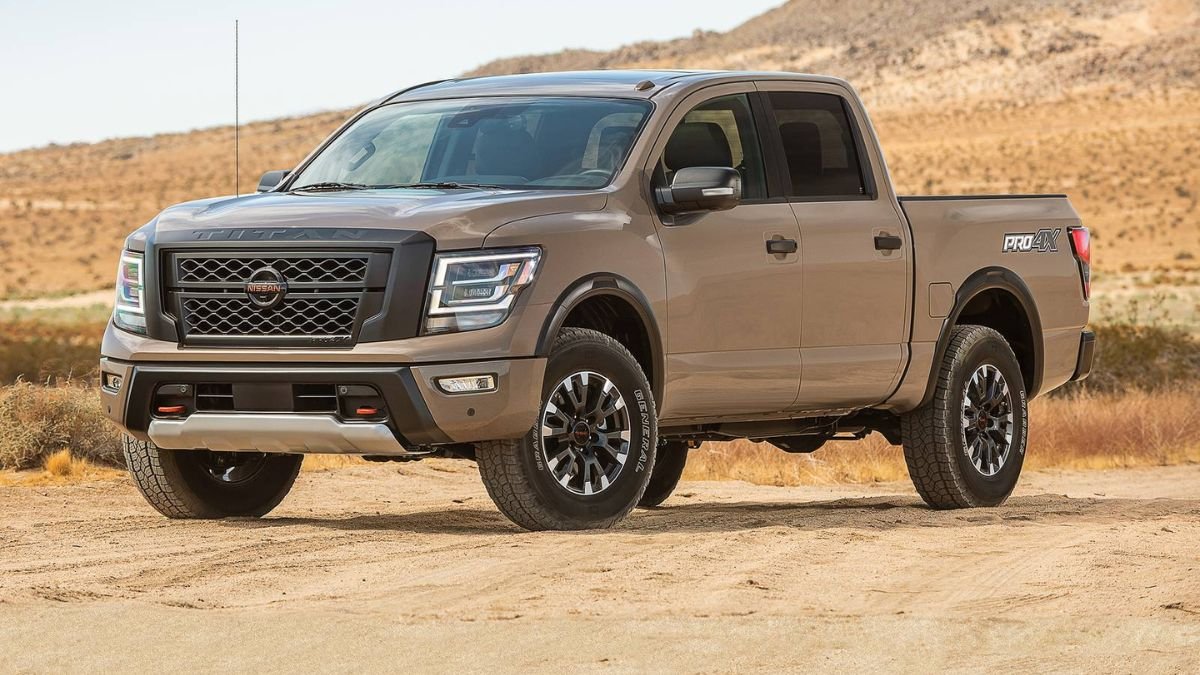
The 2023 Nissan Titan review is really a look at a truck from the final years of a nameplate that is no longer in production. Nissan ended Titan production after the 2024 model year, closing the chapter on a full-size pickup that never quite found the same level of success as the Ford F-150, Chevrolet Silverado, Ram 1500, or Toyota Tundra. That does not make the 2023 Titan irrelevant—in some ways, it makes it more interesting. Its smooth 5.6-liter V8, comfortable ride, roomy cabin, and straightforward personality still give it plenty of appeal, particularly on the used market. But there is a different perspective to consider in 2026: you are not buying into a truck with a future product cycle ahead of it. You are choosing a finished chapter of Nissan’s pickup lineup, and the real question is whether the strengths of the 2023 Titan still outweigh the compromises that come with owning a discontinued truck.
The 2023 Titan is not a bad truck. That is the frustrating part. It has a strong V8, a comfortable cabin, and a reputation for being smoother to drive than the segment’s sales leaders. What it does not have is the towing muscle, the configuration variety, or the long-term parts and resale confidence that come with a truck the manufacturer is still investing in. Ford, Chevrolet, Ram, and Toyota keep building on their platforms every year. Nissan built this one, then closed the book.
That puts the 2023 Titan in an odd spot for buyers. It is not a truck you cross-shop against the current F-150 or Silverado on paper and expect to win. It is a truck you consider because the specific combination of ride comfort, standard horsepower, and depreciation-driven pricing happens to fit what you need, with your eyes open about what you are not getting.
This review covers the Nissan Titan 2023 lineup in detail, from the standard V8 and its real-world towing numbers to where the Titan actually beats its full-size rivals and where it clearly does not.
Our Take
The 2023 Titan’s best argument is refinement. The 5.6-liter V8 is smooth, the nine-speed automatic shifts cleanly, and the ride quality on pavement is more composed than a lot of buyers expect from a traditional body-on-frame pickup. For someone who tows occasionally and drives daily, that composure is worth something real.
The weakness is capability relative to price. Max tow ratings on the standard Titan run from about 9,167 to 9,323 pounds depending on cab and drivetrain, with payload ranging from about 1,607 to 1,697 pounds depending on configuration, respectable numbers on their own, but they trail the class leaders by a wide margin, and you are paying V8-full-size-truck money without getting V8-full-size-truck towing numbers to match. Add in the fact that this generation is not getting another update, and the Titan becomes a truck you buy for what it is right now, not for where it is going.
Pros and Cons
Pros
- Standard 400-horsepower V8 with no de-contented base engine
- Smoother, quieter ride than most rivals on paved roads
- Strong standard safety suite across every trim
- Simple, easy-to-navigate trim structure
- One of the strongest warranties in the full-size truck segment: 5 years or 100,000 miles bumper-to-bumper
Cons
- Towing and payload numbers trail the F-150, Silverado, Ram 1500, and Tundra
- No hybrid, diesel, or turbocharged engine option
- Below-average fuel economy for the segment
- Production ending after the 2024 model year limits long-term resale confidence
- Fewer cab, bed, and configuration choices than competitors offer
What’s New for 2023?
The changes for 2023 are modest. Wireless Apple CarPlay became standard on the PRO-4X and Platinum Reserve trims, closing a gap that had made the Titan feel a step behind on tech. Nissan also brought back the Midnight Edition appearance package for the Crew Cab SV, adding black wheels and darkened trim for buyers who want a more aggressive look without stepping up to PRO-4X.
Nothing about the powertrain, chassis, or towing hardware changed. This is a carryover year in every mechanical sense, and it turned out to be one of the Titan’s last two model years before Nissan pulled the plug entirely.
Who Is This Truck Really For?
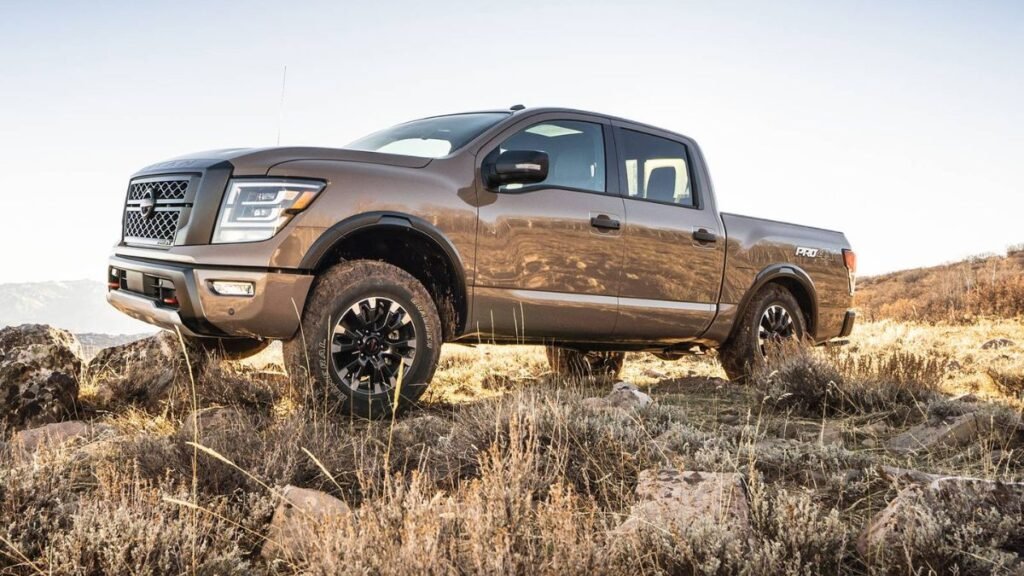
The Titan makes the most sense for a buyer who wants a full-size, V8-powered pickup for daily driving, occasional towing under 9,000 pounds, and a smoother highway ride than the segment typically delivers, and who is comfortable buying a truck that will not see another redesign or meaningful update.
It is a much tougher sell for anyone who tows heavy trailers regularly, wants a diesel or hybrid option, or cares deeply about long-term resale value and dealer network support for a discontinued model. Those buyers are better served by an F-150, Silverado, or Tundra.
Driving Experience
This is where the Titan quietly earns its keep. The 5.6-liter V8 pulls with an even, confident delivery, and the nine-speed automatic does a good job staying out of the way, shifting cleanly without the hunting or hesitation that shows up in some rival transmissions when a load is added. Throttle response around town is direct without feeling twitchy, and the steering, while not particularly communicative, is light enough for easy parking-lot maneuvering and settles down nicely at highway speed.
Ride quality is the Titan’s calling card. On rough pavement, the suspension does a better job soaking up impacts than several of its competitors, and that composure carries over onto the highway, where wind and road noise stay reasonably subdued for a full-size truck. Body control in corners is unremarkable but not sloppy, which is about what you want from a half-ton pickup, since nobody is buying this truck to carve canyon roads.
Where the driving experience comes up short is in outright capability. Braking feels adequate rather than confidence-inspiring under a heavy load, and the PRO-4X’s off-road hardware, while genuinely useful with its electronic locking rear differential and Bilstein shocks, does not match the more elaborate systems Ford and Ram now offer on their off-road trims. In everyday use, though, the Titan drives like a truck that was tuned by people who understood real-world commuting and light-duty work, even if it was never given the resources to chase the segment leaders on paper.
Comfort and Interior
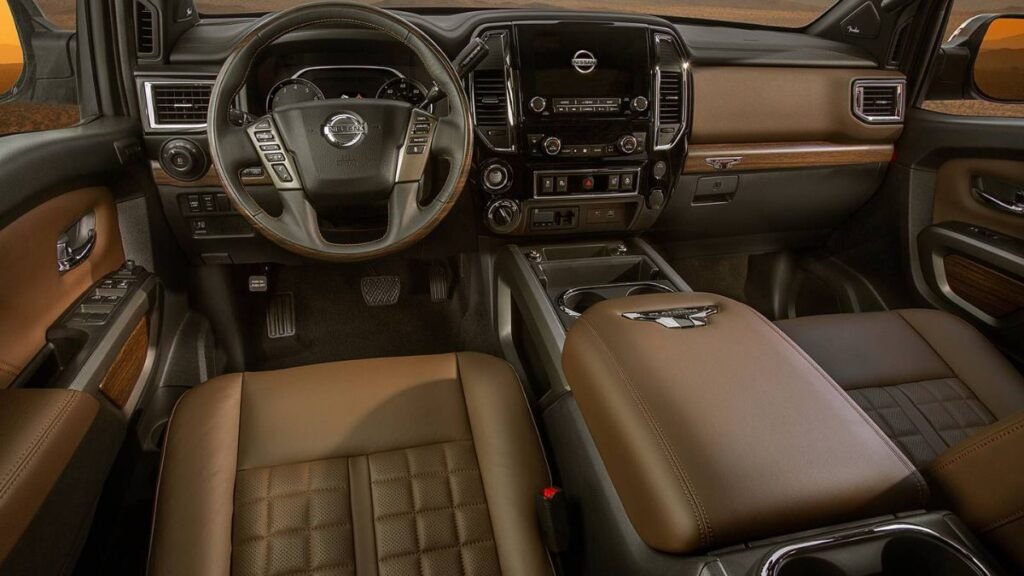
The cabin is one of the Titan’s strongest arguments. Seat comfort stands out in particular. Nissan’s zero-gravity front seats are genuinely supportive on long drives, and that matters more than most spec sheets suggest once you are three hours into a road trip. Materials in the SV and PRO-4X feel solid rather than premium, with a mix of durable plastics and reasonably padded touch points that hold up to work-truck use without feeling cheap.
Visibility is good by modern truck standards, with a relatively low beltline for the class and a dash layout that keeps the driver’s sightlines clear. Nissan mixed physical gauges with a 7-inch digital display in the instrument cluster, and that combination works better in daily use than some of the fully digital setups competitors have moved to, since key information stays visible without menu diving.
Rear seat space in the Crew Cab is generous, with enough legroom for adults on shorter trips, though the class leaders still edge it out slightly in outright rear-seat room. Road and engine noise stay well controlled at speed, reinforcing the sense that this cabin was tuned more for comfort than for shouting about its capability.
Technology and Infotainment
The Titan runs NissanConnect on an 8-inch or 9-inch touchscreen depending on trim, and for 2023, wireless Apple CarPlay finally became standard on the PRO-4X and Platinum Reserve, a change that was overdue but welcome. Android Auto remains wired-only across the lineup, which will annoy some buyers used to going wireless on both platforms.
The interface itself is not flashy. Menus are logically arranged and respond quickly, but the graphics look dated next to what Ford and Ram now offer on their larger touchscreens. Nissan compensates by keeping physical climate controls and volume knobs, which is a genuine advantage for anyone operating the truck with gloves on or without wanting to hunt through a touchscreen menu while driving. The available Intelligent Around View Monitor is a useful addition for parking and low-speed maneuvering, particularly on Crew Cab models where rear visibility is more limited.
Nissan Concierge, a subscription-based live-assistant service, is available but not something most buyers will find essential. The core technology package here does what it needs to do without trying to out-tech the competition, which fits the Titan’s overall personality.
Fuel Economy and Real-World Efficiency
EPA estimates for the 2023 Titan run 16 mpg city and 21 mpg highway with rear-wheel drive, dropping to 15/21 mpg with four-wheel drive, and 15/20 mpg on the PRO-4X specifically. Combined figures land around 17 to 18 mpg depending on configuration.
Those numbers are below average for the full-size truck class. The Ford F-150 offers a genuinely efficient hybrid option, and even the standard gas engines from Ford and Ram tend to edge out the Titan’s V8 in real-world fuel consumption. Nissan never offered a turbocharged or hybrid alternative for the Titan, so buyers get one flavor of efficiency, and it is not a particularly strong one.
For a buyer who drives mostly highway miles and does not tow often, that translates into meaningfully higher fuel costs over a year of ownership compared to a hybrid F-150 or even some of the smaller-displacement V8s and V6s from rivals. If fuel economy is a top priority, the Titan is not the truck to build a case around.
Cargo, Space and Everyday Practicality
Bed length runs 67 inches on the Crew Cab and 78.7 inches on the King Cab, which is competitive but not class-leading. Payload and towing both depend heavily on cab and drivetrain. Payload ranges from 1,607 pounds on a Crew Cab 4×2 up to 1,697 pounds on a King Cab 4×4, with the Crew Cab 4×4 landing at 1,658 pounds and the King Cab 4×2 at 1,613 pounds. Maximum towing follows a similar spread, from 9,167 pounds on a Crew Cab 4×4 up to 9,323 pounds on a King Cab 4×2. The heavier-duty Titan XD Crew Cab 4×4, built on a reinforced frame, raises payload to a maximum of 2,406 pounds and pushes towing to 10,898 pounds using the standard tow hitch receiver, or up to 11,033 pounds when equipped with an available gooseneck hitch. Those XD numbers are a meaningful jump for buyers who need more capability without stepping up to a heavy-duty diesel truck, but even at its best, the Titan lineup is built for moderate towing and everyday work rather than for chasing the highest number on the spec sheet, and buyers who need maximum towing capability will find more room to work with elsewhere in the segment.
Those numbers work fine for weekend trailers, small boats, and moderate work-truck duty. They fall short if you are regularly hauling heavier equipment trailers or fifth-wheel campers, where the F-150, Silverado, and Ram 1500 all offer configurations that tow several thousand pounds more.
Cab storage is well thought out, with usable door pockets, a covered center console, and rear underseat storage on Crew Cab models. The spray-in bedliner that comes standard even on the base S trim is a nice touch that some competitors charge extra for. Day to day, as a truck for hauling gear, running errands, and handling light trailer duty, the Titan is genuinely practical. It simply is not the truck to reach for if maximum capability is the primary goal.
Biggest Strength and Biggest Weakness
The Titan’s biggest strength is the combination of standard V8 power and everyday ride comfort. Every trim gets the full 400 horsepower, there is no watered-down base engine to avoid, and the truck rides more smoothly than several rivals on rough pavement.
The biggest weakness is capability relative to the competition, made worse by the truck’s discontinued status. A buyer paying full-size-truck money in 2023 could get meaningfully more towing capacity, more configuration choices, and more confidence in long-term support by choosing an F-150, Silverado, or Tundra instead. The Titan asks you to accept less capability and less future in exchange for comfort and a lower relative price, and that is not a trade every truck buyer is willing to make.
Competitors Worth Considering
The Ford F-150 offers a wider range of engines, including a genuinely efficient hybrid, along with significantly higher towing and payload ceilings, making it the default choice for buyers who need more capability than the Titan offers.
The Chevrolet Silverado 1500 undercuts the Titan on payload and towing while offering more cab and bed configurations, and its diesel option is worth a look for buyers focused on long-distance towing efficiency.
The Ram 1500 leads the class on interior refinement and ride quality thanks to its coil-spring rear suspension, making it the closest rival to the Titan’s comfort-focused personality, but with considerably more configuration flexibility.
The Toyota Tundra brings a twin-turbo V6 with more power than the Titan’s V8 and a hybrid option, along with Toyota’s reputation for long-term reliability, at a price point that often lands close to the Titan’s.
Trim Comparison
The 2023 Titan lineup runs four trims: S, SV, PRO-4X, and Platinum Reserve, plus the heavier-duty Titan XD variant available across most of the same trim structure.
The S trim, starting around $41,500 with destination, is the value pick. It comes with 18-inch steel wheels, a spray-in bedliner, and the full 400-horsepower V8, and in our view it is the smarter buy for most people than the more popular PRO-4X, since you get the same engine and the same core safety suite without paying for off-road hardware or styling most owners will never use.
The SV adds more convenience equipment and is eligible for the reintroduced Midnight Edition appearance package on Crew Cab models, giving buyers a way to get a more aggressive look without the PRO-4X’s off-road hardware.
The PRO-4X is the volume seller and the off-road-focused trim, adding Bilstein shocks, skid plates, hill descent control, and an electronic locking rear differential, along with standard wireless Apple CarPlay as of 2023. It also posts the lowest fuel economy figures in the lineup, a direct trade-off for its off-road gearing and hardware.
The Platinum Reserve sits at the top, adding the most comfort and technology features along with wireless Apple CarPlay, aimed at buyers who want a full-size truck that leans toward luxury rather than work duty.
Should You Buy It?
Buy the 2023 Titan if you want a full-size, V8-powered pickup with a smoother ride than most competitors, you do not need class-leading towing capacity, and you are comfortable with the idea of owning a discontinued model that Nissan will still support with parts, service, and warranty coverage but will not continue developing.
Skip it if towing capacity, configuration variety, fuel economy, or long-term resale value are priorities. The F-150, Silverado, and Tundra all offer more capability and a clearer path forward as ongoing nameplates.
For used-market buyers specifically, the Titan’s depreciation curve is worth watching closely. Discontinued vehicles often depreciate faster in the years immediately following the announcement, which can make a lightly used 2023 or 2024 Titan a genuinely strong value play, provided you go in accepting that this generation will never be updated again and that resale demand five or six years from now is uncertain compared with a truck still in active production. With Titan production now finished, buyers shopping for one today are looking at the used market rather than new-vehicle inventory, and buyers should factor in mileage, remaining warranty coverage, and the strength of local Nissan dealer parts and service support before committing, since Titan-specific inventory and expertise will only get thinner as the fleet ages.
Final Verdict: Is the 2023 Nissan Titan Worth Buying?
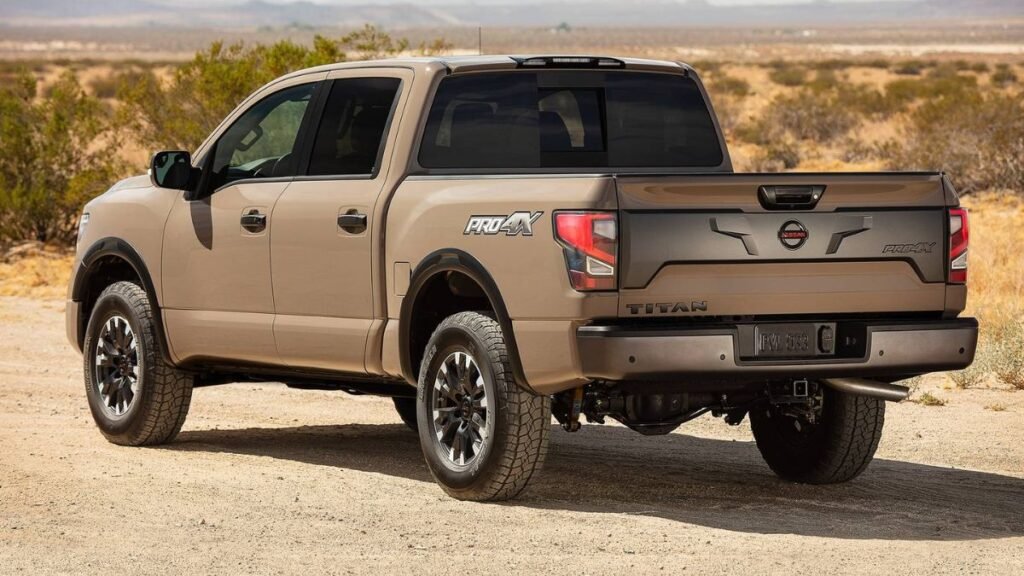
The 2023 Nissan Titan is a competent, comfortable full-size truck that Nissan gave up on before this review was even written. Judged purely on how it drives and rides, it holds its own against trucks that get far more marketing attention and far more year-over-year investment. Judged as a long-term purchase in a segment where towing numbers, configuration choices, and manufacturer commitment matter, it falls behind Ford, Chevrolet, Ram, and Toyota in ways that are hard to ignore.
Who should buy it: a buyer who wants strong standard V8 power, a comfortable ride, and a lower relative price, and who tows occasionally rather than constantly.
Who should avoid it: anyone who needs heavy-duty towing capacity, wants a hybrid or diesel option, or is prioritizing long-term resale value and manufacturer support for a nameplate that is still being built.
The biggest reason to buy it is the combination of standard horsepower and ride comfort at a price that undercuts some rivals once incentives and depreciation are factored in. The biggest reason not to buy it is simple: Nissan already decided this truck does not have a future, and that decision should weigh heavily on anyone considering one as a long-term vehicle rather than a short-term deal.
FAQ
Is the 2023 Nissan Titan a good truck to buy?
It is a solid choice for buyers who value ride comfort and standard V8 power over maximum towing capability, but the Nissan Titan 2023 review picture is complicated by the model’s discontinuation after the 2024 model year, which should factor into any long-term purchase decision.
How much can the 2023 Nissan Titan tow?
The standard Titan can tow up to 9,323 pounds when properly equipped, with the exact figure depending on cab and drivetrain, while the heavier-duty Titan XD Crew Cab reaches up to 10,898 pounds with a standard tow hitch receiver or 11,033 pounds with an available gooseneck hitch, both of which trail the towing ceilings of the F-150, Silverado, and Ram 1500.
Why did Nissan discontinue the Titan?
Nissan confirmed that Titan production would end in the summer of 2024, citing years of underwhelming sales in a segment dominated by Ford, Chevrolet, and Ram, as the company shifted its Canton, Mississippi plant toward electric vehicle production.
What is the fuel economy of the 2023 Nissan Titan?
EPA estimates range from 15 to 16 mpg city and 20 to 21 mpg highway depending on drivetrain and trim, figures that trail most of the Titan’s full-size truck competitors.
Is a used 2023 Nissan Titan a good value?
For buyers focused on this Nissan Titan 2023 review’s core trade-off of comfort over capability, a used example can be a strong value thanks to accelerated depreciation following the discontinuation announcement, provided buyers accept that this generation will not receive further updates.