Best Pickup Trucks to Buy in 2026 10 Used Models Compared
Compare 10 used pickup trucks from 2022–2023, from powerful towing workhorses to off-road performers and electric models, to find the right balance of capability, comfort, reliability, and value in 2026.


The best pickup trucks to buy in 2026 are not necessarily the newest or most expensive models on the market. For many buyers, the smarter choice is a well-equipped used full-size pickup from a recent model year, one that delivers proven capability, modern safety features, and enough remaining life to justify its purchase price. Trucks from 2022, 2023, and 2024 deserve particular attention because they offer different combinations of technology, powertrain options, refinement, and used-market value. The challenge is knowing which models deliver genuine long-term value and which ones look more appealing on a specification sheet than they do after several years of ownership.
The full-size pickup segment also demands more careful comparisons than most vehicle categories. Two trucks carrying the same model badge can have substantially different towing capacities, payload limits, fuel consumption, and equipment depending on their engine, cab configuration, bed length, drivetrain, axle ratio, and factory-installed packages. A high maximum towing figure does not automatically make a truck the right choice for a particular trailer, and a powerful engine is not necessarily the best option for someone who spends most of the week commuting. Buyers need to look beyond headline numbers and understand how each truck performs in the configuration they are actually considering.
This guide examines ten pickup trucks that remain worth considering in 2026, from traditional V8-powered workhorses and refined daily drivers to factory-built off-road machines and electric pickups. We look at towing and payload capability, engine performance, ride comfort, interior quality, fuel economy, reliability concerns, resale value, and the practical consequences of buying a model that has since been discontinued. We also consider how each truck fits into the current used market rather than treating every model as though it were still available new.
Anyone shopping for a used pickup should also go beyond the manufacturer’s original specifications. Checking the vehicle identification number through the National Highway Traffic Safety Administration’s recall database, reviewing available model-year safety results from the Insurance Institute for Highway Safety, and comparing engine-specific fuel economy estimates through FuelEconomy.gov can reveal important differences between otherwise similar trucks. Maintenance history, previous towing use, accident records, and the condition of the transmission, suspension, and frame matter just as much as the badge on the grille.
Our Take: What Makes a Pickup Truck Worth Buying in 2026?
Choosing a pickup truck in 2026 comes down to understanding what you need the vehicle to do over several years of ownership, not simply buying the truck with the highest horsepower or towing rating. A contractor who regularly pulls a heavy trailer has very different priorities from someone who wants a comfortable full-size truck for commuting, family travel, and occasional hauling. Likewise, buyers who spend weekends on desert trails need suspension travel, ground clearance, suitable tires, and durable off-road equipment rather than a luxury interior or an impressive maximum payload figure.
The Ford F-150 continues to make a strong case as an all-around pickup because its broad engine and trim selection allows buyers to match the truck to a wide range of jobs. Chevrolet Silverado and GMC Sierra models deserve close attention from buyers who prioritize towing capability, while the Ram 1500 stands out for its ride comfort and cabin refinement. Toyota’s Tundra appeals to shoppers who value resale strength and a different approach to powertrain design. For more specialized needs, the Ford F-150 Raptor and Ram 1500 TRX offer factory-engineered off-road performance, while the Nissan Titan and Ram 1500 Classic can make sense as used purchases when their pricing, condition, and equipment are right.
Electric pickups require a separate kind of evaluation. The Ford F-150 Lightning can be an appealing choice for owners with convenient home charging and predictable daily driving, but buyers who regularly tow long distances must consider the substantial effect that trailer weight, weather, and highway speed can have on driving range. A truck that works exceptionally well for local hauling may be less convenient for long-distance towing, even when its rated towing capacity appears competitive.
Our recommendations therefore place greater emphasis on real ownership considerations than on isolated specification numbers. We look at what each truck does particularly well, where it falls short, which configurations are worth seeking out, and what buyers should investigate before committing to a purchase. Some models remain attractive because they offer modern equipment and strong capability, while others deserve attention because their depreciation has made them more accessible or because they provide qualities that newer trucks no longer offer. The best pickup is ultimately the one that fits the buyer’s actual workload, budget, and ownership expectations without paying for capabilities that will rarely be used.
1. 2023 Ram 1500 Classic
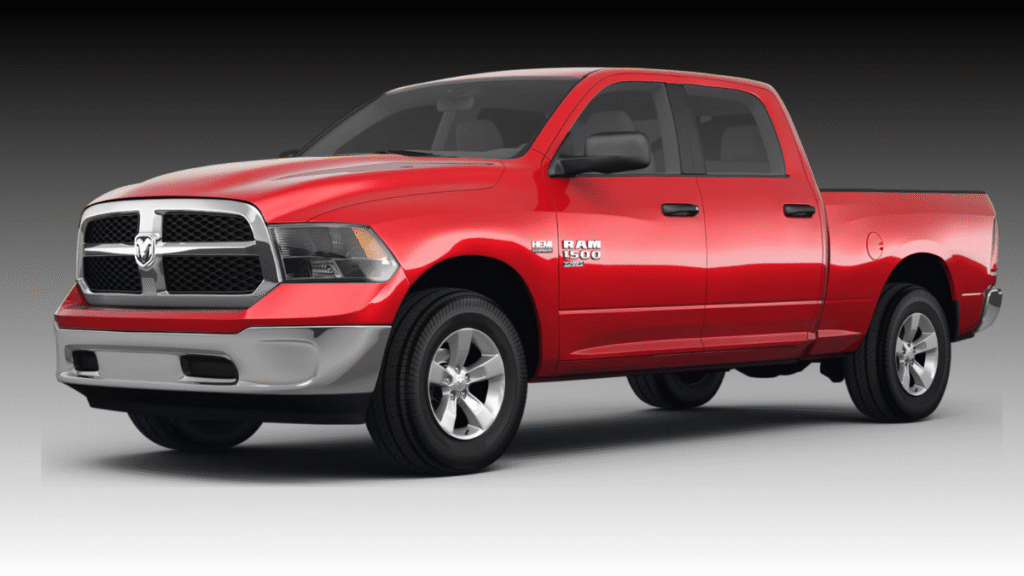
Overview
The Ram 1500 Classic occupies an unusual position in the full-size pickup market, and that is exactly what makes it worth considering as a used truck in 2026. When Ram introduced its redesigned fifth-generation 1500 for 2019, the company continued building the previous-generation model alongside it under the Classic name. This allowed buyers to choose between a newer, more refined truck and a familiar platform that prioritized straightforward capability and a lower purchase price. The Classic remained in production through 2024, making the 2023 model one of the later examples of this long-running design.
Under the hood, the 2023 Ram 1500 Classic offers two established gasoline engine choices. The 3.6-liter Pentastar V6 produces 305 horsepower and 269 pound-feet of torque, while the available 5.7-liter HEMI V8 delivers 395 horsepower and 410 pound-feet. Both engines are paired with an eight-speed automatic transmission, although the HEMI is the more compelling choice for buyers who regularly tow heavier loads. Properly equipped with the V8, the Classic can tow up to 10,620 pounds, giving it enough capability for many travel trailers, utility trailers, and everyday work demands. Another important distinction is its five-link coil-spring rear suspension, which gives the truck a more compliant ride than the leaf-spring arrangements commonly found in several competing pickups. Ram’s 2023 Ram 1500 Classic capability specifications provide further details on its engines, suspension, and towing performance.
Pros
The Ram 1500 Classic can offer a more accessible entry point into full-size pickup ownership than newer-generation trucks, particularly in the used market. Its available HEMI V8 provides strong power and a maximum towing capacity of 10,620 pounds when properly equipped, while the five-link coil-spring rear suspension delivers a comfortable ride that makes the truck easier to live with as a daily driver. Its familiar mechanical layout and straightforward approach to equipment also appeal to buyers who prefer traditional pickup engineering over increasingly complicated features and technology.
Cons
The Classic’s age is increasingly apparent inside the cabin, where interior materials, infotainment features, and available driver-assistance technology fall behind more recent full-size pickups. Its limited trim selection also gives buyers fewer opportunities to customize the truck compared with newer competitors. Fuel economy is another compromise, particularly with the HEMI V8. According to EPA fuel economy estimates, the 2023 Classic with the 3.6-liter V6 achieves up to 17 mpg city and 25 mpg highway in rear-wheel-drive form, while the HEMI V8’s ratings are lower. Four-wheel-drive versions also return different figures, so buyers should check the specific configuration rather than rely on the best advertised estimate. Finally, its discontinued status means shoppers must evaluate used inventory carefully, paying close attention to mileage, maintenance records, previous towing use, and overall mechanical condition.
Why Buy It in 2026?
The Ram 1500 Classic makes its strongest case in 2026 as a practical used pickup for buyers who value traditional V8 power, straightforward capability, and a comfortable driving experience more than the latest interior technology. With production ending in 2024, shoppers can no longer purchase a new Classic through regular production, but well-maintained examples remain relevant in the pre-owned market. Its HEMI V8 delivers substantial towing capability, while the coil-spring rear suspension makes it particularly appealing to owners who spend long hours behind the wheel rather than using their trucks exclusively for heavy work.
The Classic is especially worth considering for contractors, small business owners, and individuals who need a capable half-ton pickup without paying the premium associated with a newer, more extensively equipped model. However, its appeal depends heavily on finding the right example at the right price. Buyers should not assume that a simpler design automatically guarantees trouble-free ownership; a documented service history, a thorough mechanical inspection, and a careful assessment of the engine and transmission are still essential. For someone who wants a proven full-size truck with useful towing strength and fewer luxury-oriented extras, the 2023 Ram 1500 Classic remains a sensible used-market option.
2. 2023 Nissan Titan
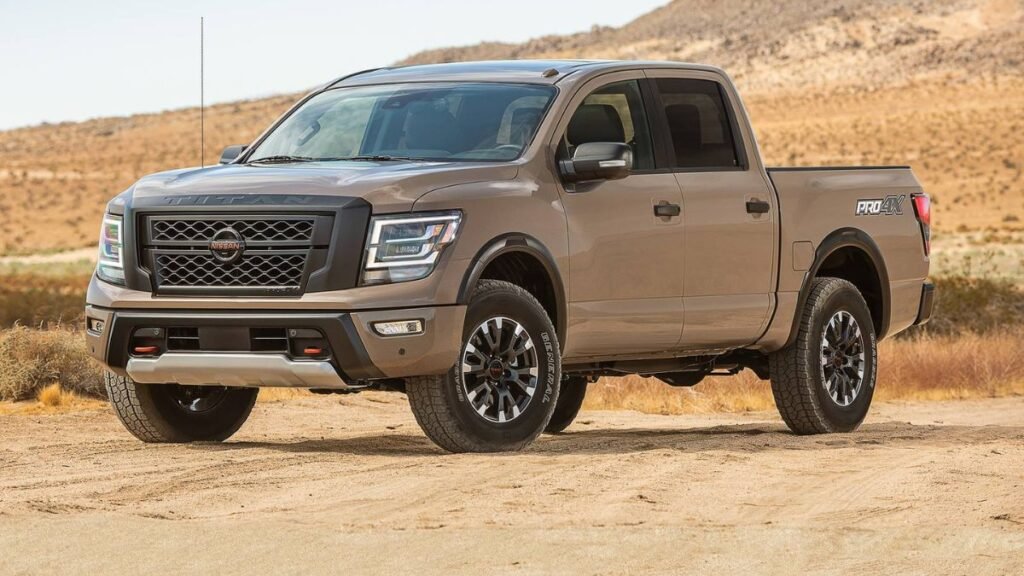
Overview
The 2023 Nissan Titan takes a different approach from most of its full-size competitors by keeping the powertrain lineup remarkably simple. Rather than offering several engine choices with widely varying performance levels, Nissan equipped every Titan with the same naturally aspirated 5.6-liter Endurance V8, producing 400 horsepower and 413 pound-feet of torque. Paired with a nine-speed automatic transmission, this engine gives the Titan strong acceleration and the kind of traditional V8 character that continues to appeal to pickup buyers who prefer straightforward gasoline power over smaller turbocharged alternatives. The combination also means shoppers do not have to navigate a complicated engine lineup to find the more powerful configuration.
Towing capability is competitive for everyday recreational and work-related use, although the exact rating depends on cab style, drivetrain, and trim. The 2023 Titan reaches a maximum conventional towing capacity of 9,317 pounds in a properly equipped King Cab 4×2 configuration, while some Crew Cab and four-wheel-drive versions have lower limits. Its maximum payload also varies by configuration, so buyers who regularly carry heavy equipment should check the specific truck’s factory ratings rather than relying on the highest figure advertised for the entire lineup. Nissan’s official 2023 Titan specifications provide a detailed breakdown of the available configurations and their towing capacities.
One of the Titan’s most attractive advantages when new was its warranty coverage. Nissan offered five-year/100,000-mile bumper-to-bumper protection, including basic and powertrain coverage, whichever came first. That was an unusually generous selling point in the full-size truck segment and helped distinguish the Titan from its domestic competitors. With 2024 marking the nameplate’s final production year, the 2023 model now represents an interesting option for buyers who want a relatively recent V8-powered pickup with a straightforward mechanical specification. Nissan confirms the model’s production history on its official discontinued Titan page.
Pros
The Titan’s standard 400-horsepower V8 gives every trim a strong and consistent powertrain without forcing buyers to pay extra for a larger engine. Its nine-speed automatic transmission provides a modern transmission setup, while the available King Cab configuration offers useful towing capability for a full-size pickup. The original five-year/100,000-mile bumper-to-bumper warranty was another significant advantage, particularly for buyers who wanted more extensive factory coverage than the shorter basic warranties commonly offered by competitors. Now that production has ended, the Titan may also appeal to used-truck shoppers who can find a well-maintained example at a competitive price.
Cons
The Titan’s single-engine strategy makes the lineup simple, but it also limits buyer choice. There is no smaller, more fuel-efficient engine for shoppers who do not need the full output of the V8, and its maximum towing and payload ratings fall short of the strongest configurations offered by the Ford F-150, Chevrolet Silverado 1500, and GMC Sierra 1500. Fuel consumption is another consideration, particularly for owners who drive long distances or use the truck primarily for commuting. According to EPA fuel economy estimates, the 2023 Titan returns approximately 16 mpg city and 21 mpg highway with rear-wheel drive, dropping to 15 mpg city and 21 mpg highway with four-wheel drive. The final production year also means buyers should not expect future model updates or a direct Titan replacement, while remaining factory warranty coverage must be checked against the individual truck’s original in-service date and mileage.
Why Buy It in 2026?
The 2023 Nissan Titan makes sense in 2026 for a particular type of used-truck buyer: someone who wants traditional V8 performance, useful towing capability, and a relatively uncomplicated powertrain without necessarily needing the highest ratings in the segment. Its 5.6-liter Endurance V8 delivers 400 horsepower across the lineup, eliminating the need to compare multiple engine options before deciding which version provides adequate performance. That simplicity, combined with a comfortable full-size cabin and a substantial original factory warranty, gives the Titan a strong argument as an alternative to more expensive or heavily optioned domestic pickups.
Its discontinued status deserves consideration, but it should not automatically discourage buyers. A truck that is no longer in production can still be a practical ownership choice, provided its condition, maintenance history, and asking price are right. The most important warranty consideration is that the original five-year/100,000-mile coverage runs from the vehicle’s original in-service date, so a 2023 example purchased in 2026 may have only part of that protection remaining. Buyers should verify the VIN and remaining coverage with a Nissan dealer before completing a purchase.
The Titan is particularly appealing to owners who appreciate naturally aspirated V8 power and do not need the maximum towing or payload capacity available from a half-ton pickup. A well-maintained example with documented service history, no significant accident damage, and a competitive used-market price can offer a satisfying combination of power and everyday practicality. For buyers who value those qualities more than the latest technology or an extensive range of engine choices, the 2023 Nissan Titan remains worth a place on their used-pickup shortlist.
3. 2022 Ford F-150 Raptor
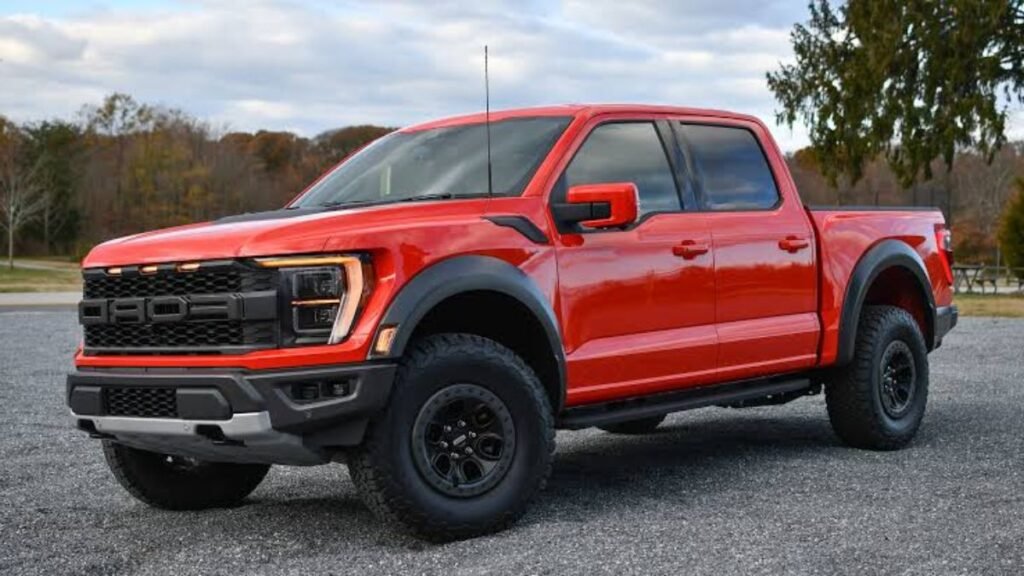
Overview
The 2022 Ford F-150 Raptor takes a very different approach to full-size pickup performance. Rather than focusing on maximum towing capacity or heavy-duty work capability, Ford engineered this truck around high-speed off-road driving, particularly the wide-open desert terrain that helped establish the Raptor name. Its high-output 3.5-liter twin-turbocharged EcoBoost V6 produces 450 horsepower and 510 pound-feet of torque, sending power through a 10-speed automatic transmission and a sophisticated four-wheel-drive system. The result is a truck that feels considerably different from an ordinary F-150, with an emphasis on maintaining control and composure over rough terrain at speeds that would challenge conventional pickup suspensions. Ford’s F-150 Raptor lineup provides additional information about the engineering behind this performance-oriented family of trucks.
The Raptor’s suspension is one of its defining advantages. Ford equips the 2022 model with FOX 3.1-inch Live Valve internal bypass shocks, using electronic damping adjustments to respond to changing terrain and driving conditions. The suspension works alongside a unique five-link rear setup, reinforced underbody protection, and substantial all-terrain tires. Standard equipment includes 35-inch BFGoodrich All-Terrain tires, while the available Raptor 37 Performance Package upgrades the truck to 37-inch tires and brings additional off-road capability. These features make the Raptor particularly effective across desert trails, loose surfaces, and rough terrain where suspension travel and damping control matter more than outright towing numbers.
That specialized hardware does come with practical compromises. The 2022 F-150 Raptor has a maximum towing capacity of 8,200 pounds, considerably less than many conventional F-150 configurations, and its payload capacity is also limited by its performance-focused setup. Fuel consumption is another consideration. The standard 35-inch tire configuration carries EPA estimates of 15 mpg in the city and 18 mpg on the highway, while the 37-inch version is rated at 15 mpg city and 16 mpg highway. Buyers considering a used Raptor should understand that they are paying for specialized suspension engineering and off-road performance rather than the maximum utility available from the broader F-150 lineup. The EPA’s 2022 F-150 Raptor fuel economy data provides the official estimates for the standard configuration.
Pros
The Raptor’s FOX Live Valve suspension delivers exceptional control over rough terrain, making it particularly rewarding for high-speed desert driving and demanding off-road conditions. Its twin-turbocharged V6 produces 450 horsepower and 510 pound-feet of torque, providing strong acceleration without requiring a large-displacement V8. The standard 35-inch all-terrain tires, available 37-inch upgrade, reinforced underbody protection, and specialized four-wheel-drive hardware give it genuine factory-built off-road capability. Its wide body, distinctive exterior styling, and aggressive stance also make it one of the most recognizable performance pickups on the road. The 10-speed automatic transmission complements the engine with a broad range of gearing suited to both highway driving and demanding off-road conditions.
Cons
The Raptor’s performance-focused design comes with several compromises that buyers should understand before purchasing one. Its maximum towing capacity of 8,200 pounds is relatively modest for a full-size pickup at this price level, particularly when compared with conventional F-150 models designed for trailer work. Fuel consumption is also high, and the larger 37-inch tire package makes highway efficiency even less favorable. The wide body and aggressive tires can make everyday parking and maneuvering less convenient than in a standard F-150, while the specialized suspension components, large tires, and off-road equipment can increase maintenance and replacement costs. Buyers should also remember that a heavily used Raptor may have experienced more demanding conditions than an ordinary pickup, making a careful inspection of its shocks, suspension components, underbody protection, and drivetrain especially important.
Why Buy It in 2026?
The 2022 Ford F-150 Raptor remains an appealing used pickup in 2026 for buyers who want genuine off-road performance without moving into a specialized aftermarket build. Its combination of a high-output twin-turbo V6, electronically controlled FOX suspension, substantial ground clearance, and factory-engineered four-wheel-drive hardware gives it capabilities that a standard F-150 cannot easily replicate. Several years of real-world ownership experience are now available, allowing prospective buyers to research maintenance requirements, inspect used examples, and compare how individual trucks have been treated.
The key is understanding what the Raptor does particularly well. It is not the ideal choice for someone who regularly hauls heavy equipment or needs the highest possible towing capacity from a half-ton pickup. Instead, its strengths become apparent on desert trails, rough backroads, and long off-road trips where suspension performance, traction, and vehicle control matter most. The available 37-inch tire package makes an already distinctive truck even more capable, although buyers should account for its additional effect on fuel consumption and replacement costs.
Condition is especially important when shopping for a used Raptor. A truck that has spent years tackling demanding off-road terrain may have experienced more suspension stress and underbody impacts than one used primarily on highways. Prospective buyers should look for leaking shock absorbers, damaged skid plates, worn suspension joints, uneven tire wear, and evidence of poorly repaired underbody damage. Checking the vehicle’s VIN through the National Highway Traffic Safety Administration’s recall database is another worthwhile step before completing a purchase. For buyers who prioritize factory-built desert performance, distinctive styling, and a highly capable suspension system over maximum towing strength, the 2022 F-150 Raptor remains one of the most rewarding full-size pickups to consider in the used market.
4. 2023 Chevrolet Silverado 1500
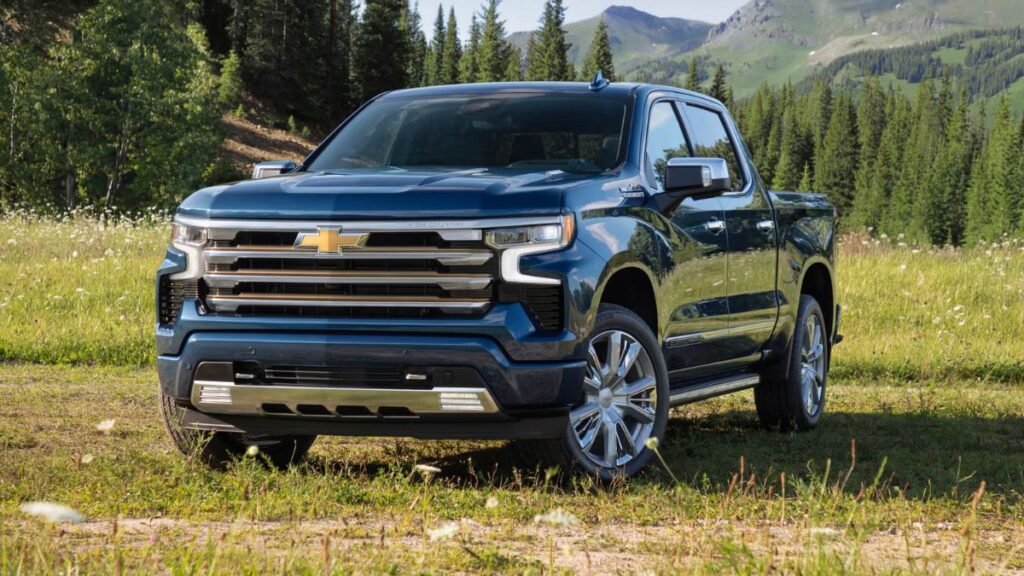
Overview
The Chevrolet Silverado 1500 offers one of the most versatile powertrain lineups in the full-size pickup segment, making it an appealing choice for buyers with very different driving and workload requirements. The 2023 model provides four engine options, beginning with the turbocharged 2.7-liter High-Output four-cylinder producing 310 horsepower and 430 pound-feet of torque. Buyers can step up to the naturally aspirated 5.3-liter EcoTec3 V8, which delivers 355 horsepower and 383 pound-feet of torque, or choose the larger 6.2-liter V8 with 420 horsepower and 460 pound-feet, standard on the ZR2 trim. The fourth option is the second-generation 3.0-liter Duramax turbo-diesel inline-six, introduced for 2023 with 305 horsepower and an impressive 495 pound-feet of torque. The 2.7-liter engine uses an eight-speed automatic transmission, while the larger V8 and Duramax options are paired with a 10-speed automatic. This range gives buyers considerably more flexibility than a truck lineup built around a single engine, although availability depends on the selected trim and configuration.
For buyers who regularly tow, the Duramax diesel deserves particular attention because its strong low-end torque makes it well suited to pulling travel trailers, enclosed utility trailers, and other substantial loads. The Silverado 1500 reaches a maximum conventional towing capacity of 13,300 pounds when properly equipped, although that figure applies only to specific configurations. For example, a Crew Cab Short Bed 2WD with the Duramax engine, Max Trailering Package, and 20-inch wheels can achieve that rating, while comparable four-wheel-drive diesel configurations have lower maximum ratings. The 6.2-liter V8 can also reach 13,300 pounds in a properly equipped four-wheel-drive configuration. Buyers should therefore examine the cab, bed, drivetrain, wheels, and factory trailering equipment rather than assuming every Silverado with the same engine can tow the published maximum. Chevrolet provides detailed configuration-specific figures through its official Trailering and Towing Guide.
Chevrolet also gives the Silverado a highly functional cargo bed. Its Durabed design incorporates 12 standard tie-downs, each rated for 500 pounds, while the available six-function Multi-Flex tailgate adds several practical ways to load equipment, reach into the bed, secure cargo, and create a full-width step. Cargo volume varies according to bed length, measuring 62.9 cubic feet with the Short Bed, 71.7 cubic feet with the Standard Bed, and up to 89.1 cubic feet with the Long Bed. That distinction matters for buyers who frequently carry bulky equipment or materials, since the largest advertised cargo figure does not apply to every Silverado configuration. These features make the truck particularly useful for owners who need a pickup that can handle regular work duties without sacrificing everyday versatility.
Pros
The Silverado 1500 offers an unusually broad engine selection, allowing buyers to choose between the responsive 2.7-liter turbocharged four-cylinder, two V8 options with different performance characteristics, and the torque-rich Duramax diesel. The available 3.0-liter diesel is particularly attractive for frequent towing and long-distance driving, while the 6.2-liter V8 provides strong acceleration and substantial towing capability. The ZR2 trim adds genuine factory-built off-road equipment, including Multimatic DSSV dampers, electronic locking front and rear differentials, underbody protection, and 33-inch mud-terrain tires. The Durabed also provides useful cargo space, 12 standard tie-downs, and an available Multi-Flex tailgate that makes loading and accessing the bed considerably more convenient. Chevrolet’s explanation of Multimatic DSSV suspension technology offers a closer look at the engineering behind the ZR2’s off-road suspension.
Cons
The Silverado’s wide range of configurations can make choosing the right used example more complicated than it initially appears. Towing capacity, payload, transmission equipment, and available technology vary considerably depending on the cab, bed, engine, drivetrain, and selected packages. The Duramax diesel also carried a higher purchase price when new, and buyers should consider diesel-specific maintenance requirements alongside its fuel-efficiency advantages. Interior quality is another area where trim selection makes a noticeable difference. Work-oriented versions have a relatively basic cabin, while higher trims provide more sophisticated materials, larger displays, and additional comfort features. The ZR2, despite its impressive off-road equipment, sacrifices some towing capability and can feel firmer on ordinary pavement than a standard Silverado. Buyers interested in the 6.2-liter V8 should also account for its higher fuel consumption and premium gasoline requirement. Official EPA fuel economy estimates for the 2023 Silverado provide useful comparisons between the available engine and drivetrain combinations.
Why Buy It in 2026?
The 2023 Chevrolet Silverado 1500 remains one of the more versatile used full-size pickups to consider in 2026 because its different engine options allow buyers to prioritize the qualities that matter most to their particular needs. Someone who spends considerable time towing a travel trailer or covering long highway distances may find the 3.0-liter Duramax diesel particularly attractive, thanks to its substantial torque and better fuel economy than the larger gasoline V8 engines. Buyers who prefer conventional gasoline power have the 5.3-liter V8 as a balanced option, while the 6.2-liter V8 offers stronger performance for those who want more power. Even the 2.7-liter turbocharged engine deserves consideration, particularly for owners who want useful everyday capability without stepping up to a larger engine.
The Silverado also makes a convincing case for buyers who need more than just towing strength. Its spacious cargo bed, available Multi-Flex tailgate, substantial equipment selection, and range of trim levels make it adaptable to everything from ordinary commuting to demanding work assignments. The ZR2 adds another dimension to the lineup for buyers who regularly travel beyond paved roads and want factory-engineered off-road hardware rather than modifying a standard pickup themselves. That variety gives the Silverado an advantage over competitors that offer fewer combinations of engines and equipment.
Buying a used 2023 model still requires careful attention to the original configuration. Shoppers should verify the truck’s towing and payload ratings using its factory labels, confirm whether the necessary trailering packages were installed, and review maintenance records before making a decision. Diesel buyers should pay particular attention to service history and the condition of emissions-related equipment, while V8 buyers should investigate previous towing use and routine engine maintenance. For anyone seeking a full-size pickup that can be configured for considerably different purposes, the 2023 Silverado 1500 remains a practical and capable choice, particularly when the right engine, equipment, and used-market price come together.
5. 2022 Ram 1500 TRX
Overview
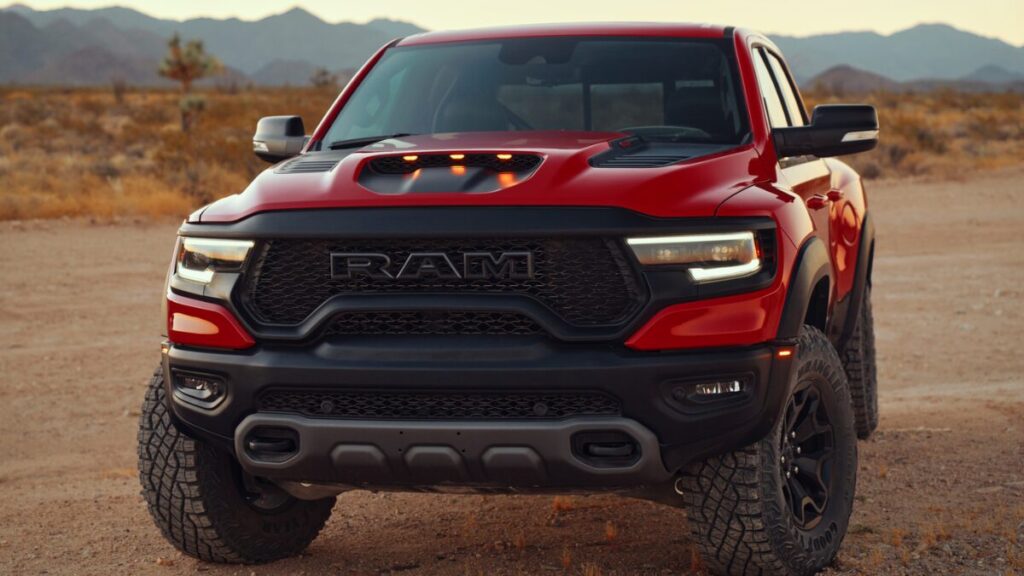
The 2022 Ram 1500 TRX represents one of the most extreme interpretations of what a factory-built full-size pickup can achieve. Developed around a supercharged 6.2-liter HEMI V8, the TRX produces 702 horsepower and 650 pound-feet of torque, giving it performance figures that rival many dedicated sports cars despite its substantial size and weight. Power reaches all four wheels through a TorqueFlite eight-speed automatic transmission, while the standard four-wheel-drive system and launch-control technology help translate that enormous output into remarkably quick acceleration. Independent testing by Car and Driver recorded a 0-to-60-mph time of just 3.7 seconds, demonstrating how far the TRX moved beyond the traditional expectations of a half-ton pickup.
The engineering extends well beyond the engine. Ram equipped the TRX with Bilstein Black Hawk e2 adaptive performance shock absorbers designed specifically for high-speed off-road driving. The electronically controlled damping system adjusts to changing terrain, helping the truck maintain stability over rough surfaces, deep sand, and uneven trails. Its five-link rear suspension provides up to 14 inches of rear wheel travel, while the front suspension offers 13 inches. Combined with 35-inch Goodyear Wrangler Territory all-terrain tires, reinforced underbody protection, and 11.8 inches of ground clearance, the TRX has the hardware to handle demanding desert conditions without sacrificing the ability to travel comfortably on paved roads. Ram’s official 2022 TRX technical information provides additional details about its suspension, tires, and off-road engineering.
Despite its performance focus, the TRX remains a full-size pickup with meaningful everyday utility. It offers a maximum towing capacity of 8,100 pounds and a maximum payload rating of 1,310 pounds, although neither figure approaches the strongest conventional Ram 1500 configurations. Fuel consumption is another major compromise. The Environmental Protection Agency rates the 2022 TRX at 10 mpg in city driving and 14 mpg on the highway, with a combined rating of 12 mpg, and it requires premium gasoline. These figures make the TRX an expensive truck to operate for owners who accumulate substantial annual mileage. However, buyers considering it primarily for its combination of supercharged V8 performance and factory-engineered off-road capability may find those compromises acceptable.
Pros
The supercharged 6.2-liter HEMI V8 delivers 702 horsepower and 650 pound-feet of torque, placing the TRX among the quickest production pickups of its generation. Its Bilstein Black Hawk e2 adaptive suspension provides exceptional high-speed off-road control, while 35-inch Goodyear all-terrain tires, substantial suspension travel, and nearly 12 inches of ground clearance give it genuine desert-running capability. Unlike many specialized performance trucks that sacrifice interior refinement, the TRX also offers a spacious and well-appointed cabin with comfortable seating, modern infotainment features, and available premium audio equipment. The combination of extraordinary engine performance, sophisticated suspension engineering, and everyday cabin comfort makes it a particularly distinctive full-size pickup.
Cons
The TRX’s biggest disadvantage is its fuel consumption. EPA estimates of 10 mpg city and 14 mpg highway make it one of the least economical full-size pickups of its model year, and the requirement for premium gasoline adds further expense. Its maximum towing capacity of 8,100 pounds is also relatively modest considering the truck’s purchase price and enormous engine output. Although the adaptive suspension is a major performance advantage, its specialized shock absorbers, large tires, and performance-oriented components can make replacement and maintenance more expensive than on a conventional Ram 1500. The truck’s considerable width and weight can also make tight parking spaces and narrow trails less convenient. Buyers shopping for a used example should pay particular attention to suspension condition, signs of demanding off-road use, tire wear, and evidence of modifications or inadequate maintenance.
Why Buy It in 2026?
The 2022 Ram 1500 TRX remains an exceptional used pickup in 2026 for buyers who want something considerably more exciting than a conventional full-size truck. Its 702-horsepower supercharged V8 delivers an experience that few production pickups of its generation could match, while its specialized suspension and four-wheel-drive hardware make it genuinely capable beyond paved roads. Unlike a standard Ram 1500 with an aftermarket performance package, the TRX was engineered as a complete high-performance off-road vehicle, with its engine, transmission, suspension, tires, and chassis components developed to work together.
The model’s production history adds another interesting dimension to its appeal. Ram ended the original TRX production run with the 2024 Final Edition, and the Ram 1500 RHO initially carried the performance-off-road role with a twin-turbocharged 3.0-liter Hurricane inline-six. However, the TRX story did not end there. Ram officially reopened the nameplate for the 2027 model year, bringing back the supercharged 6.2-liter HEMI V8 with an even higher output of 777 horsepower and 680 pound-feet of torque. This makes the 2022 model an interesting opportunity for buyers who want the original 702-horsepower TRX experience without necessarily shopping for the newer generation. Ram’s official 2027 TRX announcement confirms the return and explains the differences in performance.
For used buyers, the most important consideration is finding an example that has not been subjected to excessive abuse. The TRX was built for aggressive driving, but frequent high-speed off-road use can place considerable stress on its suspension, tires, drivetrain, and underbody components. A thorough inspection, documented maintenance history, and confirmation that the truck has not received questionable performance modifications are essential before purchasing one. Buyers should also calculate the ongoing cost of premium fuel, tires, brakes, and specialized maintenance rather than focusing exclusively on the purchase price. For someone who values extraordinary acceleration, distinctive styling, and genuine factory-built desert performance, the 2022 Ram 1500 TRX remains one of the most entertaining used pickups available in 2026.
6. 2023 GMC Sierra 1500
Overview
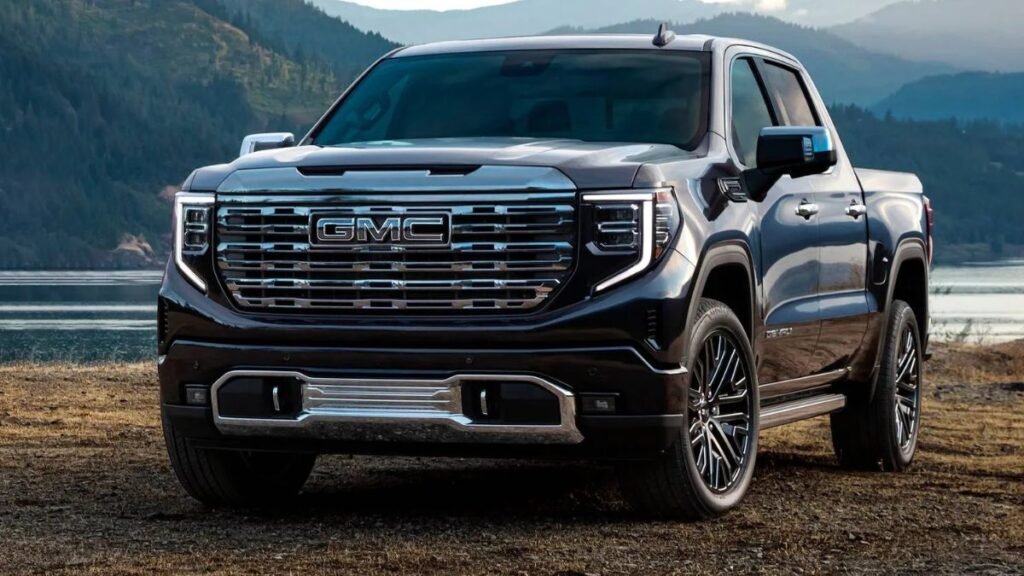
Mechanically, the 2023 GMC Sierra 1500 shares much of its engineering with the Chevrolet Silverado 1500, including the same four-engine selection and a closely related chassis and drivetrain setup. However, GMC positions the Sierra as the more premium alternative, placing greater emphasis on interior refinement, upscale materials, and additional equipment across its higher trim levels. Engine choices begin with the turbocharged 2.7-liter High-Output four-cylinder producing 310 horsepower and 430 pound-feet of torque, followed by the 5.3-liter V8 with 355 horsepower and 383 pound-feet. Buyers seeking more performance can choose the 6.2-liter V8, which produces 420 horsepower and 460 pound-feet, while the updated 3.0-liter Duramax turbo-diesel inline-six delivers 305 horsepower and 495 pound-feet of torque. Transmission availability also varies by engine: the 2.7-liter turbo uses an eight-speed automatic, while the V8 and Duramax options are paired with a 10-speed automatic. This range gives used buyers considerable flexibility, although not every engine is available with every trim. GMC introduced the updated Duramax powertrain for the 2023 model year, bringing increased output and torque over the earlier diesel version, as explained in its official announcement of the revised 3.0-liter Duramax engine.
What truly separates the Sierra is the way its different trims serve distinct types of buyers. The AT4X is particularly interesting because it combines serious off-road equipment with an unusually luxurious cabin. Its factory-installed two-inch suspension lift, Multimatic DSSV spool-valve dampers, front and rear electronic-locking differentials, and 33-inch Goodyear Wrangler Territory MT tires give it substantial capability on difficult trails. Buyers looking for even more specialized protection can consider the AT4X AEV Edition, which adds AEV-developed stamped-steel bumpers and additional underbody protection using high-strength boron steel skid plates. These are meaningful engineering upgrades rather than cosmetic changes, making the AT4X a genuine alternative to more familiar factory off-road pickups. GMC’s official 2023 Sierra AT4X and AT4X AEV Edition overview provides further details about these features.
At the opposite end of the lineup, the Denali and Denali Ultimate focus on premium comfort and cabin quality. The Denali Ultimate is particularly distinctive, with full-grain leather seating, open-pore Paldao wood trim, 16-way power-adjustable front seats with massage functions, a 12-speaker Bose premium audio system, and additional technology features. This gives the Sierra an unusual combination of work-oriented capability and near-luxury refinement, depending on the configuration selected. GMC’s official description of the Denali Ultimate interior and equipment explains how the trim moves beyond the traditional expectations of a full-size pickup.
For buyers concerned with towing, the Sierra reaches a maximum conventional towing capacity of 13,200 pounds when properly equipped with the 3.0-liter Duramax diesel, Max Trailering Package, and specific Double Cab 2WD configuration with 20-inch wheels. That maximum should not be confused with the rating of every diesel-powered Sierra, since cab style, drivetrain, axle ratio, and factory equipment can produce substantially different limits. The same principle applies to payload, which varies by configuration. Buyers should always verify the individual truck’s factory ratings rather than relying solely on the model’s advertised maximum capacity.
Pros
The Sierra 1500 offers a versatile engine lineup that accommodates buyers with different priorities, from the practical 2.7-liter turbocharged engine to the powerful 6.2-liter V8 and torque-rich Duramax diesel. Its AT4X trim provides genuine factory-built off-road equipment, including Multimatic DSSV dampers, front and rear locking differentials, and a two-inch suspension lift. At the premium end, Denali and Denali Ultimate models deliver a more sophisticated cabin with upscale materials, advanced technology, and additional comfort features. The available GMC MultiPro tailgate also adds practical functionality for loading cargo and accessing the bed, while the available ProGrade Trailering System and multiple camera views help simplify towing and maneuvering with a trailer.
Cons
The Sierra’s premium positioning comes with a higher purchase price than many comparable Silverado configurations, even though the two trucks share much of their underlying mechanical hardware. Buyers who choose the lower trim levels may also find that the interior does not offer the same level of refinement that makes the Denali and Denali Ultimate particularly attractive. Some desirable features, including advanced driver-assistance technology, premium audio equipment, and additional comfort amenities, are restricted to higher trims or optional packages. The AT4X also makes a different set of compromises, with its lifted suspension, aggressive mud-terrain tires, and specialized off-road hardware placing greater emphasis on trail capability than everyday road comfort. Fuel consumption varies significantly across the engine lineup, with the Duramax generally offering a more economical option for long-distance driving than the larger gasoline V8 engines. Buyers can compare the different configurations using EPA fuel economy estimates for the 2023 GMC Sierra.
Why Buy It in 2026?
The 2023 GMC Sierra 1500 remains a compelling used full-size pickup in 2026 because it offers more than one clear ownership advantage. Buyers who want a comfortable truck for daily driving and long highway journeys can focus on the SLT, Denali, and Denali Ultimate trims, while those who regularly travel across rough terrain have the AT4 and AT4X models to consider. The availability of four different engines also makes it easier to find a configuration that matches specific requirements, whether that means traditional V8 performance, diesel torque for towing, or a more economical turbocharged gasoline engine for everyday use.
The Sierra is especially attractive to buyers who want the working capability of a conventional full-size pickup without sacrificing interior quality. The Denali Ultimate delivers a level of cabin refinement that makes extended highway trips more comfortable, while the AT4X combines that premium approach with specialized suspension and traction equipment for demanding off-road conditions. Even the less expensive trims remain useful options for owners who primarily need a dependable pickup for commuting, hauling equipment, and occasional trailer work.
As with any used truck, the original configuration and maintenance history matter considerably. Buyers should verify the engine and drivetrain, check the factory towing and payload labels, and confirm which optional packages are installed before comparing prices. Those considering the Duramax should pay particular attention to diesel maintenance records and emissions-system condition, while shoppers interested in the AT4X should inspect its suspension, underbody protection, differentials, and tires for evidence of demanding off-road use. For buyers who want a full-size pickup with a more premium character than the Silverado, combined with genuine towing capability and several distinct trim personalities, the 2023 GMC Sierra 1500 remains a strong option in the used market.
7. 2023 Toyota Tundra
Overview
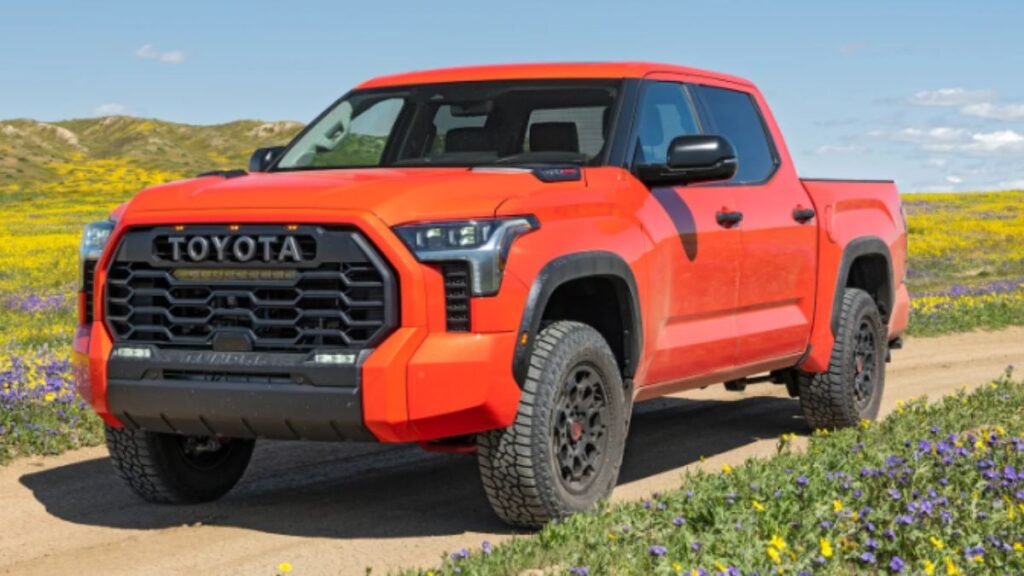
The 2023 Toyota Tundra marked a major departure from its traditional full-size pickup formula by eliminating the V8 engine and adopting a 3.4-liter twin-turbocharged V6 as its primary powerplant. However, the standard i-FORCE engine comes in two different output configurations. The entry-level SR produces 358 horsepower and 406 pound-feet of torque, while the SR5 and higher gasoline-powered trims increase output to 389 horsepower and 479 pound-feet. Buyers looking for additional performance can choose the i-FORCE MAX hybrid system, which combines the twin-turbo V6 with an electric motor to produce a combined 437 horsepower and 583 pound-feet of torque. Both powertrains use a 10-speed automatic transmission, giving the Tundra a broad performance range without relying on a traditional V8. Toyota’s official 2023 Tundra technical comparison provides additional details about the engine configurations and drivetrain.
The hybrid system is particularly appealing because it delivers substantially more torque than the conventional V6, making acceleration and pulling power more responsive under load. It also provides a modest improvement in fuel economy, although the difference depends on the drivetrain and trim selected. EPA estimates reach approximately 22 mpg combined for certain 4×2 hybrid models and 21 mpg for comparable 4×4 hybrid configurations. The gasoline-powered versions generally reach up to 20 mpg combined with rear-wheel drive and 19 mpg with four-wheel drive. Buyers can compare the different configurations through the EPA’s fuel economy estimates for the 2023 Toyota Tundra. Toyota also highlights the hybrid system’s power delivery and efficiency in its official announcement of the 2023 Tundra lineup.
Towing capability remains competitive, although the highest figures depend heavily on the selected configuration. A properly equipped non-hybrid Tundra can tow up to 12,000 pounds, with that maximum achieved by a specific SR5 Double Cab 4×2 configuration. The hybrid models reach a maximum of 11,450 pounds in a properly equipped Limited CrewMax 4×2 configuration. Consequently, the i-FORCE MAX offers greater torque but does not deliver the highest available towing rating in the lineup. Payload capacity also varies by trim, cab, and drivetrain, reaching a maximum of 1,940 pounds in certain gasoline-powered configurations. Buyers should verify the individual truck’s door-jamb payload label and factory towing specifications rather than assuming every Tundra can achieve the advertised maximum.
The Tundra also benefits from a fully boxed steel frame and a coil-spring multi-link rear suspension, replacing the traditional leaf-spring arrangement used by earlier generations. This design helps improve ride comfort, handling stability, and everyday driving refinement without abandoning the truck’s working capabilities. Toyota Safety Sense 2.5 is standard across the lineup, and the Insurance Institute for Highway Safety awarded both the Tundra’s crew-cab and extended-cab configurations its 2023 Top Safety Pick+ recognition. Buyers can review the IIHS safety evaluation and award details.
Pros
Strong engine performance, with the i-FORCE MAX hybrid producing 437 horsepower and an impressive 583 pound-feet of torque.
Hybrid technology provides stronger low-speed pulling response and modestly improved fuel economy compared with comparable gasoline-powered configurations.
Comfortable road manners supported by the multi-link coil-spring rear suspension, which gives the Tundra a more refined driving character.
Competitive towing capability, with properly equipped gasoline models reaching up to 12,000 pounds.
IIHS Top Safety Pick+ recognition for both crew-cab and extended-cab configurations.
Strong resale value that continues to make the Tundra an attractive option in the used full-size truck market.
Cons
No V8 option, which may disappoint buyers who prefer the traditional 5.7-liter V8 found in earlier Tundra generations.
The twin-turbocharged V6 platform has a shorter long-term ownership history than Toyota’s previous V8, and certain gasoline-powered trucks have been affected by engine-related recalls.
Maximum payload capacity reaches 1,940 pounds, trailing the highest ratings offered by several domestic full-size pickup competitors.
The hybrid’s maximum towing capacity of 11,450 pounds is slightly lower than the 12,000-pound maximum available with a properly configured gasoline-powered model.
The largest infotainment screen and several premium comfort and technology features are restricted to higher trims or optional equipment packages.
Why Buy It in 2026?
The 2023 Toyota Tundra remains an appealing used full-size pickup in 2026 for buyers who place a high value on engine performance, everyday comfort, and long-term resale potential. Toyota’s reputation for durability continues to support the Tundra’s appeal, while the redesigned chassis and multi-link rear suspension make this generation more comfortable and composed on the highway than many owners might expect from a traditional work-oriented pickup. The i-FORCE MAX hybrid is particularly attractive for buyers who want substantial torque and somewhat better fuel economy without giving up the practicality of a conventional gasoline-powered truck.
The Tundra is not necessarily the strongest choice for buyers who need the highest towing or payload figures available in the segment. However, its combination of a capable twin-turbo V6, available hybrid performance, comfortable cabin, and strong resale value makes it a well-rounded option for daily driving, recreational towing, and general pickup duties. Buyers who prefer the hybrid should also consider that its higher torque output does not translate into a higher maximum towing rating than the best-equipped conventional version.
There is one important consideration when shopping for a used 2023 Tundra: engine recall history. Toyota announced a recall in May 2024 involving certain 2022–2023 non-hybrid Tundra models because machining debris could contaminate the engine, potentially causing knocking, engine failure, or a loss of motive power. Toyota subsequently announced another engine-related recall in November 2025 covering certain 2022–2024 gasoline-powered Tundra models. These campaigns do not mean that every 2023 Tundra is affected, but buyers should check the vehicle identification number and request documentation confirming that all applicable recall repairs have been completed. Toyota provides an official recall lookup service and additional information in its 2025 engine-related recall announcement.
For buyers who want a modern full-size pickup with strong engine options, a more comfortable ride, advanced safety equipment, and Toyota’s established resale-value advantage, the 2023 Tundra remains a compelling used-truck choice. The key is selecting the right powertrain and configuration while carefully checking the vehicle’s recall and maintenance history before making a purchase.
8. 2023 Ford F-150 Lightning
Overview
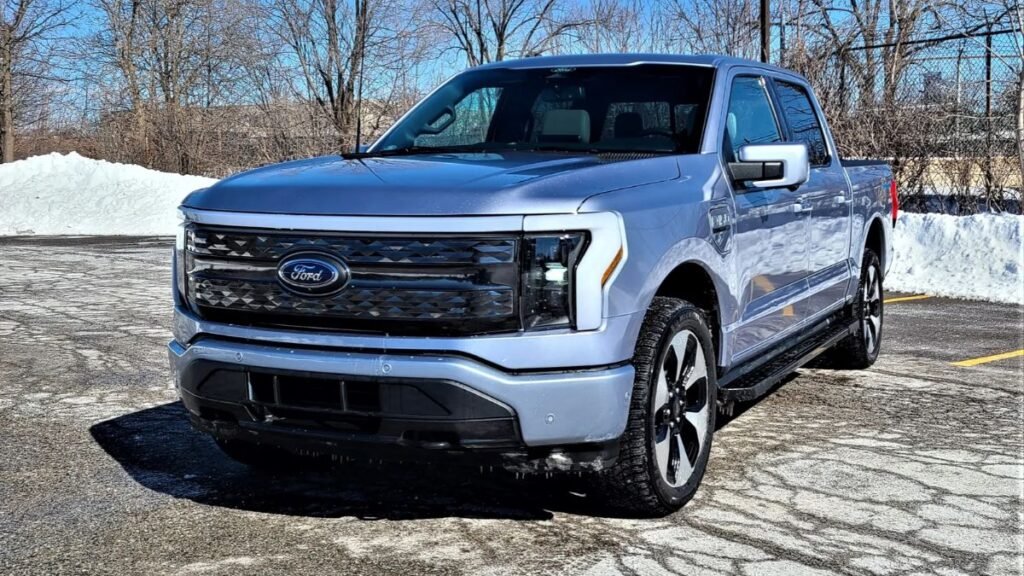
Ford’s F-150 Lightning demonstrated that an all-electric pickup could deliver the functionality expected from a conventional full-size truck while introducing capabilities that gasoline-powered versions could not easily match. The 2023 model was available with two battery configurations, a standard-range 98 kWh battery and an extended-range 131 kWh battery, both using dual electric motors and standard four-wheel drive. The standard-range version produces 452 horsepower and 775 pound-feet of torque, while the extended-range configuration increases output to 580 horsepower without changing the impressive torque figure. EPA-estimated driving range reaches 240 miles with the standard battery and up to 320 miles with the extended-range battery in XLT and Lariat trims, although the Platinum version is rated for 300 miles. This combination of immediate electric torque and substantial power makes the Lightning particularly responsive under acceleration. Ford’s official 2023 F-150 Lightning announcement provides additional information about its performance, range, and available equipment.
Towing capability depends considerably on the battery and factory equipment selected. Standard-range models can tow up to 5,000 pounds in their basic configuration, increasing to 7,700 pounds with the appropriate Max Trailer Tow Package. Extended-range models have a standard maximum rating of 7,700 pounds, while properly equipped XLT and Lariat versions can reach 10,000 pounds with the Max Trailer Tow Package. The Platinum configuration has a lower maximum rating of 8,500 pounds. Payload capacity also varies, reaching 2,235 pounds with the standard-range Pro configuration and up to 1,952 pounds with the extended-range battery. These ratings are important distinctions because the truck’s impressive 775 pound-feet of torque does not automatically translate into the highest towing capacity across every configuration.
One of the Lightning’s most distinctive features is its Mega Power Frunk, a 14.1-cubic-foot front storage compartment that replaces the traditional engine bay. It provides lockable, washable storage with a 400-pound weight limit, making it particularly useful for tools, equipment, and other cargo that owners want to keep separate from the pickup bed. The available Pro Power Onboard system also delivers up to 9.6 kW of exportable electrical power through multiple outlets, giving contractors and other owners a practical way to operate equipment away from conventional electrical connections. With the appropriate home integration equipment, the Lightning can also supply backup power to a house during an outage. These features help distinguish it from traditional full-size pickups, as explained in Ford’s official F-150 Lightning feature overview.
Pros
The F-150 Lightning delivers impressive acceleration and immediate torque, with the extended-range version producing 580 horsepower and 775 pound-feet of torque. Its dual-motor four-wheel-drive system provides strong traction, while the available 10,000-pound towing capacity makes it capable of handling substantial trailer loads when properly equipped. The Mega Power Frunk adds genuinely useful enclosed storage that conventional pickups cannot match, and the available Pro Power Onboard system turns the truck into a mobile power source for tools, equipment, and certain home backup applications. Quiet operation, smooth acceleration, and the ability to recharge at home also make the Lightning particularly attractive for owners with predictable daily driving requirements.
Cons
The Lightning’s biggest limitation is its dependence on charging infrastructure, particularly for owners who regularly travel long distances or tow heavy trailers. Real-world driving range can fall considerably when pulling a trailer, making long-distance towing more complicated than with a gasoline-powered F-150, especially when charging stations are inconveniently located or difficult to access with a trailer attached. Charging also requires more planning during extended trips, and the extended-range battery adds considerable cost and weight. Ford’s decision to end production of the current all-electric generation introduces additional uncertainty regarding long-term resale values, although the company has confirmed that replacement parts, software updates, and existing-owner support will continue. The Lightning is therefore less suitable for buyers who need unrestricted long-distance towing or prefer the flexibility of refueling at conventional gas stations.
Why Buy It in 2026?
Despite the end of production of its current all-electric generation, the F-150 Lightning remains a compelling used pickup in 2026 for buyers whose driving patterns suit an electric vehicle. Owners who primarily commute, transport equipment locally, and have access to home charging can take advantage of its immediate acceleration, quiet operation, and lower routine powertrain maintenance requirements. The extended-range model is particularly attractive because its 580 horsepower and substantial torque provide performance that makes it feel exceptionally capable for everyday driving, while the available towing equipment and Pro Power Onboard system preserve much of the versatility expected from a full-size pickup.
Ford’s production decision should not automatically discourage used buyers, but it does make ownership considerations more important. The company ended production of the current-generation all-electric Lightning in December 2025 as part of a broader restructuring of its electric-vehicle business. However, Ford has explicitly confirmed that existing-owner support remains unchanged, including continued access to replacement parts, software updates, and authorized electric-vehicle service. The high-voltage battery is also covered by an original factory warranty of eight years or 100,000 miles, whichever comes first, subject to the applicable warranty terms. Buyers can review these details through Ford’s official F-150 Lightning owner support and warranty information.
When shopping for a used example, battery condition, charging history, remaining factory warranty, and the availability of nearby charging stations deserve particular attention. Buyers who regularly tow should also evaluate their actual trailer weight and expected driving distance rather than relying on the truck’s advertised maximum range. For the right owner, the 2023 Ford F-150 Lightning offers a distinctive combination of full-size pickup practicality, strong electric performance, useful onboard power, and everyday comfort that remains attractive even after the end of its original production run.
9. 2023 Ford F-150
Overview
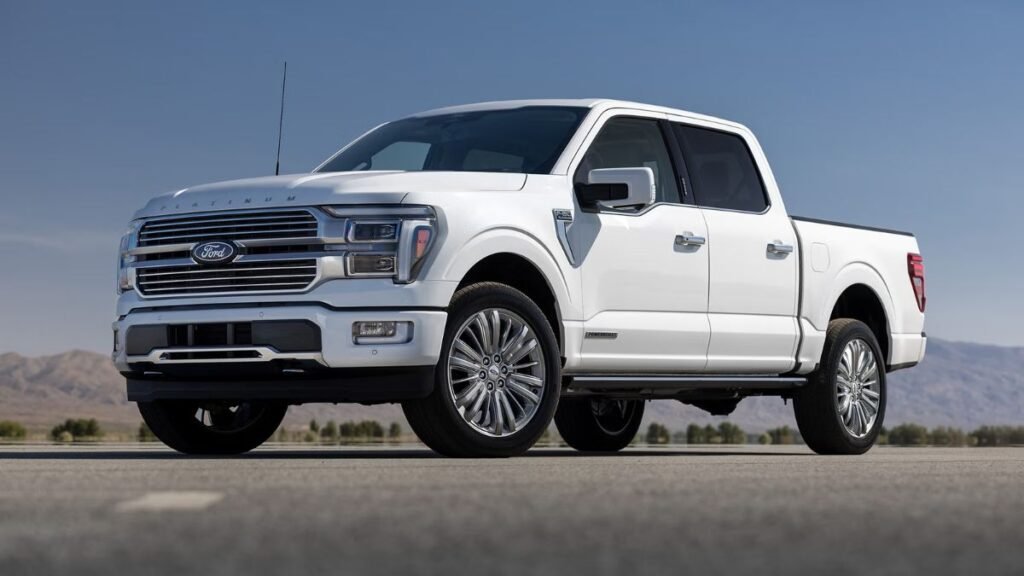
The standard gasoline-powered F-150 remains one of the most versatile full-size pickups on the market, and the 2023 model year demonstrates why Ford continues to attract such a broad range of buyers. The lineup offers seven different engine choices across the F-150 family, including the 3.3-liter V6 producing 290 horsepower and 265 pound-feet of torque, the 2.7-liter EcoBoost V6 delivering 325 horsepower and 400 pound-feet, and the 5.0-liter V8 generating 400 horsepower and 410 pound-feet. Buyers seeking greater pulling power can choose the 3.5-liter EcoBoost V6, which produces 400 horsepower and 500 pound-feet of torque. The available 3.5-liter PowerBoost full hybrid V6 combines a gasoline engine with an electric motor to deliver 430 horsepower and 570 pound-feet, offering an appealing balance of performance and fuel efficiency. The specialized Raptor and Raptor R models complete the engine lineup with high-output versions producing 450 and 700 horsepower, respectively. All seven powertrains are paired with a 10-speed automatic transmission, providing a wide range of configurations for different driving and working requirements.
The 3.5-liter EcoBoost V6 delivers the F-150’s highest conventional towing rating, reaching a maximum of 14,000 pounds when equipped with the Max Trailer Tow Package and configured with the appropriate SuperCab or SuperCrew 4×2 setup. Maximum payload reaches 3,315 pounds, but that rating belongs to a different configuration: a Regular Cab 4×2 with the 5.0-liter V8, eight-foot bed, Max Trailer Tow Package, and Heavy-Duty Payload Package. The 3.5-liter EcoBoost itself offers up to 3,235 pounds of payload, while the PowerBoost hybrid reaches up to 12,700 pounds of towing capacity. These distinctions matter because the maximum towing and payload ratings cannot be achieved simultaneously and vary substantially according to cab style, drivetrain, axle configuration, and optional equipment.
Ford also gives the F-150 several useful technologies designed specifically for towing and jobsite productivity. Available Pro Trailer Backup Assist helps drivers maneuver trailers in reverse, while Pro Trailer Hitch Assist can automate certain hitch-alignment movements on properly equipped models. The available Pro Power Onboard system effectively turns the truck into a mobile generator, offering different output levels depending on configuration, including up to 7.2 kW. On hybrid models, this capability makes the PowerBoost particularly attractive for contractors, outdoor enthusiasts, and owners who regularly need electrical power away from conventional outlets. For additional safety information, buyers can review the 2023 Ford F-150 safety ratings from the IIHS.
Pros
The F-150 offers an unusually broad range of powertrain options, allowing buyers to select an engine that matches their specific requirements rather than compromising on performance or operating costs. Its 3.5-liter EcoBoost delivers excellent towing capability, while the 5.0-liter V8 remains an attractive choice for buyers who prefer naturally aspirated power and traditional V8 characteristics. The available PowerBoost hybrid adds another dimension by combining strong torque with improved fuel efficiency and useful onboard electrical power. Ford’s available towing technologies, including Pro Trailer Backup Assist and Pro Trailer Hitch Assist, also make trailer handling less intimidating, particularly for owners who regularly maneuver larger loads. With multiple cab and bed configurations, strong payload ratings, and a wide range of equipment packages, the F-150 can serve equally well as a daily driver, family pickup, or serious work truck.
Cons
The F-150’s extensive configuration choices can make the buying process more complicated than it initially appears, particularly when towing and payload requirements are involved. Buyers must pay close attention to the specific cab, bed, engine, drivetrain, and optional packages because two trucks with the same model name can have substantially different working capacities. The base 3.3-liter V6 is also relatively modest compared with the larger EcoBoost and V8 engines, making it a less attractive choice for owners who regularly tow heavy trailers or carry substantial payloads. Some of the most useful convenience and towing technologies are optional or restricted to higher trim levels, which can increase the purchase price considerably. Interior quality also varies noticeably between the basic XL and more expensive Lariat, King Ranch, and Platinum models, so buyers should inspect the equipment carefully rather than assuming every F-150 offers the same level of comfort.
Why Buy It in 2026?
The 2023 Ford F-150 remains one of the strongest used full-size pickup choices in 2026 because its broad engine selection and configuration options allow it to accommodate an unusually wide variety of ownership needs. Buyers who primarily commute and occasionally haul equipment can find practical value in the smaller EcoBoost engines, while those who regularly tow recreational trailers or work equipment may prefer the 3.5-liter EcoBoost or 5.0-liter V8. The PowerBoost hybrid is especially interesting for owners who want strong acceleration, substantial torque, and the additional convenience of onboard electrical power without moving to a fully electric pickup.
Another advantage is the F-150’s flexibility across different trim levels. An XL or XLT can provide a practical work-oriented setup without paying for unnecessary luxury equipment, while the Lariat, King Ranch, and Platinum offer increasingly sophisticated interiors and additional technology. Buyers who need more specialized off-road capability can also consider the Tremor and Raptor models, although their priorities and working capacities differ from those of conventional F-150 configurations.
As with any used full-size truck, however, condition and maintenance history should take priority over the model’s reputation. Buyers should verify the original engine and factory equipment, inspect the transmission and drivetrain, and confirm the actual payload and towing ratings on the individual truck. Recall history also deserves attention, particularly for owners planning to tow. Ford announced a 2026 safety recall affecting certain 2021–2026 F-150 models because of an integrated trailer module software problem that could interrupt trailer lighting and, on some configurations, trailer braking. Certain 2023–2025 models equipped with specific Trailer Tow Max Duty and rear axle configurations were also included in a separate axle-hub recall. Buyers can verify outstanding campaigns through the official NHTSA vehicle recall lookup and review Ford’s announcement concerning the integrated trailer module software update.
For buyers seeking a full-size pickup that can handle commuting, family transportation, demanding work, and recreational towing, the 2023 Ford F-150 remains an exceptionally versatile option. Its greatest advantage is not simply its maximum towing capacity or the availability of powerful engines, but the ability to find a configuration suited to almost any half-ton pickup requirement. Choosing the right engine, equipment package, and vehicle condition is what makes the difference between a good used F-150 and an excellent one.
10. 2023 Ram 1500
Overview
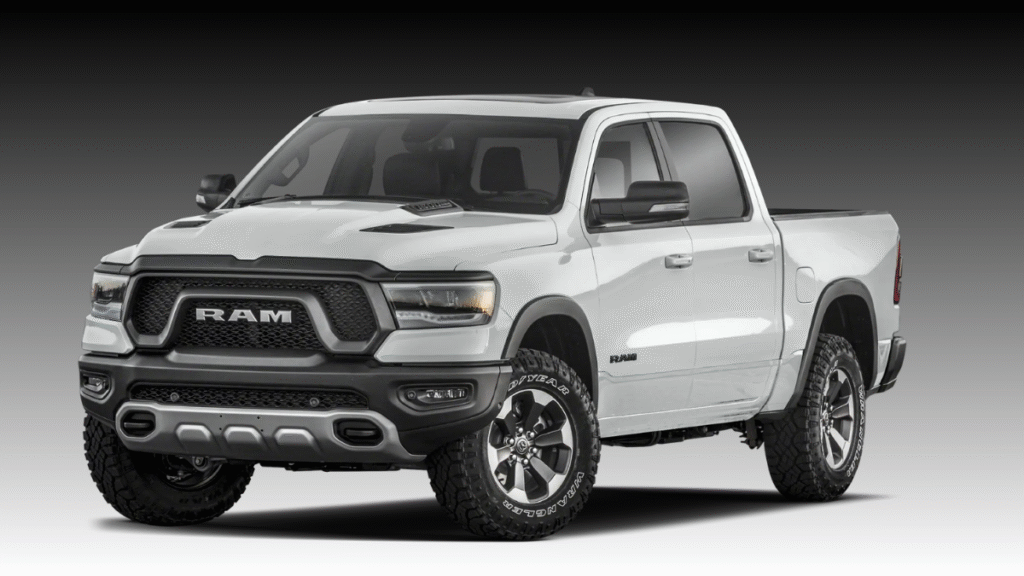
The 2023 Ram 1500, distinct from the more budget-focused Ram 1500 Classic covered earlier in this list, continues to stand out in the full-size pickup segment for its ride comfort, interior refinement, and well-balanced driving characteristics. Rather than introducing a completely new design for 2023, Ram carried forward the fifth-generation platform introduced in 2019, refining an already competitive formula. The standard 3.6-liter Pentastar V6 with eTorque mild-hybrid assistance produces 305 horsepower and 269 pound-feet of torque, while the available 5.7-liter HEMI V8 increases output to 395 horsepower and 410 pound-feet. The HEMI can also be equipped with eTorque technology, which provides an additional 130 pound-feet of supplemental torque during certain operating conditions. Buyers seeking greater efficiency can consider the 3.0-liter EcoDiesel V6, which produces 260 horsepower and 480 pound-feet of torque, while the high-performance TRX model uses a supercharged 6.2-liter HEMI V8 delivering 702 horsepower and 650 pound-feet. All four engine families are paired with an eight-speed automatic transmission, giving the lineup considerable flexibility. Ram’s official 2023 Ram 1500 engine and capability information provides further details about the available powertrains.
The 5.7-liter HEMI V8 with eTorque delivers the truck’s maximum gasoline towing capacity of 12,750 pounds when properly equipped, although that figure applies only to specific configurations. Maximum payload reaches 2,300 pounds with the appropriate engine, cab, drivetrain, and equipment combination. The EcoDiesel offers a different advantage, combining substantial low-speed torque with strong highway fuel economy, making it particularly attractive for owners who regularly cover long distances. However, 2023 represents the final model year for this diesel powertrain, with production scheduled to conclude in January 2023. Ram officially announced the end of the engine’s production through its final EcoDiesel availability announcement.
One of the Ram 1500’s defining characteristics is its suspension design. Unlike several competing half-ton pickups that traditionally rely on rear leaf springs, the Ram uses a multi-link rear coil-spring suspension that contributes to its composed ride and improved comfort over uneven roads. An available Active-Level Four-Corner Air Suspension system adds further refinement by adjusting ride height according to driving conditions, helping reduce aerodynamic drag at highway speeds while making trailer hitching and vehicle access easier. This system is available on Crew Cab configurations. Combined with a well-insulated cabin, supportive seating, and a broad range of interior materials, the Ram 1500 continues to offer one of the most comfortable driving experiences in its class.
Pros
The Ram 1500’s greatest advantage is its combination of ride comfort and interior refinement, particularly in Laramie, Limited Longhorn, and Limited configurations. Its rear coil-spring suspension provides a more controlled and comfortable experience over rough pavement, while the available four-corner air suspension takes that refinement further by adjusting the truck’s ride height to suit different conditions. The 5.7-liter HEMI V8 delivers strong traditional gasoline-engine performance and a maximum towing capacity of 12,750 pounds when properly configured, while the EcoDiesel offers substantial torque and impressive highway efficiency for buyers who can find a well-maintained example. The availability of multiple powertrains, an upscale cabin, and useful towing technologies makes the Ram a particularly appealing choice for owners who want a truck that works during the week but remains comfortable on extended road trips.
Cons
Despite its strengths, the Ram 1500 is not without compromises. Fuel consumption with the HEMI V8 can be higher than that of some turbocharged six-cylinder competitors, especially in city driving or when carrying heavy loads. The EcoDiesel is also no longer available in newer production years, which makes finding a suitable used example more difficult and places greater importance on maintenance records and recall history. The truck’s infotainment system and advanced electronic equipment can add complexity, while replacement or diagnosis costs may become a concern as these systems age. Buyers looking for serious factory-installed off-road capability will also find that the more specialized equipment is concentrated in the Rebel and TRX models rather than the standard Tradesman, Big Horn, and luxury-oriented trims. Finally, the wide range of engines, packages, cab configurations, and optional suspension systems makes comparing individual trucks more complicated than simply choosing a trim level.
Why Buy It in 2026?
The 2023 Ram 1500 remains a particularly attractive used full-size pickup in 2026 for buyers who prioritize everyday comfort and interior quality alongside conventional truck capability. Its rear coil-spring suspension gives it a distinct advantage for long-distance driving, while the available air suspension and well-equipped upper trims create an ownership experience that feels more refined than many traditional work-oriented pickups. Buyers who need a dependable gasoline-powered work truck can focus on the 5.7-liter HEMI V8, while those who regularly travel long distances may find the final-year EcoDiesel particularly appealing because of its strong torque and fuel efficiency.
The EcoDiesel deserves special attention, however, because its discontinued status is not the only consideration. Certain 2022 and 2023 Ram 1500 diesel models were included in a recall involving the high-pressure fuel pump, which could fail prematurely and potentially cause a loss of engine power. Buyers considering one of these trucks should verify its VIN against the official recall database and confirm that any applicable repairs have been completed. Diesel maintenance history, fuel-system condition, and emissions-system servicing are also important when evaluating a used example. The NHTSA recall lookup service provides a way to check individual vehicles before purchase.
The HEMI-powered versions offer a more conventional ownership proposition, with strong towing capability and a familiar gasoline powertrain. Buyers should still inspect the transmission, suspension, cooling system, and available electronic features, particularly on higher-mileage examples. Those considering the Rebel or TRX should also pay close attention to suspension components, tires, underbody condition, and signs of demanding off-road use.
For buyers who want a full-size pickup that places greater emphasis on comfort and cabin refinement without sacrificing meaningful towing capability, the 2023 Ram 1500 remains a strong used-market choice. Its combination of multiple engine options, a comfortable suspension setup, and a well-appointed interior gives it a distinctive position among half-ton trucks. Choosing the right powertrain and verifying the truck’s maintenance and recall history are the most important steps toward getting the best ownership experience.
Final Verdict
Choosing the right pickup truck in 2026 requires more than comparing horsepower figures, towing capacities, or the number of features included in a particular trim. A truck can look impressive on paper and still be the wrong purchase for someone whose daily workload, driving habits, and budget demand something different. The most sensible choice is the one that delivers the capabilities its owner will actually use, without introducing unnecessary fuel expenses, maintenance costs, or compromises in everyday comfort. That distinction becomes especially important in the used market, where two trucks from the same model year can offer very different ownership experiences depending on their original configurations, condition, and service histories.
Among the trucks examined here, the Ford F-150 remains the strongest all-around recommendation because of its extensive engine selection, broad range of configurations, and ability to serve as both a practical work vehicle and a comfortable daily driver. It also offers the highest advertised towing capacity among the conventional configurations discussed in this comparison, reaching 14,000 pounds when properly equipped. The Chevrolet Silverado 1500 and GMC Sierra 1500 remain compelling alternatives, particularly for buyers interested in the 3.0-liter Duramax diesel, while the Ram 1500 makes a convincing case for those who place greater emphasis on ride quality and interior refinement. The Toyota Tundra offers a different combination of hybrid performance and resale appeal, while the Nissan Titan can provide traditional V8 power at an attractive used-market price when the right example is available.
Specialized pickups deserve a different kind of consideration. The Ford F-150 Raptor and Ram 1500 TRX are engineered for buyers who value serious off-road performance, powerful engines, and suspension systems designed for demanding terrain. They are not necessarily the most practical choices for conventional hauling, but their factory-developed engineering gives them capabilities that ordinary pickups cannot easily reproduce. At the other end of the spectrum, the F-150 Lightning makes sense for owners who can charge at home and primarily use their trucks for local driving, commuting, and moderate hauling. Its discontinued production does not eliminate its usefulness, but it makes battery condition, charging access, warranty coverage, and long-term ownership considerations particularly important.
The same principle applies to discontinued models and older powertrains throughout this comparison. A truck does not automatically become a poor purchase simply because its manufacturer has stopped producing it. The Nissan Titan, Ram 1500 Classic, and final-year EcoDiesel models can still offer meaningful value, provided buyers understand the implications for resale, maintenance, parts availability, and future ownership costs. What matters is distinguishing between a discontinued vehicle that remains practical to maintain and one whose condition, specialized equipment, or repair expenses make an apparently attractive purchase price misleading.
Buyers whose primary concern is trailer capacity should pay particular attention to the relationship between towing and payload ratings. A truck advertised with an impressive maximum towing figure may not have sufficient payload capacity for a particular trailer once passengers, cargo, accessories, and trailer tongue weight are included. Our comparison of 10 Used Trucks for Towing 2022–2025 Models Compared provides another useful perspective for shoppers who want to evaluate used pickups specifically around their towing requirements rather than relying on maximum manufacturer ratings alone.
Before committing to any used pickup, buyers should verify the vehicle’s actual towing and payload ratings, check its VIN for outstanding safety recalls, review maintenance and accident records, and arrange a thorough mechanical inspection. Particular attention should be given to the engine, transmission, suspension, frame condition, cooling system, and any specialized equipment fitted to the vehicle. For discontinued or more technically complex models, checking remaining warranty coverage and the availability of qualified service facilities is equally important.
Ultimately, the best pickup truck to buy in 2026 is not necessarily the one with the biggest engine, the highest towing rating, or the most expensive trim package. It is the truck whose capabilities, condition, and ownership costs align with the demands placed on it. A well-maintained pickup with the right engine and equipment can deliver considerably better long-term value than a more powerful model purchased for capabilities its owner rarely needs. Whether the priority is demanding work, long-distance towing, off-road performance, family transportation, or everyday versatility, the right used truck is the one that continues to justify its purchase long after the initial excitement of owning it has passed.