Which Ford F-150 Trim Is Actually Worth Buying?
A technical look at F-150 trims, engines, capability, and the equipment that makes some configurations worth the money.

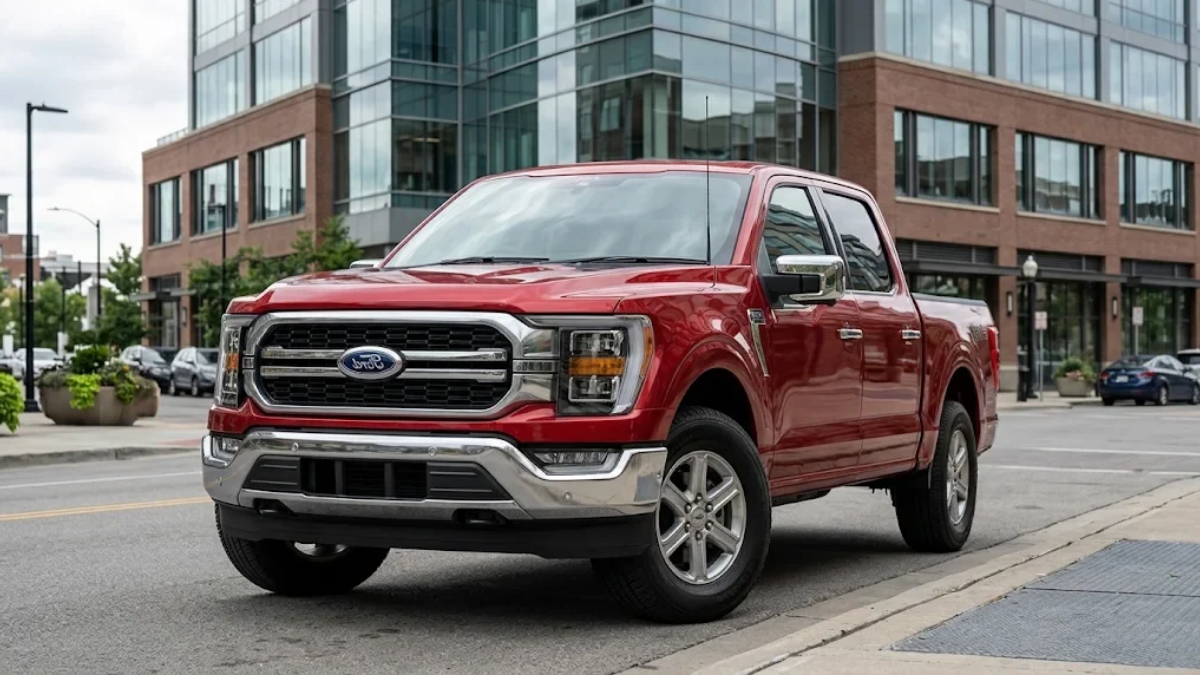
Shopping among Ford F-150 trims feels like climbing a ladder, with the XL at the bottom, the Raptor at the top and a steady rise in price along the way. In practice the lineup is a grid. Eight trim names intersect with three cab styles, three bed lengths, six engines and drivetrain hardware that changes from one model year to the next, so two buyers spending the same money can drive away in trucks that tow, ride and consume fuel very differently. The most expensive configuration is rarely the best one, and the gap between a smart purchase and an expensive mistake is often a single option box.
This analysis covers the 2023 through 2026 model years, with the 2026 truck as the main subject. Specifications and equipment come from Ford’s own pages, beginning with Ford’s official 2026 F-150 lineup, and anything measured at a track comes from Edmunds, whose testers drove and instrumented the truck. The conclusion that runs through every section is easy to state. The XLT, properly optioned, gives most buyers the best return, the Lariat is a comfort purchase rather than a capability upgrade, and the Tremor, Raptor and Raptor R are specialist tools that only make sense for owners who will use what they were built to do.
Our Take The F-150 Worth Paying For
The best F-150 is the one whose price is justified by features the owner will use daily, and that standard favors the middle of the lineup. An XLT SuperCrew with the right engine and a few chosen options delivers nearly everything the expensive trims offer in capability, plus the trailer technology and camera system that matter most. The Lariat is a worthwhile reward for long commutes and heavy highway use, but its price rises quickly toward the luxury trims, which sell mostly on style and exclusivity.
Different owners will land in different places, and that is the strength of the lineup. A fleet operator should take an XL, a family should look at a SuperCrew XLT or Lariat, a long-distance tower should specify the 3.5-liter EcoBoost and the Max Tow/Haul Package, and an off-road enthusiast should buy the Tremor or Raptor that matches how fast they will drive. Spend on the hardware the truck will use, and the F-150 is hard to fault. Spend on the badge instead, and the lineup has plenty of ways to cost more without delivering more.
Understanding the 2023 to 2026 Ford F-150 Lineup
The 2023 lineup carried XL, XLT, Lariat, King Ranch, Platinum, Limited, Tremor and Raptor trims, with the supercharged Raptor R arriving at the top. STX existed that year as an appearance and equipment package layered over the XL, not as a trim in its own right. Engine choices were broader than they are today. A naturally aspirated 3.3-liter V6 rated at 290 horsepower sat at the bottom, followed by the 2.7-liter EcoBoost, the 3.5-liter EcoBoost, the 5.0-liter V8 and the PowerBoost hybrid, with a high-output EcoBoost for the Raptor and a supercharged 5.2-liter V8 for the Raptor R.
The 2024 model year was a genuine mid-cycle refresh rather than a facelift. As Ford’s official 2024 F-150 announcement describes it, Ford gave each trim a distinct grille, made a 12-inch SYNC 4 touchscreen standard across the lineup and added a head-up display to the options list for the first time. The Pro Access Tailgate, a swing-open section hinged on the driver’s side, joined the catalog alongside a lockable bed storage box. Under the hood, Ford dropped the 3.3-liter V6, moved the 2.7-liter EcoBoost into base duty, priced the PowerBoost hybrid level with the 3.5-liter EcoBoost, and lifted the Raptor R from 700 to 720 horsepower.
The refresh also reshuffled the trim ladder. Ford retired the Limited, and the top-of-the-range role passed to a Platinum Plus package, while the STX stepped out of the XL’s shadow and became its own trim. Buyers cross-shopping a used 2023 truck against a new one should treat matching badges with suspicion. A 2023 STX is an XL with a package, a 2023 base truck may carry the 3.3-liter V6 that no later model offers, and a 2023 Limited has no direct successor beyond Platinum Plus. Ford’s 2025 F-150 model information describes largely the same refreshed truck, with the 2.7-liter EcoBoost still the base engine, the 5.0-liter V8 standard on the Tremor and the PowerBoost rated at 570 lb-ft with up to 11,200 pounds of towing, so the mechanical changes that matter most sit between 2023 and 2024, and again at 2026.
The 2026 model year changed the arithmetic again. According to Ford’s official 2026 F-150 updates, the PowerBoost hybrid became available on the STX, the 3.5-liter EcoBoost became standard on XL and XLT trucks with the 157-inch wheelbase, on the 4×2 Lariat and on the Tremor, and the 5.0-liter V8 became optional on the Lariat, the Tremor and the 4×4 XLT with that long wheelbase. Zone Lighting became standard from XLT upward, BlueCruise hands-free driving became a one-time purchase option from XLT up, and XL and STX trucks gained a 4-inch cluster display. A 2026 Tremor is therefore a different mechanical proposition from a 2025 Tremor, whose standard engine was the V8.
XL vs. STX What Do You Actually Get for the Extra Money?
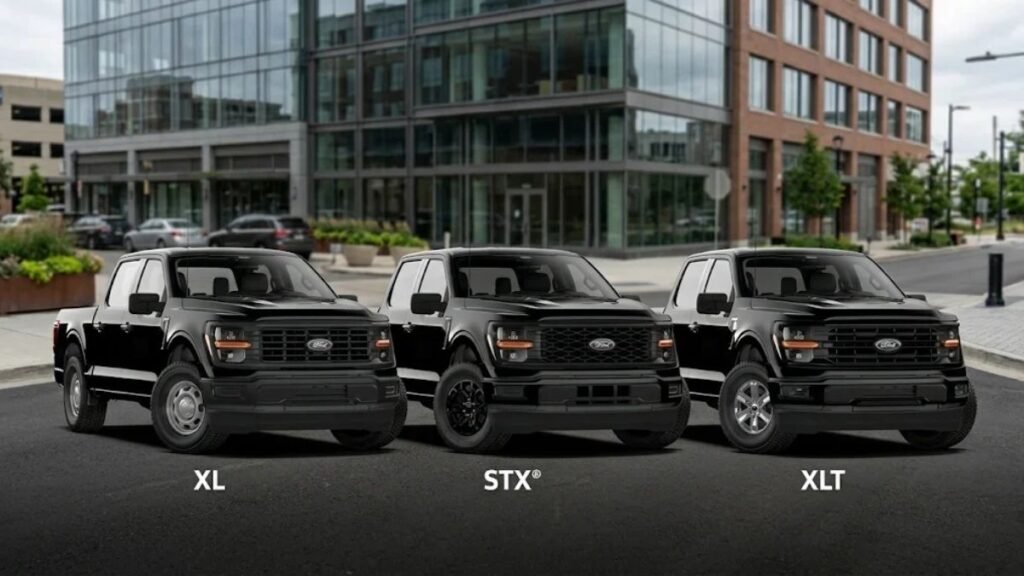
The XL is the truck for buyers who will judge it by what it does rather than how it looks. Ford fits it with the 2.7-liter EcoBoost on most configurations, though the 3.5-liter EcoBoost is standard on the 157-inch wheelbase for 2026, along with a Class IV hitch, cloth seats, a vinyl floor covering, 17-inch steel wheels and the 12-inch SYNC 4 touchscreen. It is also the trim that can still be ordered in every cab and bed combination, from a Regular Cab with an 8-foot bed to a SuperCrew. That makes sense for contractors, fleet operators and anyone who wants a hose-it-out interior and does not want to pay for finishes that a work site will ruin.
The STX is where the F-150 starts to look like a personal truck. Ford adds 18-inch gloss black wheels, a black and dark gray grille, body-color bumpers, unique sport cloth seats and color-coordinated carpet. The trim is also the gateway to the FX4 group, which brings an electronic-locking rear differential, skid plates and all-terrain tires, and to the Lobo package. Ford describes Lobo as street-focused, pairing a rear suspension lowered by 2 inches, a gloss black grille, 22-inch gloss black wheels and the 5.0-liter V8. It is an appearance and performance package, not an off-road one, it already appears on Ford’s 2025 STX listing so it is not a 2026 debut, and Ford’s 2026 update removes the Tow/Haul Package from that combination.
Whether the STX earns its premium depends on how it is priced against the truck above it. Edmunds’ November 2026 MSRP listings, including destination, for four-wheel-drive SuperCrew models with the 5.5-foot bed and the 2.7-liter engine put the STX roughly $850 below the equivalent XLT, a gap small enough that the Ford F-150 XLT vs STX decision usually favors the XLT. The STX makes its best case for buyers who want the wheels, seats and FX4 hardware, or who want the hybrid now that Ford offers it there. A carefully chosen XL still wins as a work tool.
XLT Why This Might Be the Smartest F-150 to Buy
The XLT matters because it is the first trim where the option list opens up. Ford lists the 2.7-liter EcoBoost, the 3.5-liter EcoBoost, the 5.0-liter V8 and the PowerBoost for it, though the 3.5-liter is standard only on the 157-inch wheelbase and the V8 is limited to the 4×4 with that wheelbase in 2026. Ford adds Zone Lighting, LED fog lamps and 18-inch painted wheels on 4×4 models, and it makes the 360-degree camera, heated front seats, Pro Trailer Hitch Assist, Pro Trailer Backup Assist and BlueCruise available. The STX listing on Ford’s page shows none of those items. For anyone who tows, the trailer-assist systems and the camera change daily life more than any leather ever will.
Edmunds named the XLT its recommended trim for most buyers, a conclusion you can follow in Edmunds’ 2026 F-150 trim comparison, and its reasoning is worth reading closely. The reviewers suggest the hybrid for long-term fuel savings, BlueCruise for long-distance driving and Pro Power Onboard for outdoor recreation or job sites, and every one of those is an option on the XLT rather than a standard feature of a more expensive truck. Our own conclusion goes a step further. Because the XLT can be built around one job, a buyer who keeps it for years can spend only on the features that will be used, which the STX’s narrower options list does not allow.
The XLT is still not automatically the right answer. Heavily optioned, it drifts toward Lariat money while still lacking the Lariat’s ventilated seats, memory pedals and standard trailer-assist hardware. A buyer who adds the 3.5-liter EcoBoost, the 360-degree camera, heated seats, BlueCruise and a generator package should price the equivalent Lariat before signing, because the comparison can tighten sharply. Likewise, a buyer who needs only a dependable hauler for a farm or a shop will find the XL or a lightly equipped XLT delivers the same towing and payload ratings for far less.
Lariat Where Does the Additional Money Go?
The Lariat changes the experience of driving the truck rather than the work it can do. Ford fits heated and ventilated ActiveX-trimmed seats, a heated steering wheel and mirrors, an 8-speaker B&O sound system, LED projector headlamps with dynamic bending, remote start and power-folding mirrors. For 2026 it also adds power-adjustable pedals with memory. Pro Trailer Hitch Assist and Pro Trailer Backup Assist are listed as standard rather than optional, and the head-up display and 360-degree camera are available. Ventilated seats and a heated wheel pay off for someone logging hours every week, and the standard trailer aids matter to anyone who tows often.
The harder question is the price. Edmunds’ MSRP listings show the Lariat well above the XLT, but the two carry different standard engines in the configurations listed, so the gap overstates what the equipment alone costs. Add the head-up display, larger wheels, a generator package or a BlueCruise purchase, and the Lariat approaches the base King Ranch, which Ford says now starts under $70,000 after adding a base equipment group in 2026. Past that point, the Lariat’s value argument weakens considerably.
King Ranch vs. Platinum Two Different Approaches to Luxury
The King Ranch is a theme as much as a trim. Ford gives it two-tone paint with a Marsh Gray lower accent, genuine wood interior accents, King Ranch-specific carpeted mats and 6-inch extended running boards as standard for 2026. Multicontour leather seats with Active Motion are included in the 601A group, and an 8-speaker B&O system is standard, with the 14-speaker Unleashed system available. The twin-panel moonroof, standard on the 2025 truck, became a separate option for 2026. The engine is the 3.5-liter EcoBoost, with PowerBoost available. What a buyer is paying for is a distinct Western-inspired identity.
The Platinum takes the opposite route, trading heritage for a modern, darker look. Ford specifies a gloss black grille surround, 20-inch gloss black wheels, a hood with gloss black inserts, leather-trimmed console lid, shifter knob and door armrests, and a heated leather-wrapped steering wheel with power tilt, telescope and memory. Rear seats are heated and the pedals are power-adjustable with memory. A satin appearance package is new for 2026. The availability story differs from King Ranch in one important way, because the 7.2 kW Pro Power Onboard system comes bundled with hybrid Platinum trucks in the 701A, 702A and 703A groups but is only an option on King Ranch.
Both trims use the 3.5-liter EcoBoost as the standard engine, and neither adds towing or payload capability that a well-optioned Lariat lacks. The difference is therefore interior and identity. The Platinum offers more tangible utility for buyers who will use the hybrid and its generator, while the King Ranch is primarily attractive because of its styling and exclusivity. The Limited, which topped the 2023 lineup, disappeared from the revised range starting with the 2024 model year, so these two trims are now the main luxury choices.
Tremor vs. Raptor The Difference Between Trail Capability and Desert Performance
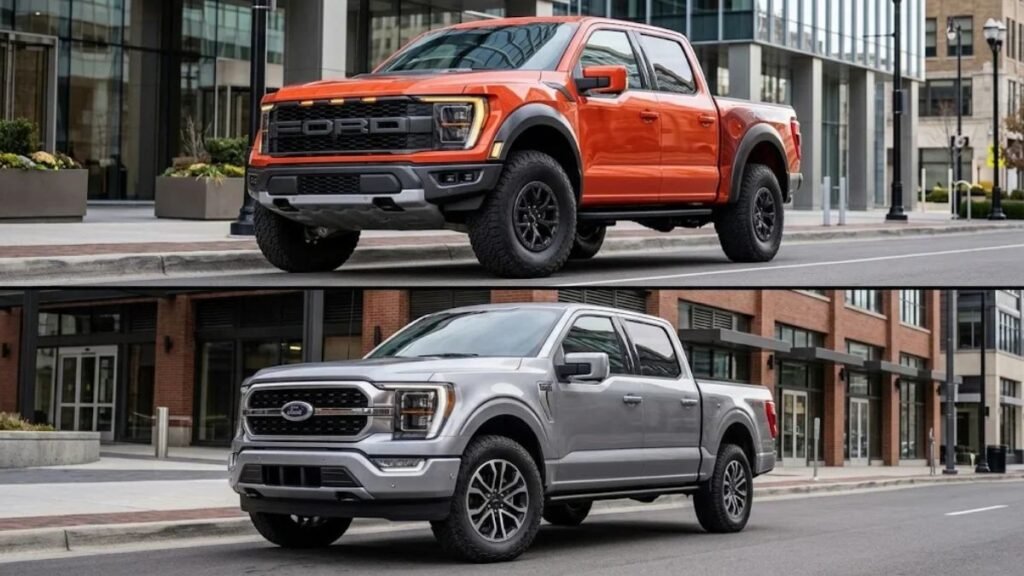
Tremor and Raptor are often described as two flavors of off-road F-150, and that description hides their different engineering goals. The Tremor takes an everyday F-150 and adds trail hardware without surrendering much of the truck’s daily usefulness. The Raptor is built around a different problem, which is covering rough terrain at speed. Ford itself positions the Tremor as a purpose-built off-roader that keeps the truck’s functionality but is not quite a desert racer like the Raptor.
Ford’s 2026 F-150 Tremor specifications list standard four-wheel drive and an electronic-locking rear differential, with the 3.5-liter EcoBoost as the standard engine and the 5.0-liter V8 optional, and a front axle with a Torsen differential is available. It has a long-travel front suspension with unique control arms and knuckles, off-road-tuned 1.7-inch twin-tube dampers and the same leaf-spring rear arrangement as other F-150s. It rides on 33-inch all-terrain tires on 18-inch wheels. Ford lists 9.4 inches of ground clearance, a 27.6-degree approach angle and a 24.3-degree departure angle. Drive modes include Rock Crawl, and Trail Control works like low-speed cruise control. Ford’s 2026 table lists a 10,200-pound tow rating for the 5.5-foot SuperCrew Tremor with the 3.5-liter EcoBoost, which keeps it practical.
The Raptor is a different truck from the ground up. Ford’s specification table lists a front track of 74.0 inches against 67.9 inches for a standard F-150, a body 86.6 inches wide without mirrors, and 12.0 inches of ground clearance with a 31.0-degree approach angle. The rear is a five-link coil setup with a Panhard rod and extra-long trailing arms, paired with FOX dampers with electronically controlled compression. The 3.5-liter high-output EcoBoost makes 450 horsepower and 510 lb-ft on premium fuel. The trade-off is clear, because Ford lists a tow rating of 8,200 pounds and a payload near 1,400 pounds, well short of a conventional F-150.
The Raptor R is a separate financial and performance proposition from the Raptor. It swaps in a supercharged 5.2-liter V8 rated at 720 horsepower and 640 lb-ft, and Ford’s 2025 page ties it to 37-inch tires and Dual Live Valve FOX dampers. Its base curb weight is 5,950 pounds, and Ford’s table lists an 11.5-quart oil capacity and a separate 3.1-liter coolant circuit for the supercharger, both reflecting how hard this engine is worked. Edmunds notes that the Raptor and Raptor R use more fuel than the Tremor’s 17 to 18 mpg. A buyer who is not driving fast across desert terrain is buying hardware they cannot use.
Ford F-150 Engine Comparison Which Powertrain Deserves Your Money?
Horsepower alone is a poor guide to a truck engine, because trucks spend most of their time at low engine speeds, accelerating a heavy body from a stop, holding speed on a grade or pulling a trailer. What matters is how much torque is available there and how the transmission uses it. Every F-150 pairs its engine with a 10-speed automatic, which keeps the engine in its useful range, while the PowerBoost uses a modified version with an electric motor built in. Turbocharged engines deliver torque early but depend on boost, while naturally aspirated engines respond more linearly and need more revs.
The 2.7-liter EcoBoost is the entry point for 2024 and later, rated at 325 horsepower and 400 lb-ft at 3,000 rpm, with a compacted graphite iron block and regular fuel. Ford lists a maximum tow rating of 8,400 pounds for it, which suits a commuter that occasionally pulls a utility trailer. The 3.3-liter V6, sold only through 2023, was a 290-horsepower naturally aspirated engine without a turbocharger’s torque advantage, and Ford dropped it. The 3.5-liter EcoBoost makes 400 horsepower and 500 lb-ft with turbocharged torque arriving near 3,100 rpm, and it is the engine behind the 13,500-pound headline tow rating and the 2,440-pound maximum payload.

The 5.0-liter V8 is the traditional alternative, producing 400 horsepower and 410 lb-ft at a high 4,250 rpm, with a 12:1 compression ratio and no turbocharging. It feels different, with smoother and more linear power delivery and less of the early shove that turbos provide, and Ford lists its maximum tow rating at 12,800 pounds for 2026. Edmunds reports combined fuel economy of about 19 mpg for V8 trucks. Choosing the V8 is therefore a matter of preference and sound, not capability, because the 3.5-liter EcoBoost out-tows it and carries more.
The PowerBoost pairs a 3.5-liter V6 with an electric motor and battery, and its figures differ by model year. Ford rated the 2024 and 2025 versions at 430 horsepower and 570 lb-ft, with up to 11,200 pounds of towing and a 1,750-pound maximum payload on the 2025 truck, while its 2026 specifications list 430 horsepower, 578 lb-ft and up to 11,600 pounds of towing. Edmunds measured 5.8 seconds to 60 mph in a PowerBoost truck and reports fuel economy up to 24 mpg combined, but it also found the hybrid vibrates and sounds like a portable generator when powering the onboard generator. The hybrid carries a smaller 30.6-gallon fuel tank. Pro Power Onboard is offered at 2.0 kW on gas engines, with 2.4 kW standard on the hybrid and 7.2 kW optional or bundled on certain trims, and 400W outlets are standard on the 2026 King Ranch and Platinum. Those are electrical output ratings, not engine horsepower, and a 7.2 kW system is useful at a job site or campground, not a measure of pulling power.
Towing Payload Cab Configurations and Bed Length
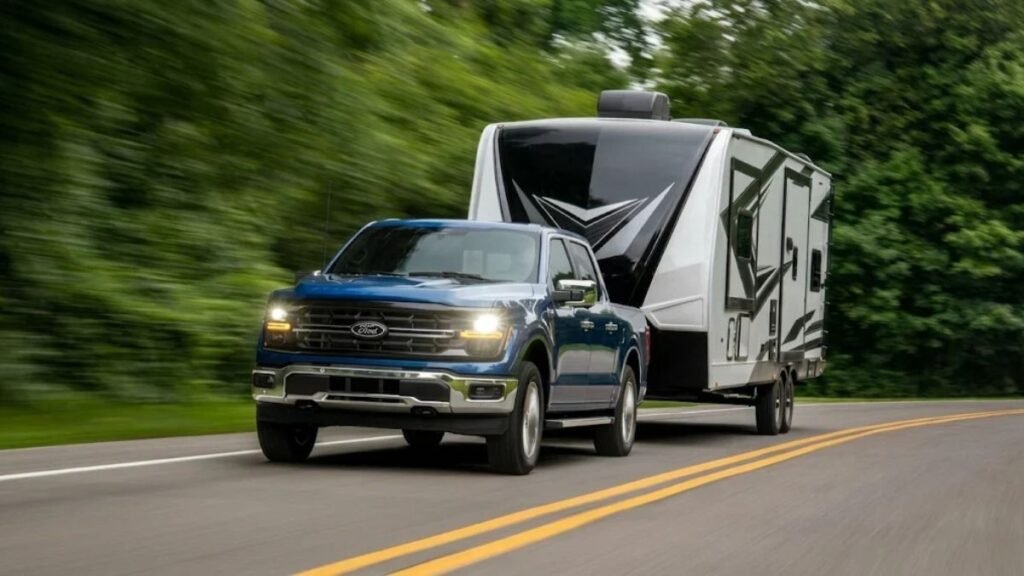
Towing capacity and payload measure two different aspects of a truck’s capability. Towing capacity refers to the maximum loaded trailer weight an F-150 can pull when properly equipped, while payload includes everything the truck itself carries, from passengers and cargo to accessories and trailer tongue weight. For 2026, Ford advertises up to 13,500 pounds of towing with the 3.5-liter EcoBoost V6, while its maximum available payload reaches 2,440 pounds on a separate Regular Cab 4×2 configuration with the 8-foot bed. These figures apply to different configurations, and neither represents what every F-150 can handle. Engine choice, drivetrain, axle ratio, cab, bed length and towing equipment all influence the actual ratings.
The distinction becomes especially important when a truck is loaded. GVWR limits the maximum loaded weight of the truck itself, while GCWR covers the combined weight of the truck and trailer. GAWR establishes separate weight limits for the front and rear axles. Trailer tongue weight also counts against payload, alongside passengers, tools, bed covers and other accessories. This means an F-150 can remain below its advertised towing capacity while exceeding its available payload or rear axle rating. Buyers should always check the payload label on the driver’s doorjamb and the specific vehicle’s towing information rather than relying exclusively on Ford’s maximum advertised figures.
Cab and bed configurations also change the F-150’s everyday practicality. The Regular Cab is available with 6.5-foot and 8-foot beds, the SuperCab comes with a 6.5-foot bed, and the SuperCrew offers 5.5-foot and 6.5-foot options, depending on trim and configuration. The Raptor uses the shorter 5.5-foot bed. That shorter configuration makes the SuperCrew easier to maneuver and park, while the 6.5-foot bed provides more room for tools, equipment and recreational cargo. The 8-foot bed is particularly useful for contractors and fleet operators who regularly carry lumber, long materials or bulky work equipment.
For families and buyers who regularly carry adult passengers, the SuperCrew is generally the most practical choice because of its spacious rear seating area and conventional rear doors. The SuperCab offers additional seating in a smaller cabin, but its rear-hinged doors require the front doors to be opened first, which can become inconvenient during everyday use. Work-oriented buyers may find more value in a Regular Cab with the longer bed, especially when cargo capacity matters more than rear passenger space. Ultimately, choosing the right F-150 means matching the engine, cab, bed and towing equipment to the actual workload rather than simply buying the configuration with the highest advertised rating.
Interior Technology Ride Quality and Everyday Ownership
The F-150 rides on a fully boxed high-strength steel frame under an aluminum-alloy body, with independent double-wishbone suspension in front and leaf springs at the rear. Edmunds’ independent 2026 Ford F-150 testing gave the truck an overall score of 8.0 out of 10, describing its ride and handling as impressive given the traditional rear leaf springs. However, the coil- or air-sprung Ram 1500 still delivers a more comfortable ride. The F-150 makes up ground with direct, quick steering, stable highway manners and strong brakes. During track testing, a PowerBoost truck accelerated from zero to 60 mph in 5.8 seconds, a respectable result for a full-size pickup, although the latest Ram 1500 with its turbocharged inline-six engines was quicker.
Technology is one of the F-150’s strongest areas. Edmunds rated its in-cabin technology 9 out of 10, highlighting the 12-inch SYNC 4 touchscreen, its straightforward tile-based interface, physical climate controls, wireless charging and standard wireless Apple CarPlay and Android Auto. The system is particularly practical because its large on-screen controls are easy to operate without distracting the driver unnecessarily. Pro Trailer Backup Assist also deserves attention, allowing drivers to control a trailer’s direction while reversing through a dedicated rotary knob. BlueCruise offers hands-free driving assistance on compatible highways, although independent testing found that the system could occasionally deactivate without a clear explanation. Ford also offers Smart Hitch, which helps measure trailer tongue weight, and onboard scales that estimate the truck’s payload, although availability depends on the selected equipment.
Storage and everyday comfort are more mixed. The F-150’s center console includes a fold-flat work surface that can turn into a practical desk or table, while the SuperCrew’s rear seat lifts to reveal a full-width storage compartment. Both features make the truck useful for contractors and families who regularly carry equipment inside the cabin. However, the Ram 1500 offers a larger center-console storage area and more versatile underfloor storage. Ford’s standard tailgate with its integrated step and grab handle is also a particularly practical feature, although the optional Pro Access Tailgate provides another way to reach items in the bed. Fuel economy varies considerably across the lineup, with Edmunds reporting approximately 19 mpg combined for the 5.0-liter V8 and up to 24 mpg for the PowerBoost hybrid, figures that remain typical for a large pickup rather than particularly impressive by passenger-car standards.
How the Ford F-150 Compares With Its Main Competitors
The F-150’s advantage is breadth. No rival matches its mix of eight trims, six engines, hybrid availability across much of the lineup and trailer technology such as Pro Trailer Hitch Assist. The Ram 1500 counters on comfort. Edmunds says it still rides better than the Ford, and the Ram’s turbocharged inline six is quicker than the tested PowerBoost. The details of that truck’s coil-spring rear suspension, cabin comfort and premium interior are covered in our full 2023 Ram 1500 review, which remains the reference point for buyers who value ride quality over configuration range.
The Silverado 1500 competes on engine choice and work-oriented capability. As detailed in our 2026 Chevrolet Silverado 1500 review, it offers a turbocharged 2.7-liter four-cylinder, 5.3-liter and 6.2-liter V8s and a 3.0-liter Duramax diesel, with Chevrolet’s maximum tow rating of 13,300 pounds belonging to a specific Double Cab diesel build. The F-150’s 13,500-pound rating likewise belongs to one configuration, so neither number settles the argument. Buyers choosing between them should compare the exact cab, bed, axle and package against the trailer they plan to pull.
The Tundra takes a different route with a twin-turbo 3.4-liter V6 and an i-Force Max hybrid system that makes 437 horsepower and 583 lb-ft. As our 2026 Toyota Tundra review notes, it also has a coil-spring rear suspension and maximum tow ratings of about 11,175 to 12,000 pounds, which trail the F-150’s best. The Tundra’s hybrid is a premium-trim powertrain focused on torque and smoothness, while Ford spreads its hybrid across most of its lineup and pairs it with a generator. Ford is stronger on configurations and capability, and Toyota is stronger on ride.
Which Ford F-150 Trim Is Actually Worth Buying?
For a budget-conscious buyer, the answer depends on how the truck will be used. An XL with the 2.7-liter EcoBoost covers commuting and light hauling at the lowest price, while the STX is the better purchase when the budget is tight but appearance, wheels and seats matter, particularly if it can be found within a thousand dollars or so of an equivalent XLT, as in the Edmunds listing above. An everyday driver should look at an XLT with the 2.7-liter or 3.5-liter engine, heated seats and the 360-degree camera, since those features are used every day.
A frequent tower should concentrate on configuration, not trim. The best choice is an XLT or Lariat SuperCrew with the 3.5-liter EcoBoost, the Max Tow/Haul Package and a 6.5-foot bed, and a buyer should check the final rating against the trailer’s loaded weight. A traditional V8 enthusiast will find the 5.0-liter available on the XL and STX, on the XLT 4×4 with the long wheelbase, and on the Lariat and Tremor, but not on the King Ranch or Platinum, and should pick it because of how it drives, accepting a lower tow rating than the 3.5-liter EcoBoost provides.
The luxury-oriented buyer should choose between the King Ranch’s Western styling and the Platinum’s darker, more modern interior, with the Platinum hybrid making sense for anyone who will use the 7.2 kW generator. The serious off-road buyer should pick the Tremor for trail work that still includes towing and family use, and move to the Raptor only for fast desert driving. The Raptor R is only for owners who want a roughly 720-horsepower supercharged truck and will pay for its running costs.