This 2026 Ford Explorer Review starts with a simple question: does one of America’s longest running SUVs still make sense in a segment that has gotten more competitive than ever? The Explorer is what it’s always been, a family SUV built around genuinely engaging driving dynamics rather than maximum interior space, and the 2026 version widens that identity with a new off-road trim and a lower-priced entry point rather than changing course.
The strength is consistent from year to year. The Explorer accelerates with real confidence, corners with a composure that feels almost out of place in a three-row family hauler, and backs that up with a useful towing rating and a genuinely strong driver-assistance suite. The weakness is just as consistent: the third row is tighter than what buyers get in a Kia Telluride or a Toyota Grand Highlander, and some interior materials still trail the segment’s best. This review is built to help decide whether that trade-off works for you, and which of the six 2026 trims makes the most sense if it does.
Pros and Cons
Pros
- Strong acceleration and capable engines across the lineup
- Secure, unusually composed handling for a three-row SUV
- Excellent technology and connectivity, especially from 2025 onward
- Strong available driver-assistance features, including hands-free highway driving
- Useful towing capability for boats, small trailers, and campers
- New Tremor trim adds genuine off-road hardware, not just styling
- Good overall cargo capacity for family gear and road trips
Cons
- Second and third row space isn’t class leading
- Third row is tight for adults on longer trips
- Some interior materials feel a step behind rival SUVs
- Real-world fuel economy is only average
- Desirable tech like BlueCruise can come with added cost or subscription terms
- Higher trims climb into premium SUV pricing territory
What’s New for 2026?
Ford didn’t reinvent the Explorer for 2026. It expanded it. The most noticeable change sits at the bottom of the lineup, where the new Active 100A trim gives buyers a lower-priced entry point without stripping out what makes the Explorer feel like an Explorer. It’s a distinct trim from the standard Active, not a renamed version of it.
The bigger story is the Tremor, the most significant addition to the 2026 lineup. Where off-road flavored trims sometimes amount to little more than a badge and some black plastic, the Tremor backs up its looks with real hardware: standard Intelligent 4WD, increased ground clearance, all-terrain tires, a Torsen limited-slip rear axle, and suspension tuning built for rougher ground. Underbody protection guards the vitals, off-road auxiliary lighting and tow hooks come standard, and buyers who want more power can step up to the available 3.0L EcoBoost V6. Convenience and Ultimate packages let owners add comfort features without diluting the trim’s off-road intent. It’s worth being precise about what the Tremor actually is: a more capable three-row SUV for buyers who want extra off-road ability, not a dedicated rock crawler.
Technology takes a real step forward too. The Ford Connectivity Package is now standard and includes a year of service, backed by a 5G modem that replaces the older FordPass Connect setup. BlueCruise continues to expand across the lineup and now supports Automatic Lane Change, with longer subscription terms giving owners more flexibility than before. A panoramic fixed glass roof with a power shade is now available across more of the lineup, a factory-installed keyless-entry keypad returns as an orderable option, and the ST finally offers a second-row bench for buyers who want seven-passenger seating on what has traditionally been a captain’s-chair-focused trim.
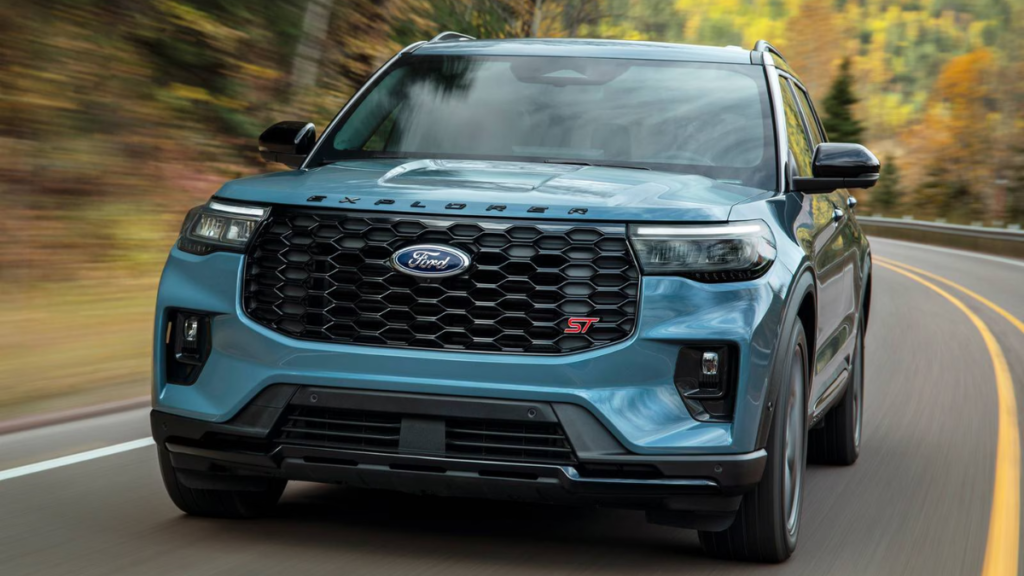
2026 Ford Explorer Review: What Changed From 2023 to 2026?
To understand why the 2026 Explorer looks the way it does, it helps to trace how it got here rather than treating each model year as its own separate vehicle.
2023 established the formula. By this point, the sixth-generation Explorer had already settled into its identity: a rear-wheel-drive-based architecture that set it apart from most three-row competitors, strong turbocharged engines including an available 3.0L V6, a 10-speed automatic, available all-wheel drive, and towing numbers that made it genuinely useful for trailers and small boats. Rear passenger space already trailed some rivals, a compromise buyers made in exchange for how the Explorer drove.
2024 was mostly a carryover year. The one notable change was a subtraction rather than an addition, as Ford discontinued the available hybrid powertrain. Everything else, strengths and weaknesses alike, stayed the same.
2025 is where the story actually turns a corner. Ford gave the SUV a meaningful refresh: updated exterior styling, a genuinely redesigned interior, and a new infotainment experience built around the Android-based Ford Digital Experience system. That brought native Google Maps and Google Assistant into the vehicle, along with wireless Apple CarPlay and wireless Android Auto, a standard 12.3-inch digital instrument cluster, and a large 13.2-inch center touchscreen. BlueCruise became available for the first time. This was the year the Explorer stopped feeling like it was running last-generation technology, even though the tighter third row and other fundamental packaging stayed the same.
2026 builds on that 2025 foundation rather than replacing it. Active 100A, Tremor, the 5G modem, wider BlueCruise availability, Automatic Lane Change, the panoramic glass roof option, and the new second-row bench on ST are about broadening who the Explorer works for, not reinventing it. Put simply: 2025 transformed the Explorer’s cabin and technology, and 2026 expanded its lineup, connectivity, and capability.
Which Model Year Should You Consider?
The right year depends on what a buyer is optimizing for, especially when shopping used. A 2023 suits buyers hunting for the lowest price on a sixth-generation model with the core driving experience already dialed in. A 2024 is a similarly sensible used pick if budget is the priority, though it lacks the technology and interior upgrades that arrived a year later. The 2025 is the sweet spot for anyone who wants the modernized cabin and infotainment system without needing the newest 2026-specific additions like Tremor. The 2026 is the clear choice for buyers who want the most current Explorer available, with the widest trim selection and full access to current feature availability.
Engine, Power, and Performance
The 2026 Explorer offers two engines, and the right one depends more on how a buyer plans to use the vehicle than on outright performance envy.
The 2.3L EcoBoost turbocharged four-cylinder remains the volume engine, producing roughly 300 horsepower and somewhere in the 310 to 311 lb-ft torque range depending on configuration. It’s paired with a 10-speed automatic, comes with rear-wheel drive standard, and offers Intelligent 4WD as an option. For the vast majority of daily driving, this engine already feels more than adequate.
The 3.0L EcoBoost V6 is reserved for the performance and capability focused trims, namely the ST and Tremor. In its current 2026 U.S. tune, it produces 385 horsepower and 415 lb-ft of torque, still routed through the 10-speed automatic. On the Tremor, Intelligent 4WD is standard. On the ST, the V6 is the whole point of the trim.
One clarification worth making directly: the 3.0L V6 is not available on the 2026 Platinum. That trim uses the 2.3L EcoBoost, with its case built on comfort and equipment rather than outright power. Buyers who want the V6’s extra shove need the ST or Tremor instead.
Fuel Economy
Fuel economy depends heavily on engine choice, drivetrain, and how the Explorer is equipped, so there is no single number that accurately represents the entire lineup. The 2.3L EcoBoost with rear-wheel drive is the most efficient combination, while adding Intelligent 4WD generally reduces efficiency because of the additional weight and drivetrain losses. The available 3.0L EcoBoost V6 also uses more fuel, particularly in the ST and Tremor, where the extra performance encourages harder acceleration and more aggressive driving.
For everyday family use, the four-cylinder is the more sensible choice if fuel costs matter, while the V6 makes more sense for drivers who value stronger acceleration, performance, or the added capability of the Tremor. Real-world consumption can also change considerably with traffic, short trips, cold weather, heavy loads, frequent climate-control use, and towing. The Explorer can be reasonably efficient for a three-row SUV, but buyers should not expect compact-SUV fuel economy, especially when choosing Intelligent 4WD or one of the more powerful configurations.
Driving Experience
This is where the Explorer separates itself from most of its three-row peers. The rear-wheel-drive-based architecture is one reason it feels more balanced through corners than the front-wheel-drive-based SUVs it competes against, since weight distribution and steering feel benefit from that layout in ways that are hard to replicate on a transverse-engine platform. Grip is strong, body control is better than the segment average, and acceleration, especially with the V6, feels genuinely quick rather than merely adequate for a family hauler.
It isn’t flawless. The 10-speed automatic can occasionally hesitate at low speeds during light urban driving, searching for the right gear rather than delivering it instantly. The larger performance-oriented trims ride firmer than a family-first buyer might expect, and engine and wind noise can intrude more than in some quieter competitors. The Explorer is clearly tuned by people who care about how it drives, sometimes at a small cost to outright comfort.
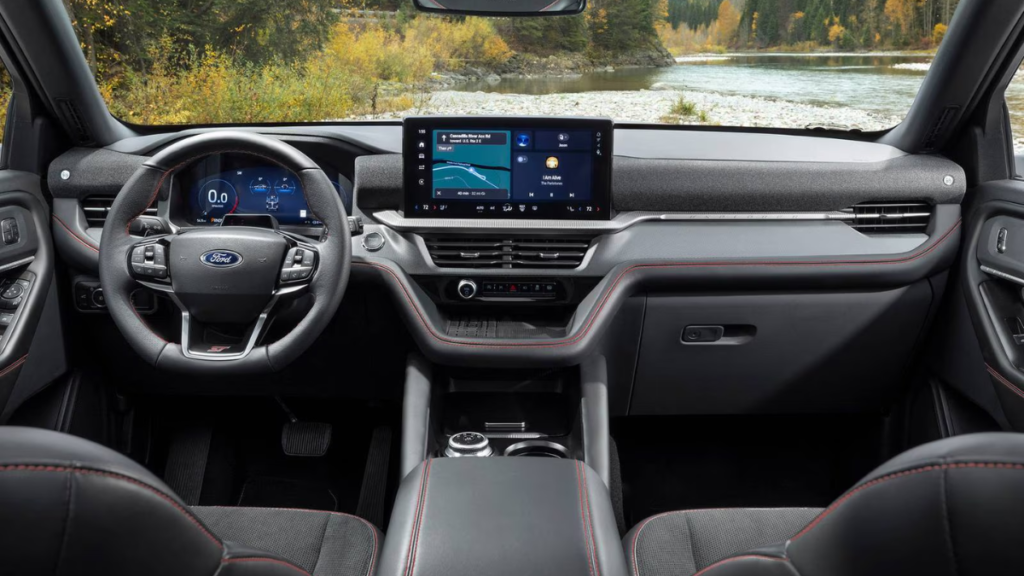
Interior and Comfort
The line between pre-2025 and 2025-and-later Explorers is stark. Through 2024, the cabin was functional, with good front-seat space and decent outward visibility, but let down by material quality that felt a step behind rivals and a dated technology presentation.
From 2025 onward, the dashboard looks and feels genuinely modern, the technology interface is far more competitive, screens are larger and sharper, and the overall presentation closes much of the gap with class leaders. What didn’t change is the basic space available in the cabin. A nicer interior doesn’t create more legroom on its own.
Third Row and Family Practicality
The Explorer is a legitimate three-row SUV. It seats real people back there, not just cargo, but it isn’t among the roomiest in its class. Second-row space is reasonable, and access to the third row is manageable thanks to sliding second-row seats, but the third row itself suits children, smaller adults, or shorter trips better than it suits two adults on a long highway drive.
Buyers can choose between captain’s chairs and a bench in the second row, with the bench newly available on the ST for 2026, which affects whether the Explorer seats six or seven overall. Child seats fit without much fuss in the second row, and the practical realities of installing and accessing a third-row child seat are typical for the segment. The honest conclusion is that the Explorer is a practical family SUV, but not the class leader for passenger room, so buyers whose top priority is adult-friendly third-row comfort should cross-shop before committing.
Cargo Space
Behind the third row, the 2026 Explorer offers approximately 16.3 cubic feet of cargo space, with maximum cargo volume reaching up to 85.8 cubic feet depending on trim and how the second and third rows are folded. Those figures are slightly down from the roughly 18.2 and 87.8 cubic feet quoted for some 2024 configurations, a reminder that older specifications shouldn’t be treated as current ones.
In practical terms, the cargo area remains a strong point: a flat-folding third row, useful underfloor storage, and enough room for strollers, sports gear, or a family’s luggage on a road trip.
Technology and Connectivity
The technology story is arguably the biggest reason to consider a 2025-or-newer Explorer over an older one. The 13.2-inch center touchscreen and 12.3-inch digital instrument cluster give the cabin a genuinely modern feel, and the Android-based Ford Digital Experience brings native Google Maps and Google Assistant into the vehicle alongside wireless Apple CarPlay and wireless Android Auto, so owners aren’t locked into one ecosystem.
For 2026, the standard Ford Connectivity Package and its 5G modem mean faster, more reliable onboard connectivity than the outgoing FordPass Connect setup, which matters for everything from remote start to over-the-air updates. Available B&O audio adds a real upgrade for anyone who cares about sound quality, and BlueCruise, now with Automatic Lane Change and longer subscription options, extends the hands-free highway driving experience further than before.
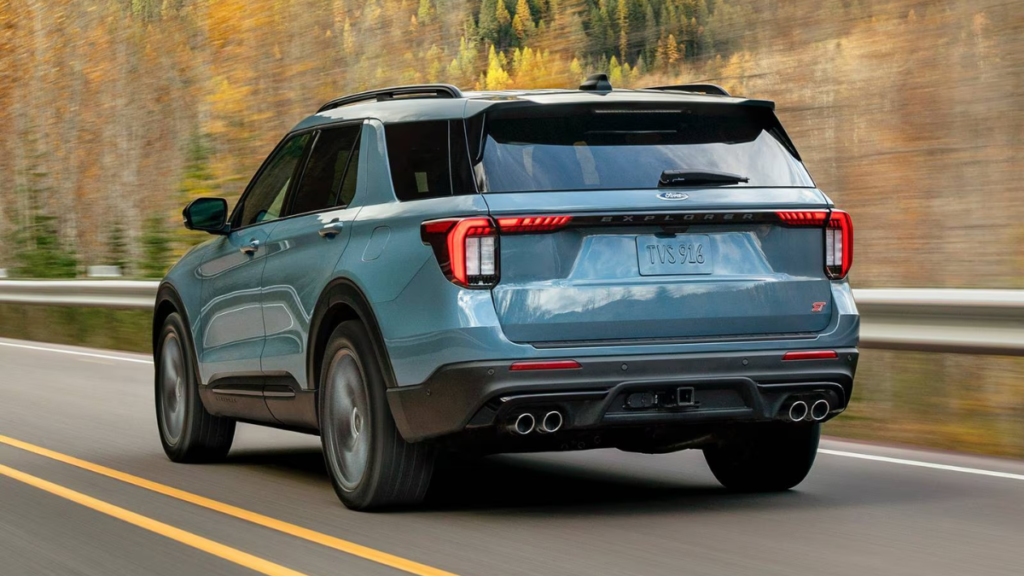
Safety and Driver Assistance
The Explorer’s safety suite covers the expected essentials: automatic emergency braking, lane-keeping assistance, blind-spot monitoring, rear cross-traffic alert, adaptive cruise control, and automatic high beams, with a 360-degree camera and additional Ford Co-Pilot360 features available depending on trim.
BlueCruise deserves a clear explanation rather than marketing shorthand. It’s a hands-free driving system for compatible, mapped highways, not a self-driving system. The driver still needs to stay attentive and ready to take over, and the system monitors driver attention to enforce that. It’s genuinely useful on long highway stretches, but it doesn’t make the Explorer autonomous.
Towing and Capability
The 2026 Explorer’s maximum towing capacity is 5,000 pounds, achieved with the Class III Trailer Tow Package, which adds the necessary trailer wiring and tow and haul functionality. Blind-spot monitoring on equipped models can also account for a trailer’s length, a small but genuinely useful detail for anyone new to towing.
That 5,000-pound figure covers small campers, boats, and typical recreational trailers, and the rear-wheel-drive-based architecture helps with stability while towing. It isn’t a heavy-duty tow vehicle, and buyers shouldn’t expect it to compete with truck-based SUVs, but for the kind of towing most Explorer owners actually do, it’s a real asset.
Trim Levels
The 2026 Explorer lineup spans six trims, each with a clear identity.
Active 100A is the lowest entry point, built to lower the cost of admission without feeling stripped down.
Active is the mainstream choice for buyers who want a well-rounded, comfortable Explorer without chasing extra features.
ST-Line adds sportier styling and equipment, delivering most of the visual and technology appeal buyers want without the ST’s performance-hardware price premium.
Tremor is the off-road specialist, built around standard Intelligent 4WD, increased ground clearance, all-terrain tires, a Torsen limited-slip rear axle, off-road-tuned suspension, underbody protection, and the option of the 3.0L V6.
ST is the performance flagship, running the 385-horsepower, 415 lb-ft 3.0L V6 with a sport-tuned suspension, performance brakes, and 21-inch wheels.
Platinum is the luxury trim, built around the 2.3L EcoBoost rather than the V6, and focused on premium interior equipment: leather-appointed seating, heated, ventilated, and massaging front seats, B&O audio, BlueCruise-ready equipment, and an available panoramic roof.
2026 Ford Explorer Review: Which Trim Should You Buy?
The ST-Line is the recommended pick for most buyers. It strikes a good balance between price and equipment, uses the strong and efficient 2.3L engine, adds sportier styling, and gives access to the Explorer’s best technology features, all while avoiding the ST’s steeper price for hardware many buyers won’t fully use.
Beyond that default, it comes down to what matters most. Active makes sense if minimizing cost is the priority. Tremor earns its price premium if off-road capability will actually get used. ST justifies itself for buyers chasing outright performance. Platinum is the pick when comfort and premium equipment outweigh outright speed.
2026 Ford Explorer Review: How Does It Compare With Competitors?
Against the rest of the three-row midsize field, the Explorer’s case rests almost entirely on how it drives and what it can do, rather than on outright space. Its advantages are real: stronger driving dynamics, quicker acceleration, a rear-wheel-drive-based platform most competitors don’t offer, genuine performance and off-road variants in the ST and Tremor, available BlueCruise, and solid towing capability. Its disadvantages are equally real: less rear-seat room, a tighter third row, interior materials that don’t quite match the segment’s best, and fuel economy that trails in its stronger configurations.
The Kia Telluride and Hyundai Palisade put more emphasis on family comfort and passenger-oriented cabin design. The Toyota Grand Highlander is the stronger pick for buyers who prioritize maximum passenger and cargo space above everything else. The Mazda CX-90 offers a more premium, upscale driving character built around a different powertrain philosophy. The Honda Pilot remains a strong, practical family alternative with genuinely useful interior space. The Volkswagen Atlas is worth a look for buyers who want one of the largest, most practical cabins in the class.
None of these is objectively the best choice for every buyer. The right pick depends on whether driving character or interior space matters more.
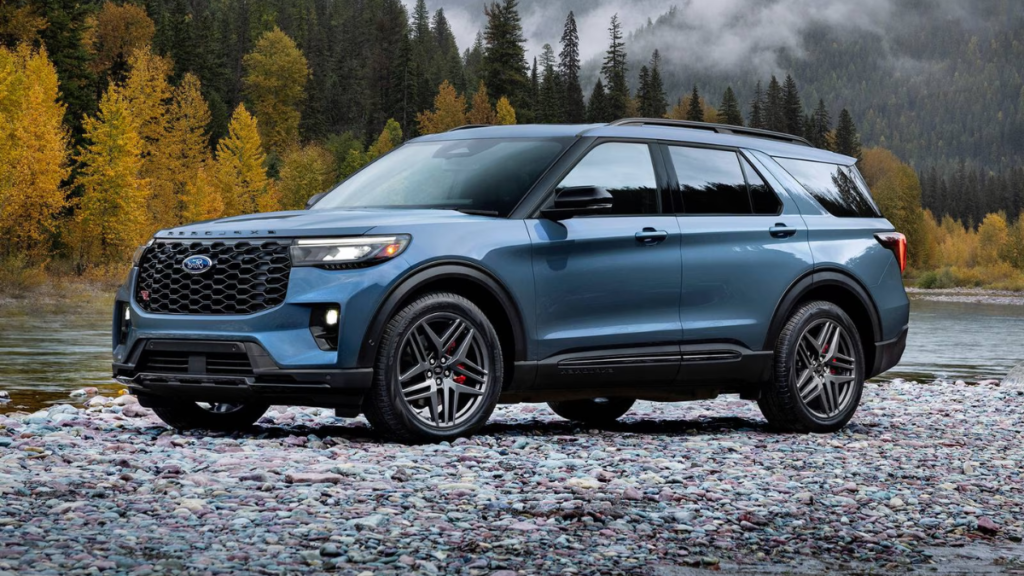
2026 Ford Explorer Review: Is It Worth Buying?
Yes, for the right buyer. If performance, handling, technology, towing capability, available hands-free highway driving, distinct trim personalities, and now genuine off-road capability through Tremor are priorities, the Explorer earns a serious look. If the top priorities are maximum third-row space, the most comfortable possible passenger experience, the most premium interior materials in the class, or the strongest possible fuel economy, it’s worth cross-shopping the alternatives above before deciding.
Does Cardrav Recommend the 2026 Ford Explorer?
Yes, with conditions. Cardrav recommends the Explorer for buyers who value driving dynamics and technology more than maximizing interior space. The ST-Line stands out as the most balanced choice for the majority of buyers, the Tremor is a genuinely interesting option for anyone who wants real off-road hardware in a three-row package, the ST suits buyers chasing outright performance, and the Platinum makes sense for those prioritizing comfort and premium equipment over speed.
If third-row space is the single most important factor in a buying decision, this isn’t the right SUV to start with, and that’s a fair trade-off to understand going in rather than a flaw to talk around.
FAQ
Is the 2026 Ford Explorer worth buying?
Yes, especially for buyers who want strong performance, confident handling, modern technology, useful towing capability, and the added off-road ability of the Tremor. Its main compromise is interior space, particularly in the third row, where rivals such as the Kia Telluride and Toyota Grand Highlander offer more room.
What is new on the 2026 Ford Explorer?
The biggest changes are the new Active 100A and Tremor trims. The 2026 Explorer also gains a standard Ford Connectivity Package with a 5G modem, expanded BlueCruise functionality including Automatic Lane Change, an available panoramic glass roof, and a second-row bench option for the ST.
Which engine and trim are best for the 2026 Ford Explorer?
The 2.3L EcoBoost four-cylinder makes about 300 horsepower and is the better all-around choice for most drivers. The 385-horsepower 3.0L EcoBoost V6 is available on the ST and Tremor for buyers who want stronger performance. For most buyers, the ST-Line offers the best balance of equipment, performance, and price.
How practical is the 2026 Ford Explorer for families?
It remains a capable family SUV with seating for six or seven, useful cargo space, sliding second-row seats, and up to 5,000 pounds of towing capacity when properly equipped. However, the third row is better suited to children and shorter adults than to three-row rivals designed around maximum passenger space.
Is the 2026 Ford Explorer good for off-road driving?
The new Tremor makes the Explorer considerably more capable away from paved roads, with standard Intelligent 4WD, increased ground clearance, all-terrain tires, a Torsen limited-slip rear axle, off-road-tuned suspension, and underbody protection. It is a meaningful upgrade for light to moderate off-road use, but it is not intended to replace a dedicated body-on-frame off-road SUV.