The midsize pickup truck segment has never been more competitive. Buyers today can choose from highly refined options like the Ford Ranger, Toyota HiLux, and Isuzu D-Max, all of which continue to raise the bar for technology, comfort, and capability. Against this backdrop, the 2023 Mitsubishi Triton finds itself in a unique position. It may not be the newest truck in the class, but it remains one of the most affordable and well-rounded options available.
Unlike some of its rivals, the Triton doesn’t rely on flashy technology or headline-grabbing power figures to attract buyers. Instead, Mitsubishi focuses on delivering proven reliability, genuine four-wheel-drive capability, and strong value for money. For many truck buyers, those qualities matter far more than having the largest touchscreen or the most advanced driver assistance systems.
The 2023 Mitsubishi Triton GLS sits near the top of the lineup and offers an appealing balance between affordability and equipment. With its capable turbo-diesel engine, advanced Super Select II four-wheel-drive system, and generous warranty coverage, it continues to be a compelling choice for buyers who want a dependable workhorse that can also handle family duties on weekends.
Our Take
The 2023 Mitsubishi Triton GLS may not lead the segment in technology, towing capacity, or ride comfort, but it excels in the areas that matter most to many pickup buyers. It offers a proven diesel powertrain, excellent off-road credentials, strong reliability, and a competitive price that undercuts many of its key rivals.
Its aging infotainment system and firm ride quality remind you that this generation is nearing the end of its lifecycle. However, the Triton still delivers a level of durability and practicality that has helped it remain a popular choice for years.
For buyers seeking the latest innovations, there are newer alternatives available. But for those looking for a capable and trustworthy pickup that offers strong value without breaking the bank, the Triton GLS remains easy to recommend.
Pros & Cons
Pros
- Strong value for money compared to key rivals
- Proven 2.4-liter turbo-diesel engine
- Excellent Super Select II four-wheel-drive system
- Rear differential lock improves off-road capability
- Comfortable front seats for long-distance driving
- Outstanding warranty coverage when serviced through Mitsubishi dealerships
- Solid reputation for durability and reliability
Cons
- Ride quality trails newer competitors
- Infotainment system feels outdated
- Lower towing capacity than some rivals
- Rear-seat comfort could be better
- Lacks several advanced driver-assistance features found elsewhere
- Interior design is beginning to show its age
What’s New for 2023
The Mitsubishi Triton enters 2023 with only minor updates as the current generation approaches the end of its production cycle. Mitsubishi continues to focus on value, maintaining a wide range of configurations and trim levels to suit different buyers.
For GLS buyers, the key highlights remain unchanged. The truck continues to offer Mitsubishi’s highly regarded Super Select II four-wheel-drive system, a capable 2.4-liter turbo-diesel engine, and a generous list of standard equipment. Mitsubishi also introduced additional special-edition variants in some markets, but the GLS remains one of the most balanced choices in the lineup.
While competitors continue to push forward with larger screens, more advanced safety technology, and higher towing capacities, the Triton’s formula remains refreshingly simple. It focuses on capability, affordability, and long-term dependability rather than chasing trends.
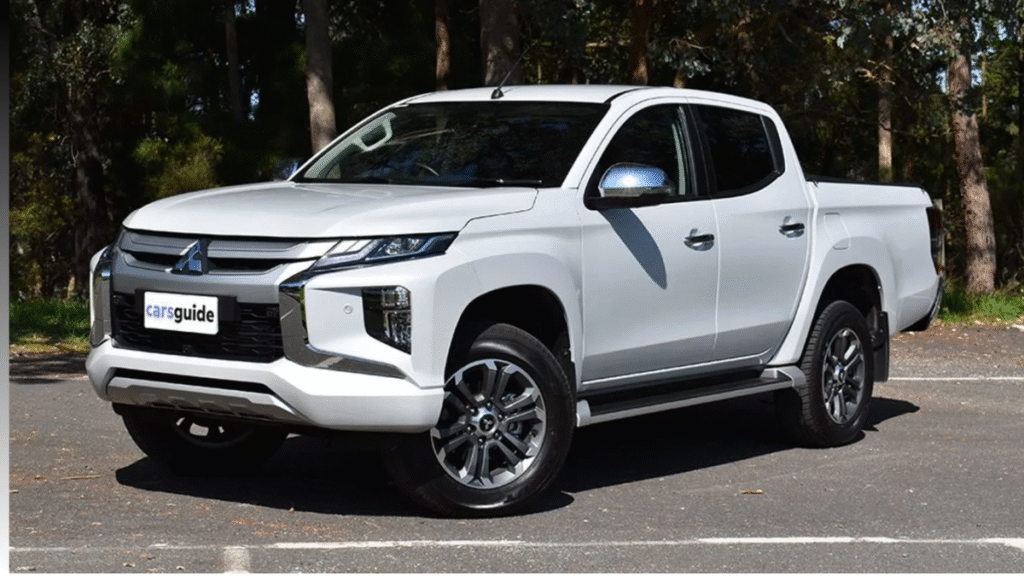
Who Is This Truck Really For?
The 2023 Mitsubishi Triton GLS is not aimed at buyers searching for the most luxurious or technologically advanced pickup truck in the segment. Instead, it targets practical owners who prioritize reliability, capability, and value over flashy features.
For tradies, small business owners, and outdoor enthusiasts, the Triton offers a proven package that can comfortably handle daily work duties while remaining capable enough for weekend adventures. Its Super Select II four-wheel-drive system provides a level of versatility that many competitors cannot match, allowing drivers to confidently tackle changing road and weather conditions.
Families looking for a dual-cab pickup will also find plenty to like. The cabin is spacious enough for everyday commuting, school runs, and road trips, while the tray provides the practicality needed for recreational equipment, camping gear, or home improvement projects.
However, buyers seeking the smoothest ride quality, the largest infotainment screen, or the most advanced driver-assistance technology may be better served by newer competitors such as the Ford Ranger or Volkswagen Amarok.
Ultimately, the Triton GLS makes the most sense for buyers who want a dependable pickup with genuine off-road capability and long-term ownership confidence without stretching their budget.
Driving Experience
Behind the wheel, the 2023 Mitsubishi Triton GLS feels exactly like what it is: a durable and capable pickup truck designed to handle demanding conditions rather than deliver luxury-SUV levels of refinement.
Power comes from a 2.4-liter turbo-diesel four-cylinder engine producing 133 kW and 430 Nm of torque. While those figures no longer lead the class, the engine delivers its torque low in the rev range, making the Triton feel responsive during everyday driving and when carrying heavy loads.
The six-speed automatic transmission prioritizes smoothness and reliability over outright speed. Gear changes are generally unobtrusive, and the transmission does a respectable job of keeping the diesel engine within its optimal operating range.
One of the Triton’s biggest strengths is its Super Select II four-wheel-drive system. Unlike many rivals that require drivers to switch between two-wheel drive and four-wheel drive depending on road conditions, the Mitsubishi can operate in full-time four-wheel drive on sealed roads. This provides additional confidence during rain, snow, or slippery conditions while maintaining everyday usability.
On winding roads, the Triton feels secure and predictable. Steering is reasonably accurate, although it lacks the precision and sophistication found in newer rivals. The truck’s age becomes more apparent when driving back-to-back with a Ranger or Amarok, but it remains easy to maneuver and confidence-inspiring for most drivers.
Off-road performance remains a major highlight. Ground clearance, low-range gearing, and the locking rear differential help the Triton tackle challenging terrain that would stop many crossovers in their tracks. Even though the platform is aging, its off-road credentials remain highly competitive.
Comfort & Interior
The interior of the 2023 Mitsubishi Triton GLS reflects the truck’s practical nature. It may not impress buyers with cutting-edge design or premium materials, but it offers a straightforward and functional environment that prioritizes durability and ease of use.
The dashboard layout is simple and intuitive. Physical controls remain available for key functions, making it easy to adjust settings while driving. While some competitors have moved toward more digital interfaces, Mitsubishi’s traditional approach still works well in everyday use.
The front seats are supportive and comfortable over long distances, particularly for drivers who spend significant time on highways. Visibility is generally good, and the driving position offers the commanding view buyers expect from a midsize pickup.
Material quality is respectable for the segment, though the cabin clearly shows its age in certain areas. Hard plastics are present throughout much of the interior, and some design elements feel dated compared to newer competitors. Nevertheless, everything feels solidly assembled, reinforcing the Triton’s reputation for durability.
Rear-seat space is adequate for adults, but it isn’t class-leading. Taller passengers may find the seating position slightly upright due to the raised floor and packaging limitations typical of dual-cab pickups. Still, the rear bench provides enough room for family use and everyday transportation duties.
While the Triton’s cabin lacks the premium atmosphere of newer rivals, it succeeds in delivering a practical and dependable workspace that should age well over years of ownership.
Technology & Infotainment
Technology is one of the few areas where the Triton GLS noticeably falls behind the segment leaders.
The truck features a 7.0-inch touchscreen infotainment system that supports Apple CarPlay and Android Auto. While smartphone connectivity remains a welcome feature, the screen itself feels small by modern standards, especially when compared to the larger displays found in the latest Ford Ranger, Volkswagen Amarok, and Nissan Navara.
Graphics and menu layouts are functional rather than visually impressive. Response times are acceptable, but the overall experience lacks the polish and sophistication offered by newer systems. Buyers upgrading from older vehicles may find it perfectly adequate, but technology-focused shoppers will likely expect more.
Fortunately, Mitsubishi compensates by keeping the system easy to use. Physical shortcut buttons and straightforward menus reduce distractions while driving, allowing drivers to access common functions quickly.
The available camera systems and parking aids help improve visibility when maneuvering in tight spaces, while Bluetooth connectivity, USB ports, and smartphone integration cover the essentials most owners use daily.
Although the infotainment system is no longer a segment benchmark, it remains functional and reliable. More importantly, it avoids the complexity that sometimes accompanies newer technology-focused competitors.
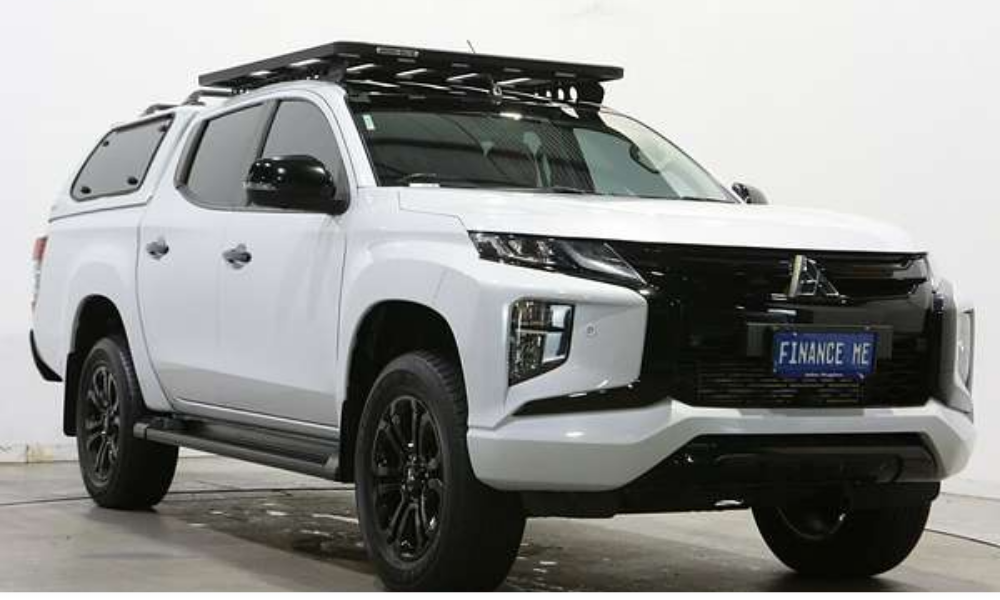
Fuel Economy & Real-World Efficiency
The 2023 Mitsubishi Triton GLS may not be the most powerful pickup in its class, but its 2.4-liter turbo-diesel engine delivers respectable efficiency for a vehicle designed to handle both work and recreational duties.
Official combined fuel consumption is rated at approximately 8.6 L/100 km for automatic-equipped GLS models. While real-world results naturally vary depending on driving conditions, load, terrain, and driving style, most owners can realistically expect fuel economy between 8.5 and 10.0 L/100 km during mixed driving.
Highway cruising is where the Triton performs best. The diesel engine settles comfortably at lower engine speeds, helping reduce fuel consumption on long-distance trips. Around town, stop-and-go traffic can push consumption higher, but the Triton remains competitive with most diesel-powered rivals.
The 75-liter fuel tank also provides a useful touring range, making the Triton a practical option for buyers who regularly travel long distances between fuel stops. Combined with Mitsubishi’s proven diesel powertrain, the truck offers the kind of efficiency and dependability that appeal to both private owners and commercial users.
While newer competitors may offer slight improvements in refinement and efficiency, the Triton’s real-world operating costs remain one of its strongest selling points.
Cargo & Everyday Practicality
Practicality has always been one of the Triton’s strengths, and the GLS continues that tradition. Whether it’s carrying tools to a job site, hauling camping equipment for a weekend getaway, or handling everyday family duties, the truck offers the versatility buyers expect from a dual-cab pickup.
The cargo tray measures approximately 1,520 mm long and 1,470 mm wide, providing enough space for construction materials, recreational gear, or bulky household items. While some rivals offer slightly larger tray dimensions, the Triton’s load area remains more than adequate for most real-world tasks.
Payload capacity varies depending on specification, but the GLS remains capable of handling demanding workloads without difficulty. Tie-down points and the durable tray design further improve usability for owners who regularly transport equipment.
Towing capability is rated at 3,100 kg when properly equipped. Although that figure falls short of the increasingly common 3,500 kg ratings offered by competitors such as the Ford Ranger and Isuzu D-Max, it remains sufficient for many trailers, boats, and caravans.
Inside the cabin, practicality continues with numerous storage areas, large door pockets, cupholders, and a reasonably sized center console. The dual-cab configuration also makes it easy to transition between work vehicle and family transport, which remains one of the Triton’s biggest advantages.
For buyers seeking a dependable pickup that can comfortably handle both professional and personal responsibilities, the Triton continues to deliver a highly practical package.
Safety & Driver Assistance
Safety remains a solid area for the Triton, even if some of its technology is beginning to show its age compared to newer competitors.
The Triton lineup received a five-star ANCAP safety rating and comes equipped with a comprehensive suite of essential safety features. Standard equipment includes multiple airbags, anti-lock brakes, electronic stability control, trailer stability assistance, autonomous emergency braking, forward collision warning, and lane departure warning.
The GLS trim builds upon this foundation by adding blind-spot monitoring and rear cross-traffic alert, both of which provide valuable assistance during everyday driving. Parking sensors and available camera systems also help improve visibility when maneuvering in tight spaces.
Where the Triton begins to fall behind newer rivals is in the availability of advanced driver-assistance technologies. Features such as lane-centering assistance, adaptive cruise control, traffic sign recognition, and more sophisticated semi-autonomous driving aids are either unavailable or less advanced than those offered by competitors.
For most buyers, the Triton still provides the essential safety technologies needed for daily driving and long-distance travel. However, shoppers prioritizing the latest driver-assistance systems may find more comprehensive packages elsewhere.
Competitors Worth Considering
Ford Ranger
The Ford Ranger has become the benchmark in the midsize pickup segment. It offers a more modern interior, superior ride comfort, stronger towing capability, and significantly more advanced technology. The Ranger feels more refined in everyday driving, but it also commands a noticeably higher price. Buyers willing to spend more for additional comfort and features may find the Ford worth the premium.
Toyota HiLux
The Toyota HiLux remains one of the most trusted names in the pickup market. Known for its durability, resale value, and proven reliability, it continues to attract both commercial and private buyers. While the HiLux benefits from a strong reputation and broad dealer network, the Triton often provides comparable capability and equipment at a more competitive price point.
Isuzu D-Max
The Isuzu D-Max is one of the Triton’s closest rivals. It combines excellent fuel efficiency, strong towing credentials, impressive reliability, and a more modern safety package. The D-Max generally offers a smoother driving experience and a newer overall platform, though it typically comes at a higher purchase price than an equivalent Triton.
Each of these competitors excels in different areas, but the Triton continues to stand out for its combination of affordability, proven mechanicals, and one of the most capable four-wheel-drive systems available in the segment.
Final Verdict: Should You Buy It?
The 2023 Mitsubishi Triton GLS proves that a pickup truck doesn’t need to be the newest or most powerful option in the segment to remain relevant. While competitors such as the Ford Ranger and Isuzu D-Max have moved ahead in areas like technology, refinement, and towing capacity, the Triton continues to offer a compelling blend of capability, reliability, and value.
Its proven 2.4-liter turbo-diesel engine, highly capable Super Select II four-wheel-drive system, and strong warranty coverage make it an attractive choice for buyers who prioritize long-term ownership confidence over the latest gadgets. The cabin and infotainment system may feel dated compared to newer rivals, but the fundamentals remain solid.
For tradies, outdoor enthusiasts, and families seeking a dependable dual-cab pickup that can handle both work and weekend adventures, the Triton GLS remains a smart buy. It may be approaching the end of its lifecycle, but it still delivers exactly what many truck buyers need: durability, practicality, and genuine capability at a competitive price.
Cardrav Verdict: 8.4/10
The 2023 Mitsubishi Triton GLS isn’t the most advanced pickup in its class, but it remains one of the best value-for-money options available. Proven reliability, strong off-road credentials, and competitive pricing continue to make it a worthy contender in the midsize pickup segment.
FAQ
Is the 2023 Mitsubishi Triton GLS a good truck for daily driving?
Yes. While it doesn’t offer the same level of refinement as some newer competitors, the Triton GLS remains comfortable enough for daily commuting, family use, and long-distance travel. Its dependable diesel engine and practical dual-cab layout make it a versatile everyday vehicle.
How capable is the Mitsubishi Triton GLS off-road?
The Triton GLS is one of the strongest off-road performers in its segment. Its Super Select II four-wheel-drive system, low-range transfer case, and rear differential lock provide excellent traction on challenging terrain, making it well-suited for camping, touring, and off-road adventures.
What is the towing capacity of the 2023 Mitsubishi Triton GLS?
When properly equipped, the Triton GLS can tow up to 3,100 kg. While this is slightly lower than the 3,500 kg ratings offered by some competitors, it remains sufficient for many trailers, boats, and caravans.
Is the Mitsubishi Triton reliable?
The Triton has built a strong reputation for reliability over many years. Its proven 2.4-liter turbo-diesel engine and relatively simple mechanical design have helped make it a popular choice among both private owners and commercial operators.
Should I buy the Mitsubishi Triton GLS or a Ford Ranger?
The answer depends on your priorities. The Ford Ranger offers a more modern cabin, better ride comfort, and more advanced technology. However, the Triton GLS provides excellent value for money, strong off-road capability, and lower purchase costs, making it a compelling alternative for budget-conscious buyers.