2023 Lucid Air Review: The EV Range King
A luxury electric sedan with class-leading range, incredible performance, and the technology to challenge Tesla, Mercedes-Benz, and Porsche.

2023 Lucid Air: An electric sedan built by aerospace engineers, priced like a private jet payment, and still one of the smartest EVs money can buy in 2026.
For years the electric luxury sedan conversation started and ended with one name. Then Lucid showed up with a car that could out-range a Tesla Model S, out-charge a Porsche Taycan, and out-quiet a Mercedes EQS, and the conversation got a lot more interesting. The 2023 Lucid Air did not just enter the segment, it rearranged the seating chart. This was the model year that filled out the lineup properly, adding a base Pure trim for buyers who wanted the Lucid experience without the six-figure buy-in, and topping it off with the tri-motor Sapphire, a car with more horsepower than most supercars and a back seat that reclines like a business class flight.
Lucid is not Tesla. It never tried to be. Where Tesla built a tech company that happens to make cars, Lucid built a car company staffed by former Tesla and aerospace engineers obsessed with efficiency, packaging, and the kind of quiet, tailored luxury you find in an S-Class rather than a smartphone on wheels. The Air Pure starts in the low eighties, the Grand Touring stretches past six figures, and the Sapphire lives in a different universe entirely near a quarter million dollars. That is a wide net, and it is why the Air pulls buyers cross-shopping everything from a loaded Model S to a Mercedes-Benz EQS to a BMW i7.
By 2026 the Air is a known quantity rather than a science project, and that matters. Early EV adopters take software hiccups on faith. Buyers looking at a 2023 Air today, whether new-old-stock or on the used market, want to know if the thing actually works, holds its charge estimate, and drives like the reviews promised. Mostly, it does.
Used pricing has also shifted the entire conversation around this car. A vehicle that stickered anywhere from ninety thousand to well over a hundred thirty thousand dollars new can now be found for a fraction of that on the used market, which changes who this car makes sense for. Early adopters absorbed the depreciation hit, but that same depreciation is exactly why a 2023 Air deserves a second look today, especially against a used Model S or EQS sitting at a similar price point.
Our Opinion
The Lucid Air remains the most technically impressive electric sedan sold in America, full stop. The packaging is a genuine engineering achievement, the range numbers are not inflated marketing, and the ride quality embarrasses cars costing twice as much. It is also a car from a company still finding its footing, with an infotainment system that occasionally stutters and a dealer network that is thin compared to the German brands it wants to beat.
If you value driving range, real world efficiency, and an interior that feels genuinely different from everything else on the road, the Air rewards you generously. If you want bulletproof reliability history and a service center in every zip code, you are choosing a young brand knowing the risks that come with it.
Pros and Cons
Pros:
- Best in class EV range across nearly every trim
- Class leading efficiency and DC fast charging speed
- Genuinely quiet, composed ride at any speed
- Enormous frunk and usable rear trunk space
- Interior space that outclasses cars with longer wheelbases
Cons:
- Infotainment software can lag or freeze during use
- Some interior switchgear feels cheaper than the price tag suggests
- Limited service network compared to established luxury brands
- Steep depreciation for original buyers
What’s New for 2023
The 2023 model year is where the Air lineup finally made sense. Lucid added the Pure trim as a genuine entry point, initially rear wheel drive with an all wheel drive version following later in the year. At the opposite extreme, the Sapphire arrived as the performance flagship, a tri-motor monster making around 1,234 horsepower with a claimed zero to sixty time under two seconds. The Grand Touring Performance debuted too, based on the Grand Touring but with power bumped to 1,050 horsepower and a second rear motor. Lucid also introduced a Stealth Look appearance package that swaps the brightwork for dark gray trim and black wheels, available on every trim but the base Pure.
None of this changed what the Air fundamentally is. It sharpened the range of buyers it could reach, from a well equipped daily driver to a genuine hypercar-slaying performance sedan wearing a business suit.
Exterior Design
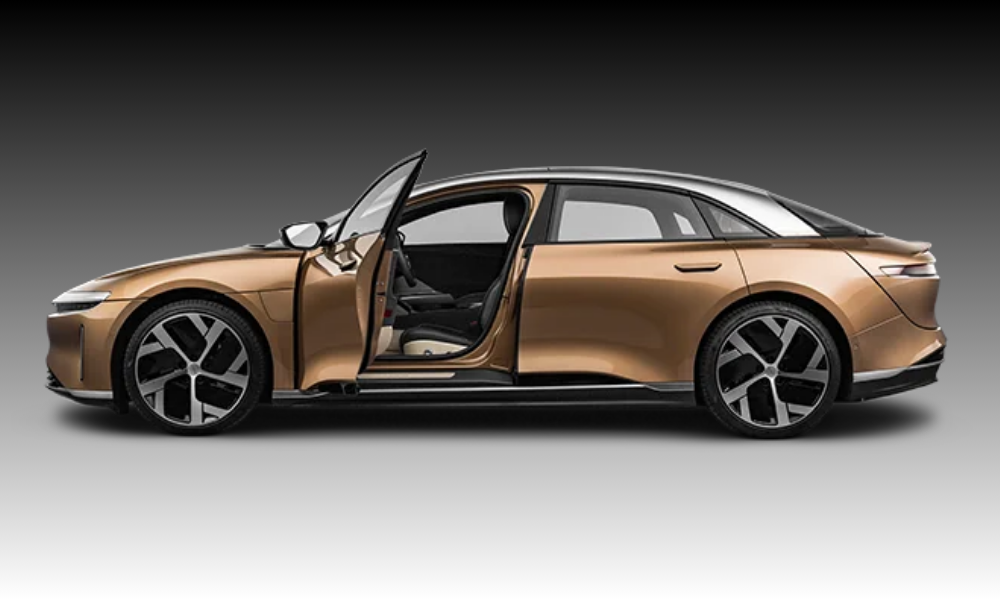
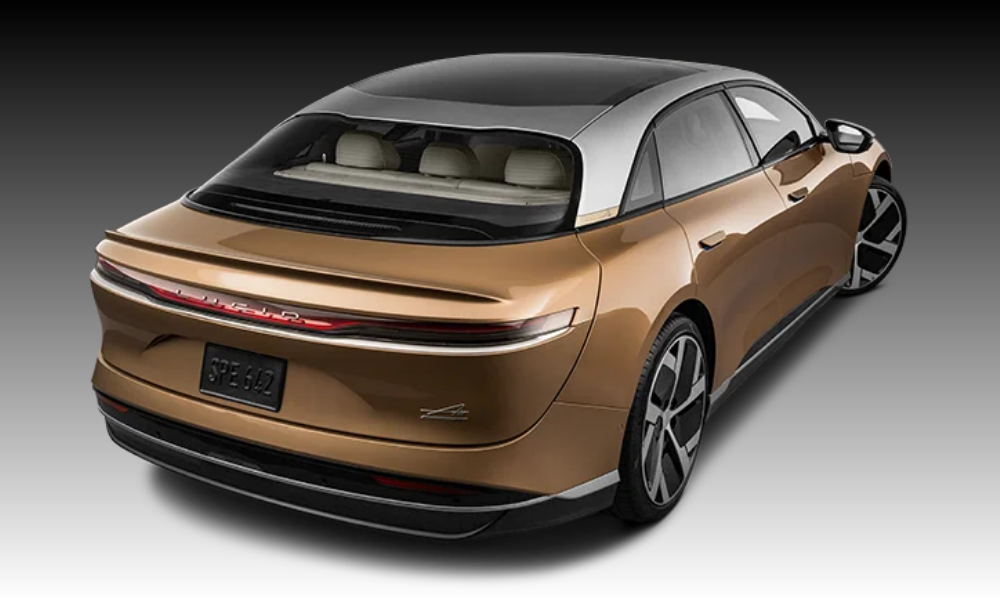
The Air does not shout. From most angles it reads as a smooth, low, aerodynamic sedan that could pass for a concept car that snuck onto the production line. The drag coefficient sits around 0.21, among the slickest of any production car, and you can see why once you notice the tiny headlights, the flush door handles, and the way every panel seems to have been sanded down to remove excuses for turbulence.
Compared to the Mercedes EQS, which wears its aerodynamic teardrop shape a little awkwardly, the Air looks more like a normal sedan that happens to slip through the air with almost no resistance. Next to the Tesla Model S, the Air feels more tailored and less appliance-like, with a clamshell hood and a clamshell trunk lid that give it a unique, seamless presence front and rear. It will not turn heads at a stoplight the way a Taycan does, but it ages well, and that is a compliment most flashy EVs cannot claim.
Driving Experience
This is where the Air earns its reputation. Step on the accelerator in a Touring or Grand Touring and the car delivers thrust with almost no drama, just a surge that feels more like being pushed by a very large, very calm hand than being launched. Even the base trims hit 60 mph in around 3.2 seconds, numbers that put most performance cars on notice. The Sapphire is a different animal entirely, closer to a Bugatti’s numbers than a luxury sedan’s.
What sets the Air apart from other quick EVs is how it behaves once the initial punch wears off. The steering is light but accurate, the chassis stays composed through fast sweepers, and the ride never turns brittle even on the larger wheel packages. This is where the excitement begins to feel sustainable rather than a one time party trick. Around town, the Air is almost eerily serene, gliding over broken pavement in a way that few luxury sedans manage regardless of powertrain.
Highway merges deserve a mention too. Because the power delivery is so linear, there is none of the jerky, all-or-nothing throttle response that plagues some EVs. Tip into the pedal gently and the Air responds gently. Bury it and the car simply disappears down the road without the tires scrambling for grip, even in the wet, thanks to the standard all wheel drive on every trim above the base Pure. It is the kind of car that makes a two hour commute feel shorter and a canyon road feel like an occasion, which is a rare combination.
Performance and Acceleration
Every trim tells its own story here. The Pure, with 480 horsepower, is already quicker than the vast majority of gasoline sedans on sale, and it delivers that power in a straightforward, confidence inspiring way that does not try to overwhelm a new EV buyer.
The Touring steps things up considerably, with around 620 horsepower on tap, enough to put it ahead of even the most powerful Porsche Taycan variant on the market. The Grand Touring adds more range focused engineering without sacrificing much punch, while the Grand Touring Performance turns the wick up further with a second motor on the rear axle for a combined output north of a thousand horsepower.
Then there is the Sapphire, which exists mostly to prove a point. A tri-motor setup producing 1,234 horsepower and a 0 to 60 time of roughly 1.89 seconds puts this four door family sedan in company usually reserved for seven figure hypercars. It is absurd, and Lucid clearly built it to be absurd. Most buyers do not need this car. Some will want it anyway, and that is exactly the point.
Ride Comfort and Cabin
Lucid engineered the Air to be quiet first and impressive second, and it shows. Road and wind noise are suppressed to a degree that few gas or electric cars can match, and the air suspension available on upper trims soaks up expansion joints and potholes without transmitting much into the cabin. Long stretches of highway pass in near silence, which makes the Air an outstanding road trip car for anyone who values their ears as much as their range anxiety.
It is not entirely flawless. Some road textures still telegraph a bit more than you would expect from a car this expensive, and the ride firms up noticeably on the larger wheel and performance tire combinations. If comfort is the priority over outright grip, stick to the standard wheels rather than the sportier packages.
Interior Design and Luxury
The cabin is where Lucid separates itself most clearly from Tesla’s minimalist playbook. Materials like PurLuxe synthetic leather, Alcantara suede, sustainably sourced wood, and polished metal accents give the Air’s interior a genuinely upscale feel, closer to what you would expect from an established luxury brand than a startup’s first production car. Starting with the Touring trim, a standard Glass Canopy windshield stretches in one seamless piece over the front seats, and it changes the whole mood of the cabin, letting in light without turning the interior into a greenhouse.
Space is the other headline. Lucid managed to fit S-Class levels of interior room into a package closer in size to an E-Class, which means rear seat passengers get genuine limousine-like legroom despite the car’s relatively compact footprint. Front and rear seats are supportive and well padded, comfortably fitting four adults with room for a fifth in a pinch. Some interior touch points, like certain window switches and steering wheel buttons, feel like they were sourced from a much cheaper parts bin, and on a car costing well into six figures, that inconsistency stands out.
The details matter here too. Door handles retract and present themselves with a small flourish, the massage function in the front seats is genuinely strong rather than a token gesture, and the overall design language leans mid-century modern rather than trying to look futuristic for its own sake. It photographs well, but it also just feels good to sit in for three hours straight, which says more about the actual engineering than any spec sheet number.
Technology and Infotainment
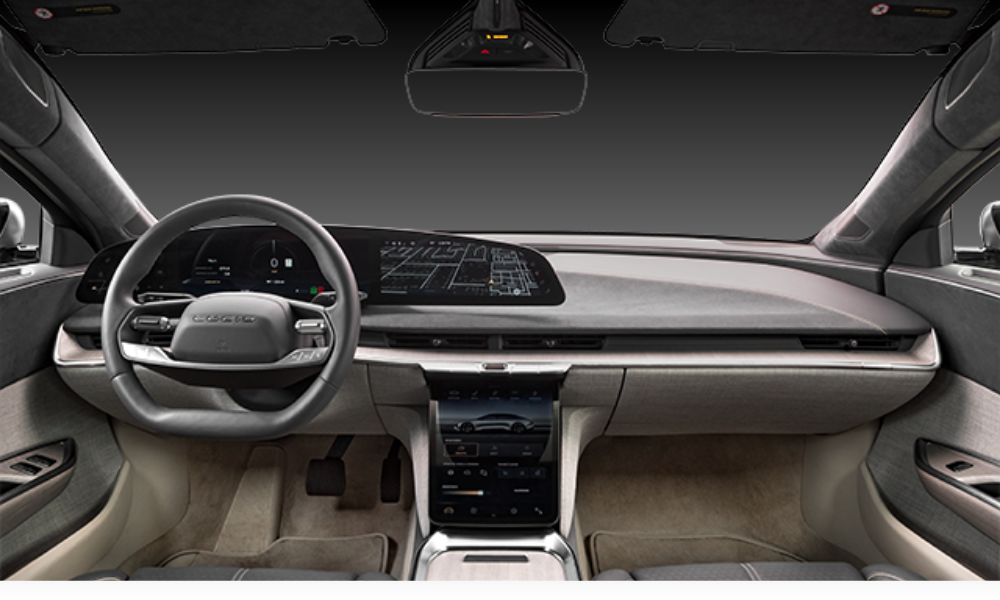
Lucid’s cabin tech is ambitious and mostly delivers, though not without hiccups. The 34 inch curved Glass Cockpit display groups vehicle controls on the left, speed and driver assistance info in the center, and infotainment functions like navigation on the right, while the smaller Pilot Panel below handles climate and seat settings and can retract to reveal a hidden storage compartment.
It looks fantastic and functions logically once you learn where things live, but the execution has rough edges. Menus occasionally lag, and there is enough packed into these screens that even experienced EV owners find themselves hunting for settings they adjusted the day before. If you want a system as intuitive as Tesla’s, the Air is not quite there yet. If you want a system that looks like nothing else on the road, it delivers in spades.
Fuel Efficiency
Efficiency is arguably the single biggest reason to consider a Lucid over anything else in this segment. EPA-estimated range spans from 384 to 516 miles depending on trim and equipment, numbers that comfortably beat the Tesla Model S, Mercedes EQS, Audi e-tron GT, and Porsche Taycan. That range advantage is not a fluke, it comes from genuinely efficient motors and battery packaging, not just a bigger battery pack.
Charging backs this up. The Air can add up to 300 miles of range in about 20 minutes on a suitable DC fast charger, which means road trips involve shorter, less frequent stops than most rivals. For daily driving, that efficiency translates into real world range that tracks close to the window sticker, something not every EV manufacturer can honestly claim.
Practicality
The Air surprises with how usable it is day to day. The rear trunk offers about 22.1 cubic feet of cargo space with a low, wide opening that makes loading bulky items easy, and the frunk adds roughly 10 cubic feet more, among the largest front storage compartments of any EV on sale. Rear seat access is slightly compromised by the swooping roofline, so taller passengers may need to duck getting in, but once seated there is little to complain about.
Two full sets of LATCH connectors and a middle tether anchor mean it works fine as a family car too, something that is easy to forget given how the Air is marketed as a performance-luxury flagship first.
Safety and Driver Assistance Systems
Every 2023 Air comes with Lucid’s DreamDrive suite, covering the fundamentals like automatic emergency braking, blind spot monitoring, and a 360 degree camera system. Stepping up to DreamDrive Pro, standard on the Grand Touring and optional lower down the lineup, adds more advanced hardware including lidar sensors, positioning the Air for future hands free highway driving as those features roll out through over the air updates.
The safety case for the Air is strong on paper, though as a lower volume brand it does not have the same mountain of crash test and real world reliability data that decades old rivals have accumulated. Buyers should weigh that reality against the genuinely thoughtful hardware Lucid has built in from day one.
Worthy Competitors
The Tesla Model S remains the most obvious cross-shop, with a more mature software ecosystem and Supercharger network, though it cannot match the Air’s cabin materials or outright range in top trims.
The Mercedes-Benz EQS answers with a more traditional luxury feel and a stronger dealer network, but falls short of the Air’s efficiency and offers a busier, more polarizing exterior design.
The Porsche Taycan counters with sharper driving dynamics for enthusiasts who prioritize handling over range, though even its most powerful variant trails the Touring’s horsepower figures and its real world range lags well behind any Air trim.
Key Strengths and Key Weaknesses
The Air’s greatest strength is simply being the most efficient, longest range electric sedan money can buy, wrapped in an interior that feels genuinely upscale rather than gadget-forward. Its greatest weakness is a young company’s growing pains, from occasional software glitches to a thinner service network than buyers get with legacy luxury brands.
Which Category Does Cardrav Recommend?
For most buyers we would point toward the Touring trim. It carries enough range and performance to satisfy nearly anyone, without the six figure jump into Grand Touring territory or the borderline absurd price of the Sapphire. The Pure is a smart entry point if budget is the priority, but Touring feels like the sweet spot Lucid actually engineered this car around.
Conclusion: Is It Worth Buying?
If you want the electric sedan with the longest range, the fastest charging, and an interior that genuinely feels like nothing else on sale, the 2023 Lucid Air deserves serious consideration. It drives beautifully, it is remarkably efficient, and it makes a compelling case against far more established rivals. Just go in with open eyes about Lucid’s smaller footprint and occasional software rough edges. If you can live with that trade off, this is one of the most rewarding electric cars you can put in your driveway today.
FAQ
Is the 2023 Lucid Air a good buy in 2026?
Yes, for buyers who value range and efficiency above all else, the 2023 Lucid Air remains one of the strongest values in the used luxury EV market thanks to steep early depreciation.
How much range does the 2023 Lucid Air get?
Depending on trim and wheel package, the 2023 Lucid Air ranges from 384 to 516 miles on a full charge, the longest in its class.
Is the Lucid Air Sapphire really that fast?
Yes, the Sapphire trim produces around 1,234 horsepower and can hit 60 mph in under two seconds, putting it in supercar territory.
Does the Lucid Air have reliability issues?
As a newer automaker, Lucid has had some software related complaints, though the hardware itself has generally proven solid across owner reports.
What is the biggest competitor to the Lucid Air?
The Tesla Model S is the most direct competitor, though the EQS and Taycan also draw cross-shoppers depending on whether comfort or handling matters more to the buyer.