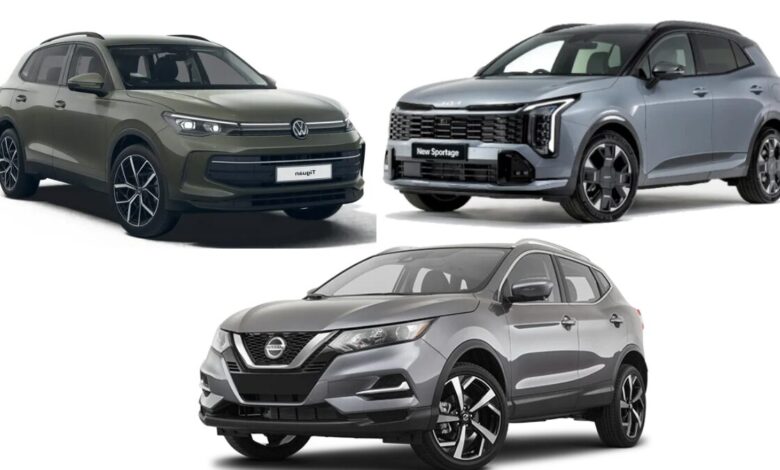
Kia Sportage vs Nissan Qashqai vs Volkswagen Tiguan, three of the most popular compact SUVs in the world, define what modern family motoring truly means. The compact SUV segment is one of the most competitive battlegrounds in today’s global automotive market, spanning North America, Europe, and Asia. These three models dominate highways, city streets, and suburban driveways alike. Their appeal lies in the perfect balance they strike between practicality, comfort, and cutting-edge technology. Each promises efficiency and performance in equal measure, yet few truly master both at once.
At first glance, the differences might seem subtle. All are five-door, five-seat crossovers designed for families who want the commanding presence of an SUV without sacrificing manoeuvrability or fuel economy. Look closer, though, and their distinct personalities come alive. Kia stands out with confident design and hybrid versatility, Nissan pushes forward with electrified innovation, and Volkswagen refines the formula with German precision and premium craftsmanship.
The 2025 Kia Sportage, currently one of the best-selling vehicles worldwide, joins this test with a light refresh to maintain its upward momentum. The 2025 Nissan Qashqai, meanwhile, evolves the formula it helped invent, now boasting a smoother and more efficient e-Power hybrid system. Completing the trio, the all-new Volkswagen Tiguan enters as the polished benchmark for quality, space, and understated sophistication.
Ultimately, these SUVs reveal how distinct design philosophies can achieve success within the same market. They cater to the practical, tech-savvy driver seeking style, reliability, and balance for both city commutes and long journeys. Yet, the way each brand reaches that harmony differs entirely. Kia builds its case on value and long-term confidence, Nissan focuses on technological innovation, while Volkswagen relies on brand prestige and precise engineering finesse.
Cardrav tested all three in real-world conditions to discover which delivers the best all-around experience for 2025. Beyond the specs and promises, this comparison dives into everyday usability, comfort, technology, and efficiency, revealing how these SUVs perform where it matters most: in real life.
After years of rivalry, the Kia Sportage vs Nissan Qashqai vs Volkswagen Tiguan shows us how far compact SUVs have evolved in 2025.
Kia Sportage
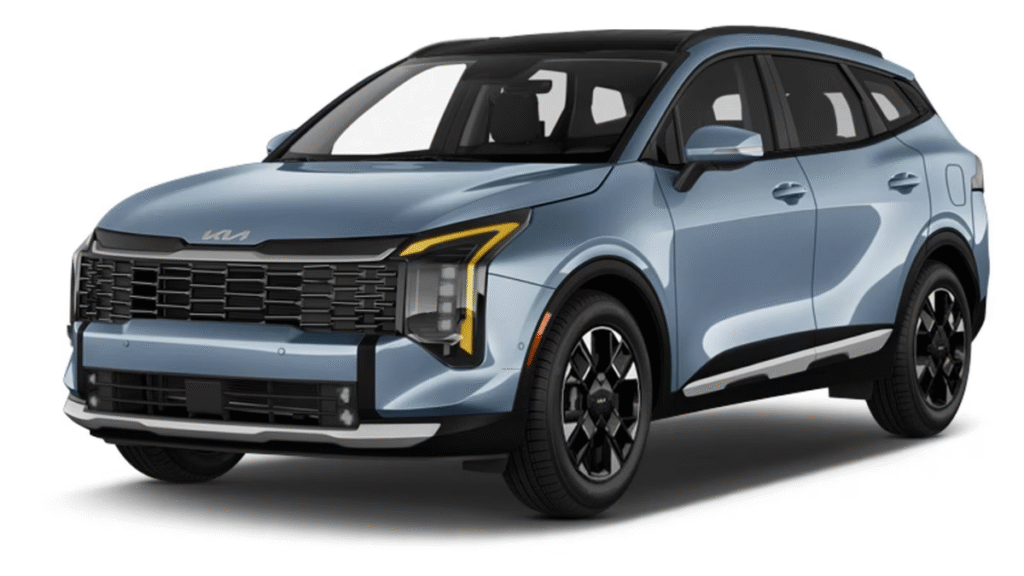
Few SUVs have climbed the sales charts with the same quiet confidence as the Kia Sportage. Once seen as a modest choice for families on a budget, it has transformed into one of the most desirable midsize SUVs in the UK and beyond. For 2025, Kia chose refinement over reinvention, polishing the Sportage’s winning formula rather than starting over. The result is a vehicle that feels more mature, cohesive, and better built than ever before.
The design changes are subtle but effective. The Sportage now looks leaner, with tighter proportions and sharper surface detailing. Its signature tiger-nose grille flows naturally into the LED headlights, giving the front a sense of unity and direction. From any angle, it feels like a car that knows its identity, confident without shouting for attention. This evolution reflects Kia’s understanding that timelessness often trumps bold experimentation.
Inside, the transformation continues. The cabin exudes a quiet sophistication, where simplicity meets modern luxury. The dual 12.3-inch curved displays stretch elegantly across the dashboard, integrating infotainment and driver information into one seamless layout. Material quality is excellent, with soft-touch finishes on the upper dash and doors, balanced by metallic accents that feel genuinely premium. It’s an environment built for long drives and everyday comfort alike.
Behind the wheel, the Sportage surprises with how composed and responsive it feels. The hybrid system combines a 1.6-litre turbocharged petrol engine with an electric motor to produce 235 horsepower. Power delivery is smooth and immediate, especially in urban driving, where the electric motor does most of the heavy lifting. The six-speed automatic transmission shifts fluidly, while regenerative braking, adjustable via steering paddles, allows drivers to fine-tune deceleration to their preference. This small touch gives the car a level of control usually found in luxury EVs.
The GT-Line model tested by Cardrav demonstrates how far Kia’s craftsmanship has come. With features like ventilated front seats, adaptive LED headlights, a panoramic sunroof, and a premium sound system, it feels closer to an entry-level luxury SUV than a mainstream one. Add in Kia’s industry-leading seven-year warranty and impressive reliability record, and the Sportage’s appeal becomes undeniable. It’s a vehicle that offers substance over status, a reminder that good design and clever engineering can still deliver genuine satisfaction without breaking the bank.
| Model | Kia Sportage |
|---|---|
| Price | $47,300 |
| Powertrain | 1.6L 4-cylinder hybrid, 235 hp |
| 0–62 mph | 7.9 seconds |
| Efficiency | 43.8 mpg |
| Range | 501 miles |
| Annual Road Tax | $250 |
Nissan Qashqai
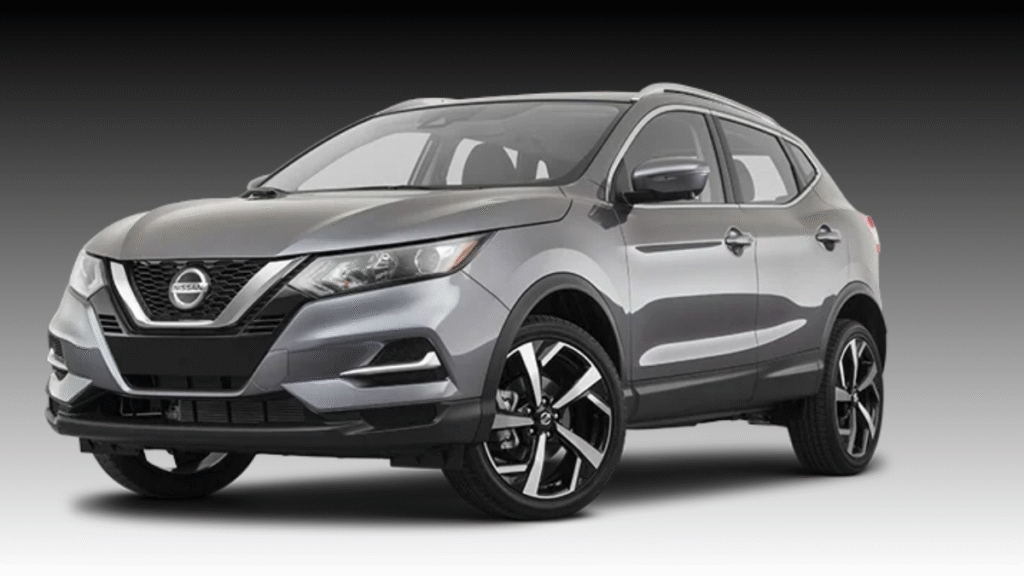
If one car can claim to have shaped the compact SUV segment as we know it, it’s the Nissan Qashqai. Since its original debut, it has defined what families expect from a practical, efficient, and comfortable crossover. For 2025, Nissan doesn’t reinvent the concept; it perfects it. The latest Qashqai brings a more advanced powertrain, subtle aerodynamic updates, and a driving experience that feels one step closer to full electrification without losing the convenience of a conventional vehicle.
The Qashqai’s evolution is one of maturity and precision. At a glance, its exterior might seem unchanged, but look closer and you’ll notice refinements that make a real difference. The reshaped bumpers and mirrors, paired with a smoother underbody, reduce drag and improve stability at higher speeds. The result isn’t just better efficiency, it’s a car that feels more settled, quieter, and more confident on the motorway. It’s designed for function, executed with restraint and purpose.
The big news lies under the hood. The new e-Power hybrid system is the heart of this transformation. Unlike traditional hybrids, it uses the petrol engine solely to charge the battery, which in turn powers an electric motor that drives the wheels. That means the Qashqai behaves like a pure EV most of the time, smooth, silent, and instantly responsive. With 201 horsepower and a 0–62 mph sprint of 7.6 seconds, it feels lively in traffic and effortless on longer journeys. Fuel efficiency is outstanding, averaging 52.5 mpg in real-world testing.
Inside, the Qashqai continues Nissan’s focus on driver comfort and usability. The cockpit feels refined but not overcomplicated. The infotainment system, now powered by Google, is intuitive, fast, and beautifully presented. Every detail seems thought through, from the high seating position to the easy visibility that families love. And in true Nissan fashion, the ergonomics are nearly flawless, with supportive seats and clever use of soft materials that elevate the overall feel.
Cardrav’s test vehicle was the range-topping Tekna+ trim, loaded with luxury features such as a 10-speaker Bose audio system, quilted leather upholstery, and adaptive LED lighting. Yet even with all the tech, it’s the Qashqai’s calm and confident character that stands out most. It’s a car that doesn’t just adapt to modern driving, it anticipates it, blending electric precision with the reliability and range of petrol power.
| Model | Nissan Qashqai |
|---|---|
| Price | $47,780 |
| Powertrain | 1.6L 3-cylinder hybrid (e-Power), 201 hp |
| 0–62 mph | 7.6 seconds |
| Efficiency | 52.5 mpg |
| Range | 774 miles |
| Annual Road Tax | $250 |
Volkswagen Tiguan
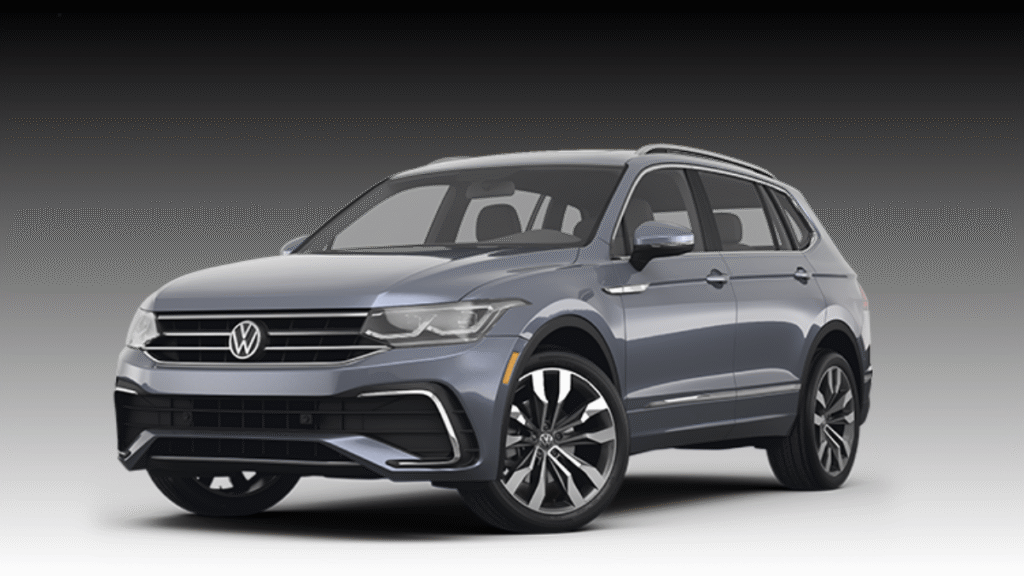
The Volkswagen Tiguan has long been a benchmark in the compact SUV world, the model that many others measure themselves against. With the latest generation, Volkswagen hasn’t simply tried to outshine its rivals; it’s aimed to refine what already worked. The result is a vehicle that radiates understated sophistication, delivering an experience that feels grounded in German precision rather than flash or flair.
Externally, the 2025 Tiguan doesn’t chase trends. Its lines are clean and balanced, its surfaces taut and disciplined. The LED light bar running across the grille adds a modern touch, but the overall design remains timeless, unmistakably Volkswagen. It looks substantial, reassuring, and perfectly at home whether parked outside a city café or gliding down a motorway. While the Sportage and Qashqai rely more on expressive styling, the Tiguan’s appeal lies in quiet confidence.
Inside, Volkswagen’s cabin design continues to be one of its strongest cards. The materials feel premium, the ergonomics are spot-on, and everything operates with the solid tactility that defines the brand. The new 12.9-inch central touchscreen sits proudly atop the dashboard, paired with a fully digital instrument cluster. It’s crisp, quick, and packed with intuitive menus, a massive leap from older VW systems. There’s also an abundance of thoughtful storage spaces, including dual wireless charging pads and a configurable centre console that feels genuinely practical.
Under the hood, the Tiguan’s mild-hybrid powertrain combines a 1.5-litre turbocharged engine with a small electric motor for smoother acceleration and improved fuel economy. Producing 148 horsepower, it’s not the most powerful option in this test, but it delivers its performance with quiet confidence. The seven-speed automatic gearbox is well-calibrated, and when paired with Volkswagen’s optional adaptive dampers, the Tiguan transforms into one of the most comfortable cars in its class. It feels stable and composed even over rough tarmac, maintaining that characteristic VW poise.
On the road, it prioritises comfort over thrill, a deliberate choice. The steering is light but precise, the brakes progressive, and the suspension isolates road imperfections effortlessly. For drivers seeking a refined, mature SUV rather than something sporty, the Tiguan delivers beautifully. And with the R-Line trim adding premium touches like larger wheels, ambient lighting, and advanced driver aids, it feels every inch the premium crossover it claims to be.
| Model | Volkswagen Tiguan |
|---|---|
| Price | $50,220 |
| Powertrain | 1.5L 4-cylinder mild hybrid, 148 hp |
| 0–62 mph | 9.1 seconds |
| Efficiency | 39.5 mpg |
| Range | 478 miles |
| Annual Road Tax | $250 |
Head-to-Head: On the Road
Out on the open road, the personalities of these three SUVs couldn’t be more distinct. In this real-world comparison of Kia Sportage vs Nissan Qashqai vs Volkswagen Tiguan, each model expresses a different driving character that reflects its brand philosophy.
The Kia Sportage leans toward the confident and refined side. It feels well-planted, smooth, and predictably comfortable. Its hybrid setup provides instant torque and a quiet cruising experience, though the gearbox occasionally hesitates during quick transitions between electric and petrol modes. Still, it remains composed, precise, and impressively stable even on tight corners.
The Nissan Qashqai, in contrast, feels effortlessly modern. Its e-Power system delivers instant electric response with the ease of a full EV, yet without the range anxiety that comes with plugging in. There’s a certain calmness in how it accelerates and slows down; the engine hums quietly in the background, acting purely as a generator rather than a traditional power source. It makes the Qashqai the most polished to drive day to day agile in the city, relaxed on long trips, and perfectly balanced between power and efficiency.
Meanwhile, the Volkswagen Tiguan brings its own flavour of refinement. It’s less athletic but exudes composure and precision. The steering is light yet consistent, and with the optional adaptive dampers, the Tiguan delivers superb ride quality. It absorbs rough patches better than either rival, maintaining that classic Volkswagen balance. The trade-off, however, is that it never feels quite as engaging as the Qashqai or as lively as the Sportage. It’s calm and confident but not particularly thrilling.
Technology and Interior Quality
Step inside these three SUVs, and you’ll find three very different interpretations of modern comfort. The Kia Sportage impresses with its high-quality build and dual-screen layout that rivals more expensive brands. The infotainment interface is easy to read and quick to respond, though it’s not as visually sophisticated as its competitors. The cabin’s combination of soft-touch materials, intuitive controls, and generous space creates a strong sense of modern practicality.
The Nissan Qashqai is the tech leader here. Its Google-based infotainment system feels one generation ahead, seamlessly integrating maps, voice commands, and smartphone connectivity. The graphics are crisp, and everything works without delay. Combined with clear instrumentation and comfortable seating, the cabin feels elegant but uncluttered a place designed for families who value logic as much as luxury.
Volkswagen’s approach, as always, focuses on craftsmanship. The Tiguan’s materials and design execution stand out immediately. The touchscreen is larger and brighter than before, and the new rotary controller for driving modes feels solid and mechanical. While some menu layouts take a moment to master, the attention to detail and tactile feedback give the interior a reassuring sense of precision. Every button, every click feels engineered to last.
Practicality and Everyday Use
When it comes to practicality, the Tiguan dominates. Its 652-litre boot is vast, easily swallowing strollers, luggage, or a family’s weekend gear. The square load bay and low lip make it one of the most user-friendly designs in its class. Rear seat passengers also benefit from impressive space and flexible seating angles.
The Kia Sportage is not far behind. Its 587-litre boot and reclining rear seats make it family-friendly and versatile. Kia’s packaging is clever, maximising space without compromising comfort. The wide-opening rear doors and flat floor enhance accessibility, a detail families will appreciate in daily use.
The Qashqai, while slightly smaller inside, makes up for it with thoughtful design. Storage cubbies are everywhere, the driving position is commanding, and visibility is excellent. For many families, it strikes a sweet spot between compact dimensions and genuine usability.
Efficiency, Value, and Safety
The Qashqai’s e-Power system makes it the most efficient by a clear margin, returning more than 52 mpg in real-world conditions. It’s the car that best merges hybrid technology with low running costs. The Sportage follows with solid economy and the reassurance of a seven-year warranty, a package that gives it immense long-term value. The Tiguan, though thirstier, compensates with stronger residual values and a perception of prestige that keeps it appealing to buyers seeking a more “premium” badge.
All three SUVs achieve five-star Euro NCAP safety ratings, but Volkswagen earns extra credit for passing under stricter testing standards. Still, Kia’s suite of safety assists, including adaptive cruise and lane-keep systems, comes standard, something VW often reserves for higher trims. Nissan’s ProPilot Assist strikes the best balance, helping reduce fatigue on long drives while maintaining a natural steering feel.
Verdict: The Final Decision
After extensive evaluation, one conclusion is clear: each of these SUVs excels differently. Kia Sportage vs Nissan Qashqai vs Volkswagen Tiguan proves that even within the same compact SUV class, every brand brings a unique identity to the table.
The Kia Sportage offers unbeatable value, long warranty coverage, and a mature driving experience that punches above its price point. The Volkswagen Tiguan shines with refinement, practicality, and German engineering discipline, but its high price and modest hybrid system hold it back from outright victory.
The crown goes to the Nissan Qashqai. Its advanced hybrid powertrain, polished comfort, and outstanding efficiency make it the most complete package of the three. It feels genuinely next-generation, combining electric smoothness with real-world usability. In short, it’s the SUV that best represents where family mobility is heading, blending innovation and reliability in perfect harmony.
Prices and Specs
| Price (as tested) | $47,270 / $48,130 | $47,780 / $55,310 | $50,220 / $65,540 |
| Engine | 4-cyl inline / 1,598cc | 3-cyl inline / 1,598cc | 4-cyl inline / 1,498cc |
| Hybrid Motor Output | 64 hp | 201 hp / 243 lb-ft | 18 hp / 41 lb-ft |
| Combined Power / Torque | 235 hp / 195 lb-ft | 201 hp / 243 lb-ft | 148 hp / 184 lb-ft |
| Transmission | 6-speed automatic (FWD) | Single-speed (FWD) | 7-speed automatic (FWD) |
| 0–62 mph / Top Speed | 7.9s / 121 mph | 7.6s / 105 mph | 9.1s / 130 mph |
| Fuel Tank / Battery Capacity | 52 L / 1.49 kWh | 67 L / 2.1 kWh | 55 L / N/A |
| Fuel Economy (test/WLTP) | 43.8 / 50.4 mpg | 52.5 / 61.4 mpg | 39.5 / 46.1 mpg |
| Driving Range | 501 miles | 774 miles | 478 miles |
| CO₂ Emissions | 128 g/km | 103 g/km | 140 g/km |
| Length / Wheelbase | 4,540 / 2,680 mm | 4,425 / 2,665 mm | 4,539 / 2,677 mm |
| Width / Height | 1,865 / 1,645 mm | 1,835 / 1,625 mm | 1,842 / 1,658 mm |
| Rear Knee Room | 629–850 mm | 601–844 mm | 625–868 mm |
| Rear Headroom / Elbow Room | 985 / 1,531 mm | 922 / 1,451 mm | 980 / 1,502 mm |
| Boot Capacity (seats up/down) | 587 / 1,776 L | 479 / 1,415 L | 652 / N/A L |
| Boot Length / Width | 862 / 1,037 mm | 855 / 1,084 mm | 975 / 1,005 mm |
| Boot Lip Height | 692 mm | 756 mm | 723 mm |
| Kerb / Towing Weight | 1,665 / 1,510 kg | 1,592 / 1,800 kg | 1,616 / 1,800 kg |
| Turning Circle | 11.0 m | 11.5 m | 11.7 m |
| Residual Value (3yrs / 36k miles) | $22,630 / 47.9% | $23,290 / 48.7% | $26,720 / 53.2% |
| Depreciation | $24,640 | $24,510 | $23,510 |
| Insurance Group / Premium / Tax | 23 / $880 / $250 | 27 / $845 / $250 | 22 / $735 / $250 |
| 3-Year Service Cost | $855 | $1,095 | $685 (2 yrs) |
| Annual Tax Liability (std / higher) | $2,795 / $5,590 | $2,450 / $4,915 | $3,265 / $6,530 |
| Fuel Cost (10,000 miles) | $1,805 | $1,510 | $2,000 |
| Warranty / Roadside Recovery | 7 yrs (100k miles) / 1 yr | 3 yrs (60k miles) / 3 yrs | 3 yrs (60k miles) / 1 yr |
| Manufacturer Ranking (Driver Power) | 18th | 15th | 27th |
| Euro NCAP Rating (Adult/Child/Ped/Assist/Stars) | 87 / 86 / 66 / 72 / ⭐⭐⭐⭐⭐ | 91 / 91 / 70 / 95 / ⭐⭐⭐⭐⭐ | 83 / 88 / 84 / 78 / ⭐⭐⭐⭐⭐ |
| Metallic Paint / Wheel Size | $865 / 19 in | $955 / 18 in | $1,060 / 20 in |
| Parking Sensors / Camera | Front & Rear / 360° | Front & Rear / Yes | Front & Rear / Yes |
| Spare Wheel / ISOFIX Points | Repair kit / 2 | Space saver / 2 | $475 / 3 |
| Keyless Entry & Power Tailgate | Yes / Yes | Yes / No | $1,460 (package) |
| Leather / Heated Seats | Yes / Yes | No / Yes | $2,850 / Yes |
| Display / Digital Dashboard | 12.3 in / 4.2 in | 12.3 in / 12.3 in | 12.9 in / 10.25 in |
| Climate Control / Panoramic Sunroof | Yes / Yes | Yes / No | Yes / $1,770 |
| USB Ports / Wireless Charging | 4 / Yes | 4 / No | 4 / 2 |
| Wireless CarPlay / Android Auto | Yes / Yes | Yes / Yes | Yes / Yes |
| Blind-Spot Warning / Head-Up Display | Yes / Yes | Yes / No | Yes / $1,480 (package) |
| Adaptive Cruise / Steering Assist | Yes / Yes | Yes / Yes | Yes / $1,280 (package) |
If you’re exploring more of 2025’s standout vehicles and detailed comparisons, the following articles offer deeper insight and broader context across the automotive world. These are some of the most popular and highly recommended reads on CarDrav:
- Best SUVs: Highest-rated cars for 2025
- Best Cars of 2025: A Review of the Year’s Automotive Icons
- Kia Sportage vs Nissan Qashqai vs Volkswagen Tiguan
- Mercedes EQS vs BMW iX (2025) Review: Late to the EV Party, But Better Than Ever
- Mazda 3 2025 vs Volkswagen Jetta 2024
- Best Coupes 2020–2021: In-depth Reviews
- Best Electric SUVs 2025
- 10 Cars We Will Say Goodbye to in 2024
- Best Electric Vehicle Brands in 2025
- The 20 Best Used Cars of 2025 Under $15,000
- The Smartest Fuel-Efficient Trucks of 2025
- The 16 Best Towing Trucks of 2025
- Best Crossovers & Small SUVs for 2025
- The Best Pickup Trucks of 2025
- 8 of the Best Cars Under $20,000 – Minivans
- Best Third-Row SUVs for 2025
- 20 of the Best Cars of 2023 and Affordable SUVs
- The 10 Most Affordable Cars to Buy in 2025
- The 12 Best Cars, 6 Hybrid and 6 Electric, to Buy in 2025
(FAQ)
Which SUV is the best overall choice in 2025?
After extensive real-world testing, the Nissan Qashqai takes the top spot. Its advanced e-Power hybrid system delivers smooth, electric-like performance without requiring a plug-in charge. It’s also the most efficient and refined to drive, making it the best all-around family SUV for 2025.
Is the Kia Sportage still worth buying in 2025?
Absolutely. The Kia Sportage continues to be one of the most balanced SUVs in its class. It offers a premium cabin, smooth hybrid performance, and unbeatable long-term value thanks to Kia’s 7-year warranty. While it’s not the most efficient, it strikes an excellent balance between comfort, technology, and reliability.
What makes the Volkswagen Tiguan different from its rivals?
The Tiguan stands out for its exceptional build quality and refined road manners. It’s the most spacious SUV of the three, offering the biggest boot and excellent interior practicality. However, its mild-hybrid system isn’t as advanced as the Qashqai’s e-Power, and it’s more expensive to buy and maintain.
Which SUV offers the best fuel economy?
The Nissan Qashqai e-Power leads the pack with an impressive 52.5 mpg average during testing. The Kia Sportage follows with 43.8 mpg, while the Volkswagen Tiguan trails with 39.5 mpg. In daily driving, the Qashqai consistently consumes less fuel, especially in city conditions.
Which model has the most spacious interior and boot?
The Volkswagen Tiguan wins here easily. It offers a massive 652-litre boot and excellent passenger space. The Kia Sportage is close behind with 587 litres, while the Qashqai’s 479 litres still make it practical for small families but less versatile for long trips or heavy luggage.
Which SUV provides the best value for money?
Value depends on what you prioritise. The Kia Sportage gives you the most equipment for the price, especially in GT-Line trim. The Qashqai justifies its cost through efficiency and innovation, while the Tiguan commands a premium for its brand prestige and superior fit-and-finish.
Are all three SUVs safe for families?
Yes — all three earned five-star Euro NCAP ratings. The Qashqai scored highest in safety assist features (95%), while the Sportage impressed in occupant protection. The Tiguan achieved its rating under stricter 2024 standards, showing solid crash protection and structural integrity.
Which SUV is most comfortable for long-distance driving?
The Volkswagen Tiguan offers the smoothest long-distance comfort thanks to its optional adaptive suspension and spacious seating. The Qashqai is quieter and more refined in hybrid mode, while the Sportage delivers a balanced mix of both ride comfort and dynamic stability.
What about maintenance and ownership costs?
Kia offers the best long-term ownership plan with its 7-year/100,000-mile warranty and affordable servicing. Nissan’s maintenance costs are moderate, while Volkswagen’s tend to be higher due to parts pricing and premium insurance brackets.
Which one should I buy?
If you value innovation and efficiency, go for the Nissan Qashqai.
If you want value and reliability, the Kia Sportage is unbeatable.
And if you prefer comfort and craftsmanship, the Volkswagen Tiguan remains a refined choice.
Each has a clear identity; it’s just a matter of matching it with your driving lifestyle.