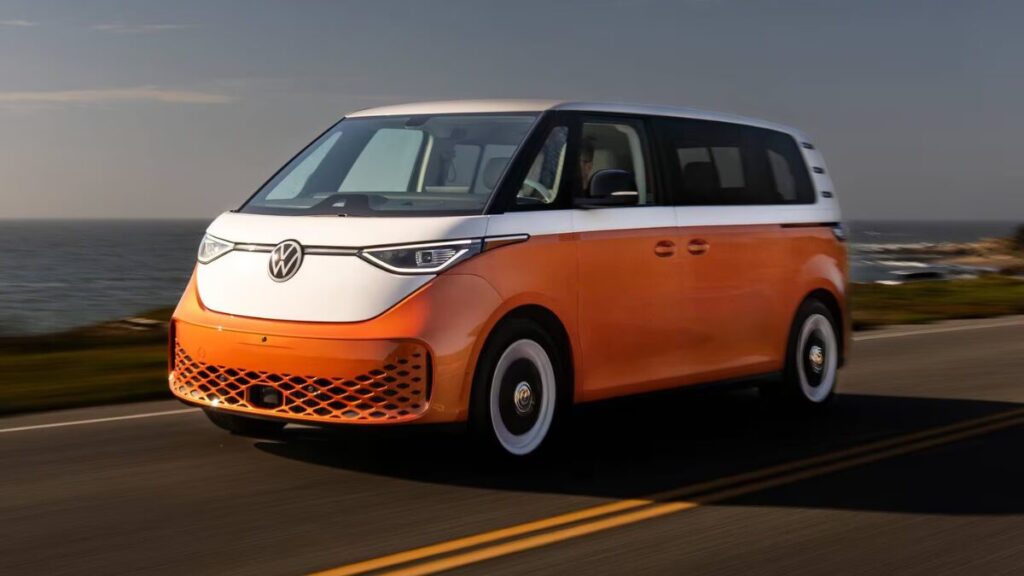
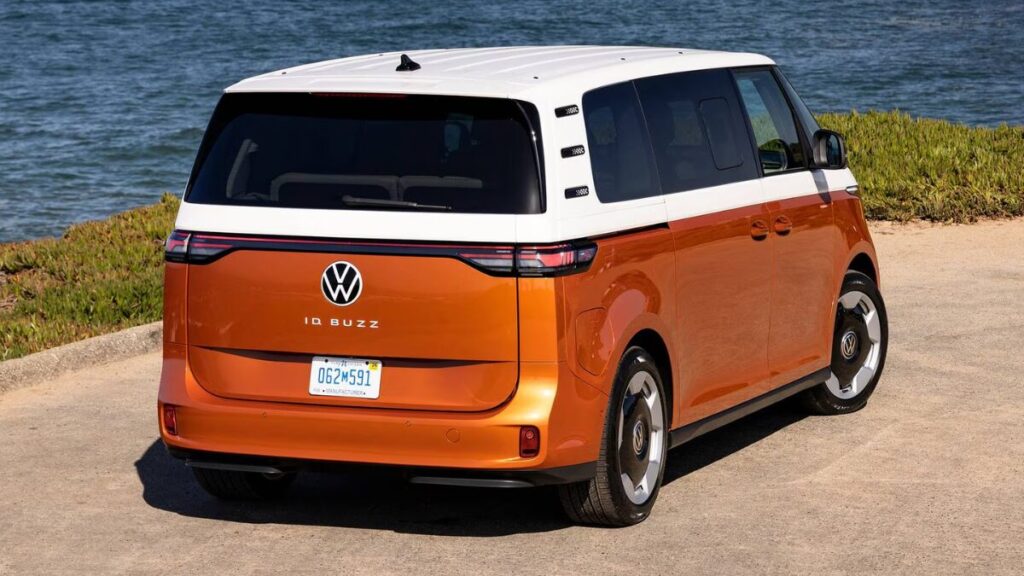
The 2022 Volkswagen ID. Buzz Cargo is unlike any commercial van currently on the market. While most electric vans are simply battery-powered versions of existing diesel models, the ID. Buzz Cargo was designed from the ground up as an electric vehicle, combining Volkswagen’s iconic retro-inspired styling with modern EV technology.
Built on the same MEB platform that underpins Volkswagen’s electric passenger cars, the ID. Buzz Cargo delivers a driving experience that feels closer to a premium crossover than a traditional work van. It offers impressive electric range, excellent refinement, and a high-tech cabin that stands out in a segment often focused purely on utility.
However, style and innovation come at a cost. The Buzz Cargo carries a higher price tag than many rivals, and its payload capacity falls short of several cheaper competitors. The question is whether its unique design, strong efficiency, and premium driving experience are enough to justify the compromises.
In this 2022 Volkswagen ID. Buzz Cargo review, we take a closer look at its performance, practicality, operating costs, technology, and overall value for business owners considering the switch to electric.
Our Take
The 2022 Volkswagen ID. Buzz Cargo successfully brings personality to a segment that is usually defined by practicality above all else. It combines impressive electric range, a premium cabin, and one of the most distinctive designs on the road today. While it may not offer the highest payload capacity or the lowest purchase price, the Buzz Cargo delivers a level of refinement and brand appeal that few commercial vehicles can match. For businesses that value image as much as efficiency, it stands in a class of its own.
| Specification | 2022 Volkswagen ID. Buzz Cargo |
|---|---|
| Powertrain | Single Electric Motor |
| Horsepower | 204 hp |
| Torque | 229 lb-ft |
| Battery Capacity | 77 kWh |
| Drivetrain | Rear-Wheel Drive |
| Range | Up to 258 miles (WLTP) |
| Cargo Volume | 3.9 m³ |
| Payload Capacity | Up to 695 kg |
| DC Fast Charging | Up to 170 kW |
| Seating | 2 or 3 occupants |
Pros & Cons
Pros
- Unique retro-inspired design
- Premium cabin quality
- Comfortable and refined driving experience
- Strong electric driving range
- Advanced safety technology
Cons
- Expensive compared to rivals
- Payload capacity trails key competitors
- Cargo area smaller than some traditional vans
- Touchscreen-heavy controls may frustrate some drivers
What’s New for 2022?
The 2022 model year marks the arrival of the all-new Volkswagen ID. Buzz Cargo. Unlike many electric commercial vehicles that are adapted from existing diesel vans, the Buzz Cargo was developed from the beginning as a dedicated electric vehicle. It introduces Volkswagen’s modular MEB electric platform to the commercial van segment, combining modern EV technology with styling inspired by the iconic Volkswagen Type 2 Microbus.
Driving Experience
The 2022 Volkswagen ID. Buzz Cargo delivers a driving experience that feels remarkably different from most commercial vans. Thanks to its dedicated electric platform and passenger-car roots, it feels more refined, quieter, and easier to drive than many traditional diesel-powered alternatives.
Power comes from a rear-mounted electric motor producing 204 horsepower, which provides strong acceleration for a commercial vehicle. The instant torque delivery typical of electric vehicles makes the Buzz Cargo feel responsive in city traffic, allowing it to pull away from junctions confidently and merge onto faster roads with ease. While outright performance is not the primary goal, the electric powertrain gives the van a level of smoothness that many rivals struggle to match.
One of the Buzz Cargo’s greatest strengths is refinement. With no diesel engine noise or vibration entering the cabin, long hours behind the wheel are noticeably less tiring. Wind and road noise are also well controlled, creating an environment that feels closer to a modern SUV than a work-focused commercial vehicle.
The steering is light and precise, making the van easy to maneuver through narrow city streets and crowded delivery routes. Visibility is excellent, and the low center of gravity created by the battery pack helps the vehicle feel stable and composed when cornering. Although it is not designed to be sporty, the Buzz Cargo feels more agile than its size might suggest.
Ride quality is another highlight. Even on rough urban roads, the suspension does an excellent job of absorbing bumps and imperfections, providing a comfortable experience for drivers who spend long days on the road. Compared with many commercial vans that prioritize payload capacity over comfort, the ID. Buzz Cargo places a much stronger emphasis on driver satisfaction.
For businesses operating primarily in urban and suburban environments, the combination of instant electric performance, excellent refinement, and easy maneuverability makes the Volkswagen ID. Buzz Cargo one of the most pleasant commercial vehicles currently available.
Cargo Space & Practicality
While the Volkswagen ID. Buzz Cargo stands out for its design and driving refinement, practicality remains a key consideration for commercial buyers. Volkswagen has designed the cargo area to balance usability with the packaging requirements of its electric platform, resulting in a van that works well for many urban businesses, although it does not lead the segment in outright carrying capacity.
The cargo compartment offers 3.9 cubic meters of load volume, providing enough space for tools, equipment, parcels, and day-to-day business deliveries. The load area is wide enough to accommodate two Euro pallets, making it suitable for a variety of commercial applications. Large sliding side doors and wide-opening rear access help simplify loading and unloading throughout the workday.
However, buyers focused purely on maximum carrying capacity should be aware that the Buzz Cargo makes some compromises compared with traditional commercial vans. Payload capacity is rated at up to 695 kg, which falls behind several smaller and less expensive rivals. Businesses regularly transporting heavy materials may find alternatives such as the Renault Kangoo E-Tech or Nissan Townstar EV better suited to their needs.
Where the ID. Buzz Cargo excels is everyday usability. The flat load floor makes cargo management simple, while numerous tie-down points help secure items during transport. The lower loading height also improves convenience when loading heavier objects, reducing strain on drivers who make frequent stops throughout the day.
Inside the cabin, practicality continues with numerous storage solutions. Large door pockets, dashboard storage areas, cup holders, and a versatile center compartment provide plenty of space for documents, devices, and work essentials. Drivers who spend long hours on the road will appreciate how thoughtfully the cabin has been designed.
For businesses focused on urban deliveries, service work, and customer-facing operations, the ID. Buzz Cargo offers sufficient practicality while delivering a level of comfort and style that few commercial vehicles can match.
Interior & Technology
One of the biggest advantages of the 2022 Volkswagen ID. Buzz Cargo is its cabin. Unlike many commercial vans that prioritize durability over driver comfort, the Buzz Cargo delivers an interior that feels modern, well-built, and surprisingly premium for a work vehicle.
The dashboard design is heavily influenced by Volkswagen’s passenger EV lineup, giving the cabin a clean and contemporary appearance. A compact digital instrument cluster sits behind the steering wheel, providing essential driving information in a clear and easy-to-read format. At the center of the dashboard is a 10-inch touchscreen infotainment system that serves as the primary hub for navigation, media, vehicle settings, and charging information.
Wireless Apple CarPlay and Android Auto come standard, allowing drivers to seamlessly connect their smartphones for navigation, calls, and music streaming. The system also supports Volkswagen’s connected services, giving owners access to remote vehicle functions and charging management features.
Material quality is noticeably better than what is typically found in the commercial van segment. While the Cargo model uses more durable materials than the passenger-focused ID. Buzz, the overall fit and finish remain impressive. The controls feel solid, the seats provide excellent support, and the cabin maintains a modern atmosphere that drivers are likely to appreciate during long workdays.
Practicality has not been overlooked. Large storage compartments throughout the cabin make it easy to organize documents, tools, mobile devices, and everyday work essentials. The available center storage box adds further convenience, while multiple USB-C ports help keep phones and tablets charged throughout the day.
The technology package is not without flaws. Like other Volkswagen electric vehicles, many vehicle functions are controlled through the touchscreen, which can require more attention than traditional physical buttons. Some drivers may find this less intuitive, especially when adjusting climate controls while driving.
Despite this minor drawback, the ID. Buzz Cargo offers one of the most advanced and comfortable interiors in the electric van segment. For businesses whose drivers spend hours behind the wheel every day, the combination of modern technology, excellent connectivity, and premium cabin quality is a significant advantage.
Range & Charging
Range is one of the areas where the 2022 Volkswagen ID. Buzz Cargo genuinely stands out from many of its electric van competitors. Equipped with a 77 kWh battery pack, the Buzz Cargo offers an official WLTP range of up to 258 miles, making it one of the more capable options for businesses that spend long hours on the road.
In real-world conditions, actual range will vary depending on payload, driving style, weather conditions, and the amount of highway driving involved. Even so, most urban delivery operators and service-based businesses should be able to complete an entire workday on a single charge without needing to stop and recharge.
The strong range capability gives the Buzz Cargo a practical advantage over several smaller electric vans, many of which require more frequent charging stops during busy working schedules. For businesses operating predictable daily routes, overnight charging alone may be sufficient to keep the vehicle ready for service every morning.
Charging performance is equally impressive. Using a DC fast charger, the battery can be charged from 5% to 80% in approximately 30 minutes under ideal conditions. This minimizes downtime and makes longer journeys more manageable when rapid charging infrastructure is available.
For home or depot charging, owners can take advantage of lower overnight electricity rates, significantly reducing operating costs compared with traditional diesel-powered vans. Businesses with dedicated charging facilities will likely see the greatest financial benefits over the long term.
While diesel vans still maintain an advantage for frequent long-distance journeys and continuous operation, the ID. Buzz Cargo’s combination of competitive range, fast-charging capability, and low running costs makes it an attractive solution for modern urban and regional businesses transitioning to electric mobility.
Operating Costs
For many businesses, operating costs are just as important as cargo capacity, and this is where the 2022 Volkswagen ID. Buzz Cargo makes a strong case for itself. While its purchase price is noticeably higher than many traditional diesel vans and several electric competitors, the lower day-to-day running costs can help offset that initial investment over time.
Electricity remains significantly cheaper than diesel in most markets, particularly for businesses that can charge vehicles overnight at their own premises. Owners with access to off-peak electricity rates can reduce energy costs even further, making the Buzz Cargo especially attractive for fleet operators and local businesses with predictable daily routes.
Maintenance costs should also be lower than those of a comparable diesel van. Electric vehicles have fewer moving parts, require no oil changes, and generally experience less wear on components such as brakes thanks to regenerative braking systems. Over several years of ownership, these savings can become substantial.
Businesses operating in major cities may benefit from additional financial advantages. Depending on local regulations, the ID. Buzz Cargo may qualify for exemptions from congestion charges, low-emission zone fees, or other urban access restrictions that can add significant costs to diesel-powered vehicles. These incentives can improve the overall ownership equation for companies that frequently operate in city centers.
However, buyers should carefully consider the vehicle’s higher upfront cost. The Buzz Cargo is positioned as a premium electric van, and its purchase price can be difficult to justify if maximum payload capacity and lowest operating expense are the only priorities. Some competitors offer greater carrying capacity for less money, even if they cannot match Volkswagen’s technology, refinement, or design appeal.
Ultimately, the ID. Buzz Cargo makes the most financial sense for businesses that can fully utilize its electric powertrain, charge regularly at low-cost locations, and benefit from its premium image. For these buyers, the long-term savings and branding advantages may help justify the higher initial investment.
Safety & Driver Assistance
The 2022 Volkswagen ID. Buzz Cargo benefits significantly from being built on Volkswagen’s modern electric vehicle platform. Unlike many commercial vans that prioritize utility over technology, the Buzz Cargo offers an impressive suite of safety and driver-assistance features that help reduce stress during daily operation.
Standard safety equipment includes Autonomous Emergency Braking, pedestrian and cyclist detection, driver fatigue monitoring, cruise control, and a speed limiter. These systems work together to improve driver awareness and help prevent accidents in busy urban environments where commercial vehicles spend much of their time.
Visibility is another strong point. The large windshield, generous side windows, and elevated driving position provide an excellent view of the road, making the vehicle easier to maneuver in tight city streets and crowded parking areas. Front and rear parking sensors further assist drivers when operating in confined spaces.
Higher trim levels add even more advanced technology, including adaptive cruise control, lane-keeping assistance, blind-spot monitoring, and a rearview camera. These features are particularly valuable for businesses whose drivers spend long hours behind the wheel, helping reduce fatigue and increasing confidence during longer journeys.
One of the more interesting available technologies is Volkswagen’s advanced parking assistance system, which can learn and repeat specific parking maneuvers. This can be especially useful for drivers who regularly return to the same loading bays, warehouses, or restricted parking areas.
The overall safety package gives the ID. Buzz Cargo a clear advantage over many traditional commercial vans. For businesses focused on driver protection, accident prevention, and modern fleet technology, Volkswagen has equipped the Buzz Cargo with one of the most comprehensive safety suites in its class.
Reliability
Because the 2022 Volkswagen ID. Buzz Cargo was introduced as an all-new model, long-term reliability data remains limited compared with more established commercial vans. However, the vehicle shares much of its underlying electric technology with other Volkswagen Group EVs, providing some confidence in the durability of its core components.
The electric powertrain itself is expected to be one of the vehicle’s strongest assets. Electric motors generally require less maintenance than traditional combustion engines, and the simplified mechanical layout reduces the number of components that can wear out over time. This can lead to lower maintenance costs and fewer unexpected repairs during ownership.
Volkswagen’s MEB electric platform is already used across multiple models within the Volkswagen Group portfolio, including several Volkswagen, Audi, Cupra, and Skoda electric vehicles. This shared architecture has allowed the company to refine many aspects of the battery and powertrain systems before introducing them to the commercial vehicle market.
Some owners of Volkswagen’s early electric models have reported occasional software-related issues, particularly involving infotainment functions and touchscreen controls. Volkswagen continues to address these concerns through over-the-air software updates, which allow many improvements to be delivered without requiring a dealership visit.
Although it is still too early to fully assess the long-term durability of the ID. Buzz Cargo, the available evidence suggests that its electric drivetrain should prove dependable. Businesses considering the vehicle should pay close attention to warranty coverage, battery protection policies, and software support programs when evaluating long-term ownership costs.
Competitors Worth Considering
The 2022 Volkswagen ID. Buzz Cargo occupies a unique position in the electric van market, but buyers still have several strong alternatives to consider depending on their priorities. While few competitors can match the Buzz Cargo’s combination of styling, technology, and brand appeal, some offer greater practicality or better value.
The Nissan Townstar EV is one of the most affordable electric commercial vehicles available. It offers a lower purchase price and impressive practicality for urban businesses, making it a sensible choice for operators focused primarily on minimizing costs.
Another strong contender is the Renault Kangoo E-Tech. It provides excellent cargo flexibility, strong efficiency, and a more business-focused approach than the style-oriented Volkswagen. Many fleet operators may find it offers a better balance between price and utility.
The Vauxhall Combo Electric is also worth considering. It delivers competitive payload figures, practical load space, and lower acquisition costs, making it attractive for businesses that prioritize function over image.
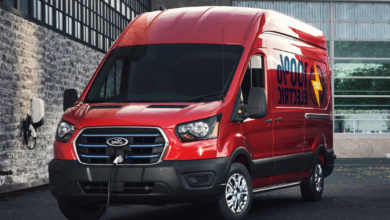
For buyers needing a larger vehicle, the Ford E-Transit Custom offers greater cargo capacity and commercial-focused engineering. It may be the better option for operators who regularly transport heavier loads or require maximum versatility from their work vehicle.
Ultimately, none of these alternatives replicate the character of the ID. Buzz Cargo. Volkswagen’s electric van stands apart thanks to its retro-inspired design, premium interior, and passenger-car-like driving experience. However, businesses whose priorities center on payload capacity, cargo volume, or overall value may find one of these rivals better suited to their operational needs.
Which Trim Does Cardrav Recommend?
For most buyers, the Commerce Plus trim is the version of the 2022 Volkswagen ID. Buzz Cargo that makes the most sense. While the standard model already includes a generous amount of technology and safety equipment, the additional features included with Commerce Plus help justify the extra cost and enhance the van’s premium character.
Commerce Plus adds desirable upgrades such as factory navigation, alloy wheels, body-colored exterior trim, and additional driver-assistance technologies that improve both convenience and day-to-day usability. These features are particularly valuable for businesses that frequently meet clients or use their vehicles as part of their brand image.
The ID. Buzz Cargo is not a van purchased solely for maximum payload or the lowest operating costs. It is a vehicle that combines practicality with image, comfort, and modern technology. The Commerce Plus trim best reflects that philosophy, delivering the most complete ownership experience without moving into unnecessarily expensive option packages.
For businesses looking to showcase a modern, environmentally conscious image while enjoying the full benefits of Volkswagen’s electric van technology, the Commerce Plus trim is the version Cardrav would choose.
If you’re exploring more electric commercial vehicles and modern EV technology, CarDrav offers a growing collection of detailed electric vehicle reviews and buying guides. Readers interested in future-focused transportation can also explore our coverage of the 2025 VinFast VF 9, electric SUV comparisons, and the latest developments in Volkswagen’s expanding EV lineup. These guides provide additional insight into range, charging performance, technology, and real-world ownership experiences across today’s electric vehicle market.
Final Verdict
The 2022 Volkswagen ID. Buzz Cargo proves that commercial vehicles do not have to be dull, noisy, or purely functional. Volkswagen has successfully created an electric van that combines modern EV technology with eye-catching styling, excellent refinement, and a cabin that feels far more premium than most vehicles in the commercial segment.
Its strengths are clear. The Buzz Cargo offers impressive electric range, a comfortable driving experience, advanced technology, and a distinctive design that can serve as a valuable marketing tool for businesses. Drivers who spend long hours behind the wheel will appreciate its quiet cabin, smooth power delivery, and passenger-car-like road manners.
However, it is not the perfect choice for every buyer. The relatively modest payload capacity and premium purchase price mean there are more practical and affordable alternatives for businesses focused solely on maximizing productivity and minimizing costs.
Ultimately, the Volkswagen ID. Buzz Cargo is best suited for companies that want more than just a work vehicle. For businesses looking to embrace electric mobility while projecting a modern and environmentally conscious image, few commercial vans are as appealing or as memorable as the ID. Buzz Cargo.
FAQ
Is the 2022 Volkswagen ID. Buzz Cargo fully electric?
Yes. The ID. Buzz Cargo is built on Volkswagen’s dedicated MEB electric platform and is powered entirely by electricity, with no gasoline or diesel engine available.
How much range does the Volkswagen ID. Buzz Cargo offer?
The 2022 ID. Buzz Cargo offers an official WLTP driving range of up to 258 miles on a full charge, depending on driving conditions, weather, and payload.
How much cargo can the ID. Buzz Cargo carry?
The van provides 3.9 cubic meters of cargo space and a maximum payload capacity of up to 695 kg, making it suitable for urban deliveries and light commercial duties.
How fast can the Volkswagen ID. Buzz Cargo charge?
Using a compatible DC fast charger, the battery can be charged from approximately 5% to 80% in around 30 minutes under ideal conditions.
Is the Volkswagen ID. Buzz Cargo worth buying?
If your business values electric efficiency, modern technology, driver comfort, and a distinctive brand image, the ID. Buzz Cargo is one of the most attractive electric vans available. Buyers focused primarily on payload capacity and purchase price may find better value elsewhere.
What motor does the 2022 Volkswagen ID. Buzz Cargo use?
The launch model uses a rear-mounted electric motor producing 204 horsepower, sending power to the rear wheels for smooth and responsive performance.
Which Volkswagen ID. Buzz Cargo trim does Cardrav recommend?
Cardrav recommends the Commerce Plus trim because it adds useful technology, upgraded styling, and additional convenience features while maintaining strong overall value.
What are the main competitors to the Volkswagen ID. Buzz Cargo?
Key rivals include the Nissan Townstar EV, Renault Kangoo E-Tech, Vauxhall Combo Electric, and Ford E-Transit Custom, each offering different strengths in pricing, payload capacity, and practicality.