Volkswagen Scirocco Used Car Review
Volkswagen Scirocco Used Car : The Coupe That Time Forgot

The Volkswagen Scirocco is a car that probably should not still be generating this much conversation. Volkswagen pulled the plug on it in 2017, a casualty of falling coupe sales, shifting consumer tastes, and the financial and reputational fallout from the Dieselgate scandal. Yet here we are, still talking about it. Still searching for clean examples. Still wondering why Volkswagen never quite cracked the formula that would have made this car the sales success it deserved to be.
The Scirocco was never a volume seller. Its third-generation production run yielded just over 280,000 units, a number the Golf eclipses in a matter of months. But sales figures were never really the point. The Scirocco existed to prove that Volkswagen could build something genuinely desirable, a coupe that looked like it cost considerably more than it did, and drove with enough precision and poise to back up the styling.
This is a used car review, full stop. There is no current Volkswagen Scirocco sitting in a dealership. There is no updated model, no refresh, and no special edition. What you will find are used examples, most of them dating from the 2014 to 2017 model years, available through private sellers and independent dealers. That is the market this review focuses on.
Our Verdict
The Scirocco asks you to accept its limitations before you can fully appreciate what it offers. That is an honest trade. The exterior design remains genuinely striking, a low, wide, swept-back silhouette that still looks contemporary alongside cars built years later. The driving experience is sharper and more engaging than the Golf it shares its underpinnings with, and the cabin, while clearly dated by current standards, is solidly built and practical enough for real-world use.
Where the Scirocco shows its age is in the technology department. The infotainment systems fitted to most examples feel like relics. Apple CarPlay and Android Auto were never offered, the digital instrument clusters that are now standard on even budget hatchbacks were not available, and modern driver assistance features are largely absent. For some buyers, that simplicity is refreshing. For others, it is a dealbreaker.
Prices for clean, well-maintained examples have firmed up in recent years. The Scirocco is no longer the overlooked bargain it once was. Buyers who know what they are looking for can still find fair deals, but low-mileage, single-owner cars in good condition are increasingly sought after, and the asking prices reflect that.
If you want a used coupe that turns heads, drives well, and offers more character than almost anything in its price range, the Scirocco is a serious contender. If you need the latest technology, modern safety systems, or space for a family, look elsewhere.
Pros and Cons
Pros
- Exterior design that remains genuinely attractive years after production ended
- Driving dynamics that outshine the Golf on a back road, with crisp steering and a composed, balanced chassis
- The 2.0-liter TSI engine in standard and GTS form delivers strong, accessible performance
- Surprisingly usable interior for a coupe, with real space for four adults on shorter journeys
- The Scirocco R, with 276 horsepower, is a genuinely quick and rewarding machine
- Solid Volkswagen build quality that holds up well on older examples with good service histories
Cons
- Discontinued in 2017; only used examples are available
- Interior design and materials feel noticeably behind current-generation rivals
- No Apple CarPlay, Android Auto, or modern connectivity options on any example
- Boot space of 312 liters trails most modern hatchbacks
- Thick rear pillars create meaningful blind spots
- Real-world fuel economy on the 2.0-liter TSI and R models can be disappointing
Exterior Design
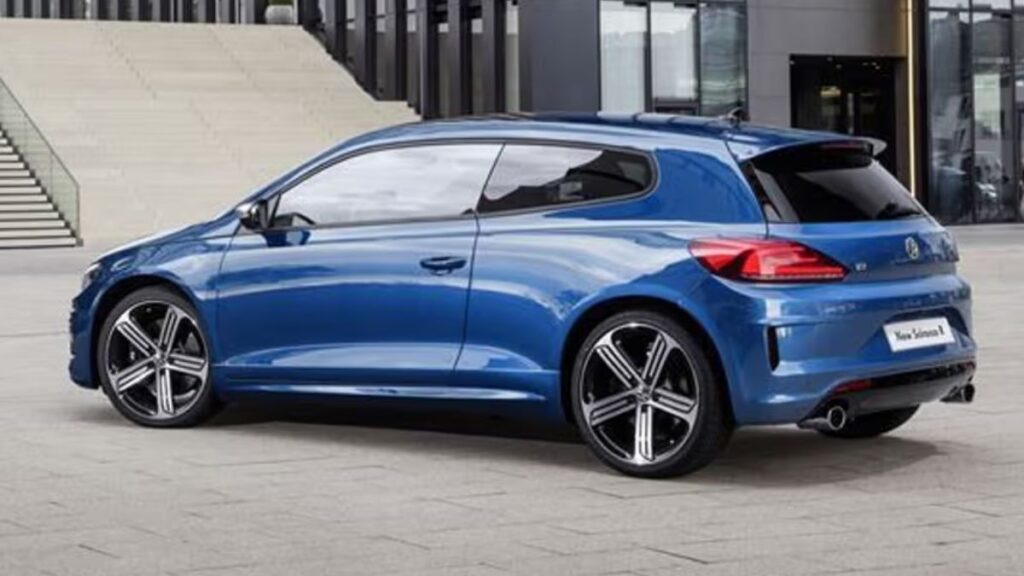
Few cars from the mid-2010s have aged as well as the Scirocco. Volkswagen’s designers managed to create a shape that avoided the overwrought styling cues that have made so many of its contemporaries look exhausting. The Scirocco is 51mm wider and 97mm lower than the Golf it shares its platform with, and those numbers translate directly into visual impact. It sits on the road with authority, its long roofline and pronounced wheel arches giving it a presence that its compact dimensions do not immediately suggest.
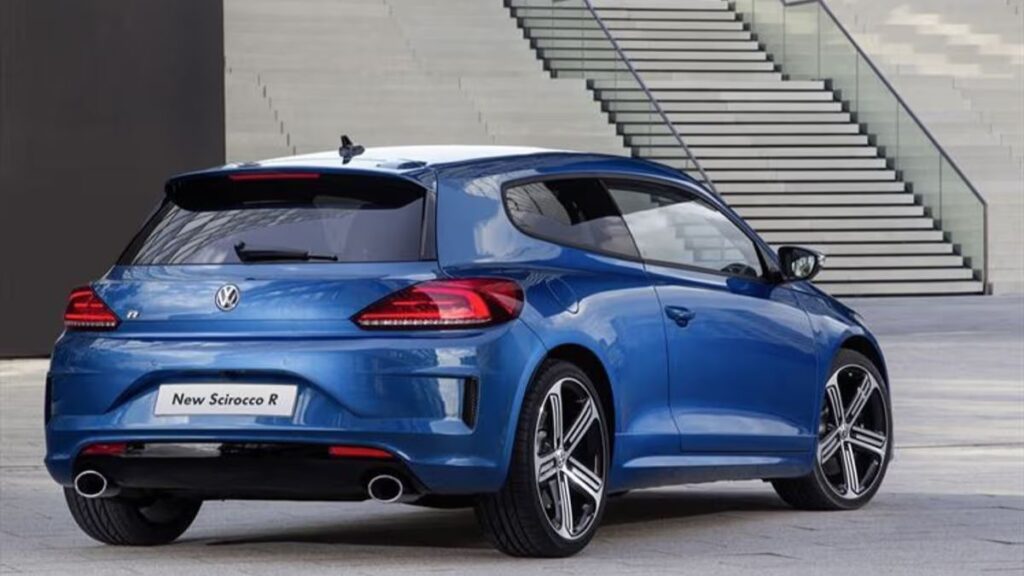
The front end is clean and purposeful rather than aggressive. The side profile is where most of the drama lives, with a sweeping roofline that drops steeply toward the tail. The rear is restrained, with a subtle integrated spoiler and twin exhaust outlets on the more powerful models. It is a design built on proportion and control rather than visual noise, which is exactly why it has lasted.
Stand the Scirocco next to an Audi TT or a Toyota GR86 and it holds its own without apology. That is genuinely impressive for a car that has been out of production for the better part of a decade.
Driving Experience
This is where the Scirocco makes its strongest case. Drive it back to back with the Golf of the same era and the differences are immediately apparent. The steering is more communicative, the body roll better controlled, and the overall sense of connection between driver and road is noticeably sharper. The lower center of gravity makes a real difference in corners, and the chassis feels balanced and predictable in a way that encourages you to push.
On a winding road, the Scirocco is genuinely enjoyable to drive. It is not a track weapon, and it does not pretend to be. But it rewards a driver who is paying attention, offering feedback and confidence that most hot hatchbacks of its era did not quite match. The suspension manages the balance between sporty firmness and everyday compliance better than expected, though the ride on lower-profile tires fitted to R models can feel stiff on rougher surfaces.
The Scirocco R sits in its own category. With 276 horsepower routed through a six-speed DSG, it is quick in a way that still feels relevant. The 0-62 mph sprint takes 5.7 seconds, and the delivery is linear and authoritative rather than peaky. It is a car that rewards smooth, committed driving rather than ragged aggression.
The standard 2.0-liter TSI models are more accessible but no less enjoyable on the right road. The steering and chassis remain the highlights regardless of which engine sits up front.
Performance and Engines
Volkswagen offered the Scirocco with a range of petrol and diesel engines across its production run. The entry-level 1.4-liter TSI, producing around 123 horsepower, was the volume choice in several markets, prioritizing economy and ease of use over outright pace.
The 2.0-liter TSI is the engine most buyers seeking a genuine driving experience should target. In standard trim, it produces 178 horsepower with 207 pound-feet of torque, covering 0-62 mph in around 7.4 seconds. The GTS variant, offered in some markets, extracted 217 horsepower from the same block and cut that time to 6.5 seconds. Both variants are available with either a six-speed manual or the DSG dual-clutch automatic.
The Scirocco R uses a more highly tuned version of the 2.0-liter TSI producing 276 horsepower, paired exclusively with a six-speed DSG. The 0-62 mph figure of 5.7 seconds is impressive even by current standards, and the engine pulls strongly through the rev range without feeling strained.
Diesel options included a 2.0-liter TDI in 148 and 182 horsepower configurations. These are the cars for high-mileage buyers who want the Scirocco’s styling with more manageable running costs. They are composed and capable on long motorway runs, even if they lack the petrol models’ character.
Interior and Technology
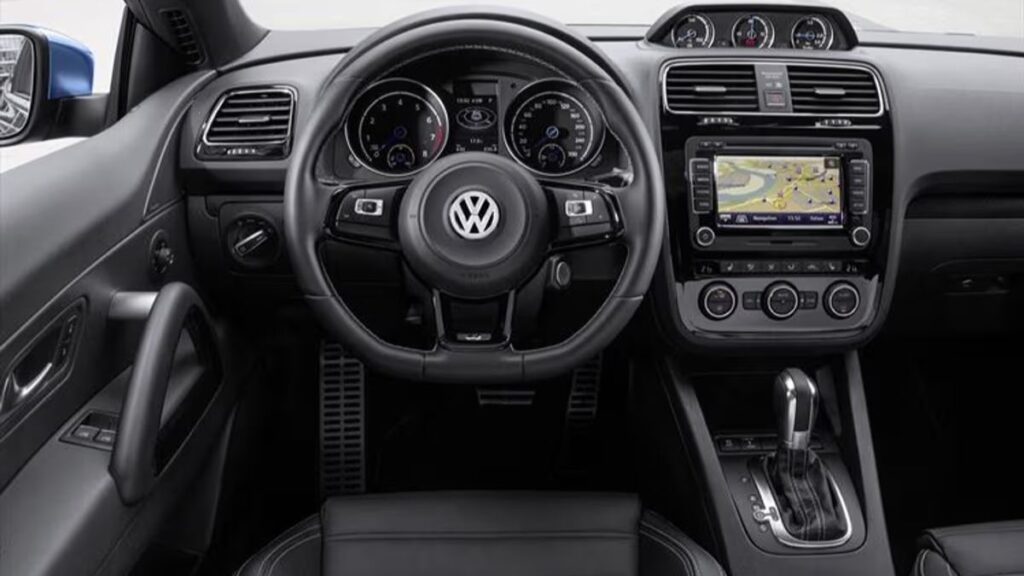
The cabin is where the Scirocco’s age is most apparent, and it is worth being direct about that. The materials are solid and the build quality holds up well on well-maintained examples, but the overall design is clearly from another era. The dashboard layout is functional and logically organized, but it lacks any visual drama. You sit in a Scirocco and you know you are sitting in a mid-2010s Volkswagen.
The infotainment system varies by spec and year, but even the better examples offer little by modern standards. Higher trim levels include satellite navigation and a touchscreen interface that was considered reasonable at the time. Digital radio and Bluetooth connectivity are standard across most of the range. What you will not find is Apple CarPlay, Android Auto, wireless charging, or a digital instrument cluster. These features simply did not exist in Volkswagen’s lineup when the Scirocco was current.
Front seat space and comfort are genuinely good. The seats are supportive and well-bolstered, and taller drivers will find the driving position accommodating. The rear is a different story. The sloping roofline eats into headroom, and while two adults can fit back there for shorter journeys, it is not a place anyone will want to spend hours. The car has two rear seats rather than a full bench, so it is a strict four-seater at best.
Boot capacity is 312 liters with the rear seats up, which is adequate for a coupe but modest by hatchback standards. The rear seats fold to expand the cargo area, though the load lip is high enough to make loading heavier items slightly awkward.
Ride Comfort and Refinement
For a car with sporting pretensions, the Scirocco is a composed and comfortable daily driver. Wind noise is well suppressed at highway speeds, road noise is reasonably controlled on smooth surfaces, and the ride quality on standard suspension setups is firm but not punishing. Longer journeys are genuinely comfortable rather than merely tolerable.
The main ergonomic complaint is the rear visibility. The thick C-pillars create substantial blind spots, and the rear window is small enough that parking without sensors requires careful attention. Rear parking sensors were an optional extra on many trim levels and are worth prioritizing when searching for a used example.
Safety
The Scirocco received a four-star Euro NCAP rating under the testing protocols in use at the time of its production. Standard safety equipment includes multiple airbags, electronic stability control, and traction control. Front and rear parking sensors were available on higher specifications.
What the Scirocco does not offer is the suite of active safety systems that buyers may be accustomed to from newer cars. There is no autonomous emergency braking, no lane departure warning, no blind spot monitoring. It is a car that assumes the driver is engaged and responsible for managing the vehicle. That is not necessarily a criticism, but it is a meaningful difference from current-generation alternatives that buyers should factor in.
Fuel Economy
Fuel economy figures vary considerably across the engine range. The 1.4-liter TSI is the most efficient petrol option, with official figures around 44 to 47 mpg, though real-world returns will depend heavily on how the car is driven. The 2.0-liter TSI in 178 horsepower form typically returns figures in the low-to-mid 30s in everyday use. The Scirocco R, driven with any enthusiasm, will drop into the mid-20s without much effort.
The diesel models offer a different proposition. The 148-horsepower 2.0-liter TDI returns around 60 mpg on official cycles, with real-world figures in the mid-to-high 40s on mixed routes. The more powerful 182-horsepower version is slightly thirstier but still significantly more economical than the petrol alternatives for motorway driving.
The fuel tank holds 55 liters, which provides a reasonable range across all engine options.
Competitors to Consider
Audi TT: The TT is the Scirocco’s natural rival in the used coupe market. It offers a more premium interior, stronger badge appeal, and available quattro all-wheel drive on higher-powered models. It is typically more expensive and slightly less practical, but the interior quality and perceived prestige are meaningfully higher.
Toyota GR86: A different kind of car, but worth mentioning for buyers who prioritize pure driving dynamics. The GR86 is rear-wheel drive, naturally aspirated, and genuinely engaging from the driver’s seat. It is less refined and less practical, but for buyers who want the most involving experience possible, it is worth a test drive.
Volkswagen Golf GTI: The obvious alternative within the Volkswagen family. The GTI is more practical, more technologically current depending on the generation you buy, and in many respects easier to live with. The Scirocco simply looks better and sits lower, but the Golf GTI is the more rational purchase for most buyers.
Peugeot RCZ: A distinctive coupe with a unique double-bubble roof design and genuine visual impact. The RCZ is less powerful and less refined than the Scirocco overall, but it offers a different flavor of style for buyers who want something unusual.
SEAT Leon SC: Shares much of its engineering with the Scirocco and is typically cheaper to buy and run. It is more practical and more anonymous. Buyers who want the platform without the premium should consider it.
Who Should Buy One
The Scirocco suits a specific type of buyer, and if you fit the profile, it is one of the more rewarding used car purchases available at its price point.
If you want a coupe that attracts genuine attention without resorting to aftermarket modifications or outrageous styling, the Scirocco delivers that effortlessly. If you value a connected, involving driving experience over the latest driver assistance technology, it remains one of the sharper tools in the used market. And if you are comfortable using your mirrors and your eyes for parking rather than relying on cameras and sensors, the practical limitations become much more manageable.
Buyers who need Apple CarPlay, a digital cockpit, automatic emergency braking, or rear-seat space for regular adult passengers should look at something newer. The Scirocco will disappoint in those areas, and no amount of visual appeal will compensate for daily frustrations.
Conclusion
The Volkswagen Scirocco is a car that rewards buyers who understand what they are getting into. It is discontinued, it is dated in several meaningful ways, and it asks for compromises that newer alternatives do not. None of that fully explains away the fact that it is still one of the most attractive coupes you can buy at its price point in the used market, and it still drives with a precision and engagement that many modern cars have traded away in the pursuit of refinement and automation.
For the right buyer, a clean, well-serviced Scirocco remains a compelling find. It is not the most logical purchase, but logic has rarely been the primary language of coupes. The Scirocco makes its argument with style, character, and a driving experience that reminds you why this kind of car is worth preserving.
Frequently Asked Questions
Is the Volkswagen Scirocco still available new?
No. Volkswagen discontinued the Scirocco in 2017. It is no longer produced and has not been replaced. All available examples are used vehicles.
Which engine should I look for?
The 2.0-liter TSI in 178 or 217 horsepower form represents the best balance of performance and everyday usability. The Scirocco R is the choice for driving enthusiasts who want maximum performance and are willing to accept higher running costs. The diesel TDI models suit high-mileage buyers who prioritize fuel economy.
How does the Scirocco compare to the Golf GTI?
The Golf GTI is more practical, more technologically current, and in many respects easier to recommend as a daily driver. The Scirocco’s advantages are its lower, wider stance, its more distinctive styling, and a slightly sharper dynamic character on the right road. It comes down to whether style or practicality is the priority.
Does the Scirocco have Apple CarPlay or Android Auto?
No. Neither feature was ever offered on the Scirocco during its production run. Buyers who require modern smartphone integration will need to factor in the cost of aftermarket solutions.
Is the Scirocco reliable?
Generally, yes. The 2.0-liter TSI and TDI engines are well-proven units used across the Volkswagen Group in multiple applications. Build quality on well-maintained examples holds up well. As with any used car purchase, a full service history and a pre-purchase inspection are essential.