2023 Toyota 4Runner Review: While most of the midsize SUV market spent the last decade quietly switching to car based unibody platforms, the Toyota 4Runner kept doing what it’s always done. Body on frame construction. Traditional four wheel drive hardware borrowed from truck engineering, offered alongside rear wheel drive on several trims. A naturally aspirated V6 with a five speed automatic that Toyota hasn’t touched in years. In a segment full of soft roading crossovers, the 4Runner reads less like a modern SUV and more like a truck that learned to carry passengers.
2023 mattered for one specific reason: it was the platform’s 40th year on sale, and Toyota used the milestone to make a handful of real, tangible changes rather than just rolling the calendar forward. Blind Spot Monitor and Rear Cross Traffic Alert became standard equipment across the entire lineup for the first time (before 2023, they were standard only on select trims). A retro themed 40th Anniversary Special Edition arrived in limited numbers. And underneath all of it, the engine, transmission, and frame stayed exactly as they were.
That tension is the whole story of this car. It’s rugged and off road capable on the trims built for it, but it’s also mechanically unchanged from a design that traces back to the current generation’s 2010 debut. It’s honest about its trade offs, but it drinks fuel at a rate that’s high even by midsize SUV standards. So the real question for anyone cross shopping model years isn’t whether the 2023 4Runner is good; it’s whether these specific updates are worth paying a premium for over a 2022 model that shares the same drivetrain in every configuration.
Our Take
The 4Runner isn’t trying to be everyone’s SUV, and that’s part of the point. It exists for people who tow occasionally, camp seriously, drive on unpaved roads more than pavement purists would like, and value Toyota’s long standing reputation for durability. If your commute is almost entirely highway and your idea of off roading is a gravel driveway, there are more comfortable, more fuel efficient options in this price range, several of them built by Toyota itself.
But for the buyer who actually wants what a body on frame SUV offers on the right trim (real ground clearance, an electronically locking rear differential where it’s fitted, genuine low range crawling ability, and a reliability reputation that matters to long term owners), the 4Runner remains one of the few vehicles left that hasn’t been softened into a crossover. That’s an increasingly uncommon thing to be able to say about a new SUV in 2023.
Where the platform shows its age is in the everyday experience: the cabin technology, the ride quality on rough pavement, and the fuel economy all feel like they belong to an earlier decade, because mechanically, a great deal of the vehicle does. The 2023 changes don’t touch any of that. What they do is close a real gap (blind spot monitoring being unavailable on certain trims was a genuine shortcoming) and give collectors and anniversary buyers a distinct reason to want this specific model year over the ones around it.
Pros and Cons
Pros:
- Blind Spot Monitor and Rear Cross Traffic Alert are now standard on every 2023 trim, not just the upper ones
- Genuine body on frame construction, with four wheel drive hardware, including a locking rear differential, Multi Terrain Select, and Crawl Control, standard on the TRD Off Road, TRD Off Road Premium, and TRD Pro trims
- 40th Anniversary Special Edition adds a distinctive, limited production option with a clear visual identity tied to the nameplate’s history
- Toyota’s broader reputation for building durable vehicles, which matters to buyers planning to keep this SUV for many years
- Historically strong resale value relative to most midsize SUVs
Cons:
- EPA rated at 16 mpg city and 19 mpg highway across every configuration, among the weaker fuel economy figures in the segment
- Five speed automatic has noticeably fewer ratios than the eight, nine, and ten speed transmissions common in competing SUVs
- Ride quality on broken pavement is firmer than in crossover based alternatives, a byproduct of a suspension tuned for off road articulation
- Infotainment system uses older graphics and a smaller display than most 2023 competitors offer
- No mechanical upgrades over the 2022 model, despite the anniversary milestone; the meaningful changes are equipment based, not drivetrain based
What’s New for the 2023 Toyota 4Runner?
40th Anniversary Special Edition
Toyota marked the 4Runner nameplate’s 40th year with a dedicated special edition rather than a broader redesign. It’s built on the SR5 Premium grade, offered exclusively with four wheel drive, and limited to a production run of 4,040 units for the U.S. market, a number chosen to echo the anniversary.
Visually, it leans into 1980s off road racing style. A retro heritage graphics package runs a red, orange, and yellow stripe treatment along the doors, fenders, and rear windows, paired with a body color matched grille that spells out “TOYOTA” in block lettering rather than using the modern badge. Bronze finished 17 inch alloy wheels, a bronze tailgate badge, and bronze cross stitching on the shift knob and seats carry the theme into the cabin, along with anniversary badging on the center console and floor mats. It’s offered in three colors: Midnight Black Metallic, Ice Cap, and Barcelona Red Metallic, and every unit includes a standard power moonroof.
The 40th Anniversary Special Edition is based on the SR5 Premium and adds its own heritage inspired appearance and equipment package on top of it. That doesn’t mean it’s identical to the SR5 Premium in every respect: it comes standard with an electronically controlled locking rear differential and 9.6 inches of ground clearance, equipment the SR5 Premium itself doesn’t include. It does not, however, get Multi Terrain Select or Crawl Control, which remain exclusive to the TRD Off Road, TRD Off Road Premium, and TRD Pro grades. In practice, that makes it more capable off road than a standard SR5 Premium, but a step below the TRD Off Road family. The appeal here is still primarily heritage styling and scarcity rather than maximum off road capability. It’s best understood as a limited production, collector oriented model, and buyers should not expect it to hold or increase in value; limited production alone is not a guarantee of that.
Safety equipment
This is the change that affects the largest number of buyers. Heading into 2023, Blind Spot Monitor and Rear Cross Traffic Alert had been standard on the SR5 Premium, TRD Off Road Premium, TRD Pro, and Limited grades, available as part of an optional package on the TRD Sport, and unavailable on the base SR5 and TRD Off Road. For 2023, Toyota made both features standard across every trim in the lineup, from the base SR5 through the TRD Pro. Toyota Safety Sense P (which bundles the Pre Collision System with Pedestrian Detection, Lane Departure Alert, Automatic High Beams, and Dynamic Radar Cruise Control) carried over unchanged, since it was already standard on every grade before 2023. Rear Occupancy Alert, which reminds the driver to check the back seat before walking away, also carried over unchanged; it had already become standard across the entire lineup back in 2022, so it isn’t part of what’s new this year.
If you’re comparing a well equipped 2022 SR5 against a base 2023 SR5, the newer model actually comes with driver assistance equipment the 2022 base trim didn’t offer at all.
Exterior, color, and equipment changes
Outside of the anniversary model, 2023 didn’t bring a facelift. Toyota didn’t revise the grille, headlights, or bumpers on the standard lineup for this model year, since those had changed in earlier years of this generation. What did shift were some trim specific color offerings and minor equipment adjustments within packages, which is typical of a vehicle this deep into its production cycle. Buyers shouldn’t expect to visually distinguish a 2023 model from a 2022 one at a glance, aside from the 40th Anniversary’s graphics.
What did NOT change
It’s worth being direct about this because it’s the honest core of the story: the engine is the same 4.0 liter V6 producing 270 horsepower and 278 pound feet of torque across every trim and drivetrain. The transmission is the same five speed automatic. The body on frame architecture, the available drivetrain configurations, the suspension hardware, and the overall driving character are all unchanged from 2022. Toyota used the anniversary year to close a safety equipment gap and release a limited run special edition, not to reengineer the vehicle. That’s not a criticism so much as a fact buyers should walk in understanding.
2023 Toyota 4Runner Exterior Design
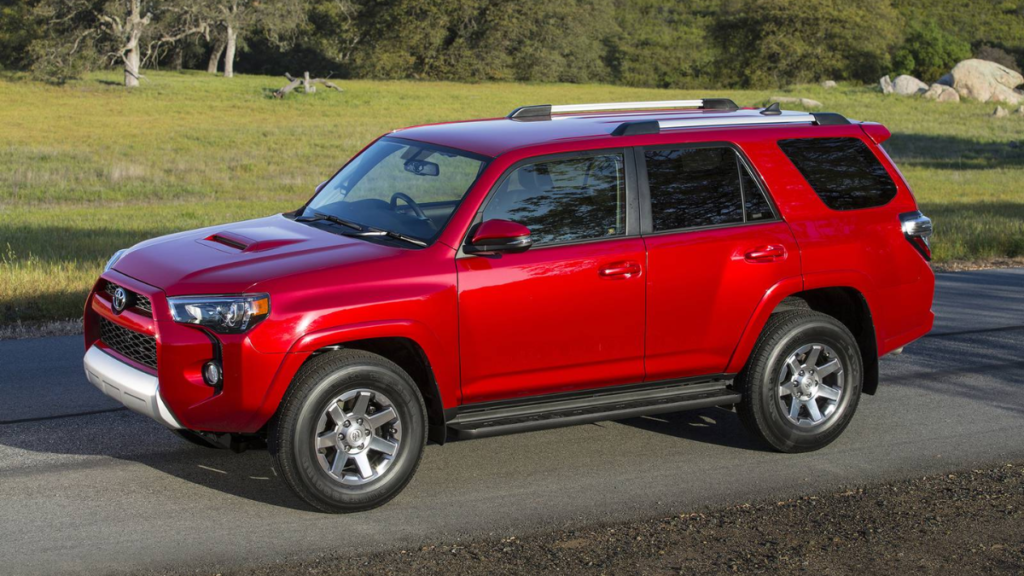
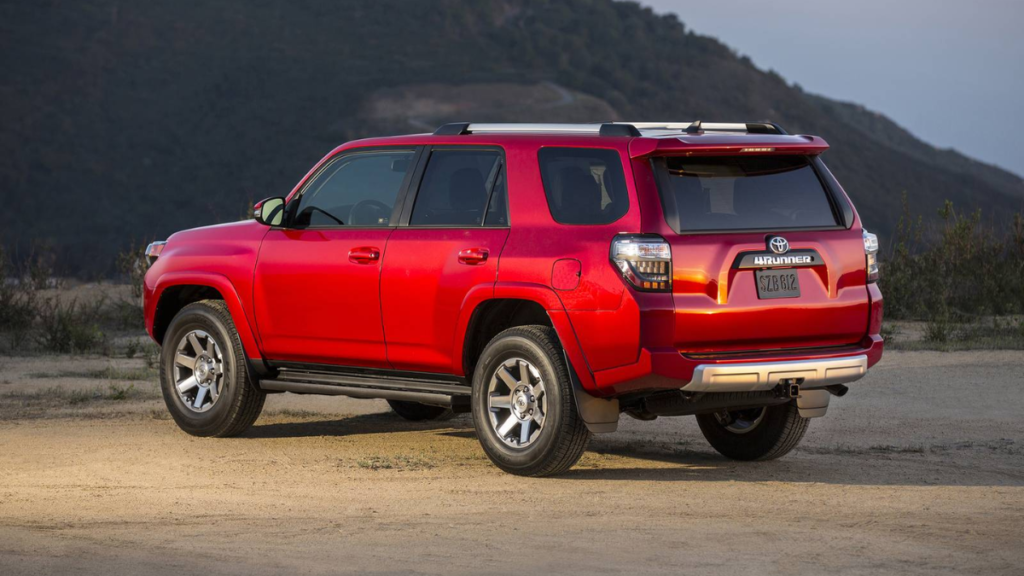
The 4Runner’s shape hasn’t chased modern SUV design trends, and that’s part of why it still reads as purposeful in 2023. The boxy greenhouse and high beltline aren’t purely stylistic choices; they reflect a tall frame and a structure designed around ground clearance and off road use on the trims equipped for it. That same boxiness pays off in ways owners notice day to day: strong outward visibility, easier judgment of the vehicle’s corners when parking or navigating a trail, and a cargo area that’s usefully shaped rather than swept back for the sake of a coupe like roofline.
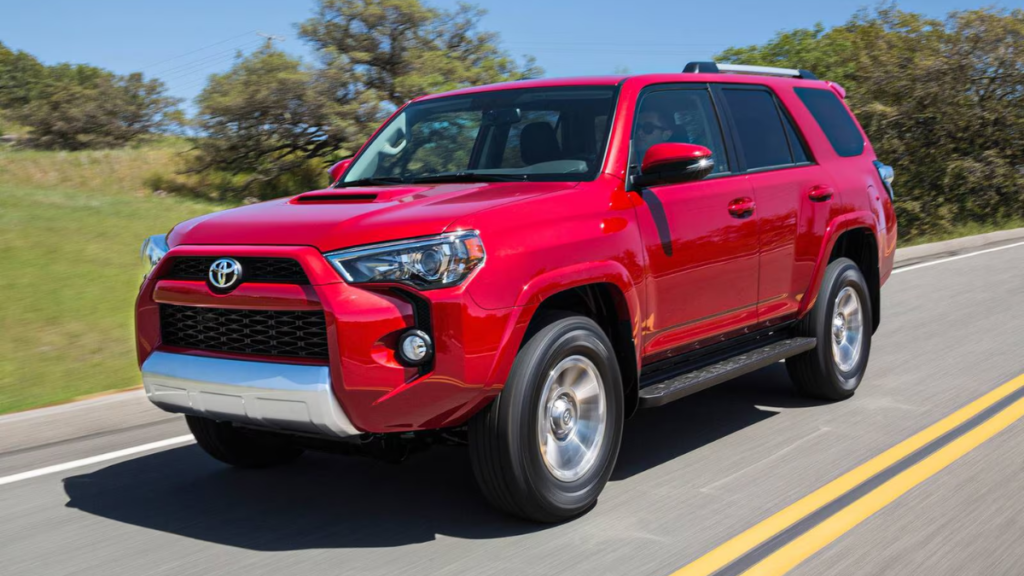
The off road focused TRD Off Road, TRD Off Road Premium, and TRD Pro trims add more specialized hardware and geometry for trail use, including flared fenders, functional skid plates, and more aggressive front and rear styling; ground clearance and approach angles genuinely improve on these three grades. The 40th Anniversary Edition takes the opposite approach, using color and graphics rather than added hardware to stand out, which makes it the rare special edition built around heritage rather than capability.
None of this makes the 4Runner a conventionally stylish SUV by 2023 standards. It makes it a distinctive one, and for a vehicle whose appeal is built around not following the crowd, that distinction does real work.
Driving Experience
It’s worth noting up front that this section reflects the 4Runner’s known, well documented characteristics from expert testing and published road tests rather than a first hand test drive conducted for this article. Toyota’s V6 and five speed drivetrain and suspension tuning are unchanged from prior model years that have been extensively reviewed.
Everyday driving
The 4Runner drives like what it is: a truck based SUV wearing a comfortable interior. Steering is accurate enough for daily use but noticeably heavier and less communicative than in a crossover based competitor. Visibility is a genuine strength: the upright windshield, tall seating position, and boxy rear glass make it easy to place the vehicle in traffic or a parking lot.
Highway cruising is where the trade offs show up. Road noise is more present than in a unibody SUV, wind noise builds at speed because of the boxy shape, and the suspension, tuned to prioritize off road articulation on the relevant trims, transmits more of the road surface than buyers coming from a crossover will typically expect. None of it is unpleasant, but it’s a reminder that ride comfort wasn’t the primary design brief.
Off Road Driving
This is where the 4Runner’s engineering intent is clearest, and equipment varies meaningfully by trim. TRD Off Road, TRD Off Road Premium, and TRD Pro come standard with an electronically locking rear differential, Multi Terrain Select (which adjusts throttle and traction control for surfaces like mud, sand, and rock), and Crawl Control, which manages throttle and braking automatically at low speeds so the driver can focus on steering. The 40th Anniversary Special Edition also gets the standard locking rear differential, but not Multi Terrain Select or Crawl Control. The SR5, SR5 Premium, TRD Sport, and Limited use a more conventional open differential and don’t get any of these three features.
The Limited trim takes a different approach to its 4WD system: when equipped with four wheel drive, it uses a full time system with a Torsen limited slip center differential, engineered for year round on road traction rather than low speed trail crawling. It’s a genuinely different kind of capability than the TRD Off Road trims offer; more suited to variable road conditions than technical off roading.
Ground clearance and suspension articulation are strongest on the TRD oriented trims, and the TRD Pro’s Fox brand shocks push that further. This is real, functional hardware rather than badge driven marketing, but it’s concentrated in specific trims, and shoppers who assume every 4Runner has Multi Terrain Select and Crawl Control will be disappointed to find those two features absent outside the TRD Off Road, TRD Off Road Premium, and TRD Pro grades (the 40th Anniversary Special Edition splits the difference, with the locking differential but not the other two). The Kinetic Dynamic Suspension System (KDSS), which improves wheel articulation, is optional on the TRD Off Road and TRD Off Road Premium grades.
Engine, Transmission and Performance
The 4.0 liter V6 makes 270 horsepower and 278 pound feet of torque across every 2023 trim and drivetrain configuration, sent through a five speed automatic. Those numbers were competitive years ago and are now modest for the segment, but the more useful question isn’t how the spec sheet compares; it’s how the powertrain behaves in the vehicle it’s installed in.
Around town, the V6 responds without the lag some turbocharged four cylinder engines exhibit at low RPM, which some drivers prefer even at the cost of outright torque. Highway passing requires more planning than in newer competitors; the five speed transmission has fewer ratios to choose from than an eight or nine speed unit, and shifts are more perceptible as a result.
Towing is where this pairing tends to work best, according to published reviews and Toyota’s own equipment choices: the V6’s broad torque curve suits sustained load hauling, and the five speed automatic remains well matched to the 4Runner’s V6 and truck based character. Off road, the powertrain delivers the predictable response that suits low speed trail driving, although it lacks the gearing flexibility and efficiency of newer transmissions.
The honest summary: this is not a quick SUV, and Toyota isn’t positioning it as one. It’s a powertrain chosen for consistency across a wide range of conditions rather than outright performance, and reviewers have generally found it well matched to the 4Runner’s mission, even as it trails newer, more efficient designs on paper.
Off Road Capability
The 4Runner remains one of the few SUVs in this price range where off roading is a primary design consideration on specific trims, rather than a general marketing theme. Not every buyer needs the same level of capability, and the trim structure reflects that directly.
TRD Off Road is the entry point into serious hardware: it comes standard with the electronically locking rear differential, Multi Terrain Select, and Crawl Control, along with meaningful ground clearance, without pushing into TRD Pro pricing. TRD Off Road Premium adds comfort and convenience features on top of the identical off road hardware, aimed at buyers who want capability without giving up creature comforts. The Kinetic Dynamic Suspension System (KDSS), which improves wheel articulation, is optional on the TRD Off Road and TRD Off Road Premium grades.
TRD Pro is the specialist’s choice: TRD tuned Fox shocks, the most off road focused suspension tune Toyota offers on this platform, and the same locking differential, Multi Terrain Select, and Crawl Control hardware found on the TRD Off Road trims. It’s genuinely capable, but it’s also more than many buyers need; someone whose idea of off road driving is a dirt access road to a campsite or an occasional snowy trailhead will likely get more real world value from a TRD Off Road than a TRD Pro, and the price gap between them is large enough that it’s worth being honest about that rather than defaulting to the most expensive badge.
It’s also worth repeating: the SR5, SR5 Premium, TRD Sport, and Limited do not include the locking rear differential, Multi Terrain Select, or Crawl Control. The 40th Anniversary Special Edition is a partial exception: it comes standard with the locking rear differential and 9.6 inches of ground clearance, but not Multi Terrain Select or Crawl Control. None of the trims outside the TRD Off Road family get the full off road technology suite found on TRD Off Road, TRD Off Road Premium, and TRD Pro grades.
Ride Comfort and Daily Usability
Much of what makes the TRD Off Road and TRD Pro trims capable off road works against ride comfort on pavement. Their suspensions are tuned for articulation over rough, uneven surfaces, which generally means less isolation from sharp bumps and pavement seams than a crossover’s more road focused setup provides. Highway expansion joints and potholes tend to register more directly in the cabin than in a unibody competitor.
The seating position is upright and commanding, which most owners like, and long distance comfort is reasonable once the firmer overall character is expected going in. Road noise at highway speeds is more noticeable than in unibody competitors, largely a function of the boxy shape and the vehicle’s mass. None of this makes the 4Runner unpleasant to live with daily, but buyers coming directly from a modern crossover should expect an adjustment period, and a back to back test drive against something like a RAV4 or Highlander is worth the time before committing.
Interior and Practicality
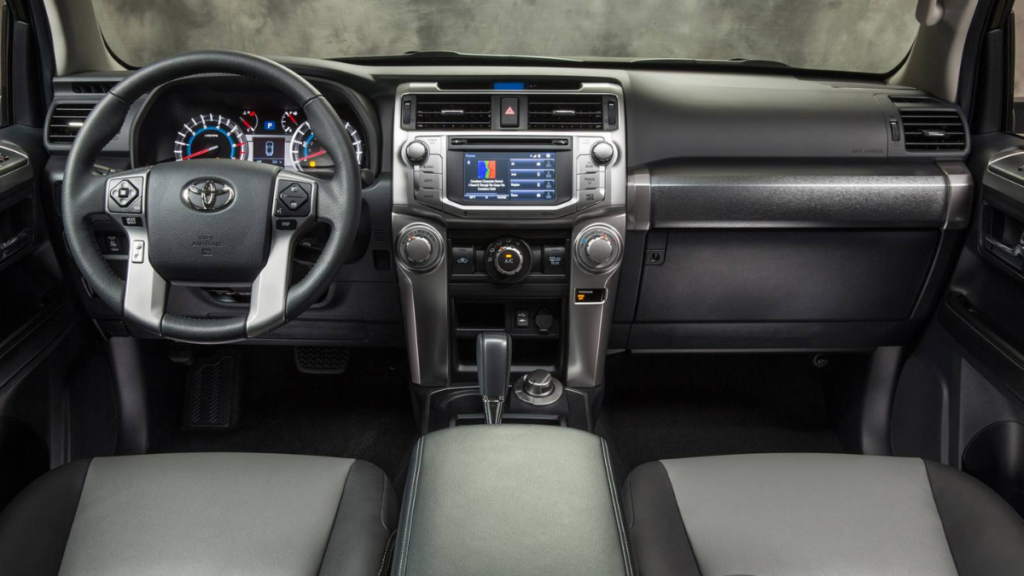
Front seat space is generous, with a commanding view out and controls that remain refreshingly simple: physical buttons and knobs for climate control rather than menus buried in a touchscreen. Rear seat space is adequate for adults on shorter trips, though it doesn’t match the roominess of some larger midsize competitors.
An optional third row is available on certain configurations, but it’s better suited to occasional use by children than as a full time seating solution; headroom and legroom back there are tight. Where the 4Runner is genuinely strong is cargo usability: the rear cargo opening is wide and low, the floor is flat, and an available sliding cargo deck (a long running 4Runner feature) makes loading and unloading gear meaningfully easier than in SUVs without one. For buyers who regularly haul camping equipment, tools, or dogs, this kind of practicality matters more day to day than horsepower figures do.
Technology and Infotainment
The 2023 4Runner’s technology remains straightforward rather than current generation. The touchscreen supports Apple CarPlay and Android Auto, along with Bluetooth and standard USB connectivity, and higher trims add available navigation and a JBL premium audio system. The graphics and menu structure are dated compared to Toyota’s newer models, though the core functionality (pairing a phone, running navigation apps, adjusting audio) works reliably by most published accounts.
This is an area where the 4Runner’s age is impossible to disguise. The system does what most owners need, but it doesn’t feel current in 2023, and buyers who spend real time comparing infotainment across brands will notice the gap. If cutting edge cabin technology is a priority, this isn’t the vehicle to prioritize it in; the 4Runner’s strengths lie elsewhere.
Safety and Driver Assistance
Every 2023 4Runner comes standard with Toyota Safety Sense P, which includes the Pre Collision System with Pedestrian Detection, Lane Departure Alert, Automatic High Beams, and Dynamic Radar Cruise Control. As covered above, the meaningful 2023 change is that Blind Spot Monitor and Rear Cross Traffic Alert are now standard across the entire lineup, rather than being limited to specific trims as in 2022 and earlier. Rear Occupancy Alert rounds out the suite as well, though it isn’t a 2023 addition; it had already been standardized across the lineup in 2022. There’s no ambiguity here about what’s included versus what requires an upgrade; the core safety suite is now consistent across the trim walk, which simplifies shopping considerably.
Fuel Economy
Every 2023 4Runner configuration, 2WD and 4WD alike, according to EPA fuel economy data, carries the same rating: 16 mpg city, 19 mpg highway, and 17 mpg combined. That’s low for a midsize SUV in 2023, and it isn’t a mysterious result. It follows from several design choices working together: body on frame construction adds weight that a unibody SUV doesn’t carry, the V6’s displacement and the five speed automatic’s wider gear spacing both work against efficiency compared with smaller turbocharged engines paired with more modern transmissions, and the boxy shape (while good for visibility and interior volume) is aerodynamically inefficient at highway speeds. On the trims built for serious off road use, the added drivetrain hardware (transfer case, locking differential) contributes further weight without improving on road economy.
Who can realistically live with this? Buyers who genuinely use the 4Runner’s capability (towing, trail driving, prioritizing durability over efficiency) will likely find the fuel cost a reasonable trade for what they’re getting. Buyers whose driving is mostly commuting and errands, without a real need for body on frame durability or serious off road hardware, will feel the fuel economy penalty regularly without using the capability that justifies it.
Towing Capacity
Every 2023 4Runner trim is rated to tow up to 5,000 pounds when properly equipped, a figure that’s consistent across the lineup rather than varying by drivetrain or trim. In real world terms, that’s enough for a small to midsize travel trailer, a pop up camper, most personal watercraft and boat trailers, and utility trailers loaded with equipment like ATVs or snowmobiles. It’s not enough for a large travel trailer or a heavy toy hauler; buyers with those needs should look toward a full size, truck based SUV instead.
The lineup includes an integrated tow hitch receiver and a wiring harness with 4 pin and 7 pin connectors, which removes a common source of aftermarket cost and hassle for buyers who plan to tow regularly. As with any towing figure, actual capability depends on passenger load, cargo, and how the vehicle is optioned, so buyers planning to tow near the maximum should confirm the specifics for their exact configuration with a dealer.
2023 Toyota 4Runner Trim Levels
SR5 is the entry point, available with rear wheel drive or optional part time four wheel drive, offering the core 4Runner experience, including the newly standard Blind Spot Monitor, without the off road hardware or luxury features of higher trims. It’s the right choice for buyers who want the platform’s durability and towing capability without needing serious trail capability.
TRD Sport adds a sport tuned suspension and styling touches aimed at buyers who want a more road oriented driving feel without sacrificing the 4Runner’s core durability. Like the SR5, it’s available with RWD or 4WD, and it does not include the locking rear differential or Multi Terrain Select.
SR5 Premium builds on the SR5 with additional comfort and convenience features, and it also serves as the mechanical basis for the 40th Anniversary Special Edition.
TRD Off Road is 4WD only and introduces the genuine off road hardware: a standard electronically locking rear differential, Multi Terrain Select, and Crawl Control, for buyers who actually intend to use it.
TRD Off Road Premium pairs that same standard off road hardware with added comfort features, aimed at buyers who don’t want to choose between trail readiness and daily livability.
40th Anniversary Special Edition is the collectible option covered above: based on the SR5 Premium with its own heritage styling and equipment, including a standard locking rear differential (though not Multi Terrain Select or Crawl Control), 4WD only, and limited to 4,040 units.
Limited leans into on road comfort and upscale features, available in RWD or a 4WD configuration that uses a full time system with a Torsen center differential rather than the TRD Off Road family’s part time, locking differential setup.
TRD Pro is the top off road specialist trim: 4WD only, with the most capable suspension setup in the lineup and the same locking differential, Multi Terrain Select, and Crawl Control found on the TRD Off Road grades, aimed squarely at buyers who genuinely push the vehicle’s limits off road.
Which 2023 Toyota 4Runner Trim Should You Buy?
For the typical buyer who wants genuine off road capability without paying TRD Pro money, Cardrav’s recommendation is the TRD Off Road. It delivers real, usable hardware: the locking rear differential, Multi Terrain Select, and Crawl Control, without the TRD Pro’s price premium or its more specialized, occasionally stiffer riding suspension tune. This isn’t a universal answer, though; it’s a recommendation for buyers whose priority is genuine trail capability at a reasonable price.
Buyers who never plan to leave pavement are generally better served by an SR5 Premium or Limited, which deliver the same core reliability and towing capacity without paying for off road equipment that would sit unused. Buyers drawn to on road comfort and all weather traction specifically, rather than technical off roading, may find the Limited’s full time 4WD system fits their driving better than a part time system would. And buyers drawn primarily to the anniversary styling should go in with clear eyes: the 40th Anniversary Special Edition is based on the SR5 Premium and does add a standard locking rear differential, but it skips Multi Terrain Select and Crawl Control, so most of the premium paid is for exclusivity and appearance rather than a full off road equipment upgrade. TRD Pro remains the right call specifically for buyers who push the vehicle hard off road and want the most capable suspension Toyota offers on this platform.
2023 Toyota 4Runner vs. 2022 Toyota 4Runner
| Category | 2022 4Runner | 2023 4Runner |
|---|---|---|
| Engine | 4.0L V6, 270 hp | 4.0L V6, 270 hp, unchanged |
| Torque | 278 pound feet | 278 pound feet, unchanged |
| Transmission | 5 speed automatic | 5 speed automatic, unchanged |
| Drivetrain configurations | RWD or 4WD on SR5, SR5 Premium, TRD Sport, and Limited. 4WD only on TRD Off Road, TRD Off Road Premium, and TRD Pro | Same structure, unchanged |
| Off road hardware | Locking rear differential, Multi Terrain Select, and Crawl Control standard on TRD Off Road, TRD Off Road Premium, and TRD Pro | Same trims, unchanged |
| Blind Spot Monitor and Rear Cross Traffic Alert | Standard on SR5 Premium, TRD Off Road Premium, TRD Pro, and Limited. Optional package on TRD Sport. Not available on base SR5 and TRD Off Road | Standard on every trim |
| Rear Occupancy Alert | Standard on every trim, added in 2022 | Standard on every trim, carried over from 2022 |
| Special edition | Trail Special Edition | 40th Anniversary Special Edition, limited to 4,040 units, with standard locking rear differential |
| Towing capacity | Up to 5,000 lbs | Up to 5,000 lbs, unchanged |
| Fuel economy, EPA | 16 city / 19 highway / 17 combined | 16 city / 19 highway / 17 combined, unchanged |
The honest conclusion here is that 2023 is an evolution, not a redesign, and Toyota never presented it as otherwise. The mechanical package (engine, transmission, off road hardware, towing capacity, fuel economy) is the same across both model years. What actually changed is that Blind Spot Monitor and Rear Cross Traffic Alert are now standard everywhere in 2023, where they were previously limited to specific trims, and that Toyota introduced the 40th Anniversary Special Edition. Rear Occupancy Alert, despite sometimes being mentioned in the same breath, isn’t part of that story; it had already been standardized across the lineup back in 2022. For a closer look at the previous model year, see our 2022 Toyota 4Runner Review.
Whether that makes a 2023 model worth a price premium over a 2022 depends entirely on which trim you’re comparing. If you were looking at a 2022 SR5 or TRD Off Road, a 2023 equivalent brings genuinely new standard safety equipment. If you were already looking at a 2022 SR5 Premium, TRD Off Road Premium, TRD Pro, or Limited, those trims already had blind spot monitoring in 2022, so a substantially cheaper 2022 example in that range may be the smarter financial choice, since you’re not gaining safety equipment you didn’t already have. The 2023 model becomes more clearly worth its premium when its added equipment, or the 40th Anniversary Special Edition specifically, lines up with what you’re actually shopping for.
2023 Toyota 4Runner vs. Its Main Competitors
The Jeep Wrangler is one of the 4Runner’s closest rivals in off road credibility, with removable doors and a roof that the 4Runner doesn’t offer, and its own set of serious 4×4 hardware on Rubicon level trims. It typically comes with a firmer, more truck like ride than the 4Runner on pavement and less cargo practicality for daily use, largely a function of its more compact, purpose built body. Buyers who prioritize open air off road capability above daily driving polish should look closely at the Wrangler.
The Ford Bronco offers its own well regarded 4×4 systems and off road focused trims, in a package that many reviewers find slightly more modern in cabin technology than the 4Runner. It’s a genuine alternative for buyers who want current generation infotainment alongside real trail capability, rather than a straightforward upgrade over the 4Runner in every respect; each brings different strengths and different off road hardware.
The Jeep Grand Cherokee trades some of the 4Runner’s low range crawling emphasis for a more refined on road ride, more current technology, and available third row seating in certain configurations, making it a reasonable fit for buyers who want SUV styling and moderate capability without the body on frame trade offs.
The Honda Passport and Ford Explorer represent the crossover alternative: generally better fuel economy, a smoother ride, and more modern cabin technology, in exchange for less of the dedicated off road hardware and low range capability the 4Runner offers on its TRD trims. Both are legitimate, well regarded vehicles in their own right; they’re simply engineered around a different set of priorities. Buyers whose SUV needs are mostly about space and comfort rather than trail capability will likely be happier, and spend less at the pump, with either.
Is the 2023 Toyota 4Runner Worth Buying?
Buy the 2023 4Runner if:
You tow occasionally and want a simple, well proven powertrain built for that job. You genuinely drive on unpaved roads or in conditions where real 4WD hardware and, on the right trim, a locking differential matter. You plan to keep the vehicle for many years and value Toyota’s broader reputation for durability over cutting edge features. You specifically want the safety equipment now standard on every trim, or you’re drawn to the 40th Anniversary Special Edition as a limited production model with a distinct identity.
Consider something else if:
Your driving is almost entirely on road and fuel costs matter to your budget. You want the most current infotainment technology and cabin refinement available in the segment. You need notably smoother ride comfort for long highway commutes than the 4Runner delivers. Or you’re comparing strictly by price and can find a comparably equipped 2022 model, particularly an SR5 Premium, TRD Off Road Premium, TRD Pro, or Limited that already had blind spot monitoring, for meaningfully less, since the core mechanical experience is identical.
Final Verdict
The 2023 Toyota 4Runner is largely what it appears to be: a proven, aging platform that received a genuine safety equipment upgrade and a well executed anniversary special edition, without any change to the parts of the vehicle that define how it drives. That’s not a criticism; it’s an honest description of a vehicle built on being dependable rather than current.
Its off road hardware on the right trims, its practicality, and Toyota’s broader reliability reputation remain real strengths. Its fuel economy, ride comfort on rough pavement, and cabin technology remain real compromises, and they’re the same compromises the 2022 model carried. The 2023 changes matter most to two groups: buyers who were previously shopping trims without standard blind spot monitoring, and buyers specifically drawn to a model Toyota built in a fixed, limited quantity. For buyers already eyeing a 2022 SR5 Premium or higher trim, the case for paying extra for a 2023 is considerably weaker.
By now, the 2023 model year is firmly a used market proposition. Toyota fully redesigned the 4Runner for the 2025 model year, moving to a new TNGA F platform shared with the Tacoma and Land Cruiser and replacing the long running V6 and five speed automatic with turbocharged four cylinder and hybrid powertrains paired to an eight speed automatic. That redesign changes the calculation for cross shopping: a 2023 4Runner no longer competes against a current showroom model, it competes against a genuinely different, newer generation of the same nameplate. Buyers who specifically want the fifth generation’s proven V6 and five speed simplicity, along with a lower purchase price than a new or lightly used 2025 or later model, will find a 2023 example still makes sense on the used market. For a used 2023 4Runner specifically, buyers should prioritize maintenance records, tire and suspension wear on off road oriented trims, and a pre purchase inspection over any assumption that Toyota’s reliability reputation alone guarantees a trouble free ownership experience.
The 2023 4Runner suits the buyer who has already decided they want a body on frame SUV and simply needs to choose the right trim and model year for their budget and priorities. It’s not the vehicle that will convert a crossover shopper into an off road enthusiast, and it isn’t trying to be.
FAQ
What is new for the 2023 Toyota 4Runner?
The biggest change is that Blind Spot Monitor and Rear Cross Traffic Alert became standard on every trim. Toyota also introduced the 40th Anniversary Special Edition, limited to 4,040 units and based on the SR5 Premium. The engine, transmission, and core mechanical package remained unchanged from 2022.
Is the 2023 Toyota 4Runner reliable?
The 2023 4Runner uses the long running 4.0 liter V6 and five speed automatic combination that has been part of this generation for years. Its established mechanical design is one reason the 4Runner has earned a strong reputation for long term durability. However, the condition of an individual used 4Runner depends heavily on maintenance history, mileage, driving conditions, and previous use.
Is the 2023 4Runner better than the 2022 model?
Mechanically, the two model years are essentially the same. The main advantage of the 2023 model is that Blind Spot Monitor and Rear Cross Traffic Alert became standard across the entire lineup. Toyota also added the 40th Anniversary Special Edition. For buyers comparing upper 2022 trims that already included these safety features, a well maintained 2022 may offer better value if it costs significantly less.
How much can the 2023 Toyota 4Runner tow, and what is its fuel economy?
The 2023 4Runner is rated to tow up to 5,000 pounds when properly equipped. Its EPA fuel economy is 16 mpg city, 19 mpg highway, and 17 mpg combined across the lineup. That relatively low efficiency is one of the main compromises of its body on frame construction, V6 engine, and traditional four wheel drive hardware.
Which 2023 Toyota 4Runner trim is best for off road driving?
For most buyers who want serious off road capability without paying TRD Pro money, the TRD Off Road offers the strongest balance. It includes an electronically locking rear differential, Multi Terrain Select, and Crawl Control as standard. TRD Off Road Premium provides the same core off road hardware with additional comfort features, while TRD Pro adds a more specialized suspension and is better suited to buyers who regularly push the vehicle harder off road.
Is the 2023 Toyota 4Runner worth buying as a used SUV?
Yes, for the right buyer. Its proven V6, body on frame construction, towing capability, practical cargo area, and genuine off road hardware remain compelling. However, buyers who prioritize fuel economy, modern technology, and refined road manners may be better served by a newer crossover or the redesigned sixth generation 4Runner. For a used 2023 model, maintenance records and a thorough pre purchase inspection are more important than simply relying on the Toyota badge.