The 2026 Subaru Outback : has always occupied a strange and comfortable space in the SUV world. It was never quite a wagon, never quite a truck, and never quite trying to be anything other than itself. That changes with the seventh generation. This 2026 Subaru Outback review covers a vehicle that finally abandons its sedan-adjacent roots and steps fully into SUV territory, both in proportion and in intent. With the Legacy sedan gone as of the end of 2025, Subaru had the freedom to let the Outback become what buyers actually wanted it to be: taller, boxier, and unmistakably rugged.
This matters because the midsize SUV segment has never been more crowded or more competitive. Buyers cross-shopping a RAV4, a CX-50, or a Santa Fe are not doing so out of loyalty. They are comparing cabin space, technology, fuel economy, and long-term value line by line. Subaru knows this, and the 2026 Outback responds with a genuinely new structure, a modernized cabin, and a driving character that feels more confident than anything the nameplate has offered in years. Anyone researching this vehicle deserves a straightforward answer: is the redesign a real improvement, or just a styling refresh with a taller roofline? This 2026 Subaru Outback review answers that question in detail.
Our Cardrav Verdict
Subaru did not simply raise the roofline and call it a day. The engineering underneath the 2026 Outback reflects a company that listened to a decade of buyer feedback about ground clearance, cabin volume, and outdated infotainment. The result is a vehicle that finally competes on equal footing with the segment’s biggest names rather than trading almost entirely on brand loyalty and all-weather reputation.
Is it a stronger SUV competitor now? Yes, and convincingly so. The redesigned interior no longer feels like a decade-old cabin wearing new upholstery, the steering has real weight and precision borrowed from Subaru’s performance lineup, and the technology suite finally matches what buyers expect at this price point. Where the Outback still trails behind some rivals is outright fuel efficiency and outright horsepower, but neither of those gaps is large enough to disqualify it. For buyers who value all-weather capability, long-term durability, and genuine off-pavement confidence, the 2026 Outback is worth serious consideration, and in several respects it now beats vehicles that used to have a clear edge over it.
Pros and Cons
Pros
- Standard Symmetrical All-Wheel Drive on every trim, with no upcharge for the feature that defines the model
- Meaningfully improved interior space and a cabin that finally feels current rather than dated
- Strong ground clearance for a unibody SUV, giving real off-pavement confidence without the drawbacks of a body-on-frame vehicle
- A turbocharged engine option that adds genuine punch for passing and merging
- Return of physical climate controls, a detail that matters more than it sounds on a daily basis
- Reworked steering that finally gives the driver useful feedback
Cons
- Base engine output remains modest next to some turbocharged and hybrid competitors
- Fuel economy trails the class leaders, particularly hybrid-equipped rivals
- Trim pricing gets confusing quickly, with several mid-range trims separated by only a few hundred dollars
- Interior materials, while improved, still fall short of near-luxury competitors at the top of the price range
2026 Subaru Outback : What’s New?
Calling this an update undersells what Subaru actually did. The 2026 Outback is a ground-up seventh generation, and nearly everything about it changed except the badge and the boxer engines underneath the hood.
On the exterior, the Outback trades its familiar wagon-inspired silhouette for a boxier, more upright shape with a flatter roofline and squared-off nose. The interior sees the biggest functional leap, with a new horizontal touchscreen layout, a fully digital gauge cluster, and the long-awaited return of physical climate control buttons and a knob. Technology gets a full overhaul too, headlined by a 12.1-inch standard touchscreen and a 12.3-inch digital instrument display, both running wireless Apple CarPlay and Android Auto.
Mechanically, Subaru carried over its familiar 2.5-liter and 2.4-liter turbocharged boxer engines but reworked the all-wheel-drive system for faster center differential lockup and better stability, and borrowed a version of the WRX’s dual-pinion electric power steering rack to sharpen handling. On the driving side, that steering upgrade is the single most noticeable change behind the wheel. Combined with the new available Hands-Free Driving Assistance and updated EyeSight sensors, the 2026 Outback feels like a vehicle built for 2026 rather than one wearing new sheet metal over old bones.
Exterior Design
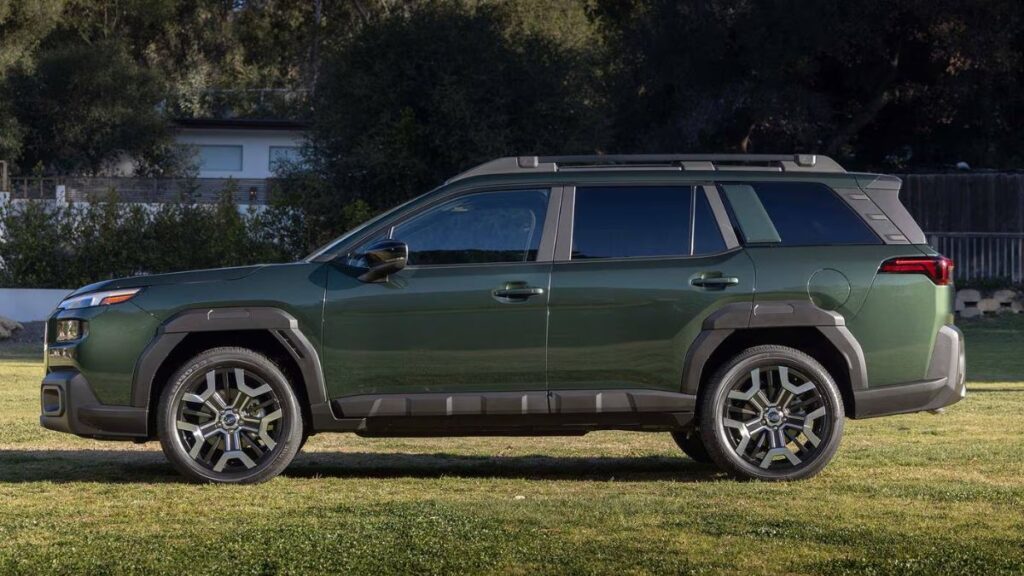
The front end is where the new design direction is most obvious. Headlights sit at the vehicle’s four corners in a vertical arrangement, giving the nose a broader, more purposeful stance than the outgoing model’s rounded, softer face. Body-color trim frames the headlights, and the grille has grown larger and more upright, which gives the whole front fascia a squared, confident presence rather than the friendly, almost apologetic look of previous Outbacks.
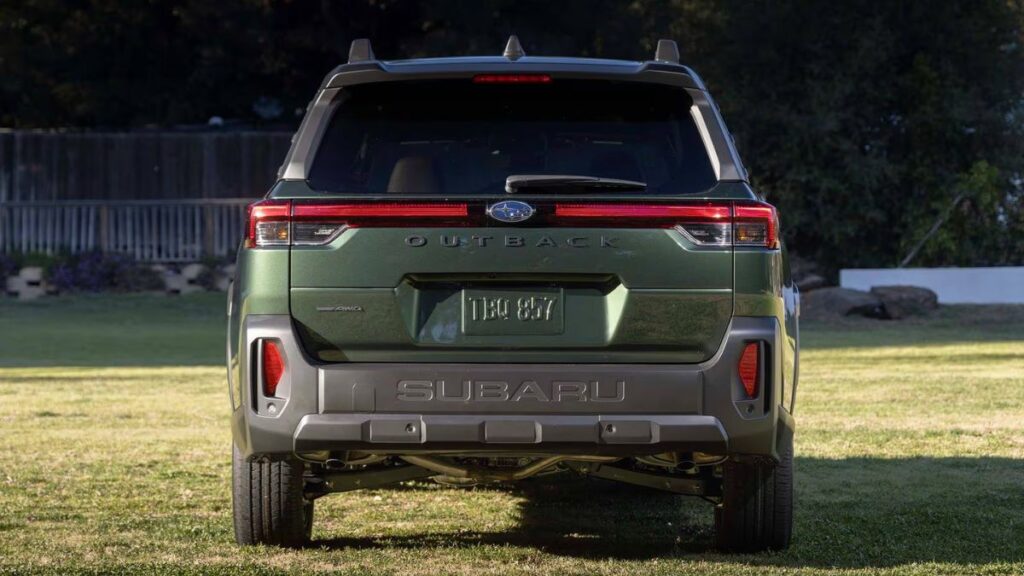
Down the sides, the proportions are familiar but the execution is not. The boxier profile and flatter roofline replace the old wagon-like taper, and a wider rear roof pillar behind the back doors adds visual weight that signals durability rather than delicacy. The rear gets a light bar that spans the width of the liftgate, a detail that modernizes the back of the vehicle instantly and ties it visually to other recent Subaru redesigns.
Ground clearance sits at 8.7 inches on standard trims, which remains a genuine advantage over most crossover competitors and even some larger, heavier SUVs. The Wilderness trim pushes that to 9.5 inches and pairs it with 17-inch wheels wrapped in all-terrain tires, giving it a distinctly different look and mission from the standard lineup. Meanwhile, 19-inch wheels are available for the first time on higher Outback trims, a size that leans more toward on-road polish than off-road capability. Compared with the outgoing generation, this new design finally looks like it belongs in the same conversation as dedicated SUVs rather than a lifted wagon trying to pass as one.
2026 Subaru Outback : Driving Experience
Daily driving in the 2026 Outback feels noticeably different from the outgoing car within the first few miles, and the difference comes down almost entirely to steering. Subaru borrowed a version of the WRX’s dual-pinion electric power steering rack and tuned the variable gear ratio for easier low-speed maneuvering while keeping stability intact at highway speeds. The result is a steering feel with actual weight and directness, something the Outback has historically lacked compared with sportier competitors like the CX-50.
On the highway, the Outback settles into a comfortable, composed cruise, aided by the standard EyeSight suite’s adaptive cruise control and lane centering. The available Hands-Free Driving Assistance takes some of the fatigue out of longer trips, automatically slowing for curves and allowing hands-free lane changes when a turn signal is used. Off-pavement, the combination of standard X-MODE, Symmetrical All-Wheel Drive, and generous ground clearance means the Outback remains genuinely capable on gravel, mud, and light trails without requiring the Wilderness trim, though that variant obviously pushes the capability further.
The revised all-wheel-drive system also brings faster center differential lockup and incorporates steering angle data into its calculations, which translates to noticeably better stability during cornering on faster roads. Overall, this is the most confident-feeling Outback Subaru has ever built, and it no longer feels like a vehicle apologizing for its size or its height.
Performance and Acceleration
The 2026 Outback carries over Subaru’s familiar boxer engine lineup with mild refinements rather than a clean-sheet redesign. The base engine is a 2.5-liter naturally aspirated boxer four-cylinder producing 180 horsepower and 178 pound-feet of torque. Buyers who want more urgency can step up to a 2.4-liter turbocharged boxer four-cylinder making 260 horsepower and 277 pound-feet of torque, standard on the Limited XT, Touring XT, and Wilderness trims.
Both engines pair with a Lineartronic continuously variable transmission that includes an 8-speed manual shift mode for drivers who want more control over the power band, along with standard Symmetrical All-Wheel Drive across the entire lineup. The turbocharged engine is the one to choose if daily merging, passing, and towing matter to you. It delivers noticeably stronger midrange pull than the base engine, which can feel adequate but unremarkable when the Outback is loaded with passengers and cargo.
Towing capacity reflects the same split. The 2.5-liter models are rated to tow up to 2,700 pounds, while turbocharged Outbacks, including the Wilderness, climb to 3,500 pounds. That figure is respectable for a unibody SUV in this class and enough for a small trailer, a pair of jet skis, or a modest camper, though it will not satisfy buyers who need serious hauling capability.
Ride Comfort and Cabin Luxury
Ride quality benefits from the Outback’s tall stance and generous suspension travel, which smooths out broken pavement and highway expansion joints more effectively than lower, stiffer crossovers. The suspension leans toward comfort over outright sportiness, which suits the vehicle’s mission as a long-distance, all-weather companion rather than a canyon carver.
Noise insulation has improved as part of the redesign, with a quieter cabin at highway speeds than the outgoing generation, though it still trails some of the segment’s quietest competitors. On long trips, the combination of a smoother ride, comfortable seating, and reduced road noise makes the Outback a genuinely relaxing vehicle to cover serious mileage in. Overall cabin refinement has taken a real step forward, particularly with the addition of nicer materials on upper trims and a noticeably quieter, more insulated feel than the model it replaces.
2026 Subaru Outback: Interior Design
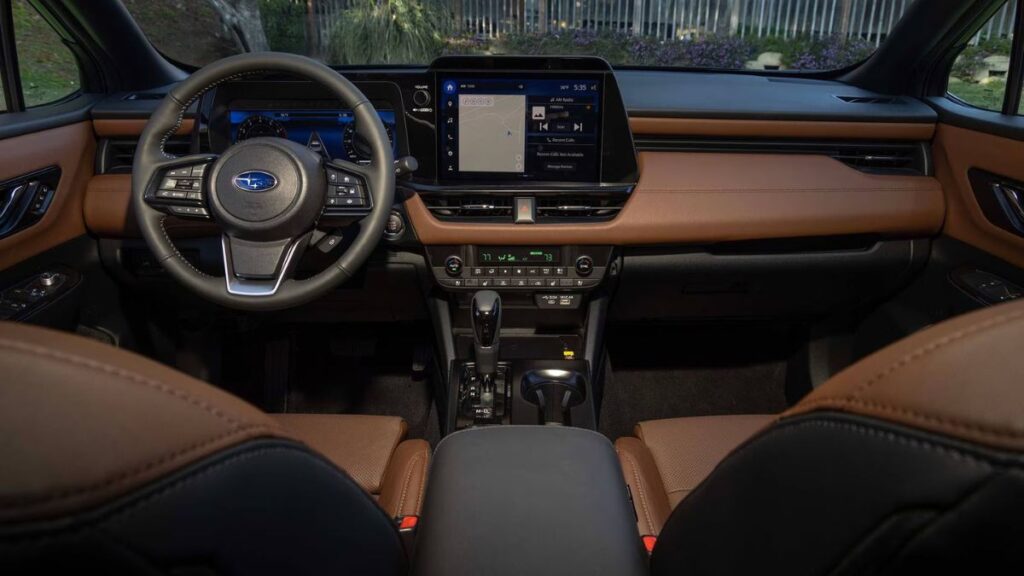
The dashboard layout is the single biggest interior change. Subaru moved to a horizontal, more driver-focused design, with the new 12.1-inch touchscreen and 12.3-inch digital gauge cluster aligned for easier reading and quicker interaction. Perhaps more importantly for daily usability, physical climate controls are back, with dedicated hard buttons and a knob replacing the touchscreen-only setup that frustrated many owners in the previous generation.
Material quality has improved across the board, with upper trims offering leather-trimmed upholstery and a noticeably more premium feel than before, including headliner inserts made from recycled plastic bottles, a small but thoughtful sustainability touch. Seating comfort remains a Subaru strength, with supportive front seats and heated options extending to the outboard rear seats on higher trims.
Passenger space benefits from the taller, boxier new body, and small everyday details show real thought: redesigned cupholders that securely hold both small and large beverages, door bottle holders sized for 32-ounce water bottles, and a new front passenger USB charging clip that keeps phone cables tidy and out of the driver’s way. None of these features individually feels groundbreaking, but together they signal a cabin designed by people who actually live with the vehicle rather than one designed purely to look good in photos.
Technology and Infotainment
Every 2026 Outback comes standard with a 12.1-inch Subaru Multimedia touchscreen running wireless Apple CarPlay and Android Auto, paired with a 12.3-inch fully digital instrument cluster. This is a significant leap from the smaller, dated screens that defined the previous generation, and it brings the Outback’s technology suite in line with, and in some respects ahead of, several key competitors.
Additional standard features include SiriusXM with a 360L trial subscription, HD Radio, Bluetooth audio streaming, hands-free phone connectivity, and multi-touch gesture control. MySubaru Connected Companion services come standard with a five-year trial, giving owners remote access features and vehicle data through a smartphone app. Wireless charging and smartphone integration are handled cleanly, and the new USB charging clip for the front passenger is a small but genuinely useful addition for anyone tired of tangled cords in the center console.
2026 Subaru Outback: Fuel Economy
Fuel economy is one area where the 2026 Outback shows its boxer-engine heritage rather than chasing class-leading numbers. The base 2.5-liter engine returns an EPA-estimated 25 mpg city, 31 mpg highway, and 27 mpg combined. Stepping up to the turbocharged 2.4-liter engine drops those figures to 21 mpg city, 29 mpg highway, and 24 mpg combined, while the Wilderness trim, with its heavier off-road equipment and all-terrain tires, comes in at 21 city, 27 highway, and 23 combined.
These numbers are respectable but not segment-leading. Buyers cross-shopping hybrid options from Toyota or Hyundai will find better real-world efficiency elsewhere, particularly in city driving. What the Outback offers in exchange is the all-weather security of standard all-wheel drive and genuinely useful ground clearance, a tradeoff that will matter more to some buyers than raw fuel economy numbers.
Practicality and Storage
Cargo space checks in at 34.6 cubic feet with the rear seats in place and 80.5 cubic feet with them folded flat, numbers that comfortably support both weekly errands and long road trips with gear for a family. A new standard configurable, washable tonneau cover, made from recycled materials, adds real everyday flexibility, whether that means keeping muddy gear separate from clean items, creating a barrier for pets riding in the cargo area, or simply protecting the rear bumper during loading.
Rear seat space benefits from the taller new body, with 39.5 inches of rear legroom and 43 inches up front, giving adult passengers genuine comfort rather than the cramped compromise sometimes found in this class. Folding seats are straightforward to operate, and the low cargo floor height, a longtime Outback strength, remains intact despite the taller overall stance. For families managing car seats, strollers, and weekend gear simultaneously, this is a vehicle built around real-world usability rather than showroom specifications alone.
Safety and Driver Assistance Systems
Every 2026 Outback comes standard with the latest generation of Subaru’s EyeSight Driver Assist Technology, a meaningful upgrade over the outgoing system. Standard features include Automatic Emergency Steering, Emergency Stop Assist with Safe Lane Selection, Front and Side Alert Assist, Emergency Lane-Keep Assist, Haptic Steering Wheel Alerts, Front Cross-Traffic Braking, and Lane Keep Assist, along with Blind-Spot Warning with Rear Cross-Traffic Warning and Reverse Automatic Braking.
A Wide Angle EyeSight Camera adds a 180-degree field of view ahead of the vehicle to help spot pedestrians and cyclists earlier, while the standard DriverFocus Distraction Mitigation System monitors driver attention. Available options push further into modern driver assistance territory, including Hands-Free Driving Assistance for reduced fatigue on longer highway stretches and Lane Change Assist, which checks whether a merge is safe and can execute the lane change automatically when hands-free mode is engaged and the turn signal is used.
This suite puts the Outback near the front of its class for standard active safety equipment, a category where Subaru has built a strong reputation over the past decade and clearly intends to protect with this redesign.
Worthy Competitors
The Toyota RAV4 remains the volume leader in this segment, and its available hybrid and plug-in hybrid powertrains give it a clear fuel economy advantage over every Outback configuration. Where the Outback pulls ahead is ground clearance, standard all-wheel-drive traction, and genuine off-pavement composure, areas where the RAV4 feels more like a tall car than a true adventure vehicle.
The Honda Passport trades the Outback’s efficiency and compact footprint for more outright size and a punchier V6 engine, making it the better choice for buyers who prioritize interior volume and towing over fuel economy or the Outback’s lower step-in height. The Mazda CX-50 offers a sportier, more engaging driving experience and a more upscale-feeling cabin at the top of its range, but it cannot match the Outback’s ground clearance or its reputation for long-term reliability in harsh winter conditions.
The Hyundai Santa Fe counters with a boxier, more distinctive interior layout and generally sharper standard technology at lower price points, making it a strong value argument. What it lacks is the Outback’s all-weather pedigree and the peace of mind that comes from Subaru’s decades of experience building vehicles specifically for snow, mud, and unpredictable roads. Each of these rivals wins on a specific priority. None of them replicates the Outback’s particular blend of everyday comfort and all-weather trail capability.
Key Strengths and Key Weaknesses
The Outback’s biggest strength is its combination of standard all-wheel drive, strong ground clearance, and a genuinely modernized cabin, all wrapped into one vehicle without forcing buyers to pay extra for the traction system that defines the model. The redesigned steering and structural updates also give it a driving character that finally feels intentional rather than incidental.
Its biggest weakness is fuel economy relative to hybrid-equipped competitors, along with a trim lineup that can be genuinely confusing to shop given how closely several mid-range configurations are priced. Buyers who prioritize maximum efficiency or the lowest possible running costs will find better options elsewhere in the segment.
Which Category Does Cardrav Recommend?
Recommended for:
- Families who need genuine passenger and cargo space without stepping up to a three-row SUV
- Outdoor enthusiasts who regularly drive on gravel, dirt, or unmaintained roads
- Snow and cold-weather drivers who want standard all-wheel-drive traction without paying an upcharge for it
- Long-distance travelers who value a comfortable, composed highway ride over sharp handling
Not recommended for:
- Buyers seeking maximum performance or a genuinely sporty driving feel
- Buyers who prioritize the lowest possible fuel consumption above all else
- Buyers looking for a luxury-level interior experience at the top of the price range
Conclusion: Is It Worth Buying?
The 2026 Subaru Outback earns a genuine recommendation, and it does so by finally addressing the complaints that followed the previous generation for years. The cabin no longer feels dated, the technology suite is competitive rather than merely adequate, and the driving experience has real substance behind it thanks to the reworked steering and all-wheel-drive system. This is not a cosmetic refresh dressed up as a redesign. It is a legitimately new vehicle wearing a familiar name.
The ideal buyer here is someone who drives in unpredictable weather, values cargo and passenger space over outright efficiency, and wants a vehicle built to last well past the ten-year mark, a promise Subaru backs with genuinely strong long-term reliability data. Does it outperform every competitor in every category? No. The RAV4 remains more efficient, the Passport offers more raw size, and the CX-50 feels sportier from behind the wheel. But none of those vehicles matches the Outback’s specific combination of all-weather confidence, cabin practicality, and modernized daily livability. For the buyer this vehicle is built for, the 2026 Outback is worth buying, and it is the strongest version of itself Subaru has ever produced.
FAQ
What is new about the 2026 Subaru Outback compared to the previous generation?
The 2026 Subaru Outback is a complete seventh-generation redesign, not a minor refresh. It gets a taller, boxier exterior, a fully modernized interior with a 12.1-inch touchscreen and 12.3-inch digital gauge cluster, reworked steering borrowed from the WRX, an upgraded all-wheel-drive system, and the latest generation of Subaru’s EyeSight safety technology.
How much does the 2026 Subaru Outback cost?
Pricing starts at roughly $36,445 including destination for the base Premium trim and climbs to about $49,445 for a fully loaded Touring XT. The lineup includes six trims: Premium, Limited, Touring, Limited XT, Touring XT, and Wilderness, with several mid-range trims priced closely together.
What engines are available on the 2026 Subaru Outback?
There are two engine choices. The standard engine is a 2.5-liter naturally aspirated boxer four-cylinder making 180 horsepower and 178 pound-feet of torque. An available 2.4-liter turbocharged boxer engine produces 260 horsepower and 277 pound-feet of torque and is standard on the Limited XT, Touring XT, and Wilderness trims.
How does the 2026 Subaru Outback compare to its competitors like the RAV4 or Santa Fe?
This 2026 Subaru Outback review finds that it trails the Toyota RAV4 in fuel economy, particularly against hybrid versions, and trails the Hyundai Santa Fe on some standard technology value at lower price points. Where the Outback wins is standard all-wheel drive, stronger ground clearance, and better all-weather and light off-road capability than either rival offers.
Is the 2026 Subaru Outback a good SUV to buy?
Yes, based on this 2026 Subaru Outback review, it is a strong choice for families, outdoor enthusiasts, and buyers in snowy or unpredictable climates who want a comfortable, all-weather SUV with genuine cargo space and modernized technology. Buyers focused purely on fuel economy or outright performance may be better served elsewhere in the segment.