Kia Sportage vs Nissan Rogue vs Volkswagen Tiguan
Three compact SUVs, two distinct hybrid systems, and one turbocharged gasoline alternative, each offering a different balance of performance, efficiency, comfort, and everyday practicality.


Anyone shopping for a compact SUV in America right now faces a question that has little to do with size. All three of these vehicles carry five people, fold their rear seats to swallow a weekend’s worth of gear, and start in the low to mid thirties. What separates them is the way each one turns fuel into motion, and that choice shapes everything from the monthly gas bill to how the car feels pulling away from a stoplight.
The 2027 Kia Sportage Hybrid pairs a turbocharged gasoline engine with an electric motor and puts the combined effort through a conventional automatic. The 2027 Nissan Rogue Hybrid takes a far less familiar route, using electric motors to drive the wheels while its gasoline engine works as a generator. The 2027 Volkswagen Tiguan skips electrification entirely in the American market and offers a traditional turbocharged engine, with a more powerful version at the top of the range. Two hybrids and one gasoline SUV, three different arguments about what a family crossover should be. That is why a comparison of the 2027 Kia Sportage vs Nissan Rogue vs Volkswagen Tiguan needs to look past starting prices and horsepower figures.
This article is built on manufacturer specifications, EPA fuel economy data, and published pricing, and it does not claim any hands-on driving by CardRav. Where a figure depends on trim, drivetrain, or seat position, the text says so.
2027 Kia Sportage Hybrid The Practical Hybrid
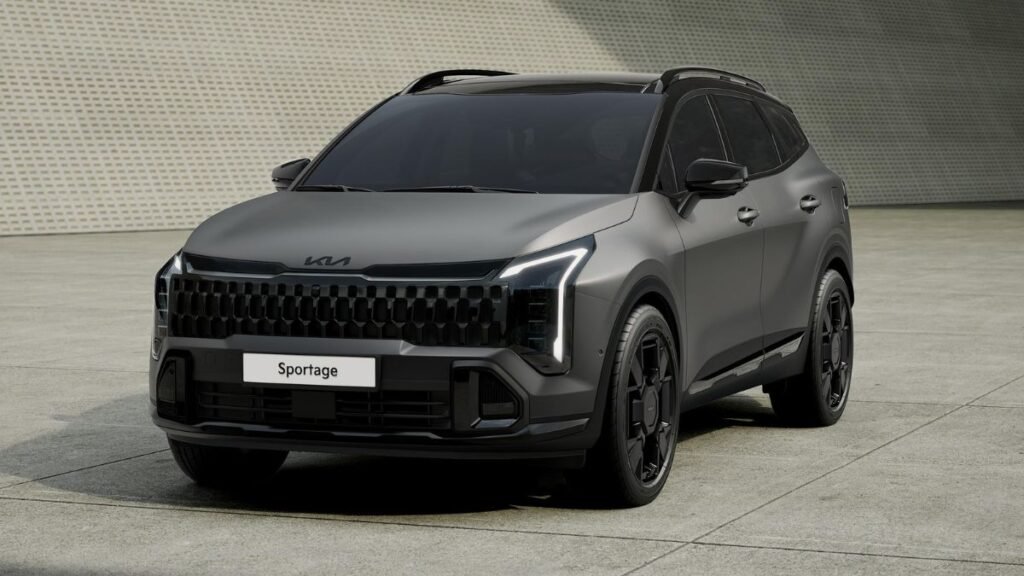
The Sportage Hybrid is the most conventional of the two hybrids in how it behaves, and that is a large part of its appeal. Its 1.6-liter turbocharged four-cylinder works alongside an electric motor in what engineers call a parallel hybrid, meaning both power sources can send energy to the wheels. Together they produce 232 horsepower and 271 lb-ft of torque, delivered through a regular six-speed automatic. There is no plug and no charging routine. The battery refills through regenerative braking and the hybrid system itself, and the Sportage runs on regular 87 octane gasoline from a 13.7-gallon tank. Kia’s official 2027 Sportage Hybrid specifications provide further details about its powertrain and available configurations.
The 271 lb-ft figure deserves attention because torque is what you feel when merging or climbing a grade with a full load. Combined with a traditional gearbox, it gives the Kia a familiar rhythm for drivers who have never lived with a hybrid.
Pricing is where the 2027 model year changes the conversation. Kia now sells the Sportage Hybrid in front-wheel drive form at a notably accessible level. The LX FWD starts at $30,590, the S FWD at $31,290, and the EX FWD at $32,290. All-wheel drive is available on the S at $32,890 and on the EX at $33,890, while the X-Line AWD begins at $35,790 and the SX Prestige AWD tops the range at $40,690. These are starting prices that exclude the $1,495 destination charge, taxes, title, licensing, and dealer fees, and the LX is offered only with front-wheel drive. Kia’s official 2027 Sportage Hybrid pricing announcement provides the complete trim-by-trim MSRP breakdown.
That drivetrain choice matters more than usual here. EPA estimates for front-wheel-drive Sportage Hybrids are 40 mpg city, 42 highway, and 41 combined. All-wheel-drive versions drop to 35 city, 36 highway, and 35 combined. Buyers who live where snow is rare can capture the better numbers and the lower price. Buyers who need the extra traction will pay for it at the pump, and those two sets of figures should never be blended together. Kia provides these figures in its official 2027 Sportage Hybrid fuel economy and specifications.
Visually, the Sportage is the boldest of the three. Vertical LED headlights with amber daytime running lights give the front end an unusual signature, and the look changes meaningfully by trim. The X-Line adds black exterior accents and 19-inch gloss-black alloy wheels, and with the available panoramic sunroof and roof rails it leans toward an outdoorsy image. Compared with the Volkswagen’s restrained styling, the Kia clearly aims at buyers who want their SUV to stand out in a parking lot, though that is a matter of taste rather than engineering.
Inside, the Sportage offers a 12.3-inch touchscreen with wireless Apple CarPlay and Android Auto, and higher trims add a second 12.3-inch screen for the instrument cluster. Depending on trim and package, buyers can add navigation, Harman Kardon audio, a panoramic sunroof, ventilated front seats, a power driver’s seat with memory, and advanced camera systems. On the X-Line, the Technology Package bundles the 360-degree Surround View Monitor, Blind-Spot View Monitor, navigation, Harman Kardon audio, driver’s seat memory, and added parking assistance. The caution is obvious: those features are not standard on the base LX, and some of the most useful ones sit behind packages or higher trims. Anyone pricing a Sportage should build the exact trim they want rather than assume the entry price delivers the equipment shown in photos.
Where the Kia truly separates itself is space. It measures about 184.4 inches long on a 108.5-inch wheelbase, with 41.4 inches of front legroom and 41.3 inches in the rear, which is an unusually generous rear seat for the class. Cargo volume is 39.5 cubic feet behind the rear seats and 73.7 cubic feet with them folded, using the lower position of the dual-level floor. In daily terms, that means a rear-facing child seat does not force the front passenger to sit with knees against the dashboard, and a stroller, a Costco run, and a few duffel bags can coexist without a puzzle.
Capability is sensible rather than ambitious. Active AWD helps with traction and stability, and selected versions add Snow, Sand, and Mud modes, but these do not make the Sportage an off-roader. Towing is rated up to 2,000 pounds with trailer brakes and 1,653 pounds without, which suits a small utility trailer or a pair of bikes and not much more.
Standard and available safety equipment includes Forward Collision-Avoidance Assist, Lane Keeping Assist, Blind-Spot Collision Warning, Rear Cross-Traffic Collision-Avoidance Assist, and Smart Cruise Control with Stop & Go, with extra camera and monitoring systems reserved for higher trims or packages. Kia’s warranty is a genuine selling point, with a 10-year/100,000-mile powertrain limited warranty and a 5-year/60,000-mile basic limited warranty. The full powertrain coverage applies to eligible original purchasers, so a later owner should not assume they inherit the same term. Hybrid battery coverage follows the applicable warranty terms. Buyers can review Kia’s official U.S. warranty coverage for the complete terms and limitations. On crash testing, the 2026–27 Kia Sportage earned an IIHS Top Safety Pick+ award, which applies only to vehicles built after May 2025.
The Sportage’s weak points are modest. All-wheel drive costs real efficiency, well-equipped trims climb in price, and key technology can require a package. For most buyers those are trade-offs rather than flaws.
2027 Nissan Rogue Hybrid The Electric-Drive Outlier
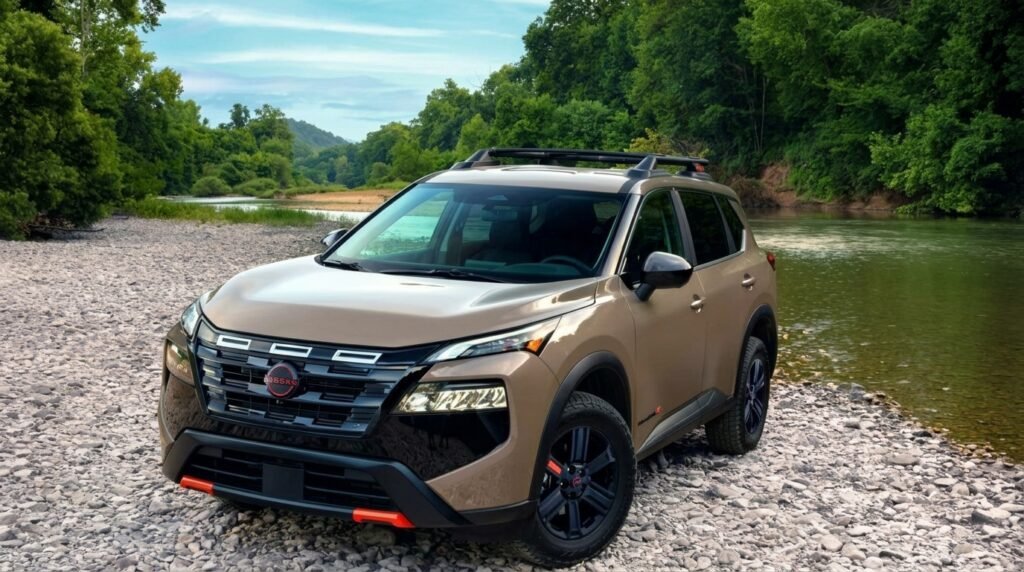
The Rogue Hybrid is the most interesting vehicle here, mainly because it does not work like the hybrids most Americans know. It brings Nissan’s third-generation e-POWER system to the United States, and the layout is a series hybrid. The 1.5-liter turbocharged three-cylinder gasoline engine, rated at 148 horsepower and 171 lb-ft, is not mechanically connected to the wheels. Its job is to generate electricity for the system and the small 1.67 kWh lithium-ion battery. The wheels are driven entirely by electric motors, a 202-horsepower, 243 lb-ft motor at the front and a 134-horsepower, 144 lb-ft motor at the rear. Nissan rates the combined system output at 225 horsepower, a figure that should not be confused with the sum of the individual outputs. Nissan’s official 2027 Rogue Hybrid press kit provides additional technical details about the e-POWER system, electric motors, battery, and powertrain specifications.
There is no multi-speed transmission to shift through. The Rogue is not a plug-in hybrid and not an electric vehicle, so it refuels at a gas station like any other car. What it offers is an electric-motor driving experience without charging infrastructure, which is a very specific proposition. The wider e-POWER technology has been used in nearly two million vehicles across 68 countries since 2016, but that is a global engineering record. It says little about how this particular American Rogue will hold up over a decade of ownership, a distinction worth keeping in mind.
Dual-motor electric all-wheel drive is standard on every 2027 Rogue Hybrid. Official starting prices are $35,490 for the SV AWD, $37,490 for the SR AWD, and $43,490 for the Platinum AWD, before the $1,575 destination and handling charge, taxes, title, licensing, and dealer charges. The SV Premium Package adds $2,100, which brings a configured SV to $37,590, and the SR Technology Package adds $4,000 for a configured price of $41,490. Timing matters as much as price this fall. As of Nissan’s October 30, 2026 announcement, the SR with the Technology Package is expected in limited quantities in late November 2026, while the broader SV, SR, and Platinum range is expected in January 2027. A shopper reading this in November cannot simply walk into a dealership and choose any trim. Nissan’s official October 30, 2026 announcement provides the latest U.S. launch details and EPA-estimated fuel economy information.
Fuel economy is where the Nissan’s design shows its intent. Nissan’s October 30 announcement gives EPA estimates for the SR AWD of 41 mpg city, 36 highway, and 38 combined. Nissan’s live specifications list 37 combined for the SV and Platinum, but the final EPA labeling for those trims should be verified, since the SR announcement does not automatically confirm them. Against the Kia, the comparison is revealing. The Sportage Hybrid FWD reaches 41 mpg combined, but the Rogue delivers 38 mpg combined with standard AWD, while the AWD Sportage manages 35. Nissan provides further details in its official Rogue Hybrid fuel economy and features information.
Design-wise, the 2027 Rogue Hybrid has updated American-market styling with a refined front fascia and modern lighting. The SR takes a sportier stance and the Platinum emphasizes luxury and premium equipment. It is a separate vehicle from older gasoline Rogues and from overseas X-Trail models, even if the names are related.
The cabin pairs a 12.3-inch touchscreen with wireless Apple CarPlay and Android Auto. SV and SR models offer a 12.3-inch digital instrument display, while the Platinum steps up to dual 14.3-inch displays and a Head-Up Display. The SR Technology Package adds an available 14.3-inch screen with Google built-in, including Google Maps and Google Gemini, and the Platinum also carries Google built-in along with a 10-speaker Bose audio system. All trims include a 15-watt Qi2 wireless charger, while other available equipment includes a panoramic moonroof, heated and ventilated front seats, heated rear outboard seats, and enhanced surround-view cameras. Nissan also retains physical controls for important cabin functions, which matters in real use because adjusting temperature or volume by touch alone on a bumpy road is a nuisance. That practical benefit is easy to overlook next to the bigger screens. Buyers can explore Nissan’s official 2027 Rogue Hybrid specifications and trim features for a complete breakdown of the available equipment.
The Rogue is the tightest of the three in the back seat. It measures 183.1 inches long, 72.8 inches wide, and 67.7 inches tall on a 106.5-inch wheelbase, with 36.2 inches of rear legroom, noticeably less than the Kia offers. Nissan offsets some of that with rear doors that open nearly 90 degrees and five LATCH anchors in the rear seat, which makes installing child seats less of a contortion act. For parents buckling toddlers into a car seat in a tight garage, wide door openings are worth more than they look on a spec sheet.
Cargo capacity is quoted differently depending on the source, so the numbers need care. The press materials cite 31.1 cubic feet behind the raised second row, while the detailed specifications show up to 34.4 cubic feet only when the second-row seat is moved to its forward-most position. They describe different seat settings and should not be treated as the same measurement. With the second row folded, maximum capacity is 65.9 cubic feet. The cargo area includes a luggage floorboard, tie-downs, and a molded storage area behind the passenger-side wheel well. The fuel tank holds 14 gallons and maximum towing capacity is 1,500 pounds when properly equipped.
The two electric motors let the Rogue distribute torque between the front and rear axles to help with traction and stability. Drive modes include Standard, Eco, Sport, Off-Road, Snow, and Personal. The e-Pedal system lets drivers slow the vehicle considerably by lifting off the accelerator, using regenerative braking, and Smooth Stop softens the final moment of a braking event. In stop-and-go commuting these features are the most relevant to daily comfort. ProPILOT Assist is available, with hands-on operation and an enhanced hands-off Traffic Jam Support feature through the SR Technology Package and higher configurations. Both are driver-assistance systems, not autonomous driving.
Warranty terms are 3 years or 36,000 miles basic, 5 years or 60,000 miles powertrain, and 8 years or 100,000 miles for both the hybrid battery and electrical components, with roadside assistance for 3 years or 36,000 miles, all subject to the manufacturer’s terms. The Rogue Hybrid is assembled at Nissan Motor Kyushu in Japan. Buyers can review Nissan’s official 2027 Rogue Hybrid specifications and warranty coverage for the complete coverage details.
The Rogue’s limits are plain. It starts at a higher price than the Kia, offers less cargo and rear legroom than the Sportage, has no front-wheel-drive option for buyers who do not want AWD, and arrives in stages. It is also a new American application of an established global system, which is a point in its favor on engineering maturity and a reason for patience on long-term verdicts.
2027 Volkswagen Tiguan The Conventional Turbo with a Premium Cabin
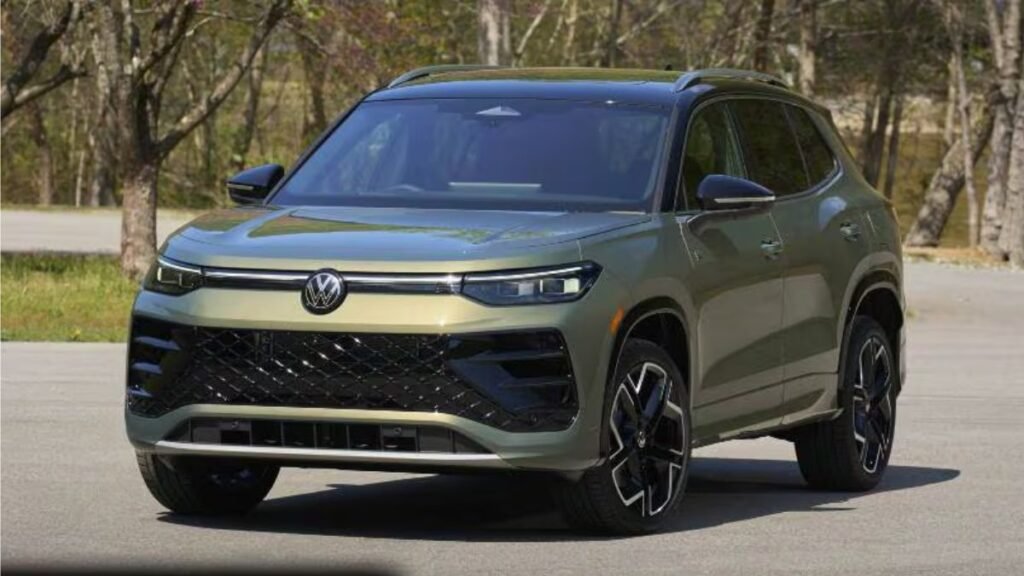
The American Tiguan is a gasoline vehicle, and it is worth stating that clearly because the European Tiguan is sold with mild hybrid technology that does not apply here. In the United States, the standard 2027 Tiguan uses a 2.0-liter turbocharged four-cylinder making 201 horsepower and 207 lb-ft of torque, paired with an eight-speed automatic. Front-wheel drive is available on lower trims and 4MOTION all-wheel drive can be selected on qualifying ones. Volkswagen’s official 2027 Tiguan specifications provide further details about the available engines, drivetrain configurations, and trim levels.
At the top of the range, the SEL R-Line Turbo changes the character of the vehicle considerably. It produces 268 horsepower and 258 lb-ft of torque and comes with 4MOTION AWD. That is more power than either hybrid claims and a visible step above the base Tiguan, though it applies only to that one trim and not to the lineup as a whole.
The pricing is the widest of the three. Manufacturer suggested retail prices begin at $31,205 for the S, $33,995 for the SE, and $37,245 for the SE R-Line Black, and climb to $43,085 for the SEL R-Line Turbo. These prices exclude destination, taxes, title, licensing, and dealer charges, and no destination figure is provided here. The gap between the base car and the performance flagship is nearly $12,000, a reminder that the Tiguan is really two different propositions under one name.
The efficiency trade-off is the Tiguan’s central compromise. The EPA’s official 2027 Volkswagen Tiguan fuel economy record lists a 2.0-liter turbocharged front-wheel-drive configuration at 25 mpg city, 33 highway, and 28 combined. Volkswagen’s product page advertises 30 mpg highway for the SEL R-Line Turbo. Full city, highway, and combined EPA numbers for AWD and Turbo versions should be confirmed against the specific label before anyone budgets around them. Even so, the direction is clear. Compared with the Kia’s 41 combined in front-wheel drive or the Nissan’s 38 combined in the SR, the Tiguan uses meaningfully more fuel.
Design is the quietest here. Proportions are balanced and the look is understated, with R-Line styling available for those who want more edge. The SE R-Line Black adds dark exterior accents and 20-inch black alloy wheels, while the SEL R-Line Turbo carries a more upscale exterior identity.
Inside, the Tiguan comes with a standard 12.9-inch central touchscreen, with a 15-inch screen available, and includes Volkswagen Digital Cockpit Pro. Available equipment includes a Head-Up Display, panoramic sunroof, ambient lighting, Harman Kardon audio, and a hands-free liftgate. The SEL R-Line Turbo adds diamond-stitched leather seating surfaces, ventilated front seats, massage functions, memory settings, and heated rear outboard seats. None of that should be assumed on the S or SE.
Cargo space is up to 69.8 cubic feet with the second row folded. That trails the Sportage’s 73.7 but remains generous, and the Tiguan seats five in its American configuration. Towing is rated up to 1,800 pounds braked, which supports light recreational use, and 4MOTION adds traction without turning the Tiguan into a rugged vehicle.
Standard safety and driver-assistance equipment includes Travel Assist, Adaptive Cruise Control, Front Assist, and Park Distance Control, with further IQ.DRIVE features depending on trim. These systems reduce workload on highways and in traffic but still require an attentive driver. No 2027 NHTSA crash rating should be assumed unless the result has actually been published. Volkswagen’s coverage includes a 4-year/50,000-mile New Vehicle Limited Warranty, scheduled maintenance for the first two years or 20,000 miles, whichever comes first, covering the services included in its official Carefree Coverage program, and roadside assistance for 3 years or 36,000 miles. That maintenance coverage is limited in scope and should not be mistaken for unlimited free servicing.
Three Powertrain Philosophies
The most useful way to understand these SUVs is through how their drivetrains work, because the differences are not cosmetic.
In the Kia, a gasoline engine and an electric motor can both drive the wheels, with a six-speed automatic managing the delivery. Because the engine is directly involved, the experience resembles a conventional car with an electric assist, which makes it the easiest of the two hybrids to adapt to. The electric motor helps most when pulling away and at low speeds, and the engine takes over more of the work as demands rise.
The Nissan breaks that link. Since the engine does not drive the wheels, its speed does not have to match road speed, and there is no gearbox to shift. The wheels respond to electric motors, which tend to deliver torque immediately, while the engine runs to keep the battery and motors supplied. One practical consequence of this layout is that engine behavior can feel less tied to throttle position than in a conventional car, something shoppers should notice for themselves on a test drive.
The Volkswagen is the simplest of the three. A turbocharged engine sends power through an eight-speed automatic, with no electric assist anywhere in the system. That simplicity brings familiarity and, in the case of the 268-horsepower Turbo, the strongest output of the group, but it also costs efficiency, especially around town where hybrids recover energy during braking and a gasoline engine does not.
Performance and Driving Character
On paper, the Kia’s 232 horsepower and 271 lb-ft sit between the Nissan’s 225 horsepower system rating and the standard Tiguan’s 201 horsepower, with the 268-horsepower SEL R-Line Turbo leading the field. Horsepower, however, does not tell the whole story. A hybrid’s electric motor can add torque at the exact moment a driver asks for it, and the Nissan’s electric motors drive the wheels directly, so its real-world response may feel different from its number. The Volkswagen relies on turbocharged boost and gear selection, which gives it a more traditional feel, particularly in the standard version.
No independently measured acceleration times are cited here, and none are implied. Readers who care about the numbers should look to published instrumented tests once these 2027 models have been evaluated. What can be said from the specifications is that the Tiguan Turbo is the clear performance choice, the Kia is the most balanced of the hybrids, and the Nissan offers the most distinctive character with standard AWD and electric-motor drive.
Fuel Economy and Everyday Running Costs
The efficiency ranking is straightforward, but it depends on drivetrain. A front-wheel-drive Sportage Hybrid at 41 mpg combined is the most economical on paper, while an all-wheel-drive Sportage at 35 mpg combined actually falls behind the Rogue SR AWD’s 38 mpg combined. That is the real significance of the Nissan’s standard AWD. Buyers who want all-wheel drive and a hybrid will find the Rogue more efficient than the equivalent Kia, while buyers who would happily choose front-wheel drive can save more with the Sportage.
The Tiguan sits behind both in efficiency, and the gap widens in city driving. This article does not estimate annual fuel costs, because any such figure depends on assumptions about fuel prices and mileage that vary widely across the country. EPA figures are the right basis for comparison, and they should not be set against European WLTP or British miles per gallon numbers.
Interior Comfort and Technology
Screen size alone is a poor guide to cabin quality, and these three show why. The Kia’s pair of 12.3-inch displays on higher trims make for a wide, modern dashboard, though the best features sit above the base trim. The Nissan combines digital instrumentation with the option of a large Google-powered display, and its retention of physical controls reflects an understanding of how people actually use their cars. The Volkswagen’s 12.9-inch standard screen and optional 15-inch display give it the largest central screen, and its upper trims bring the most pronounced luxury touches, with massage seats and diamond-stitched leather.
The right choice depends on trim. A base Kia, a base Nissan, and a base Volkswagen are very different from their top versions, and the cost of climbing the ladder varies across the three. Comparing a loaded Tiguan with an entry Sportage says more about price than about the vehicles.
Space and Family Practicality
For rear passengers, the Kia holds a clear lead with 41.3 inches of legroom against the Nissan’s 36.2 inches, and it also leads on maximum cargo with 73.7 cubic feet against the Volkswagen’s 69.8 and the Nissan’s 65.9. Those numbers come from different manufacturers who may measure under different standards and seat positions, so they are a good guide and not a perfectly interchangeable one. The Nissan compensates with nearly 90-degree rear door openings and five LATCH anchors, genuinely useful for families with young children. The Volkswagen offers flexible cargo space and the most premium comfort at the top of its range.
For families focused on raw room, the Sportage makes the strongest case. For those who install child seats frequently, the Rogue’s door design deserves a look in person. For buyers who value a plush cabin along with practical space, the Tiguan fits comfortably.
AWD and All-Weather Capability
The three all-wheel-drive systems are not equivalent. The Kia’s is an available active system that can be paired with Snow, Sand, and Mud modes on selected versions. The Nissan’s is a dual-motor electric system that is standard on every trim and can distribute torque between its front and rear motors. The Volkswagen’s 4MOTION is available on qualifying trims and standard on the Turbo. Each helps in rain and snow, but none transforms a compact crossover into a trail vehicle, and drive modes should be read as tools for slippery pavement and light dirt roads.
Price, Equipment, and Value
The cheapest ticket is not automatically the best deal. The Kia starts lowest at $30,590 and its front-wheel-drive hybrids give it the strongest entry point for fuel-conscious buyers. The Tiguan S begins at $31,205 but uses more fuel, and its top trim at $43,085 competes with the Rogue Platinum at $43,490 and sits well above the Sportage SX Prestige at $40,690. The Rogue starts at $35,490, the highest entry price of the three, but it includes standard AWD, which narrows that gap for anyone who would otherwise pay extra for all-wheel drive.
Warranty terms and fuel savings also factor into value, though this article makes no claims about long-term maintenance costs or resale value. Nissan’s staged rollout, with limited SR Technology Package availability in late November 2026 and the wider lineup in January 2027, means some buyers will need to wait or compromise on trim.
Safety and Ownership Confidence
All three offer a robust set of driver-assistance technologies, though the best systems often require higher trims or packages. The IIHS’s current small SUV safety ratings list the 2026–27 Kia Sportage as a Top Safety Pick+ for qualifying vehicles built after May 2025 and include crash-test results for the 2027 Nissan Rogue. The current IIHS list does not yet show a 2027 Volkswagen Tiguan entry, so buyers should check for updated results as they become available. These distinctions matter because an award or test result should not automatically be applied to every model year or configuration. Kia’s 10-year/100,000-mile powertrain coverage, limited to eligible original owners, is the longest of the three, while Nissan’s 8-year/100,000-mile hybrid battery and electrical coverage is a meaningful reassurance on its newest technology and Volkswagen’s 4-year/50,000-mile warranty and two years of scheduled maintenance round out a different kind of package.
The Rogue deserves a particular caveat. e-POWER has a long record overseas, but this is a new American model, and mature technology elsewhere is not the same as a proven ownership history here.
Wider Context and Alternatives
Buyers who find all three a little large or pricey may want to explore smaller options, and CardRav’s look at the best subcompact SUVs of 2022 and 2023 covers that end of the market. Readers curious about how hybrids differ from fully electric cars, or who are open to buying used, can start with these used electric and hybrid cars worth buying in 2026.
The Verdict
For most American compact SUV shoppers, the Kia Sportage Hybrid is the most convincing overall package. It combines the lowest starting price, the best fuel economy in front-wheel-drive form, the roomiest back seat, the largest cargo area, a familiar driving experience, and the strongest powertrain warranty for original owners. Its weaknesses are real, since all-wheel drive costs efficiency and the best equipment demands a higher trim, but they rarely outweigh the case for it.
The Nissan Rogue Hybrid is the one to consider if the engineering itself appeals. It offers electric-motor driving without ever plugging in, standard dual-motor AWD, and a respectable 38 mpg combined on the SR. It asks for a higher price, accepts less space, and requires patience as the lineup arrives, yet for drivers who want the smoothness of an electric-driven machine without the charging cable, nothing else in this group comes close.
The Volkswagen Tiguan belongs to the buyer who simply prefers a gasoline turbo and an upmarket cabin. The 268-horsepower SEL R-Line Turbo, with its massage seats and large screen, is the most luxurious and most powerful vehicle of the three, and it pays for that with fuel economy and price.
Taken together, the 2027 Kia Sportage vs Nissan Rogue vs Volkswagen Tiguan matchup comes down to what each buyer is willing to pay for at the pump and in the showroom. If the goal is a single sensible purchase, the Sportage Hybrid is the safest bet. If the goal is something different, the Rogue is the most intriguing SUV in its class, and the Tiguan remains the one for people who would rather have power and polish than a hybrid badge.