Only a year after Jeep revived the Wagoneer nameplate, the brand is already expanding the lineup in a serious way. For 2023, the standard Wagoneer and the more luxurious Grand Wagoneer gain extended-wheelbase “L” variants, giving these full-size three-row SUVs even more passenger room and cargo capacity. Jeep has also introduced the new Hurricane twin-turbocharged inline-six engine, available in multiple output levels, allowing the Wagoneer family to compete more aggressively with rivals like the Chevrolet Tahoe and Suburban, GMC Yukon, Cadillac Escalade, Ford Expedition, and Lincoln Navigator.
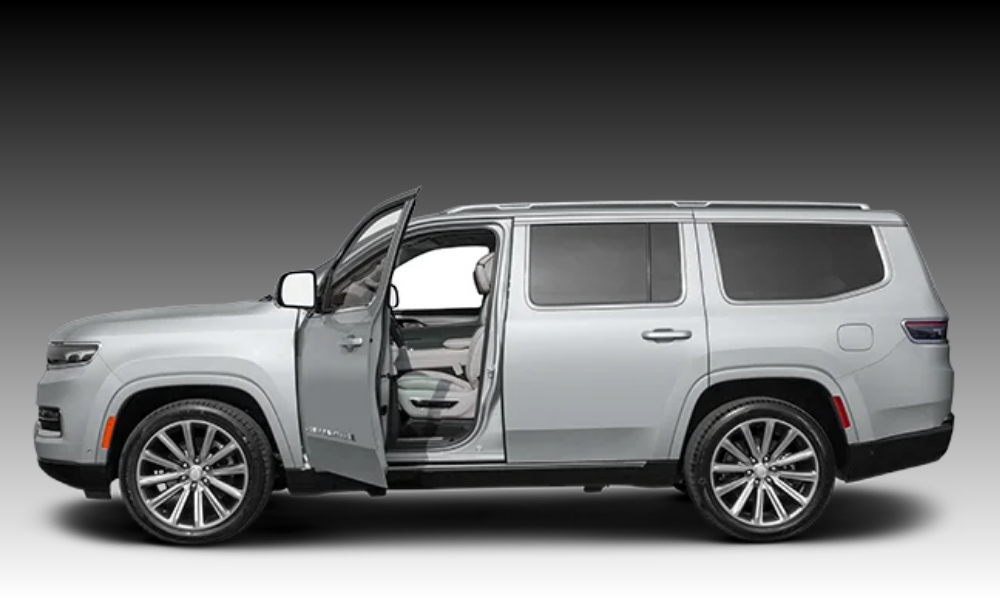
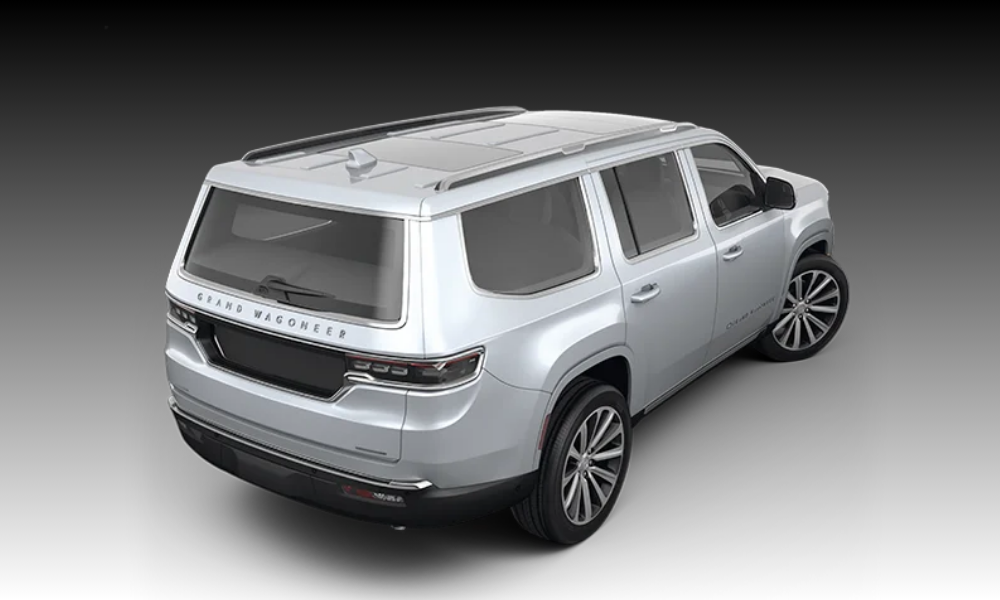
Regardless of whether buyers choose the standard Wagoneer or the ultra-premium Grand Wagoneer, both SUVs make a strong first impression through sheer presence alone. They are large, bold, and unmistakably American in character, yet Jeep has done an impressive job balancing traditional SUV toughness with a more upscale and modern design language. Although the platform underneath is shared with the Ram 1500 pickup truck, the Wagoneer hides its truck-based roots remarkably well thanks to its refined ride quality, quieter cabin, and far more sophisticated interior presentation.
Practicality remains one of the Wagoneer’s biggest strengths. The extended-wheelbase Wagoneer L offers an enormous amount of cargo space behind the third row, outperforming several direct competitors in usable storage capacity. Families traveling with luggage, sports equipment, or large cargo loads will immediately notice the advantage. At the same time, Jeep has managed to preserve a level of utility expected from the brand. While the Wagoneer is not positioned as a hardcore off-road SUV like the Wrangler or Grand Cherokee Trailhawk, available features such as a two-speed transfer case, air suspension, skid plates, tow hooks, and all-terrain tires still allow it to venture confidently beyond paved roads when needed.
Towing capability is equally impressive. When properly equipped, the Wagoneer can tow up to 10,000 pounds, placing it among the strongest tow vehicles in the full-size SUV segment.
What makes the 2023 Wagoneer lineup especially appealing is how broad its personality has become. The standard Wagoneer delivers a comfortable and upscale family SUV experience, while the Grand Wagoneer pushes deeper into true luxury territory with richer materials, more advanced technology, and a far more premium atmosphere. The addition of the new Hurricane engine and the longer L variants only strengthens the appeal, giving Jeep a much more complete and competitive luxury SUV lineup than before.
If you’re comparing full-size SUVs, CarDrav also offers detailed reviews of models like the 2022 GMC Yukon, 2022 Nissan Armada, and the rugged 2022 Toyota 4Runner. Shoppers looking for refined midsize alternatives can also explore the 2022 Cadillac XT6, 2023 Chevrolet Traverse, and 2022 Ford Edge for additional insight into comfort, space, and everyday practicality.
Drivers interested in newer electric or tech-focused SUVs may also want to check out the 2023 Nissan Ariya, 2023 Chevrolet Bolt EUV, and 2023 Honda Passport. For smaller family-oriented crossovers, the 2023 Nissan Kicks, 2023 Nissan Murano, 2023 Ford Explorer, and 2023 GMC Acadia each bring a unique mix of utility, technology, and driving character.
Pros
- Massive interior and cargo space
- Impressive towing capability
- Strong technology offerings
- Grand Wagoneer delivers a genuinely luxurious cabin
- New Hurricane engine improves performance and efficiency
Cons
- Expensive in higher trims
- Fuel economy still trails some rivals
- Less agile than certain competitors
- Off-road capability is more limited than other Jeep models
What’s New for 2023?
The biggest update for the 2023 Jeep Wagoneer and Grand Wagoneer lineup is the introduction of the new extended-wheelbase models, officially named the Wagoneer L and Grand Wagoneer L. These larger variants stretch the wheelbase by approximately 7 inches and increase the overall vehicle length by nearly a full foot, creating even more passenger space and significantly expanding cargo capacity behind the third row.
Jeep has also introduced the brand-new Hurricane 3.0-liter twin-turbocharged inline-six engine for 2023. Available in two different output levels depending on the model and trim, the new powertrain delivers stronger performance and improved fuel efficiency compared to the traditional V8 engines previously associated with large American SUVs. The Hurricane engine quickly becomes one of the most important additions to the Wagoneer family, helping the lineup feel more modern and competitive within the full-size luxury SUV segment.
Beyond the mechanical updates, Jeep has slightly reorganized and simplified portions of the trim structure for 2023, making the lineup easier to navigate for buyers choosing between the standard Wagoneer, the more luxurious Grand Wagoneer, and the new long-wheelbase L variants.
Interior and Technology
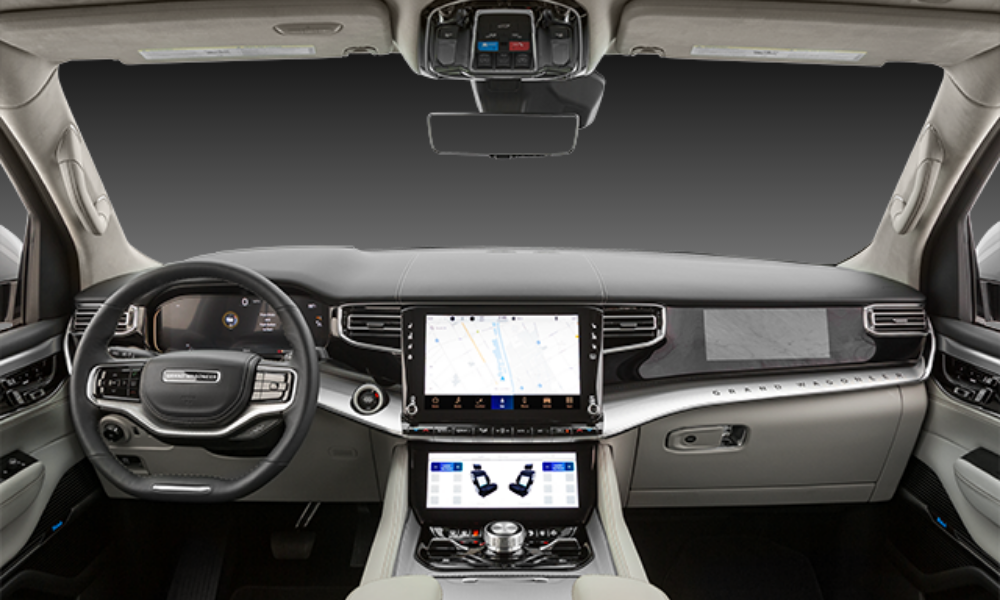
The Grand Wagoneer is unquestionably the centerpiece of the lineup when it comes to interior luxury. Jeep has created a cabin that feels genuinely premium, packed with high-end materials, rich detailing, and an overwhelming amount of technology. While it may not rely on the dramatic OLED displays of the Cadillac Escalade or the ultra-flashy presentation of a Lincoln Navigator Black Label, the Grand Wagoneer still succeeds in feeling every bit like a true luxury SUV despite wearing a mainstream Jeep badge.
Soft leather surfaces, real wood trim, metal accents, and carefully layered interior textures give the cabin a warm and upscale atmosphere. The overall design feels modern without becoming overly futuristic, striking a balance between traditional American luxury and contemporary technology. Passenger comfort is excellent throughout all three rows, and unlike some rivals, the third row still feels like part of the premium experience rather than an afterthought.
Interestingly, the standard Wagoneer may actually appeal to a broader audience. It shares nearly the same cabin architecture and general layout as the Grand Wagoneer but tones down some of the more extravagant materials and luxury-focused features. In many ways, this gives the regular Wagoneer a cleaner and more approachable character while still feeling noticeably more upscale than mainstream competitors like the Chevrolet Tahoe or Ford Expedition. Unlike GM and Ford, where luxury versions receive dramatically different interiors from their mainstream counterparts, Jeep has done a better job maintaining a premium feel across the entire Wagoneer family.
Technology is another major focus inside both models. Jeep’s Uconnect infotainment system remains one of the more user-friendly interfaces in the segment, helping manage the enormous amount of available digital features without becoming frustrating to operate. Depending on trim level, the Wagoneer and Grand Wagoneer can be equipped with multiple screens spread throughout the cabin, including digital instrument clusters, large central infotainment displays, dedicated climate-control touchscreens, rear entertainment systems, and even a separate front-passenger display.
The sheer number of screens can initially feel overwhelming, especially in higher trims where nearly every passenger has access to some form of digital interface. Yet the system itself remains relatively intuitive, and Jeep has managed to integrate the technology in a way that still feels functional rather than gimmicky.
Interior Space and Cargo Capacity
Size is one of the defining characteristics of the 2023 Jeep Wagoneer and Grand Wagoneer lineup. Even the standard-wheelbase models are enormous by full-size SUV standards, stretching beyond key competitors like the Chevrolet Tahoe, GMC Yukon, Cadillac Escalade, Ford Expedition, and Lincoln Navigator. That added length translates directly into one of the roomiest cabins in the segment, particularly for passengers sitting in the third row.
Unlike many three-row SUVs where the rearmost seats feel compromised or designed primarily for children, the Wagoneer delivers genuinely usable third-row comfort for adults. Legroom, headroom, and overall seating comfort are impressive, and Jeep has done an excellent job extending the upscale atmosphere all the way to the back of the cabin rather than concentrating luxury only in the front rows. In fact, the Wagoneer family arguably offers one of the best third-row experiences currently available in a full-size SUV.
Cargo capacity is equally impressive. Thanks to the SUV’s substantial dimensions, the Wagoneer provides more usable storage space behind the third row than many direct rivals. Large suitcases, travel gear, coolers, and family luggage can fit comfortably without immediately requiring the third row to be folded down. Once the rear seats are lowered, the available cargo area becomes enormous, turning the Wagoneer into one of the most practical luxury-oriented SUVs on the market.
Passenger flexibility is another strong point. The standard Wagoneer typically comes configured to seat up to eight passengers, while the Grand Wagoneer leans more heavily into luxury with a standard seven-passenger layout featuring second-row captain’s chairs. Buyers can still configure the Wagoneer for a more premium seating arrangement if desired.
For 2023, Jeep expanded practicality even further by introducing the new Wagoneer L and Grand Wagoneer L models. These long-wheelbase variants add roughly 12 inches of total vehicle length, creating substantially more cargo room and additional rear passenger space. The increase in storage capacity is immediately noticeable, especially for larger families or buyers who frequently travel with significant luggage, equipment, or oversized cargo loads.
Performance and Fuel Economy
The 2023 Jeep Wagoneer and Grand Wagoneer lineup offers a surprisingly wide range of powertrains for a full-size luxury SUV family, with every engine paired to a smooth-shifting eight-speed automatic transmission. Jeep’s goal is clearly to balance traditional American V8 character with newer turbocharged efficiency-focused alternatives, giving buyers several distinct personalities to choose from depending on their priorities.
The standard Jeep Wagoneer begins with a 5.7-liter V8 producing 392 horsepower and 404 lb-ft of torque. This engine uses Jeep’s mild-hybrid eTorque system, which combines a belt-driven motor generator and a small battery pack to provide additional low-end torque assistance during acceleration while also improving efficiency during stop-and-go driving. The system can temporarily add extra torque when needed and allows smoother engine shutoff during deceleration and idle situations.
Fuel economy for the V8-powered Wagoneer is respectable considering the SUV’s size, though still far from class-leading. Rear-wheel-drive models achieve approximately 16 mpg in the city and 22 mpg on the highway, while four-wheel-drive variants see slightly lower numbers.
The most important engine in the lineup, however, is arguably the new Hurricane 3.0-liter twin-turbocharged inline-six. Available on higher Wagoneer trims and the Wagoneer L, this engine produces 420 horsepower and 468 lb-ft of torque while delivering noticeably stronger fuel efficiency than the traditional V8. It also transforms the driving experience, providing smoother power delivery, quicker throttle response, and significantly more low-end torque without making the SUV feel strained under acceleration. Among the available engines, the standard Hurricane powertrain delivers the best balance between performance and efficiency.
Moving into the Grand Wagoneer lineup introduces even more power. The standard Grand Wagoneer engine is a massive 6.4-liter V8 generating 471 horsepower and 455 lb-ft of torque. It delivers smooth and effortless acceleration with the deep, traditional sound expected from a large American luxury SUV, but fuel economy is predictably poor. This engine is among the thirstiest options in the segment and becomes noticeably more expensive to operate over time compared to rivals like the Lincoln Navigator.
Jeep also offers a more powerful version of the Hurricane engine known as the Hurricane 510. Producing 510 horsepower and 500 lb-ft of torque, this twin-turbocharged inline-six gives the Grand Wagoneer genuinely impressive acceleration for a vehicle of this size. Power arrives quickly and smoothly, making highway passing and merging feel effortless despite the SUV’s enormous dimensions. While the Hurricane 510 still consumes a considerable amount of fuel, it offers better efficiency than the larger V8 while delivering even stronger real-world performance.
Fuel requirements vary depending on the chosen engine. The standard V8 and base Hurricane inline-six can operate on regular gasoline, though Jeep recommends mid-grade fuel for optimal performance. Meanwhile, the high-output Hurricane 510 and the 6.4-liter V8 perform best with premium fuel, adding to the already substantial ownership costs associated with these luxury SUVs.
Ultimately, the new Hurricane engines represent one of the most important improvements to the Wagoneer family. They modernize the driving experience, improve efficiency, and help Jeep compete more directly with increasingly sophisticated rivals in the full-size luxury SUV segment.
Driving Experience
Driving the 2023 Jeep Wagoneer and Grand Wagoneer is an experience defined more by comfort, presence, and effortless highway cruising than by agility or sporty behavior. These are enormous body-on-frame SUVs, and Jeep makes very little attempt to disguise their size from behind the wheel. You are constantly aware that you’re piloting a vehicle weighing well over three tons, especially in tighter urban environments and parking lots where the Wagoneer’s massive dimensions become impossible to ignore.
Yet despite that size, the Wagoneer family manages to feel remarkably refined on the road. Models equipped with the available air suspension, standard on the Grand Wagoneer and optional on certain Wagoneer trims, deliver an exceptionally smooth and isolated ride quality. Highway cruising is where these SUVs feel most natural, effortlessly absorbing broken pavement and long-distance road imperfections while maintaining a calm and quiet cabin atmosphere. In many ways, the driving experience genuinely resembles an old-school American luxury cruiser, large, soft, stable, and deeply comfortable over long distances.
There is still noticeable body movement during aggressive cornering, particularly compared to more composed rivals like the Cadillac Escalade. The Wagoneer leans more heavily into comfort than athleticism, and the softer suspension tuning allows more side-to-side motion when pushed through tighter turns. Even so, the steering remains reasonably accurate and surprisingly communicative for a vehicle of this size, helping the SUV feel more controlled than some traditional body-on-frame competitors.
One of the most impressive aspects of the Wagoneer lineup is how solid and refined the structure feels. Many large truck-based SUVs suffer from vibrations, harsh impacts, or chassis shudder over rough surfaces, but the Wagoneer family remains impressively composed. Jeep has done an excellent job minimizing the typical drawbacks associated with body-on-frame construction.
The longer Wagoneer L and Grand Wagoneer L models maintain nearly the same driving character despite their increased dimensions. Low-speed maneuvering becomes slightly more challenging because of the larger turning radius, but once on the move, the extended-wheelbase models feel almost identical to the standard versions.
Off-road capability remains respectable, though buyers should keep expectations realistic. Unlike the Wrangler or Grand Cherokee Trailhawk, the Wagoneer is not designed to tackle extreme technical trails. Its sheer size limits maneuverability off-road, and the suspension setup prioritizes comfort over articulation. Still, features such as available low-range gearing, adjustable air suspension, and generous ground clearance allow the Wagoneer to handle snow, dirt roads, mud, and moderate off-road terrain far more confidently than many luxury-focused rivals.
Engine choice also plays a major role in the overall driving experience. The standard V8 engines deliver smooth and traditional American-style power, but the new Hurricane inline-six engines are unquestionably the highlights of the lineup. They feel stronger, more responsive, and significantly more modern than the older V8s, delivering effortless acceleration with impressive low-end torque. The Hurricane engines also improve fuel efficiency without sacrificing the relaxed and refined character expected from a full-size luxury SUV.
The high-output Hurricane 510 found in upper Grand Wagoneer trims is especially impressive, delivering massive power with surprisingly smooth delivery. However, the standard Hurricane engine already feels more than capable for most buyers, making it arguably the smartest choice in the lineup thanks to its balance of performance, refinement, and efficiency.
Pricing and Trim Levels
The 2023 Jeep Wagoneer and Grand Wagoneer lineup spans an enormous price range, starting in premium full-size SUV territory and climbing deep into luxury-vehicle pricing as trims and options increase. Buyers can configure these SUVs in countless ways, with available technology packages, upgraded interiors, long-wheelbase L variants, advanced suspension systems, and high-output powertrains quickly pushing prices upward.
Even the standard Wagoneer arrives impressively equipped for its starting price. Base models include heated and ventilated leather seating, a large Uconnect infotainment system with navigation, remote start, premium audio, power-folding mirrors, and a wide range of driver-assistance features. Unlike some rivals that feel stripped down at lower trims, the Wagoneer maintains a genuinely upscale atmosphere even before moving into higher configurations.
The Grand Wagoneer, however, targets a completely different level of luxury. It introduces significantly richer materials, more advanced technology, and additional comfort-focused features designed to compete directly with vehicles like the Cadillac Escalade and Lincoln Navigator. Standard equipment includes air suspension, larger digital displays, premium leather upholstery, high-end McIntosh audio systems, and heated second-row captain’s chairs, transforming the SUV into a true luxury flagship.
Pricing rises quickly as buyers move through the lineup. The standard Wagoneer begins at just over $60,000 before destination charges, while adding four-wheel drive or selecting the extended-wheelbase L variants pushes the price noticeably higher. The Grand Wagoneer starts above the $90,000 mark and can easily exceed six figures in upper trims, particularly when equipped with premium packages and optional upgrades.
At the very top of the range, fully loaded Grand Wagoneer Series III and Obsidian models approach the pricing territory of high-end European luxury SUVs. At that level, buyers receive virtually every available comfort, technology, and luxury feature Jeep offers.
Among the available configurations, the Wagoneer Series II equipped with the standard Hurricane twin-turbocharged inline-six engine arguably represents the best balance in the lineup. It delivers strong performance, improved fuel efficiency, upscale features, and a more manageable price compared to the ultra-expensive Grand Wagoneer trims.
2023 Jeep Wagoneer Pricing
The 2023 Jeep Wagoneer lineup covers a massive price range, starting in premium full-size SUV territory and stretching well into six-figure luxury SUV territory with the highest Grand Wagoneer trims. Pricing varies significantly depending on drivetrain, wheelbase length, trim level, and optional luxury equipment.
Wagoneer
- Wagoneer 4×2 — $60,995
- Wagoneer 4×4 — $63,995
- Series II 4×2 — $67,725
- Series II 4×4 — $71,725
- Carbide 4×2 — $70,775
- Carbide 4×4 — $73,775
- Series III 4×2 — $73,865
- Series III 4×4 — $76,865
Wagoneer L
- Wagoneer L 4×2 — $64,495
- Wagoneer L 4×4 — $67,495
- Series II 4×2 — $70,725
- Series II 4×4 — $73,725
- Carbide 4×2 — $73,775
- Carbide 4×4 — $76,775
- Series III 4×2 — $76,865
- Series III 4×4 — $79,865
Grand Wagoneer
- Grand Wagoneer — $90,640
- Series II — $97,735
- Obsidian — $103,230
- Series III — $109,995
- Series III Obsidian — $111,635
Grand Wagoneer L
- Grand Wagoneer L — $94,140
- Series II — $100,735
- Obsidian — $106,230
- Series III — $112,995
- Series III Obsidian — $113,990
Safety and Driver Assistance
The 2023 Jeep Wagoneer and Grand Wagoneer come equipped with a strong collection of standard driver-assistance and safety technologies, helping these massive SUVs feel easier and more reassuring to drive despite their substantial size.
Every Wagoneer model includes forward collision warning with automatic emergency braking, blind-spot monitoring, rear cross-traffic alert, trailer sway control, and front and rear parking sensors as standard equipment. These features are particularly useful in a vehicle this large, especially during parking maneuvers, highway driving, and towing situations.
Adaptive cruise control with stop-and-go capability and lane-keeping assistance are optional on lower Wagoneer trims but become standard equipment on higher trims and throughout the Grand Wagoneer lineup. The Grand Wagoneer also includes a standard 360-degree surround-view camera system, while it remains optional on certain Wagoneer models.
Although the Wagoneer family offers a generous amount of modern safety technology, official crash-test ratings were still unavailable from both the National Highway Traffic Safety Administration (NHTSA) and the Insurance Institute for Highway Safety (IIHS) at the time of writing. Even so, the extensive suite of active safety systems helps position the Wagoneer competitively against other premium full-size SUVs in the segment.