2023 Hyundai Elantra Review: Still a Smart Buy?
Hyundai Elantra 2023 is affordable depending on your needs.

2023 Hyundai Elantra arrived at a time when compact sedans were fighting for relevance. Crossovers continued to dominate sales charts, manufacturers were pouring resources into EVs, and many buyers were convinced that traditional four-door cars had little left to offer. Yet Hyundai approached the situation differently. Instead of treating the Elantra as an entry-level afterthought, the company transformed it into one of the most diverse vehicles in the segment.
Few compact sedans offered such a broad range of personalities. Buyers could choose an affordable commuter, a fuel-sipping hybrid, a sportier N Line, or a high-performance Elantra N. Even if we focus strictly on the standard Elantra, that versatility says a lot about Hyundai’s confidence in the platform. The company was no longer trying to build a cheap alternative to the Honda Civic or Toyota Corolla. It was trying to give buyers reasons to choose the Elantra first.
Looking at the car from a 2026 perspective makes that strategy easier to appreciate. The dramatic styling remains controversial, but the fundamentals have aged remarkably well. The cabin is spacious, the technology remains competitive, fuel economy continues to impress, and Hyundai’s warranty coverage still stands among the strongest in the industry. More importantly, many of the features that helped the Elantra stand out when new have become increasingly valuable as vehicle prices continue to rise.
That does not mean the Elantra dominates every category. Some rivals are more refined, others are more engaging to drive, and a few offer stronger reputations for long-term dependability. What Hyundai managed to create, however, was a compact sedan with very few obvious weaknesses. Instead of excelling in one area while compromising another, the Elantra focuses on delivering a balanced ownership experience that works for a wide variety of buyers.
The real question in 2026 is not whether the Elantra can compete with the segment’s established leaders. It is whether many of those competitors still offer enough advantages to justify overlooking what remains one of the best values in the compact sedan market.
Our Take
The 2023 Hyundai Elantra succeeds for the same reason it attracted so many buyers when it was new: it consistently gives owners more than they expect.
At first glance, the Elantra appears to follow the traditional compact-sedan formula. It offers good fuel economy, a comfortable cabin, and a reasonable starting price. Spend more time with the car, however, and a different picture begins to emerge. The interior feels larger than many direct competitors, the technology package remains one of the strongest in the segment, and the overall feature content often rivals vehicles that cost significantly more.
What impresses most in 2026 is how well Hyundai anticipated the needs of everyday buyers. The company understood that most owners would spend their time commuting, carrying passengers, managing family responsibilities, and covering long highway distances. As a result, the Elantra prioritizes comfort, efficiency, and usability rather than chasing a sporty image that only a small percentage of owners would fully appreciate.
The driving experience reflects that philosophy. The standard Elantra is not trying to challenge the Civic for handling precision or the Mazda3 for driver engagement. Instead, it focuses on making daily transportation feel effortless. The controls are light, visibility is good, and the car never demands more attention than necessary. For many buyers, that is exactly what a compact sedan should do.
There are areas where competitors maintain an advantage. The Civic feels more polished from behind the wheel, the Corolla continues to benefit from Toyota’s reputation for long-term reliability, and the Mazda3 delivers a more premium atmosphere. Yet none of those vehicles create enough separation to overshadow what Hyundai offers for the money.
Viewed through today’s lens, the Elantra remains one of the segment’s smartest purchases because it understands its mission better than most of its rivals. It may not be the most exciting compact sedan on the market, but it remains one of the most complete.
Pros & Cons
Pros
- Spacious cabin with rear-seat room that rivals some midsize sedans.
- Excellent fuel economy, even before stepping up to hybrid models.
- User-friendly technology and infotainment systems.
- Strong value for money across most trim levels.
- Comfortable ride quality that suits daily commuting.
- Industry-leading warranty coverage that continues to attract budget-conscious buyers.
Cons
- Base engine delivers adequate rather than impressive performance.
- Exterior styling remains polarizing years after launch.
- Some interior materials fall short of the segment’s best.
- Honda Civic and Mazda3 offer a more engaging driving experience.
- Road and wind noise become more noticeable at highway speeds than in some competitors.
- Updated IIHS testing standards have exposed areas where newer rivals perform better.
What’s New for 2023
Unlike some model years that introduce significant mechanical upgrades or major redesigns, the 2023 Hyundai Elantra entered the market with relatively minor changes. Hyundai had already completed a substantial overhaul when the seventh-generation Elantra debuted, and the company clearly felt there was little need to alter a formula that was working well.
The most notable updates were limited to feature availability and trim-level adjustments rather than fundamental changes to the vehicle itself. Buyers still had access to the same broad lineup that helped separate the Elantra from many rivals, including standard gasoline models, highly efficient hybrids, the sporty N Line, and the high-performance Elantra N.
Looking back from 2026, that consistency has become one of the model’s strengths. Buyers shopping for a used 2023 Elantra are not missing out on major updates that arrived immediately afterward, which helps the car retain its appeal several years after launch.
Exterior Design
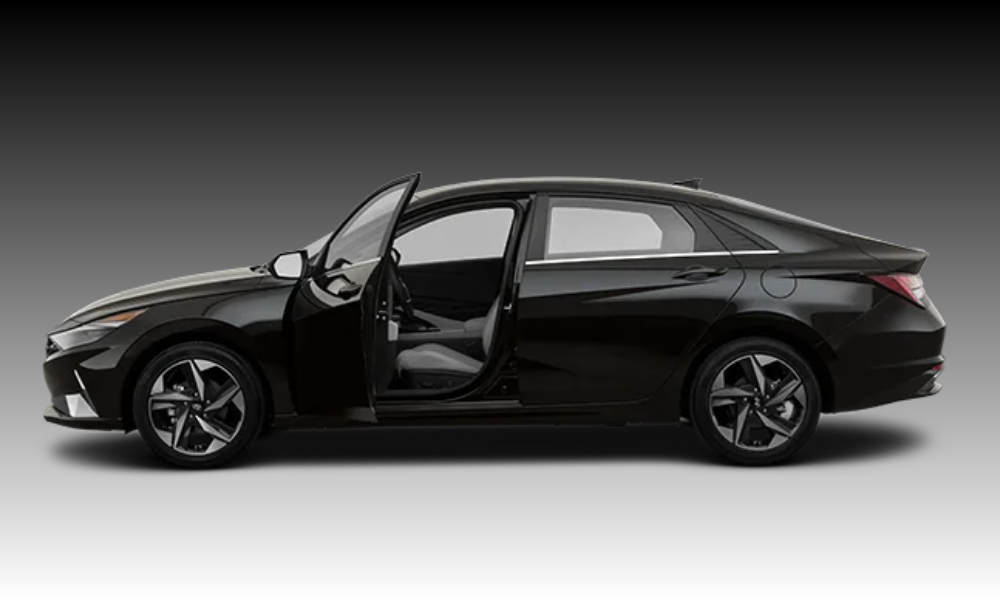
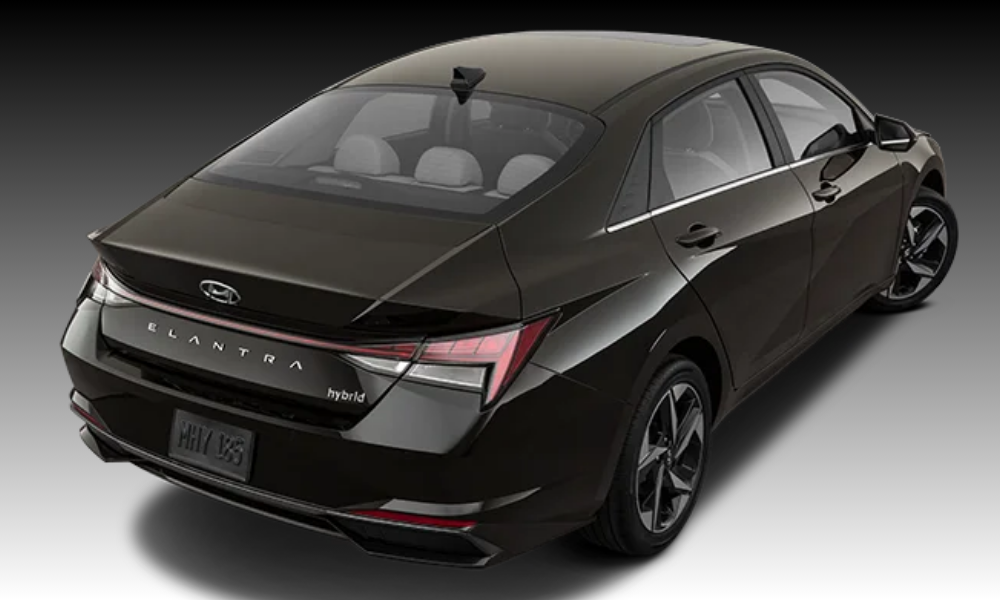
Few compact sedans generate as many different opinions as the Hyundai Elantra. When the current generation first appeared, Hyundai moved away from the conservative styling that had defined earlier Elantras and embraced a far more aggressive design language. Sharp character lines cut across the bodywork, the grille dominates the front fascia, and the overall shape feels more dramatic than many buyers expected from an affordable compact sedan.
That design remains controversial today, but it has one important advantage: people still notice it. While several competitors from the same era have gradually blended into traffic, the Elantra continues to look distinct. Whether someone loves the styling or dislikes it, there is rarely much indifference.
The profile is arguably where the design works best. The low roofline and stretched proportions create a more premium appearance than the car’s price would suggest, while the strong side creases give the body visual character without relying on excessive trim pieces or decorative elements.
Viewed in 2026, the Elantra’s design has aged better than many critics predicted. It still looks modern, still stands apart from more conservative rivals, and still communicates that Hyundai was willing to take risks in a segment where safe design choices often dominate.
Driving Experience
The standard Hyundai Elantra approaches driving in a fundamentally different way than some of its key competitors.
Rather than emphasizing sportiness, Hyundai focused on making the car approachable and easy to drive. The steering is light, visibility is excellent, and the controls require very little effort. New drivers quickly feel comfortable behind the wheel, while experienced drivers will appreciate how little stress the car adds to everyday commuting.
Ride quality is one of the Elantra’s stronger attributes. The suspension handles broken pavement competently and remains composed over longer highway journeys. It does not isolate occupants from the road as thoroughly as some larger sedans, but it delivers a level of comfort that suits the vehicle’s mission extremely well.
Where the Elantra differs most from a Civic or Mazda3 is in the way it responds to enthusiastic driving. Hyundai intentionally prioritized predictability over excitement. The chassis remains stable and confidence-inspiring, but it rarely encourages drivers to seek out winding roads or push harder through corners. Buyers looking for that kind of engagement are better served by the Elantra N, which transforms the platform into something entirely different.
For everyone else, the standard Elantra delivers exactly what many compact sedan buyers actually want. It is easy to maneuver in city traffic, comfortable on the highway, and relaxed enough to make daily driving feel effortless rather than demanding.
Performance & Acceleration
Performance has never been the primary reason people buy a standard Hyundai Elantra, and Hyundai has never pretended otherwise.
The 2.0-liter four-cylinder engine produces 147 horsepower and 132 lb-ft of torque, figures that place it squarely in the middle of the compact sedan segment. Acceleration is adequate for daily driving, highway merging, and routine commuting, but nobody will mistake the standard Elantra for a sports sedan. Hyundai reserves that role for the N Line and Elantra N.
What matters more is how the powertrain behaves during normal use. The engine delivers smooth, predictable power, while the continuously variable transmission focuses on efficiency rather than urgency. Around town, the setup feels refined enough for its intended audience, and it rarely draws attention to itself, which is often a compliment in an everyday commuter.
Some competitors feel quicker when pushed harder. The turbocharged Volkswagen Jetta produces more low-end torque, while certain Civic variants feel more responsive during aggressive acceleration. Yet the Elantra’s mission is different. Hyundai prioritized efficiency, affordability, and ease of ownership over outright speed, and the powertrain reflects those priorities consistently.
Most owners will likely conclude that the standard Elantra has exactly as much performance as it needs. No more, no less.
Ride Comfort & Cabin Refinement
One of the first things drivers notice about the Elantra is how easy it is to live with. The suspension tuning favors comfort over sharp handling responses, which proves beneficial during everyday driving. Rough pavement, expansion joints, and imperfect city streets are absorbed with reasonable composure, helping the car feel settled even when road conditions deteriorate. Hyundai avoided the mistake of making the suspension unnecessarily firm in an attempt to create a sporty impression.
The seats also contribute significantly to the overall experience. Front occupants benefit from supportive cushions that remain comfortable during longer trips, while the driving position offers good visibility and an immediate sense of familiarity. Everything feels designed to reduce fatigue rather than impress during a short test drive.
Cabin refinement is generally strong for the segment. Engine noise remains subdued during normal driving, and the car maintains a calm character at highway speeds. There is still some wind and road noise present, particularly on coarser pavement, but the overall experience remains competitive against most mainstream rivals.
The Elantra’s greatest strength in this area is balance. It does not deliver luxury-car isolation, yet it rarely reminds occupants that they are driving an affordable compact sedan. That ability to quietly handle daily transportation duties is one of the reasons the car continues to age well.
Interior & Luxury Feel
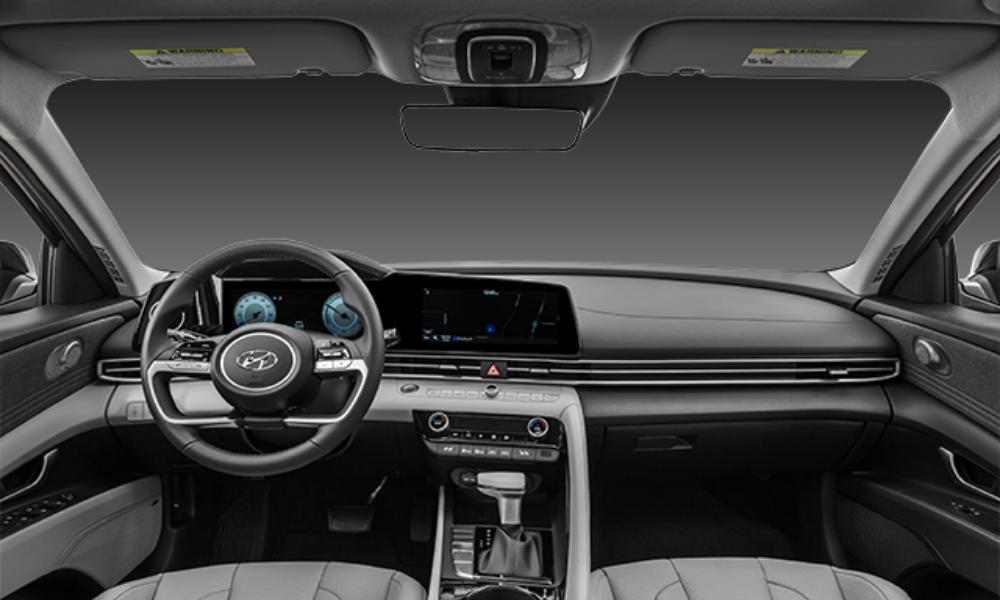
The interior is arguably where the 2023 Elantra makes its strongest case against competitors. Step inside and it becomes immediately clear that Hyundai invested considerable effort into making the cabin feel more modern than buyers might expect at this price point. The dashboard design is clean and contemporary, with a layout that wraps gently around the driver without feeling cramped or overly complicated. Several years after its introduction, the interior still looks current rather than dated.
Space is one of the Elantra’s biggest advantages. Front-seat occupants enjoy generous room in every direction, while rear passengers benefit from accommodations that feel closer to a midsize sedan than a traditional compact car. Adults can comfortably spend extended periods in the back seat without the compromises that often accompany vehicles in this class. For families, commuters, and rideshare drivers, that additional space becomes a meaningful benefit over time.
Hyundai also deserves credit for making technology feel naturally integrated into the cabin. Available digital displays blend well with the overall design instead of appearing as oversized screens attached to the dashboard as an afterthought. Higher trims look particularly upscale, creating an atmosphere that exceeds expectations for the segment.
Material quality is good rather than exceptional. Soft-touch surfaces appear in the areas occupants interact with most frequently, while harder plastics remain present in less visible locations. This is a common strategy within the class, and Hyundai executes it competently. The result is an interior that feels thoughtfully assembled without pretending to be something it is not.
Perhaps the most impressive aspect of the cabin is how cohesive everything feels. Nothing appears added solely for marketing purposes. The controls are intuitive, storage solutions are practical, and the overall environment supports the car’s broader mission of delivering comfort, usability, and value. Years after launch, that approach continues to resonate with buyers who spend more time living with their vehicles than admiring them from the outside.
Technology & Infotainment
Hyundai has spent the past several years building a reputation for offering technology that feels accessible rather than overwhelming, and the Elantra benefits directly from that philosophy.
Even lower trims provide features that many competitors once reserved for more expensive models, including smartphone integration and a well-organized infotainment interface. The system responds quickly to inputs, menus are logically structured, and drivers rarely need to spend time searching for commonly used functions.
Higher trims elevate the experience further through larger digital displays that help give the cabin a more premium appearance. Unlike some modern interiors that prioritize visual impact over usability, the Elantra manages to combine contemporary design with controls that remain easy to understand. Physical buttons are still available for important functions, which helps reduce distractions while driving.
Several years after its introduction, the technology package remains one of the Elantra’s strongest selling points. It may not be the most advanced system available in 2026, but it continues to provide everything most drivers need without unnecessary complexity.
Fuel Economy
Fuel economy remains one of the most compelling reasons to consider the 2023 Elantra. The standard gasoline-powered model delivers efficiency figures that continue to compare favorably with much of the compact sedan segment. Owners can realistically expect low operating costs, particularly during highway driving where the Elantra excels. For commuters covering significant annual mileage, those savings can add up quickly over the course of ownership.
Buyers who place maximum efficiency above all else will naturally be drawn toward the hybrid models, which achieve some of the best fuel-economy figures in the class. However, even the standard Elantra performs well enough that many drivers may find the conventional powertrain perfectly adequate for their needs.
What makes the fuel economy story particularly impressive is that Hyundai achieved these results without making the car feel underpowered for normal driving. The Elantra remains practical and efficient without constantly reminding owners that economy was the primary engineering goal.
Practicality & Cargo Space
Practicality has always been one of the Elantra’s strongest assets, and that remains true today.
The spacious passenger compartment immediately gives the car an advantage over several competitors. Rear-seat passengers enjoy impressive legroom for the segment, making the Elantra a legitimate option for families, carpooling duties, and longer road trips. It is one of the few compact sedans that consistently feels larger from the inside than its exterior dimensions might suggest.
The trunk is equally useful. With more than enough room for luggage, grocery runs, sports equipment, or airport pickups, the cargo area handles everyday tasks without difficulty. The opening is somewhat narrower than some buyers might prefer, but overall capacity remains competitive within the segment.
Storage solutions throughout the cabin are also thoughtfully executed. Cupholders, door pockets, center-console storage, and smaller compartments provide enough space for the items owners carry every day. None of these details are individually remarkable, but together they contribute to a vehicle that feels practical and easy to live with.
This is where the Elantra often outperforms expectations. It may enter the conversation as an affordable compact sedan, yet it frequently delivers the usability of a larger and more expensive vehicle. For buyers who value functionality as much as features, that remains one of the car’s most appealing qualities.
Safety & Driver Assistance
Safety has become increasingly important in the compact sedan segment, and Hyundai equipped the Elantra with a substantial collection of driver-assistance technologies.
Many active safety features come standard, including forward-collision warning, automatic emergency braking, lane-keeping assistance, lane-following assistance, blind-spot monitoring, rear cross-traffic alert, and driver-attention monitoring. The breadth of standard equipment remains impressive, particularly considering the vehicle’s price point.
The Elantra also earned a five-star overall safety rating from the National Highway Traffic Safety Administration, which continues to provide reassurance for buyers prioritizing occupant protection. However, the story is slightly more complicated when examining newer IIHS evaluation standards. While the Elantra performed well under previous testing criteria, stricter requirements introduced in recent years have exposed areas where some competitors now hold an advantage.
That does not make the Elantra unsafe. Rather, it highlights how rapidly safety expectations continue to evolve across the industry. For most buyers, the extensive driver-assistance suite and strong overall crash-test performance will remain more than sufficient.
Competitors Worth Considering
The compact sedan category remains fiercely competitive, which means the Elantra faces strong alternatives from nearly every major manufacturer.
The Honda Civic continues to set the benchmark for overall balance. It offers excellent build quality, a refined driving experience, strong resale value, and one of the most polished packages in the segment. Buyers willing to spend slightly more money often find themselves comparing the Civic directly against the Elantra.
Toyota’s Corolla remains the reliability-focused choice. It may not offer the same interior space or feature content as the Hyundai, but its reputation for long-term durability continues to attract a loyal audience. Hybrid variants are particularly appealing for efficiency-focused buyers.
The Volkswagen Jetta provides a more mature driving experience and a slightly more European character. Highway comfort remains one of its strengths, although the Elantra generally offers more features for the money.
Meanwhile, the Mazda3 appeals to drivers who prioritize design and driving engagement. Its premium interior and sharper handling help it stand apart from the segment’s more practical alternatives.
Each competitor excels in a different area, but the Elantra’s ability to perform well across nearly every category remains one of its greatest strengths.
Which Trim Does Cardrav Recommend?
For most buyers, the SEL represents the sweet spot in the 2023 Hyundai Elantra lineup. The base SE succeeds as affordable transportation, but the SEL adds enough convenience features and technology to noticeably improve the ownership experience without creating a substantial increase in price. It is the trim where the Elantra begins to feel fully realized.
The Limited offers additional luxury-oriented equipment, but its higher price reduces some of the value advantage that makes the Elantra so appealing in the first place. Buyers focused on maximum efficiency may find themselves considering the Hybrid Blue, while performance enthusiasts will naturally gravitate toward the N Line or Elantra N.
For the average compact sedan buyer, however, the SEL delivers the best combination of comfort, technology, practicality, and value.
Final Verdict: Should You Buy It?
The 2023 Hyundai Elantra remains one of the most convincing examples of how far the compact sedan segment has evolved.
It offers more space than many buyers expect, more technology than several competitors provide, and better fuel economy than most drivers will ever need. Just as importantly, it accomplishes all of this while maintaining an attractive price point and one of the strongest warranty programs in the industry.
There are certainly areas where rivals hold advantages. The Civic feels more refined, the Mazda3 is more rewarding to drive, and the Corolla continues to enjoy a stronger reputation for long-term dependability. Yet none of those vehicles make the Elantra feel outclassed.
Instead, Hyundai has created a sedan that consistently performs well across nearly every category that matters to mainstream buyers. It may not dominate comparison charts in a single area, but it rarely falls behind either.
For drivers searching for an efficient, spacious, comfortable, and technology-rich compact sedan in 2026, the 2023 Hyundai Elantra remains one of the smartest choices on the market.
FAQ
Why has the 2023 Hyundai Elantra aged better than many compact sedans?
Several factors have helped the Elantra remain competitive years after its launch. Its spacious cabin, modern technology, impressive fuel economy, and extensive feature list still compare favorably with newer rivals. While some competitors have received updates since 2023, the Elantra’s overall package continues to feel current rather than outdated.
Is the 2023 Hyundai Elantra’s CVT transmission a long-term concern?
For most owners, the continuously variable transmission should not be a major concern when maintained properly. Hyundai has significantly improved the refinement and durability of its CVT systems compared with earlier generations. As with any transmission, following the recommended maintenance schedule and avoiding neglected examples is more important than the transmission type itself.
Does the 2023 Hyundai Elantra feel as spacious as a midsize sedan?
In some areas, surprisingly close. Rear-seat legroom remains one of the Elantra’s biggest strengths and exceeds what buyers expect from a compact sedan. While it cannot fully match the shoulder room and overall cabin volume of a true midsize sedan, it often feels larger inside than many direct competitors.
Is the Hyundai Elantra Hybrid worth the extra money over the standard model?
That depends largely on annual mileage. Drivers who spend significant time commuting or regularly cover long distances will likely recover the additional cost through fuel savings over time. Buyers with shorter commutes may find the standard Elantra provides the better overall value while still delivering excellent efficiency.
Would you buy a 2023 Hyundai Elantra or a Volkswagen Jetta in 2026?
The answer depends on priorities. The Elantra generally offers more technology, a stronger warranty, and a more spacious cabin for the money. The Jetta counters with a more mature driving character, a turbocharged engine that feels stronger in everyday driving, and a slightly more refined highway experience. For value-focused buyers, the Elantra remains the stronger overall package, while the Jetta appeals to drivers who prioritize comfort and a more European feel.