Best Subcompact SUVs 2022–2023 16 Models Compared
Explore 16 small SUVs from 2022 and 2023, comparing fuel efficiency, performance, interior comfort, cargo space, and all-wheel-drive capability to find the right fit for your needs.


The best subcompact SUVs from 2022 and 2023 offer an appealing balance of affordability, fuel efficiency, interior practicality, and everyday comfort. For buyers shopping in the used-car market, these model years provide an opportunity to get a modern small crossover without paying the higher prices associated with newer vehicles. As ownership expenses continue to influence purchasing decisions, many drivers are considering smaller SUVs that deliver useful space, reasonable fuel consumption, and manageable maintenance costs.
The subcompact SUV segment has also become more competitive over the years. Manufacturers have introduced more attractive designs, improved interior technology, advanced safety features, and increasingly efficient powertrains. Models such as the Kia Niro, Hyundai Kona, Subaru Crosstrek, and Toyota Corolla Cross demonstrate that choosing a smaller vehicle does not necessarily mean sacrificing comfort, versatility, or everyday capability.
This comparison covers 16 U.S.-market SUVs and crossovers from the 2022 and 2023 model years. It includes popular subcompact models as well as a few closely related alternatives that compete for the same buyers. Both model years are worth considering in the used and certified pre-owned market, although equipment, engine choices, and available features can differ between individual model years and trim levels.
A good small SUV should offer more than compact exterior dimensions. Buyers still need comfortable seating, useful technology, adequate cargo capacity, dependable safety features, and enough passenger room for everyday family needs. It should also be easy to park, economical to operate, and comfortable enough for commuting, highway travel, and weekend trips.
Rather than declaring one universal winner, this guide compares each vehicle according to its practical strengths and limitations. Fuel economy, engine performance, interior space, cargo capacity, available all-wheel drive, driving comfort, and suitability for different road conditions all play a role in determining which SUV makes the most sense for a particular buyer.
Quick Comparison: 16 Subcompact SUVs from 2022–2023
Quick Comparison: 16 Subcompact SUVs from 2022–2023
| Model | EPA Combined MPG | Cargo Space (cu. ft.) | AWD / 4WD | Best For |
| 2023 Volkswagen Taos | 28–31 | 24.9–27.9 | Available | Cargo Space and Family Use |
| 2023 Kia Seltos | 27–31 | 26.6 | Available | Overall Value |
| 2023 Kia Niro | 49–53 (HEV)* | 22.8 (HEV) | Not Available | Fuel Economy |
| 2023 Hyundai Kona | 29–32 | 19.2 | Available | City Driving |
| 2022 Mazda CX-30 | 25–26 | 20.2 | Standard AWD | Driving Enjoyment |
| 2022 Jeep Compass | 24–25 | 27.2 | Available | Light Off-Road Capability |
| 2023 Chevrolet Trailblazer | 28–31 | 25.3 | Available | Passenger Space |
| 2023 Kia Soul | 30–31 | 18.7–24.2** | Not Available | Budget-Friendly Practicality |
| 2023 Subaru Crosstrek | 25–30 | 20.8 | Standard AWD | All-Weather Confidence |
| 2023 Ford Bronco Sport | 23–26 | 29.4–32.5 | Standard 4×4 | Adventure and Off-Road Use |
| 2023 Hyundai Venue | 31 | 18.7 | Not Available | Urban Commuting |
| 2023 MINI Countryman | 26–28 | 17.6 | Available (ALL4) | Premium Experience |
| 2022 Nissan Kicks | 33 | 25.3 | Not Available | Fuel Efficiency on a Budget |
| 2023 Buick Encore GX | 27–30 | 23.5 | Available | Comfort and Features |
| 2022 Toyota Corolla Cross | 30–32 | 25.2–26.5 | Available | Everyday Practicality |
| 2023 Jeep Renegade | 24–26 | 18.5 | Standard 4×4 | Trail Capability |
Note: All fuel economy figures represent EPA-estimated combined city/highway MPG ratings for gasoline-powered versions. Actual ratings may vary depending on engine configuration, trim level, drivetrain, transmission, and wheel size. Real-world fuel economy may also differ based on driving habits, weather, traffic, road conditions, and vehicle maintenance. See the EPA fuel economy database for specific vehicle configurations.
Cargo Space: Cargo capacity figures represent the approximate volume behind the second-row seats with the seats upright. Measurements can vary by trim, drivetrain, battery configuration, cargo-floor position, and manufacturer measurement methods. The Kia Soul’s cargo figure varies with its adjustable cargo floor. The Volkswagen Taos, Ford Bronco Sport, and Toyota Corolla Cross also have different cargo capacities depending on drivetrain or engine configuration.
Kia Niro: The 49–53 MPG range applies to conventional Hybrid (HEV) models. The Plug-in Hybrid (PHEV) achieves 108 MPGe combined in electric operation and 48 MPG in gasoline-only operation. The fully electric Niro EV is rated at 113 MPGe combined. See EPA MPGe information.
Subaru Crosstrek: The 25–30 MPG range applies to conventional gasoline models. The 2023 Crosstrek Plug-in Hybrid has separate EPA ratings of 90 MPGe combined and 35 MPG in gasoline-only operation.
MINI Countryman: The 26–28 MPG range applies to gasoline-powered versions. The Cooper SE Countryman ALL4 plug-in hybrid has separate EPA efficiency ratings of 73 MPGe combined in electric operation and 29 MPG in gasoline-only operation.
2023 Volkswagen Taos
Original MSRP When New: $24,155
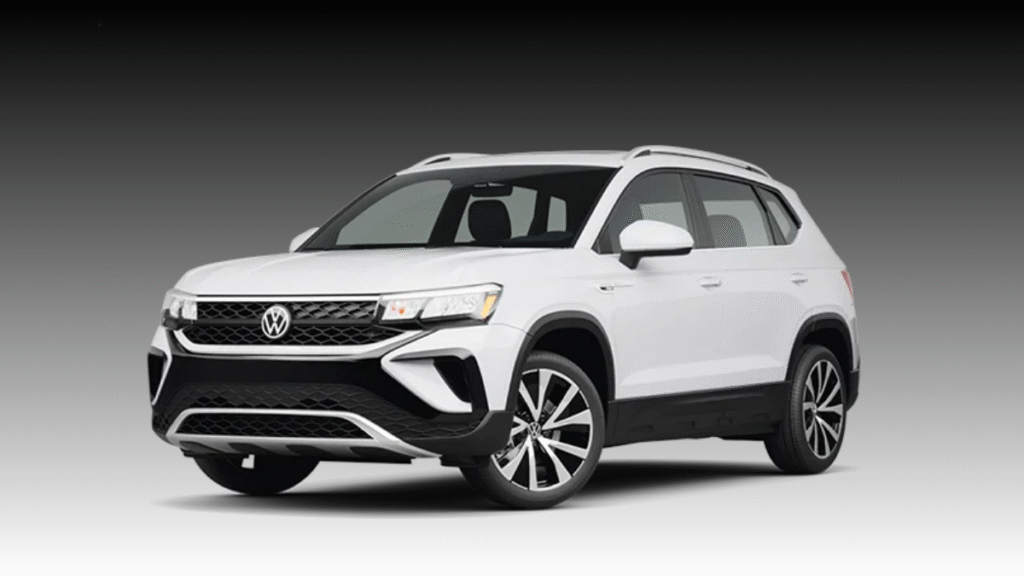
The 2023 Volkswagen Taos was designed as a smaller and more affordable alternative to the Tiguan, but its appeal goes beyond its entry-level positioning. It offers a surprisingly spacious cabin, useful cargo capacity, and a comfortable driving experience, making it one of the more practical choices for buyers comparing small SUVs from the 2022 and 2023 model years.
Every 2023 Taos uses a 1.5-liter turbocharged four-cylinder engine producing 158 horsepower and 184 lb-ft of torque. Front-wheel-drive models pair the engine with an eight-speed automatic transmission, while 4MOTION all-wheel-drive versions use a seven-speed dual-clutch DSG automatic. The AWD system also includes selectable driving modes and an Off-Road mode, adding versatility on loose or uneven surfaces.
Fuel economy is one of the Taos’s stronger attributes. According to EPA estimates, front-wheel-drive versions achieve 28 mpg in the city, 36 mpg on the highway, and 31 mpg combined. Models equipped with 4MOTION AWD are rated at 25 mpg city, 32 mpg highway, and 28 mpg combined. This difference is worth considering when choosing between better fuel efficiency and additional traction.
Interior space is another major advantage. The Taos seats five passengers and provides 37.9 inches of rear legroom, giving adult passengers more room than many buyers might expect from a small crossover. Cargo capacity depends on the drivetrain: FWD models offer 27.9 cubic feet behind the rear seats and up to 65.9 cubic feet with the rear seats folded. AWD versions provide 24.9 cubic feet behind the second row and up to 60.2 cubic feet with the seats folded.
On the road, the Taos delivers a composed ride and predictable handling, particularly during everyday commuting and highway travel. Its turbocharged engine provides useful low-speed torque for routine driving, although acceleration is adequate rather than particularly sporty. The available 4MOTION system adds traction on slippery or loose surfaces, while its relatively comfortable cabin makes longer journeys easier.
The main trade-off is that buyers choosing AWD sacrifice some fuel economy and cargo capacity compared with FWD models. Even so, the Taos remains a strong option for shoppers who want a small SUV with generous passenger space, practical storage, and a well-balanced everyday driving character.
Pros
- Spacious rear seating with 37.9 inches of legroom
- Generous cargo capacity, particularly in FWD models
- Good EPA-rated fuel economy with front-wheel drive
- Available 4MOTION all-wheel drive
- Comfortable ride for daily commuting and highway travel
Cons
- AWD models have less cargo capacity than FWD versions
- Acceleration is adequate but not particularly sporty
- AWD versions consume more fuel than FWD models
- No hybrid powertrain option
Read our review of the Volkswagen Taos.
2023 Kia Seltos
Original MSRP When New: $22,840 (LX AWD)
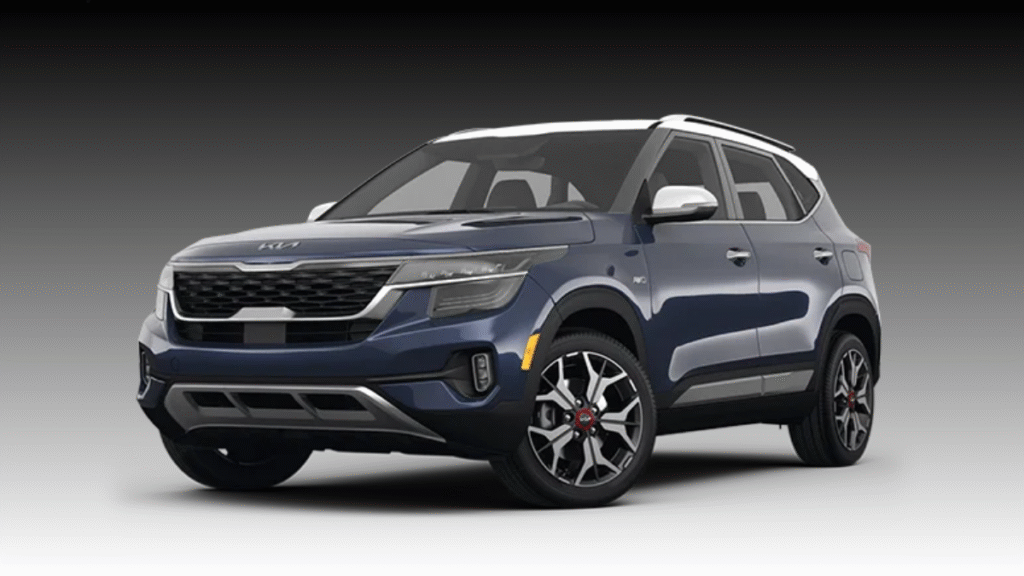
The 2023 Kia Seltos has established itself as a strong value-focused option in the subcompact SUV segment. Rather than concentrating on one particular advantage, it combines practical interior space, modern technology, useful safety features, and multiple powertrain choices. Its relatively competitive starting price when new also helped make it an appealing alternative to more expensive small crossovers.
Kia offered two four-cylinder engines for the 2023 Seltos. Most trims use a naturally aspirated 2.0-liter engine producing 146 horsepower and 132 lb-ft of torque, paired with an Intelligent Variable Transmission (IVT). Buyers looking for stronger acceleration can choose the Nightfall Edition or SX, which feature a turbocharged 1.6-liter engine producing 175 horsepower and 195 lb-ft of torque. These turbocharged versions use a seven-speed dual-clutch automatic transmission (DCT).
Drivetrain availability varies by trim. The S trim is available with either front-wheel drive or all-wheel drive, while the LX, EX, Nightfall Edition, and SX are equipped with AWD. Fuel economy also depends on the selected configuration. According to EPA estimates, the 2.0-liter FWD model achieves 29 mpg in the city, 35 mpg on the highway, and 31 mpg combined. The 2.0-liter AWD version returns 27/31/29 mpg, while the more powerful 1.6-liter turbo AWD model is rated at 25/30/27 mpg.
Interior practicality is one of the Seltos’s strongest selling points. The cabin accommodates five passengers and provides 38 inches of rear legroom, giving adults a reasonable amount of space for longer trips. Cargo capacity measures 26.6 cubic feet behind the second row and increases to 62.8 cubic feet with the rear seats folded. These figures make the Seltos a useful choice for everyday errands, luggage, shopping, and small-family transportation.
The cabin design also gives the Seltos a relatively modern character for its price range. Depending on the trim, available equipment includes a larger infotainment display, advanced driver-assistance technologies, and additional convenience features. Kia’s Drive Wise safety systems include features such as Lane Keeping Assist and Lane Following Assist, although the complete list of equipment varies across the lineup.
On the road, the Seltos focuses more on everyday comfort and predictable handling than sporty performance. The standard 2.0-liter engine is adequate for commuting and ordinary driving, but drivers who frequently accelerate onto highways or carry several passengers may prefer the stronger turbocharged version. The available all-wheel-drive system also provides additional traction in poor weather and on slippery or loose surfaces.
The main consideration when choosing a Seltos is the difference between its powertrain configurations. The naturally aspirated engine offers better fuel economy, particularly in the FWD version, while the turbocharged model provides stronger acceleration at the expense of higher fuel consumption. Buyers should also consider their preferred trim carefully because drivetrain availability and equipment differ throughout the lineup.
Pros
- Spacious cabin with 38 inches of rear legroom
- Useful cargo capacity of up to 62.8 cubic feet
- Two engine options to suit different driving needs
- Available all-wheel drive
- Good EPA-rated fuel economy with the 2.0-liter FWD configuration
- Modern driver-assistance and convenience features
Cons
- The standard 2.0-liter engine offers modest acceleration
- Turbocharged versions consume more fuel than FWD models
- The seven-speed dual-clutch transmission may feel less smooth during some low-speed driving situations
- Features and drivetrain availability vary considerably by trim
Read our review of the Kia Seltos.
2023 Kia Niro
Original MSRP When New: Starting at $26,490 (Hybrid LX)
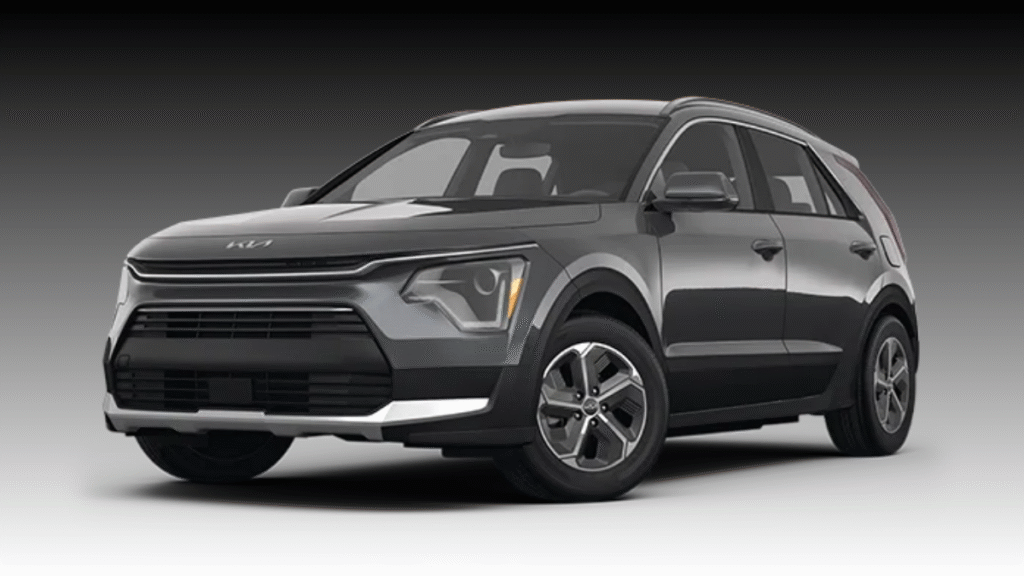
The fully redesigned 2023 Kia Niro takes a different approach from most small SUVs. Instead of relying on a single gasoline or turbocharged engine, Kia offers three distinct powertrains: a conventional hybrid, a plug-in hybrid, and a fully electric version. This gives buyers several ways to reduce fuel consumption and operating costs while retaining the practicality of a small crossover.
The standard Niro Hybrid combines a 1.6-liter four-cylinder gasoline engine with a 32-kW electric motor, producing a combined 139 horsepower and 195 lb-ft of torque. Power is delivered through a six-speed dual-clutch automatic transmission. According to EPA estimates, the Hybrid achieves up to 53 mpg combined with 16-inch wheels, while versions equipped with 18-inch wheels are rated at 49 mpg combined. All three Niro powertrains use front-wheel drive, so all-wheel drive is not available.
For drivers who want to cover some daily trips using electricity alone, the Niro Plug-in Hybrid offers a more powerful setup. It combines the 1.6-liter engine with a larger 62-kW electric motor, producing 180 horsepower and 195 lb-ft of torque. Its 11.1-kWh battery provides an EPA-rated all-electric range of 33 miles, while its efficiency reaches 108 MPGe combined when using electricity and gasoline. When operating on gasoline after the electric charge is depleted, the PHEV is rated at 48 mpg combined.
The fully electric Niro EV takes a different approach, eliminating the gasoline engine entirely. Its 64.8-kWh battery powers a 201-horsepower electric motor producing 188 lb-ft of torque. The EPA-estimated driving range reaches 253 miles per charge, with an efficiency rating of 113 MPGe combined. DC fast charging can replenish the battery from 10 to 80 percent in under 45 minutes under suitable charging conditions, making it more practical for drivers who have access to public charging infrastructure.
Interior practicality remains one of the Niro’s strongest attributes. The standard Hybrid and electric versions provide 22.8 cubic feet of cargo space behind the rear seats, increasing to 63.7 cubic feet when the seats are folded. The Plug-in Hybrid offers 19.4 cubic feet behind the second row because of its battery packaging. Rear legroom reaches 39.8 inches in the HEV and PHEV, although the EV provides 36.9 inches. These figures make the Niro a comfortable option for commuters and small families who want useful passenger space without moving up to a larger SUV.
On the road, the Niro prioritizes smooth everyday operation and efficiency rather than aggressive acceleration or off-road capability. The conventional Hybrid is particularly appealing for drivers who want excellent fuel economy without changing their refueling habits. The Plug-in Hybrid makes more sense for those who can charge regularly and want to complete shorter daily journeys using electricity, while the Niro EV is the better fit for buyers ready to move entirely away from gasoline.
The main limitation across the lineup is the absence of all-wheel drive. This makes the Niro less suitable for buyers who regularly encounter deep snow, loose terrain, or conditions where additional drivetrain traction is desirable. The differences in cargo capacity and purchase price between the three versions are also important considerations when comparing used examples.
Pros
- Outstanding fuel economy from the conventional Hybrid
- Three powertrain choices, including a plug-in hybrid and fully electric version
- Spacious cabin with generous rear-seat legroom in HEV and PHEV models
- Useful cargo capacity in Hybrid and EV versions
- Plug-in Hybrid offers up to 33 miles of EPA-estimated electric range
- Fully electric version provides an EPA-estimated range of 253 miles
Cons
- No all-wheel-drive option across the lineup
- Plug-in Hybrid has reduced cargo capacity
- PHEV and EV versions had higher original purchase prices
- Electric version requires access to suitable charging facilities
- Less suited to off-road use than more rugged small crossovers
Read our review of the Kia Niro.
2023 Hyundai Kona
Original MSRP When New: Starting at $22,140 (SE FWD)
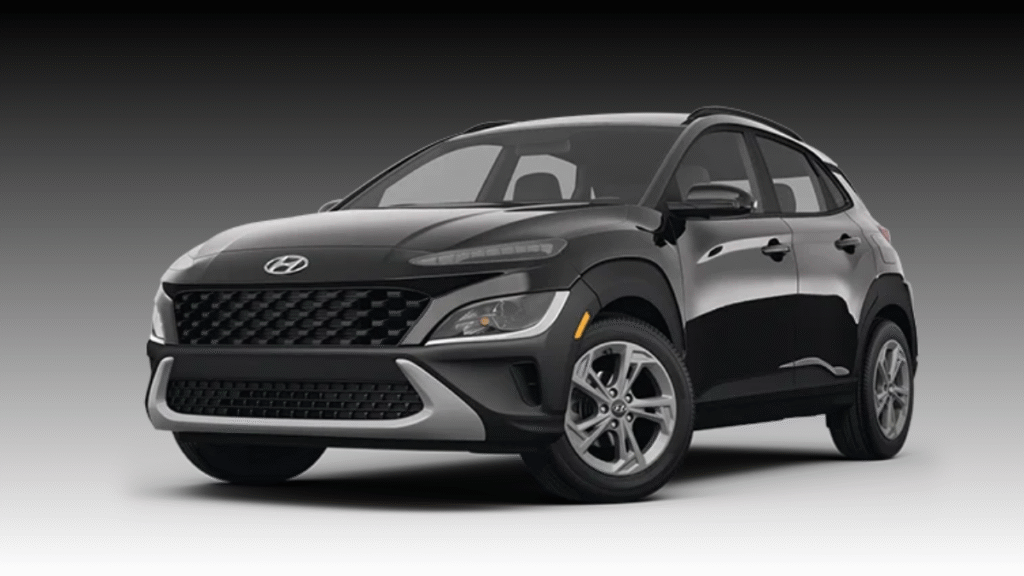
The 2023 Hyundai Kona is designed for drivers who spend much of their time in urban environments and want a small SUV that is easy to maneuver, reasonably efficient, and equipped with useful technology. Its compact exterior dimensions make parking and navigating crowded streets relatively simple, while its available turbocharged engine gives buyers an alternative to the more modest performance of the standard powertrain.
Hyundai offered two main gasoline engines in the 2023 Kona lineup. The SE and SEL trims use a naturally aspirated 2.0-liter four-cylinder engine producing 147 horsepower and 132 lb-ft of torque, paired with an Intelligent Variable Transmission (IVT). Buyers who want stronger acceleration can choose the N Line or Limited, which feature a turbocharged 1.6-liter four-cylinder engine producing 195 horsepower and 195 lb-ft of torque. These versions use a seven-speed dual-clutch automatic transmission.
Front-wheel drive is standard, while all-wheel drive is available across the regular gasoline trim lineup. Fuel economy varies according to the selected engine and drivetrain. According to EPA estimates, the 2.0-liter FWD models achieve 32 mpg combined, compared with 30 mpg for their AWD counterparts. Turbocharged 1.6-liter versions return 32 mpg combined with FWD and 29 mpg with AWD. These differences make the standard engine particularly appealing to buyers who prioritize fuel efficiency, while the turbocharged option offers stronger acceleration.
Inside, the Kona provides seating for five passengers, with 35.2 inches of rear legroom. Cargo capacity measures 19.2 cubic feet behind the rear seats and increases to 45.8 cubic feet when the second row is folded. The 60/40 split-folding rear seatbacks provide additional flexibility for groceries, luggage, and everyday items. However, the cargo area is relatively modest compared with roomier alternatives such as the Volkswagen Taos and Chevrolet Trailblazer.
Technology and safety equipment are among the Kona’s stronger attributes. Standard features include Forward Collision-Avoidance Assist, Lane Following Assist, and Driver Attention Warning. Other available or standard-by-trim technologies include Blind-Spot Collision-Avoidance Assist, Rear Cross-Traffic Collision-Avoidance Assist, and Safe Exit Warning. An available 10.25-inch touchscreen navigation system adds a more advanced infotainment experience on appropriately equipped versions.
On the road, the Kona feels agile and easy to control, particularly in city traffic and tight parking spaces. The standard 2.0-liter engine is adequate for everyday commuting, but drivers who frequently travel on highways or want quicker acceleration may prefer the 1.6-liter turbocharged version. Available all-wheel drive adds confidence on slippery roads, although it comes with a small reduction in fuel economy and does not turn the Kona into a serious off-road SUV.
The main compromises are its limited cargo capacity and relatively tight rear seating compared with some larger competitors. Nevertheless, the 2023 Kona remains a practical choice for urban drivers who value compact dimensions, modern safety technology, and the flexibility of two gasoline powertrains.
Pros
- Easy to maneuver and park in crowded urban environments
- Good EPA-rated fuel economy, particularly with FWD
- Available 195-hp turbocharged engine
- Available all-wheel drive
- Useful standard driver-assistance features
- Flexible 60/40 split-folding rear seats
Cons
- Limited cargo capacity compared with roomier competitors
- Rear-seat legroom is relatively tight
- Standard 2.0-liter engine offers modest acceleration
- Turbocharged AWD versions consume more fuel than FWD models
Read our review of the Hyundai Kona.
2022 Mazda CX-30
Original MSRP When New: Starting at $22,200 (Later Increased to $22,500)
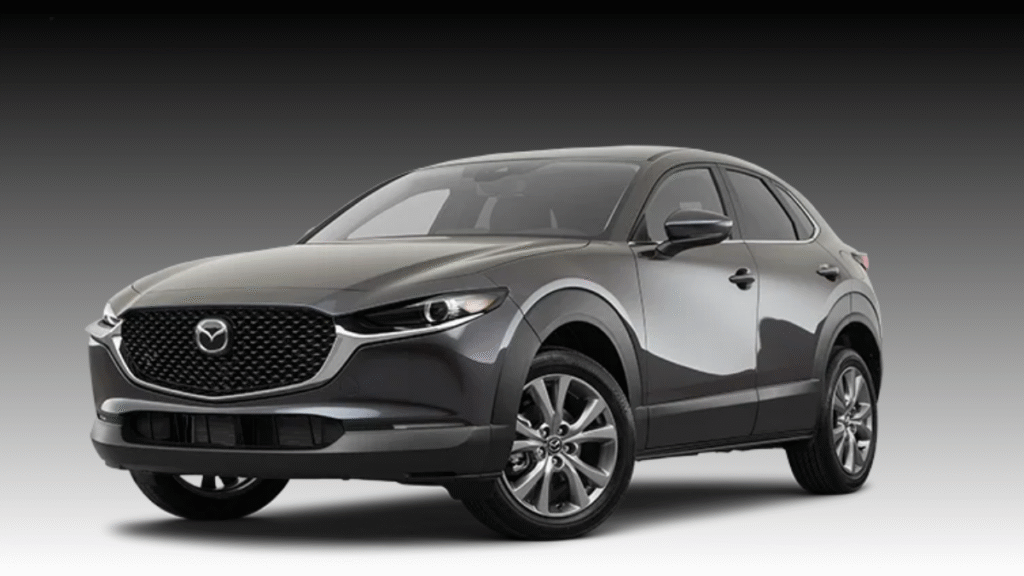
The 2022 Mazda CX-30 takes a different approach from many subcompact SUVs by placing greater emphasis on driving enjoyment, interior quality, and overall refinement rather than maximum passenger or cargo space. It offers a more premium-feeling cabin than many mainstream competitors, along with responsive handling that makes everyday driving more engaging.
Mazda offered two versions of its 2.5-liter four-cylinder engine for the 2022 CX-30. The standard naturally aspirated Skyactiv-G engine produces 186 horsepower and 186 lb-ft of torque, while the available turbocharged version delivers 227 horsepower and 310 lb-ft of torque on regular 87-octane gasoline. Using premium 93-octane fuel increases the turbo engine’s output to 250 horsepower and 320 lb-ft of torque. Both engines are paired with a six-speed automatic transmission.
One important advantage of the 2022 model is its standard i-Activ all-wheel-drive system. Unlike several competitors that reserve AWD for selected trims or charge extra for it, Mazda included the system across the entire 2022 CX-30 lineup. This provides additional traction and confidence in wet conditions, snow, and on loose surfaces. Mazda also included G-Vectoring Control Plus and Off-Road Traction Assist as standard equipment.
Fuel economy is respectable for a gasoline-powered crossover with standard AWD. According to EPA estimates, models equipped with the naturally aspirated engine achieve 24 mpg in the city, 31 mpg on the highway, and 26 mpg combined. Turbocharged versions return 22 mpg city, 30 mpg highway, and 25 mpg combined. The standard engine is therefore the more economical choice, while the turbo model offers stronger acceleration for drivers who prioritize performance.
Inside, the CX-30 reflects Mazda’s focus on materials, design, and driver-oriented controls. The cabin has a clean layout, a well-positioned central display, and a more upscale appearance than many budget-oriented crossovers. Depending on the trim, available features include leather seating, heated front seats, a power-adjustable driver’s seat, a power moonroof, and a Bose premium audio system.
Practicality is where the CX-30 makes some compromises. It provides 20.2 cubic feet of cargo space behind the rear seats and up to 45.2 cubic feet with the second row folded. Rear legroom measures 36.3 inches, which is adequate for occasional adult passengers but less generous than the space offered by models such as the Volkswagen Taos and Kia Seltos. The five-seat cabin is comfortable for everyday use, although families who regularly carry several passengers may prefer a roomier alternative.
On the road, the CX-30 stands out for its precise steering, controlled body movements, and composed ride. Its standard AWD system adds confidence in changing weather, while the turbocharged engine provides noticeably stronger acceleration. The result is a small SUV that feels more driver-focused than many practical, economy-oriented rivals.
The main trade-off is that the CX-30 prioritizes refinement and driving dynamics over maximum interior space and fuel efficiency. Its rear seating and cargo capacity are relatively limited, and even the standard engine does not match the economy of hybrid competitors such as the Kia Niro. However, for buyers who value handling, cabin quality, and standard all-wheel drive, the 2022 Mazda CX-30 remains an appealing choice.
Pros
- Standard i-Activ all-wheel drive across all trims
- Precise steering and engaging driving dynamics
- Upscale cabin design and quality interior materials
- Available turbocharged engine with up to 250 horsepower
- Good road stability and composed highway behavior
- Standard G-Vectoring Control Plus and Off-Road Traction Assist
Cons
- Less rear-seat space than some competitors
- Cargo capacity is relatively limited
- Turbocharged versions have lower fuel economy
- Rear visibility can be limited by the styling and window design
- Not as fuel-efficient as hybrid alternatives
Read our review of the Mazda CX-30.
2022 Jeep Compass
Original MSRP When New: Starting at $24,995 (Sport FWD)
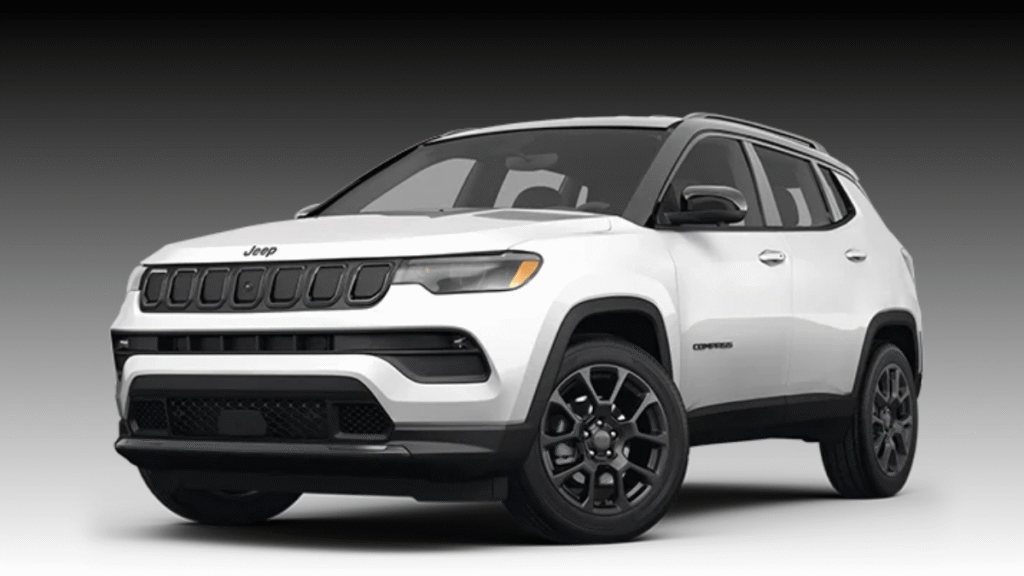
The 2022 Jeep Compass received a substantial interior and exterior update, making it a more modern and refined alternative to earlier versions. It combines compact dimensions with traditional Jeep styling, available four-wheel drive, and additional capability in the Trailhawk trim. Although it is larger than several other vehicles in this comparison, it deserves consideration for buyers who want a small crossover with a stronger focus on all-weather traction and occasional off-road driving.
Every 2022 Compass is powered by a 2.4-liter Tigershark four-cylinder engine producing 177 horsepower and 172 lb-ft of torque. Front-wheel-drive models use a six-speed automatic transmission, while 4×4 versions receive a nine-speed automatic. The engine also includes Engine Stop-Start technology to help reduce fuel consumption during certain driving conditions. While its output is adequate for ordinary commuting, the naturally aspirated engine does not deliver the strong low-speed response or acceleration of some turbocharged competitors.
Fuel economy is relatively consistent across the lineup. According to EPA estimates, front-wheel-drive models achieve 22 mpg in the city, 31 mpg on the highway, and 25 mpg combined. Four-wheel-drive versions return 22 mpg city, 30 mpg highway, and 25 mpg combined. Although the AWD system adds traction and versatility, it does not significantly change the combined fuel economy rating.
Jeep offers two different four-wheel-drive systems for the Compass. Standard 4×4 models use Jeep Active Drive, while the Trailhawk receives Jeep Active Drive Low, which adds a more capable low-range-style crawl function. The system provides a 20:1 crawl ratio, while the Trailhawk also benefits from Selec-Terrain traction management and additional off-road hardware. Ground clearance measures 7.7 inches on FWD models, 8.1 inches on regular 4×4 versions, and 8.6 inches on the Trailhawk. These differences matter because not every Compass has the same off-road capability.
The cabin received one of the most noticeable improvements for 2022. Jeep redesigned the dashboard, center console, and interior storage areas, creating a more contemporary layout. The Uconnect 5 infotainment system includes an 8.4-inch touchscreen on Sport and Latitude models, while Latitude LUX, Trailhawk, and Limited trims receive a larger 10.1-inch display. Wireless Apple CarPlay and Android Auto are standard, and available equipment includes a digital instrument cluster, wireless charging, heated seats, and additional driver-assistance technologies.
Passenger and cargo space remain practical for everyday use. The Compass accommodates five occupants and offers 38.3 inches of rear legroom, providing reasonable space for adult passengers. Cargo capacity measures 27.2 cubic feet behind the rear seats and increases to 59.8 cubic feet when the second row is folded. This makes it a useful choice for groceries, luggage, and weekend equipment, although its cargo area is not particularly class-leading.
On paved roads, the Compass delivers a comfortable and stable driving experience, with improved cabin refinement and technology compared with earlier model years. Its main advantage becomes more apparent when buyers choose a 4×4 version, particularly the Trailhawk, which is designed for rougher surfaces and more demanding terrain than ordinary urban crossovers. However, the standard engine is not especially powerful, and the nine-speed automatic transmission can take some getting used to in certain driving situations.
The most important buying decision is choosing the right trim. Sport and Latitude FWD models are more suitable for ordinary commuting and everyday transportation, while the regular 4×4 versions provide additional traction for poor weather. The Trailhawk is the most capable choice for buyers who genuinely intend to use their SUV on dirt roads and uneven surfaces. Its higher original price reflects the additional equipment and specialized drivetrain.
Pros
- Available four-wheel-drive systems with different capability levels
- Trailhawk offers enhanced off-road equipment and an 8.6-inch ground clearance
- Useful cargo capacity of up to 59.8 cubic feet
- Comfortable rear seating with 38.3 inches of legroom
- Updated cabin with Uconnect 5 and available 10.1-inch touchscreen
- Wireless Apple CarPlay and Android Auto
Cons
- Naturally aspirated engine provides only adequate acceleration
- Fuel economy is average compared with more efficient competitors
- FWD and regular 4×4 versions have less off-road capability than Trailhawk
- Nine-speed automatic transmission may feel less smooth in some situations
- Higher 4×4 trim levels can become relatively expensive
Read our review of the Jeep Compass.
2023 Chevrolet Trailblazer
Original MSRP When New: Starting at $22,100 (LS FWD)
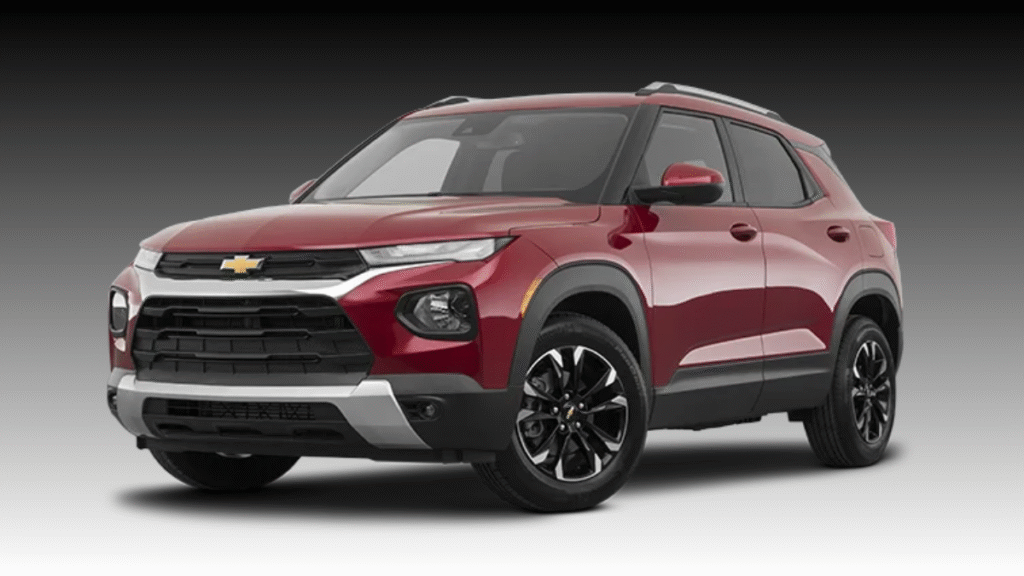
The 2023 Chevrolet Trailblazer is designed to deliver useful passenger space, flexible cargo capacity, and everyday practicality in a relatively compact package. It stands out among small crossovers for its generous rear-seat legroom and versatile interior, making it particularly appealing to commuters and small families who regularly carry passengers or luggage. Chevrolet also offers several trim levels and powertrain configurations, allowing buyers to choose between affordability, additional traction, and a more rugged appearance.
The 2023 Trailblazer is available with two turbocharged three-cylinder engines. The standard 1.2-liter ECOTEC engine produces 137 horsepower and 162 lb-ft of torque, while the larger 1.3-liter turbocharged engine delivers 155 horsepower and 174 lb-ft of torque. The 1.2-liter engine is available with front-wheel drive, while the 1.3-liter engine can be configured with either FWD or AWD. Front-wheel-drive models use a continuously variable transmission (CVT), whereas all-wheel-drive versions receive a nine-speed automatic transmission.
Fuel economy is one of the Trailblazer’s practical advantages, particularly in front-wheel-drive configurations. According to EPA estimates, the 1.2-liter FWD version achieves 29 mpg in the city, 31 mpg on the highway, and 30 mpg combined. The 1.3-liter FWD configuration improves the highway rating to 33 mpg and reaches 31 mpg combined. Models equipped with the 1.3-liter engine and AWD return 26 mpg city, 30 mpg highway, and 28 mpg combined. This makes the front-wheel-drive versions more economical, while AWD models provide additional traction in changing weather conditions.
Interior space is a major strength of the Trailblazer. The cabin accommodates five passengers and offers 39.4 inches of rear legroom, providing useful space for adults traveling in the second row. Cargo capacity measures 25.3 cubic feet behind the rear seats and increases to 54.4 cubic feet when the rear seats are folded. One particularly useful feature is the available fold-flat front passenger seat, which allows the vehicle to accommodate longer items measuring up to 8.5 feet when configured appropriately. The reversible two-tier cargo floor also provides additional flexibility for everyday loading and transport.
Chevrolet offers four main trim levels for 2023: LS, LT, ACTIV, and RS. The LS focuses on affordability and essential equipment, while the LT adds convenience features such as heated front seats, remote start, and an eight-way power driver’s seat. The ACTIV trim is designed for drivers who want a more rugged appearance and better suitability for gravel roads, featuring sport-terrain tires, a functional skid plate, and specially tuned suspension. The RS takes a more street-oriented approach with distinctive styling, black exterior details, and larger wheels.
Technology and safety equipment are also competitive for the segment. Every 2023 Trailblazer includes Chevy Safety Assist, which incorporates Automatic Emergency Braking, Front Pedestrian Braking, Lane Keep Assist with Lane Departure Warning, Forward Collision Alert, IntelliBeam automatic high beams, and a Following Distance Indicator. Wireless Apple CarPlay and Android Auto compatibility are also included, while an available 8-inch infotainment display and additional convenience technologies depend on the selected trim and package.
On the road, the Trailblazer prioritizes easy maneuverability, comfortable everyday driving, and predictable handling rather than strong performance. The standard 1.2-liter engine is adequate for ordinary commuting, while the 1.3-liter version offers additional power and is the better choice for buyers who want AWD or stronger highway performance. The available AWD system improves traction in rain, snow, and on loose surfaces, although it does not make the Trailblazer a dedicated off-road vehicle. The ACTIV trim is better suited to occasional gravel roads and light outdoor use than the ordinary LS and LT versions.
The main appeal of the 2023 Trailblazer is its balance of passenger space, cargo flexibility, fuel economy, and accessible pricing. Its three-cylinder engines are relatively small, so buyers expecting strong acceleration may find their performance modest. However, for everyday transportation, family errands, and occasional longer journeys, the Trailblazer provides a practical combination of features and usability.
Pros
- Generous rear-seat legroom with 39.4 inches of space
- Useful cargo capacity of up to 54.4 cubic feet
- Available 1.3-liter turbocharged engine with 155 horsepower
- Good EPA-rated fuel economy, especially with FWD
- Standard Chevy Safety Assist across all trims
- Wireless Apple CarPlay and Android Auto compatibility
- ACTIV trim offers additional equipment for gravel roads and light off-road use
Cons
- Three-cylinder engines provide modest acceleration
- AWD models consume more fuel than FWD versions
- The 1.2-liter engine is not available with AWD
- The standard infotainment display is relatively small at 7 inches
- ACTIV equipment does not make it a dedicated off-road SUV
Read our review of the Chevrolet Trailblazer.
2023 Kia Soul
Original MSRP When New: Starting at $19,790 (LX)
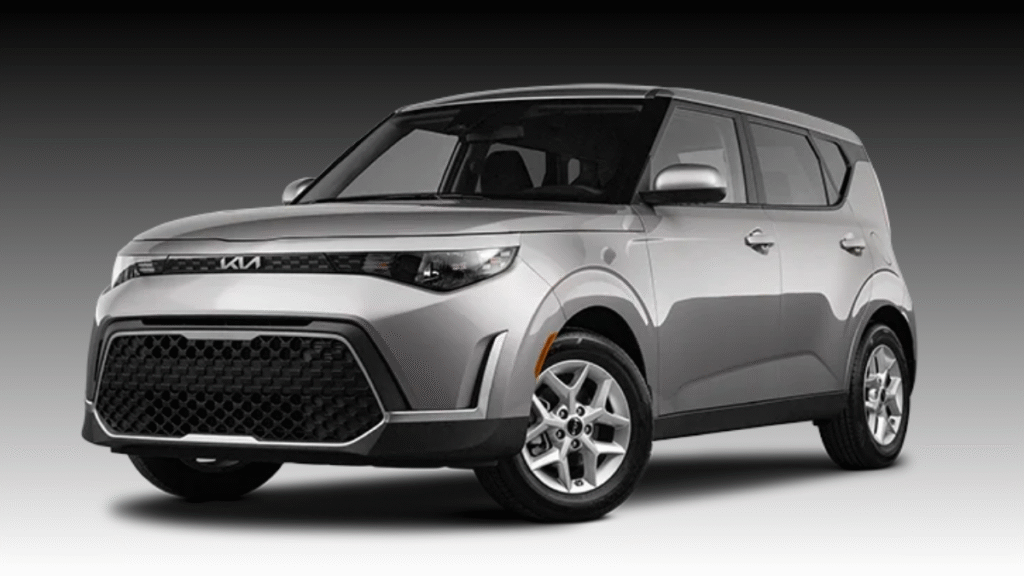
The 2023 Kia Soul remains one of the most distinctive and practical vehicles in the small crossover segment. Its boxy exterior design is more than a styling choice; it creates an unusually spacious cabin within a relatively short footprint. For drivers who prioritize passenger comfort, useful cargo capacity, affordable ownership, and easy city driving, the Soul offers a different kind of practicality from more traditionally styled small SUVs.
For 2023, Kia simplified the Soul lineup and discontinued both the off-road-inspired X-Line and the turbocharged model. Every remaining version uses a naturally aspirated 2.0-liter four-cylinder engine producing 147 horsepower and 132 lb-ft of torque. The engine uses multi-port fuel injection and is paired with Kia’s Intelligent Variable Transmission (IVT). Power is sent exclusively to the front wheels, meaning all-wheel drive is not available on any 2023 Soul trim.
Fuel economy is one of the Soul’s practical advantages. According to EPA estimates, the LX, S, and GT-Line achieve 28 mpg in the city, 33 mpg on the highway, and 30 mpg combined. The EX is slightly more efficient, with ratings of 29 mpg city, 35 mpg highway, and 31 mpg combined. These figures make the Soul a sensible choice for commuters who want reasonable fuel consumption without moving to a hybrid powertrain.
Interior space is where the Soul becomes particularly competitive. It seats five passengers and provides 38.8 inches of rear legroom, giving adult passengers useful room despite the vehicle’s compact exterior dimensions. Cargo capacity measures 24.2 cubic feet behind the rear seats and increases to 62.1 cubic feet when the rear seats are folded. Its tall roofline and upright seating position also help create a more open cabin than many buyers might expect from a vehicle of this size.
Kia updated the 2023 Soul’s exterior styling with redesigned front and rear fascias, revised lighting elements, and new available wheel designs. The lineup includes LX, S, EX, and GT-Line versions, each offering a different combination of comfort, appearance, and technology features. The larger 10.25-inch touchscreen with navigation is available on higher trims, while the LX uses a simpler infotainment setup. Available equipment includes heated front seats, a power-adjustable driver’s seat, a sunroof, and a Harman Kardon premium audio system on appropriately equipped versions.
Safety and driver assistance also received attention. Standard features across the lineup include Forward Collision-Avoidance Assist with Pedestrian Detection, Lane Keeping Assist, Lane Following Assist, Driver Attention Warning, and High Beam Assist. Blind-Spot Collision-Avoidance Assist and Rear Cross-Traffic Collision-Avoidance Assist are available depending on the trim and equipment package. This gives the 2023 Soul a useful collection of modern safety technologies, although the exact equipment should be checked when comparing individual used vehicles.
On the road, the Soul focuses on predictable handling, comfortable everyday driving, and easy maneuverability rather than sporty performance. The 2.0-liter engine provides sufficient power for normal commuting and urban traffic, but acceleration can feel modest when merging onto highways or carrying several passengers. Its compact dimensions make parking easier, while the upright cabin provides good outward visibility. However, the lack of AWD limits its appeal for drivers who regularly encounter snow, slippery roads, or more demanding unpaved surfaces.
The biggest advantage of the 2023 Soul is its efficient use of interior space. It offers passenger and cargo capacity that rivals some larger-looking crossovers, while retaining relatively compact exterior dimensions and reasonable fuel consumption. Its main compromises are modest acceleration, front-wheel-drive-only availability, and limited suitability for off-road use. For buyers who primarily drive in cities and value practicality over rugged capability, the Soul remains a compelling used-vehicle option.
Pros
- Spacious interior with 38.8 inches of rear legroom
- Generous cargo capacity of up to 62.1 cubic feet
- Good EPA-rated fuel economy of up to 31 mpg combined
- Affordable original starting price
- Easy to maneuver and park in urban environments
- Standard driver-assistance features across the lineup
- Distinctive exterior styling and practical upright cabin
Cons
- No all-wheel-drive option
- Modest acceleration from the naturally aspirated 2.0-liter engine
- The turbocharged engine was discontinued for 2023
- Limited suitability for serious off-road driving
- Some advanced convenience and safety features require higher trims or optional packages
Read our review of the Kia Soul.
2023 Subaru Crosstrek
Original MSRP When New: Starting at $23,645 (Base Manual)
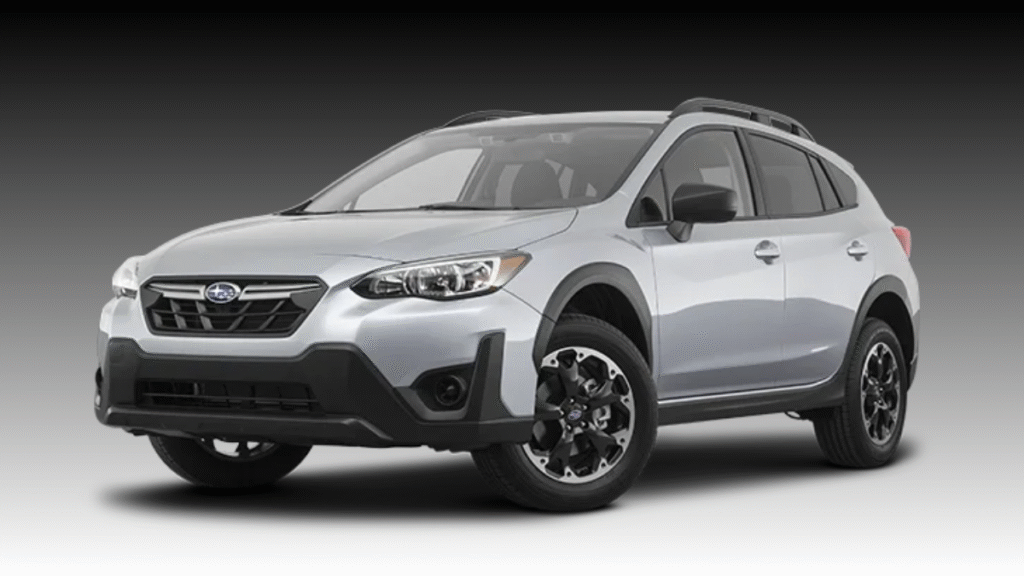
The 2023 Subaru Crosstrek is designed for drivers who want a small crossover with dependable all-weather traction, useful ground clearance, and practical everyday versatility. Rather than prioritizing sporty acceleration or luxury features, it focuses on providing confidence in changing road conditions. Its standard all-wheel-drive system and raised suspension make it particularly appealing to drivers who regularly encounter rain, snow, gravel, and uneven surfaces.
Subaru offered two main gasoline engines in the 2023 Crosstrek lineup. The Base, Premium, and Special Edition trims use a naturally aspirated 2.0-liter SUBARU BOXER four-cylinder engine producing 152 horsepower and 145 lb-ft of torque. The Sport and Limited trims receive a larger 2.5-liter BOXER engine that produces 182 horsepower and 176 lb-ft of torque. Both engines run on regular 87-octane gasoline, making them straightforward choices for everyday ownership.
Transmission availability depends on the trim. The Base and Premium models come standard with a six-speed manual transmission, while a Lineartronic continuously variable transmission (CVT) is available. The Special Edition, Sport, and Limited use the CVT as standard equipment. Buyers who want stronger acceleration should consider the 2.5-liter Sport or Limited, as the larger engine provides noticeably more power than the standard 2.0-liter unit.
One of the Crosstrek’s strongest advantages is its standard Subaru Symmetrical All-Wheel Drive system. Unlike several competitors that charge extra for AWD or reserve it for higher trims, Subaru includes it throughout the gasoline lineup. All 2023 Crosstrek models also provide 8.7 inches of ground clearance, while available X-MODE helps optimize engine and transmission responses and traction control on slippery or uneven surfaces. The Sport trim adds dual-function X-MODE settings for conditions such as deep snow and mud, giving it additional versatility on challenging roads.
Fuel economy varies depending on the engine and transmission. According to EPA estimates, 2.0-liter models equipped with the six-speed manual transmission achieve 22 mpg in the city, 29 mpg on the highway, and 25 mpg combined. The same engine paired with the CVT improves those figures to 28 mpg city, 33 mpg highway, and 30 mpg combined. The larger 2.5-liter engine in Sport and Limited trims achieves 27 mpg city, 34 mpg highway, and 29 mpg combined. This means the 2.0-liter CVT is the most economical conventional gasoline configuration, while the 2.5-liter engine offers better acceleration with only a modest difference in combined fuel economy.
Subaru also offered a separate Crosstrek Hybrid plug-in model for 2023. It combines a 2.0-liter BOXER engine with electric motors and a rechargeable battery, producing approximately 148 horsepower in total system output. Its EPA-estimated electric driving range reaches 17 miles, and its efficiency is rated at 90 MPGe combined when using electricity and gasoline. Once operating in gasoline-only mode, its combined rating is 35 mpg. The Hybrid therefore provides an additional option for drivers who can charge regularly, although its higher original price and availability in selected markets make it a different proposition from the conventional Crosstrek models.
Interior practicality is another useful part of the Crosstrek package. The five-passenger cabin provides 36.5 inches of rear legroom, offering reasonable space for adults in the second row. Cargo capacity measures 20.8 cubic feet behind the rear seats and increases to 55.3 cubic feet when the rear seatbacks are folded. The 60/40-split folding rear seats make it easier to carry longer items while retaining space for passengers. Although some competitors offer greater cargo capacity, the Crosstrek provides a practical balance between passenger space and everyday storage.
Technology and safety equipment vary by trim and transmission. CVT-equipped models include Subaru EyeSight Driver Assist Technology, which incorporates features such as Pre-Collision Braking, Lane Departure and Sway Warning, and Adaptive Cruise Control with Lane Centering. Higher trims add further convenience and driver-assistance equipment, while the Limited offers a more upscale interior with leather-trimmed upholstery and additional features. The Sport trim also stands out with distinctive exterior styling and dual-function X-MODE.
On the road, the Crosstrek delivers predictable handling and a comfortable driving experience, particularly when road conditions become less favorable. The standard AWD system provides useful traction on wet and slippery surfaces, while its 8.7-inch ground clearance makes it more capable on gravel roads and light trails than many urban-focused crossovers. However, the base 2.0-liter engine can feel slow during highway acceleration, especially when carrying several passengers or climbing steep roads. The 2.5-liter engine is a better choice for buyers who want stronger everyday performance.
The main appeal of the 2023 Crosstrek is its combination of standard all-wheel drive, generous ground clearance, and practical everyday usability. It is not a dedicated off-road vehicle, but its traction system, suspension design, and available X-MODE provide meaningful advantages on rougher surfaces. For drivers who regularly face winter weather or travel on unpaved roads, it remains one of the more capable small crossovers in this comparison.
Pros
- Standard Subaru Symmetrical All-Wheel Drive across the lineup
- Generous 8.7-inch ground clearance
- Available 182-hp 2.5-liter BOXER engine
- Useful X-MODE traction and hill-descent features
- Comfortable ride and practical five-passenger cabin
- Good EPA-rated fuel economy with the 2.0-liter CVT
- Available plug-in hybrid powertrain
Cons
- The standard 2.0-liter engine offers modest acceleration
- Manual transmission models have lower fuel economy than CVT versions
- Cargo capacity is not class-leading
- Hybrid model has a higher original purchase price
- AWD does not replace appropriate winter tires or provide unlimited off-road capability
Read our review of the Subaru Crosstrek.
2023 Ford Bronco Sport
Original MSRP When New: Starting at $29,215 (Base 4×4)

The 2023 Ford Bronco Sport brings genuine adventure-oriented capability to the small SUV segment. While many crossovers in this comparison are designed primarily for city driving and paved roads, the Bronco Sport places greater emphasis on all-weather traction, ground clearance, and off-road versatility. Its boxy exterior, upright cabin, and standard four-wheel-drive system give it a more rugged character than most conventional small crossovers.
Ford offered two EcoBoost engine options for the 2023 Bronco Sport, depending on the trim. The Base, Big Bend, Heritage, and Outer Banks models use a turbocharged 1.5-liter three-cylinder engine producing 181 horsepower and 190 lb-ft of torque. The Badlands and Heritage Limited receive a larger turbocharged 2.0-liter four-cylinder engine that generates 250 horsepower and 277 lb-ft of torque. Both engines are paired with an eight-speed automatic transmission, while the 2.0-liter version provides noticeably stronger acceleration and additional towing capability.
Four-wheel drive is standard across the entire Bronco Sport lineup, but the system differs according to the trim. The 1.5-liter models use Ford’s standard 4×4 system with five selectable G.O.A.T. Modes: Normal, Eco, Sport, Slippery, and Sand. The Badlands takes capability further with an Advanced 4×4 system featuring a twin-clutch rear drive unit, an off-road-calibrated suspension, and an electronic locking rear differential. Its Terrain Management System provides seven G.O.A.T. Modes, adding Mud/Ruts and Rock Crawl settings for more demanding conditions.
Fuel economy varies significantly between the two engines. According to EPA estimates, the 1.5-liter Bronco Sport achieves 25 mpg in the city, 28 mpg on the highway, and 26 mpg combined. The more powerful 2.0-liter version in the Badlands and Heritage Limited returns 21 mpg city, 26 mpg highway, and 23 mpg combined. These figures show the trade-off between stronger performance and lower fuel consumption, particularly for buyers comparing the Badlands with the more economical Big Bend or Outer Banks.
Interior practicality is another important part of the Bronco Sport’s appeal. The cabin accommodates five passengers and provides 36.9 inches of rear legroom, giving second-row occupants reasonable space for everyday journeys. Cargo capacity depends on the engine configuration. Models equipped with the 1.5-liter engine provide 32.5 cubic feet behind the rear seats and up to 65.2 cubic feet with the second row folded. The 2.0-liter versions offer 29.4 cubic feet behind the rear seats and a maximum of 60.6 cubic feet. This difference is worth considering for buyers who frequently carry luggage, camping equipment, or larger outdoor gear.
The trim lineup includes Base, Big Bend, Heritage, Outer Banks, Badlands, and Heritage Limited. Each version serves a different type of buyer. Base and Big Bend models provide the essential Bronco Sport character with the smaller engine and standard 4×4 capability. Heritage adds distinctive retro-inspired styling, while Outer Banks places greater emphasis on appearance and comfort. Badlands is the most off-road-focused standard trim, combining the stronger engine with advanced drivetrain hardware. Heritage Limited pairs the more powerful engine with a distinctive appearance and additional premium equipment.
Ground clearance also varies between configurations. Base and Big Bend models provide approximately 7.8 inches, while Outer Banks offers approximately 7.9 inches. Badlands increases this figure to 8.6 inches in its standard configuration, with available all-terrain tire equipment capable of raising it to approximately 8.8 inches. The Badlands also provides improved approach, breakover, and departure angles, helping it handle obstacles that would challenge ordinary road-focused crossovers.
Towing capacity is another advantage, although buyers must match the rating to the correct engine and equipment. Properly equipped 1.5-liter models can tow up to 2,000 pounds, while 2.0-liter versions can reach 2,200 pounds. This additional capacity makes the Badlands more suitable for carrying small recreational trailers or other appropriately rated loads, although it remains a compact SUV rather than a dedicated towing vehicle.
On paved roads, the Bronco Sport delivers a comfortable and relatively controlled driving experience for a vehicle with clear off-road intentions. The 1.5-liter engine is adequate for ordinary commuting, while the 2.0-liter version offers stronger acceleration and greater flexibility when climbing hills or carrying additional weight. Off pavement, the Badlands stands apart thanks to its advanced 4×4 hardware, additional driving modes, and more capable suspension setup. However, the standard models should not be assumed to offer the same level of trail performance.
The biggest consideration when choosing a 2023 Bronco Sport is deciding how much capability you actually need. The 1.5-liter versions provide better fuel economy, more cargo capacity, and sufficient performance for most everyday driving. The Badlands and Heritage Limited offer substantially stronger engines, while the Badlands is the better choice for drivers who regularly explore dirt trails and more challenging terrain. For buyers who want a small SUV that feels more adventurous than a typical urban crossover, the Bronco Sport offers a distinctive combination of practicality and capability.
Pros
- Standard 4×4 across the entire 2023 lineup
- Strong 250-hp 2.0-liter engine in Badlands and Heritage Limited
- Advanced 4×4 system and electronic locking rear differential in Badlands
- Seven selectable G.O.A.T. Modes in the Badlands
- Generous cargo capacity of up to 65.2 cubic feet in 1.5-liter models
- Useful ground clearance for gravel roads and off-road driving
- Available towing capacity of up to 2,200 pounds
Cons
- Lower fuel economy than many urban-focused competitors
- 2.0-liter models have less cargo capacity than 1.5-liter versions
- Higher original purchase price than many conventional small crossovers
- The 1.5-liter engine offers less acceleration than the 2.0-liter version
- Badlands capability comes with higher fuel consumption and ownership costs
Read our review of the Ford Bronco Sport.
2023 Hyundai Venue
Original MSRP When New: Starting at $19,650 (SE)
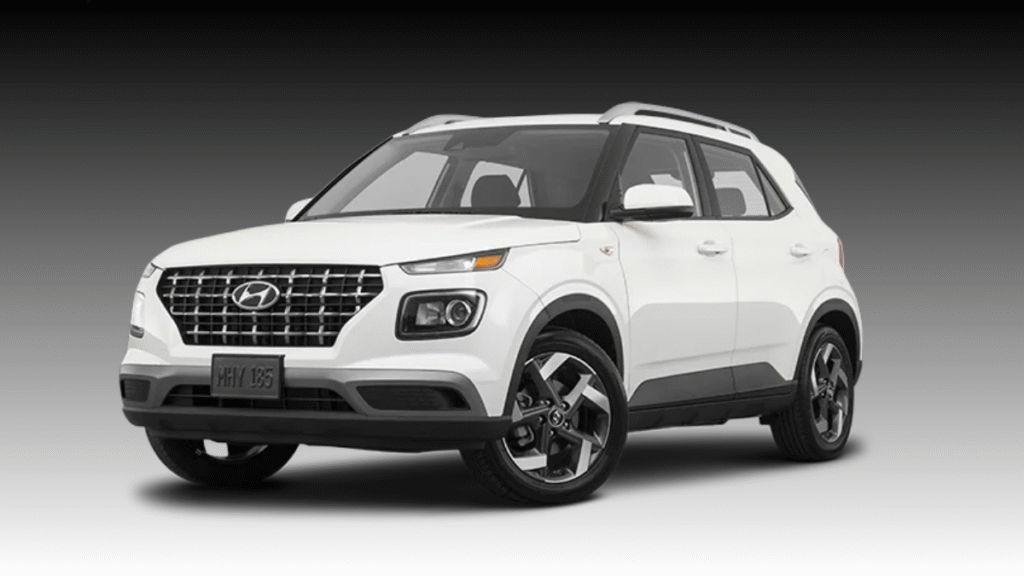
The 2023 Hyundai Venue is designed primarily for drivers who spend most of their time in urban environments and want an affordable, easy-to-manage crossover. Its compact dimensions, straightforward powertrain, and practical interior make it particularly appealing to commuters and first-time SUV buyers. Rather than competing with larger crossovers on passenger space or off-road capability, the Venue focuses on affordability, fuel efficiency, and everyday convenience.
Every 2023 Venue uses a naturally aspirated 1.6-liter Smartstream four-cylinder engine producing 121 horsepower and 113 lb-ft of torque. The engine is paired with Hyundai’s Intelligent Variable Transmission (IVT), which sends power exclusively to the front wheels. Unlike several competitors in this comparison, the Venue does not offer an all-wheel-drive option, making it better suited to paved roads and ordinary commuting than snow-covered routes or more demanding off-road conditions.
Fuel economy is one of the Venue’s stronger advantages. According to EPA estimates, all three trim levels achieve 29 mpg in the city, 33 mpg on the highway, and 31 mpg combined. The figures are identical across the SE, SEL, and Limited, making the choice between trims more about equipment and comfort than fuel consumption. Its 11.9-gallon fuel tank also provides a useful driving range for everyday commuting, although actual mileage will depend on traffic, weather, and driving habits.
The Venue’s compact exterior dimensions make it particularly convenient in crowded cities. At 159.1 inches long, it is easier to maneuver and park than many larger crossovers. Despite its relatively short body, the cabin accommodates five passengers and offers 34.3 inches of rear legroom. Front-seat occupants receive 41.3 inches of legroom, while the upright seating position and tall roofline help create a practical cabin for everyday use.
Cargo capacity is reasonable for a vehicle of this size. The Venue provides 18.7 cubic feet of luggage space behind the rear seats, increasing to 31.9 cubic feet when the second row is folded. Its 60/40 split-folding rear seatbacks allow owners to carry longer items while retaining seating space for an additional passenger. However, buyers who regularly transport bulky luggage or larger family loads may find the Volkswagen Taos, Kia Seltos, or Chevrolet Trailblazer more accommodating.
Hyundai offers three trim levels for 2023: SE, SEL, and Limited. The SE provides the most affordable entry point, with an eight-inch touchscreen, wireless Apple CarPlay and Android Auto, and essential driver-assistance technology. The SEL adds equipment such as 17-inch alloy wheels, roof rails, automatic climate control, a power sunroof, and additional convenience features. The Limited sits at the top of the lineup, bringing upgrades such as LED exterior lighting, heated front seats, navigation, and wireless smartphone charging.
Safety technology is another useful part of the Venue’s equipment package. Standard features include Forward Collision-Avoidance Assist with Pedestrian Detection, Lane Keeping Assist, Driver Attention Warning, High Beam Assist, and Rear Occupant Alert. Depending on the trim, additional features such as Blind-Spot Collision Warning and Rear Cross-Traffic Collision Warning are available. Buyers comparing used examples should check the specific vehicle’s trim and installed equipment rather than assuming every Venue includes the same safety features.
On the road, the Venue feels most comfortable in city traffic, where its light controls, compact footprint, and easy maneuverability make everyday driving less demanding. The 1.6-liter engine provides sufficient power for ordinary commuting, but its 121 horsepower can become a limitation during highway merging, overtaking, and climbing steep grades. The IVT prioritizes smooth operation and fuel efficiency rather than quick acceleration, so drivers who frequently travel at higher speeds may prefer a more powerful alternative.
The biggest advantage of the 2023 Venue is its straightforward approach to affordable everyday transportation. It offers useful technology, respectable fuel economy, and a practical cabin without the added cost and complexity of a larger SUV. Its main compromises are limited cargo capacity, modest engine performance, and the absence of all-wheel drive. For buyers who primarily need an economical vehicle for commuting, shopping, and navigating crowded urban streets, the Venue remains a sensible option.
Pros
- Affordable original starting price
- EPA-rated fuel economy of 31 mpg combined
- Compact dimensions make parking and city driving easy
- Standard eight-inch infotainment touchscreen
- Wireless Apple CarPlay and Android Auto
- Useful standard driver-assistance features
- Practical cabin with flexible rear seating
Cons
- No all-wheel-drive option
- Modest 121-hp engine limits highway acceleration
- Cargo capacity is smaller than several competitors
- Rear-seat space is relatively limited for taller adults
- Less suitable for long highway trips and rough roads
Read our review of the Hyundai Venue.
2023 Mini Countryman
Original MSRP When New: Starting at $29,600 (Cooper Countryman)

The 2023 MINI Countryman stands out in the subcompact SUV segment by offering a more distinctive and premium-oriented experience than most mainstream competitors. It combines MINI’s recognizable styling, a more upscale cabin atmosphere, and engaging driving characteristics with the additional practicality of four doors and seating for five. Although it is larger and more versatile than other MINI models, it retains the brand’s emphasis on responsive handling, customization, and distinctive design.
The 2023 Countryman lineup offers several powertrain choices. The Cooper uses a turbocharged 1.5-liter three-cylinder engine producing 134 horsepower and 162 lb-ft of torque. Buyers who want stronger performance can choose the Cooper S, which features a turbocharged 2.0-liter four-cylinder engine producing 189 horsepower and 206 lb-ft of torque. At the top of the gasoline range, the John Cooper Works (JCW) version delivers 301 horsepower and 331 lb-ft of torque from a more powerful version of the 2.0-liter turbocharged engine.
Transmission and drivetrain configurations depend on the selected model. Front-wheel-drive Cooper and Cooper S versions use a seven-speed dual-clutch automatic transmission, while their ALL4 all-wheel-drive counterparts receive an eight-speed automatic. The John Cooper Works Countryman comes standard with ALL4 and an eight-speed sport automatic transmission. Every 2023 Countryman is automatic, making the lineup different from earlier MINI models that offered manual transmission options.
Fuel economy also varies according to engine and drivetrain. According to EPA estimates, the standard Cooper FWD achieves 26 mpg in the city, 32 mpg on the highway, and 28 mpg combined. Adding ALL4 changes those figures to 23 mpg city, 31 mpg highway, and 26 mpg combined. The Cooper S FWD also achieves 28 mpg combined, while the Cooper S ALL4 returns 26 mpg. The performance-focused John Cooper Works ALL4 is rated at 24 mpg city, 30 mpg highway, and 26 mpg combined. All gasoline-powered versions require premium gasoline, an important consideration for buyers comparing long-term running costs.
MINI also offered the Cooper SE Countryman ALL4 plug-in hybrid. It combines a turbocharged 1.5-liter three-cylinder gasoline engine with an electric motor, producing a total system output of 221 horsepower and 284 lb-ft of torque. A six-speed automatic transmission distributes power through the ALL4 system. Its EPA efficiency reaches 73 MPGe combined when using electricity, while gasoline-only operation is rated at 29 mpg combined. This version is particularly appealing to drivers who can charge regularly and want some electric-only driving capability without giving up a gasoline engine for longer journeys.
Inside, the Countryman offers a more distinctive cabin than most conventional small crossovers. Its dashboard features MINI’s signature circular center display, recognizable toggle switches, and a variety of customization options depending on the trim. Apple CarPlay became standard across the 2023 MINI lineup, while other available equipment includes navigation, upgraded upholstery, heated seats, a panoramic sunroof, and premium audio. The Classic, Signature, and Iconic equipment levels allow buyers to choose different combinations of comfort, appearance, and technology.
Passenger space is reasonable for the segment, with seating for five and 37.6 inches of rear legroom. Adults can use the second row comfortably for ordinary journeys, although the cabin is better suited to four adults when additional personal space is important. Cargo capacity is another useful aspect of the Countryman’s design. Conventional gasoline models provide 17.6 cubic feet behind the rear seats and up to 47.6 cubic feet with the rear seats folded. These figures offer adequate everyday practicality, although the Countryman does not lead the segment in cargo volume. Buyers considering the plug-in hybrid should also account for its different battery packaging and cargo measurements.
The driving experience is one of the Countryman’s strongest selling points. Its steering is responsive, its suspension is more controlled than that of many economy-focused crossovers, and the Cooper S provides stronger acceleration than the standard three-cylinder Cooper. The ALL4 system adds traction and stability in rain, snow, and other slippery conditions, while the JCW model offers considerably more performance for drivers who want a sporty small SUV. However, its standard road-oriented configuration should not be confused with the more specialized off-road equipment found in vehicles such as the Ford Bronco Sport Badlands.
The main consideration when choosing a Countryman is balancing performance, equipment, and ownership expenses. The Cooper is the more affordable entry point, while the Cooper S offers a stronger combination of performance and everyday usability. The plug-in hybrid is worth considering for buyers who can make regular use of its electric capability, and the John Cooper Works version is aimed at those who prioritize acceleration and sportier handling over fuel economy and purchase price. Premium fuel requirements and potentially higher maintenance expenses should also be considered when comparing used examples.
Pros
- Distinctive exterior styling and customizable appearance
- More upscale cabin design than many mainstream competitors
- Available 189-hp Cooper S and 301-hp John Cooper Works engines
- Optional ALL4 all-wheel drive on Cooper and Cooper S models
- Standard ALL4 on JCW and plug-in hybrid versions
- Available plug-in hybrid powertrain with 73 MPGe combined efficiency
- Practical five-passenger cabin and flexible rear seating
Cons
- Higher original purchase price than many mainstream small SUVs
- Premium gasoline required for gasoline-powered versions
- Cargo capacity is modest compared with some roomier competitors
- Rear seating is more comfortable for four adults than five
- Additional maintenance and repair expenses may be a consideration in used ownership
- JCW performance comes with lower fuel economy and higher running costs
Read our review of the MINI Countryman.
2022 Nissan Kicks
Original MSRP When New: Starting at $19,990 (S FWD)

The 2022 Nissan Kicks is one of the more affordable ways to enter the small crossover segment, particularly for drivers who prioritize fuel efficiency, easy city driving, and practical everyday transportation. Its compact exterior dimensions make it convenient in crowded streets and tight parking spaces, while its distinctive styling and useful technology give it a more modern character than many traditional entry-level vehicles.
Every 2022 Kicks uses a naturally aspirated 1.6-liter DOHC four-cylinder engine producing 122 horsepower and 114 lb-ft of torque. The engine features continuously variable valve timing and is paired with Nissan’s Xtronic continuously variable transmission (CVT). Power is sent exclusively to the front wheels, as Nissan does not offer an all-wheel-drive configuration for this model year. The powertrain prioritizes smooth everyday operation and fuel economy rather than strong acceleration or sporty performance.
Fuel efficiency is one of the Kicks’ strongest advantages. According to EPA estimates, the 2022 model achieves 31 mpg in the city, 36 mpg on the highway, and 33 mpg combined. These figures make it an appealing choice for commuters who spend considerable time driving in urban and suburban environments. Its 10.8-gallon fuel tank is relatively small, but its efficient powertrain helps reduce the frequency of fuel stops during ordinary use. The engine also operates on regular unleaded gasoline, avoiding the added expense associated with premium-fuel requirements.
The Kicks makes particularly good use of its compact exterior dimensions. It measures 169.1 inches in overall length and provides seating for five passengers. Front-seat occupants receive 43.7 inches of legroom, while rear passengers have 33.4 inches. The front seating area is especially accommodating, although the second row is less generous for taller adults on longer journeys. Its upright seating position and relatively large windows also help provide good outward visibility in everyday traffic.
Cargo practicality is another strength. The Kicks offers 25.3 cubic feet of cargo space behind the rear seats and up to 53.1 cubic feet when the second row is folded. The 60/40-split folding rear seat provides additional flexibility when carrying longer items, groceries, or weekend luggage. These figures make the Kicks more useful than its small exterior footprint might suggest, although vehicles such as the Volkswagen Taos and Subaru Crosstrek offer different advantages in overall cargo capacity and passenger space.
Nissan offers three trim levels for 2022: S, SV, and SR. The S serves as the entry-level version, providing a seven-inch touchscreen, Apple CarPlay, Android Auto, Bluetooth connectivity, and essential driver-assistance equipment. The SV adds convenience features such as Intelligent Key with push-button start, automatic climate control, remote engine start, and 17-inch alloy wheels. The SR brings a sportier appearance, LED headlights, LED fog lights, and an Intelligent Around View Monitor. Buyers seeking a more premium cabin can choose the available SR Premium Package, which includes Bose Personal Plus audio, heated front seats, a heated steering wheel, and additional interior upgrades.
Safety equipment is a particularly useful part of the 2022 Kicks package. Nissan Safety Shield 360 is standard across all three trims and includes Automatic Emergency Braking with Pedestrian Detection, Rear Automatic Braking, Blind Spot Warning, Rear Cross Traffic Alert, Lane Departure Warning, and High Beam Assist. The SR also offers an Intelligent Around View Monitor, which combines camera images to provide a view around the vehicle during low-speed maneuvering. These technologies help make the Kicks a competitive choice for buyers who want modern driver assistance without moving into a more expensive vehicle class.
On the road, the Kicks feels most comfortable in urban environments. Its compact dimensions, light steering, and predictable handling make it easy to drive through congested streets and maneuver into tight parking spaces. The 1.6-liter engine is adequate for regular city commuting, but acceleration is modest when merging onto highways, overtaking slower traffic, or climbing steep grades. The CVT emphasizes smooth operation and efficiency, although engine noise can become more noticeable under heavy acceleration.
The biggest advantage of the 2022 Nissan Kicks is its combination of affordable original pricing, strong EPA-rated fuel economy, and useful everyday practicality. Its generous cargo area and modern safety equipment make it more versatile than a basic city car, while its relatively simple naturally aspirated engine and regular-gasoline requirement help keep everyday running costs manageable. Its main limitations are the absence of AWD, modest acceleration, and less generous rear-seat legroom than some larger competitors. For buyers who primarily need an economical vehicle for commuting, shopping, and everyday urban transportation, the Kicks remains a sensible used-car option.
Pros
- Excellent EPA-rated fuel economy of 33 mpg combined
- Affordable original starting price
- Spacious front seating area with 43.7 inches of legroom
- Useful cargo capacity of up to 53.1 cubic feet
- Standard Nissan Safety Shield 360 across all trims
- Standard Apple CarPlay and Android Auto
- Uses regular unleaded gasoline
- Easy to maneuver and park in crowded urban environments
Cons
- No all-wheel-drive option
- Modest 122-hp engine limits highway acceleration
- Rear legroom is relatively limited for taller adults
- CVT can make the engine sound noisy under heavy acceleration
- Less suitable for rough roads and off-road driving
Read our review of the Nissan Kicks.
2023 Buick Encore GX
Original MSRP When New: Starting at $25,900 (Preferred FWD)
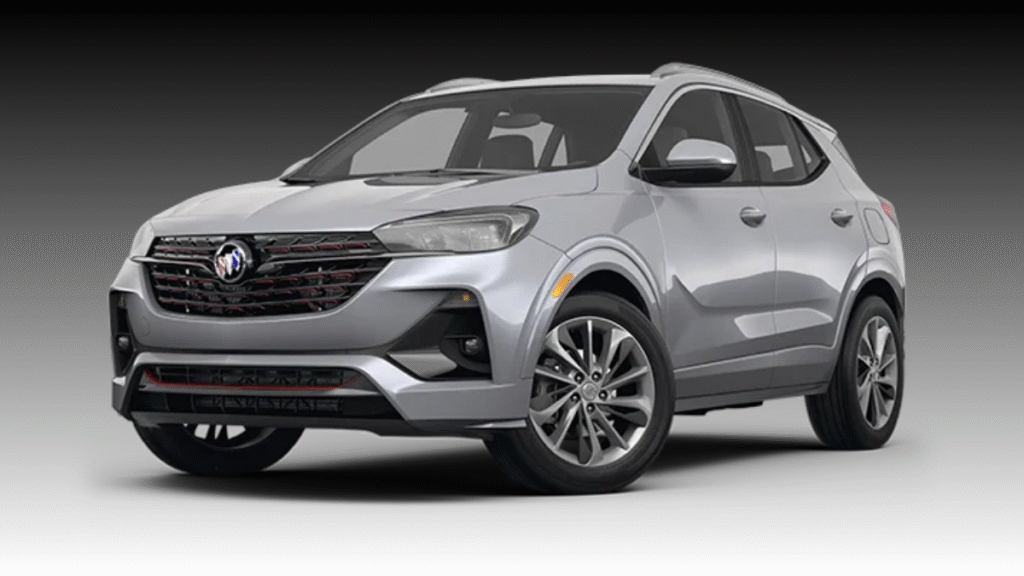
The 2023 Buick Encore GX occupies a more comfort-oriented position in the small SUV segment, offering a combination of compact exterior dimensions, a refined cabin, useful technology, and flexible powertrain choices. It is designed for buyers who want an easy-to-manage crossover for everyday commuting without sacrificing interior comfort or modern convenience features. Rather than focusing on sporty performance or serious off-road ability, the Encore GX emphasizes a quieter driving environment, practical cabin design, and an approachable premium feel.
Buick offered two turbocharged three-cylinder engines for the 2023 Encore GX. The standard 1.2-liter ECOTEC turbo produces 137 horsepower and 162 lb-ft of torque, while the available 1.3-liter turbocharged engine increases output to 155 horsepower and 174 lb-ft of torque. Both engines are paired with a continuously variable transmission (CVT) in front-wheel-drive configurations. Buyers choosing all-wheel drive receive the 1.3-liter engine and a nine-speed automatic transmission, making the larger powertrain the only option for AWD models.
Fuel economy is competitive for a gasoline-powered crossover. According to EPA estimates, the 1.2-liter FWD version achieves 29 mpg in the city, 31 mpg on the highway, and 30 mpg combined. The 1.3-liter FWD configuration returns 29 mpg city, 32 mpg highway, and 30 mpg combined. Models equipped with the 1.3-liter engine and AWD achieve 26 mpg city, 29 mpg highway, and 27 mpg combined. The differences are relatively modest between the two front-wheel-drive engines, but the additional traction of AWD comes with a noticeable reduction in fuel efficiency.
Interior comfort is one of the Encore GX’s main strengths. The cabin accommodates five passengers and provides 40.9 inches of front legroom and 36 inches of rear legroom. Its seating layout is practical for everyday family use, while the 8-inch Buick infotainment touchscreen gives the dashboard a modern and straightforward appearance. Wireless Apple CarPlay and Android Auto compatibility are standard, along with Amazon Alexa Built-In and an available Wi-Fi hotspot. Depending on the trim and selected packages, buyers can also find features such as heated front seats, dual-zone automatic climate control, a power liftgate, and upgraded interior materials.
Cargo practicality is another useful part of the Encore GX package. It provides 23.5 cubic feet of storage behind the rear seats and up to 50.2 cubic feet when the second row is folded. The flat-folding front passenger seat and 40/60-split rear seating arrangement offer additional flexibility for carrying longer objects, including items measuring up to eight feet diagonally when configured appropriately. This makes the Encore GX more versatile than its compact exterior dimensions might initially suggest.
Buick offered three primary trim levels for 2023: Preferred, Select, and Essence. The Preferred serves as the entry point and provides essential comfort and technology features. The Select adds further convenience and appearance upgrades, while the Essence emphasizes a more premium experience with additional available features and standard equipment. The Sport Touring Edition and Black Roof Package provide additional styling choices for buyers who prefer a more distinctive exterior appearance. Equipment availability varies by trim and package, so used-car shoppers should check the original window sticker when comparing individual vehicles.
Safety technology is an important part of the Encore GX’s equipment. Every 2023 model includes Buick Driver Confidence, which incorporates Lane Keep Assist with Lane Departure Warning, Automatic Emergency Braking, Front Pedestrian Braking, Forward Collision Alert, Following Distance Indicator, and IntelliBeam automatic high beams. The available Advanced Technology Package on Select and Essence models adds features such as Adaptive Cruise Control, HD Surround Vision, and a Head-Up Display. Some equipment availability was affected by production changes, so buyers should verify the specific features installed in each used vehicle.
On the road, the Encore GX focuses on comfort, predictable handling, and easy everyday driving. The 1.2-liter engine is adequate for routine commuting, but drivers who frequently travel on highways or carry several passengers may prefer the stronger 1.3-liter version. Front-wheel-drive models provide the better balance of fuel economy and affordability, while the AWD configuration adds useful traction on wet or slippery roads. The nine-speed automatic transmission in AWD models also gives the larger engine a different driving character from the CVT-equipped versions.
The biggest appeal of the 2023 Encore GX is its combination of compact dimensions, useful cabin space, modern connectivity, and a more refined atmosphere than many entry-level crossovers. Its main compromises are relatively modest engine output, reduced fuel economy with AWD, and cargo capacity that is useful but not class-leading. For buyers who value comfort, convenience, and a premium-oriented interior more than acceleration or off-road ability, the Encore GX is a worthwhile used-SUV option.
Pros
- Comfortable and relatively refined cabin
- Two turbocharged engine choices
- Available all-wheel drive
- EPA-rated fuel economy of up to 30 mpg combined
- Standard 8-inch infotainment touchscreen
- Wireless Apple CarPlay and Android Auto
- Useful cargo capacity of up to 50.2 cubic feet
- Flexible front-passenger and rear-seat folding arrangement
- Standard Buick Driver Confidence safety features
Cons
- Modest acceleration compared with some turbocharged competitors
- AWD models have lower fuel economy
- The 1.2-liter engine is available only with FWD
- Rear-seat space is adequate but not class-leading
- Advanced technology features depend on trim and optional packages
- Cargo capacity is smaller than some roomier competitors
2022 Toyota Corolla Cross
Original MSRP When New: Starting at $22,445 (L FWD)
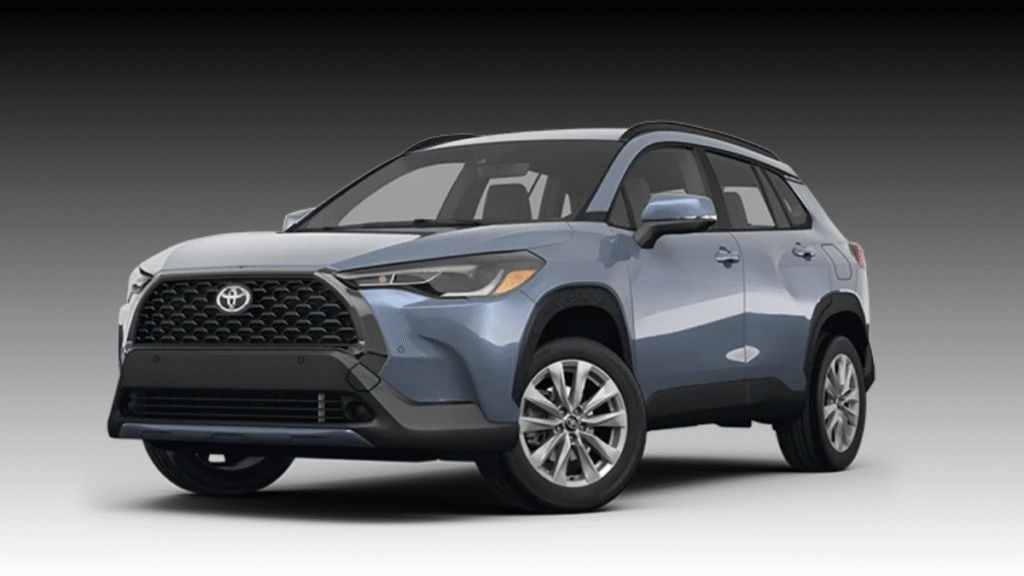
The 2022 Toyota Corolla Cross marked Toyota’s entry into the compact crossover segment, bringing the familiar Corolla nameplate into a taller and more practical body style. Positioned between the smaller C-HR and the larger RAV4 in Toyota’s U.S. lineup, it offers a useful balance of passenger comfort, cargo space, fuel efficiency, and everyday versatility. Although it is slightly larger than several vehicles in this comparison, it deserves consideration for buyers who want a practical small SUV with available all-wheel drive.
Every 2022 Corolla Cross is powered by a naturally aspirated 2.0-liter Dynamic Force four-cylinder engine producing 169 horsepower and 151 lb-ft of torque. It is paired with Toyota’s continuously variable transmission with intelligence and Shift Mode (CVTi-S), which is designed to deliver smooth power delivery and efficient operation. Both front-wheel drive and all-wheel drive are available across the L, LE, and XLE grades, giving buyers the flexibility to choose between better fuel economy and additional traction.
Fuel economy is one of the Corolla Cross’s strongest advantages. According to EPA estimates, front-wheel-drive models achieve 31 mpg in the city, 33 mpg on the highway, and 32 mpg combined. Versions equipped with all-wheel drive return 29 mpg city, 32 mpg highway, and 30 mpg combined. Both configurations use regular gasoline, making the Corolla Cross a practical option for drivers who want reasonable fuel costs without moving to a hybrid powertrain.
Toyota’s available Dynamic Torque Control AWD system improves traction by directing power to the rear wheels when additional grip is needed. It can send up to 50 percent of available power to the rear axle under appropriate conditions and reduce rear-wheel power when it is no longer required. AWD models also receive an independent multi-link rear suspension, whereas FWD versions use a torsion-beam setup. All configurations provide 8.1 inches of ground clearance, giving the Corolla Cross useful clearance for uneven roads, steep driveways, and light unpaved surfaces. However, its design remains focused on everyday road use rather than serious off-road driving.
Interior practicality is another major part of the Corolla Cross’s appeal. The cabin accommodates five passengers and offers 42.9 inches of front legroom, although rear legroom measures a more limited 32 inches. This gives front occupants generous space, while adults sitting in the second row may find the legroom less accommodating than in roomier competitors such as the Volkswagen Taos or Kia Seltos. Cargo capacity reaches 26.5 cubic feet in FWD models and 25.2 cubic feet in AWD versions. The 60/40 split-folding rear seats provide additional flexibility when carrying luggage, shopping, or larger everyday items.
The 2022 lineup consists of three grades: L, LE, and XLE. The L provides essential equipment, including a seven-inch touchscreen, Apple CarPlay, Android Auto, and Toyota Safety Sense 2.0. The LE adds an eight-inch touchscreen, wireless smartphone charging, roof rails, automatic climate control, Smart Key with push-button start, and Blind Spot Monitor with Rear Cross-Traffic Alert. The XLE brings a more premium interior with SofTex-trimmed seats, heated front seats, an electrically adjustable driver’s seat, dual-zone automatic climate control, and additional parking assistance features.
Safety is a particularly important strength. Toyota Safety Sense 2.0 is standard across all three grades and includes a Pre-Collision System with Pedestrian and Cyclist Detection, Full-Speed Range Dynamic Radar Cruise Control, Lane Departure Alert with Steering Assist, Lane Tracing Assist, Automatic High Beams, and Road Sign Assist. The Corolla Cross also includes Toyota’s STAR Safety System and nine airbags. Additional technologies, including Blind Spot Monitor and Rear Cross-Traffic Alert, are standard on LE and XLE grades rather than the entry-level L.
On the road, the Corolla Cross prioritizes predictable handling, a comfortable driving position, and efficient everyday performance. Its 2.0-liter engine provides adequate power for normal commuting, highway travel, and routine family use, although acceleration is not particularly exciting compared with turbocharged alternatives. The CVT emphasizes smooth and efficient operation, but engine noise can become more noticeable when the driver demands stronger acceleration. AWD versions provide additional confidence on slippery roads, while the suspension differences between FWD and AWD configurations give each version a slightly different road character.
As the first model year of the Corolla Cross, the 2022 version should be evaluated on its own maintenance history and condition rather than relying entirely on the long-standing reputation of the Corolla sedan. Its familiar Toyota powertrain and practical engineering make it an appealing used-car candidate, but buyers should still check service records, accident history, tire condition, and the operation of the transmission and drivetrain before purchasing.
The biggest advantage of the 2022 Toyota Corolla Cross is its balanced approach to everyday ownership. It combines respectable EPA-rated fuel economy, useful cargo space, available AWD, modern safety technology, and a practical five-passenger cabin. Its main compromises are modest acceleration and limited rear-seat legroom compared with some larger small crossovers. For buyers who value straightforward daily transportation, useful safety equipment, and the flexibility of optional all-wheel drive, the Corolla Cross remains a compelling used-SUV choice.
Pros
- Good EPA-rated fuel economy of up to 32 mpg combined
- Available Dynamic Torque Control all-wheel drive
- Standard Toyota Safety Sense 2.0 across all grades
- Generous 26.5-cubic-foot cargo capacity in FWD models
- Useful 8.1-inch ground clearance
- Practical five-passenger cabin
- 169-hp naturally aspirated engine
- Available multi-link rear suspension on AWD models
Cons
- Modest acceleration compared with some turbocharged competitors
- Rear legroom is relatively limited at 32 inches
- AWD versions have slightly lower fuel economy and cargo capacity
- Entry-level L grade has fewer convenience and safety features than LE and XLE
- CVT can become noticeably noisier under hard acceleration
- Not designed for demanding off-road use
Read our review of the Toyota Corolla Cross.
2023 Jeep Renegade
Original MSRP When New: Starting at $27,805 (Latitude 4×4)
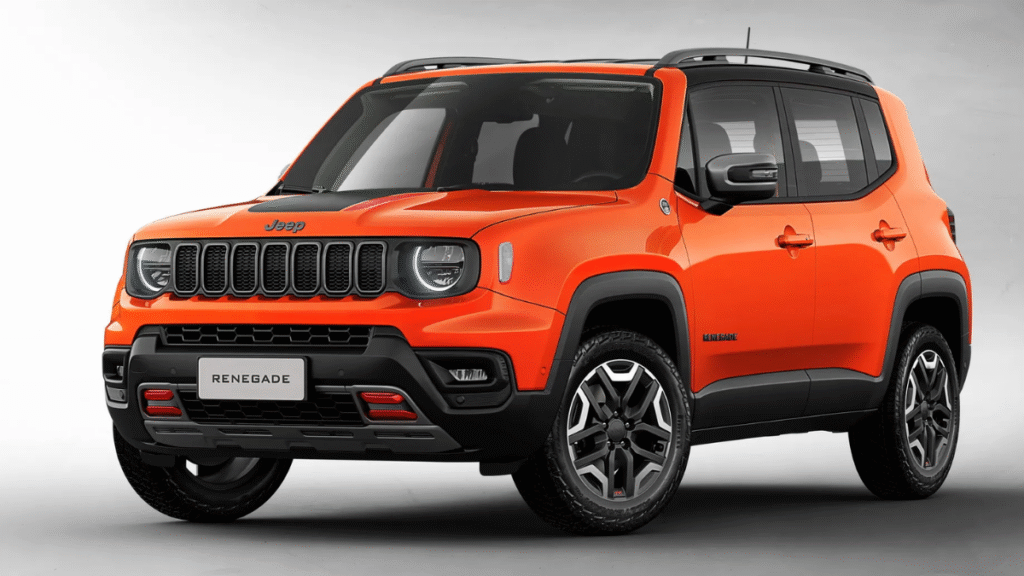
The 2023 Jeep Renegade is one of the more distinctive options in the small SUV segment, combining compact exterior dimensions with traditional Jeep styling and standard four-wheel-drive capability. Its upright design, relatively spacious cabin, and available off-road equipment make it appealing to buyers who want more than a conventional urban crossover. Unlike many competitors that offer AWD only on selected trims, every U.S.-market 2023 Renegade comes with a 4×4 system as standard equipment.
For 2023, Jeep discontinued the Sport trim and removed the front-wheel-drive configuration, leaving the Latitude as the entry-level model. Every version uses a 1.3-liter MultiAir2 turbocharged four-cylinder engine producing 177 horsepower and 210 lb-ft of torque. The engine is paired with a nine-speed automatic transmission, providing a broad range of gearing for everyday driving and different road conditions. Its turbocharged design delivers useful low-speed torque, although the Renegade places greater emphasis on traction and versatility than outright fuel efficiency.
Fuel economy is one of the Renegade’s compromises. According to EPA estimates, standard 4×4 versions achieve 23 mpg in the city, 29 mpg on the highway, and 26 mpg combined. The more heavily equipped Trailhawk returns 22 mpg city, 27 mpg highway, and 24 mpg combined. Jeep specifies that regular 87-octane gasoline is acceptable, although 91-octane premium fuel is recommended for optimum performance. Buyers should therefore consider its fuel requirements and relatively modest efficiency when comparing it with more economical alternatives such as the Nissan Kicks, Kia Soul, and Hyundai Venue.
The standard Jeep Active Drive 4×4 system provides automatic torque distribution and works with the Selec-Terrain traction management system. Latitude and Limited models offer four selectable settings: Auto, Snow, Sand, and Mud. The Trailhawk uses the more capable Jeep Active Drive Low system, which adds a 21:1 crawl ratio and a fifth Rock mode. Hill Descent Control also helps manage speed on steep and uneven downhill sections. These differences give the Trailhawk a meaningful capability advantage over ordinary Renegade versions.
Ground clearance measures 8.0 inches on standard 4×4 models and increases to 8.7 inches on the Trailhawk. The more capable trim also receives additional skid plates, all-terrain-oriented tires, unique front and rear fascias, and red tow hooks. Its improved approach, breakover, and departure angles make it better suited to rocky trails and uneven terrain than the standard versions. The Trailhawk is the only Renegade trim with Jeep’s Trail Rated designation, reflecting its additional off-road hardware and testing.
Interior practicality is another useful part of the Renegade’s package. The cabin accommodates five passengers and provides 41.2 inches of front legroom and 35.1 inches in the rear. Its upright roofline creates a relatively open atmosphere, while the rear seats can fold in a 60/40 configuration to accommodate larger items. Cargo capacity measures 18.5 cubic feet behind the rear seats and increases to 50.8 cubic feet with the second row folded. Although this is adequate for everyday shopping and weekend luggage, it is less generous than the cargo space offered by some competitors.
The 2023 lineup included Latitude, Upland, Altitude, Trailhawk, and Limited versions, along with the limited-availability (RED) Edition. Equipment varies by configuration, but the range includes an 8.4-inch Uconnect infotainment system with navigation, Apple CarPlay, Android Auto, and a seven-inch color driver information display. Available comfort features include heated front seats, a heated steering wheel, a power-adjustable driver’s seat, and a dual-pane panoramic sunroof. The Upland Edition adds a more rugged appearance and all-terrain-oriented tires, while the Limited focuses more heavily on comfort and upscale equipment.
Safety and driver-assistance technology include Blind Spot Monitoring, Rear Cross-Path Detection, LaneSense Lane Departure Warning with Lane Keep Assist, Electronic Stability Control, Hill Start Assist, and a ParkView rear backup camera. Equipment availability varies by trim, and some systems are not included on every version. For example, Full-Speed Forward Collision Warning with Active Braking is listed for the Latitude and Limited but is excluded from the Trailhawk. Buyers comparing used vehicles should check the original equipment list rather than assuming every safety feature is standard across the lineup.
On paved roads, the Renegade offers a comfortable driving position, good outward visibility, and predictable handling. The turbocharged engine provides useful torque for normal commuting and moderate hills, while the nine-speed automatic transmission helps make the most of its available power. However, the suspension and drivetrain hardware that support its off-road character do not make it as fuel-efficient or as road-focused as some urban-oriented alternatives. The Trailhawk is particularly appealing for drivers who regularly explore unpaved roads, although its lower EPA fuel economy reflects its more specialized equipment.
The 2023 model year also marked the end of the Renegade’s U.S. production run. This makes the final-year models particularly relevant to used-car shoppers who want a compact Jeep with standard 4×4 capability. The most important buying decision is choosing between the ordinary 4×4 versions and the Trailhawk. Latitude, Upland, Altitude, and Limited models provide a useful blend of everyday comfort and traction, while the Trailhawk adds the specialized hardware needed for more demanding trails.
The biggest advantage of the 2023 Jeep Renegade is its combination of compact dimensions, standard four-wheel drive, and genuine Trailhawk capability. Its main compromises are below-average fuel economy, limited cargo capacity compared with roomier rivals, and a higher original purchase price than many city-focused crossovers. For buyers who value traction, distinctive styling, and occasional off-road use more than maximum efficiency, the Renegade remains a distinctive used-SUV option.
Pros
- Standard 4×4 across the entire 2023 U.S. lineup
- Turbocharged 1.3-liter engine produces 177 horsepower and 210 lb-ft of torque
- Trailhawk offers an advanced Active Drive Low system with a 21:1 crawl ratio
- Up to 8.7 inches of ground clearance on Trailhawk models
- Five Selec-Terrain modes on Trailhawk versions
- Useful rear-seat folding flexibility
- Available towing capacity of up to 2,000 pounds on properly equipped Trailhawk models
- Distinctive Jeep styling and upright seating position
Cons
- EPA fuel economy is lower than many urban-focused competitors
- Cargo capacity is relatively limited
- Premium 91-octane gasoline is recommended, although regular 87-octane is acceptable
- Rear legroom is adequate but not especially generous
- Trailhawk equipment comes with lower fuel economy
- More demanding off-road capability is limited to the specialized Trailhawk configuration
Final Verdict: Choosing the Best Subcompact SUVs for 2022–2023
The best subcompact SUVs from 2022 and 2023 offer a wide range of strengths, from impressive fuel economy and affordable ownership to generous cargo space and genuine all-weather capability. As this comparison shows, there is no single model that suits every buyer. The right choice depends on how much space you need, where you drive, how much you want to spend, and which features matter most in everyday use.
The Volkswagen Taos, Kia Seltos, Chevrolet Trailblazer, and Toyota Corolla Cross make compelling choices for buyers who want a practical crossover for commuting and small-family duties. The Hyundai Venue and Nissan Kicks are better suited to drivers who prioritize affordability and easy city maneuverability, while the Subaru Crosstrek and Ford Bronco Sport appeal to those who regularly encounter snow, gravel, or uneven roads.
Which 2022–2023 Subcompact SUV Is Best for Fuel Economy?
The 2023 Kia Niro Hybrid is one of the strongest choices for buyers who prioritize fuel economy. Unlike conventional gasoline crossovers, its hybrid powertrain is specifically designed to reduce fuel consumption during everyday driving, particularly in urban traffic. Buyers who want an electrified option can also consider the Niro Plug-in Hybrid or Niro EV, although these models require separate comparisons because their energy use and driving ranges are measured differently.
Among the gasoline-powered alternatives, the Nissan Kicks and Hyundai Venue are worth considering for drivers seeking an affordable and efficient city vehicle. Actual fuel costs will depend on the powertrain, drivetrain, driving conditions, and individual driving habits.
Which Small SUV Offers the Best Combination of Space and Practicality?
The Volkswagen Taos stands out for its spacious cabin and useful cargo area. Its generous rear-seat accommodation makes it a practical option for small families and drivers who frequently carry passengers. The Chevrolet Trailblazer and Kia Seltos are also strong alternatives, offering useful passenger space and flexible cargo arrangements within relatively compact exterior dimensions.
The best choice depends on how you use the vehicle. Buyers who regularly carry adults in the rear seats should pay particular attention to second-row legroom, while those who transport luggage, groceries, or larger items should compare cargo capacity with the rear seats both raised and folded.
Which Subcompact SUV Is Best for Reliability and Low Ownership Costs?
The 2022 Toyota Corolla Cross deserves serious consideration from buyers who value straightforward everyday transportation and long-term ownership. Its naturally aspirated engine and practical design make it an appealing alternative to smaller turbocharged crossovers.
However, reliability in the used market depends on more than the manufacturer’s reputation. Maintenance records, mileage, previous accident damage, and the condition of the transmission, engine, suspension, and other major components should all influence the buying decision. The specific vehicle’s history matters more than a general reliability label.
Which SUVs Are Best for Snow, Rain, and Rough Weather?
The 2023 Subaru Crosstrek is a particularly appealing choice for drivers who regularly face changing weather conditions. Its standard all-wheel-drive system and generous ground clearance provide useful advantages on wet roads, snow-covered streets, gravel, and other uneven surfaces.
The Ford Bronco Sport is another strong candidate, especially for drivers who want additional versatility beyond ordinary pavement. Other models, including the Volkswagen Taos, Kia Seltos, Mazda CX-30, and Chevrolet Trailblazer, offer all-wheel-drive configurations, depending on the model and trim.
Buyers should remember that all-wheel drive does not replace appropriate tires or careful driving. Tire condition and the right seasonal setup remain important for safe winter travel.
Which Small SUV Is Best for Light Off-Road Driving?
The Ford Bronco Sport is one of the most adventure-oriented vehicles in this comparison. Its standard all-wheel drive and available terrain-management features make it more suitable for dirt trails and uneven surfaces than many urban-focused competitors. The Badlands trim takes capability further with additional hardware designed for more demanding conditions.
The Jeep Compass Trailhawk and Jeep Renegade Trailhawk also deserve consideration. Both offer more specialized off-road equipment than their ordinary versions. However, buyers should compare the exact trim and drivetrain rather than assuming every model in these lineups provides the same level of capability.
Which Subcompact SUVs Are Best for City Driving and Tight Budgets?
The Hyundai Venue and Nissan Kicks are sensible choices for drivers who spend most of their time in urban environments. Their compact dimensions make parking and maneuvering easier, while their relatively accessible original prices helped position them among the more budget-friendly options when new.
The 2023 Kia Soul also deserves attention. Its distinctive boxy design creates a practical cabin with useful passenger space, making it an appealing alternative for buyers who do not need all-wheel drive or traditional SUV styling.
For shoppers comparing used vehicles, purchase price should not be the only consideration. Insurance costs, fuel consumption, maintenance history, tire condition, and the likely cost of upcoming repairs can make a meaningful difference in total ownership expenses.
Which Model Offers the Most Premium Driving Experience?
The 2022 Mazda CX-30 delivers one of the more refined driving experiences among mainstream models in this comparison. Its steering, handling, and cabin presentation give it a more upscale character than many economy-focused crossovers, particularly in well-equipped versions.
The 2023 Mini Countryman offers a different kind of appeal, with distinctive styling, customization options, and a more premium-oriented cabin. However, buyers should consider its original price positioning and potential maintenance expenses when comparing used examples.
Are 2022 and 2023 Subcompact SUVs Still Worth Buying in 2026?
Yes. Many 2022 and 2023 subcompact SUVs remain worthwhile options in the used-car market because they combine modern safety equipment, useful technology, practical interiors, and relatively efficient powertrains with the potential benefit of lower purchase prices than newer models.
Their value depends heavily on condition, mileage, service history, equipment, and local market pricing. A carefully maintained Kia Seltos, Volkswagen Taos, Toyota Corolla Cross, or Subaru Crosstrek may offer an attractive balance of everyday practicality and modern features. However, buyers should compare individual vehicles rather than assuming that every example from these model years represents a good deal.
Before purchasing, check the vehicle’s maintenance and accident history, confirm that applicable recalls have been addressed, arrange a professional pre-purchase inspection, and evaluate the condition of the engine, transmission, brakes, tires, and suspension. Hybrid and plug-in hybrid models also deserve a qualified inspection of their high-voltage battery systems.
Ultimately, the best subcompact SUVs from 2022 and 2023 are not necessarily the most expensive or the most powerful. They are the models that match their owners’ actual needs. Whether the priority is fuel economy, family practicality, comfortable city driving, all-weather confidence, or light off-road capability, this group offers several compelling choices. Taking the time to compare specifications, trim levels, ownership history, and overall condition will help buyers find a small SUV that makes sense for their budget and daily driving requirements.