2022 Chevrolet Colorado Review: Still Worth Buying?
An aging midsize truck that refuses to be boring, even as its replacement waits in the wings

2022 Chevrolet Colorado: Every truck buyer eventually runs into the same question. Do you buy the outgoing design because you know exactly what you are getting, or do you wait for the redesign and gamble on first year kinks. The 2022 Chevrolet Colorado sits squarely in that first camp, and it makes a surprisingly strong argument for itself.
This is the final year of the current Colorado generation before Chevrolet rolls out an all new truck for 2023, and that timing matters more than most shoppers realize. Instead of feeling like a truck running out the clock, the 2022 model behaves like a company trying to sell every unit it can before the reset. That means aggressive incentives at the dealer, a genuinely broad engine lineup, and a truck that still drives with more confidence than its age suggests.
The midsize truck class has gotten crowded. The Toyota Tacoma sells on reputation and resale value. The Ford Ranger leans on a strong turbocharged four-cylinder and modern styling. The Nissan Frontier finally got the update it needed in 2022. Against that backdrop, the Colorado’s biggest weapon is choice. No other truck in this segment lets you pick between a four-cylinder, a V6, and a turbo-diesel in the same generation, and that flexibility alone keeps it relevant.
Chevrolet is not pretending this is a class leading truck in every category. The interior plastics feel like they came from a decade-old parts bin because, frankly, they did. But underneath that dated cabin is a chassis that rides better than it has any right to, and a range of powertrains that still beats most rivals on paper. This review breaks down where the Colorado still wins, where it clearly shows its age, and who should actually buy one in 2022.
Our Opinion
The 2022 Chevrolet Colorado is not the most refined truck in its class, and it is not trying to be. What it offers instead is a truck that can be configured almost exactly to the buyer’s job, whether that means a fuel-sipping four-cylinder work truck, a torquey V6 for weekend towing, or a Duramax diesel that makes highway trailer trips feel effortless. The ZR2 trim remains one of the more credible off-road packages sold by any mainstream automaker, with real skid plates and real locking differentials instead of a badge and a sticker.
Where it loses ground is inside the cabin, where the design and materials clearly predate the current wave of touchscreen-heavy interiors from Ford and Toyota. If you can live with a truck that feels a generation behind on tech and interior polish, the Colorado rewards you with genuine capability and a driving character that still holds up on the road.
Pros and Cons
Pros
- Three distinct engine choices, including a diesel none of its rivals offer
- ZR2 trim delivers legitimate off-road hardware, not just styling
- Comfortable, controlled ride for a midsize truck
- Strong towing and payload figures across most configurations
- Aggressive year-end pricing ahead of the 2023 redesign
Cons
- Interior materials and layout feel dated next to newer rivals
- Base four-cylinder engine is noticeably underpowered
- Safety tech is thinner than what Ford and Toyota now offer standard
- Infotainment screen looks small compared to the class
What’s New for 2022
The headline change for 2022 is the new Trail Boss package, available on 4WD LT and Z71 crew cab models. It bundles a one-inch front leveling kit, underbody skid plates, black 17-inch wheels borrowed from the ZR2’s design language, red tow hooks, and blacked-out badging. Chevrolet reports the package sold out quickly, which tells you something about how many buyers want ZR2 looks without the ZR2 price tag.
Beyond that, changes are minor. A couple of new appearance packages joined the lineup, including a Redline special edition for LT trims and additional Midnight editions for the Z71 and ZR2. None of this reinvents the truck, but it does suggest Chevrolet knew exactly what this model year needed to be: a sendoff, not a rewrite.
Exterior Design
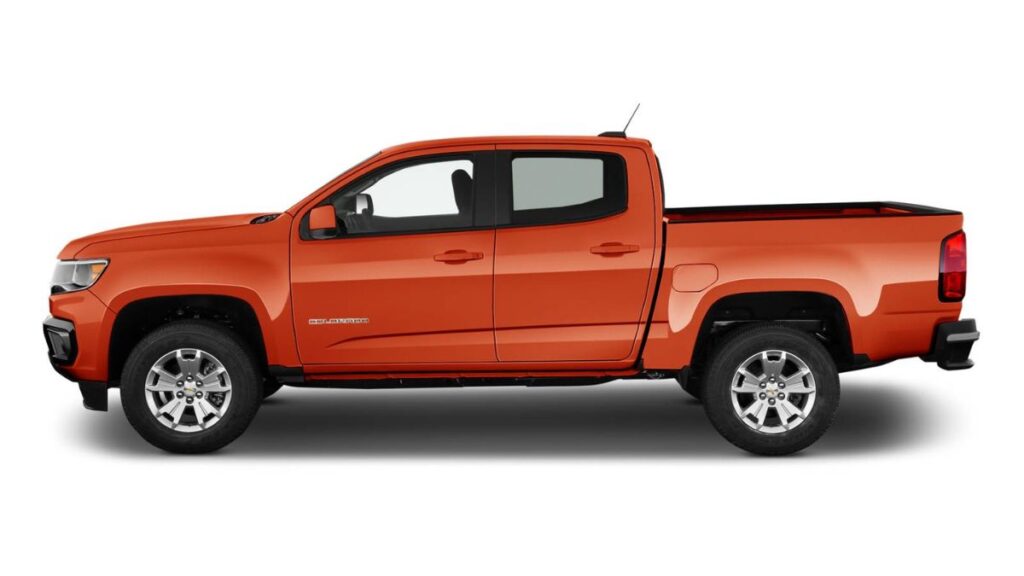
The Colorado’s sheet metal has aged better than its interior. The squared-off hood and upright grille still look purposeful rather than dated, and the truck avoids the overstyled creases that make some rivals look busy. WT and LT trims keep things clean and utilitarian. Z71 and ZR2 models add black trim, more aggressive front fascias, and wider fender flares that visually widen the truck’s stance.
Next to the Ford Ranger, the Colorado looks less aerodynamically sculpted but more traditionally truck-like, which matters to buyers who want their pickup to actually look like a pickup. Compared with the Tacoma, the Colorado reads as slightly more modern despite being built on an older platform, mostly because Toyota has let its midsize truck’s exterior design age even longer without a refresh.
Driving Experience
This is where the Colorado quietly outperforms its reputation. The steering is more precise and better weighted than you would expect from a body-on-frame midsize truck, and the ride avoids the choppy, unsettled feeling that plagues some rivals over rough pavement. Chevrolet engineers clearly spent real effort tuning the suspension rather than just carrying over full-size Silverado hardware and calling it done.
On the highway, the V6 models feel composed at speed, with wind and road noise kept reasonably in check for the segment. Switch to the ZR2 and the personality changes entirely. The wider track, remote-reservoir Multimatic dampers, and extra suspension travel turn washboard dirt roads into a non-event, and that is not marketing language. It is one of the few trucks under $50,000 that can genuinely back up its off-road branding on rough terrain.
The base four-cylinder is the letdown here. It works fine around town, but merging onto a highway with a full cab and cargo makes the engine’s limitations obvious fast. This is a truck that changes character dramatically depending on which engine sits under the hood, more so than almost any competitor.
Braking feel deserves a mention too, since it is an area trucks often get wrong. The Colorado’s pedal has a firm, predictable bite rather than the vague, over-boosted feel some rivals still exhibit, and that confidence carries over when a trailer is hooked up behind it. It is a small detail, but it is the kind of thing that separates a truck engineered as a truck from one that feels like a raised sedan wearing a bed.
Performance and Acceleration
Three engines headline the 2022 lineup, and each one has a distinct job to do. The base 2.5-liter four-cylinder makes 200 horsepower and 191 lb-ft of torque, paired with a six-speed automatic. It is adequate for light-duty work truck buyers who prioritize purchase price over performance, but it struggles once you start loading the bed or hitching a trailer.
The 3.6-liter V6 is the sweet spot for most buyers, producing 308 horsepower and 275 lb-ft of torque through an eight-speed automatic. It pulls with real enthusiasm and gives the Colorado acceleration that beats most of its four-cylinder rivals outright. Then there is the 2.8-liter Duramax turbo-diesel, rated at 181 horsepower but a massive 369 lb-ft of torque. On paper the horsepower number looks unimpressive, but the torque curve is what matters for towing, and this engine delivers highway pulling power that neither the Ranger nor the Tacoma can match without stepping up to a larger platform.
Chevrolet’s willingness to keep all three engines available through the truck’s final model year is arguably the single biggest reason to consider a Colorado over a Ranger or Frontier. Nobody else in this class lets you shop by engine philosophy instead of settling for whatever comes standard.
Ride Comfort and Cabin Luxury
Ride quality is genuinely good for the segment, and that consistency holds whether you are in a base WT or a loaded ZR2. Bumps get absorbed rather than transmitted straight into the cabin, and the truck stays composed over broken pavement in a way that some newer competitors, ironically, do not always manage.
Cabin comfort is a mixed bag. Front seats offer solid support on longer drives, and the crew cab’s rear seat has more legroom than either the Tacoma or the Ranger, which matters if you regularly carry adult passengers. But road and wind noise creep in more than they should at highway speeds, particularly on 4WD models with larger off-road tires. It is comfortable, not hushed.
Interior Design and Luxury
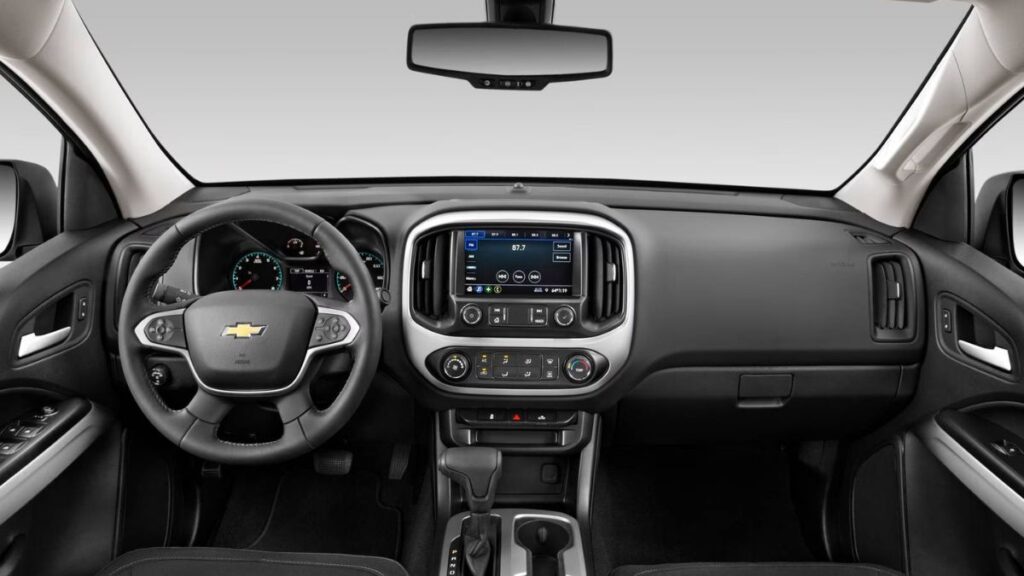
Here is where the Colorado’s age becomes impossible to ignore. The dashboard layout is straightforward and easy to operate, which has some value, but the plastics feel hard and cheap in places a five-year-old design should have already addressed. Higher trims dress things up with better cloth or available leather, but the bones of the interior never escape their mid-2010s origins.
Storage is handled reasonably well, with a usable center console and door pockets sized for real-world items rather than just cupholders. Crew cab models offer genuinely usable rear seating for adults, something not every rival in this class can claim. It is a functional interior. It is just not a modern one.
Technology and Infotainment
The base WT trim comes with a 7-inch touchscreen running Chevrolet’s infotainment software, with standard Apple CarPlay, Android Auto, and Bluetooth. It works, and the interface is simple enough that nobody needs a manual to figure it out. Higher trims can upgrade to an 8-inch screen with navigation, a Wi-Fi hotspot, and voice recognition, and that larger system responds quickly without the lag some rivals suffer from.
The honest assessment is that neither screen size feels particularly modern next to what Ford now offers in the Ranger or what Toyota packages into a well-equipped Tacoma. It gets the job done, but buyers coming from a newer vehicle will notice the screen looks small and the graphics feel a generation behind.
Fuel Consumption
Fuel economy varies significantly by engine, and that is worth understanding before you pick a configuration. The base four-cylinder returns around 19 mpg city and 25 mpg highway, numbers that are unremarkable given its modest power output. The V6 trades a bit of efficiency for a large jump in capability, landing in a similar overall range once you factor in real-world driving with a heavier right foot.
The real standout is the Duramax diesel, which can reach up to 30 mpg on the highway according to EPA figures. That efficiency, combined with its towing torque, makes the diesel the clear choice for anyone who regularly drives long highway stretches with a trailer attached. It costs more upfront, but frequent towers will make that money back in fuel savings alone.
Practicality and Storage
The Colorado offers real flexibility in cab and bed configurations, with extended cab and crew cab body styles paired with either a 5-foot-2-inch or 6-foot-2-inch bed depending on trim. Maximum payload capacity reaches 2,181 pounds, and towing capacity tops out at 7,700 pounds when properly equipped, both of which are competitive figures for the class.
Where the Colorado has a genuine practical edge is rear seat space in crew cab trims. It offers more usable room back there than either the Tacoma or the Ranger, which matters for buyers who need this truck to double as a family vehicle during the week and a work truck on weekends.
Bed accessibility is another area Chevrolet got right. The tailgate opens smoothly, tie-down points are placed where you actually need them rather than as an afterthought, and available bed liners hold up to real cargo use without scratching after a single season. None of this shows up on a spec sheet, but anyone who has loaded a truck bed weekly knows how much these small choices matter over time.
Safety and Driver Assistance Systems
This is a weak point relative to the rest of the class. The 2022 Colorado earned a four-star overall safety rating from NHTSA, and driver assistance technology is noticeably thinner than what competitors now bundle in as standard equipment. Forward collision alert and automatic emergency braking are available, but they are not standard across the lineup the way similar systems now are on the Ford Ranger.
Buyers who prioritize the latest active safety technology should look closely at trim-specific options before assuming a feature is included. It often is not on lower trims, and adding it means stepping up the price ladder.
Worthy Competitors
The Toyota Tacoma remains the resale value king of the segment, and buyers who care most about long-term ownership costs will keep cross-shopping it no matter what else improves elsewhere. The Ford Ranger counters with a stronger standard engine and more modern safety tech, though it cannot match the Colorado’s engine variety or the ZR2’s off-road credentials. The Nissan Frontier‘s 2022 redesign brought a much-needed interior and tech upgrade, making it a real threat on paper, though it still lacks a diesel option entirely. The GMC Canyon, essentially a mechanical twin to the Colorado, offers a more upscale cabin on top trims but starts at a higher price for buyers who do not need that extra polish.
Biggest Strength and Biggest Weakness
The Colorado’s biggest strength is engine choice paired with genuine off-road credibility in the ZR2. No competitor in this price range lets a buyer choose between a diesel, a V6, and a four-cylinder while also offering a factory off-road package with real hardware behind it. Its biggest weakness is just as clear: the interior. Cheap-feeling plastics and a dated dashboard layout undercut an otherwise strong overall package, and buyers stepping out of anything built in the last three years will notice immediately.
Which Category Does CARDRAV Recommend
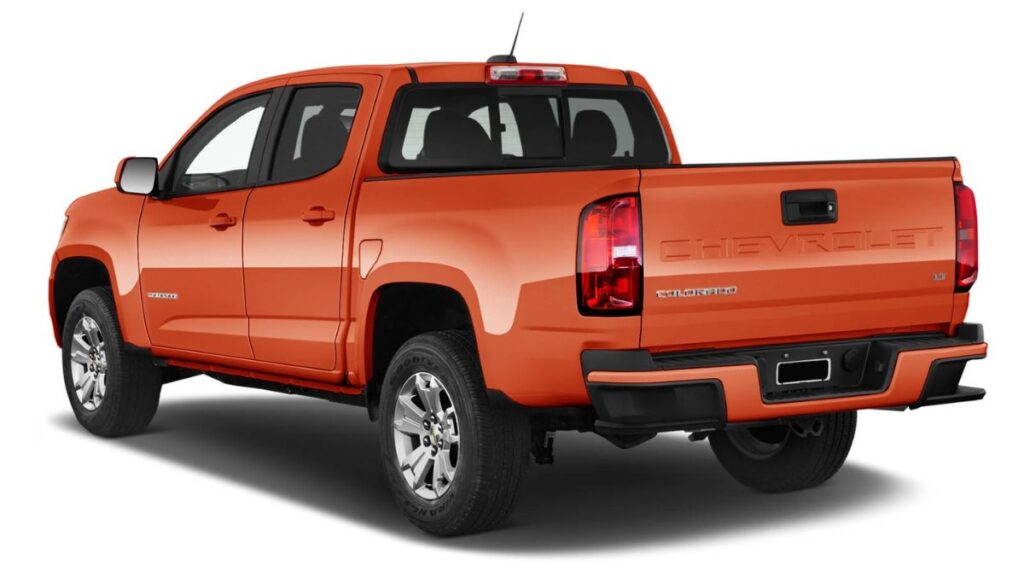
For most buyers, the V6 LT crew cab represents the strongest overall value in the lineup, balancing real power with a reasonable price. Anyone who tows regularly should look hard at the Duramax diesel despite the upfront premium, since the torque and highway fuel economy pay dividends over time. Off-road enthusiasts should skip straight to the ZR2, since nothing else in this lineup, or arguably this price class, matches its capability out of the box.
Conclusion: Is It Worth Buying?
If you are shopping used or catching end-of-model-year incentives on a new one, the 2022 Chevrolet Colorado is absolutely worth a look, especially if engine flexibility and off-road capability matter more to you than cabin polish. It is not the truck to buy if a modern interior and the latest safety tech are non-negotiable, since the Ranger and the redesigned Frontier will serve those priorities better.
But for buyers who want a truck that can be tailored to a specific job, whether that is fuel-efficient commuting, serious towing, or genuine off-road use, the Colorado still delivers more configuration options than anything else in its class. It is a truck that knows exactly what it is good at, even in its final year before replacement.
FAQ
Is the 2022 Chevrolet Colorado a good truck to buy?
Yes, particularly for buyers who want engine variety or off-road capability, though shoppers prioritizing cabin tech and materials may prefer a newer rival.
What is the towing capacity of the 2022 Chevrolet Colorado?
Properly equipped, the 2022 Colorado can tow up to 7,700 pounds, with the exact figure depending on engine and configuration.
Which engine is best in the 2022 Chevrolet Colorado?
The V6 suits most buyers for its balance of power and price, while the Duramax diesel is the better choice for frequent towing thanks to its 369 lb-ft of torque.
Is the 2022 Chevrolet Colorado ZR2 a real off-roader?
Yes, the ZR2 comes with front and rear locking differentials, Multimatic dampers, and a wider track, making it one of the more capable factory off-road trucks in its price range.
How does the 2022 Chevrolet Colorado compare to the Toyota Tacoma?
The Colorado offers more engine choices and a more spacious rear seat, while the Tacoma holds a clear advantage in resale value and long-term reliability reputation.