In a market obsessed with three-row family SUVs, the 2023 Honda Passport takes a different approach. Honda designed the Passport for buyers who want midsize SUV capability, generous cargo space, and proven V6 performance without carrying around an unused third row. It sits neatly between the compact CR-V and the larger Pilot, creating a sweet spot that many families overlook.
What makes the Passport interesting is not flashy technology or groundbreaking innovation. Instead, it focuses on the fundamentals that matter in daily ownership. The naturally aspirated V6 engine remains one of the last of its kind in the segment, standard all-wheel drive is included across the lineup, and the cabin prioritizes comfort, durability, and practicality over gimmicks.
For 2023, the Passport continues largely unchanged after its significant refresh the previous year. While competitors increasingly move toward turbocharged engines and hybrid systems, Honda stays committed to a straightforward formula built around reliability, strong towing capability, and everyday usability. The result is an SUV that may not grab headlines, but it remains one of the most sensible choices for buyers who value function over fashion.
Our Take
The 2023 Honda Passport is one of the easiest midsize SUVs to recommend for buyers who do not need a third row. Its spacious interior, powerful V6 engine, standard all-wheel drive, and excellent cargo capacity make it a highly practical family vehicle.
However, the Passport faces a difficult challenge. Many competitors now offer three rows, better fuel economy, more modern infotainment systems, and similar pricing. As a result, the Passport’s biggest strength is also its biggest limitation. It excels at being a roomy two-row SUV, but shoppers seeking maximum value may find themselves tempted by larger alternatives such as the Kia Telluride or Toyota Highlander.
Still, for drivers who prioritize simplicity, proven engineering, and everyday comfort, the Passport remains one of the strongest two-row SUVs in the segment.
Pros & Cons
Pros
- Strong and refined 3.5-liter V6 engine
- Standard all-wheel drive on every trim
- Excellent cargo capacity for a two-row SUV
- Comfortable ride quality on long journeys
- Impressive reliability reputation
Cons
- Fuel economy trails hybrid competitors
- Infotainment system feels dated
- Interior design lacks premium flair
- TrailSport is not a serious off-road vehicle
- Pricing overlaps with larger three-row SUVs
What’s New for 2023?
The Honda Passport enters 2023 with no major mechanical or technological changes following its substantial redesign and styling update for the previous model year. Honda continues offering the Passport in EX-L, TrailSport, and Elite trims, all powered by the same 3.5-liter V6 engine paired with a nine-speed automatic transmission and standard all-wheel drive. While some competitors introduced hybrid powertrains and larger infotainment displays during this period, Honda chose stability over change, allowing the Passport to build on its reputation for reliability, comfort, and everyday practicality.
Exterior Design
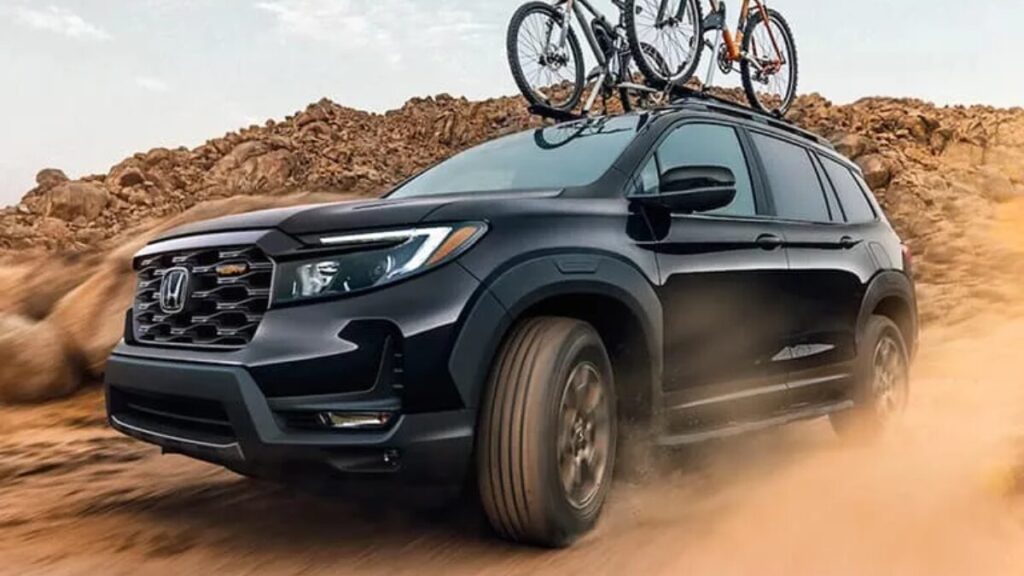
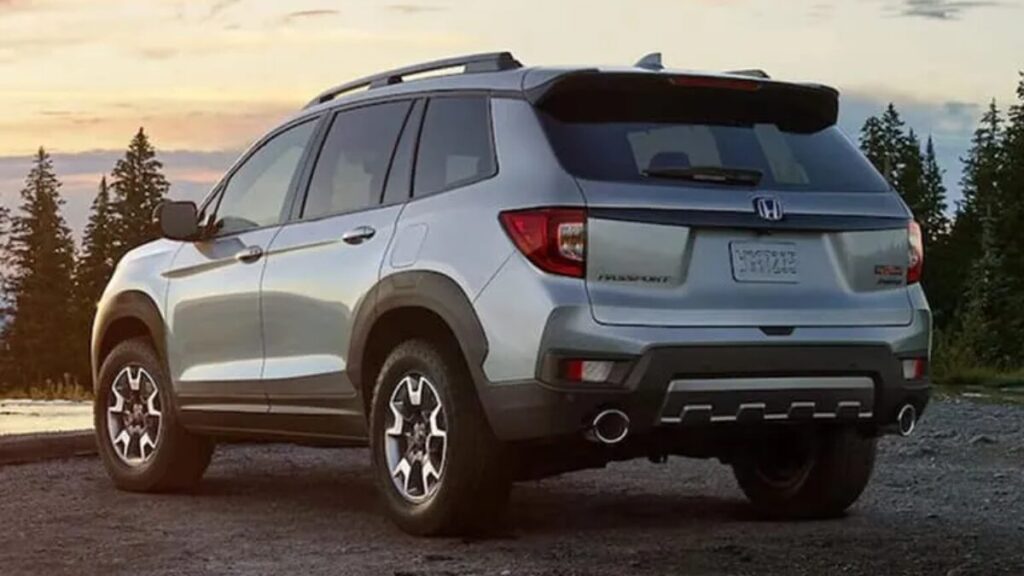
The 2023 Honda Passport embraces a rugged and purposeful design that reflects its role as Honda’s adventure-oriented midsize SUV. Following the substantial styling refresh introduced the previous year, the Passport features a more upright front fascia, a larger grille, and a wider stance that gives it noticeably more presence than earlier versions. It looks tougher than the CR-V and less family-focused than the Pilot, which helps establish its own identity within Honda’s SUV lineup.
The TrailSport trim is particularly attractive. Unique bumpers, orange TrailSport badging, roof rails, and all-terrain tires give it a more adventurous appearance without becoming overly aggressive. It projects the image of a vehicle ready for camping trips, mountain roads, and weekend escapes, even if its actual off-road capability remains moderate.
Unlike some rivals that rely on dramatic curves and futuristic styling, the Passport favors clean lines and a traditional SUV profile. That approach may not turn heads in a crowded parking lot, but it ages gracefully and reinforces Honda’s reputation for practical, long-lasting design. Build quality is excellent throughout, with tight panel gaps and a solid feel that immediately communicates durability.
Driving Experience
The Honda Passport prioritizes comfort and confidence over excitement, and for most buyers, that is exactly the right approach. From behind the wheel, visibility is excellent thanks to the upright seating position and large windows, making the SUV feel smaller and easier to maneuver than its dimensions suggest.
Steering is predictable and well-weighted, while the suspension strikes a comfortable balance between stability and ride comfort. Whether navigating city traffic, cruising on the interstate, or traveling on rough secondary roads, the Passport remains composed and easy to drive. Road and wind noise are also impressively controlled, creating a refined atmosphere that makes long-distance travel less tiring.
The TrailSport trim adds a bit more personality through its all-terrain tires and unique suspension tuning. While it is not designed for serious rock crawling, it handles gravel roads, dirt trails, and remote campsites with confidence. Most owners will never reach the limits of its capability, but the added versatility provides welcome peace of mind for outdoor enthusiasts.
Drivers seeking a sporty SUV may find the Passport somewhat conservative. Rivals such as the Mazda CX-9 and Ford Edge offer sharper handling characteristics. Honda instead focuses on smoothness, predictability, and everyday usability, qualities that often matter more after years of ownership.
Performance & Acceleration
Power comes from Honda’s proven 3.5-liter naturally aspirated V6 engine producing 280 horsepower and 262 lb-ft of torque. At a time when many competitors have transitioned to turbocharged four-cylinder engines, the Passport’s V6 feels refreshingly straightforward. Throttle response is immediate, power delivery is linear, and there is no turbo lag to manage.
The engine works with a nine-speed automatic transmission that generally shifts smoothly and keeps the V6 within its optimal power band. Acceleration is strong enough for confident highway merging and passing maneuvers, while the standard all-wheel-drive system helps put power down effectively in various weather conditions.
Although the Passport is not marketed as a performance SUV, it feels adequately quick for its class. More importantly, the V6 delivers its performance effortlessly. There is plenty of low-end and mid-range torque available for everyday driving, allowing the SUV to feel relaxed rather than strained.
Towing capability is another highlight. With a maximum rating of 5,000 pounds, the Passport can comfortably handle small boats, utility trailers, campers, and recreational equipment. For many buyers, that capability adds a layer of versatility that smaller turbocharged competitors struggle to match.
Overall, the Passport’s powertrain is one of its strongest assets. It may not be the most fuel-efficient option in the segment, but its combination of smooth performance, proven reliability, and strong towing ability continues to make a compelling case for buyers who appreciate traditional V6 power.
Ride Comfort & Cabin Refinement
One of the Passport’s strongest qualities is its ability to make long journeys feel effortless. The suspension is tuned primarily for comfort, absorbing broken pavement, expansion joints, and rough road surfaces with impressive composure. Even on longer highway drives, the SUV maintains a smooth and stable ride that helps reduce driver fatigue.
The cabin itself contributes significantly to that relaxed experience. Honda has done an excellent job insulating occupants from road and wind noise, particularly at highway speeds. While premium luxury SUVs still have an advantage in overall refinement, the Passport feels quieter than many mainstream competitors and delivers the kind of solid, well-built character buyers expect from the brand.
The seats are another highlight. Both front and rear passengers benefit from supportive cushioning and generous space, making the Passport an excellent choice for road trips. Buyers cross-shopping vehicles such as the Toyota Highlander, Kia Telluride, or the Honda Pilot may discover that the Passport’s two-row layout actually creates a more spacious and comfortable environment for adult passengers.
Interior & Practicality
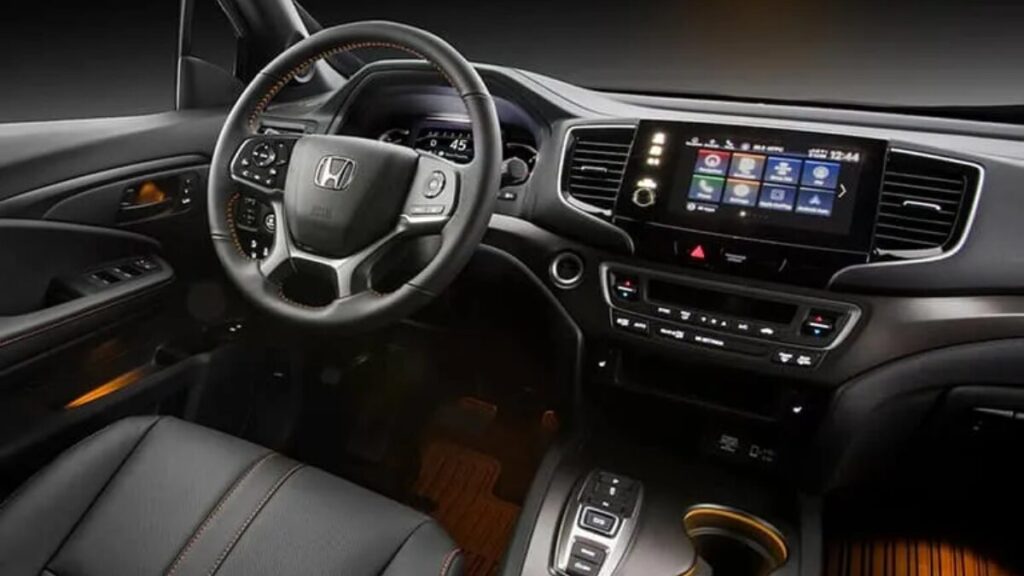
The Passport’s interior focuses on functionality rather than flashy design. The dashboard layout is straightforward, controls are logically placed, and nearly everything can be operated without navigating complicated menus. While some rivals offer more modern-looking cabins, Honda’s approach prioritizes usability, which many owners will appreciate after years of daily use.
Passenger space is exceptional. Without a third row consuming valuable cabin real estate, rear-seat passengers enjoy generous legroom and shoulder room. Adults can comfortably sit in the second row for extended trips without feeling cramped, making the Passport particularly appealing for couples and small families.
Practicality is where the Passport truly separates itself from many competitors. Large door openings simplify child-seat installation, storage compartments are thoughtfully placed throughout the cabin, and visibility remains excellent in every direction. Honda clearly designed this SUV around real-world family use rather than showroom impressions.
Material quality is also impressive. Soft-touch surfaces appear in key areas, controls operate with precision, and the overall fit and finish reinforce Honda’s reputation for long-term durability. The interior may not be luxurious, but it feels built to withstand years of daily use.
Technology & Infotainment
The Passport’s technology package is functional and user-friendly, even if it no longer leads the segment. Every model comes equipped with an 8-inch touchscreen infotainment system that supports both Apple CarPlay and Android Auto, allowing seamless smartphone integration for navigation, music, and communication.
One advantage of Honda’s system is its simplicity. Menus are easy to navigate, physical controls remain available for frequently used functions, and drivers are not forced to rely exclusively on touchscreen inputs. This makes the system less distracting while driving compared to some newer competitors that place nearly every function inside digital menus.
The digital instrument display provides useful vehicle information and can be customized to show navigation guidance, fuel economy data, and driver-assistance settings. While it lacks the visual sophistication of some fully digital luxury setups, it remains clear and easy to read.
Audio quality is respectable in the EX-L and TrailSport trims, but buyers who enjoy premium sound will appreciate the Elite trim’s upgraded 10-speaker audio system. Combined with the Passport’s quiet cabin, it creates a surprisingly refined listening experience during long drives.
Although competitors such as the Telluride and newer Hyundai models offer larger and more modern screens, Honda’s technology remains dependable, intuitive, and easy to live with every day.
Fuel Economy
Fuel economy is one of the few areas where the Passport shows its age compared to newer competitors. The standard 3.5-liter V6 and all-wheel-drive system deliver respectable efficiency for a traditionally powered midsize SUV, but they cannot match the impressive numbers achieved by modern hybrid alternatives.
The EPA estimates the 2023 Passport at 19 mpg in the city, 24 mpg on the highway, and 21 mpg combined. Those figures are competitive against V6-powered rivals such as the Chevrolet Blazer and Ford Edge, but buyers comparing fuel costs will quickly notice the advantage offered by hybrid SUVs like the Toyota Highlander Hybrid.
That said, there is value in the Passport’s simplicity. The naturally aspirated V6 delivers predictable performance without relying on turbochargers or complex hybrid components. Many buyers will gladly accept slightly higher fuel costs in exchange for the proven durability and smooth power delivery that Honda’s V6 provides.
For drivers who spend most of their time on highways, the Passport performs reasonably well. Long-distance travelers will appreciate the combination of a comfortable ride, quiet cabin, and a fuel tank large enough to support extended road trips with fewer fuel stops.
Safety & Driver Assistance
Honda continues to make safety a major selling point of the Passport. Every 2023 model comes standard with the Honda Sensing suite of driver-assistance technologies, eliminating the need to climb the trim ladder for essential safety features.
The package includes Forward Collision Warning, Automatic Emergency Braking, Lane Departure Warning, Lane Keeping Assist, Adaptive Cruise Control, and Road Departure Mitigation. These systems operate smoothly and naturally, avoiding the overly aggressive interventions that can sometimes frustrate drivers in competing vehicles.
Adaptive Cruise Control is particularly effective on long highway journeys, helping reduce driver workload during extended travel. Lane-centering functionality also performs well, providing subtle corrections without feeling intrusive.
Beyond active safety technologies, the Passport benefits from Honda’s strong reputation for crash protection. Its rigid structure, comprehensive airbag system, and advanced occupant protection technologies contribute to excellent safety credentials. For families prioritizing security and peace of mind, the Passport remains one of the stronger choices in the midsize SUV segment.
Practicality & Cargo Space
If there is one area where the Passport truly excels, it is cargo capacity and everyday usability. By eliminating the third row found in many competitors, Honda created one of the most spacious cargo areas in the entire midsize SUV category.
Behind the rear seats, the Passport offers generous space for luggage, sports equipment, camping gear, groceries, or pet carriers. Fold the second row flat, and the cargo area becomes large enough to accommodate bulky furniture, bicycles, and larger household items with surprising ease.
Storage solutions throughout the cabin are equally impressive. The center console is enormous, door pockets are generously sized, and numerous compartments help keep personal items organized. Honda clearly designed the Passport with active families in mind.
The wide rear opening and low cargo floor make loading and unloading simple, while the hands-free power liftgate available on higher trims adds further convenience. Whether serving as a family hauler, road-trip companion, or weekend adventure vehicle, the Passport delivers the kind of practical versatility that many SUVs promise but few execute as effectively.
For buyers who never intend to use a third row, the Passport’s cargo-focused design may actually be more useful than many larger three-row competitors. It is one of the strongest arguments in favor of choosing the Passport over more popular alternatives.
Competitors Worth Considering
The 2023 Honda Passport occupies a somewhat unique position in the midsize SUV market, but it faces strong competition from several well-established rivals. The first is the Toyota Highlander, which offers available hybrid efficiency, a comfortable ride, and an optional third row for growing families. Buyers focused on fuel savings will likely find the Highlander difficult to ignore.
Another excellent alternative is the Kia Telluride. The Telluride has become one of the segment’s benchmarks thanks to its upscale interior, generous equipment levels, attractive styling, and spacious three-row cabin. It delivers tremendous value and remains one of the Passport’s toughest competitors.
For shoppers who prioritize driving dynamics, the Mazda CX-90 deserves serious consideration. Its premium cabin, refined driving experience, and powerful available powertrains give it a more luxurious feel than many mainstream SUVs.
Within Honda’s own lineup, the Honda Pilot is perhaps the Passport’s biggest rival. The Pilot offers many of the same strengths while adding a third row and greater overall versatility. Buyers who occasionally need additional seating may find the Pilot worth the extra investment.
Which Trim Does Cardrav Recommend?
The TrailSport is the trim that makes the most sense for most buyers.
It strikes the ideal balance between value, capability, and equipment. The TrailSport receives unique styling enhancements, all-terrain tires, roof rails, and additional rugged character without dramatically increasing the price. It also captures the adventurous image that many Passport buyers are looking for while retaining the comfort and practicality that define the SUV.
The EX-L remains a strong budget-conscious option thanks to its generous standard equipment, but the TrailSport’s upgrades feel worthwhile for the modest price increase. Meanwhile, the Elite trim adds luxury-oriented features and additional comfort amenities, yet its price moves dangerously close to larger and more premium alternatives.
For most families and outdoor enthusiasts, the TrailSport delivers the Passport experience at its best.
Final Verdict: Should You Buy It?
The 2023 Honda Passport is not the newest, most advanced, or most fuel-efficient midsize SUV on the market. What it offers instead is something many buyers still value: simplicity, reliability, practicality, and proven V6 performance.
Its spacious two-row layout creates an exceptionally useful cargo area, while standard all-wheel drive and a strong V6 engine make it capable in a wide range of driving conditions. The comfortable ride, durable interior, and excellent safety features further strengthen its appeal as a long-term family vehicle.
The Passport’s biggest challenge is value. Several competitors offer three rows, more modern technology, and better fuel economy at similar prices. Buyers who need maximum versatility may ultimately choose a Telluride, Highlander, or Pilot instead.
However, if you specifically want a midsize SUV without a third row and appreciate Honda’s reputation for durability, the Passport remains one of the most compelling choices in its class.
FAQ
Is the 2023 Honda Passport bigger than the Honda CR-V?
Yes. The Passport is noticeably larger than the CR-V and belongs to the midsize SUV segment. It offers significantly more passenger space, cargo capacity, towing capability, and overall road presence.
Does the 2023 Honda Passport have a third row?
No. Unlike the Honda Pilot, the Passport is exclusively a two-row SUV. Honda uses the extra space to provide a larger cargo area and more comfortable second-row accommodations.
Is the Honda Passport TrailSport a true off-road SUV?
Not quite. The TrailSport is more capable than a standard Passport thanks to its all-terrain tires and rugged enhancements, but it is designed primarily for dirt roads, camping trips, and light trail use rather than serious rock crawling.
How much can the 2023 Honda Passport tow?
When properly equipped, the Passport can tow up to 5,000 pounds. This makes it suitable for small campers, boats, utility trailers, and recreational equipment.
Is the 2023 Honda Passport worth buying over the Honda Pilot?
If you do not need a third row, many buyers will actually prefer the Passport. It offers similar Honda reliability, a spacious cabin, standard all-wheel drive, and a larger cargo-focused design. Families needing occasional extra seating, however, will likely find the Pilot to be the better overall choice.