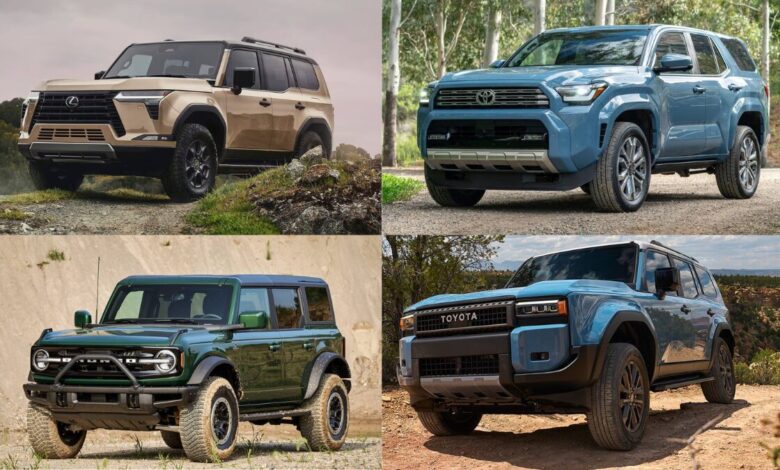
The 2025 SUV comparison across the Toyota 4Runner, Toyota Land Cruiser, Lexus GX, and Ford Bronco highlights four very different interpretations of capability, comfort, and modern adventure. Each SUV brings its own character, from rugged durability to refined luxury and retro inspired excitement. Together, they represent the most diverse mix of off road oriented vehicles in the 2025 market, giving shoppers a wide range of personalities and strengths to choose from.This 2025 SUV comparison highlights how differently these vehicles approach capability.
The world of adventure-ready SUVs has evolved dramatically in recent years, and nowhere is that more evident than in the four vehicles that dominate the conversation for 2025. The Toyota 4Runner, Toyota Land Cruiser, Lexus GX, and Ford Bronco represent four different philosophies built on the same foundation of toughness, capability, and versatility. Each one delivers its own interpretation of what a modern off-road oriented SUV should be. Together, they form a fascinating lineup that stretches from old-school durability to refined luxury and bold retro personality.
The 2025 Toyota 4Runner enters a new era with a complete redesign after more than a decade of anticipation. It keeps its traditional truck-based spirit but embraces modern powertrains and technology, making it feel familiar yet refreshed. The returning Toyota Land Cruiser brings a tighter, more purposeful design backed by hybrid efficiency and heritage-driven styling that blends past and present with surprising harmony. Meanwhile, the Lexus GX approaches the segment from a luxury perspective. It shares Toyota’s off-road DNA but elevates it with craftsmanship, cabin refinement, and a polished driving experience that makes long journeys as enjoyable as trail exploration.
Then there is the Ford Bronco, the SUV that rekindled a legacy when it returned in 2021 and continues to ride a wave of enthusiasm. With its removable roof and doors, retro-inspired lines, and a suite of off-road hardware, the Bronco injects fun and personality into a segment often defined by seriousness. It feels energetic, expressive, and proudly adventurous.
Bringing these four vehicles together creates a comparison that goes far beyond numbers or specifications. This is a story about character, philosophy, and the different kinds of adventures each SUV encourages you to pursue. Whether you prioritize capability, comfort, heritage, style, or raw excitement, each model offers a distinct vision of what a true modern SUV should be.
2025 Toyota 4Runner
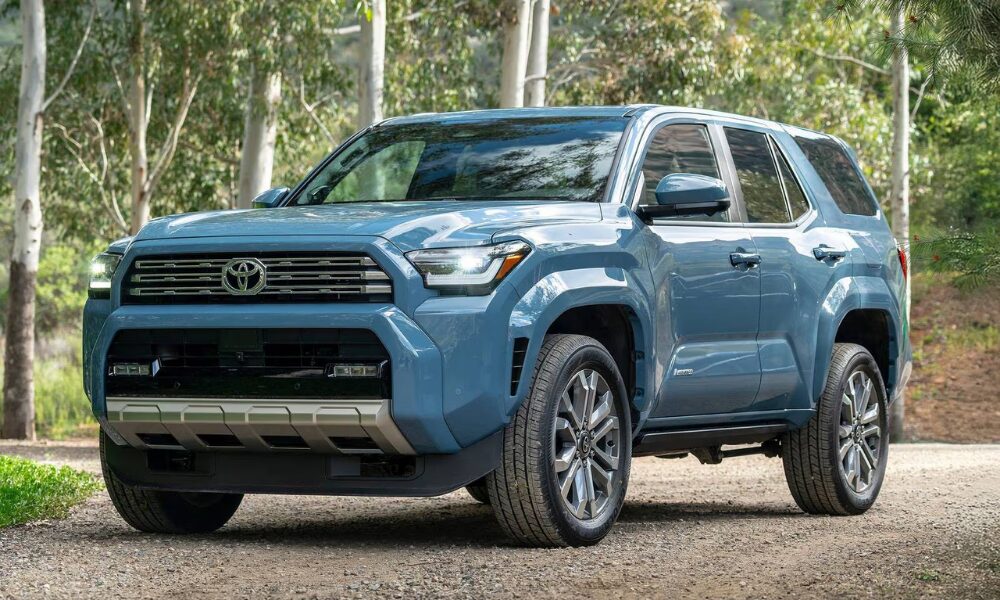
After more than a decade of waiting, the Toyota 4Runner finally enters a new chapter with a complete redesign for 2025. While it stays true to its roots as a rugged, body-on-frame midsize SUV, nearly every aspect has been modernized. It’s slightly larger, wears a sharper and more contemporary design, and features a fully revamped interior packed with Toyota’s latest technology. Under the hood, the long-standing V6 is gone, replaced by a new turbocharged four-cylinder engine, with an optional hybrid setup for extra power and improved efficiency. For shoppers who want something more adventurous than a typical crossover, yet less extreme than a Ford Bronco or Jeep Wrangler, the new 4Runner strikes a balanced middle ground. Overall, this generation represents one of the biggest leaps forward in the model’s long history.
Toyota also offers an unusually wide range of trims, totaling nine versions that cater to different types of buyers. The base SR5 is the budget-friendly entry point, while the TRD models appeal to the core 4Runner crowd seeking capability and attitude. Those who prioritize comfort and upscale features may prefer the Limited or Platinum trims, and serious off-road enthusiasts will gravitate toward the TRD Pro or the all-new Trailhunter. Every model benefits from the new turbo engine’s stronger low-end torque and better fuel economy, with the hybrid adding even more punch and a small bump in mpg.
When compared to rivals, the 4Runner sits in a unique space. The Jeep Wrangler and Ford Bronco offer superior off-road ability but demand compromises in daily comfort. The 4Runner, by contrast, feels far more livable on highways and around town. The Land Rover Defender is another alternative, and within Toyota’s lineup, buyers may also consider the new Land Cruiser or the more family-oriented Highlander and Grand Highlander.The 4Runner stands out in this 2025 SUV comparison for its value and reliability.
In performance testing, the gas-powered 4Runner delivers decent acceleration and enough muscle for everyday driving, though it trails behind the hybrid version by a small margin. Ride quality is its weak point, with noticeable body roll and a restless rear suspension even on smooth pavement. Steering response also feels slower than expected. Still, it’s more comfortable than Bronco and Wrangler, even if it can’t match the on-road refinement of something like the Honda Passport. On the upside, Toyota equips every trim with a generous suite of standard safety features, including adaptive cruise control, blind-spot warning, and lane-keeping assistance.
Comfort is a mixed bag. The front seats are well cushioned, but the second row feels tighter than expected in both headroom and legroom, with flatter cushions that don’t offer much support. Rear door openings are small, making child-seat installation more challenging. Noise levels are generally controlled, though the four-cylinder engine sounds coarse when pushed hard. The climate system, however, works efficiently and is straightforward to use thanks to large, chunky controls.
Technology is one area where the 4Runner shines. Depending on the trim, you get either an 8-inch or 14-inch touchscreen, both supporting wireless Apple CarPlay and Android Auto. There are multiple USB ports, an optional wireless charger, and Toyota’s native navigation system, although advanced features require a data subscription after the trial period. Most drivers will still prefer smartphone navigation for ease and familiarity.
Cargo space is generous in gas-only models, offering over 48 cubic feet behind the second row, and loading heavy items is easier thanks to a reasonable lift-over height. However, with the optional third row, usable cargo space nearly disappears. Towing capacity reaches 6,000 pounds, which is competitive for the segment. Interior storage is decent, with well-placed pockets and bins throughout the cabin.
Value ultimately depends on the trim. Lower models are reasonably priced, but high-end trims can exceed $60,000, and off-road-focused versions can climb into the high $60,000s. Build quality is solid, with no unusual rattles even during off-road testing, but fuel economy remains average at best, especially when using premium fuel as recommended.
Out in the elements, the 4Runner comes alive. On pavement it behaves like a traditional truck-based SUV, but off-road its capability and character shine. Styling now resembles the Tacoma’s front end, and several trims proudly feature the heritage-style “TOYOTA” grille badge.
With nine trims available, choosing the “best” one depends on how you plan to use the vehicle. The TRD Sport Premium offers a balanced mix for mostly on-road use with occasional off-roading, while the TRD Off-Road and TRD Pro are better suited for buyers who want serious adventure capability.
Owner reviews for the 2025 model are mixed. Some drivers appreciate the improved tech, handsome interior, and overall safety, while others criticize the price, ride stiffness, tight second row, and underwhelming fuel economy. A fewowners have also reported early issues, such as noisy brakes, adding to the mixed impressions.
2025 Toyota Land Cruiser
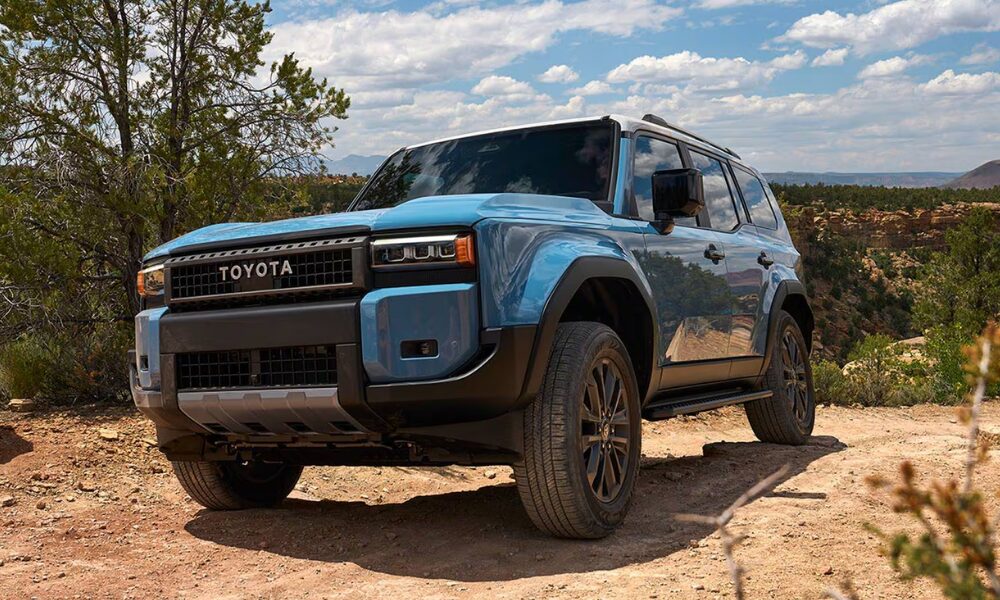
The 2025 Toyota Land Cruiser continues Toyota’s legacy of building a go-anywhere SUV designed for durability, capability, and everyday usability. After last year’s redesign, the Land Cruiser returned with a smaller footprint, updated retro-inspired styling, and a new hybridized turbocharged four-cylinder engine. While the new powertrain produces less horsepower than the old V8, it delivers far better fuel efficiency without sacrificing its confident, torque-rich character. For 2025, the only notable change is the removal of the First Edition trim.
True to its heritage, the Land Cruiser is equipped with full-time four-wheel drive, low-range gearing, and standard locking center and rear differentials. An optional disconnecting front stabilizer bar increases wheel articulation for tougher trails, while additional technology features, including low-speed off-road cruise control, multiple traction modes, and trail-focused camera views, enhance its confidence off pavement.
Against direct rivals, the Land Cruiser finds a comfortable middle ground. The Jeep Wrangler and Ford Bronco offer superior raw capability but compromise heavily on refinement. The Land Rover Defender is an appealing alternative, albeit far more expensive. Toyota’s own 4Runner presents another option, sharing much of the Land Cruiser’s engineering while offering more trims and an available third row.
On the road, the Land Cruiser’s hybrid system feels smooth and responsive for daily driving, though acceleration is modest and highway passing requires effort. Steering is on the heavier side, and hard braking results in noticeable nose dive. Still, it rides more comfortably than hardcore off-road competitors and handles rough pavement with confidence. Inside, the cabin is quiet and well insulated. The front and second-row seats are comfortable, but rear legroom is surprisingly limited for a vehicle of this size.In this 2025 SUV comparison, the Land Cruiser shows impressive balance.
Technology is one of the Land Cruiser’s strengths. The touchscreen interface is straightforward and supports wireless Apple CarPlay and Android Auto, with multiple USB ports throughout the cabin. Cargo room is adequate at 37.5 cubic feet, but the hybrid battery raises the load floor and reduces practicality. Towing capacity is rated at 6,000 pounds.
Overall value depends heavily on trim. The starting price is steep, and the cramped rear seating and elevated cargo floor undercut its practicality. Still, the interior quality is high, and the SUV’s hybrid efficiency,an EPA-estimated 23 mpg combined, surpasses most off-road-oriented competitors, though premium fuel is required.
The Land Cruiser is available in just two trims: the basic 1958 and the more feature-rich Land Cruiser model. Both use the same 326-horsepower hybrid engine with full-time 4WD. The higher trim adds synthetic leather, ventilated seats, and a larger 12.3-inch display, making it the better all-around choice.
The 2025 model combines classic Land Cruiser character with modern efficiency and an appealing retro aesthetic. While not the most powerful or the most spacious in its class, it remains a highly capable and thoughtfully engineered SUV built for adventurous drivers who want capability without sacrificing everyday comfort.
2025 Lexus GX
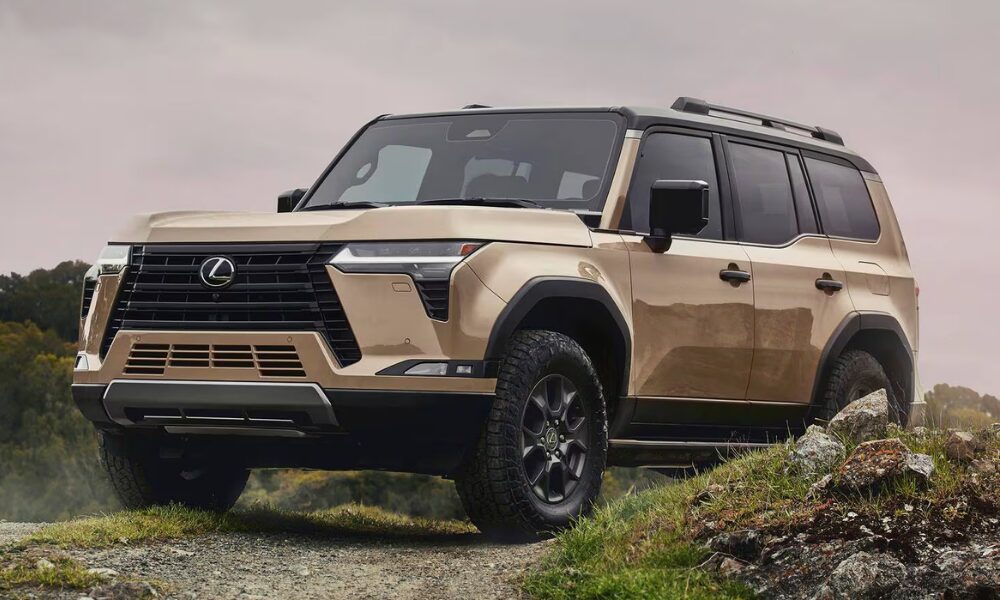
The 2025 Lexus GX stands out in the brand’s SUV lineup as the model that blends genuine off-road capability with true luxury. Redesigned just last year, the GX enters this model year with a modern look and a more purposeful identity. Its truck-based platform gives it the toughness expected from an adventure-focused SUV, yet Lexus surrounds it with enough premium amenities to make it equally comfortable on highway commutes and long-distance travel.
Power comes from a turbocharged 3.4-liter V6 paired with a 10-speed automatic transmission, a combination that delivers strong acceleration and smooth, confident power delivery. In testing, the GX reached 60 mph in 6.7 seconds, making it quicker than many rivals in the segment. While handling isn’t its strongest trait and body roll becomes noticeable when pushed, the GX’s composure off-road more than compensates. The Overtrail trims add all-terrain tires and a locking rear differential, making the SUV impressively capable when the pavement ends. On-road comfort is also a pleasant surprise, especially with the more street-oriented Luxury trims that smooth out bumps effectively.

Inside, the GX is quiet, refined, and built with the attention to detail expected from Lexus. The front and second-row seats offer excellent support, though the third row sits low and is best reserved for short trips. Cabin access is made easier by running boards, and the controls are laid out more intuitively than in other Lexus SUVs. Space for passengers in the second row is somewhat tighter than expected, but overall comfort remains high.As part of our 2025 SUV comparison, the GX brings luxury into the off road segment.
Technology is a highlight thanks to the available 14-inch touchscreen, which features sharp graphics and quick responses. Wireless CarPlay and Android Auto come standard, though Lexus oddly charges a subscription for navigation once the initial free period ends. Multiple USB-C ports and a well-placed wireless charging pad add to the GX’s practicality.
Cargo capacity depends heavily on the configuration. Three-row models provide minimal space behind the third row, but folding it unlocks a more usable area, and two-row versions like the Overtrail offer significantly better utility. The GX also earns points for its impressive towing capability of over 9,000 pounds, outperforming large luxury SUVs such as the Cadillac Escalade and Infiniti QX80.
In terms of value, the GX delivers a polished interior, excellent build quality, and serious off-road credentials, though pricing climbs quickly,especially in Overtrail trims. Some features requiring subscriptions may also frustrate long-term owners. Fuel economy is its biggest drawback at just 17 mpg combined, but this figure remains competitive for a rugged, body-on-frame luxury SUV.
Available in six trims, the 2025 GX caters to a wide range of buyers. The Premium trim offers a strong mix of standard features and capability, making it the best fit for most shoppers. Those who prioritize trail performance will find the Overtrail trim the most compelling choice thanks to its specialized off-road hardware.
The result is an SUV that successfully merges style, capability, and luxury, making the 2025 Lexus GX an appealing choice for drivers who want real off-road confidence without sacrificing comfort or refinement.
2025 Ford Bronco
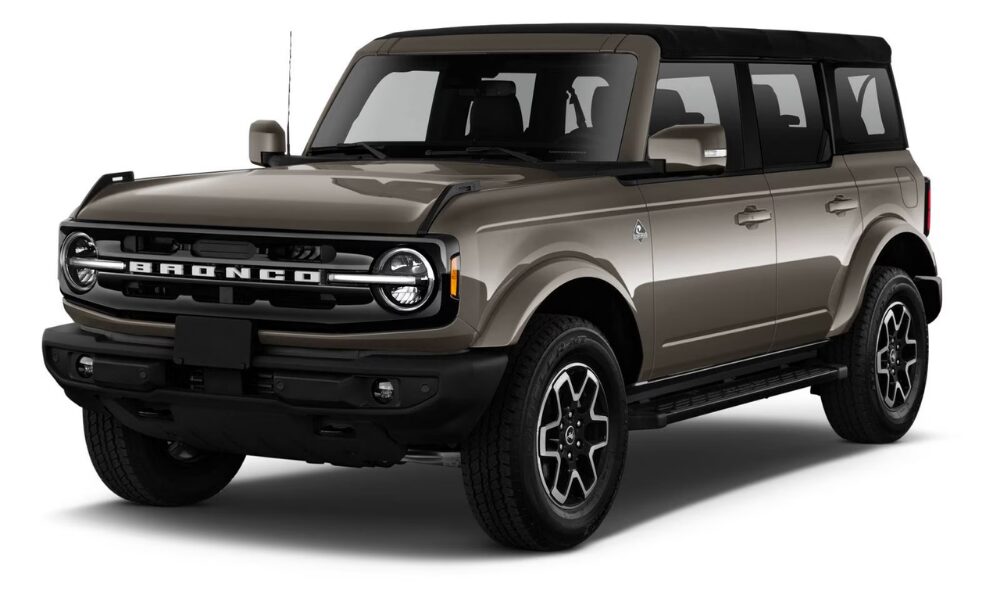
The 2025 Ford Bronco carries forward the spirit that made its 2021 reboot such a major automotive event. Designed to challenge the Jeep Wrangler directly, the Bronco delivers authentic go-anywhere capability with a modern personality and a long list of configurations. Buyers can choose between two- or four-door body styles, manual or automatic transmissions, and multiple off-road packages that tailor the SUV to different types of adventure. For 2025, updates are minimal, with the main addition being a nostalgic “Free Wheeling” appearance package inspired by 1970s Broncos.
At its core, the Bronco remains a highly capable off-road machine. Even base models come with four-wheel drive and solid ground clearance, making light trails effortless. For more demanding rock crawling, the Sasquatch package adds heavy-duty hardware designed for slow, technical terrains. At the opposite extreme, the Bronco Raptor transforms the SUV into a desert runner with advanced suspension, a stronger engine, and adaptive stability tuning, turning high-speed off-roading into its own form of entertainment.The Bronco adds personality and fun to this 2025 SUV comparison.
On the road, the Bronco delivers enough refinement to outperform the Wrangler in comfort, though it can’t match traditional SUVs like the Toyota 4Runner in quietness or smoothness. The turbocharged engines provide confident power, with 0–60 mph times ranging from 8.4 seconds to a brisk 7 seconds depending on configuration. Steering is a highlight; thanks to its independent front suspension, the Bronco feels stable at freeway speeds and more predictable than rivals built with solid axles. Braking performance, however, suffers from long stopping distances, and the removable hardtop introduces significant wind noise at speed.
Inside, the Bronco blends ruggedness with usability. The seats offer solid support, and both rows feel roomy compared to the Wrangler. Climate controls are easy to operate, and optional heated seats are impressively quick to warm up. Some rattles and vibrations appear during off-road use, hinting at the compromises of a removable roof design. Child-seat accommodation is straightforward thanks to generous second-row space.
Technology is handled by Ford’s Sync 4 system, which is intuitive despite showing its age with slower load times and occasional lag. Navigation is thoughtfully designed for off-road use, offering routing options that include 4×4 trails. Wireless Apple CarPlay and Android Auto are standard, and multiple USB ports support device-heavy adventures. The Bronco also integrates with a dedicated smartphone app offering trail maps and off-road tools.
Cargo and towing performance are mixed. The Bronco’s larger size gives it more interior room than the Wrangler, and access is easy via a side-hinged swing gate. Still, towing capacity , mostly capped at 3,500 pounds , trails rivals like the 4Runner and even some crossovers. Storage space inside the cabin is adequate, though not exceptional.
Value depends on the trim. Some interior materials feel cost-cutting, especially in higher-priced versions, but the Bronco delivers broad off-road capability across its lineup, making adventure more accessible than in the Wrangler or 4Runner. Fuel economy is the biggest downside; all engines return modest numbers averaging 18–20 mpg combined, and real-world testing often results in worse.
For 2025, the Bronco lineup spans six trims, from the affordable Base model to the extreme Raptor. The recommended Big Bend trim offers a strong foundation with room to grow through packages like Sasquatch for capability or Mid Package for comfort.
Overall, the 2025 Ford Bronco stands out with its lively personality, strong trail performance, and nostalgic charm. It isn’t the most refined or fuel-efficient SUV of its class, but its blend of capability and charisma makes it a standout choice for drivers who want genuine adventure wrapped in a modern package.
Four Different Visions of Adventure
The world of rugged SUVs has never been more competitive, and the 2025 model year brings together four machines that represent four completely different interpretations of capability, comfort, and identity. The Toyota 4Runner arrives with a long overdue redesign yet keeps the familiar toughness that made it an icon. The new Land Cruiser returns with a smaller footprint and modern hybrid efficiency, blending heritage with practicality. The Lexus GX redefines the concept of luxury off-roading by fusing premium craftsmanship with real trail performance. And then there is the Ford Bronco, a charismatic disruptor built to challenge the Jeep Wrangler and steal back the spotlight with retro charm and a wide range of off-road hardware.
Although these SUVs often appeal to overlapping audiences, they ultimately serve very different personalities. Understanding how each one behaves in real-world driving, how it handles the wild, and what kind of ownership experience it offers reveals a much clearer picture of where they stand. What follows is a detailed look at the strengths, weaknesses, and defining traits of each model, comparing them not as numbers on a chart, but as real companions for the road, the trail, and everyday life.
Design and Identity: Four Distinct Characters
Each SUV carries a unique presence. The 4Runner looks familiar yet evolved, retaining the square shoulders and muscular stance that fans expect, only with sharper modern details. It feels intentionally rugged, as if Toyota refused to soften its personality during the redesign. The Land Cruiser takes a bolder approach by embracing a retro inspired shape. The upright proportions, boxy fenders, and heritage style grille give it the kind of nostalgia driven personality that instantly connects with fans of earlier generations.
The Lexus GX sits in an entirely different stage of the theater. It shares the same underlying platform as the Land Cruiser, but Lexus molds it into a more polished shape. It has the stance of a serious off roader, yet everything about its design carries a sense of premium sculpting. The Bronco, meanwhile, wears its personality proudly. Every line and curve is a deliberate callback to the classic Bronco. The round lights, slab sided panels, and customizable color accents make it one of the most expressive SUVs on the market. No other model in this group has this much charisma baked directly into its shape.
On Road Performance and Comfort
Daily driving reveals dramatic differences between the four.
The 4Runner, even with its updated engine and tech, still drives like a traditional truck based SUV. There is body movement during turns, and the suspension feels busy on smoother pavement. Yet it maintains a predictable and honest feel that some drivers genuinely prefer. The Land Cruiser, despite sharing the same platform legacy, feels noticeably more refined. The hybrid powertrain delivers smooth response, and the ride quality is more controlled. Steering is heavy but confident, and overall the SUV carries itself with a quieter, more composed demeanor.
The Lexus GX elevates this experience even further. Its turbocharged V6 offers strong acceleration, and the cabin absorbs road imperfections with a softness that almost feels surprising given its off road credentials. Long drives are effortless. Seats are deeply supportive, sound insulation is refined, and the interior layout is straightforward. The third row, however, remains tight and best suited for occasional use.
The Ford Bronco lands on the sportier, more expressive end of the spectrum. Its steering is one of its greatest strengths, delivering surprising stability at high speeds thanks to the independent front suspension. Ride quality is firmer and more playful, especially with off road oriented tires. Wind noise from the removable roof is ever present, and the interior materials lean more functional than refined, yet the Bronco still manages to feel enjoyable in everyday driving. Among these four, it offers the most personality on the road and the least luxury.
Off Road Capabilities
All four SUVs are capable, but the degree and character of that capability vary dramatically.
The 4Runner offers the widest range of options. TRD trims unlock heavy duty equipment, improved articulation, and more advanced terrain software, making it suitable for both casual adventure seekers and serious trail drivers. The Land Cruiser, on the other hand, is ready for the wilderness straight from the base trim. Full time four wheel drive, low range gearing, locking center and rear differentials, and available stabilizer bar disconnect create an incredibly competent platform that feels engineered for rugged exploration rather than accessorized for it.
The Lexus GX takes a refined approach but is far from soft. The Overtrail trims add all terrain tires, a locking rear differential, and specialized suspension tuning, transforming it into a luxury off road machine that genuinely competes with high end rivals. The Bronco is where things get wild. With its Sasquatch package, the Bronco becomes surprisingly capable in technical terrain. The Bronco Raptor takes capability to a different universe. Jumping dunes, high speed desert running, and aggressive rock crawling are all part of its natural habitat.
Where the Toyota duo feels precise and engineered, and the Lexus feels premium and purposeful, the Bronco feels adventurous and energetic, almost like a toy built for grown ups who never stopped loving the outdoors.
Interior Usability and Everyday Practicality
In daily use, practicality matters just as much as specs.
The 4Runner offers the most straightforward cargo layout with a lower load floor, making it ideal for hauling gear and luggage. Rear seating is tighter than expected, but the practicality of the trunk gives it major appeal for families and active lifestyles. The Land Cruiser sacrifices some cargo usability because of the hybrid battery raising the load floor. The rear area is still functional but requires more lifting and compromises flat space.
The Lexus GX splits the difference. Three row models offer limited cargo space with all seats raised, but two row versions like the Overtrail trims reclaim much more room. Small item storage varies, and the optional cooled center console reduces available space. The Bronco surprisingly offers one of the more convenient cargo areas in the group, especially compared to the Wrangler. Its swing gate opens wide, and the hardtop version provides a simple lift glass for access. Still, towing capacity trails significantly behind the GX and the 4Runner.
Value, Efficiency, and Ownership
This category creates some of the clearest separation between these SUVs. The 4Runner delivers strong value through its wide trim range and large price spread. The Land Cruiser, while well engineered, starts high and requires premium fuel, making long term ownership more expensive. The Lexus GX offers luxury levels of quality at a price that rises quickly but feels justified for those seeking refinement and off road capability in one package. The Bronco, on the other hand, gives buyers access to genuine off road performance at a lower price barrier, but fuel economy remains a major weakness and some interior materials feel cost driven.
Efficiency paints an interesting picture. The Land Cruiser stands out with its hybrid system providing far better fuel economy than the others. The 4Runner hybrid comes close, while the GX and Bronco trail significantly, especially in real world conditions.
Final Perspective: Four SUVs, Four Identities
When viewed together, the 2025 Toyota 4Runner, Land Cruiser, Lexus GX, and Ford Bronco form a fascinating family of rugged SUVs. Each one represents a different take on adventure. The 4Runner is the classic, honest workhorse that thrives on utility and customization. The Land Cruiser is the heritage hero, mixing tradition with modern engineering and hybrid efficiency. The Lexus GX is the refined explorer, built for drivers who want genuine capability without stepping away from comfort. The Ford Bronco is the charismatic wild card, designed for enthusiasts who want emotion, style, and a sense of freedom baked into every mile.
There is no single winner here. Instead, each SUV reveals a different path depending on the type of driver behind the wheel.
If you’re exploring more of 2025’s standout vehicles and detailed comparisons, the following articles offer deeper insight and broader context across the automotive world. These are some of the most popular and highly recommended reads on CarDrav:
- Best SUVs: Highest-rated cars for 2025
- Best Cars of 2025: A Review of the Year’s Automotive Icons
- Kia Sportage vs Nissan Qashqai vs Volkswagen Tiguan
- Mercedes EQS vs BMW iX (2025) Review: Late to the EV Party, But Better Than Ever
- Mazda 3 2025 vs Volkswagen Jetta 2024
- Best Coupes 2020–2021: In-depth Reviews
- Best Electric SUVs 2025
- 10 Cars We Will Say Goodbye to in 2024
- Best Electric Vehicle Brands in 2025
- The 20 Best Used Cars of 2025 Under $15,000
- The Smartest Fuel-Efficient Trucks of 2025
- The 16 Best Towing Trucks of 2025
- Best Crossovers & Small SUVs for 2025
- The Best Pickup Trucks of 2025
- 8 of the Best Cars Under $20,000 – Minivans
- Best Third-Row SUVs for 2025
- 20 of the Best Cars of 2023 and Affordable SUVs
- The 10 Most Affordable Cars to Buy in 2025
- The 12 Best Cars, 6 Hybrid and 6 Electric, to Buy in 2025
FAQ
Which SUV delivers the best overall balance between everyday comfort, off-road performance, and long-term usability?
If we look at the four SUVs as complete packages, the Toyota Land Cruiser stands out as the most balanced. It blends strong off-road engineering with impressive on-road manners and modern hybrid efficiency. Unlike the more traditional 4Runner, which still feels rugged and old-school in the way it moves over pavement, the Land Cruiser drives with a sense of refinement that makes long highway trips far more pleasant. It absorbs bumps more cleanly, offers smoother power delivery, and feels more settled at speed.
Compared to the Lexus GX, the Land Cruiser is slightly less luxurious but also more honest and purpose-built, making it easier to live with for owners who move between pavement and trails regularly. The Ford Bronco brings lots of excitement and character, but its ride quality, wind noise, and fuel economy make it less practical for daily use. Taken together, the Land Cruiser is the SUV that adapts most naturally to whatever you ask of it, whether that is a commute, a camping weekend, or a technical trail.
Which model offers the strongest off-road capability, and how do the four differ when the terrain gets challenging?
For pure off-road domination, the Ford Bronco, especially in the Raptor configuration, simply operates on another level. Its suspension travel, high-speed desert capability, and aggressive tuning make it incredibly confident in environments where speed and control matter. Yet the story is more layered when you slow things down. The Toyota Land Cruiser is engineered for precision: locking center and rear diffs, full-time 4WD, low-range gearing, and excellent traction software give it a calm, confident presence on rocky or technical trails.
The Lexus GX Overtrail shares much of this hardware but adds a polished, luxurious feel thanks to improved isolation and sound control, making tough terrain feel less dramatic for the driver. The 4Runner can be extremely capable in its TRD configurations, but its character is more traditional and mechanical. It lacks the Bronco’s wild personality and the Land Cruiser’s composure, yet remains a dependable and predictable tool on trails. Each SUV excels in a different environment, but the Bronco Raptor wins the extreme category, and the Land Cruiser wins the technical, slow-speed category.
Which SUV provides the best interior experience for passengers and long trips?
The Lexus GX is the clear winner when it comes to interior refinement, comfort, and long-distance ease. Lexus designed the GX to feel premium the moment you sit down: the seats offer exceptional support, the cabin remains impressively quiet even at higher speeds, and the materials feel upscale regardless of trim.
Compared to the 4Runner, which retains a more functional and rugged interior with a tighter second row, the GX offers a much more inviting space for families or frequent travelers. The Land Cruiser comes close, with a comfortable first and second row and a straightforward layout, but it falls behind the GX in terms of materials and rear legroom. The Ford Bronco is the least refined of the four. Although it is spacious and its seats are surprisingly comfortable, wind noise from the removable roof, firmer ride quality, and functional plastics make it feel more utilitarian than luxurious. For anyone who values comfort on long drives, the GX delivers the most satisfying and relaxing experience.
Which SUV is the best value for money, considering purchase price, fuel cost, features, and long-term durability?
No SUV in this group matches the Toyota 4Runner when it comes to long-term value. Its pricing structure is far more approachable than the Land Cruiser and GX, and its simple, durable components historically deliver excellent reliability and strong resale value. The 4Runner requires fewer expensive technologies, which also means fewer expensive failures over time.
The Land Cruiser is exceptionally capable and efficient, but its higher up-front cost, premium-fuel requirement, and hybrid complexity affect ownership cost. The Lexus GX is luxurious and well-built, but its turbo V6 and feature-heavy cabin make it more expensive to maintain long term. The Ford Bronco offers good value for capability, especially compared to the Wrangler, but its fuel consumption and fast-rising trim prices limit its financial appeal. For buyers who want durability, predictable costs, and practicality without the luxury premium, the 4Runner remains the value king.
Which model is best suited for families who need space, usability, and versatility?
The Toyota 4Runner is the strongest choice for family practicality thanks to its low cargo floor, wide trunk opening, and predictable interior layout. It handles strollers, sports gear, luggage, and camping supplies with ease. Unlike the LandCruiser and Lexus GX, the 4Runner’s cargo space is not compromised by a raised floor or hybrid battery packaging. The Land Cruiser’s cargo height requires more lifting,
and the GX’s third row leaves very little space when upright. The Ford Bronco offers good passenger room, especially in the second row, but its swing gate, limited towing capacity, and smaller cargo area make it less ideal for families who carry more gear. The 4Runner’s straightforward design makes it easier for families to live with day to day, especially for outdoor-oriented households.
Which SUV has the most engaging personality or “fun factor” for drivers who want an emotional connection with their vehicle?
The Ford Bronco is the emotional standout of this group. Its retro styling, removable doors and roof, lively steering, and adventurous character give it a kind of charm that the others simply cannot replicate. Driving a Bronco feels like an event, even when you are just going to the store. The Toyota duo feels grounded and purposeful rather than playful. The 4Runner has its classic charm, and the Land Cruiser carries heritage and respect,
but neither matches the Bronco’s raw sense of fun. The Lexus GX also delivers personality through luxury and design, but its character leans more toward sophistication than excitement. For drivers who want their SUV to feel like part of the adventure, the Bronco is the one that brings the biggest grin.
If a buyer wants one SUV that can truly do everything well without major compromises, which model should they choose?
The Toyota Land Cruiser offers the most complete one-vehicle solution. It is not the most luxurious, not the most powerful, and not the wildest off-road, yet it excels in all the categories that actually matter in real life. It is comfortable, efficient, reliable, capable, and refined. It handles daily commuting with ease, performs confidently on trails,
offers advanced technology, and carries Toyota’s reputation for durability. The Lexus GX is the superior choice for luxury focused buyers, and the Bronco is unbeatable for pure fun, but neither is as universally balanced as the Land Cruiser. For someone who wants a single SUV that adapts to every need, the Land Cruiser is the strongest and most rational choice.